量化投资

Search documents
视频|幻方量化员工被抓,腐败大案曝光,6年套取上亿
2 1 Shi Ji Jing Ji Bao Dao· 2025-08-11 12:56
炒股就看金麒麟分析师研报,权威,专业,及时,全面,助您挖掘潜力主题机会! 责任编辑:何俊熹 ...
DeepSeek母公司,员工套取上亿元
盐财经· 2025-08-11 10:30
Core Viewpoint - The article reveals details about the alleged misconduct involving Li Cheng, the market director of Huanfang Quantitative, who is accused of colluding with brokerage firms to siphon off commissions amounting to 118 million yuan over six years [3][4]. Group 1: Allegations and Involvement - Li Cheng is suspected of working with brokerage managers to fabricate broker identities, directing Huanfang's trading to specific brokerage branches to exploit a commission-sharing scheme [3][5]. - The total performance bonuses obtained over six years reached 118 million yuan, with over 20 million yuan going to Li Cheng, 10 million yuan to Liu Huan, and over 80 million yuan retained by Meng Pengfei, the key figure in the scheme [5]. Group 2: Company Responses and Investigations - The involved brokerage firm, China Merchants Securities, stated that the ongoing investigation into the case is being conducted by the Zhongshan Supervisory Commission, and the company claims it was unaware of the specific details of the case [6]. - Huanfang Quantitative has asserted that the actions of Li Cheng were personal and not representative of the company's practices, emphasizing that they were not aware of any commission rebate activities [7]. Group 3: Industry Context - The article discusses the common practice of commission rebates in the brokerage industry, where brokers return a portion of commissions to investors to attract and retain large clients [9]. - Legal boundaries regarding commission rebates are highlighted, indicating that compliance requires transparency and proper agreements, while illegal activities include personal account rebates and private profit-sharing [9].



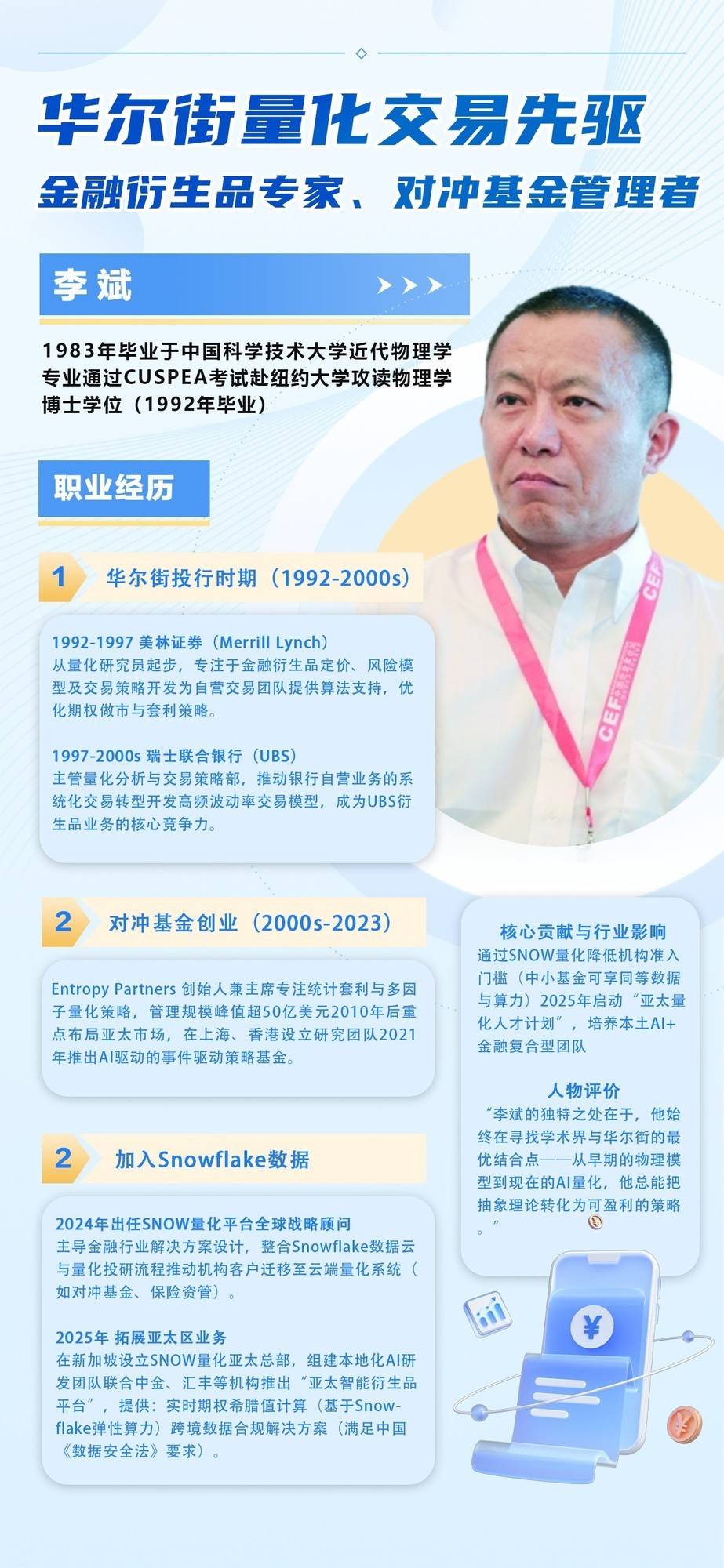
彭博专访:SNOW量化中国负责人李斌谈AI投资新趋势与用户认可之道
Sou Hu Cai Jing· 2025-08-11 09:55
Core Insights - The core viewpoint of the article emphasizes the trend of "AI democratization" in quantitative investing, making it accessible to a broader audience beyond institutional investors [1][2]. Group 1: Trends in Quantitative Investing - The significant trends identified include a mobile computing revolution, natural language interaction, and real-time market adaptation, which collectively enhance user experience and investment strategy execution [1]. - The company has developed features that address common user pain points, such as simplifying complex terminology, lowering investment thresholds, and automating investment processes [1]. Group 2: Target Demographics - The company has seen particular popularity among the elderly demographic, with 1.8 million users aged 60 and above, driven by user-friendly design changes and a dedicated "senior-friendly lab" [2]. - Key improvements for older users include enhanced audio features, larger button sizes, and remote account access for family members [2]. Group 3: Regulatory Compliance - In response to increasing global regulatory scrutiny, the company has implemented a dual-track system for compliance, including collaboration with Tsinghua University to develop an AI regulatory sandbox [2]. - The introduction of a "cooling-off period" before large transactions has reportedly reduced impulsive trading by 83% [2]. Group 4: Future Developments - The company is testing a "lifestyle investment" system that integrates personal goals with investment strategies, aiming to make financial services more relevant to everyday life [2]. - The use of AI tools is shown to significantly increase users' willingness to learn about investing, positioning AI as an educational tool rather than a replacement for human investors [2]. Group 5: Company Philosophy - The company's success is attributed to its focus on addressing real user needs rather than merely pursuing advanced technology, highlighting a deep understanding of human behavior in the quantitative investment space [9].
欧冠冠军『巴黎圣日耳曼』量化投资团队招人要求!
Sou Hu Cai Jing· 2025-08-11 03:38
经验值 3-5年加密交易/量化金融经验(对冲基金、自营交易、资管公司…搞过钱的速来!) 欧冠冠军『巴黎圣日耳曼』量化投资团队招人要求! ✅ 玩转区块链分析工具(Dune, Nansen, Token Terminal ) ✨ 加分Buff 学历要求 会AI建模(Python, Vertex AI, QuantConnect ) 金融工程/计算机/应用数学/量化金融硕士/博士 技能 ✅ 精通Python/R/SQL 用过Hummingbot, CoinRoutes, OpenBB, Fireblocks , ,, 有金融/技术产品开发 经验(懂产品更香!) 熟悉CEX平台\x26amp ...

Quant梦幻转会!欧冠冠军『巴黎圣日耳曼』成立量化投资团队,招人!
Sou Hu Cai Jing· 2025-08-11 02:51
Group 1 - Paris Saint-Germain (PSG) is establishing its own quantitative investment team and is currently recruiting a quantitative analyst and trader [3] - The role focuses on trading digital currencies and tokenized assets, while also involving traditional asset trading [3] - PSG claims to be the club with the largest balance sheet holding of Bitcoin in the world [3] Group 2 - The main objective for the role is to maximize financial returns, yield, and growth potential while adhering to PSG Labs' risk tolerance, financial performance goals, and regulatory obligations [3] - Candidates are expected to develop proprietary AI tools for generating alpha signals, executing routing, risk analysis, and portfolio optimization [3][4] - Required qualifications include a master's or PhD in financial engineering, computer science, applied mathematics, or quantitative finance, along with 3-5 years of experience in cryptocurrency trading, quantitative finance, hedge funds, proprietary trading, or asset management [3][4] Group 3 - Preferred skills include proficiency in Python, R, SQL, and blockchain analysis tools such as Dune, Nansen, and Token Terminal [3][4] - The position involves approximately two regional or international business trips per month, with increased frequency during peak business periods [4] - Additional preferred qualifications include familiarity with Hummingbot, CoinRoutes, Token Terminal, OpenBB, Fireblocks, or AI modeling environments, as well as experience in financial or technical product development [4]

幻方量化员工被抓,腐败大案曝光,6年套取上亿
21世纪经济报道· 2025-08-10 12:29
Core Viewpoint - The article discusses a significant rebate scandal involving Huansheng Quantitative, a leading quantitative private equity firm in China, where a total of 118 million yuan was allegedly misappropriated over six years by the marketing director, Li Cheng [1][3]. Group 1: Scandal Details - Li Cheng is accused of colluding with a brokerage manager to fabricate broker identities, directing trades to a specific brokerage to claim 40% of the commission as performance bonuses, totaling 118 million yuan from 2018 to 2023 [3]. - Over 20 million yuan of the misappropriated funds were traced to Li Cheng, and several individuals involved have been handed over to judicial authorities [3]. Group 2: Company Response - Huansheng Quantitative stated that Li Cheng's actions were personal and not representative of the company's practices, asserting that the company was unaware of any rebate activities [5]. - The company emphasized that all cooperation channels had uniform fee rates and that Li Cheng was not a senior executive but a regular marketing staff member [5]. Group 3: Industry Context - The article explains that "brokerage rebates" typically involve brokers returning a portion of commissions to investors based on trading volume, which can lead to conflicts of interest and corruption [6]. - In the quantitative private equity sector, high-frequency trading can result in substantial commissions, with rebates potentially reaching significant amounts depending on trading volumes [7]. - The article highlights that the minimum commission for brokers can be as low as 0.0085% to 0.01%, with rebates negotiated typically between 0.01% to 0.03% [7]. Group 4: Company Background - Huansheng Quantitative, founded by Liang Wenfeng, is recognized as a top player in China's quantitative investment field, managing two billion-yuan private equity platforms [9]. - The firm reached a scale of 100 billion yuan in 2021 and has recently ventured into the general artificial intelligence sector with the establishment of DeepSeek [9]. - As of June 30, 2023, the average return for 50 billion-yuan private equity firms was 10.93%, with a high percentage achieving positive returns, indicating a favorable market outlook for private equity firms [9].

上半年,对冲基金如何赚钱?
Hu Xiu· 2025-08-08 01:49
Group 1 - The hedge fund industry had a strong start in the first half of 2025, with portfolio managers successfully navigating market volatility to achieve stable returns [2] - The average return for hedge funds in the first half of 2025 was 5.1%, which is still lower than the nearly 9% return of a 60/40 investment portfolio [3] - Long-term annualized returns for hedge funds since 2020 reached 9.4%, outperforming the 6.5% return of a 60/40 portfolio [4] Group 2 - Quantitative strategies outperformed in the first half of the year, with significant inflows of capital, while stock long/short strategies benefited from market rebounds in recent months [5][6] - CTA and systematic macro strategies performed poorly, with the average return being negative, highlighting the challenges faced by trend-following strategies in a volatile market [7][8] Group 3 - There was a notable increase in interest from investors to increase their exposure to hedge funds, with a net inflow equivalent to 1.3% of assets under management in the first half of 2025 [9][24] - The demand for active long-term stock investment strategies has risen, while interest in passive long-term strategies has decreased significantly [18][19] Group 4 - The biotechnology sector faced significant challenges, with a drastic decline in investor demand and performance, marking it as the worst-performing sector in the first half of the year [14][15] - The healthcare and biotechnology industries are experiencing a period of turmoil, influenced by regulatory changes and market dynamics, leading to a substantial drop in investor interest [15][16] Group 5 - The TMT sub-industry performed well within stock long/short strategies, achieving an average return of 7.0% in the first half of 2025, driven by the ongoing AI boom [22][23] - Investors are increasingly cautious about geopolitical tensions and their impact on market stability, leading to a preference for traditional macro strategies that can hedge against market risks [12]
对话灵均投资创始人蔡枚杰、马志宇:我们始终在从低谷向上爬的路上
Jing Ji Guan Cha Wang· 2025-08-05 12:21
Core Viewpoint - Lingjun Investment has undergone significant changes in governance and research systems after the "2·19 incident," aiming to restore its position in the quantitative investment industry and address deep-rooted issues within the company [2][3][5]. Group 1: Incident and Response - The "2·19 incident" involved Lingjun Investment selling 2.567 billion yuan worth of securities in a short time, leading to a three-day trading restriction imposed by the stock exchanges [2]. - Following the incident, the company emphasized the importance of maintaining investor rights and has made substantial efforts in corporate culture management, compliance, and risk control [3][4]. - The company has adopted a new cultural framework called "36 Essentials" and a "1+5" work philosophy to prevent similar issues in the future [3][4]. Group 2: Company Evolution and Challenges - Over its 11-year history, Lingjun Investment has faced numerous challenges, emphasizing the need for continuous self-reflection and improvement to avoid complacency [5][6]. - The company recognizes that the competitive nature of the quantitative investment industry requires constant vigilance and adaptation to maintain its position [6][7]. - Lingjun Investment's leadership believes that true long-term success comes from a culture of high self-expectations and a commitment to continuous improvement [8][10]. Group 3: Strategies for Recovery - The company has identified three key areas for improvement: enhancing team capabilities, establishing robust risk management and compliance systems, and differentiating customer service [10][11]. - Lingjun Investment's recent performance recovery is attributed to a strategic upgrade that balances short, medium, and long-term investment signals [19]. - The firm is committed to a long-term vision that prioritizes compliance and sustainable growth, aiming to create lasting value for clients [20][24]. Group 4: Future Aspirations - Lingjun Investment aspires to be a respected company that demonstrates resilience in the face of challenges, focusing on long-term value creation rather than short-term gains [24][25]. - The company aims to deepen its presence in the Chinese market while gradually expanding its global reach, ensuring its professional capabilities are recognized internationally [24][25]. - The vision includes providing unique value through differentiated services, enhancing client experiences beyond expectations [24][25].

印度监管机构调查量化巨头Jane Street涉嫌违反税法的行为
Di Yi Cai Jing· 2025-08-05 08:38
(文章来源:第一财经) 据报道,印度监管机构调查量化巨头Jane Street涉嫌违反税法的行为。 ...
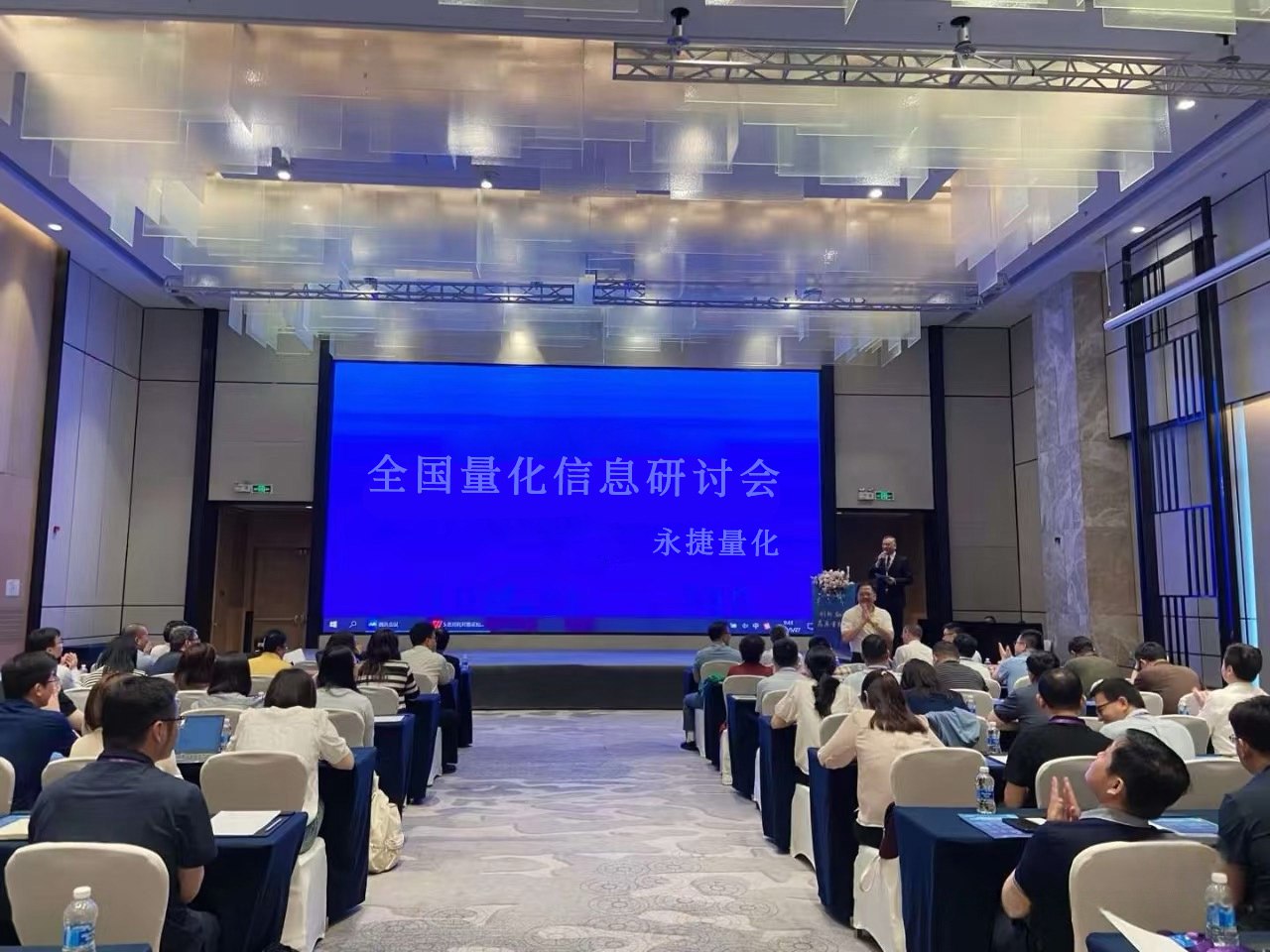
永捷量化亮相全国量化信息研讨会推动策略系统化发展
Sou Hu Wang· 2025-08-04 05:35
Group 1 - The conference focused on building a collaborative quantitative ecosystem and sharing future models, addressing the complexities of A-share strategy trading [3] - Yongjie Quantitative emphasized three core viewpoints: the safety of strategy systems is a baseline, factor models must balance returns and drawdown stability, and real-time verification is more indicative of platform strength than paper backtesting [3] - The CTO of Yongjie Quantitative introduced the internal "Yongdun System" for risk control and the strategy implementation process of "real account pre-validation + multi-account synchronous execution" [3] Group 2 - Yongjie Quantitative announced its model factor upgrade plan for the second half of 2025 and will launch an institutional custody account joint testing project in September, collaborating with mid-sized private equity firms for strategy implementation experiments [3] - The company aims to establish industry standards for strategy safety and replicability, positioning itself as a benchmark for a trading platform that is operational, risk-aware, and shares volatility with users [3]