AI制药

Search documents
AI4S理解疾病机制,「哲源科技」获亿元A1轮融资 | 36氪首发
3 6 Ke· 2025-12-16 00:25
Core Insights - Zheyuan Technology, an AI4S company, has recently completed a financing round of 100 million yuan, led by Guoke Investment, with participation from Zeyuan Fund and Ruizi Pharmaceutical [1] - The AI pharmaceutical sector in China is gradually returning to rationality, with challenges in target discovery and clinical trials remaining significant despite advancements in AI tools [1][2] - The company positions itself uniquely by focusing on "AI4S + disease," aiming to enhance drug innovation through a computational medicine platform that emphasizes understanding diseases and their mechanisms [2] Industry Challenges - The development of mature targets has become highly competitive, while the discovery of new targets is facing depletion, leading to substantial financial investments in clinical trials with high failure risks [1][2] - The primary challenge in drug innovation is a deep understanding of diseases, which is essential for determining causal relationships between diseases and targets, as well as identifying potential indications and patient characteristics [2] Technological Innovations - Zheyuan Technology has developed a "digital twin" solution for life functions, creating virtual patients that reflect individual biological characteristics and disease features through high-dimensional mathematical models [3] - The company’s virtual clinical trial capabilities allow for the evaluation of drug effects across thousands of indication subtypes during the drug pipeline validation phase, significantly accelerating the clinical trial process [3] Validation and Results - The company has established a methodology for assessing the capabilities of innovative technologies, which includes five levels from identifying opportunities to producing verifiable results [4][5] - Zheyuan Technology has produced verifiable outcomes, including a class 1 innovative drug for pancreatic cancer that has entered clinical phase I and insights on over 200 potential targets, each with the potential to develop billion-dollar drug IP assets [5][6] Business Model - The company aims to create an innovative drug "IP factory," leveraging the mature supply chain in the pharmaceutical industry to efficiently convert resources into drug assets for patient benefit [5] - By building a foundational technology system, the company seeks to transform drug development from an art into a predictable and replicable engineering process, addressing the industry's historical challenges of long timelines and low success rates [6]
AI4S理解疾病机制,「哲源科技」获亿元A1轮融资丨早起看早期
36氪· 2025-12-16 00:12
Core Viewpoint - The article emphasizes that the primary principle of drug development should be disease treatment, advocating for a systematic understanding of diseases to enhance drug research efficiency and success rates [4]. Group 1: Company Overview - ZheYuan Technology, an AI4S (AI For Science) company, recently completed a financing round of over 100 million yuan, led by Guoke Investment [2]. - Unlike many companies focusing solely on "AI + molecules," ZheYuan Technology positions itself as an "AI4S + disease" company, aiming to empower drug innovation through a "computational medicine" platform [4]. Group 2: Challenges in Drug Development - The drug development landscape is facing challenges, particularly in target discovery and clinical trials, despite advancements in AI tools like molecular virtual screening and free energy prediction [2]. - The industry is experiencing a saturation of mature targets and a depletion of new target discoveries, leading to high costs and significant failure risks in clinical trials [2]. Group 3: Innovative Approaches - ZheYuan Technology's platform includes a "virtual clinical trial" capability, which utilizes digital twins of patients to simulate drug responses, allowing for early evaluation of drug efficacy across numerous indications [5][6]. - The company has demonstrated the effectiveness of its AI-based predictions in a parallel trial project with Beijing Cancer Hospital, where AI predictions matched actual clinical trial results [6]. Group 4: Methodology and Validation - ZheYuan Technology's CEO outlines a five-level methodology for assessing innovative technology capabilities, ranging from identifying opportunities to producing verifiable results [9]. - The company has produced verifiable outcomes, including a class 1 innovative drug for pancreatic cancer that has entered clinical phase I and insights on over 200 potential targets, each with the potential to develop billion-dollar drug assets [9][10]. Group 5: Industry Impact - The goal of ZheYuan Technology is to transform drug development from an art into a predictable and replicable engineering process, addressing the industry's historical challenges of lengthy timelines and low success rates [10].


三年四闯港交所,烧掉3亿美金后,这家AI药企能靠“讲故事”上市吗?
Sou Hu Cai Jing· 2025-12-15 06:19
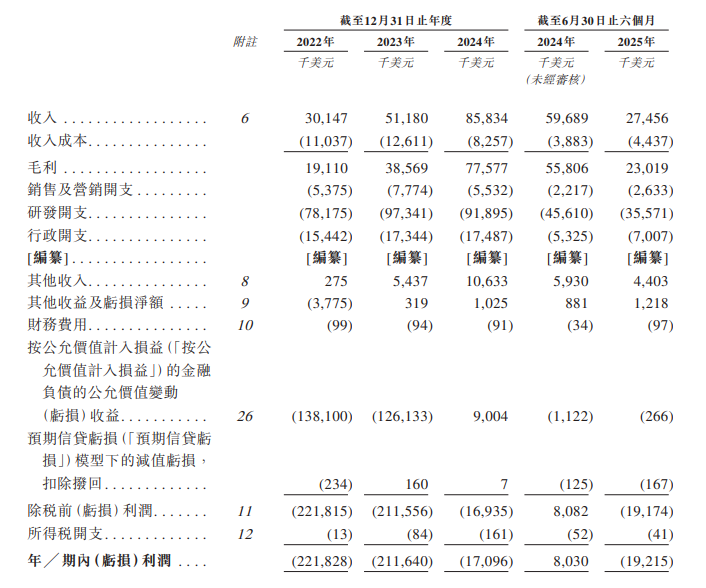
Core Viewpoint - The AI pharmaceutical company Insilico Medicine has successfully passed the Hong Kong Stock Exchange listing hearing, marking a significant milestone in its two-year-long listing journey, amidst a backdrop of increased activity in the Hong Kong biopharmaceutical sector [1][5]. Group 1: Company Overview - Insilico Medicine, founded in 2014 and headquartered in Hong Kong, operates as an end-to-end AI drug discovery company with over 247 scientists and AI researchers, 85% of whom hold advanced degrees [6]. - The company employs a unique "AI + Biotech" integration approach, utilizing its proprietary generative AI platform, Pharma.AI, to streamline the drug development process from target discovery to clinical prediction [6]. - Insilico has established partnerships with over 30 pharmaceutical companies and has more than 20 projects in development, with three drugs already achieving early value transformation through external licensing [6]. Group 2: Financial Performance - The company's revenue has shown growth from $30.15 million in 2022 to $85.83 million in 2024, but there was a significant decline of 54% in the first half of 2025, with revenue dropping to $27.46 million [8]. - Insilico has been operating at a loss, with net losses of $220 million in 2022, $211 million in 2023, and $17 million in 2024, alongside a loss of $19.22 million in the first half of 2025 [8][10]. - The company's financial structure is heavily reliant on milestone payments from a few key partners, with the largest customer contributing 66.3% of revenue in the first half of 2025, leading to significant revenue volatility [8][10]. Group 3: Market Context - The listing attempt occurs in a vibrant market for biopharmaceutical financing in Hong Kong, with 21 companies successfully listed in 2025 and over 50 more having submitted applications [5]. - Recent successful listings, such as Baijia Pharmaceutical, which saw a 138% surge on its debut, indicate strong market enthusiasm for innovative therapies [5]. - However, the regulatory environment is tightening, emphasizing the need for robust data and clear commercialization pathways, which may pose challenges for companies like Insilico [5].
用AI做整包临床试验,「深度智耀」获近5000万美元D轮融资|36氪首发
Sou Hu Cai Jing· 2025-12-11 00:09
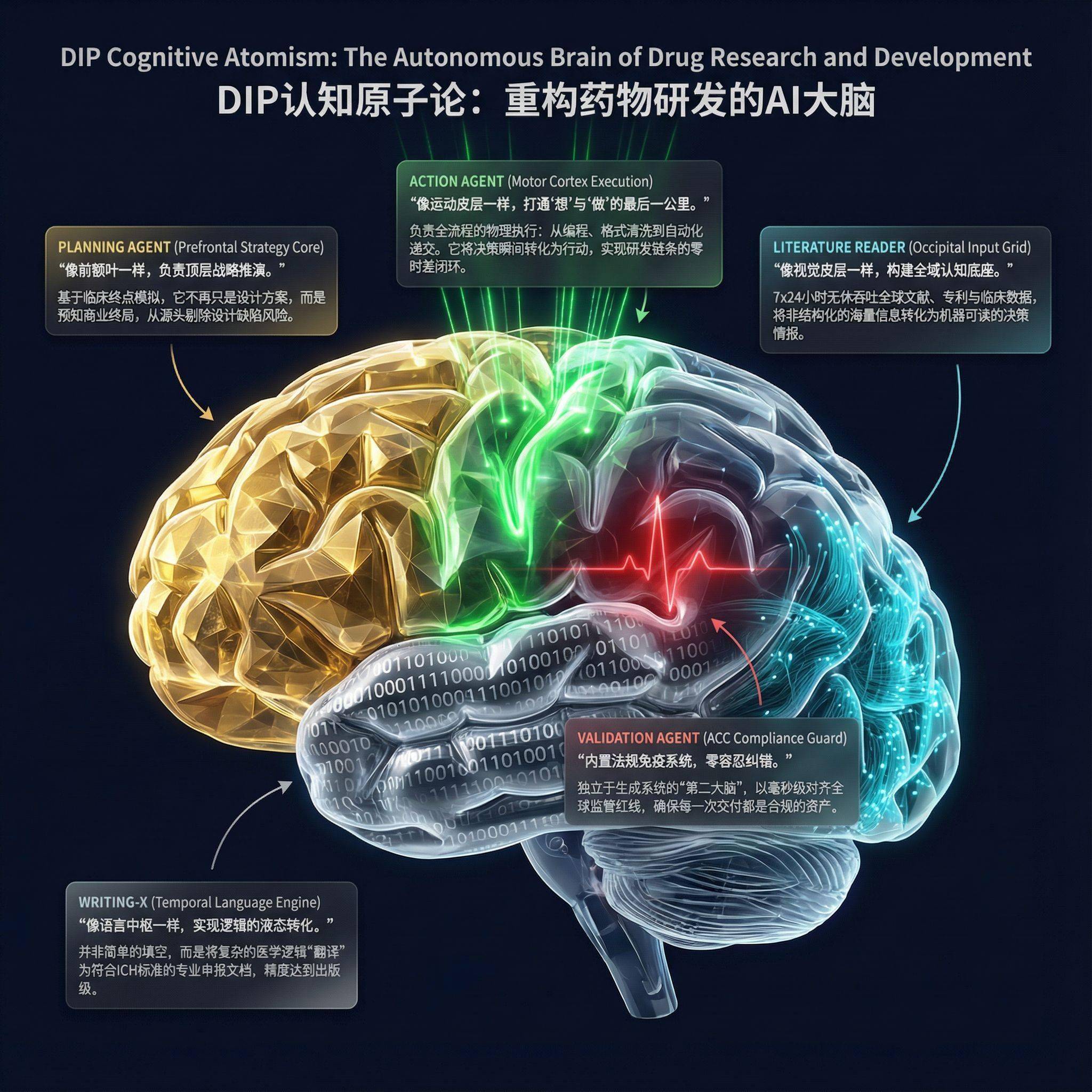
文|胡香赟 编辑|海若镜 36氪获悉,AI制药全球领军企业深度智耀近期获近5000万美元D轮融资。本轮融资由鼎晖百孚领投,老股东新鼎资本、红杉中国持续加注,指数资本担任独 家财务顾问。募集资金将主要用于"多智能体协作网络"的技术研发迭代及全球交付网络的建设。 深度智耀成立于2017年。相较于早期在单一技术点上的探索,过去三年,深度智耀完成了从"单点AI技术验证"向"AI原生临床研究平台(AI-Native Platform)"的代际跨越。这一进化使其脱离了传统软件供应商的范畴,转型为能够交付临床试验全流程结果的核心业务伙伴。 在公司创始人、CEO李星看来,医药研发的未来不在于单一功能的替代,而在于认知的重构。随着生成式AI的爆发,深度智耀率先将底层的NLP能力升级为 拥有上万个垂直领域智能体的"多智能体协作系统"。 "我们不再是交付单一功能的模块,而是交付一个能够协同完成临床试验全流程的'AI智能体集群'。"李星对36氪表示:"我们的核心壁垒在于用'认知原子 论'去重构研发流程,系统将复杂的临床试验拆解为上万个微小的原子化任务,每个任务由专精的Agent负责,它们通过类似脑神经的突触网络连接,实现了 远超通用 ...
用AI做整包临床试验,「深度智耀」获近5000万美元D轮融资|早起看早期
36氪· 2025-12-11 00:01
累计服务超过1000家药企, 并通过40000余个项目的实战交付。 "我们不再是交付单一功能的模块,而是交付一个能够协同完成临床试验全流程的'AI智能体集群'。"李星对36氪表示:"我们的核心壁垒在于用'认知原子 论'去重构研发流程,系统将复杂的临床试验拆解为上万个微小的原子化任务,每个任务由专精的Agent负责,它们通过类似脑神经的突触网络连接,实现了 远超通用大模型的专业度。" 图源:深度智耀 这种技术架构的演进,在一定程度上推动了商业模式的变革。在行业普遍采用"按人头/工时付费"的传统模式下,深度智耀开始探索基于里程碑的价值付费 (Outcome-based Model)。 文 | 胡香赟 编辑 | 海若镜 封面来源 | IC Photo 36氪获悉,AI制药全球领军企业深度智耀近期获近5000万美元D轮融资。本轮融资由鼎晖百孚领投,老股东 新鼎资本、 红杉中国持续加注,指数资本担任 独家财务顾问。募集资金将主要用于"多智能体协作网络"的技术研发迭代及全球交付网络的建设。 深度智耀成立于2017年。相较于早期在单一技术点上的探索,过去三年,深度智耀完成了从"单点AI技术验证"向"AI原生临床研究平台(A ...
英矽智能冲刺港交所背后:高合约价值难掩收入脆弱,现金消耗逼近红线
Xin Lang Zheng Quan· 2025-11-28 07:54
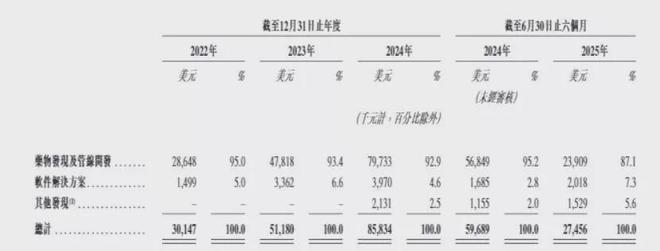
Core Viewpoint - The company, Insilico Medicine, is facing significant challenges as it transitions from an industry leader to a follower in the AI pharmaceutical sector, highlighted by its delayed IPO and financial vulnerabilities [1][4]. Revenue Structure - Insilico Medicine's revenue growth appears impressive, increasing from $30.147 million in 2022 to $85.834 million in 2024, but is heavily reliant on drug discovery and pipeline development, accounting for over 90% of its income [1]. - The company's revenue is concentrated, with 60.6% of 2024's total revenue coming from its largest client, Exelixis, and the top five clients contributing 94.5% of total revenue [1]. - A significant drop in revenue was observed in the first half of 2025, with a 54% year-on-year decline due to the absence of milestone payments from Exelixis, leading to a loss of $19.215 million [1]. Cash Flow and Debt - Despite raising $212 million in Series E funding, Insilico Medicine has a negative operating cash flow, with cumulative cash outflows exceeding $170 million from 2022 to the first half of 2025 [2]. - The company's total debt reached $895 million by the end of September 2025, a 37.24% increase from the end of 2022, with over 99% of this debt classified as financial liabilities at fair value [2]. - The net debt has risen from $450 million to $681 million, indicating increasing financial leverage pressure [2]. Related Party Transactions - Insilico Medicine faces potential conflicts of interest due to overlapping relationships with suppliers, notably WuXi AppTec, which is both a major shareholder and the largest supplier, accounting for up to 24% of procurement from 2022 to the first half of 2025 [3]. - The presence of prominent investors such as Qiming Venture Partners and Hillhouse Capital, along with a post-Series E valuation exceeding $1.3 billion, raises questions about balancing capital patience with long-term R&D investments [3]. Conclusion - The challenges faced by Insilico Medicine reflect broader commercialization and funding issues within the AI pharmaceutical industry, with its single revenue structure, unsustainable cash flow, and concentrated client and supplier relationships posing long-term threats to its viability [4].
英矽智能四次递表:20亿美元合约难解资金困局,大客户、现金、负债的三重博弈
Hua Xia Shi Bao· 2025-11-19 05:19
Core Viewpoint - In November 2025, Insilico Medicine submitted its prospectus to the Hong Kong Stock Exchange for the fourth time, over two years after its initial attempt to go public. The company has transitioned from a leader to a follower in the AI pharmaceutical sector, especially after its competitor, Jingdai Holdings, successfully went public as the "first domestic AI pharmaceutical stock" [2]. Group 1: Company Overview - Insilico Medicine, founded in 2014, is an AI-driven biotechnology company with over 20 clinical or IND application stage assets developed through its proprietary AI platform, Pharma.AI. Three of these assets have been licensed to international pharmaceutical and healthcare companies, with a total contract value exceeding $2 billion [3][10]. - The company has a significant reliance on a few major clients for its revenue, with over 90% of its income coming from drug discovery and pipeline development, primarily through milestone payment models [3][5]. Group 2: Financial Performance - Revenue for Insilico Medicine is projected to grow from $30.15 million in 2022 to $85.83 million in 2024, but over 60% of this revenue is derived from a single client, Exelixis, highlighting a high concentration risk [4][7]. - In the first half of 2025, the company experienced a dramatic revenue decline of 54%, dropping from $5.97 million to $2.75 million year-on-year, primarily due to the loss of milestone payments from Exelixis [5][9]. Group 3: Challenges and Risks - Insilico Medicine faces significant cash flow challenges, with operating cash outflows of approximately $47.52 million in 2022 and $36.84 million in the first half of 2025. Despite a recent funding round increasing cash reserves to $212 million, ongoing high costs for clinical trials pose a risk to financial stability [9]. - The company's debt has increased by 37.24% from the end of 2022 to September 2025, reaching $895 million, with over 99% of this debt classified as financial liabilities at fair value [9]. Group 4: Market Position and Future Outlook - Despite the challenges, Insilico Medicine has a strong shareholder base, including notable investors like Qiming Venture Partners and Hillhouse Capital, and its valuation exceeded $1.3 billion after the E round of financing. The company must balance market patience with the long-term nature of R&D investments [11].
英矽智能更新招股书,但港股AI制药热已“退烧”
Sou Hu Cai Jing· 2025-11-18 10:01
Core Viewpoint - Insilico Medicine is actively pursuing an IPO in Hong Kong, having updated its prospectus after six months without completing the hearing, indicating ongoing efforts to enter the market [1][2]. Company Overview - Insilico Medicine, founded in 2014, is recognized as a leading player in the "AI drug discovery" sector, backed by prominent investors including Warburg Pincus, Qiming Venture Partners, WuXi AppTec, Eli Lilly Asia Ventures, Blue Lake Capital, and Baidu Ventures [2]. - The company gained attention during the COVID-19 pandemic when its AI-discovered drug Baricitinib received emergency use authorization from the FDA [2]. Market Context - The AI drug discovery field has seen a surge in new companies, including Evolutionary Scale, which focuses on protein design and raised $142 million in seed funding before merging with the Chan Zuckerberg Initiative [2]. - In China, Jingtaiketech successfully listed on the Hong Kong Stock Exchange in June 2024, becoming the only AI drug company to do so amid a cooling global capital market [4]. IPO Significance - The success of Insilico Medicine's IPO is crucial for validating the AI drug discovery narrative, especially as it remains the only major player still seeking to go public after multiple attempts [4][5]. - The company is one of the first biotech firms to advance AI-discovered drugs into clinical trials, with its core asset, Rentosertib (ISM001-055), currently in Phase II trials [5]. Financial Health - As of mid-2023, Insilico Medicine's cash and equivalents increased from $126 million to $213 million, primarily due to a $123 million Series E funding round [6]. - The company has no commercialized drugs yet but generates revenue through various licensing agreements, including a total of $32 million in upfront payments from collaborations with Exelixis and Stemline [8]. Competitive Landscape - The AI capabilities of Insilico Medicine are critical for its competitive edge, but the increasing number of companies focusing on AI in drug development poses a challenge [9]. - Research indicates that while AI can accelerate drug discovery and preclinical phases, its impact on clinical trial success rates remains limited [9]. Performance Metrics - Insilico Medicine's revenue is projected to grow significantly, from $30.1 million in 2022 to $85.6 million in 2024, while net losses are expected to decrease from $222 million to $17.1 million over the same period [10]. - The company’s financial performance shows improvement, with a notable reduction in losses and an increase in revenue [10]. Industry Sentiment - The IPO landscape for AI drug companies is challenging, with two competitors opting for NASDAQ listings and one pausing financing, reflecting a cautious approach from long-term investors due to liquidity issues and high failure rates [11].

聚焦AI制药赛道,英矽智能四度递表港交所
Cai Jing Wang· 2025-11-13 07:08
Core Viewpoint - The company Insilico Medicine has submitted its fourth listing application to the Hong Kong Stock Exchange since June 2023, focusing on AI-driven drug discovery and development. Group 1: Company Overview - Insilico Medicine, established in 2014, specializes in AI-driven drug development, featuring a generative AI platform with four modules: Biology42, Chemistry42, Medicine42, and Science42, providing end-to-end services from target identification to clinical outcome prediction [1] - The company's business model consists of three main segments: drug discovery and pipeline development, software solutions, and other discoveries related to non-pharmaceutical fields, with approximately 90% of revenue derived from drug discovery and pipeline development [1] Group 2: Financial Performance - Revenue figures for Insilico Medicine from 2022 to 2025 show a growth trajectory: $30.15 million in 2022, $51.18 million in 2023, $85.83 million in 2024, and $27.46 million in the first half of 2025, while net losses were $222.0 million, $212.0 million, $17.1 million, and $19.2 million respectively [3][4] - The company has faced significant cash outflows, primarily due to R&D activities, with operating cash outflows of approximately $47.52 million, $29.58 million, $57.40 million, and $36.84 million across the reporting periods [4] Group 3: R&D and Drug Pipeline - Insilico Medicine's most advanced candidate, Rentosertib (ISM001-055), has completed Phase IIa clinical trials in China and is expected to submit an IND application for kidney fibrosis treatment in the first half of 2026 [3] - The company has generated over 20 clinical or IND-stage assets through its Pharma.AI platform, with three assets licensed to international pharmaceutical and healthcare companies, totaling over $2 billion in contract value [3] Group 4: Challenges and Market Position - Insilico Medicine faces ongoing financial challenges, including high R&D expenditures and significant net losses, alongside a substantial debt burden with net liabilities reaching $681 million and current liabilities at $692 million as of mid-2025 [4] - The company has experienced a decline in cash reserves, with cash and cash equivalents decreasing from $208 million in 2022 to $126 million by the end of 2024, although a recent E-round financing increased cash reserves to approximately $212 million by mid-2025 [4][5]
融资11轮!英矽智能,四度冲刺港股IPO!
Zheng Quan Shi Bao Wang· 2025-11-12 11:35
Core Viewpoint - AI pharmaceutical leader Insilico Medicine has submitted its fourth application for a Hong Kong IPO after three previous attempts failed due to expiration [1] Company Overview - Insilico Medicine is a global AI-driven biotechnology company with clinical-stage assets, including one in Phase II clinical trials, indicating a relatively advanced stage in the industry [2] - The company has generated over 20 clinical or IND-stage assets through its proprietary generative AI platform, Pharma.AI, with three assets licensed to international pharmaceutical and healthcare companies, totaling over $2 billion in contract value [2] Financial Performance - Revenue for the years 2022, 2023, 2024, and the first half of 2025 was approximately $30.15 million, $51.18 million, $85.83 million, and $27.46 million, respectively, while net losses were $222 million, $212 million, $17.1 million, and $19.2 million [2][3] - Operating cash outflows for the same periods were approximately $47.52 million, $29.58 million, $57.40 million, and $36.84 million [3] Cash Position - As of the end of 2024, Insilico Medicine had cash and cash equivalents of approximately $126 million, down from $208 million at the end of 2022 and $177 million at the end of 2023 [4] Business Model and R&D - The core advantage of Insilico's AI pharmaceutical platform is its ability to shorten R&D timelines, with candidate drugs taking 12 to 18 months from target discovery to clinical candidate confirmation, significantly faster than the traditional average of 4.5 years [5] - The company operates a project-based business model, with primary revenue sources from licensing and collaboration agreements [5] - Insilico has established multiple proprietary R&D pipelines across various therapeutic areas, including oncology, immunology, and fibrosis, leveraging AI and automation technologies [6] R&D Expenditure - R&D expenditures from 2022 to 2024 were approximately $78.18 million, $97.34 million, and $91.89 million, with over 60% of these costs attributed to third-party contracting [7] Financing and Investment - Insilico has completed 11 rounds of financing, attracting various institutional investors, including Temasek, Qiming Venture Partners, and Sequoia Capital China [8] - The latest funding round raised $123 million, which will be used to enhance the AI platform and drug development pipelines [9] IPO Use of Proceeds - Proceeds from the IPO will be allocated to further clinical development of key pipeline candidates, development of new generative AI models, expansion of automated laboratories, and general corporate purposes [10]