资产管理

Search documents
国信证券资产管理有限公司 关于国信现金增利货币型集合资产管理计划份额持有人大会 表决结果暨决议生效的公告
Zhong Guo Zheng Quan Bao - Zhong Zheng Wang· 2025-12-04 08:40
Group 1 - The core point of the news is the decision made during the meeting of the holders of the GuoXin Cash Increase Money Market Fund, which approved the change of the fund manager and the registration change to Penghua Cash Increase Money Market Fund [1][3] - The meeting was conducted via communication, with voting taking place from September 27, 2025, to November 28, 2025, and the results were announced on December 2, 2025 [2][3] - A total of 14,925,949,887.91 shares participated in the voting, representing 58.15% of the total shares, meeting the legal requirements for the meeting [2] Group 2 - The voting results showed that 13,346,825,786.49 shares were in favor, 495,630,351.95 shares were against, and 1,083,493,749.47 shares abstained, with the approval rate reaching 89.42% [3] - The decision from the meeting will take effect immediately after the vote is passed, and the management will report the decision to the China Securities Regulatory Commission within five days [3][4] - A redemption period will be set from December 5, 2025, to December 12, 2025, during which holders can opt to redeem their shares without any fees [4][5] Group 3 - After the redemption period, the management will execute the formal transition of the fund and initiate the necessary procedures for changing the fund manager [5] - The effective date of the Penghua Cash Increase Money Market Fund contract will be announced separately by Penghua Fund Management Company [5] - Investors will be able to check detailed information regarding the new fund operations on the Penghua Fund website [5]

当好“实体经济助推器”和“资源配置优化器”——专访津融资产管理公司总经理张大全
Xin Hua Cai Jing· 2025-12-04 07:53
Core Viewpoint - Tianjin Jinrong Asset Management Company is maintaining steady growth amidst tightening regulations for local AMCs and industry differentiation, with expectations to exceed 8 billion yuan in total assets by the end of 2025, achieving a profit of 533 million yuan and a return on equity of 7.75% [1][6]. Group 1: Business Strategy and Operations - The company is transitioning from a traditional "acquisition-disposal" model to a full value chain service approach, focusing on revitalizing "sleeping assets" through investment banking methods [2][4]. - A notable case involved the revitalization of a real estate project that had been stalled due to mortgage issues, where the company facilitated debt restructuring and project sales [2][3]. - The company has established a strategic cooperation alliance with asset management firms in Beijing and Hebei to enhance cross-regional collaboration [3]. Group 2: Financial Performance - The company has seen its total assets grow from 6.731 billion yuan at the end of 2020 to an expected 8 billion yuan by the end of 2025, with projected revenues of 689 million yuan and a profit of 533 million yuan for that year [6][7]. - The company has maintained a reasonable asset-liability ratio, projected to be 33.89% by the end of 2025, allowing for strategic flexibility in facing future risks [6]. Group 3: Professional Capability and Risk Management - The company emphasizes the importance of professional services in managing complex debt relationships to effectively revitalize non-performing assets [4][5]. - Since its establishment, the company has not experienced any internal non-performing assets, focusing on risk control and effective management across different economic cycles [5]. Group 4: Regulatory Environment and Industry Outlook - The introduction of new regulatory measures has prompted local AMCs to focus on their core responsibilities, which is expected to lead to a more stable industry environment [6]. - The company aims to enhance its role as a "booster for the real economy" and "optimizer of resource allocation" while fulfilling its responsibilities as a state-owned enterprise [7].
瑞银资产管理:国际投资者正在回流中国市场
Zheng Quan Shi Bao Wang· 2025-12-04 07:27
"中国股票的估值还远没有到'过热'的程度,下一阶段的市场走向将由基本面驱动。"他指出,"十五 五"规划释放出从"数量扩张"到"可持续与创新驱动增长"的转型信号。高质量增长的主线有望成为未来 十二个月行业板块轮动和估值切换的关键力量。在基本面持续改善的背景下,创新板块将依旧保持稳健 增长。同时,高股息价值将与创新增长双线并行,高股息股票在中国低利率环境下仍具吸引力,部分龙 头股息率超过5%。 人民财讯12月4日电,近日,瑞银资产管理发布2026年投资展望。瑞银资产管理中国股票主管施斌提 到,中国股票估值仍具吸引力,包括长线基金和对冲基金在内的全球投资者正在积极参与中国股票的基 石投资与二级市场交易。当前外资大多选择通过ETF的方式进入中国市场,这意味着目前市场仍处"技 术性修复"阶段,要实现持续资金回流,投资者仍需看见结构性改革的持续推进与可持续性增长的迹 象。 ...
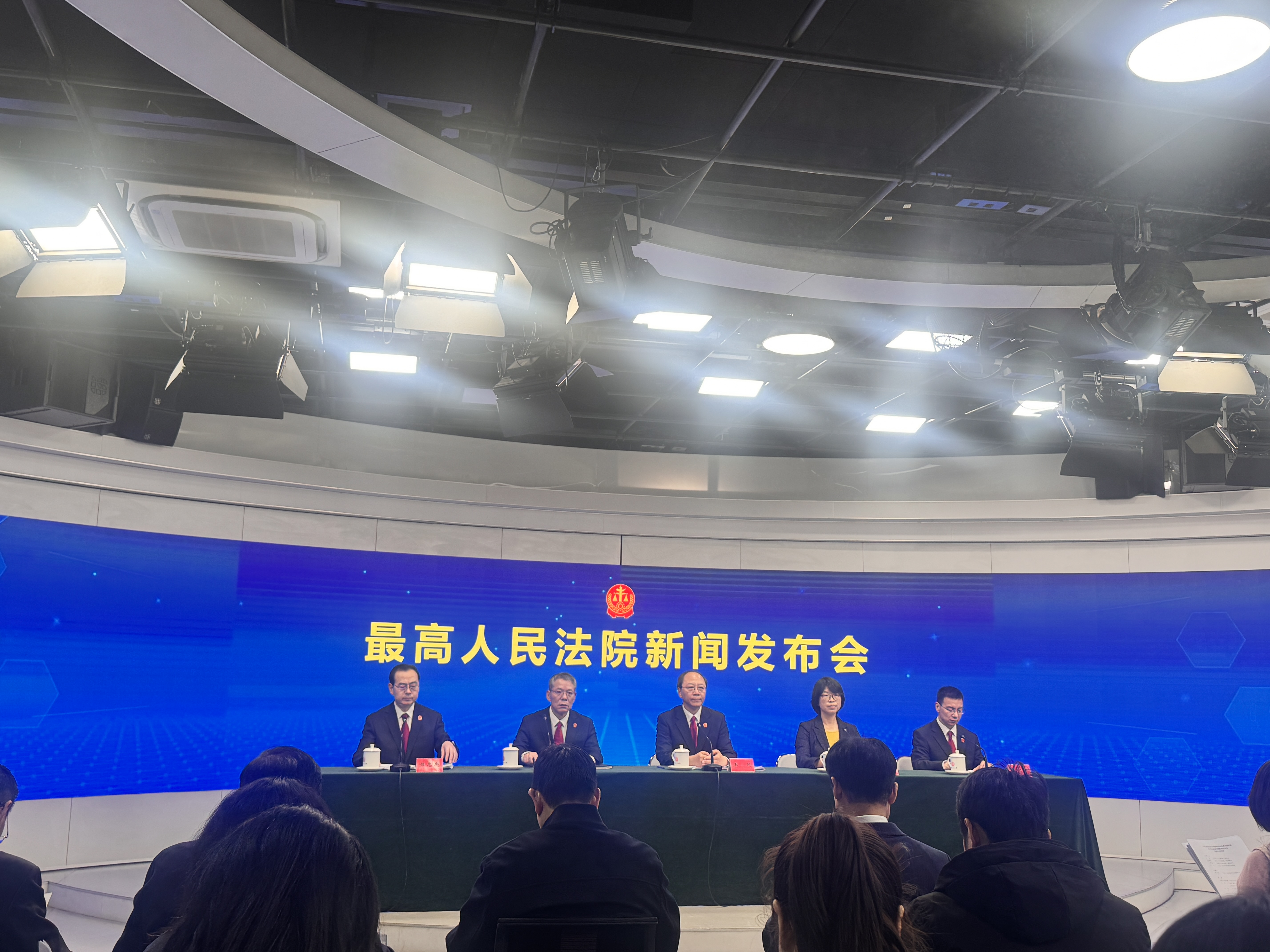
最高法发布7大典型案例 银行违规收取“融资承诺费”位列第一
Zheng Quan Ri Bao Wang· 2025-12-04 03:56
Core Viewpoint - The private economy is a driving force for China's modernization and a crucial foundation for high-quality development. The Supreme People's Court has released seven typical civil and commercial cases that demonstrate the equal legal protection of private enterprises' legitimate rights and interests [1]. Group 1: Legal Protection of Private Enterprises - The seven typical cases cover various aspects, including optimizing the financing environment, activating limited liability for shareholders, addressing historical issues, and protecting the reputation and credit of enterprises [4]. - The cases reflect the latest progress made by the courts in legally protecting the legitimate rights and interests of private enterprises [4]. Group 2: Financing Challenges - The courts aim to address the financing difficulties faced by private enterprises by regulating financial institutions' behaviors, which is essential for ensuring the survival and development of these enterprises [5]. - Through the adjudication of financial loan disputes, the courts enforce national financial regulatory policies and promote the optimization of inclusive financial services [5]. Group 3: Equal Protection of Rights - The principle of non-retroactivity is upheld to ensure equal protection of the legitimate rights of both state-owned and private enterprises [9]. - The courts consider the complexities of enterprise restructuring while balancing the interests of all parties involved, ensuring that enterprises do not evade debts through restructuring [10]. Group 4: Shareholder Limited Liability - The courts maintain the independence of corporate assets and the separation of responsibilities between shareholders and companies, which is vital for enhancing the confidence of private enterprises and entrepreneurs [11]. - Legal responsibilities are enforced against controlling shareholders and actual controllers who misuse their positions, ensuring the protection of honest shareholders' rights [11]. Group 5: Maintaining Enterprise Credit - The courts innovate execution measures to protect the credit of private enterprises, ensuring that enforcement actions do not disrupt their operational management or financial flows [12]. - In a specific case, the courts implemented measures that allowed for the efficient resolution of disputes while safeguarding the financial stability and reputation of the involved enterprises [12].

贝莱德集团CEO称美国在数字化经济方面落后于印度和巴西
Sou Hu Cai Jing· 2025-12-04 03:55
Core Insights - BlackRock CEO Larry Fink highlighted that the U.S. is lagging behind countries like India and Brazil in the development of the digital economy [1] - Fink emphasized the need for enhanced collaboration between the public sector and private enterprises, along with increased technology investments to address global competition [1] - The lack of digital identity verification and real-time payment systems is identified as a major shortcoming for the U.S. [1] Group 1 - India and Brazil have made rapid advancements in payment systems and digital infrastructure, surpassing the current levels in the U.S. [1] - The U.S. economy is experiencing a sustained slowdown due to reliance on traditional industries and a lagging response to the digital revolution [1] - The shift in global economic structure has left certain regions and industries unable to adapt to new technological environments, resulting in insufficient growth momentum [1] Group 2 - The transition in the digital economy has led to significant job disruptions and increased income inequality in the U.S., putting economic pressure on many communities [1] - Experts are urging policymakers to prioritize digital transformation to effectively reverse the current economic trends [1]


美国基金业巨头Capital Group推行战略大转型 携KKR高调进军私募市场
Xin Lang Cai Jing· 2025-12-03 18:07
Core Insights - Capital Group, a historically low-profile asset management firm, is undergoing a significant strategic transformation to adapt to the competitive landscape dominated by passive index investing and ETFs [1][11][12] - The company is expanding its ETF offerings and strengthening its partnership with KKR to attract more retail investor funds, marking the most fundamental shift since its founding in 1931 [1][11][12] Company Strategy - Under CEO Mike Gitlin's leadership, Capital Group aims to enhance its visibility and solidify its position among clients while attracting new ones [3][14] - The firm is collaborating with KKR to launch new fund products targeting retail investors, including a target-date retirement fund that combines public and private assets [3][14] - The partnership with KKR is designed to bridge the gap between institutional investors and retail investors, providing diversified investment opportunities [3][14] Market Context - Capital Group has faced net outflows from its stock mutual funds and related products for the past decade, prompting the need for transformation [4][15] - The firm is particularly focused on the private market as a new frontier, recognizing the increasing competition from firms like Apollo and Blackstone [6][17] Cultural Shift - Capital Group is moving away from its historically secretive and unique corporate culture to appeal to retail investors, including promotional activities like a hot air balloon campaign [7][18] - The company has a strong distribution network, serving over 20 million households and approximately 75% of financial advisors in the U.S., which is a significant asset in its new strategy [9][20] Fund Development - The new funds developed in partnership with KKR, including Capital Group KKR Core Plus+ and Capital Group KKR Multi-Sector+, will allocate 60% to public market debt and 40% to private credit [10][21] - The assets under management for the two new funds have already exceeded $500 million [6][17]


购房梦碎:美国年轻一代深陷财富困局
财富FORTUNE· 2025-12-03 13:08
Core Insights - The American dream of homeownership is increasingly becoming unattainable for many, particularly among the younger generations, leading to a significant shift in behavior and financial planning [1][3][4]. Group 1: Homeownership Crisis - In 2022, the median home price in the U.S. was 5.81 times the median household income, a significant increase from 4.52 times in 2010 and 3.57 times in 1984, indicating a growing affordability crisis [1]. - Many young Americans are postponing or abandoning their home-buying plans, with 67% of millennial renters in 2023 having no savings for a down payment, up from 48% in 2018 [3]. Group 2: Behavioral Changes - The belief that homeownership is unattainable leads to a change in behavior, where individuals may stop saving for a down payment and adopt a more frugal lifestyle [1][4]. - Those who abandon the dream of homeownership tend to have lower net worth and are more likely to live paycheck to paycheck, with their net assets often remaining close to zero [4]. Group 3: Intergenerational Impact - The research suggests that the loss of hope in homeownership can be hereditary, where children of parents who have given up on buying a home are less likely to pursue it themselves, exacerbating wealth inequality [4]. - By age 40, many renters have made definitive decisions about homeownership, with some still holding hope if they can gather enough funds [4]. Group 4: Economic Anxiety - Even high-income earners are experiencing economic anxiety, with 64% of those earning six figures feeling that their income is insufficient for a successful life, highlighting a broader economic struggle [5]. - The concept of a "poverty line" has been redefined, suggesting that a household income of $140,000 is necessary to avoid being left behind in society, indicating systemic issues in the economic structure [6].

摩根资产管理:以全球视野构建均衡投资组合 在不确定性中把握确定性
Sou Hu Cai Jing· 2025-12-03 12:02
中证报中证网讯(记者 王鹤静)近日,摩根资产管理发布《2026年全球市场展望》,探讨了中国及全 球经济的前景,以及投资者普遍关注的热点话题。报告表示,在步入2026年之际,投资者正站在一个充 满复杂性却又蕴含机遇的十字路口。一方面,人工智能驱动的科技浪潮持续为增长注入活力;另一方 面,全球贸易与地缘政治波动也预示着前路并非坦途。在这种背景下,单纯追逐单一市场或资产的机会 已不足够,以全球视野构建均衡的投资组合,并贯穿严谨的投资纪律,正成为在不确定性中把握确定性 的关键。 在全球经济格局深刻变革的当下,摩根资产管理凭借其全球市场洞察力和卓越的资产配置能力,为投资 者提供专业、前瞻的投资解决方案,助力客户在复杂多变的市场环境中把握先机,实现长期财富增长。 展望2026年全球经济,摩根资产管理认为,可能呈现"先强后弱"的增长态势,不同经济体将演绎各自的 故事线。中国迈入"十五五"规划开局之年,在"反内卷"与产业升级中,新的增长动能正在孕育;美国在 财政刺激效应减退后,增长或趋于温和放缓,其货币政策转向的节奏成为关键变量;欧洲需要在财政扩 张与债务纪律之间谨慎权衡;亚洲新兴市场凭借深度嵌入全球人工智能供应链,或将迎来 ...
贝莱德智库:不会出现AI泡沫
Jin Rong Jie· 2025-12-03 09:24
智通财经获悉,贝莱德智库中东及亚太区首席投资策略师庞文博(Ben Powell)表示,不认为会出现AI泡 沫,泡沫意味着供应太多,价格下调,就像上世纪90年代情况那样。而现在对于硬件及AI的需求,问 题是供应不足,因此并不算是泡沫。 贝莱德固定收益投资亚太区主管Navin Saigal表示,目前美元比以往而言更是一项风险资产,因此会减 少持有。 本文源自:智通财经网 他还表示,大家都增持(overweight)美国股票,认为AI公司股票便宜,因此他不认为这是泡沫,而是便 宜的股票,这主要因为收入、现金流等。 贝莱德智库发表的2026年全球展望报告表示,仍然对美国在AI方面的股票维持增持,风险偏好受惠于 美联储减息。 如果将美国GDP细分一下,就可以发现科技的投资超过消费,而消费传统上来说驱动美国经济。这一点 非常重要,说明投资可以继续驱动整体(aggregate) GDP增长,驱动整体收入(headline)水平增长。 ...
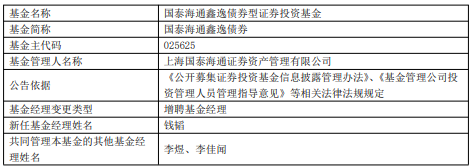
国泰海通资管旗下3只基金增聘钱韬
Zhong Guo Jing Ji Wang· 2025-12-03 08:21
| 基金名称 | 国泰海通鑫逸债券型证券投资基金 | | --- | --- | | 基金简称 | 国泰海通鑫逸债券 | | 基金主代码 | 025625 | | 基金管理人名称 | 上海国泰海通证券资产管理有限公司 | | 公告依据 | 《公开募集证券投资基金信息披露管理办法》、《基金管理公司投 资管理人员管理指导意见》等相关法律法规规定 | | 基金经理变更类型 | 增聘基金经理 | | 新任基金经理姓名 | 钱韬 | | 共同管理本基金的其他基金经 | 李煜、李佳闻 | | 理姓名 | | | 基金名称 | 因泰海通鑫悦债券型证券投资基金 | | --- | --- | | 基金间标 | 国泰海通露悦债券 | | 基金主代码 | 025627 | | 基金管理人名称 | 上海国泰海通证券资产管理有限公司 | | 公告依据 | 《公开募集证券投资基金信息披露管理办法》、《基金管理公司投 | | | 资管理人员管理指导意见》等相关法律法规规定 | | 基金经理变更类型 | 增聘基金经理 | | 新任基金经理姓名 | 钱韬 | | 共同管理本基金的其他基金经 | 李煜、李佳闻 | | 理姓名 | | | 基金 ...