
家具

Search documents
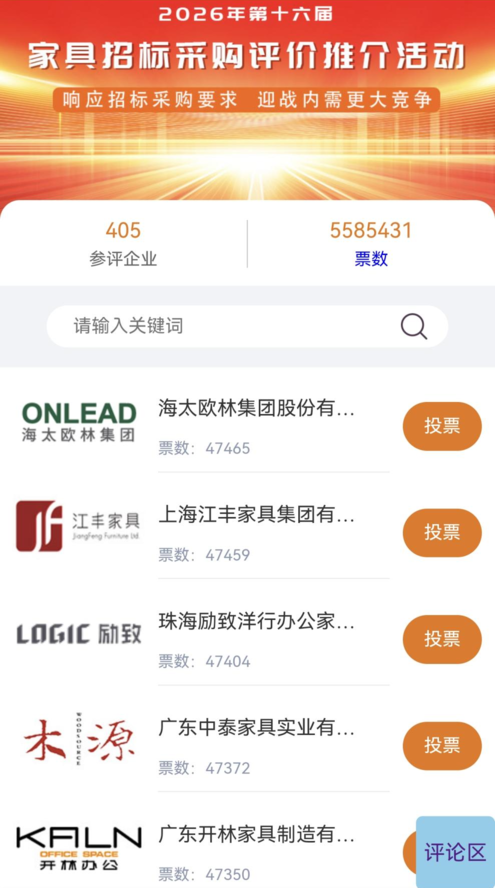
2026(第16届)家具招标采购评价推介活动第二期情况通报
Cai Fu Zai Xian· 2026-01-16 11:08
Industry Overview - The Chinese furniture industry exhibits a "multi-level, segmented" competitive landscape, characterized by a highly fragmented market and distinct consumer demand tiers [1] - The competitive structure is clearly layered, with national leading brands like Oppein and Sophia dominating the whole-house customization sector, while brands like Kuka and Man Wah excel in the soft furniture segment [1] - Competition has evolved beyond products to encompass "brand positioning + channel efficiency + supply chain integration + user experience," with design capabilities, flexible customization through smart manufacturing, and efficient logistics becoming key differentiators for leading brands [1] Brand Competition - The industry concentration is slowly increasing under the trends of whole-house customization and home integration, with leading companies expanding categories to squeeze the space for single-category brands [1] - All brands face challenges from real estate downturns, consumer segmentation, and fragmented traffic [1] - Future brand competition will increasingly rely on precise consumer insights, strong supply chain collaboration efficiency, and the ability to build unique lifestyle brands [1] Notable Companies - **Haitai Oulin Group Co., Ltd.**: A well-known enterprise in the office furniture industry, focusing on smart office solutions and ergonomic design, with a modern production base and a nationwide marketing network [6] - **Shanghai Jiangfeng Furniture Group Co., Ltd.**: A large modern furniture enterprise specializing in mid-to-high-end solid wood furniture, emphasizing quality materials and sustainable practices [7] - **Zhuhai Lizhi Yanghang Office Furniture Co., Ltd.**: A leading brand in the office furniture sector, offering a wide range of products and emphasizing ergonomic design and modern aesthetics [8] - **Guangdong Zhongtai Furniture Industry Co., Ltd.**: A major player in the office furniture market, known for its advanced production techniques and strict quality management [9] - **Guangdong Kailin Furniture Manufacturing Co., Ltd.**: A comprehensive modern furniture enterprise focusing on various commercial and public space furniture solutions, with a commitment to innovation and quality [10] - **Chongqing Zhancheng Furniture Manufacturing Co., Ltd.**: Recognized for its high-end hotel furniture solutions, providing a full range of services from design to installation [11] - **Dongguan Weige Steel Supreme Office Equipment Co., Ltd.**: A modern metal office furniture manufacturer, known for its strict quality control and comprehensive service offerings [13] - **Beijing Weisen Shengye Furniture Co., Ltd.**: Specializes in high-end office and hotel furniture, focusing on innovative design and quality control [14] - **Jingtai Holding Group Co., Ltd.**: A comprehensive commercial furniture enterprise with a focus on environmental sustainability and innovation in product development [15] - **Guangzhou Liwei Office Furniture Co., Ltd.**: A modern office furniture enterprise dedicated to ergonomic and environmentally friendly products, with a strong market presence [16]

爱逛不爱买,宜家该怪谁?
远川研究所· 2026-01-15 13:04
Core Viewpoint - IKEA is undergoing significant changes in the Chinese market, including the closure of several large stores and a shift towards smaller, more efficient store formats while also adjusting pricing strategies to remain competitive in a rapidly evolving retail landscape [3][4][26]. Group 1: Store Closures and Transformations - In early 2026, IKEA announced its largest contraction in China in 28 years, closing seven large stores in cities like Shanghai and Guangzhou [3]. - The company plans to focus on smaller store formats in key markets like Beijing and Shenzhen, with over ten new stores that are one-third the size of traditional locations [4]. - IKEA is investing 160 million RMB to reduce prices on over 150 core products, indicating a strategic shift to attract more customers [4][26]. Group 2: E-commerce Challenges - IKEA's late entry into the e-commerce space has been a significant challenge, with the company only launching its flagship store on Taobao in 2020, despite earlier suggestions to develop an online presence [5][6]. - By 2024, IKEA's sales contribution from China dropped to 3.5%, down from 6% in previous years, highlighting the impact of its delayed digital transformation [7]. - The furniture market has shifted towards online platforms, with competitors leveraging logistics and e-commerce to capture market share, leaving IKEA at a disadvantage [13][15]. Group 3: Standardization and Market Dynamics - IKEA's business model is built on standardization, allowing for efficient production and lower costs, but this has also made it vulnerable to competition from local brands that can replicate its designs at lower prices [17][21]. - The concept of "democratic design" has been challenged by the rise of local manufacturers who can produce similar products at significantly reduced prices, undermining IKEA's market position [21][23]. - The changing dynamics of consumer preferences and the oversupply of standardized products have eroded IKEA's competitive edge, leading to a decline in brand loyalty [23][24]. Group 4: Future Outlook - Despite the challenges, IKEA views the Chinese market as a critical testing ground for its transformation strategies, including the introduction of smaller stores and enhanced online fulfillment [26]. - Local brands are rapidly expanding their presence, with companies like Genji Mu Yu increasing their store count from under 100 to 1,300, indicating a shift in consumer behavior towards more accessible retail experiences [26].

罗莱生活(002293):睡眠经济方兴未艾,大单品驱动成长新篇
Xinda Securities· 2026-01-15 09:20
Group 1 - Investment Rating: Buy [6] - Core View: The company is a leading player in the home textile industry, focusing on "super-soft bedding" and implementing a multi-brand, omnichannel development strategy. The company has maintained a high dividend payout ratio, providing substantial returns to shareholders. It has launched a "big product" strategy since 2024, introducing star products like "Zero Pressure Deep Sleep Pillow" and "Seamless Sleep Bed Cover," successfully transitioning from channel-driven to product-driven strategies [6][9]. Group 2 - Industry Insight: The home textile industry is steadily growing, driven by the awakening demand for sleep health and the deepening penetration of online channels. The emergence of "big products" with technological barriers and exceptional experiences is key for brands to stand out. Leading brands are adjusting their strategies to focus on big product development and comprehensive marketing, which is expected to enhance industry concentration [6][40][42]. - Market Overview: The home textile industry is expected to reach a scale of 336 billion yuan by 2025, with a stable growth outlook. The market remains fragmented, providing opportunities for leading companies to increase their market share [42][43]. Group 3 - Company Highlights: The company has made significant progress with its big product strategy, leading to noticeable revenue growth. The core star products have driven rapid growth in related categories, and online channels have become a major revenue contributor. The company is also seeing a recovery in its offline channels, with improved confidence among franchisees [7][9][15]. - Financial Analysis: The company has shown stable profitability, with a net profit margin maintained above 10%. Despite challenges in the furniture business, the overall financial health remains strong, supported by a solid cash flow and a high dividend payout ratio [27][29][34]. - Governance: The company has a concentrated ownership structure, with experienced management. The core team has extensive industry experience, contributing to the company's strategic direction and operational efficiency [38].

皮阿诺:2026年第一次临时股东会决议公告
Zheng Quan Ri Bao· 2026-01-14 13:43
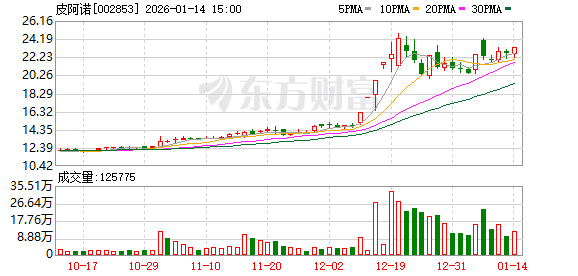
证券日报网讯 1月14日,皮阿诺发布公告称,公司2026年第一次临时股东会审议通过《关于变更公司住 所并修订的议案》。 (文章来源:证券日报) ...
曲美家居(603818.SH)发预亏,预计2025年归母净亏损1.1亿元至7500万元
智通财经网· 2026-01-14 08:35
业绩预亏的主要原因:1、报告期内,受房地产行业和家具消费低迷的影响,国内家具业务收入持续下 滑,对公司利润产生负面影响;2、报告期内,海外市场浮动利率逐步下行,但全年来看,公司境外有息 负债利率水平仍然较高,产生了较多的财务费用,对公司净利润产生了负面影响;3、公司2018年并购 Ekornes子公司所产生的资产增值摊销对公司净利润产生负面影响。 智通财经APP讯,曲美家居(603818.SH)发布公告,公司预计2025年度实现归属于上市公司股东的净利 润为亏损1.1亿元至7500万元,与上年同期相比亏损减少5,277.50万元至8,777.50万元,亏损幅度同比收 窄32.42%至53.92%。 ...

曲美家居:预计2025年年度净利润为-1.1亿元至-7500万元
Sou Hu Cai Jing· 2026-01-14 08:22
每日经济新闻 (记者 曾健辉) 免责声明:本文内容与数据仅供参考,不构成投资建议,使用前请核实。据此操作,风险自担。 每经AI快讯,曲美家居1月14日晚间发布业绩预告,预计2025年度实现归属于上市公司股东的净利润为 人民币-1.1亿元至-7500万元,与上年同期相比亏损减少人民币5277.5万元~8777.5万元,亏损幅度同比收 窄32.42%~53.92%。上年同期归属于上市公司股东的净利润为亏损约1.63亿元;归属于上市公司股东的 扣除非经常性损益的净利润为亏损约1.62亿元;每股收益为亏损0.24元。业绩变动主要原因是,报告期 内,受房地产行业和家具消费低迷的影响,国内家具业务收入持续下滑,对公司利润产生负面影响;报 告期内,海外市场浮动利率逐步下行,但全年来看,公司境外有息负债利率水平仍然较高,产生了较多 的财务费用,对公司净利润产生了负面影响;公司2018年并购Ekornes子公司所产生的资产增值摊销对 公司净利润产生负面影响。 每经头条(nbdtoutiao)——海利生物增值9倍并购的企业,估值8个月"腰斩",其第一大客户竟是尚未 成立的公司,离奇的事还不少…… ...
曲美家居预计2025年全年净亏损7500.00万元—11000.00万元
2 1 Shi Ji Jing Ji Bao Dao· 2026-01-14 07:49
21智讯1月14日电,"曲美家居"发布年度业绩预告,预计2025年全年归属于上市公司股东的净利润 为-11,000.00万元至-7,500.00万元,同比预减;预计2025年全年归属于上市公司股东的扣除非经常性损 益的净利润为-14,500.00万元至-10,500.00万元,同比预减,归属于上市公司股东的净利润:预计2025年 度实现归属于上市公司股东的净利润为人民币-11,000.00万元至-7,500.00万元,与上年同期相比亏损减 少人民币5,277.50万元至8,777.50万元,亏损幅度同比收窄32.42%至53.92%。归属于上市公司股东的净 利润同比:亏损幅度同比收窄32.42%至53.92%。原因:1、报告期内,受房地产行业和家具消费低迷的 影响,国内家具业务收入持续下滑,对公司利润产生负面影响;2、报告期内,海外市场浮动利率逐步 下行,但全年来看,公司境外有息负债利率水平仍然较高,产生了较多的财务费用,对公司净利润产生 了负面影响;3、公司2018年并购Ekornes子公司所产生的资产增值摊销对公司净利润产生负面影响。 ...
美克家居:股票连续三日收盘跌幅偏离值累计超20%
Xin Lang Cai Jing· 2026-01-13 11:14
美克家居公告称,公司股票于2026年1月9日、1月12日、1月13日连续三个交易日内收盘价格跌幅偏离值 累计超20%,属异常波动。经自查,公司经营情况、内外部环境未变,无应披露未披露重大信息,未发 现影响股价的媒体报道、市场传闻及热点概念事项,董高控在此期间无买卖公司股票情况。公司提示投 资者注意交易风险。 ...

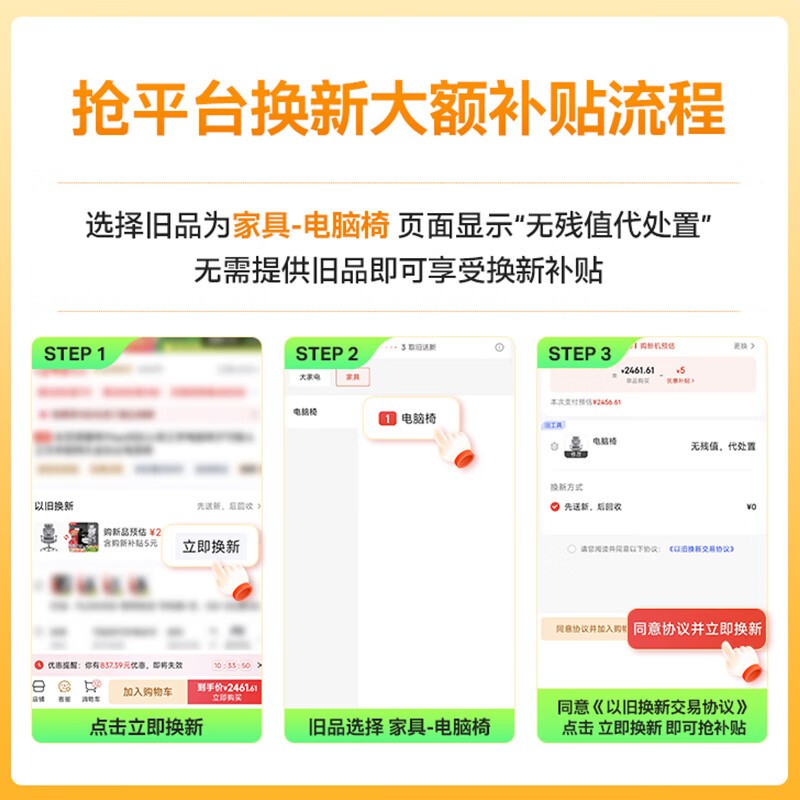
永艺Flow550i人体工学椅热卖
Xin Lang Cai Jing· 2026-01-13 06:40
ZANHEE X 電筒H 抢平台换新大额补贴流程 选择旧品为家具-电脑椅 页面显示"无残值代处置" 无需提供旧品即可享受换新补贴 0 STEP 1 同意协议并立即换新 同意《以旧换新交易协议》 旧品选择 家具-电脑椅 点击 立即换新 即可抢补贴 点击: 7 利润新 (0) STEP 1 7 即 渔 安 同意协议并立即换新 同意《以旧换新交易协议》 旧品选择 家具-电脑椅 点高v 即换新 点击 立即换新 即可抢补贴 抢平台换新大额补贴流程 选择旧品为家具-电脑椅 页面显示"无残值代处置" 无需提供旧品即可享受换新补贴 ...
渤海证券研究所晨会纪要(2026.01.13)-20260113
BOHAI SECURITIES· 2026-01-13 04:05
Group 1: Fund Research - The equity market saw all major indices rise, with the highest increase being 9.80% for the Sci-Tech 50 index during the week of January 5 to January 9, 2026 [2] - The average return for equity funds was 4.66%, with a positive return ratio of 98.63%, while fixed income plus funds averaged a 0.90% increase with a positive return ratio of 93.57% [3] - The ETF market experienced a net outflow of 57.215 billion yuan, with bond ETFs seeing the largest outflow of 66.431 billion yuan [3] Group 2: Industry Research - The U.S. Supreme Court has not yet announced a ruling on the Trump tariff case, which is being closely monitored, while the U.S. has postponed the tariff increase on certain imported furniture products [5] - The light industry manufacturing sector outperformed the CSI 300 index by 0.19 percentage points, while the textile and apparel sector underperformed by 0.13 percentage points during the same period [6] - China's emotional consumption market is projected to grow from 1.63 trillion yuan in 2022 to over 4.5 trillion yuan by 2029, indicating strong growth potential in sectors like trendy toys, pet consumption, and domestic fashion [7]