瑞典肉丸

Search documents
人们还需要宜家,只是不需要宜家门店了
36氪· 2026-02-05 09:41
Core Viewpoint - The closure of IKEA's stores in China marks a significant shift in consumer behavior and the company's market position, reflecting changing lifestyles and preferences among consumers [6][7][10]. Group 1: Store Closures and Consumer Behavior - IKEA China announced the closure of seven stores, the largest closure in its 30-year history in China, reducing its total number of stores to 41 [7][8]. - Despite a continuous increase in foot traffic, sales figures have declined for two consecutive years, indicating a disconnect between customer visits and actual purchases [8]. - The shopping experience at IKEA has evolved, with many consumers now visiting for leisure rather than shopping, leading to a decrease in actual purchases [22][23]. Group 2: Changing Consumer Preferences - Consumers' needs have shifted from frequent home purchases to a more cautious approach, often opting to keep existing furniture rather than replace it [23][24]. - The rise of alternative styles and platforms, such as second-hand markets, has made IKEA's once-dominant position less relevant [23][31]. - Younger consumers perceive IKEA's products as expensive compared to alternatives available online, leading to a preference for lower-cost options [31][33]. Group 3: IKEA's Response and Future Strategy - In response to market changes, IKEA plans to focus on price investments and local relevance, aiming to provide more affordable home products [33][34]. - The company is shifting from large-scale expansions to exploring smaller store formats and enhancing its online presence [33][34]. - IKEA aims to maintain its relevance by adapting to consumer needs, emphasizing a lighter, closer, and cheaper approach to retail [34][35].


这张纸也太会了,宜家,被家具耽误的食品顶流?
3 6 Ke· 2026-02-04 01:54
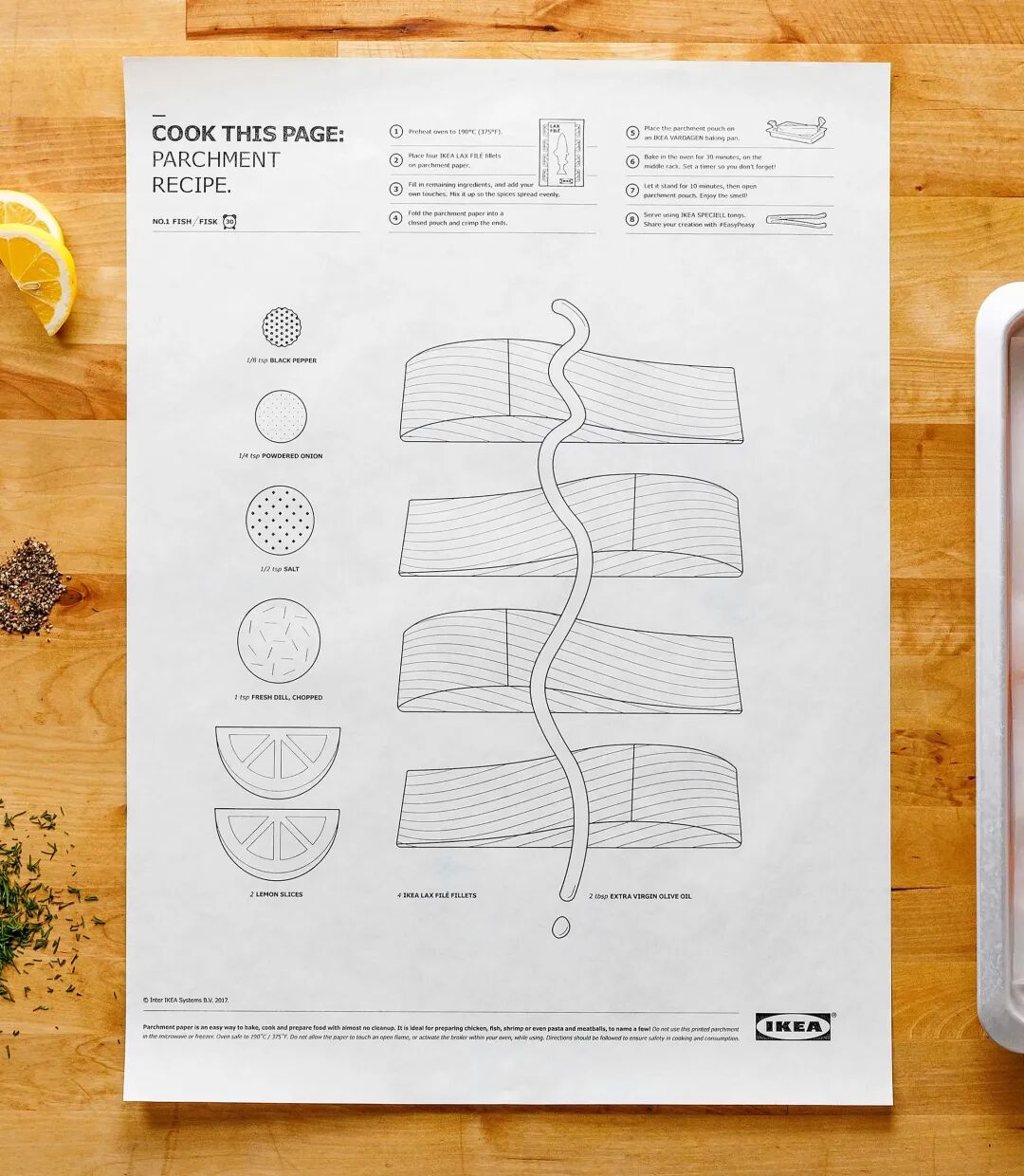
Core Insights - IKEA has launched "Cook this Page," a baking paper recipe that transforms cooking into a fun fill-in-the-blank game, making it accessible for kitchen novices [1][9] - The product has gained renewed attention on Chinese social media, with mixed reactions highlighting both its appeal and criticisms regarding its cultural relevance [3][5] Consumer Trends - The popularity of "Cook this Page" reflects a growing consumer demand for easy, efficient cooking solutions that provide a sense of accomplishment without the complexity of traditional cooking [5][7] - Consumers are increasingly seeking creative and practical designs that simplify meal preparation and reduce the effort involved in cooking and cleaning [5][16] Product Innovation - "Cook this Page" is a collaboration between IKEA and Toronto's Leo Burnett, designed to address common cooking pain points by providing visually proportioned ingredients on the baking paper [9][12] - Each recipe incorporates IKEA's food products, such as Swedish meatballs and frozen salmon, encouraging one-stop shopping for ingredients and enhancing the overall customer experience [12][25] Business Strategy - IKEA views food as a crucial component of its business model, with a significant portion of customers visiting stores primarily for dining rather than shopping for furniture [17][20] - The company's food sales reached $1.5 billion in 2013, positioning IKEA as a major player in the global food service industry [20][25] Long-term Vision - IKEA's approach emphasizes understanding consumer needs and creating sustainable innovations that resonate with customers over time [7][28] - The company has a history of adapting to consumer trends, as seen in the introduction of plant-based hot dogs after extensive research and development [28][30] Future Initiatives - IKEA's Space10 innovation lab has explored various food-related projects, including urban agriculture and alternative meat products, aiming to engage consumers in sustainable practices [31][39] - Although Space10 has recently closed, its legacy of transforming innovative ideas into consumer-friendly solutions remains integral to IKEA's food strategy [44][45]
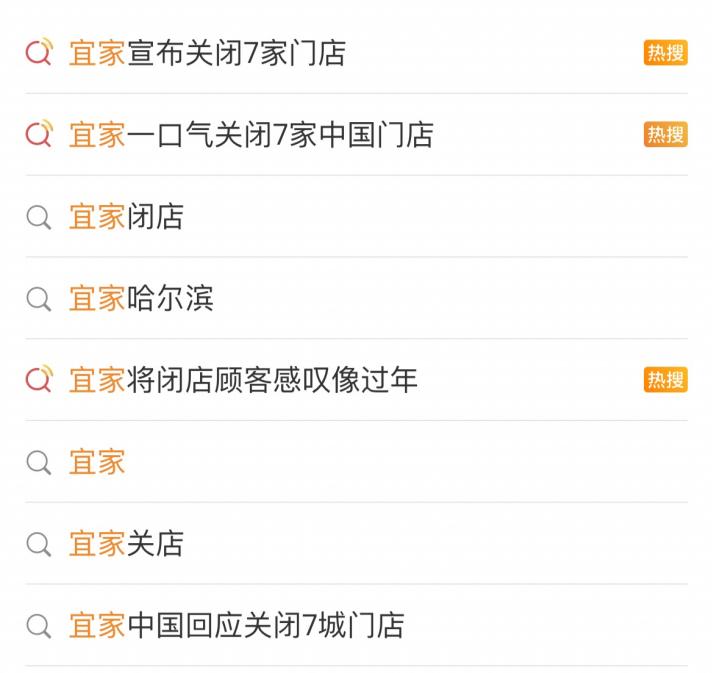
零售巨头宣布关店,清仓引发3小时排队抢购,“现场像过年”
3 6 Ke· 2026-01-27 01:00
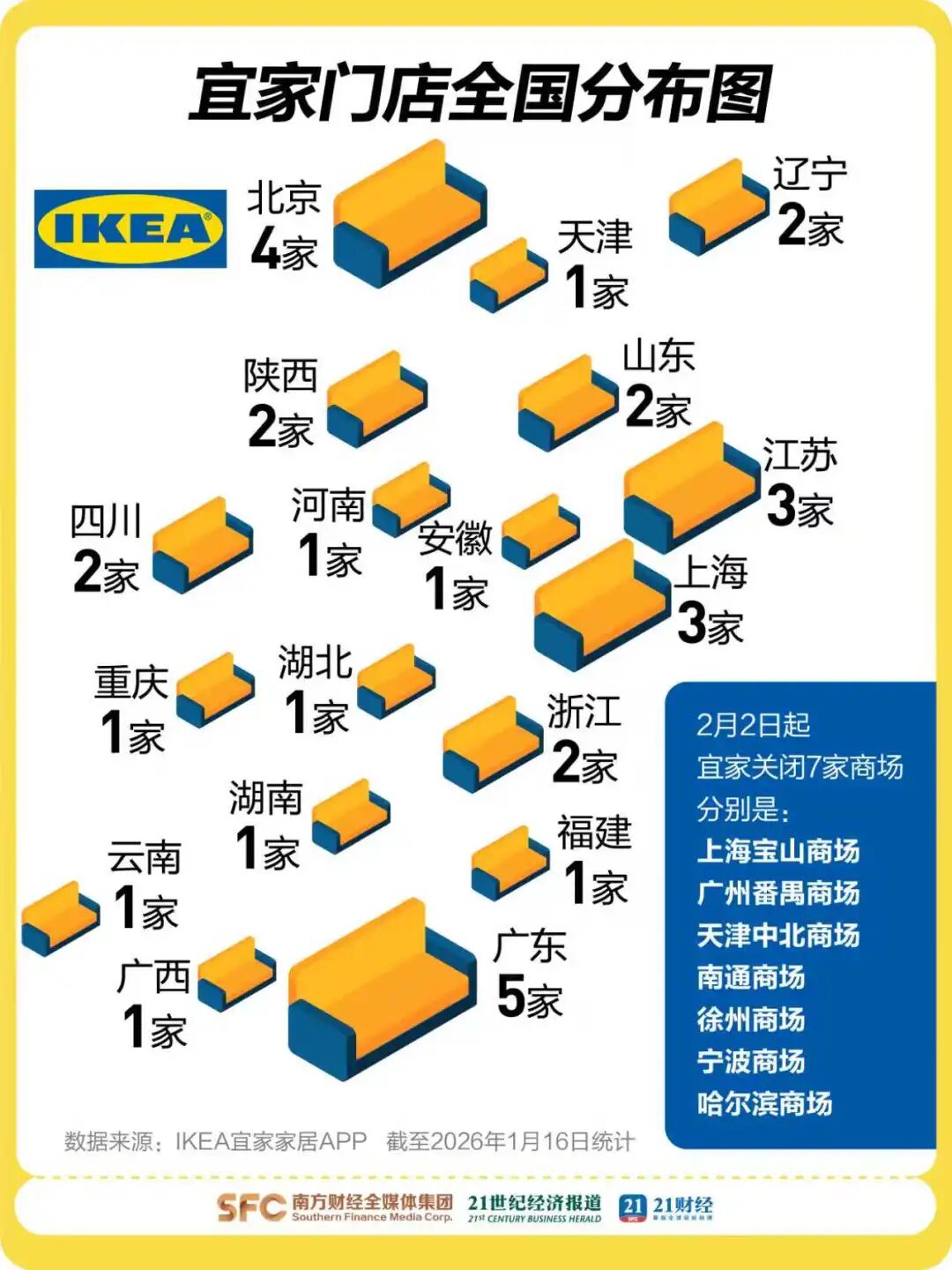
Core Insights - IKEA is closing seven stores in China, marking its largest store reduction since entering the market 28 years ago, as it seeks to adapt to changing consumer preferences and market dynamics [3][9][21] - The closures have sparked significant consumer interest, with long lines and a rush to purchase discounted items, indicating a nostalgic farewell to the brand's iconic stores [1][10][17] Group 1: Store Closures and Market Impact - The seven stores being closed include locations in Shanghai, Guangzhou, Tianjin, Nantong, Xuzhou, Ningbo, and Harbin, with operations ceasing on February 2, 2026 [1][9] - This decision is part of a broader trend where IKEA has been closing stores since 2021, with a notable decline in sales growth from 17% to 6.5% between 2021 and 2023 [9][10][19] - The closures are seen as a strategic move to address declining revenues, with sales in the Chinese market dropping from 12.07 billion yuan in the previous fiscal year to 11.15 billion yuan, a decrease of nearly 1 billion yuan [9][10][21] Group 2: Changing Consumer Preferences - The shift in consumer behavior is attributed to a transition from new home purchases to renovations of existing homes, which has reduced the effectiveness of IKEA's large store model [13][14] - Local brands have gained market share by offering more tailored products and services, leveraging e-commerce and local supply chains to meet consumer demands more effectively [15][16] - The nostalgia surrounding IKEA's stores reflects a collective farewell to a shopping experience that is no longer aligned with current consumer needs [10][17] Group 3: Future Strategies - IKEA plans to invest in smaller store formats and digital channels, with a goal to open over ten small stores in the next two years, focusing on high-frequency items and closer proximity to urban consumers [21][22] - The company is also implementing a price subsidy policy for popular products, aiming to regain market interest and adapt to the evolving landscape [22] - The strategic shift indicates a move from a "destination shopping" model to a more integrated approach that combines large warehouses, small urban stores, and online platforms [21][22]
货架被搬空!排队1.5小时进场,宜家广州一商场清仓,超600件3折起甩卖
2 1 Shi Ji Jing Ji Bao Dao· 2026-01-18 23:02
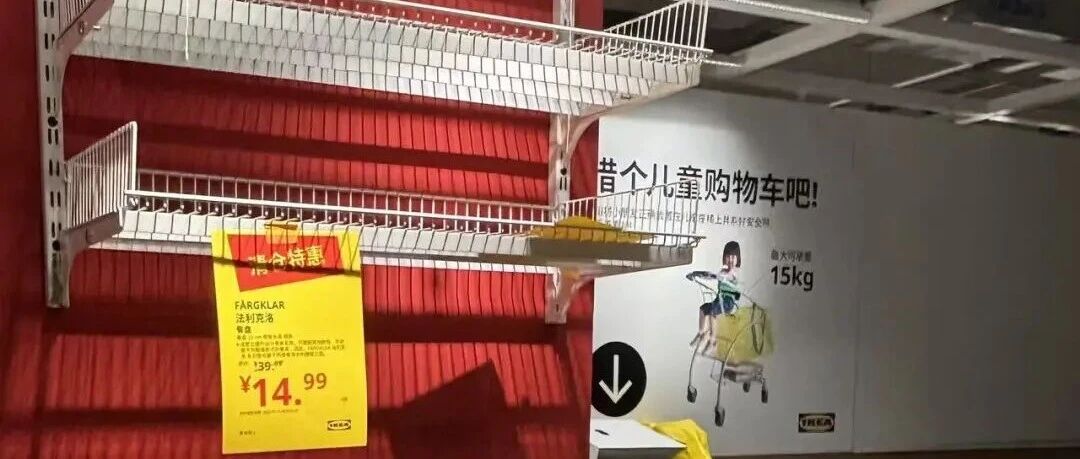
Core Insights - The recent clearance sale at IKEA's Guangzhou Panyu store attracted massive crowds, indicating a strong consumer interest despite underlying sales challenges [1][10] - IKEA is closing nearly one-fifth of its stores in China, raising questions about its market performance and future strategy [3][5] Group 1: Sales Performance and Store Closures - IKEA China reported a revenue of 11.15 billion yuan for the 2024 fiscal year, reflecting a year-on-year decline of 7.6% [5] - The company plans to close seven stores, including locations in Shanghai and Guangzhou, which represents approximately 20% of its total stores in China [3][5] - Despite store closures, Guangdong remains the province with the highest number of IKEA stores in China [4] Group 2: Consumer Behavior and Market Dynamics - The clearance sale saw long wait times, with customers reporting up to 1.5 hours to enter the store, highlighting a disconnect between consumer expectations and available inventory [2][10] - Many consumers expressed frustration over the limited availability of discounted items, with most products already sold out upon entry [2] - The rise of local e-commerce and brands has intensified competition, impacting IKEA's traditional business model [7][8] Group 3: Strategic Adjustments and Future Outlook - IKEA's shift from large suburban stores to smaller, community-focused outlets reflects a broader trend in the home furnishings retail industry [9] - The company faces challenges in maintaining its iconic "one-stop shopping" experience while adapting to changing consumer behaviors and preferences [9][11] - Frequent product recalls have raised concerns about quality, potentially eroding consumer trust in the brand [9]
货架被搬空!排队1.5小时进场,宜家广州一商场清仓,超600件3折起甩卖
21世纪经济报道· 2026-01-18 04:33
Core Viewpoint - The article discusses the challenges faced by IKEA in China, highlighting a significant decline in sales and the closure of nearly one-fifth of its stores, raising questions about its market viability and strategic adjustments in response to changing consumer behavior and competition [9][10][11]. Group 1: Store Closures and Sales Performance - IKEA China announced the closure of seven stores, representing nearly 20% of its total outlets in the country, including locations in Shanghai and Guangzhou [10]. - For the fiscal year 2024, IKEA China reported revenue of 11.15 billion yuan, a year-on-year decline of 7.6%, while its parent company, Ingka Group, experienced a global revenue drop of 5.5% [11]. - The furniture industry in China is facing challenges, with a reported 9.1% decline in revenue for large-scale enterprises from January to November 2025 [17]. Group 2: Consumer Behavior and Market Dynamics - The article notes a surge in consumer interest during the clearance sale, with long queues and significant discounts on select items, indicating a strong brand presence despite underlying issues [1][19]. - Observations from consumers reveal a mismatch between expectations of discounted items and the reality of limited availability, with many items already sold out upon arrival [7][8]. - The shift in consumer preferences towards more convenient and cost-effective shopping options, driven by local e-commerce and brands, poses a significant challenge to IKEA's traditional business model [14][15]. Group 3: Strategic Adjustments and Future Outlook - The trend of "large stores retreating and small stores thriving" is becoming prominent in the home furnishings retail sector, prompting IKEA to adapt its strategy [17]. - The company is transitioning from large warehouse-style stores to smaller, more community-focused outlets, which may enhance consumer engagement but could dilute the unique shopping experience IKEA is known for [20]. - Despite the challenges, IKEA retains a strong customer base in China, which presents both an opportunity and a responsibility for the brand to evolve and meet changing consumer needs [19].
宜家关大店、开小店,在中国市场调整身位有多难? | 声动早咖啡
声动活泼· 2026-01-12 09:06
Core Viewpoint - IKEA's performance in China has declined significantly, with sales dropping from 157.7 billion yuan in FY2019 to 111.5 billion yuan in FY2024, a decrease of nearly 30% [4][5] Group 1: Market Challenges - The decline in sales is attributed to a slowdown in the real estate market, which has reduced demand for whole-home furniture [4] - The closure of seven stores, primarily located in non-core urban areas with low population density, reflects the challenges in maintaining foot traffic, with some stores seeing daily visitor numbers drop below 800, far below the 1,500 needed for basic operations [4] - IKEA's shift from large-scale expansion to a focus on smaller stores and online channels is a response to these challenges, with plans to reduce the number of physical stores from 41 to 34 [5] Group 2: Store Format and Strategy - IKEA has experimented with various small store formats, including a 2,000 square meter ordering center and an experience center, but many of these have closed within two to three years [5][6] - The company is now testing a community-oriented small store concept in Shenzhen, with a focus on personalized design services, but the network of such stores is not yet fully established [7] Group 3: Pricing and Consumer Trends - IKEA is investing in lower-priced products to appeal to a more price-sensitive consumer base, but many consumers still perceive IKEA's larger items as expensive compared to local alternatives [8] - The consumer base is becoming polarized, with some young renters finding IKEA's prices too high and turning to platforms like Pinduoduo, while others seek high-end, customized options that IKEA's standardized products do not meet [9] Group 4: Online Presence and Competition - IKEA's online strategy has been slow, with significant competition from local brands that have capitalized on e-commerce trends, leading to a decline in IKEA's visibility in online channels [10][11] - The company's traditional model of large suburban stores has limited its ability to adapt to the rapid growth of online shopping, resulting in missed opportunities during the e-commerce boom [11]

关店背后,宜家在中国不「香」了吗?
3 6 Ke· 2026-01-12 00:10
Core Insights - IKEA is facing significant challenges in China, with sales declining nearly 30% from its peak in 2019, leading to the closure of seven large stores and a shift towards smaller store formats [1][5][10] Group 1: Sales and Store Closures - IKEA's sales in China peaked at approximately 159 billion yuan in 2019, but are projected to drop to around 111.5 billion yuan in the 2024 fiscal year [1] - The company announced the closure of seven large stores, including the Shanghai Baoshan store, which was once the largest IKEA in Asia, after 12 years of operation [1][5] - The shift from large stores to smaller formats is a response to high operational costs and declining foot traffic, with new store sizes ranging from 300 to 3,000 square meters [5][6] Group 2: Restaurant and Pricing Strategy - IKEA's most popular product in China is its Swedish meatballs, reflecting the company's long-standing integration of dining into the shopping experience [2] - The pricing strategy includes low-cost items like 5 yuan hot dogs and 1 yuan ice creams to attract customers, although many other menu items have seen price increases [2][3] - Recent price hikes for items such as lamb skewers and shrimp have raised concerns about value perception among consumers [3] Group 3: Shift to Smaller Stores and Customization - IKEA is transitioning to a "small store" strategy, focusing on personalized design services and custom solutions, which are more profitable than traditional furniture sales [6][7] - The company plans to open over ten small stores in key markets like Beijing and Shenzhen within the next two years [5][6] - The exploration of pop-up stores in urban areas, including subway stations, aims to enhance brand visibility and customer engagement [7] Group 4: Online Sales and Market Adaptation - IKEA's online sales channels have been slow to develop, with significant growth in online traffic but still only accounting for 25.7% of total sales in 2025 [8][9] - The company has started to embrace social media and live streaming to drive traffic to physical stores, reflecting a need to adapt to changing consumer behaviors [9][10] - The overall market shift towards e-commerce and personalized shopping experiences has prompted IKEA to reconsider its traditional business model [10]
宣布闭店后的宜家人满为患
Sou Hu Cai Jing· 2026-01-10 00:55
Core Viewpoint - IKEA is undergoing a significant strategic transformation in China, moving away from large-scale expansion to focus on community-based small stores and online instant retail, prompted by declining sales and changing consumer habits [6][8][10]. Group 1: Store Closures and Consumer Response - IKEA announced the closure of seven stores in China, including locations in Shanghai, Guangzhou, and Ningbo, effective February 2 [4]. - Following the announcement, there was a surge in customer traffic at the remaining stores, with long queues and crowded aisles as consumers rushed to take advantage of the clearance sales starting January 15 [5][6]. - The closures have sparked nostalgia among consumers, who associate IKEA with personal memories and experiences, highlighting its role as a community space beyond just a furniture retailer [4][5]. Group 2: Financial Performance and Market Dynamics - IKEA's parent company, Ingka Group, reported a 5.5% decline in global revenue to €41.864 billion for the fiscal year ending August 2024, while IKEA China's sales dropped nearly 30% from a peak of ¥15.77 billion in 2019 to approximately ¥11.15 billion in 2024 [6][8]. - The traditional drivers of the home furnishings market, such as new housing deliveries and large-scale renovations, are diminishing, impacting sales [7]. - Changing consumer behavior, particularly among younger generations who prefer online shopping and efficient purchasing, has challenged IKEA's traditional large store model [7][8]. Group 3: Competitive Landscape and Strategic Shift - Local brands in China are gaining market share, with IKEA ranking seventh in sales during the 2024 Double Eleven shopping festival, behind brands like Yuan Shi Mu Yu and Lin Shi Home [8]. - These local competitors offer more flexible supply chains, designs that resonate with local aesthetics, and competitive pricing, making IKEA's traditional self-service model less appealing [8]. - In response, IKEA plans to open over ten small-format stores in key cities like Beijing and Shenzhen over the next two years, marking a shift towards a "small but beautiful" community store model [8][10].
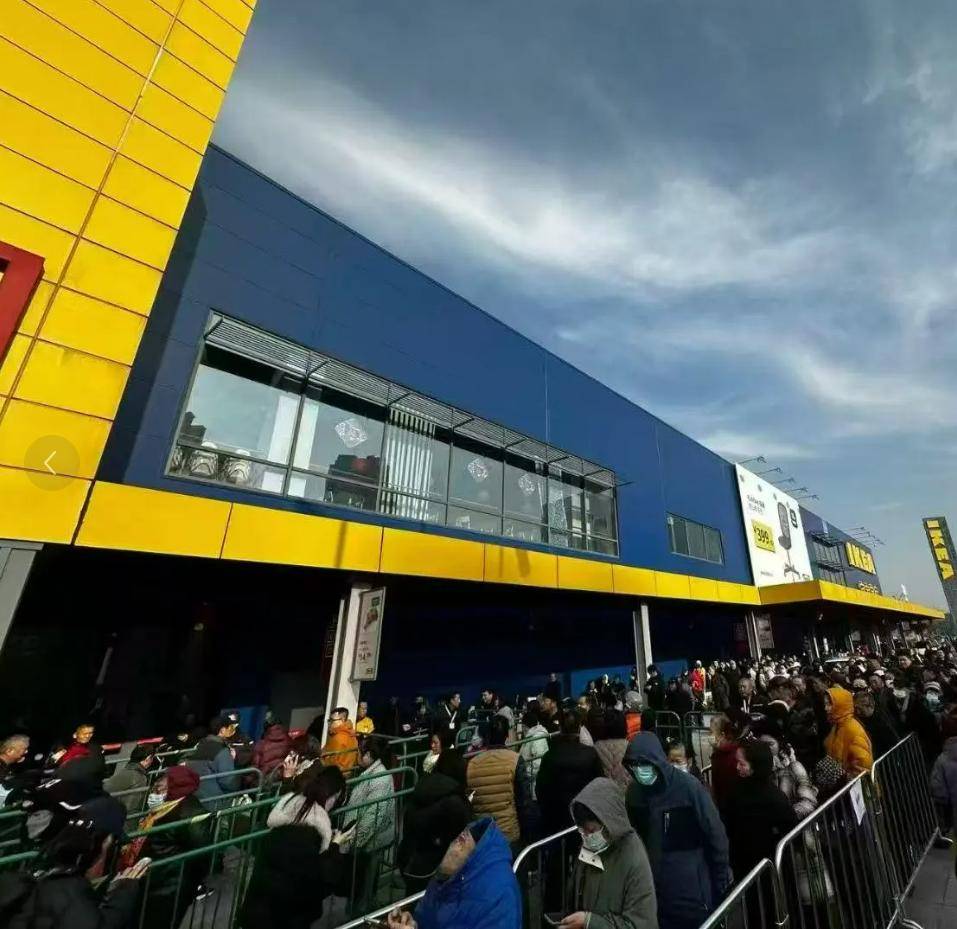
宜家关店潮,从来不买的人最伤心
3 6 Ke· 2026-01-09 08:24
Core Viewpoint - IKEA is undergoing a significant transformation, closing seven stores in China as part of a strategic shift to adapt to global economic uncertainties, digitalization, and changing consumer behaviors. This marks the largest store closure wave since its entry into China in 1998, representing one-sixth of its total stores in the country [1][6]. Group 1: Store Closures and Financial Performance - IKEA announced the closure of seven stores in Shanghai, Guangzhou, Tianjin, Nantong, Xuzhou, Ningbo, and Harbin, effective February 2, marking a major shift in its operational strategy [1]. - For the fiscal year 2024, IKEA's sales in China are projected to be approximately 11.15 billion RMB, a decrease of nearly 1 billion RMB compared to the previous fiscal year and a decline of nearly 30% from its peak in 2019 [6][8]. Group 2: Changing Consumer Perception - The brand, once a symbol of middle-class aspirations, is now perceived as a "poor man's paradise," a "family restaurant," and a "dating spot for the elderly," reflecting a shift in consumer sentiment and usage [1][21]. - The once-appealing IKEA experience has transformed into a space where consumers seek value over brand prestige, with many now viewing it as a discount store rather than a lifestyle choice [21][28]. Group 3: Competitive Landscape and Market Challenges - The decline in the real estate market has cooled the demand for home furnishings, shifting the market from growth to competition for existing customers [11]. - Local competitors have gained an edge over IKEA by offering faster product development cycles and better service, such as free delivery and assembly, which IKEA struggles to match [14][16]. Group 4: Strategic Responses and Future Directions - In response to declining sales, IKEA has implemented aggressive pricing strategies, with over 500 products marked down in the fiscal year 2024, but this has led to a perception of the brand as a discount retailer [8][10]. - IKEA is shifting its focus from large-scale stores to smaller, centrally located "design inspiration centers," planning to open over 10 new small stores in key markets like Beijing and Shenzhen [10][28].

卖1元冰淇淋的宜家,越来越少了
36氪· 2026-01-08 10:22
Core Viewpoint - IKEA China announced the closure of 7 stores, reducing the total number of stores from 38 to 31, as part of a strategic shift to optimize costs and improve efficiency in response to changing consumer behavior in the Chinese market [4][6]. Group 1: Store Closures and Strategic Shift - The stores set to close include significant locations such as IKEA Shanghai Baoshan and IKEA Guangzhou Panyu, with the closures effective from February 2, 2026 [5]. - The decision to close these stores is not due to their inability to operate but is a proactive measure to reallocate resources and enhance operational efficiency [6][7]. - This marks a continuation of IKEA's strategic adjustments in China, which have included previous store closures and a focus on optimizing its retail footprint [6][7]. Group 2: Market Challenges and Competition - IKEA faces increasing competition from local brands and changing consumer preferences, which have made it difficult to attract Chinese consumers [8][10]. - The brand's traditional Nordic minimalist design is losing appeal among younger consumers, who are now more inclined towards local styles and offerings [8]. - Local competitors, such as the clothing brand "Deer Island" and furniture brand "Lin's Wood Industry," are expanding aggressively, posing a direct challenge to IKEA's market position [10][11][12]. Group 3: Financial Performance of Ingka Group - Ingka Group, IKEA's operating entity in China, reported a decline in global revenue to €41.864 billion in the 2024 fiscal year, a decrease of 5.5% year-on-year, with net profit dropping by 46.5% [13]. - The financial struggles have led to strategic partnerships aimed at alleviating financial pressure, including a collaboration with Gaohe Capital to manage shopping centers in key cities [13]. - Despite a slight recovery in net profit for the 2025 fiscal year, overall revenue remains below previous levels, indicating ongoing financial challenges [13]. Group 4: Broader Market Trends - Other international brands, such as NITORI and MUJI, are also facing difficulties in the Chinese market, with significant store closures reported [14]. - The rapidly changing market environment and the rise of domestic brands suggest that IKEA's transformation will be a challenging endeavor in a highly competitive landscape [15].