资产管理

Search documents
资管公司如何聚焦主业实现错位竞争
Jin Rong Shi Bao· 2025-11-27 03:05
Core Viewpoint - The article emphasizes the role of Asset Management Companies (AMCs) in addressing non-performing assets (NPAs) and mitigating financial risks in key sectors such as real estate, local government debt, and small financial institutions during the 14th and 15th Five-Year Plans [1][2][3]. Group 1: AMC's Role and Opportunities - AMCs are positioned as key players in the financial system, focusing on their core business of managing non-performing assets and enhancing their governance to achieve high-quality development [1][2]. - The continuous increase in non-performing loans, which reached 3.5 trillion yuan by the end of Q3 2025, presents significant asset acquisition opportunities for AMCs [1]. - AMCs are crucial in resolving risks in the real estate sector, local government debt, and small financial institutions, contributing to the stabilization of these markets [1][2]. Group 2: Risk Mitigation Strategies - The 15th Five-Year Plan highlights the need to enhance the capacity to prevent and resolve risks in key areas, ensuring a systematic approach to risk management [2]. - AMCs are expected to play a vital role in stabilizing the real estate market and addressing the challenges posed by local government debt and financial institution vulnerabilities [2][3]. - The article suggests that AMCs should optimize their asset acquisition strategies and collaborate with other financial institutions to effectively manage diverse financial risks [3]. Group 3: Competitive Landscape and Differentiation - The current market for non-performing assets has evolved into a diversified structure, necessitating AMCs to adopt differentiated competitive strategies to thrive [3][4]. - AMCs are encouraged to explore various business models, such as focusing on niche markets or maintaining a diversified approach, to build core competitive advantages [4]. - Collaboration among AMCs and other financial entities is essential to enhance the overall effectiveness of risk mitigation efforts and foster a cooperative competitive environment [3][4].
中国长城资产北京分公司与华润资产合作盘活低效资产
Jin Rong Shi Bao· 2025-11-27 03:05
Core Viewpoint - The cooperation agreement between China Great Wall Asset Management Beijing Branch and China Resources Asset Management marks an important innovation in revitalizing inefficient assets through collaboration [1] Group 1: Project Overview - The Ma Jiabao project is a shopping center covering over 60,000 square meters located in Fengtai District, Beijing, acquired by China Great Wall Asset Management through judicial debt settlement [1] - The partnership aims to leverage the strengths of both companies to enhance asset value and share operational and disposal profits [1] Group 2: Strategic Importance - This collaboration is a response to the financial service requirements of the real economy and aims to mitigate regional financial risks [1] - The agreement signifies the entry of the Ma Jiabao project into a substantive operational phase, establishing a full-cycle revitalization model from asset debt settlement to operational enhancement and eventual disposal [1] Group 3: Future Cooperation - A framework cooperation agreement was also signed to deepen collaboration in special assets and corporate restructuring, focusing on value creation in the non-performing asset sector [1] - This partnership exemplifies the complementary advantages of both parties and holds significant demonstration value for revitalizing debt assets [1]

独家|AI资产管理平台「无破科技」连续完成两轮数千万元融资,实现企业资产搜索、分析、处置的AI改造
Z Potentials· 2025-11-27 02:55
国内领先的 AI 资产管理平台「无破科技」宣布完成数千万元 Pre-A和Pre-A+ 轮融资,分别由险峰长青和苏州国资投资,心流资本FlowCapital担任本轮和 长期财务顾问 。 融资资金将主要用于AI资产管理智能体的深化研发、产品迭代和市场拓展,真正实现企业资产的搜索、分析、处置的AI化,进一步巩固公 司在债务重组与企业资产服务领域的核心竞争力。 精准切入千亿蓝海,AI 破解企业纾困痛点 无破科技聚焦企业债务与资产优化,构建了 "AI 工具 + 专家网络 + 标准化服务" 的全链条解决方案。公司核心产品矩阵涵盖「Arico」AI 顾问、「破易云 4.0」大数据平台及「WUPOlink」重组管理系统,形成从需求唤醒、精准匹配到高效交付的服务闭环,彻底改变传统资产管理和债务重组行业 "信息不对 称、效率低下、流程不透明" 的痛点。 基于AI的破易云4.0开放数据平台,截止发稿日,预约注册用户已超45万。 在需求端,「Arico」以免费、匿名、7x24 小时智能问答为入口,为困境企业普及债务重组知识,完成初步可行性判断,低成本唤醒海量沉睡需求 。截至 目前,平台已累计解答企业 咨询超 10 万次,精准捕获数千 ...


银行保险资管业协会来了
Jing Ji Wang· 2025-11-27 02:09
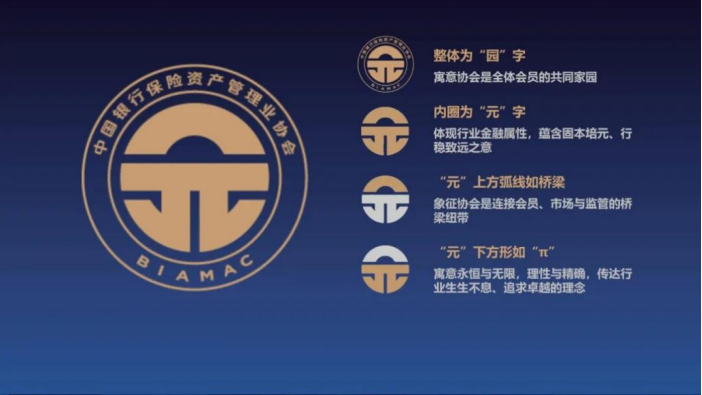
Core Points - The China Insurance Asset Management Association has officially changed its name to the China Banking Insurance Asset Management Association, marking a significant step in the self-regulation of the asset management industry in China [1][2]. Group 1: Association's Name Change and Purpose - The name change aims to enhance the self-regulatory management system of the wealth management industry and promote the collaborative development of banking and insurance asset management institutions [2]. - The association will now fully incorporate banking wealth management subsidiaries, which is seen as a crucial support for the coordinated development of these two types of asset management institutions [2]. Group 2: Leadership and Governance - The fourth member representative conference elected Wang Yi as the president of the new association, with over 200 representatives from various financial institutions in attendance [1][7]. - The association's leadership emphasized the importance of political awareness, responsibility, and the need for improved governance structures to support industry development [2][3]. Group 3: Industry Statistics - As of June 2025, there are 32 banking wealth management companies and 35 insurance asset management companies in China, with a total banking wealth management scale of 32.13 trillion yuan as of the third quarter of 2025 [3]. - Insurance asset management companies managed a total of 33.3 trillion yuan as of the end of 2024 [3]. Group 4: New Logo and Branding - The association unveiled a new logo following its name change, with the English abbreviation updated to "BIAMAC" [4][6].
英国预算案获市场认可 英债收益率走低 先锋与RLAM等巨头入场加仓
智通财经网· 2025-11-27 01:09
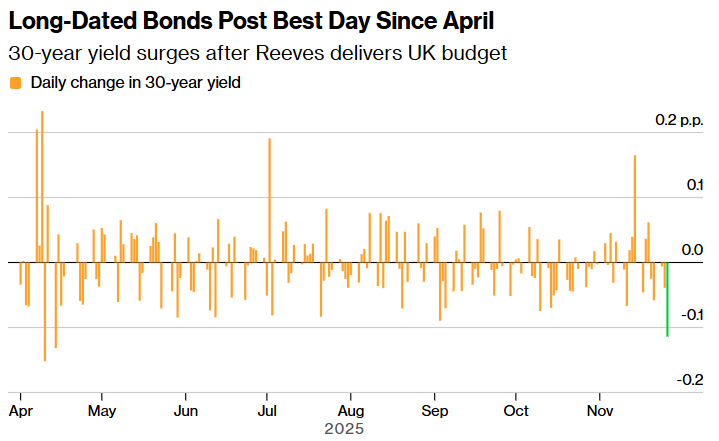
Core Insights - The UK government bond market experienced significant gains following the budget proposal by Chancellor Rachel Reeves, marking the largest increase in long-term UK bonds since April [1] - Vanguard Group and Royal London Asset Management (RLAM) have resumed purchasing UK government bonds, indicating a shift in market sentiment towards a more optimistic outlook despite ongoing fiscal challenges [1][5] - The market reacted positively to Reeves' budget, which included tax increases aimed at stabilizing the UK's fiscal situation, leading to a notable drop in the yield of 30-year UK bonds [1][6] Group 1 - Vanguard's international rates head, Ales Koutny, reduced UK bond holdings prior to the budget due to anticipated market volatility but resumed buying after the budget announcement, citing overly pessimistic pricing [1] - The 30-year UK bond yield fell by 12 basis points, the largest single-day drop since April, reflecting sensitivity to economic outlook [1] - RLAM's Craig Inches capitalized on market volatility by trading UK bonds, expecting that stringent tax policies will burden households and create conditions for further interest rate cuts by the Bank of England [5] Group 2 - The UK pound rose above $1.32, and the 10-year UK bond yield fell for the fifth consecutive day to 4.42%, indicating a positive market response to the budget [6] - The budget revealed a fiscal buffer exceeding expectations, with £22 billion available, which could mitigate potential adverse scenarios for UK bonds [10] - The Office for Budget Responsibility downgraded economic growth forecasts while predicting rising inflation and stronger wage growth, impacting investor sentiment positively [10] Group 3 - The UK government's cautious borrowing strategy aims to balance the demands of bondholders for fiscal prudence with political realities of spending cuts [11] - Despite concerns over the credibility of Reeves' plans, the market's positive reaction suggests increased investor optimism regarding the UK's fiscal trajectory [11] - The budget's potential drag on mid-term economic growth may exert downward pressure on UK bond yields, reflecting a complex interplay of fiscal policy and market expectations [11]
金融圈大事件!银行保险资管业协会来了
券商中国· 2025-11-26 23:23
Core Viewpoint - The China Insurance Asset Management Association has officially changed its name to the China Banking Insurance Asset Management Association, marking a significant step in the self-regulation of the asset management industry in China [2]. Group 1: Association Name Change and Significance - The name change is a major initiative to enhance the self-regulatory management system of the wealth management industry and promote the collaborative development of banking and insurance asset management institutions [2]. - The association aims to align with the strategic tasks and major initiatives of the 14th Five-Year Plan, focusing on national strategies and wealth management [2]. Group 2: Industry Statistics - As of June 2025, there are 32 banking wealth management companies and 35 insurance asset management companies in China [3]. - The total size of the banking wealth management market reached 32.13 trillion yuan by the end of the third quarter of 2025, while insurance asset management companies managed funds totaling 33.3 trillion yuan by the end of 2024 [3]. Group 3: Governance and Leadership - The fourth council of the association was elected during the meeting, with Wang Yi becoming the president [7]. - The association will focus on self-discipline, rights protection, coordination, and service to enhance its role in the industry [3][7]. Group 4: New Logo and Branding - The association unveiled a new logo following its name change, with the English abbreviation updated to "BIAMAC" [4].
3家重点企业密集布局,助力世博地区经济高质量发展
Sou Hu Cai Jing· 2025-11-26 15:28
Group 1 - Several key enterprises, including Guoxin Holdings, Longyuan Power, and Weiyi Chuang, have recently invested over 6 billion yuan in the Expo area, injecting strong momentum into the region's high-quality economic development [1] - Guoxin Holdings (Shanghai) Co., Ltd. completed a capital increase of 1.5 billion yuan, enhancing its registered capital and focusing on asset management, industrial investment, and investment consulting to support national strategies and regional economic development [3] - Longyuan Power Group (Shanghai) Co., Ltd. completed a capital increase of 1.23 billion yuan, significantly improving its capital operation efficiency and financing capabilities for renewable energy projects, with a controlled installed capacity exceeding 43 million kilowatts [3] Group 2 - The Expo area has become one of the core regions in Shanghai with the highest concentration of central enterprises, gathering 32 central enterprise groups and over 130 affiliated companies, including three headquarters of first-level central enterprises [4] - This area has attracted 55 regional headquarters of multinational companies, 33 Fortune Global 500 companies, and 26 international economic organizations, creating a collaborative industrial ecosystem [4] - In 2023, the Expo area has seen a total investment of over 16 billion yuan in projects that have commenced, indicating a positive trend in project implementation and resource aggregation [4]


中国保险资产管理业协会更名添“银行”,已有30家银行理财子公司加入
Mei Ri Jing Ji Xin Wen· 2025-11-26 15:11
Core Points - The China Banking and Insurance Asset Management Association has been renamed from the China Insurance Asset Management Association, marking a significant step in the self-regulation of the asset management industry in China [1][2] - The rebranding allows for the full inclusion of bank wealth management companies, which is expected to enhance the collaborative development of different asset management institutions [1][2] Group 1 - The association is a national, industry-specific, non-profit organization formed voluntarily by the banking and insurance asset management sectors, under the guidance and supervision of the National Financial Regulatory Administration and the Ministry of Civil Affairs [1] - The total number of wealth management companies in China has reached 32, including 6 state-owned banks, 12 joint-stock banks, 8 city commercial banks, 1 rural commercial bank, and 5 joint venture wealth management companies [2] - As of the end of the third quarter of 2025, the total number of existing products in the market is 43,900, an increase of 10.01% year-on-year, with a total scale of 32.13 trillion yuan, up 9.42% year-on-year [2] Group 2 - The number of existing products from wealth management companies is 30,600, with a total scale of 29.28 trillion yuan, reflecting a year-on-year increase of 15.26%, accounting for 91.13% of the entire market [2] - The association's new leadership aims to enhance its functions of self-discipline, rights protection, coordination, and service, contributing to the high-quality development of the industry [2]
连获“抖音精选”,这档投资长视频只说专业!
Sou Hu Cai Jing· 2025-11-26 14:35
Core Viewpoint - The video series "行行有说道" produced by 中泰资管 focuses on in-depth investment education, emphasizing industry knowledge and business models, and has gained significant traction on platforms like Douyin with over 2 million views since its launch [1][2][6]. Group 1: Content and Approach - "行行有说道" differs from traditional investment education by providing over 10 minutes of content per episode, analyzing specific industries or sectors through a business lens [1][3]. - The series has been recognized with the "2025公益投教案例君鼎奖" at the 2025 China Securities Asset Management Awards, highlighting its innovative approach to investment education [2]. - 中泰资管 aims to enhance investor understanding by producing industry-specific educational videos, addressing the gap in accessible content for ordinary investors [3][4]. Group 2: Challenges and Solutions - Creating industry-focused educational videos presents challenges, including the need for detailed content that varies significantly across different sectors [3][4]. - The research team at 中泰资管 plays a crucial role in content creation, ensuring that videos are tailored to industry characteristics and presented effectively [3][4]. Group 3: Audience Engagement and Feedback - The series has received positive feedback from viewers, indicating a strong demand for professional and engaging content in the investment education space [8][10]. - Viewer engagement includes constructive feedback and suggestions for improvement, demonstrating a high level of interest in the content [10]. Group 4: Content Quality and Strategy - 中泰资管 prioritizes content quality over quantity, often revising scripts multiple times to ensure high standards [11][12]. - The company has chosen to invest resources in content creation rather than paid promotions, focusing on delivering valuable insights to investors [12].
连获“抖音精选”,这档投资长视频只说专业!
券商中国· 2025-11-26 13:31
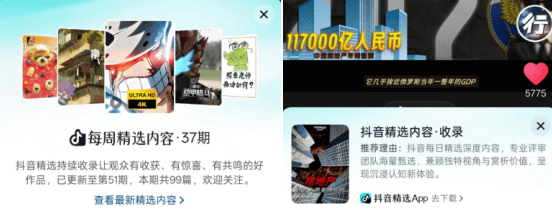
Core Viewpoint - The video series "行行有说道" produced by 中泰资管 focuses on professional investment knowledge, aiming to enhance investors' understanding of various industries through in-depth analysis and industry insights [2][3]. Summary by Sections Video Content and Approach - "行行有说道" is distinct from traditional investment education content, as it emphasizes the investment itself, featuring videos longer than 10 minutes that dissect industry development and business models [2]. - Since its launch in August last year, the series has released over ten videos, accumulating over 2 million views across platforms [2]. - The series received the "2025公益投教案例君鼎奖" at the 2025 China Securities Asset Management Jun Ding Award, highlighting its impact in the investment education space [2]. Target Audience and Educational Goals - The initiative addresses the gap in accessible industry knowledge for ordinary investors, who often find professional reports tailored for institutional investors [3]. - The goal is to elevate investors' cognitive abilities and decision-making through industry-specific educational videos [3][4]. Challenges and Support - Creating industry-focused educational videos poses challenges, including the need for detailed content that varies significantly across different sectors [3]. - The research team at 中泰资管 plays a crucial role in content creation, ensuring that videos are tailored to industry characteristics [3]. Professional Content Recognition - The rise of short videos in 2024 has led many fund companies to explore this medium, but 中泰资管 aims to produce high-quality, professional content that stands the test of time [5]. - The series has gained unexpected recognition, with videos being featured in "抖音精选," leading to significant increases in viewership [5][6]. User Engagement and Feedback - Feedback from viewers indicates a strong interest in professional content, with many expressing appreciation for the depth and quality of the videos [8][10]. - The series has also received constructive suggestions from viewers, demonstrating a community engaged in the learning process [10]. Commitment to Quality - 中泰资管 prioritizes content quality over quantity, often revising scripts multiple times to ensure high standards [12]. - The company believes that providing valuable content is essential for retaining viewer attention and trust [12]. Future Directions - The company remains committed to enhancing investor cognition without the influence of sales perspectives, focusing on factual analysis and industry insights [13]. - Upcoming features from platforms like 抖音, such as AI tools for content consumption, align with 中泰资管's mission to facilitate knowledge acquisition for investors [13].