高等教育

Search documents
吴琪:扎根西藏 助计算物理在高原“加速”
Zhong Guo Qing Nian Bao· 2025-09-17 23:39
Core Insights - The article highlights the journey of Wu Qi, a theoretical physicist who chose to work in Tibet, contributing to the development of physics research in the region and addressing the gap in scientific resources and education compared to mainland China [1][2][3]. Group 1: Research Development - Wu Qi faced significant challenges in establishing her research career in Tibet, including a lack of personnel and equipment when she started in 2015 [2]. - By 2019, Wu Qi's research team began to take shape with the addition of graduate students, and the "Multiscale Material Simulation and Application Research Laboratory" was officially established [2]. - Wu Qi's efforts have led to increased collaboration between Tibet University and other institutions, expanding the scope of academic exchanges [2][3]. Group 2: Innovative Research Approaches - Wu Qi's research focuses on utilizing computational physics to accelerate material research, particularly in the context of oxygen production in high-altitude environments [3][4]. - The team aims to find alternative porous materials for oxygen production, leveraging Tibet's abundant solar energy for water electrolysis [3][4]. - The application of computational methods has significantly reduced the time and cost associated with material synthesis, with potential production costs for oxygen being lower than current market prices [4]. Group 3: Educational Impact - Wu Qi has made significant contributions to teaching at Tibet University, enhancing the learning experience for students in physics through innovative teaching methods [5][6]. - She emphasizes the importance of nurturing young talent and encourages students to participate in academic conferences to broaden their horizons [5][6]. - The educational initiatives at Tibet University reflect a broader trend of improving higher education and research capabilities in the region, contributing to local economic development [6][7].
大学学费,涨了
Hu Xiu· 2025-09-17 23:23
Group 1 - The core viewpoint of the article highlights the changing landscape of higher education in China, where rising tuition fees and an oversupply of graduates are leading to a reevaluation of the value of a university degree [1][2][38] - The article notes that undergraduate degrees are no longer scarce, and the job market is experiencing a phenomenon of "degree inflation," where lower-level degrees are increasingly favored over bachelor's degrees [3][42] - Tuition fees have significantly increased, with some master's programs now costing over 200,000 yuan, making higher education less accessible for lower-income families [4][50] Group 2 - A notable trend is the recent wave of tuition hikes across various provinces, with over 100 universities raising fees, some by more than 50% [6][8][10] - Specific examples include increases at East China University of Science and Technology, where fees rose to 7,700 yuan, and at Taiyuan University of Technology, where engineering fees jumped from 6,000 yuan to 8,970 yuan [7][10] - The article discusses the financial pressures on families, particularly those from lower-income backgrounds, who may struggle to afford the rising costs of education [5][53] Group 3 - The article emphasizes the financial challenges faced by universities, which are increasingly reliant on tuition fees due to reduced government funding, with a reported decrease of 4.6 billion yuan in higher education allocations [27][30] - The expansion of higher education has led to a situation where the number of students far exceeds available funding, forcing institutions to raise tuition as a means of financial survival [22][30] - The article also highlights the disparity in educational investment returns, with many graduates facing lower starting salaries and increased living costs, leading to a reconsideration of the value of higher education [41][43][44]

就业指导更精准 学生求职更从容(高校毕业生就业服务在行动)
Ren Min Ri Bao· 2025-09-17 22:22
Group 1 - The article highlights the importance of early career planning and support for university students, particularly in the context of employment assistance provided by Guangxi Normal University [2][3] - Guangxi Normal University has implemented a comprehensive talent cultivation path that connects professional knowledge with career development, including various initiatives such as career planning courses and practical training programs [2][3] - The university's employment guidance center conducts thorough assessments of students' employment situations and develops personalized support plans to enhance students' employability [3] Group 2 - The article features a case study of a student, Xiao Gang, who successfully navigated his career path through the university's support system, demonstrating the effectiveness of the initiatives in place [2][3] - Xiao Gang's proactive approach to gaining practical experience in environmental engineering, including on-site training and mentorship, is emphasized as a key factor in his successful job placement [2][3] - The university's efforts include organizing activities such as mock interviews and job training camps to further prepare students for the job market [3]
一财社论:“反向进修”让人们重新思考教育的意义
Di Yi Cai Jing· 2025-09-17 13:18
Core Viewpoint - The phenomenon of university graduates choosing vocational schools for further education reflects a shift in the understanding of education's role in enhancing employability and personal interests, highlighting the need for educational reform to better align with market demands [2][3][5]. Group 1: Employment Market Dynamics - The trend of university graduates returning to vocational education is a response to the increasingly competitive job market, where high-level graduates face challenges in practical skills and job readiness [2][4]. - A report by the third-party research institution, Mycos Research Institute, indicates that the employment placement rate for the 2024 undergraduate cohort six months post-graduation is 86.7%, lower than the 88.6% rate for vocational graduates, suggesting a need for improvement in higher education's adaptability to market needs [3]. Group 2: Educational Reform and Adaptation - The current educational landscape requires a reevaluation of the goals and significance of education, emphasizing the importance of practical skills and market responsiveness in higher education [3][5]. - Initiatives in Guangdong and Zhejiang provinces to reform technician training programs, including one-year programs for graduates, demonstrate a proactive approach to enhancing vocational education's relevance to employment needs [5]. Group 3: Lifelong Learning and Skills Development - The rise of "reverse education" among graduates underscores the necessity of lifelong learning as a fundamental skill for adapting to rapid technological changes and evolving job markets [6]. - The concept of continuous learning is becoming essential for maintaining competitiveness in both professional and personal spheres, advocating for a practical application of knowledge [6].
多所高校宣布取消绩点制
第一财经· 2025-09-17 11:38
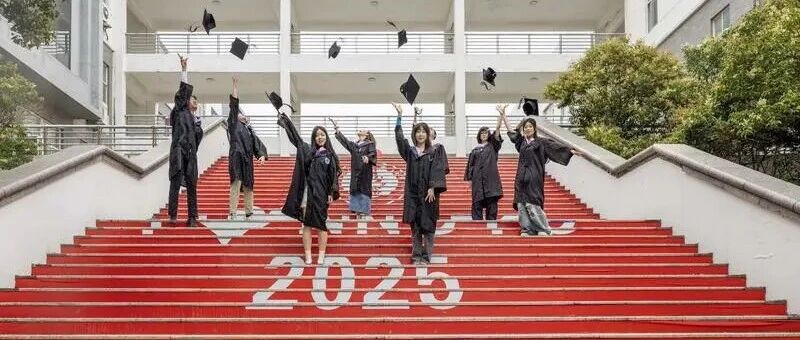
2025.09. 17 海大此次改革并非简单改变评分方式,而是系统性地重构与"双一流"高校人才培养相匹配的多元评价体系。对此,学校正在探索建立多重保障机制, 如深化"过程性评价+增值评价"机制,开展考试改革、奖学金评定改革,在成绩构成中持续推进过程性评价结构和力度;优化"成绩评价+学术活动评 价"融合机制,将学科竞赛、科研创新、实习实践和学术成果等纳入学生学业评价体系,打通"综合素质评价"的多维评价通道,让学生们各展其才、各 放其彩,提升创新创造的能力和动力。 本文字数:1376,阅读时长大约3分钟 作者 | 第一财经 林靖 近年来,我国部分高校探索取消或弱化应用已久的绩点制。 据浙江师范大学微信公众号消息,该校为切实减轻学生学业负担,激发学生内生学习动力,学校全面启动P/NP课程评价改革。此次改革以优化学业评 价机制为核心,旨在破除"唯绩点论",给予学生更多试错空间,引导学生进行自主个性化发展。 消息显示,该校教务处统筹推进公共基础课程和教师教育课程的试点实施,各学院在专业方向课、专业拓展课和综合实践课等模块中设置6-10学分的 二级制评价课程。自2025级起,全校所有专业的300余门课程(占课程总数10% ...
多所高校宣布取消绩点制,“唯绩点论”正在被破除
Di Yi Cai Jing· 2025-09-17 11:29
Core Viewpoint - Several universities in China are reforming their academic evaluation systems to reduce reliance on GPA and promote a more holistic approach to student assessment [2][4]. Group 1: University Reforms - Zhejiang Normal University has initiated a P/NP (Pass/No Pass) grading system to alleviate academic pressure and encourage personalized learning, starting from the 2025 cohort, affecting over 300 courses [2]. - Peking University announced that from the 2025 cohort, GPA will no longer be used in academic evaluations, and grades can be recorded using either a percentage or a grading system without GPA conversion [3]. - Hainan University is implementing a grading system that emphasizes personalized development and aims to shift focus from GPA to student potential, starting from the 2024 cohort [3][4]. Group 2: Evaluation System Changes - Hainan University's reform aims to create a multi-dimensional evaluation system that aligns with the "Double First-Class" initiative, incorporating process evaluation and academic activities into the grading system [4]. - Other universities, including Tsinghua University, East China Normal University, and Fudan University, are also exploring the reduction or elimination of GPA systems to combat the "score-centric" mentality [4]. - The overarching goal of these reforms is to alleviate the pressure of GPA competition, encourage student interest, and enhance overall student quality [4]. Group 3: Expert Opinions - An economics professor from Xiamen University emphasized the need for universities to focus on cultivating innovation and comprehensive qualities in students, suggesting that talent assessment standards should also be diversified [5].
鲁南制药集团与天津大学举行战略合作签约仪式
Qi Lu Wan Bao Wang· 2025-09-17 08:59
Group 1 - The core viewpoint of the article highlights the strategic collaboration between Lunan Pharmaceutical Group and Tianjin University, focusing on deep integration of industry, academia, and research in the field of medicine [1][3] - Tianjin University emphasizes its commitment to innovation in medical engineering and its strong research capabilities in pharmacy, life sciences, and precision instruments, aiming to enhance cooperation in technology development and talent cultivation with Lunan Pharmaceutical [3] - Zhang Guimin, Chairman of Lunan Pharmaceutical, discusses the unique value of traditional Chinese medicine (TCM) in maintaining human health and the importance of innovation in TCM's development, expressing hopes for further collaboration in research and talent training [3] Group 2 - The signing of the "Lunan Pharmaceutical-Brain Machine Haihe Development Fund" and the "Dean's Education Fund" signifies a formal commitment to collaborative projects and educational initiatives [3] - The event also included the awarding of a mentor appointment to Zhang Guimin by Tianjin University, indicating a strengthened partnership in academic and research endeavors [3]
港股异动 | 部分高教股早盘走强 湖南民办高教转营有切实进展 机构看好高教板块估值修复
Zhi Tong Cai Jing· 2025-09-17 05:44
Group 1 - Higher education stocks showed strong performance, with China Education Holdings (00839) rising by 14.29% to HKD 3.84, Yuhua Education (06169) increasing by 7.35% to HKD 0.73, and New Higher Education Group (02001) up by 7.26% to HKD 1.33 [1] - Yuhua Education announced that its university, Hunan International Economics University, received approval from relevant government authorities to proceed with the classification registration for profit-making private schools, indicating progress in the transition to a profit-making model [1] - Huachuang Securities noted that the recent developments in Hunan's private higher education sector could serve as a demonstration effect, signaling a positive shift in policy direction that may lead to valuation recovery for Hong Kong-listed education companies [1] Group 2 - Guoyuan International stated that profit-making schools would benefit listed companies by facilitating dividend distribution and alleviating debt burdens, despite the short-term increase in costs due to asset transfer and tax payments [1] - The announcement highlighted that the approval is not a confirmation of successful registration as a profit-making school, emphasizing the complexity and uncertainty of the process [1] - The long-term outlook suggests that the transition to profit-making status could lead to a market revaluation of assets [1]
部分高教股早盘走强 湖南民办高教转营有切实进展 机构看好高教板块估值修复
Zhi Tong Cai Jing· 2025-09-17 05:42
Core Viewpoint - The recent announcement from Yuhua Education regarding its university's approval for profit-oriented registration has positively impacted the stock performance of several higher education companies in Hong Kong, indicating a potential shift in the sector's regulatory landscape [1] Group 1: Stock Performance - Several higher education stocks saw significant gains, with China Education Holdings (00839) up 14.29% to HKD 3.84, Yuhua Education (06169) up 7.35% to HKD 0.73, and New Higher Education Group (02001) up 7.26% to HKD 1.33 [1] Group 2: Regulatory Developments - Yuhua Education announced that its university, Hunan International Economics University, received approval from relevant government authorities to proceed with the classification registration for profit-oriented private schools [1] - The announcement clarified that the approval is for initiating the registration process and does not guarantee immediate success in becoming a profit-oriented school due to the complex and time-consuming nature of the required procedures [1] Group 3: Market Implications - Huachuang Securities noted that the recent progress in Hunan's transition to profit-oriented private education could serve as a demonstration effect, signaling a more proactive policy direction [1] - Guoyuan International highlighted that profit-oriented schools would benefit listed companies through dividends and profit distribution, which could alleviate debt burdens [1] - Although the registration process may incur short-term costs due to asset transfers and tax payments, it is expected to lead to long-term market revaluation of assets [1]
预算1.19亿元!上海师范大学近期大批仪器采购意向
仪器信息网· 2025-09-17 03:58
Core Insights - Shanghai Normal University has announced procurement intentions for 21 items of laboratory equipment, with a total budget of 119 million yuan [2][3]. Procurement Summary - The procurement includes advanced equipment such as: - Wireless functional brain imaging system with a budget of 14 million yuan, scheduled for April 2025 [8]. - Multi-functional ultra-cold soil circulation triaxial testing system with a budget of 18 million yuan, scheduled for April 2025 [8]. - X-ray photoelectron spectroscopy (XPS) with a budget of 50 million yuan, scheduled for April 2025 [8]. - High-precision isotope analysis system with a budget of 14.5 million yuan, scheduled for April 2025 [8]. - Additional projects include various equipment for environmental science, teaching training centers, and interdisciplinary collaboration, with budgets ranging from 2.2 million to 1.5 million yuan, scheduled for May to September 2025 [8]. Equipment Details - The multi-functional ultra-cold soil circulation triaxial testing system is designed to study soil mechanics under extreme cold conditions, simulating real-world engineering stress states [4]. - The X-ray photoelectron spectroscopy (XPS) is a surface analysis technique that provides detailed information about the elemental composition and chemical states of materials at the nanoscale [5]. - The high-precision isotope analysis system is crucial for determining isotopic compositions and ratios, aiding research in various scientific fields [7]. Research and Development Context - Shanghai Normal University emphasizes a research-driven approach, focusing on national and regional development needs, and has seen a continuous increase in research funding [9]. - The university collaborates with other institutions and industries to promote the application of research outcomes, contributing to advancements in fields such as biomedicine and environmental protection [9][12].