
Funds

Search documents
ETF场内基金交易规则和费用,2025年最新政策!
Sou Hu Cai Jing· 2025-08-20 18:46
Group 1: ETF Trading Rules - Trading hours align with A-shares: morning session from 9:30 to 11:30, afternoon session from 13:00 to 15:00, with holidays closed [2] - Some ETFs allow fixed-price after-hours trading from 15:05 to 15:30 [2] - Main trading method is on-exchange trading through securities accounts, similar to stock trading, with real-time execution following price and time priority [2] - Off-exchange subscription and redemption is suitable for institutional investors using a basket of stocks or cash [2] - T+0 trading applies to bond ETFs, gold ETFs, cross-border ETFs, and currency ETFs, while T+1 applies to most stock ETFs [2] - Minimum trading unit is 100 shares, with some Sci-Tech ETFs allowing single share purchases [2] - Price fluctuation limits: ±10% for main board ETFs, ±20% for ChiNext and Sci-Tech board ETFs, and no limit for cross-border and commodity ETFs [2] - Institutional investors can subscribe and redeem through a basket of stocks, typically with a minimum unit of 500,000 or 1,000,000 shares [2] Group 2: ETF Trading Costs - On-exchange trading fees typically range from 0.03‰ to 0.3‰, with a minimum charge of 5 yuan, and some brokers offering as low as 0.005‰ [3] - Off-exchange subscription fees range from 0.1% to 1.5%, with some platforms offering discounts down to 0.15% [5] - Redemption fees are 1.5% for holdings less than 7 days, while most cases are exempt after 2 years [5] - Management fees range from 0.15% to 1%, with broad-based ETFs generally at 0.15% [5] - Custody fees range from 0.05% to 0.25% [5] - Hidden costs include bid-ask spreads, which may exceed 0.5% for illiquid ETFs, and tracking errors between ETF returns and underlying indices [5] Group 3: 2025 New Policies - Management fees for broad-based ETFs reduced to 0.15%, saving investors over 5 billion yuan [4] - Expanded T+0 trading allows more cross-border and bond ETFs for intraday trading [4] - ETFs are characterized by high transparency and liquidity, making them suitable for long-term investment [4]

多只债基提高净值精度,最多调至小数点后13位
21世纪经济报道· 2025-08-20 10:37
Core Viewpoint - The article discusses the significant increase in non-bank deposits and the shift of funds from fixed-income products to equity markets, driven by the rising stock market and the phenomenon of "deposit migration" [1][3][5]. Group 1: Financial Data Overview - In the first seven months of the year, RMB deposits increased by 18.44 trillion yuan, with household deposits rising by 9.66 trillion yuan and non-bank financial institution deposits increasing by 4.69 trillion yuan [3]. - In July alone, RMB deposits increased by 500 billion yuan, with household deposits decreasing by 1.11 trillion yuan and non-bank deposits increasing by 2.14 trillion yuan [3]. - The year-on-year comparison shows that in July, household deposits decreased by 7.8 billion yuan while non-bank deposits increased by 1.39 trillion yuan [3]. Group 2: Factors Driving Deposit Migration - The migration of deposits is attributed to several factors, including the end of the mid-year bank assessment, a significant return of household deposits to wealth management products, and the recent rise in the stock market [3][4]. - The trend of deposit activation is evident, with M1 growth rising to 5.6% in July, up from 2.3% in May, indicating a shift away from fixed-term deposits [4]. - The increase in non-bank deposits is also linked to the rapid growth of margin accounts at brokerage firms, suggesting that funds are being prepared for entry into the stock market [4]. Group 3: Market Activity and Fund Adjustments - The A-share market has seen a surge in trading activity, with daily trading volumes exceeding 2 trillion yuan since August, indicating a more active capital market [4]. - A total of 54 funds or asset management products have adjusted their net asset value precision due to large redemptions, reflecting the impact of the shift from fixed-income to equity markets [6][8]. - The recent trend shows that over 70% of newly established funds are equity-based, with many funds ending their fundraising early to quickly enter the market [9].

JHI: A Reasonable Bond Fund, But Hard To See Any Catalyst For Bonds
Seeking Alpha· 2025-08-20 09:05
Core Viewpoint - John Hancock Investors Trust (NYSE: JHI) is a closed-end fund designed to provide income-seeking investors with a reliable method to achieve their financial goals [1] Group 1: Fund Performance - The fund performs reasonably well in delivering income to investors [1] Group 2: Investment Strategy - The strategy focuses on generating a 7%+ income yield by investing in a portfolio of energy stocks while minimizing the risk of principal loss [1] Group 3: Subscription Benefits - Subscribers gain early access to the best investment ideas and in-depth research not available to the general public [1] - A two-week free trial is currently being offered for the service [1]

国联中债0-3年政金债指数国联恒通纯债增聘汪曼琪
Zhong Guo Jing Ji Wang· 2025-08-20 07:59
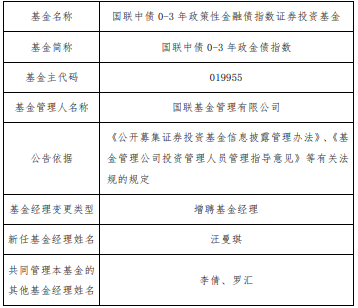
国联恒通纯债A/C成立于2022年8月8日,截至2025年8月19日,其今年来收益率为1.18%、0.98%,成立 来收益率为11.04%、10.09%,累计净值为1.1081元、1.0988元。 | 基金名称 | 国联中债 0-3年政策性金融债指数证券投资基金 | | --- | --- | | 基金筒称 | 国联中债 0-3 年政金债指数 | | 基金主代码 | 019955 | | 基金管理人名称 | 国联基金管理有限公司 | | 公告依据 | 《公开募集证券投资基金信息披露管理办法》、《基 金管理公司投资管理人员管理指导意见》等有关法 | | | 规的规定 | | 基金经理变更类型 | 增聘基金经理 | | 新任基金经理姓名 | 注意填 | | 共同管理本基金的 其他基金经理姓名 | 李倩、罗汇 | | 基金名称 | 国联恒通纯债债券型证券投资基金 | | --- | --- | | 基金简称 | 国联恒通纯债 | | 基金主代码 | 016189 | | 基金管理人名称 | 国联基金管理有限公司 | | 公告依据 | 《公开募集证券投资基金信息披露管理办法》、《基 金管理公司投资管理人员管理指导意见 ...
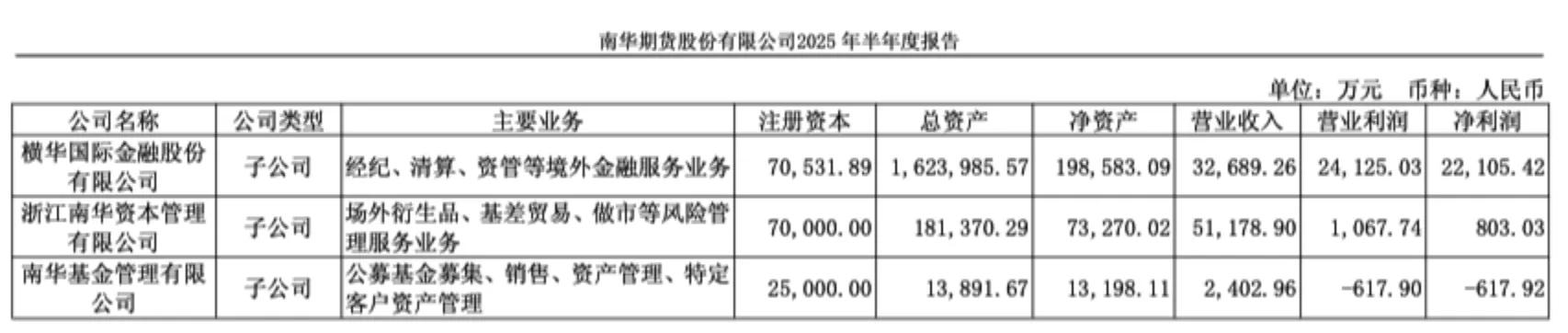
南华基金2025年上半年净利润-617.92万元
Cai Jing Wang· 2025-08-20 07:52
Group 1 - The core viewpoint of the article highlights the financial performance of Nanhua Fund, a wholly-owned subsidiary of Nanhua Futures, which reported a significant decline in revenue and net profit for the first half of 2025 [1] - Nanhua Fund's operating revenue for the first half of 2025 was 24.03 million yuan, a decrease of 26.21% year-on-year, while the net profit was -6.18 million yuan, representing a year-on-year decline of 1928.71% [1] - As of the end of June 2025, Nanhua Fund's total assets amounted to 139 million yuan, with net assets of 132 million yuan [1] Group 2 - Nanhua Fund is the first public fund management company fully controlled by a futures company in China, with a total public fund scale of 21.53 billion yuan as of June 30, 2025, reflecting a growth of 45.40% compared to the end of the previous year [3] - Nanhua Futures reported an increase in general risk reserves amounting to 2.44 million yuan, which was derived from 10% of the management fee income from securities investment funds and private asset management for the first half of 2025 [3]

两市ETF两融余额增加29.14亿元丨ETF融资融券日报
2 1 Shi Ji Jing Ji Bao Dao· 2025-08-20 02:35
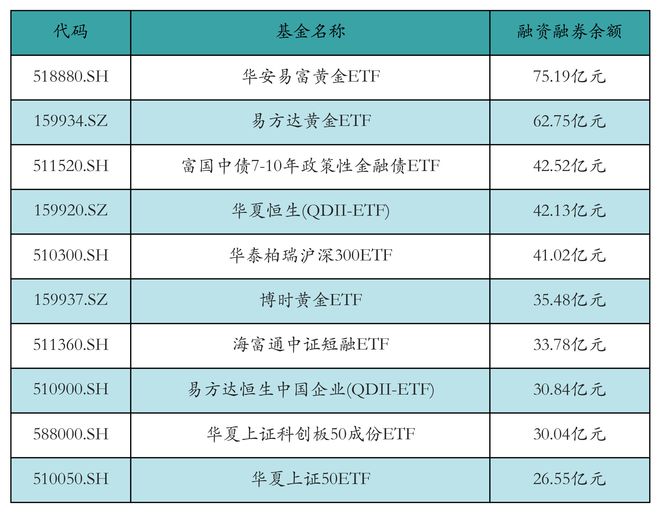
Market Overview - On August 19, the total ETF margin balance in the two markets reached 106.27 billion yuan, an increase of 2.914 billion yuan from the previous trading day [1] - The financing balance was 99.855 billion yuan, up by 2.877 billion yuan, while the securities lending balance was 6.415 billion yuan, increasing by 36.842 million yuan [1] - In the Shanghai market, the ETF margin balance was 73.885 billion yuan, rising by 2.865 billion yuan, with a financing balance of 68.293 billion yuan, up by 2.837 billion yuan [1] - The Shenzhen market's ETF margin balance was 32.384 billion yuan, increasing by 48.825 million yuan, with a financing balance of 31.562 billion yuan, up by 39.885 million yuan [1] ETF Margin Balance - The top three ETFs by margin balance on August 19 were: - Huaan Yifu Gold ETF (7.519 billion yuan) - E Fund Gold ETF (6.275 billion yuan) - Fortune China Bond 7-10 Year Policy Financial Bond ETF (4.252 billion yuan) [2] ETF Financing Amount - The top three ETFs by financing amount on August 19 were: - Hai Fudong China Bond Short-term ETF (3.698 billion yuan) - Fortune China Bond 7-10 Year Policy Financial Bond ETF (2.194 billion yuan) - E Fund China Hong Kong Securities Investment Theme ETF (1.834 billion yuan) [3][4] ETF Net Financing Amount - The top three ETFs by net financing amount on August 19 were: - Fortune China Bond 7-10 Year Policy Financial Bond ETF (1.444 billion yuan) - Hai Fudong China Bond Short-term ETF (534 million yuan) - Bosera China Bond 0-3 Year National Development Bank Bond ETF (226 million yuan) [5][6] ETF Securities Lending Amount - The top three ETFs by securities lending amount on August 19 were: - Southern China Securities 1000 ETF (37.2145 million yuan) - Bosera China Bond Convertible and Exchangeable Bond ETF (30.2817 million yuan) - Southern China Securities 500 ETF (29.5579 million yuan) [7][8]
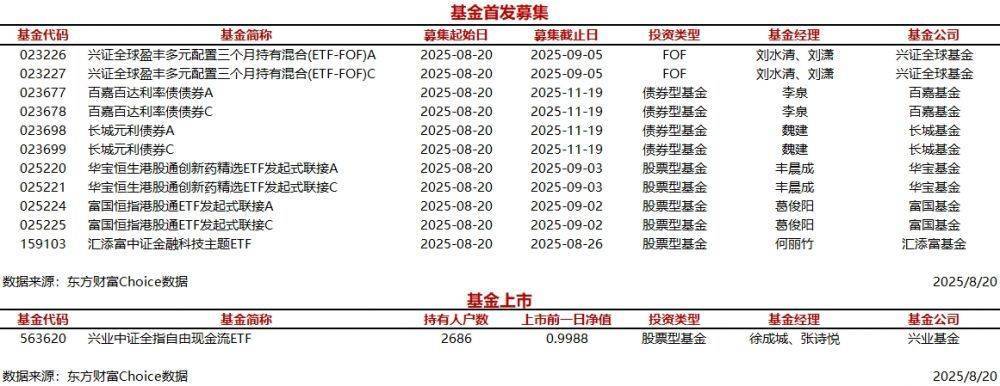
今日11只基金首发募集,1只基金上市
Sou Hu Cai Jing· 2025-08-20 01:30
Group 1 - A total of 11 funds were launched today, including 5 equity funds, 4 bond funds, and 2 FOFs [1] - One fund was listed today [1] Group 2 - The newly launched funds include various types such as mixed funds, bond funds, and ETFs, with specific details on their investment types and management teams [2] - The funds have different subscription periods, with most starting on August 20, 2025, and ending between September 2 and November 19, 2025 [2]
中信建投证券获易方达基金增持23.35万股
Ge Long Hui· 2025-08-20 00:22
| 股份代號: | 06066 | | --- | --- | | 上市法國名稱: | 中信建投証券股份有限公司 - H股 | | 日期 (日 / 月 / 年): | 20/07/2025 - 20/08/2025 | 格隆汇8月20日丨根据联交所最新权益披露资料显示,2025年8月13日,中信建投证券(06066.HK)获易方达基金管理有限公司在场内以每股均价13.70港元增 持23.35万股,涉资约319.9万港元。 增持后,易方达基金管理有限公司最新持股数目为8828.05万股,持股比例由6.98%上升至7.00%。 | 表格序號 | 大股東/董事/最高行政人員名 作出披露的買入 / 賣出或涉及的 每股的平均價 | | | | | 持有權益的股份數目 佔已發行的 有關事件的日 相關法 | | --- | --- | --- | --- | --- | --- | --- | | | | | 股份數目 | | | (語参関上述*註 有投票權股期(日/月/ 份權益 | | | | | | | | 份自分比 年) | | CS20250818E00281 | 易方达基金管理有限公司 | 1101(L) | | ...


业绩反弹!超2000只权益类基金净值创历史新高,业内人士解读→
Sou Hu Cai Jing· 2025-08-19 14:59
Group 1 - The A-share market has seen a significant increase in confidence and capital activity, leading to a rebound in the performance of equity funds, with 45 new funds launching this week, 35 of which are equity funds [1] - As of August 18, over 96% of equity funds have achieved positive returns this year, with more than 20 funds doubling their performance and over a thousand funds exceeding 30% returns [1] - The driving force behind the strong market performance is the influx of new capital, particularly from institutional investors such as insurance and private equity, alongside a favorable external environment and supportive policies [1] Group 2 - The number of new fund launches this week represents a 36.36% increase compared to the previous week, with equity funds making up 77.8% of the total [1] - The strong performance of equity funds in the issuance market reflects a positive outlook from investors towards equity assets, prompting fund companies to increase their focus on equity products [1]
基金经理晒实盘:共担风险,还是营销新招?
2 1 Shi Ji Jing Ji Bao Dao· 2025-08-19 13:33
Core Insights - The trend of fund managers publicly sharing their real investment portfolios is emerging as a significant phenomenon in the public fund industry by 2025 [1][2] - Over 30 fund managers have begun to disclose their personal fund portfolios on platforms like Ant Fortune and Tian Tian Fund, with total amounts ranging from 10,000 to 400 million [1] Group 1: Background and Development - The practice of fund managers sharing real portfolios began in September 2023 with Ant Fortune launching this feature, followed by Tian Tian Fund in July 2025 [4] - This trend arose during a period when actively managed equity funds were underperforming the market for three years, leading to investor dissatisfaction and calls for accountability from fund managers [5] Group 2: Impact on Investor Relations - Fund managers' public portfolio sharing is seen as a way to rebuild trust in the industry by aligning their interests with those of investors, as they invest their own money alongside clients [5][11] - The practice serves as a form of investor education, where fund managers provide insights and analysis alongside their portfolio updates, fostering a more interactive relationship with investors [6] Group 3: Compliance and Controversies - The phenomenon raises compliance concerns, such as whether it could be perceived as a form of marketing or "selling" products, potentially leading to investor misguidance [3][8] - There are calls for fund managers to diversify their portfolio disclosures to include external funds, enhancing the credibility of their investment strategies and avoiding the perception of self-promotion [9][10] Group 4: Future Directions - The industry needs to find a balance between compliance and meeting investor needs, ensuring that the practice does not devolve into mere marketing gimmicks [12] - Long-term success will depend on establishing clear compliance standards and enhancing investor education while maintaining the integrity of the investment process [11]