
医疗信息化

Search documents
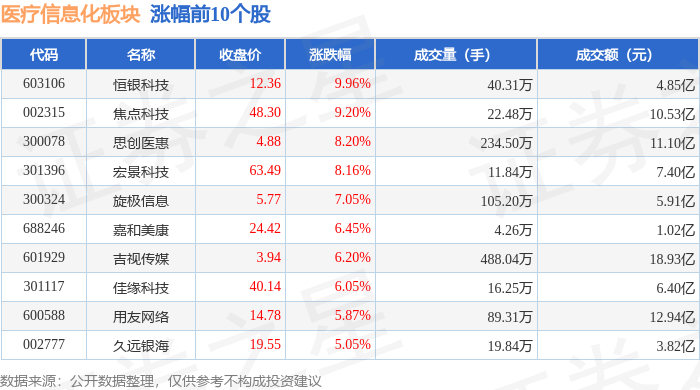
医疗信息化板块11月24日涨1.48%,恒银科技领涨,主力资金净流入1985.73万元
Sou Hu Cai Jing· 2025-11-24 09:19
Core Viewpoint - The medical information technology sector experienced a rise of 1.48% on November 24, with Hengyin Technology leading the gains [1] Group 1: Market Performance - The Shanghai Composite Index closed at 3836.77, up 0.05%, while the Shenzhen Component Index closed at 12585.08, up 0.37% [1] - Hengyin Technology saw a closing price of 12.36, with a significant increase of 9.96% and a trading volume of 403,100 shares, amounting to a transaction value of 485 million [1] - Other notable performers included: - Jiao Dian Technology: closed at 48.30, up 9.20% with a transaction value of 1.053 billion [1] - Sichuang Medical: closed at 4.88, up 8.20% with a transaction value of 1.11 billion [1] - Hongjing Technology: closed at 63.49, up 8.16% with a transaction value of 740 million [1] Group 2: Capital Flow - The medical information technology sector saw a net inflow of 19.8573 million from institutional investors, while retail investors contributed a net inflow of 466.1 million [2] - Notable capital flows included: - Jiao Dian Technology: institutional net inflow of 2.32 billion, retail net outflow of 971.479 million [3] - Jishi Media: institutional net inflow of 172 million, retail net outflow of 1.96 billion [3] - Hengyin Technology: institutional net inflow of 1.62 billion, retail net outflow of 898.739 million [3]


更顺畅!医保影像可以跨省调阅啦!
Xin Hua She· 2025-11-21 14:53
Core Insights - The launch of the national medical insurance imaging cloud system allows for cross-province retrieval of medical imaging data, facilitating easier access for patients receiving care away from their home province [1][2] - The system aims to standardize and centralize dispersed imaging data, enabling healthcare providers to access patient histories without the need for physical film [1][2] - The initiative is part of a broader effort to enhance healthcare efficiency and reduce costs associated with traditional imaging methods [2][3] Group 1 - The national medical insurance imaging cloud system officially started on November 20, allowing patients to access their imaging data without carrying physical films [1] - As of now, 24 provinces have completed the software deployment for the imaging cloud, with 160 million indexed imaging data records collected on the national platform [1] - The cloud system addresses issues related to high storage costs, space consumption, and fragmented data, which were prevalent with traditional film methods [2] Group 2 - The implementation of the imaging cloud has led to significant cost reductions, with the service cost in Guizhou dropping to 4.95 yuan per service, compared to the previous 14 yuan [2] - The national medical insurance bureau plans to expand the scope of cross-province data sharing and aims to establish a unified national imaging cloud network by the end of 2027 [3] - The imaging cloud system also enhances the ability to trace and monitor healthcare fraud, improving regulatory oversight [2]
全国医保影像云跨省调阅启动 患者告别“胶片袋”将有哪些便利?
Yang Guang Wang· 2025-11-21 09:53
Core Points - The launch of the national medical insurance imaging cloud for cross-province retrieval marks a significant advancement in medical imaging services, allowing for seamless access to patient imaging data across different regions [1][2][3] - The initiative aims to enhance diagnostic accuracy and efficiency by overcoming traditional barriers associated with physical film storage and retrieval, thus facilitating better patient care [2][3][4] Group 1: Technological Advancements - The transition from traditional film to cloud-based imaging solutions addresses the limitations of physical films, such as their bulkiness, susceptibility to damage, and inability to capture detailed images [2][3] - The national medical insurance imaging cloud has indexed over 170 million imaging records, with a goal to establish a "national network" by 2027 [3] Group 2: Operational Efficiency - The implementation of a unified platform and indexing standards allows for efficient storage and retrieval of imaging data, significantly reducing costs associated with data transmission [3] - The cloud service is priced at 5 yuan per person per imaging instance, promoting local storage and cross-regional transmission as a medical service [3] Group 3: Patient-Centric Care - Patients can now access, download, and share their imaging data without incurring additional fees, which enhances the convenience of tiered medical services and remote consultations [3][4] - The ability to consult with high-level medical institutions remotely improves diagnostic quality and resource utilization across the healthcare system [4][5] Group 4: Future Innovations - The data generated from imaging services is expected to drive innovations in AI-assisted diagnostics and remote medical applications, further benefiting patients and healthcare professionals [4]
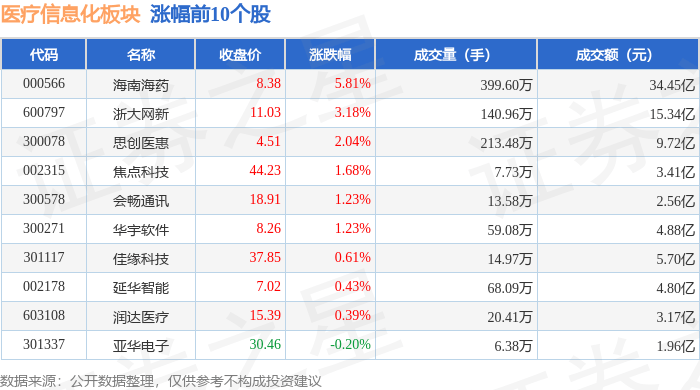
医疗信息化板块11月21日跌2.49%,天亿马领跌,主力资金净流出26.73亿元
Sou Hu Cai Jing· 2025-11-21 09:52
Market Overview - The medical information technology sector experienced a decline of 2.49% on November 21, with Tianyi Ma leading the drop [1] - The Shanghai Composite Index closed at 3834.89, down 2.45%, while the Shenzhen Component Index closed at 12538.07, down 3.41% [1] Stock Performance - Notable gainers in the medical information technology sector included: - Yuangeng Kunshi (000566) with a closing price of 8.38, up 5.81% [1] - Zhejiang University Network New (600797) at 11.03, up 3.18% [1] - Sichuang Medical (300078) at 4.51, up 2.04% [1] - Major decliners included: - Tianyi Ma (301178) at 51.97, down 9.24% [2] - ST Yinda (300125) at 8.27, down 7.80% [2] - Rong Technology (300290) at 24.68, down 6.44% [2] Capital Flow - The medical information technology sector saw a net outflow of 2.673 billion yuan from institutional investors, while retail investors contributed a net inflow of 2.234 billion yuan [2][3] - Key stocks with significant capital flow included: - Zhejiang University Network New (600797) with a net inflow of 121 million yuan from institutional investors [3] - Ji Shi Media (601929) with a net inflow of 97.23 million yuan [3] - Huayu Software (300271) with a net inflow of 36.92 million yuan [3]


嘉和美康:股东国寿成达累计减持公司股份约138万股,减持时间区间届满
Mei Ri Jing Ji Xin Wen· 2025-11-19 09:44
截至发稿,嘉和美康市值为35亿元。 每经头条(nbdtoutiao)——爱泼斯坦案文件解密倒计时,美国会"秒过"法案直通特朗普,引爆两党"极 限撕扯" (记者 曾健辉) 每经AI快讯,嘉和美康(SH 688246,收盘价:25.22元)11月19日晚间发布公告称,公司于近日收到公 司股东国寿成达出具的《关于股份减持结果的告知函》,国寿成达已于2025年10月20日至2025年10月22 日期间期间通过集中竞价方式累计减持所持有的公司股份约138万股,占公司当前股份总数的1%。截至 目前,本次减持计划披露的减持时间区间届满。 2024年1至12月份,嘉和美康的营业收入构成为:医疗信息化行业占比99.73%,其他行业占比0.27%。 ...

蚂蚁健康升级,会否成为又一个极其昂贵的故事丨正经深度
Sou Hu Cai Jing· 2025-11-17 08:14
Core Insights - Ant Group is facing challenges in cultivating new growth drivers while needing to tell a new market story for valuation recovery and management [1][2] - The health strategy of Ant Group is AI-driven, continuing the platform thinking inherited from Alibaba, aiming for a transformation from a "fintech platform" to an "AI-driven livelihood service infrastructure" [2][9] Business Structure and Strategy - Ant Group has restructured its organization, with the new "Health Business Group" becoming a strategic pillar alongside other core business units [7] - The company aims to integrate health management, consultation, diagnosis, payment, and rehabilitation into a seamless service ecosystem [9][10] Market Challenges - The healthcare sector presents significant complexity and high barriers to entry, making integration difficult [3][4] - Ant Group's health strategy faces competition from established players like Tencent, JD, and Baidu, as well as numerous AI healthcare startups [21][22] Financial Performance and Valuation - Ant Group's valuation has significantly decreased from a peak of over 2.1 trillion yuan to approximately 567.1 billion yuan, a drop of over 70% [7][8] - The company’s net profit has also declined sharply, with a drop of more than 60% compared to its peak [7] User Engagement and Market Potential - Ant Health has served over 800 million users since its inception in 2014, indicating a strong user base [8][9] - The Chinese healthcare market is projected to grow from 8 trillion yuan in 2019 to 20 trillion yuan by 2025, with a compound annual growth rate of 15% [8] AI Integration and Technology - Ant Group's AI health application "AQ" is central to its health strategy, providing various AI-driven health services and connecting with over 5,000 hospitals and nearly a million doctors [14][16] - The AI model has been trained on over a trillion tokens of medical data, aiming to provide personalized and reliable health advice [16][17] Internal and External Challenges - Internal resource competition among different business units poses challenges for the implementation of the health strategy [21] - The healthcare sector's high investment and slow return model complicates the commercialization of AI healthcare solutions [22]

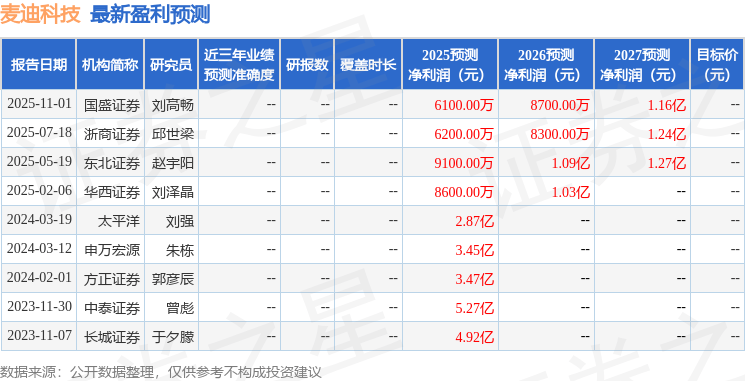
麦迪科技:11月12日召开业绩说明会,投资者、国盛证券等多家机构参与
Sou Hu Cai Jing· 2025-11-17 01:43
Core Viewpoint - The company, Madi Technology, reported a significant improvement in its financial performance for the first three quarters of 2025, driven by the successful divestment of its photovoltaic business and a strategic focus on its core medical information technology operations [1][6]. Financial Performance - For the first three quarters of 2025, the company achieved operating revenue of 223 million yuan, with a 63% decrease in operating costs compared to the previous year [1]. - The net profit attributable to shareholders reached 34.27 million yuan, marking a substantial increase of 120.49% year-on-year, successfully turning around from a loss [1][6]. - The gross profit margin for the first three quarters improved significantly, attributed to the divestment of the loss-making photovoltaic business and enhanced operational efficiency [1][2]. Cost and Cash Flow Management - The company's asset-liability ratio dropped from 74.56% to 32.41% following the completion of the photovoltaic business divestiture, indicating a significant optimization of its financial structure [2]. - The net cash flow from operating activities increased by 58.4 million yuan year-on-year, turning positive and reflecting improved cash management [2]. Business Segments and Competitive Advantages - The company has established a strong position in the medical information technology sector, leveraging 20 years of industry experience to develop a comprehensive product matrix for critical clinical scenarios [2]. - The company is actively enhancing its research and development efforts, integrating advanced technologies such as AI and big data into its core products to increase customer loyalty and system dependency [2]. Strategic Partnerships and Innovations - Madi Technology has partnered with Huawei to implement a "5G + Smart Medical" solution, which has been deployed in multiple hospitals, enhancing regional emergency response capabilities [3]. - The company is also advancing its initiatives in the smart healthcare sector, collaborating with industry partners to develop intelligent care systems for elderly care [4]. ESG and Governance - The company has integrated ESG principles into its long-term development strategy, focusing on sustainable operations and social responsibility [5]. - Madi Technology is committed to enhancing its governance framework and investor relations, ensuring transparency and accountability in its operations [5].

【财经早报】今日复牌!医疗信息化龙头 “易主”新进展
Zhong Guo Zheng Quan Bao· 2025-11-16 23:06
Group 1: Banking Sector - Four A-share listed banks will implement mid-term dividends for 2025, with a total payout of approximately 17.94 billion yuan [2] - As of November 15, eight A-share listed banks have completed their mid-term dividends for 2025, indicating a trend towards high dividend policies to boost market confidence [2] Group 2: Monetary Policy - The People's Bank of China will conduct a 800 billion yuan reverse repurchase operation to maintain liquidity in the banking system, with a term of 182 days [1][3] - A total of 11.22 trillion yuan in reverse repos will mature this week, indicating ongoing liquidity management by the central bank [3] Group 3: Company News - Huawei is set to release new AI technology on November 21, which aims to significantly improve the efficiency of computing resources from an industry average of 30%-40% to 70% [4] - Zhongwei Co. is in the process of issuing H-shares for listing on the Hong Kong Stock Exchange, with a base issuance of 104 million shares, potentially raising approximately 3.433 billion HKD [4] - Chuangye Huikang is undergoing a control change, with a major shareholder transferring 6.23% of shares, which will make the buyer the largest shareholder [5] - Heshun Petroleum plans to acquire at least 34% of Shanghai Kuixin Integrated Circuit Design Co., with a total transaction value not exceeding 540 million yuan [6] Group 4: Industry Trends - Institutional interest in listed companies remains high, with nearly 770 companies receiving institutional research in November, particularly in the electronics and machinery sectors [2] - The focus for technology investments in 2026 is expected to revolve around the application of AI, with specific attention on companies benefiting from domestic AI applications and computing power construction [2]
麦迪科技20251114
2025-11-16 15:36
Summary of Madi Technology Conference Call Company Overview - Madi Technology has divested its photovoltaic business, resulting in a significant reduction in debt-to-equity ratio to 32.41%, indicating a substantial optimization of its financial structure [1][4] - The company operates in the medical information technology sector, covering 32 provinces and cities in China, serving over 2,400 hospitals [2][5] Key Achievements and Developments - Madi Technology has established high barriers in the medical information field, participating in the formulation of regional emergency data exchange standards and collaborating deeply with Huawei to create a regional emergency rescue network [2][5][6] - Since acquiring Haikou Mary Hospital in 2019, Madi Technology has achieved steady growth in asset scale, revenue, and profit through scientific management and optimized treatment plans [2][7] - The company’s health care robot won a silver award at the Shenzhen International Smart Elderly Care Industry Expo, indicating its commitment to exploring smart elderly care service robots [2][8] Financial Performance - In the first three quarters of 2025, Madi Technology reported revenue of approximately 220 million yuan, with a 63% decrease in operating costs compared to the previous year [4] - The total profit exceeded 38 million yuan, with a net profit attributable to shareholders of 34.27 million yuan, marking a turnaround from losses [4] - Operating cash flow increased by 128.11% year-on-year, significantly boosted by cash inflows from the divestiture of the photovoltaic subsidiary [4] Innovations and Collaborations - Madi Technology has launched an automated AED drone rescue solution in collaboration with Northwestern Polytechnical University, aiming to enhance medical rescue efficiency with a 4-minute emergency response circle [2][9][10] - The company is actively exploring the application of smart elderly care robots in various settings, addressing current challenges such as high costs and insufficient suitability for the elderly [2][8] Future Strategy - Madi Technology plans to continue promoting high-quality development in smart healthcare and drive industry integration, focusing on emerging fields such as low-altitude economy and health care robots [3][11] - The company aims to leverage AI intelligent services and the medical care market, integrating self-developed software platforms with AI models to create an efficient collaborative smart health care platform [3][11]
卫宁健康董事长行贿获刑,90后儿子火速提名董事,前三季度净利暴跌259%
Xin Lang Zheng Quan· 2025-11-14 05:38
Group 1 - The actual controller of Weining Health, Zhou Wei, was sentenced to one and a half years in prison for bribery, raising concerns about the company's governance structure and transparency [1][4] - Zhou Wei's son, Zhou Cheng, has been nominated as a non-independent director candidate, which has sparked worries about the "familial" governance structure and internal controls of Weining Health [1][4] Group 2 - Weining Health reported a significant decline in performance, with a 32.27% year-on-year drop in revenue and a net loss of 241 million yuan, marking a 256.10% decrease in net profit compared to the previous year [2][3] - The company attributed the drastic performance fluctuations to factors such as deferred customer demand, project acceptance delays, and the inability of new products to generate substantial revenue [2][3] Group 3 - Weining Health is undergoing a transition from traditional software to internet healthcare, but its internet medical business is still in the "optimization" phase and has not yet made a stable contribution [3] - The company faces pressures from rigid labor costs and tax liabilities, which further squeeze profit margins [3][4] Group 4 - Weining Health is confronted with multiple intertwined risks, including legal issues, governance disputes, and significant performance declines, which complicate its path to regaining investor trust [4]
