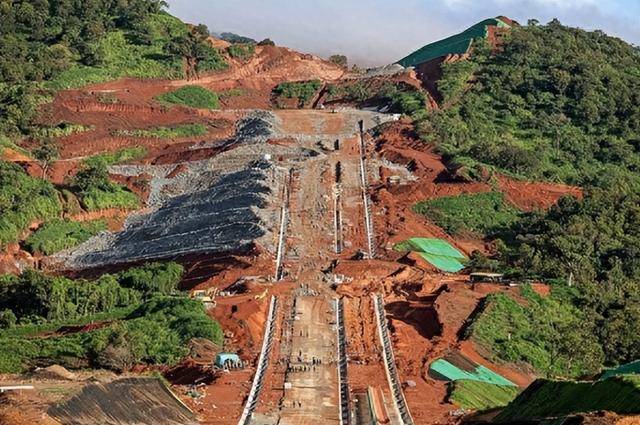
铁矿石开采

Search documents
当“地球之肺”邂逅中国市场,进博会上的“亚马孙热”
Di Yi Cai Jing· 2025-11-10 02:57
Group 1 - Brazil has been China's largest trading partner for 16 consecutive years, with bilateral trade exceeding $100 billion for seven consecutive years [6] - The 8th China International Import Expo (CIIE) highlighted a "green" theme, coinciding with the opening of COP30 in the Amazon region, emphasizing its importance in global climate governance [1][3] - Brazilian companies showcased products and technologies derived from renewable resources, aiming to contribute to a low-carbon, high-quality economy [1][3] Group 2 - The Brazilian government announced a temporary capital move to Belém during COP30 to underscore the Amazon's significance in global environmental agendas [3] - Companies like Suzano are focusing on biodiversity restoration and have developed a decarbonization white paper aligned with China's carbon neutrality goals [3][5] - The event provided opportunities for Chinese companies to collaborate with Brazilian partners, particularly in green finance, renewable energy, and sustainable agriculture [5][6]



西芒杜铁矿石准备装船,榨取中国钢企利益的时代该结束了
Sou Hu Cai Jing· 2025-11-08 03:36
Core Insights - The first batch of 2 million tons of iron ore from the Simandou mine in Guinea is set to be shipped to China, marking a significant shift in the global steel industry [2] - This initial shipment is seen as a starting point that could reshape the global steel market and challenge the dominance of the three major mining companies [2] Group 1: Industry Dynamics - The three major mining companies, BHP, Rio Tinto, and Vale, have historically monopolized the global iron ore market, capturing a significant portion of the industry's profits [4] - China consumes 70% of the world's iron ore but has limited pricing power due to the dominance of these three companies [4] - The profit margins for these mining giants are exceedingly high, with costs around $10 per ton but selling prices reaching $130 per ton, resulting in a profit margin exceeding 90% [4][6] Group 2: Financial Disparities - In 2024, the net profit of the three mining giants is projected to reach 184 billion yuan, while China's steel industry collectively earns only 29 billion yuan, with less than 50% of steel companies making a profit [4][6] - The average profit per ton for Chinese steel production is only 29 yuan, compared to 184 yuan for the mining companies, highlighting a stark disparity in profitability [6] Group 3: Simandou Mine Significance - The Simandou mine is the largest and highest quality open-pit iron ore mine globally, with proven reserves of 4.41 billion tons and an expected annual output of 120 million tons [7] - The mine was previously controlled by Rio Tinto but was not developed for decades, as the company preferred to maintain high prices by limiting supply [9] - Chinese companies now control approximately 75% of the Simandou mine's production capacity, having successfully developed the mine and built a 600-kilometer railway to facilitate exports [11] Group 4: Market Impact - The 120 million tons of annual output from Simandou represents about 10% of China's iron ore imports, which could disrupt the pricing power of the three major mining companies [11] - The introduction of this new supply could lead to a breakdown of the existing pricing agreements among the mining giants, allowing China to regain pricing power [11] - Forecasts suggest that iron ore prices could decline by 15% to 20% over the next three years, potentially dropping to a range of $80 to $100 per ton [11] Group 5: Broader Economic Implications - The development of the Simandou mine is expected to benefit Guinea significantly, potentially making it the fourth-largest iron ore exporter globally and creating 50,000 direct jobs [13] - The project is anticipated to stimulate growth in logistics and equipment manufacturing sectors within Guinea [13] - The shift in the global iron ore market dynamics signifies a potential end to the historical exploitation of developing countries by Western mining giants [14]


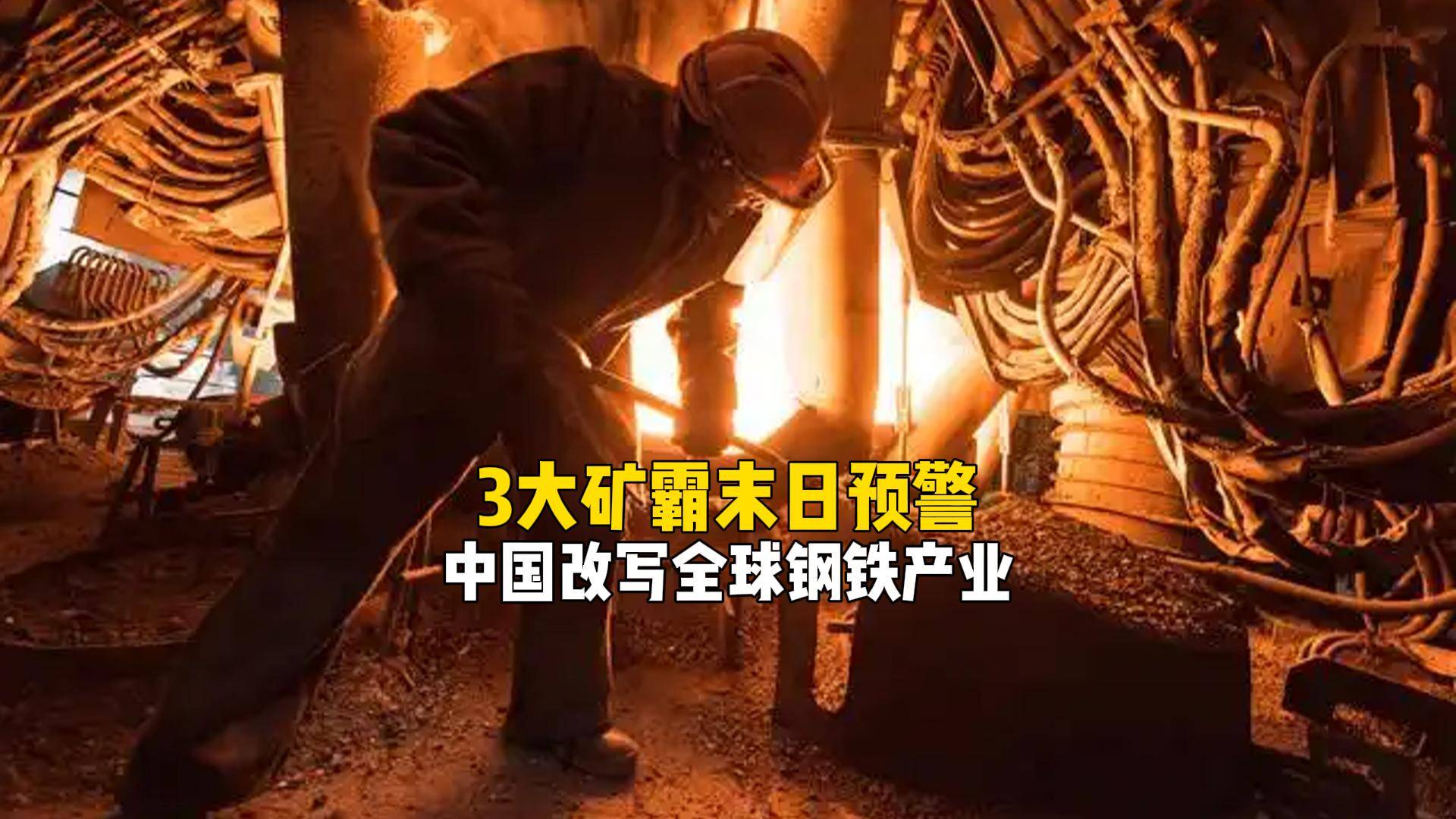
30亿吨铁矿重见天日,全球铁矿格局大变
Sou Hu Cai Jing· 2025-11-07 06:05
Core Insights - The West Simandou iron ore project in Guinea, with over 3 billion tons of reserves and 65% iron content, is poised to significantly impact the global iron ore supply chain [3][4] - China is transitioning from being a passive importer to an active participant in mining, pricing, and transportation, potentially gaining unprecedented shipping iron ore pricing power [3][6] - The project is expected to enhance China's manufacturing cost advantages and supply chain resilience, while also contributing significantly to Guinea's GDP [6][9] Industry Dynamics - The global iron ore market has been dominated by Australia and Brazil, but China's involvement in projects like Simandou is reshaping this dynamic [3][4] - Analysts predict a potential decline in global iron ore prices to around $85 per ton in the next three years, which would be significantly lower than previous highs [6] - The shift in pricing power indicates a move from a supply chain that was previously reactive to one that is more proactive, with China now influencing the market [4][9] Project Challenges - The Simandou project faces challenges including Guinea's political instability, infrastructure issues, and social tensions, which could affect its operational stability [4][8] - Despite China's strong execution capabilities in infrastructure projects, the success of Simandou will depend on maintaining cooperation and trust in a complex international environment [8] Strategic Implications - The project represents a broader strategic shift for China, moving from a resource-consuming nation to a resource-controlling entity, thereby altering the landscape of global manufacturing [8][9] - As high-grade iron ore becomes more consistently supplied, the dependency on a few dominant suppliers will diminish, leading to a more balanced market [6][9] - The implications of this shift extend beyond mere resource acquisition, as it involves a comprehensive approach to exploration, investment, construction, and market influence [6][9]
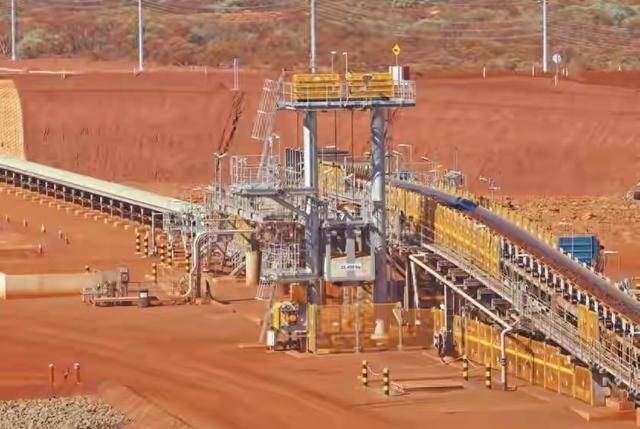
国运来了挡不住!30亿吨铁矿重见天日,美媒:中国将改写全球格局
Sou Hu Cai Jing· 2025-11-06 12:24
Core Insights - The West African Simandou iron ore project, long dormant for nearly 30 years, is now being revitalized by Chinese companies, marking a significant shift in its development approach [1][3][5] Group 1: Project Development - The Simandou iron ore, known for its high quality with grades exceeding 66%, has faced challenges in development due to unsuitable management practices by Western mining giants [5][7] - Chinese companies, including Chalco and Baowu Steel, have taken over the project, implementing effective management and operational strategies that have accelerated progress [7][9] - By June 2023, the project had recovered delays and achieved over 60% progress in development, showcasing the efficiency of Chinese teams compared to previous efforts [9][15] Group 2: Infrastructure and Logistics - A critical component of the project is the construction of a 600-kilometer railway, including the challenging 12-kilometer Kindiya tunnel, which has been a major obstacle for Western companies [13][15] - Chinese engineers have successfully addressed technical challenges and improved logistics, ensuring continuous construction and timely completion of the railway [15][19] - The railway will connect the Simandou mine to Atlantic ports, significantly enhancing Guinea's GDP by over 25% and facilitating the export of iron ore [17][19] Group 3: Economic and Strategic Implications - The high-grade iron ore from Simandou is crucial for China's steel industry, contributing to a greener transition by reducing energy consumption and carbon emissions [23][25] - The project is expected to provide a stable supply of approximately 120 million tons of iron ore annually, giving China leverage in global iron ore pricing negotiations [27][29] - China's involvement in the Simandou project represents a strategic shift in resource control, allowing for a more assertive role in the global iron ore market and reducing dependency on foreign suppliers [31][33]
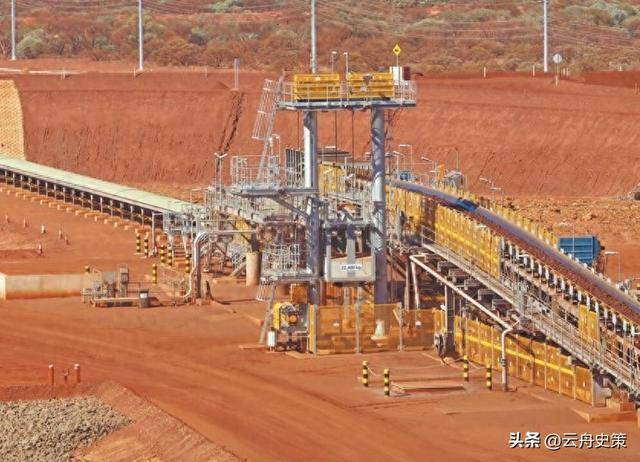
西芒杜项目投产在即,西方惊叹中国要“颠覆市场”,后果多严重?
Sou Hu Cai Jing· 2025-11-06 07:26
Core Insights - The Simandou iron ore project in Guinea is set to commence production, which has led to speculation about its potential to disrupt the market, although the real challenge lies in the industrial capacity to process the ore into steel rather than the availability of the ore itself [1][9] Group 1: Project Overview - The Simandou project boasts an exceptionally high iron content of over 65%, making it one of the top-quality iron ore sources globally [3] - The project has a long and complicated development history, having been discovered by Rio Tinto in 1998, but it is only now being advanced thanks to Chinese infrastructure capabilities [3][5] - Chinese companies now hold the majority stake in the Simandou project, with China Aluminum (Chinalco) being the largest shareholder of Rio Tinto, highlighting a significant shift in ownership dynamics [3] Group 2: Strategic Implications - The first batch of 2 million tons of ore is expected to be shipped by the end of the year, with future production capacity projected to reach 120 million tons, equivalent to 5% of global output [5] - This project enhances China's negotiating power in iron ore pricing discussions with Australia and Brazil, allowing for strategic leverage in future contracts [5][7] - The anticipated decline in iron ore prices to around $85 per ton over the next three years could significantly impact the profitability of major mining companies [7] Group 3: Industry Dynamics - The control of high-quality ore by China, combined with its status as the largest steel producer, is expected to shift pricing power in the iron ore market [7][9] - The long-term strategy of the Simandou project suggests that as the ore is depleted, a new pricing system led by China will likely be established, reflecting a broader shift in market dynamics [7][9] - The modern industrial landscape emphasizes the importance of processing capabilities over mere resource ownership, indicating a fundamental change in how wealth is generated in the 21st century [9]
铁矿石:全球四大矿山季报解读
Zhong Xin Qi Huo· 2025-11-06 07:16
1. Report Industry Investment Rating No relevant content provided. 2. Core Viewpoints of the Report - Assuming the incremental shipment guidance target is consistent with the incremental production guidance target, the year - on - year incremental shipments of the four major mining companies in Q4 2025 will be approximately 2.1 million tons. As of October 24, 2025, the year - on - year incremental shipments of the four major mining companies for the remaining period of Q4 will be approximately 5.4 million tons. After mutual verification, the year - on - year incremental shipments of the four major mining companies will not be high in the next two months [2][4][12]. 3. Summary by Directory 3.1 Overview - Combining the quarterly reports of the four major mining companies and Mysteel data, under given assumptions, the year - on - year incremental shipments of the four major mining companies will not be high in the next two months. Vale's Q4 production is expected to decrease by 1 Mt y/y, and its remaining Q4 shipment volume is projected to increase by 1.6 Mt y/y. BHP's Q4 2025 production is anticipated to rise by 0.5 Mt y/y, and its remaining Q4 shipment volume is expected to grow by 1 Mt y/y. FMG's Q4 2025 shipment volume is forecast to continue increasing by 0.6 Mt y/y, and its remaining Q4 shipment volume is expected to remain flat y/y. Rio Tinto's shipment progress is slow, and it may boost shipments at the end of the year, with Q4 shipment volume projected to increase by 2 Mt y/y and the remaining Q4 shipment volume's y/y growth estimated to be around 2.7 Mt [12][13][14]. 3.2 Quarterly Reports 3.2.1 Vale - Vale's 2025 annual production guidance target is 325 - 335 Mt, an increase of 2 Mt compared with 2024. The cumulative completion progress in the first three quarters is 74.4%, slightly higher than the past four - year average. Q4 production is expected to decrease by 1 Mt y/y. Assuming shipment guidance target increment is synchronized with production, the full - year shipment volume is expected to increase by 2 Mt y/y. As of October 24, the cumulative shipment volume has increased by 0.4 Mt y/y, and the remaining period's shipment volume is projected to rise by 1.6 Mt y/y [18][19][27]. - In Q3 2025, Vale's total iron ore production reached 94.4 Mt, a y/y increase of 4% (3.4 Mt). Pellet production was 7.997 Mt, a y/y decrease of 2.366 Mt but a slight increase compared with Q2. Iron ore sales totaled 86.0 Mt, 4.2 Mt higher y/y. Inventory increased by 4.5 Mt, mainly due to PFC in China [21][22][23]. - Northern System: Q3 production reached 48.737 Mt, basically flat y/y. S11D output reached 23.6 Mt (up 1.5 Mt y/y), offset by Serra Norte's 1.5 Mt y/y decrease. Southeastern System: Q3 production reached 22.721 Mt, a y/y increase of 1.135 Mt. Southern System: Q3 production reached 13.783 Mt, a y/y increase of 1.04 Mt [24][25][26]. 3.2.2 BHP - BHP's 100% basis production volume guidance for FY26 remains unchanged, increasing to 284 - 296 Mt compared with FY25, a y/y growth of 2 Mt. In Q3 2025, WAIO's production volume increased by 0.5 Mt y/y, and it is expected to continue rising by 0.5 Mt y/y in Q4 2025. Assuming shipment guidance target increment is synchronized with production, the full - year shipment volume is expected to increase by 2 Mt y/y. As of October 24, the cumulative y/y shipment volume of BHP's Australian operations in FY26 decreased by 1 Mt, and the remaining 2025 shipment volume is projected to increase by 1 Mt y/y [46][47][51]. - In Q3 2025, BHP's iron ore production reached 64 Mt, a y/y decrease of 0.54 Mt. WAIO had solid production with record material mined (up 9%) and strong shipments during planned maintenance. Samarco's production increased after recommissioning and ramp - up, and its FY26 production guidance remains at 7 - 7.5 Mt [48][49][50]. 3.2.3 FMG - In Q3 2025 (Q1 of FY26), FMG's total iron ore shipment volume reached 49.7 Mt, 4% higher than Q1 of FY25, setting a new record. The quarterly report maintains FY26's total shipment volume guidance at 195 - 205 Mt, an increase of 5 Mt compared to FY25. The Q3 2025 target completion rate reached 24.6%, slightly higher than the past four - year average. Q3 2025 shipment volume increased by 1.9 Mt y/y, and Q4 2025 is expected to continue growing by 0.6 Mt y/y. As of October 24, the cumulative y/y shipment volume of FMG in FY26 has increased by 4 Mt, and the remaining Q4 2025 shipment volume is projected to remain flat y/y [66][67][68]. 3.2.4 Rio - Rio's 2025 shipment guidance target for the Pilbara region remains at 323 - 328 Mt. As of Q3, the target completion rate is 71.1%, lower than the past four - year average. After cyclone impacts in Q1, Pilbara's annual shipment volume is expected to be at the lower end of the guidance range. Q4 shipment volume is expected to increase by 2 Mt y/y. As of October 24, Rio's cumulative shipments have decreased by approximately 0.7 Mt y/y, and the remaining Q4 shipment volume's y/y increment is expected to be around 2.7 Mt [84][85][87]. - In Q3, Rio's iron ore production reached 84.104 Mt, essentially unchanged y/y. The cumulative production in the first three quarters totaled 238 Mt, a y/y decrease of 3.867 Mt. Shipment volume in Q3 was 84.346 Mt, a slight y/y decline but a 6% quarter - on - quarter increase [86].

国运来了挡不住!30亿吨铁矿重见天日,美媒:中国将改写全球格局
Sou Hu Cai Jing· 2025-11-06 02:09
Core Viewpoint - The opening of the Simandou iron ore railway in Guinea marks a significant shift in the global iron ore supply chain, allowing China to establish a dominant position in high-grade iron ore sourcing and pricing, challenging the long-standing monopoly of Australia and Brazil [1][10][21]. Group 1: Project Development and Impact - The Simandou project, which has been dormant for nearly 30 years, is now operational, with the first shipment of iron ore set to depart soon [1][3]. - The total resource of the Simandou mine exceeds 3 billion tons, with an iron content of over 65%, making it one of the highest-grade "green mines" globally [3][4]. - The project involves a total investment of $23 billion and includes the construction of a dedicated railway to connect the mine to the port on Guinea's west coast [4][17]. Group 2: Strategic Shift in Pricing Power - China's involvement in the Simandou project allows it to transition from being a mere buyer to a resource owner and logistics builder, fundamentally altering the pricing dynamics in the iron ore market [10][12][19]. - The introduction of a "point-to-point pricing" model by Chinese companies is bypassing traditional pricing platforms, allowing for direct pricing based on source, tonnage, and port costs [13][15]. - The shift in pricing power is expected to provide Chinese steel companies with cost advantages, as higher-grade iron ore can reduce smelting costs significantly [15][19]. Group 3: Economic and Geopolitical Implications - The Simandou project is anticipated to contribute over 25% to Guinea's GDP growth in the next decade, creating new towns and improving local infrastructure and services [17][21]. - This initiative aligns with China's Belt and Road Initiative, emphasizing mutual benefits and industrial cooperation rather than mere resource extraction [17][21]. - The success of the Simandou project is seen as a model for China's broader strategy in global resource acquisition, moving from a "predatory" approach to one that emphasizes investment, infrastructure, and collaboration [19][23].

矿山季季观:四大矿山表现分化
Guo Tou Qi Huo· 2025-11-05 12:45
Report Summary 1. Company Production and Sales Data - In Q3 2025, Vale's production was 94.4, with a 12.9% quarterly increase and a 3.8% year - on - year increase; sales were 86.0, with an 11.2% quarterly increase and a 5.1% year - on - year increase [5] - BHP Billiton (100% equity) had a production of 70.3 in Q3 2025, a - 9.3% quarterly decrease and a - 1.8% year - on - year decrease; sales were 70.6, a - 8.0% quarterly decrease and a - 1.3% year - on - year decrease [5] - Rio Tinto (100% equity) had a production of 84.1 in Q3 2025, a 0.5% quarterly increase and a 0.0% year - on - year increase; shipping volume was 84.3, a 5.5% quarterly increase and a - 0.2% year - on - year decrease [5] - FMG's shipping volume in Q3 2025 was 49.7, a - 10.0% quarterly decrease and a 4.2% year - on - year increase [5] 2. Product - Specific Data Iron Ore Products in 2025 Q3 - PB block: production was 17.7, with a 24% year - on - year increase and a 58% quarterly increase [17] - PB fines: production was 33.4, with a 25% year - on - year increase and a 55% quarterly increase [17] - Robe River block: production was 1.3, with a 14% year - on - year increase and a - 4% quarterly decrease [17] - Robe River fines: production was 2.2, with a - 13% year - on - year decrease and a - 15% quarterly decrease [17] - Yandi fines: production was 10.8, with a - 9% year - on - year decrease and a 1% quarterly increase [17] - SP10 block: production was 2.9, with a - 49% year - on - year decrease and a - 65% quarterly decrease [17] - SP10 fines: production was 3.2, with a - 70% year - on - year decrease and a - 75% quarterly decrease [17] Another Set of Iron Ore Products in 2025 Q3 - Newman: production was 13.72, with a 3% year - on - year increase and a - 9% quarterly decrease [23] - Area C: production was 29.42, with a 2% year - on - year increase and a - 10% quarterly decrease [23] - Yandi: production was 3.5, with a - 21% year - on - year decrease and a - 9% quarterly decrease [23] - Jinbuba: production was 15.38, with an - 8% year - on - year decrease and a - 7% quarterly decrease [23] Other Iron Ore Products in 2025 Q3 - Tieqiao: production was 2.1, with a 31% year - on - year increase and a - 13% quarterly decrease [26] - West Pilbara fines: production was 4, with an 11% year - on - year increase and a 14% quarterly increase [26] - King fines: production was 3.3, with an - 11% year - on - year decrease and a - 6% quarterly decrease [26] - Mixed fines: production was 18.3, with a 6% year - on - year increase and a - 15% quarterly decrease [26] - FMG block: production was 2.3, with a 10% year - on - year increase and a 28% quarterly increase [26] - Super Special fines: production was 19.6, with a 1% year - on - year increase and a - 13% quarterly decrease [26]
铁矿石月报:供需边际减弱,铁矿承压运行-20251105
Tong Guan Jin Yuan Qi Huo· 2025-11-05 09:55
1. Report Industry Investment Rating - No specific information about the industry investment rating is provided in the report. 2. Core Viewpoints - In the past month, the demand for iron ore fluctuated at a high level but gradually weakened. At the end of the month, environmental protection restrictions in Hebei were tightened, leading to a decline in molten iron production. Steel mills became more cautious in raw material procurement, actively reducing their imported ore inventories with weak restocking intentions. As the supply - demand situation eased, the demand side's driving force for ore prices significantly weakened [3][10][34]. - The first shipment of iron ore from Simandou is planned for November this year. Its production is expected to increase significantly in 2026 and enter a rapid growth phase from 2027 - 2028, which requires close attention. In October, the global iron ore shipment volume increased slightly month - on - month and remained at a high level. The arrival volume in China increased significantly. Considering the year - end rush expectation, the shipping rhythm of major mines is likely to remain active, and the arrival volume may continue to stay high [3][14][35]. - In the next month, the market focus will shift to the fundamentals. On the macro side, recent policy benefits have been intensively introduced, releasing positive sentiment. Fundamentally, iron ore demand is declining marginally, and the expectation of steel mill production cuts is strengthening, so molten iron production will continue to fall. On the supply side, overseas shipments and arrivals are expected to be stable, and port inventories may continue to accumulate. With weakening supply - demand, the iron ore price is expected to show a volatile and pressured trend, with a focus range of 700 - 810 yuan/ton [3][35]. 3. Summary According to the Table of Contents 3.1 Market Review - In October, iron ore futures fluctuated widely at a high level, first falling and then rising, and the price weakened at a high level in November. At the beginning of last month, due to the National Day holiday, concerns about weak terminal demand increased, and the ore price declined under pressure. The main contract dropped to around 760 yuan/ton. In the middle of the month, driven by macro - level benefits, the market sentiment gradually recovered. The iron ore price rebounded after reaching the bottom. The global shipment volume remained high last month, port inventories continued to accumulate, and the demand side weakened marginally. The daily average molten iron production decreased slightly month - on - month, and the supply - demand pattern shifted from tight balance to loose [8]. - The spot price adjusted oscillatingly. As of early November, the 62% Platts Index decreased by 1.2% month - on - month to $104.6/ton, and the PB powder spot price dropped by 2 yuan to 782 yuan/wet ton. The spread between high - and low - grade ores stopped falling and rebounded. The spread between PB powder and Super Special powder increased from around 70 yuan/ton to around 95 yuan/ton. The 01 - 05 contract spread oscillated last month, fluctuating narrowly in the range of 20 - 25 yuan/ton [8]. 3.2 Fundamental Analysis 3.2.1 Demand Driving Force Significantly Weakened - In October, the demand for iron ore fluctuated at a high level but gradually weakened. The daily average molten iron production of 247 steel mills in October was 240,100 tons/day, a month - on - month increase of 1,900 tons, but the weekly data decreased continuously month - on - month, dropping to 236,360 tons at the end of the month. Steel mill profits shrank significantly, and the profitability rate dropped to 52.2%, a month - on - month decrease of 7.3%. Terminal steel demand was weak, and the pressure of steel inventory accumulation was transmitted to the raw material end, suppressing iron ore consumption. The port desilting volume decreased month - on - month, and steel mills actively reduced their imported ore inventories with weak restocking intentions [10][34]. - Overseas, in October, the Federal Reserve cut interest rates by 25 basis points as expected. The crude steel production of major iron ore importing countries has been poor. In September 2025, the global crude steel production of 70 countries/regions included in the World Steel Association statistics decreased by 1.6% year - on - year [11]. 3.2.2 Supply: Overseas Shipments Stable - China's iron ore imports decreased year - on - year this year, but the decline has recently narrowed. From January to September, China imported 917.69 million tons of iron ore, a year - on - year decrease of 0.1%. The Simandou iron ore project in Guinea is expected to be put into operation smoothly, and the first shipment is planned for November this year. Its annual production capacity is 120 million tons, and it is expected to significantly increase production in 2026 and enter a rapid growth phase from 2027 - 2028 [14]. - In October, the global iron ore shipment volume increased slightly month - on - month and remained at a high level. The weekly average shipment volume reached 3.302 million tons, an increase of 18,000 tons compared with September. The shipments of major mines in Australia and Brazil were stable. The arrival volume in China increased significantly, and the monthly average weekly arrival volume at 45 ports was 2.438 million tons, a month - on - month increase of 92,000 tons [15]. 3.2.3 Iron Ore Port Inventory - In the previous month, port iron ore inventories continued to accumulate. As of October 31, the total inventory of imported iron ore at 45 ports in the country reached 145.42 million tons, a month - on - month increase of 5.65 million tons. The inventory accumulation was due to weakening supply - demand. The arrival volume increased significantly, while the desilting volume decreased, and steel mills slowed down their restocking. In the future, the arrival volume will remain high, but the molten iron production is under pressure to decline, and the port inventory will enter a seasonal accumulation cycle [23][24]. 3.2.4 Steel Mill Inventory Situation - In October, steel mills actively reduced their inventories and became more cautious in procurement. As of the end of the month, the total imported ore inventory of 247 sample steel mills was 88.49 million tons, a month - on - month decrease of 2.3 million tons, and the inventory - to - consumption ratio dropped to 30.35 days. Currently, the profitability rate of steel mills has dropped to 52%, and cash profits have significantly declined. With the deepening of the downstream demand off - season and increasing finished product inventory pressure, it is expected that steel mills will mainly have rigid demand and there will be no large - scale restocking [26]. 3.2.5 Domestic Mine Production Situation - In October, the production of domestic iron ore mines was stable with a slight decline. Affected by environmental protection restrictions and safety production inspections, the iron concentrate powder production of national sample mines remained at around 47,600 tons, a slight month - on - month decrease of 0.21. The capacity utilization rate of domestic mines also declined to 60.96%. The supply elasticity of domestic mines is limited, and the market share of domestic mines has slightly shrunk [27][30]. 3.2.6 Shipping Freight Situation - In October, the Baltic Dry Index (BDI) was stable. As of November 4, the BDI index was reported at 1,958 points, a month - on - month increase of 1.3%. On November 4, the freight rate for the Dampier - Qingdao route in Australia was $9.31/ton, a decrease of $0.26/ton in a month, and the freight rate for the Tubarao - Qingdao route in Brazil was $22.95/ton, a month - on - month decrease of $1.21/ton. It is expected that the shipping market will still lack driving force [31]. 3.3 Market Outlook - The demand side will continue to weaken. Steel mills will be more cautious in procurement, and the demand for iron ore will be further suppressed. The supply side is expected to remain stable, and port inventories may continue to accumulate. It is expected that the iron ore price will show a volatile and pressured trend, with a focus range of 700 - 810 yuan/ton [34][35].
美媒:中国从未拥有过这般程度海运铁矿石定价权,将开始掌控局面
Sou Hu Cai Jing· 2025-11-05 09:38
Core Insights - The international commodity market has seen significant developments, particularly with BHP signing an agreement with China Mineral Resources Group to settle iron ore trades in RMB starting from Q4 of this year, indicating China's growing influence in the iron ore sector [1] - Guinea's Simandou iron ore reserve, with 2 million tons of high-grade iron ore set for its first shipment to China in mid-November, further emphasizes China's control over iron ore resources [1] Group 1: China's Position in Iron Ore Market - China is the largest steel producer and iron ore importer globally, purchasing over a billion tons annually, yet it has historically lacked pricing power due to market dominance by three major companies [3][5] - In 2021, iron ore prices surged above $200 per ton, severely impacting Chinese steel companies' profitability, with foreign mining companies earning significantly more [3][5] Group 2: Challenges Faced by China - China's domestic iron ore is of low quality, leading to high processing costs, making it uncompetitive against high-grade foreign ores [5] - The concentration of imports from Australia and Brazil has left China with limited options, resulting in a lack of bargaining power [5] Group 3: The Simandou Iron Ore Project - The Simandou mine in Guinea has over 4 billion tons of high-grade iron ore, with an average grade exceeding 65%, making it a valuable resource for low-carbon steel production [7][9] - Chinese companies are deeply involved in the development and operation of the Simandou mine, allowing China to dictate terms based on domestic demand [9] Group 4: Infrastructure Development - The development of the Simandou mine faced historical challenges, including transportation issues and ownership disputes, until Chinese enterprises initiated infrastructure projects, including a railway and deep-water port [11][13] - The railway is now operational, and the first shipment of iron ore to China is imminent, with plans for full production to supply over 80 million tons annually [13] Group 5: Market Dynamics and Future Implications - The shift to RMB pricing for iron ore by BHP indicates a recognition of China's emerging influence and the potential for changing market dynamics [15] - The high-grade ore from Simandou will significantly reduce carbon emissions in steel production, aligning with China's dual carbon goals and enhancing resource security [15][17] - The awakening of Simandou signals a transformation in the global iron ore market, moving from a passive to an active role for China in price negotiations [17]