纺织服装

Search documents
万里马(300591.SZ):签署约4460万元南网个人商城(赫兹乐购)一般劳动防护用品电商化购销协议
Ge Long Hui A P P· 2025-09-03 12:09
Core Viewpoint - Wanlima (300591.SZ) has signed an e-commerce procurement agreement with Southern Power Grid Internet Service Co., Ltd. for general labor protection products, with an estimated contract value of approximately 44.6 million yuan, representing 7.60% of the company's audited revenue for the fiscal year 2024 [1] Group 1 - The contract was signed on September 2, 2025, with the signing date indicated as August 18, 2025 [1] - The agreement is part of the procurement project for the Southern Power Grid's personal mall (Hezilego) for the years 2025-2026 [1] - The estimated procurement volume is based on the evaluation results, bidding scale, and forecasted purchasing amounts [1]

富安娜回购股份比例达1%,累计回购841.85万股金额超6162万元
Xin Lang Cai Jing· 2025-09-03 12:01
Core Viewpoint - The company announced a share buyback plan, aiming to repurchase shares for employee stock ownership or incentive plans, with a total fund allocation between 55.85 million and 103.73 million yuan [1] Group 1: Buyback Plan Details - The board approved the share buyback plan on July 31, 2025, allowing a maximum repurchase price of 11 yuan per share and a buyback period not exceeding 12 months from the approval date [1] - As of September 2, 2025, the company has repurchased 8,418,455 shares, representing 1.0043% of the total share capital, with a total transaction amount of 61,628,142.24 yuan [1] - The highest transaction price recorded was 7.41 yuan per share, while the lowest was 7.25 yuan per share [1] Group 2: Compliance and Future Actions - The buyback is in compliance with relevant laws and regulations, and the company will continue to execute the buyback plan based on market conditions and its own situation [1] - The company commits to timely information disclosure regarding the buyback progress [1]

万里马:签订约4460万元日常经营重大合同
Zheng Quan Shi Bao Wang· 2025-09-03 11:56
Core Insights - Wanlima has signed an e-commerce procurement agreement with Southern Power Grid Internet Service Co., Ltd. for general labor protection products, with a contract amount of approximately 44.6 million yuan [1] Company Summary - The contract is expected to account for 7.6% of the company's total revenue for the fiscal year 2024 [1] - Successful implementation of the project is anticipated to positively impact the company's operating performance in 2025 and the contract execution year [1]
盛泰集团: 盛泰智造集团股份有限公司2025年第四次临时股东大会会议资料
Zheng Quan Zhi Xing· 2025-09-03 11:17
Core Points - The meeting of Sheng Tai Intelligent Manufacturing Group Co., Ltd. is scheduled for September 10, 2025, at 10 AM in Shengzhou [1] - The agenda includes the announcement of the number of shareholders present, voting methods, and the review of various proposals [1][2] - The company plans to change its business scope, cancel the supervisory board, and amend its articles of association [4][5][6] Business Scope Changes - The company intends to modify its business scope to include "apparel and accessories research and development" while maintaining existing operations such as fabric dyeing and textile processing [4][5] - The changes will be subject to approval by the market supervision authority [4] Cancellation of Supervisory Board - The company will no longer have a supervisory board, with its responsibilities transferred to the audit committee of the board of directors [5][6] - The supervisory board's rules and related systems will be abolished, and the supervisory members will automatically resign [5] Amendments to Articles of Association - The articles of association will be revised to reflect the cancellation of the supervisory board and to update the names of the founders [6] - The board of directors will be authorized to handle the necessary registration and amendments [6] Voting Procedures - The meeting will utilize both on-site and online voting methods, with each share carrying one vote [3][4] - Shareholders must register and may only vote through one method to avoid duplicate votes [3] New Guarantee Proposal - The company proposes to add a new guarantee limit of up to RMB 145 million for financing and credit for subsidiaries, valid for 12 months post-approval [8] - The specifics of the guarantee agreements will be determined at the time of signing [8]

联发股份:截至2025年8月29日公司股东数为25229户
Zheng Quan Ri Bao Wang· 2025-09-03 10:23
Core Insights - As of August 29, 2025, the number of shareholders for Lianfa Co., Ltd. (002394) is reported to be 25,229 [1]

兴业科技(002674):汽车内饰皮革业务保持高增,盈利能力持续提升
Great Wall Securities· 2025-09-03 09:32
Investment Rating - The investment rating for the company is "Buy" with a target of outperforming the industry index by more than 15% over the next six months [4][17]. Core Viewpoints - The automotive interior leather business continues to grow rapidly, with a nearly 30% increase in the first half of the year. The company achieved a revenue of 1.339 billion yuan in the first half of 2025, representing a year-on-year growth of 6.16%, while the net profit attributable to the parent company was 31 million yuan, a decline of 45.32% [1][2]. - The company has established partnerships with several domestic automotive brands, including Li Auto, NIO, Chery, Geely, and Jianghuai, supplying various models [8]. - The company is leveraging opportunities in the new energy vehicle sector, with expectations for rapid growth in its automotive interior leather segment, which is anticipated to become a second growth curve for the company [8]. Financial Summary - Revenue is projected to grow from 2.7 billion yuan in 2023 to 3.738 billion yuan in 2027, with a compound annual growth rate (CAGR) of approximately 10.4% [1]. - The net profit attributable to the parent company is expected to decline from 186 million yuan in 2023 to 216 million yuan in 2027, with a notable drop in 2024 and 2025 [1]. - The company's return on equity (ROE) is forecasted to improve from 8.9% in 2023 to 9.6% in 2027 [1]. - The earnings per share (EPS) is expected to increase from 0.63 yuan in 2023 to 0.73 yuan in 2027 [1]. Margin and Cost Analysis - The gross margin for the company was stable at 20.49% in the first half of 2025, with a slight year-on-year increase of 0.13 percentage points. However, the net profit margin decreased to 4.76%, down 1.61 percentage points year-on-year due to rising expense ratios [2]. - The automotive interior leather segment showed a gross margin of 34.63%, an increase of 3.22 percentage points year-on-year, while the leather for shoes and bags had a gross margin of 15.68%, a decrease of 2.19 percentage points [2]. Production Capacity and Competitive Advantage - The company has a well-established production capacity with multiple manufacturing bases, including subsidiaries and joint ventures, which allows for effective resource integration and cost control [3]. - The diversified product matrix and sales channels enable the company to maintain a competitive edge in the leather industry, ensuring balanced consumption of raw materials and reducing fixed costs [3].

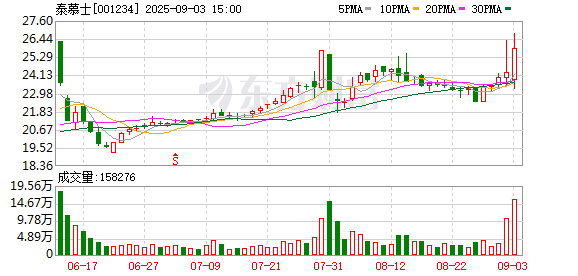
泰慕士9月3日龙虎榜数据
Zheng Quan Shi Bao Wang· 2025-09-03 09:00
Core Viewpoint - The stock of Taimusi increased by 6.16% with a trading volume of 4.07 billion yuan and a fluctuation of 15.24% on the day, indicating significant market activity and interest in the stock [2]. Trading Activity - The stock had a turnover rate of 17.29% for the day, with institutional investors net selling 13.03 million yuan and brokerage seats collectively net selling 2.68 million yuan [2]. - The stock was listed on the Dragon and Tiger list due to its daily fluctuation reaching 15.24%, with institutional proprietary seats net selling 13.03 million yuan [2]. - The top five brokerage seats on the list had a total transaction amount of 116 million yuan, with a buying amount of 50.33 million yuan and a selling amount of 66.05 million yuan, resulting in a net sell of 15.72 million yuan [2]. Institutional Activity - Among the brokerage seats, three institutional proprietary seats were involved, with a total buying amount of 11.20 million yuan and a selling amount of 24.23 million yuan, leading to a net sell of 13.03 million yuan [2]. - Over the past six months, the stock has appeared on the Dragon and Tiger list six times, with an average price increase of 0.67% the day after being listed and an average decline of 10.28% in the following five days [2]. Capital Flow - The stock experienced a net inflow of 45.30 million yuan from main funds today, with a significant inflow of 55.67 million yuan from large orders, while large orders saw a net outflow of 10.36 million yuan [2]. - In the past five days, the main funds have seen a net inflow of 61.41 million yuan [2].

美国加征关税下印度的外交转变与中印关系走向
Sou Hu Cai Jing· 2025-09-03 08:39
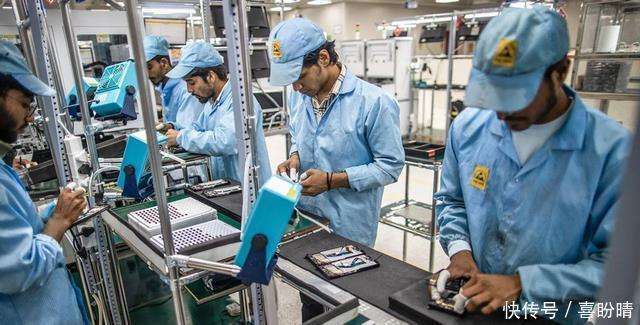
Group 1 - The U.S. government has unilaterally imposed a 25% punitive tariff on Indian goods due to India's continued import of Russian oil, raising the overall tariff rate on Indian products to 50% [1] - The new tariff policy is expected to reduce India's exports to the U.S. by 40% to 60%, significantly impacting key industries such as textiles, seafood processing, jewelry, and auto parts [1] - Over 200 small and medium-sized enterprises in Mumbai's textile sector are considering layoffs, potentially leading to a loss of at least 150,000 jobs, exacerbating India's already fragile employment market [1] Group 2 - The trade sanctions from the U.S. are prompting the Indian government to reassess its relationship with China, as India faces structural challenges in infrastructure, manufacturing upgrades, and employment [3] - India's electronics manufacturing sector has suffered a cumulative loss of $15 billion in output from 2020 to 2024 due to restrictions on Chinese technical personnel and investment approvals, resulting in the loss of approximately 100,000 technical jobs [3] - Indian business leaders believe that deepening industrial cooperation with China could attract much-needed capital and technology while diversifying trade risks [3] Group 3 - The Trump administration's trade policy may be subject to change, contingent on India making substantial concessions regarding the U.S. trade deficit, including lowering tariffs on U.S. agricultural imports and increasing Boeing aircraft purchases [5] - India's recent high-level visits to China signal a strategic recalibration based on economic calculations, as India aims to attract $100 billion in foreign investment annually to achieve its goal of becoming one of the top three economies by 2030 [5] - The Indian government is revising its Foreign Exchange Management Act to allow Chinese investors to acquire stakes in Indian companies through an automatic route [5] Group 4 - India's strategic community is concerned about the deepening military cooperation between the U.S. and Pakistan, as well as the partial thaw in U.S.-China relations, prompting India to consider improving its relationship with China to mitigate uncertainties in U.S. policy [7] - The Modi government's diplomatic adjustments are fundamentally based on a strategic rebalancing of national interests [7] Group 5 - As core members of BRICS and the Shanghai Cooperation Organization, China and India share broad consensus in global governance, advocating for reforms in the international financial system and opposing double standards on climate issues [8] - Future cooperation between China and India may include establishing a monthly meeting mechanism for brigade-level commanders to improve border crisis management and enhancing infrastructure financing cooperation under the Asian Infrastructure Investment Bank framework [8] - Joint efforts to reform the United Nations Security Council could enhance the voice of Global South countries, laying the groundwork for a more stable regional environment [8]
盛泰集团:关于调整公司2024年员工持股计划购买价格的提示性公告
Zheng Quan Ri Bao· 2025-09-03 07:16
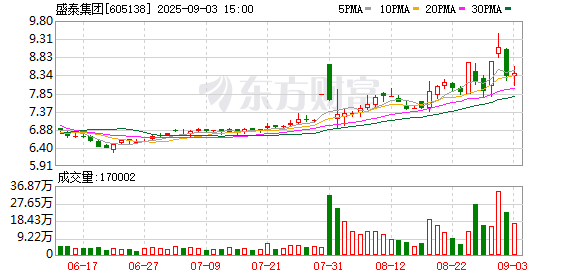
Group 1 - The company announced an adjustment to the purchase price of its 2024 employee stock ownership plan due to a differentiated dividend distribution [2] - The profit distribution plan for 2024 includes a cash dividend of 0.54 yuan (including tax) for every 10 shares [2] - As a result of the profit distribution, the purchase price for the employee stock ownership plan has been adjusted from 2.63 yuan per share to 2.58 yuan per share [2]
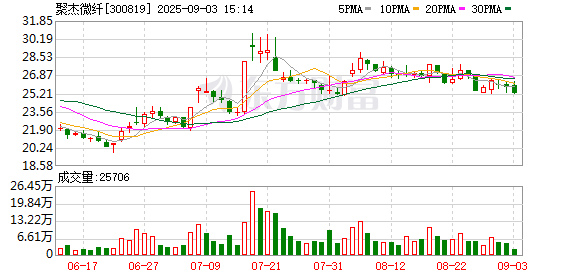
聚杰微纤:公司子公司完成工商变更登记
Zheng Quan Ri Bao· 2025-09-03 07:13
(文章来源:证券日报) 证券日报网讯 9月2日晚间,聚杰微纤发布公告称,全资子公司安徽聚杰因业务发展需要,对其经营范 围进行了变更。目前已完成工商变更登记,并取得了宣城市郎溪县市场监督管理局换发的《营业执 照》。 ...