制造业

Search documents
友邦吊顶:筹划控制权变更事项,公司股票12月24日起停牌
Mei Ri Jing Ji Xin Wen· 2025-12-24 03:58
Group 1 - The core point of the article is that Aoyuan Ceiling (SZ 002718) announced a potential change in control, which may lead to a change in its controlling shareholder and actual controller [1] - The actual controllers, Luo Lianqin and Shi Shenxiang, are planning matters related to the change of control [1] - The company's stock will be suspended from trading starting December 24, 2025, for a period not exceeding two trading days [1] Group 2 - For the first half of 2025, Aoyuan Ceiling's revenue composition was 97.27% from industrial operations and 2.73% from other businesses [1]

ST合纵控股公司出售部分闲置固定资产,盘活资产化解经营风险
Ju Chao Zi Xun· 2025-12-24 02:46
Group 1 - The core point of the article is that ST HZ has approved the sale of idle fixed assets from its subsidiary Tianjin Maolian Technology Co., Ltd. for a total amount of RMB 9.042 million [2] - The assets being sold are part of the wastewater treatment plant's idle machinery and related equipment, with a book value of RMB 168.7147 million and a net book value of RMB 108.944 million [2] - The sale is part of ST HZ's strategy to optimize asset utilization and improve operational efficiency amid financial difficulties, including overdue bank loans and unpaid employee salaries [3] Group 2 - The proceeds from the sale will be primarily used to repay some of the due debts and pay employee salaries, which will help mitigate operational risks [3] - Financial data indicates that prior to this board meeting, the company had sold fixed assets totaling RMB 27.6042 million over the past 12 months, resulting in a loss of RMB 56.9486 million, which represents 2.46% of the latest audited net assets and 9.02% of net profit [3] - After this transaction, the cumulative sales amount will increase to RMB 35.606 million, with total losses rising to RMB 157.8908 million, accounting for 3.18% of the latest audited net assets and 25.01% of net profit [3]

省委经济工作会议在济南召开
Da Zhong Ri Bao· 2025-12-24 01:07
一是更大力度推进全方位扩大内需。深入实施提振消费专项行动,实施城乡居民增收计划,扩大优 质商品和服务供给。优化消费品以旧换新政策实施。大力发展服务消费,推动商旅文体健融合发展。努 力稳住合理投资规模,突出抓好"两重"尤其是基础设施投资,提高民生类投资比重。着力健全流通体 系,加快发展内河航运、多式联运,升级城乡商贸流通网络。 省委经济工作会议在济南召开 林武周乃翔讲话 葛慧君出席 12月23日,省委经济工作会议在济南召开。会议以习近平新时代中国特色社会主义思想为指导,全 面贯彻党的二十届四中全会和中央经济工作会议精神,深入落实习近平总书记视察山东重要讲话和重要 指示批示精神,总结今年经济工作,分析当前形势,部署明年任务。 省委书记林武出席会议并讲话,省委副书记、省长周乃翔作总结讲话,省政协主席葛慧君,省人大 常委会副主任、党组书记杨东奇出席。 会议指出,今年是"十四五"收官之年,面对复杂严峻的国际形势和艰巨繁重的改革发展稳定任务, 在以习近平同志为核心的党中央坚强领导下,全省上下深入落实习近平总书记视察山东重要讲话和重要 指示批示精神,坚定扛牢"走在前、挑大梁"使命担当,统筹推进稳增长、提质效、推改革、防风险 ...
891家!湖南公布2025年上市后备企业名单
Sou Hu Cai Jing· 2025-12-24 00:38
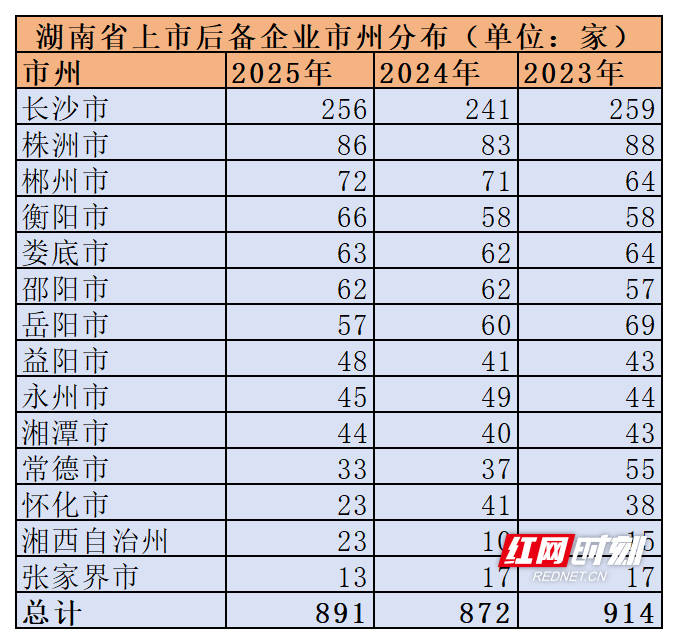
Group 1 - The core point of the article is the announcement of the 2025 Hunan Province listed backup enterprise resource pool, which includes 891 companies [1][2] - Changsha City leads with 256 companies, followed by Zhuzhou with 86 and Chenzhou with 72 [1][2] - The total number of listed backup enterprises has decreased from 914 in 2023 to 891 in 2025, indicating a decline of approximately 2.5% [2] Group 2 - The manufacturing sector has the highest number of listed backup enterprises, totaling 180, accounting for about 20.20% of the total [2] - New materials companies follow with 122 enterprises, representing approximately 13.69% [2] - The high-tech and innovation concentration is notable, with 257 companies earmarked for the Science and Technology Innovation Board, making up nearly 30% of the total [3] Group 3 - The announcement coincided with the successful review of Ying's Holdings Group Co., Ltd. by the Beijing Stock Exchange [3] - The list includes various industries, including new generation information technology, high-end equipment, new materials, and biomedicine, reflecting a diverse industrial base [2][3]
省级机关各部门认真学习贯彻省委经济工作会议精神坚定信心挑大梁 乘势而上勇争先
Xin Hua Ri Bao· 2025-12-23 23:14
Group 1 - The Jiangsu Provincial Economic Work Conference emphasizes the importance of maintaining strategic determination and aligning with national goals to ensure a strong start for the "15th Five-Year Plan" [2][3] - The conference outlines a comprehensive deployment for economic work in 2026, focusing on leveraging advantages and fostering innovation to support economic growth [1][2] - The provincial industrial and information system aims to deepen the "1650" industrial framework, promoting the integration of technological and industrial innovation [2][3] Group 2 - The provincial finance department plans to implement a more proactive fiscal policy, enhancing the effectiveness of existing and new policies to stabilize employment and market expectations [3][4] - The transportation sector is set to enhance the modern comprehensive transportation system, with significant projects like the Jiangyin-Jingjiang Yangtze River Tunnel and the Suzhou Second Cross-River Passage [3][4] - The ecological environment department will focus on green transformation and high-quality development, addressing pollution and enhancing ecological protection [4][5] Group 3 - The audit department will increase supervision in key areas such as finance, technology innovation, and public resources to identify and mitigate risks [5][6] - The legal department aims to strengthen legal services to support economic stability and growth, particularly in foreign-related legal services [6][7] - The technology sector will focus on building a globally influential industrial technology innovation center, emphasizing core technology breakthroughs and enterprise innovation [7][8] Group 4 - The provincial government has assigned responsibilities to the regional technology transfer center to enhance the conversion of scientific achievements into practical applications [8][9] - The state-owned assets and enterprises sector will develop a high-quality plan for the "15th Five-Year Plan," focusing on major projects and strategic investments in emerging industries [9]
“五万亿之城”标注自我超越又一章
Sou Hu Cai Jing· 2025-12-23 21:46
Core Insights - Beijing is set to become the second city in China to join the "5 trillion club," with its GDP expected to exceed 5 trillion yuan by 2025, marking a significant milestone in the country's high-quality economic development [2][3] - The economic growth of Beijing over the past five years has added approximately 1.4 trillion yuan, equivalent to the annual economic output of Haidian District, showcasing a remarkable leap in economic performance [2][3] Economic Development - The transition from "development" to "high-quality development" has been a key focus for Beijing, which has explored new pathways for the transformation and upgrading of super-large cities [2][4] - Beijing's GDP composition has shifted, with the combined share of information services, technology services, and advanced manufacturing rising from 32.7% in 2020 to 38.8% in 2024 [4] - The city has maintained a research and development (R&D) intensity of around 6% over the past five years, positioning itself among the top global innovative cities, compared to the EU average of approximately 2% [4] Urban and Industrial Transformation - Beijing has successfully reduced urban construction land by 150 square kilometers and eliminated over 3,000 general manufacturing enterprises in the past five years, reflecting a commitment to sustainable development [3][4] - Key indicators such as energy consumption, water usage, and carbon emissions per unit of GDP are among the best in the country, with energy efficiency approximately three times the national average [3] Future Outlook - The upcoming "15th Five-Year Plan" is expected to enhance Beijing's economic vitality, with opportunities outweighing challenges, and a clearer blueprint for achieving qualitative and reasonable quantitative growth [5] - The city aims to take on a significant role in driving economic growth, demonstrating resilience and strategic determination in the face of ongoing challenges [5]
众成商会刘志杰:决策本质——实战逻辑的透视
Sou Hu Cai Jing· 2025-12-23 18:45
Core Insights - The essence of decision-making is rooted in practical logic that is tested by the market, rather than theoretical knowledge or spontaneous inspiration [1] - Effective decision-making requires breaking through information silos and establishing a systematic cognitive framework to analyze data [2] - The ability to dynamically balance risks and opportunities is crucial for making sound decisions in uncertain economic environments [4] Group 1: Information Analysis - Decision-makers must differentiate between factual data and interpretative viewpoints to avoid misjudgments [2] - A systematic approach involves tracing the source of information to understand underlying interests and potential biases [2] - Isolated information should be contextualized within the industry supply chain to assess whether it reflects short-term fluctuations or long-term trends [2] Group 2: Risk and Opportunity Management - There is no such thing as a completely safe decision; instead, the focus should be on managing risks and opportunities dynamically [4] - Companies should adopt a "small steps, quick iterations" approach to validate core assumptions with minimal costs [5] - Decision-makers should pre-set stop-loss lines and exit mechanisms to ensure safer progress rather than adopting a purely defensive stance [5] Group 3: Cognitive Boundaries - Many failed decisions stem from decision-makers' cognitive limitations, where past successes define future paths [7] - Engaging in reverse decision-making workshops can help leaders challenge their assumptions and recognize blind spots [7] - Acknowledging one's ignorance is a crucial step towards uncovering deeper truths in decision-making [7] Group 4: Practical Application of Decision-Making - The ultimate goal of decision-making is to create a "decision immune system" that allows companies to grow amidst uncertainty [9] - Companies must possess insight into the essence of their industry while also having the courage to face consequences and the humility to iterate continuously [9] - Successful companies are those that can navigate through cycles and remain resilient in the face of challenges [9]

December consumer confidence disappoints at 89.1, below the 91.0 estimate
Youtube· 2025-12-23 15:29
Group 1 - December consumer confidence from the Conference Board is expected to be around 91 but comes in at 89.1, indicating a disappointment [1] - Last month's consumer confidence was revised from 88.7 to 92.9, making the current figure of 89.1 the largest since this revision [2] - The present situation index is reported at 116.8, marking the weakest level since February 2021 [3] Group 2 - Richmond Fed Manufacturing index is at minus 7, the weakest since the previous month of October, while the service side is at minus 11, also the weakest since October [4] - The yield on the 10-year Treasury reached 4.20%, with any yield above 4.19 representing a 3.5-month high [4] - The yield curve has flattened by about 1.5 basis points, with the 2-year yield last reported at 3.55 [5]

远翔新材:股东王芳可计划减持公司股份不超过约1.65万股
Mei Ri Jing Ji Xin Wen· 2025-12-23 14:41
Group 1 - The company, Yuanxiang New Materials, announced that several key executives and shareholders plan to reduce their holdings in the company through centralized bidding transactions within three months after a 15-day notice period [1][2] - Wang Chenghui, the vice chairman and actual controller, along with other executives, will collectively reduce their shares by approximately 1.65 million shares, representing 0.0262% of the total share capital [1][2] - The total share capital of the company is approximately 64.88 million shares, with around 1.92 million shares held in a repurchase account [1] Group 2 - The company's revenue composition for the first half of 2025 indicates that manufacturing accounts for 99.91% of its total revenue, while other businesses contribute only 0.09% [3] - As of the latest report, Yuanxiang New Materials has a market capitalization of 2.8 billion yuan [4]
A股回购规模超1400亿元,真金白银护航市场估值修复|2025中国经济年报
Hua Xia Shi Bao· 2025-12-23 14:15
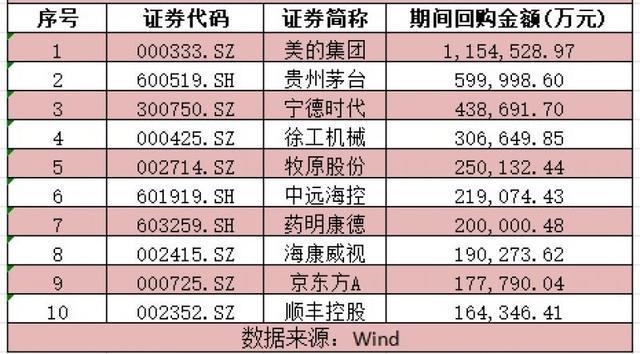
Core Viewpoint - The A-share market has seen a significant wave of stock buybacks in 2025, with nearly 1,500 companies participating, reflecting a robust response to economic recovery and external fluctuations [2][3]. Group 1: Market Overview - As of December 23, the Shanghai Composite Index closed at 3,919.98 points, with a year-to-date increase of 16.95%, peaking above 4,000 points [1]. - The overall market has shown a "shock bottoming and gradual recovery" trend, supported by favorable policies and improved corporate earnings [3]. - The three major indices have all risen this year, with the Shanghai Composite Index, Shenzhen Component Index, and ChiNext Index increasing by 16.95%, 28.37%, and 49.66%, respectively [3]. Group 2: Buyback Activity - Nearly 1,500 companies have initiated stock buybacks this year, with a total repurchase amount exceeding 1,400 billion yuan and over 13 billion shares repurchased [2][3]. - The buyback trend spans various sectors, including consumer, manufacturing, technology, and finance, indicating a comprehensive market support structure [2]. - Companies are increasingly using buybacks to enhance shareholder value and stabilize market expectations [2][3]. Group 3: Leading Companies in Buybacks - The top ten companies by buyback amount include Midea Group (11.55 billion yuan), Kweichow Moutai (5.99 billion yuan), and CATL (4.39 billion yuan) [1][6]. - Notably, Midea Group is the only company with a buyback amount exceeding 10 billion yuan this year [6]. - Companies like JD Display and XCMG Machinery have also made significant contributions to both buyback quantity and amount, showcasing their commitment to shareholder interests [6][7]. Group 4: Industry Participation - The manufacturing, consumer, and information technology sectors have the highest participation rates in buybacks, with leading firms like BOE Technology Group and XCMG Machinery actively repurchasing shares [4][5]. - These companies, backed by stable operating performance and ample cash flow, play a crucial role in stabilizing their stock prices and driving industry valuation recovery [4]. Group 5: Regulatory Support - The ongoing buyback trend is supported by regulatory policies, including the establishment of stock buyback and repurchase loans, which provide low-cost funding for companies [7]. - As of December 23, over 780 companies have disclosed receiving buyback loan support, with total loan amounts reaching over 100 billion yuan [7]. - The combination of these policies encourages companies to shift from passive stabilization to proactive value management [7][8].