主题乐园

Search documents
主题乐园过山车为何会中途停驶?业内专家释疑
Bei Jing Ri Bao Ke Hu Duan· 2025-08-10 13:47
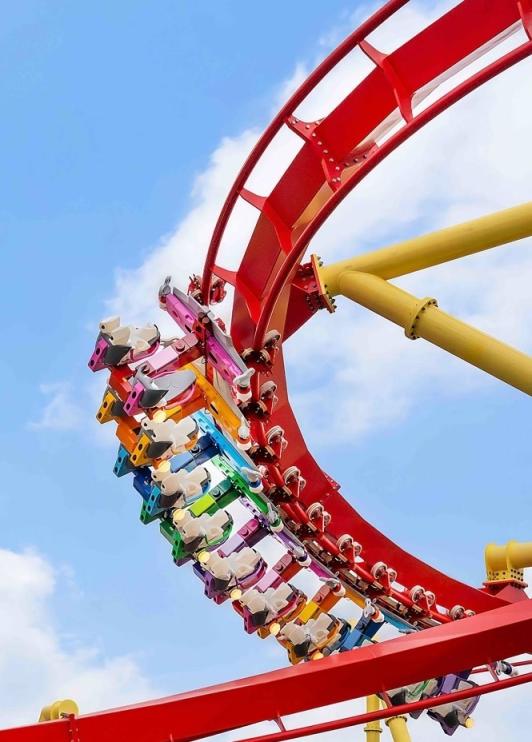
Group 1 - The recent surge in visitor numbers at theme parks during the summer family travel season has raised public attention regarding roller coaster operations, particularly when they experience temporary halts [1] - The pauses in roller coaster operations are part of a global safety mechanism employed by large theme parks, triggered by high-sensitivity monitoring systems detecting minor anomalies or potential risks [1][2] - Such "mid-ride stops" are not indicative of safety issues but rather demonstrate the effective functioning of roller coaster safety protection mechanisms, as seen in cases like Tokyo Disneyland's "Big Thunder Mountain" and Universal Orlando's "Incredible Hulk" coaster [1][2] Group 2 - Roller coasters are equipped with a comprehensive safety system that includes sensors and monitoring devices to capture various parameters such as speed, position, acceleration, and wind speed, ensuring passenger safety by stopping the ride in milliseconds upon detecting anomalies [2] - The China Amusement Park Association's Safety Professional Committee (CAPPA) emphasizes the establishment of a robust safety regulatory framework in China since the introduction of the first roller coaster in the 1980s, with strict regulations governing all aspects of roller coaster operation [2] - CAPPA highlights that safety braking is a core principle in roller coaster design, aimed at ensuring passenger safety in the event of any potential risks [2][3] Group 3 - The amusement industry prioritizes safety as its lifeline, with CAPPA urging the entire industry to strengthen safety awareness, improve risk prevention mechanisms, and enhance emergency response plans and drills [3] - Visitors are encouraged to adhere to safety guidelines, such as securing safety restraints and avoiding distractions during the ride, as these actions are crucial for their own safety [3] - Industry insiders suggest that the public should not overly worry about temporary ride halts but recommend that theme parks improve communication and reassurance for guests, as well as promote safety knowledge to alleviate visitor anxiety and enhance the overall park experience [3]

迪士尼Q3营收同比微增2%,流媒体与乐园表现强劲,难掩传统电视业务颓势 | 财报见闻
Hua Er Jie Jian Wen· 2025-08-06 12:18
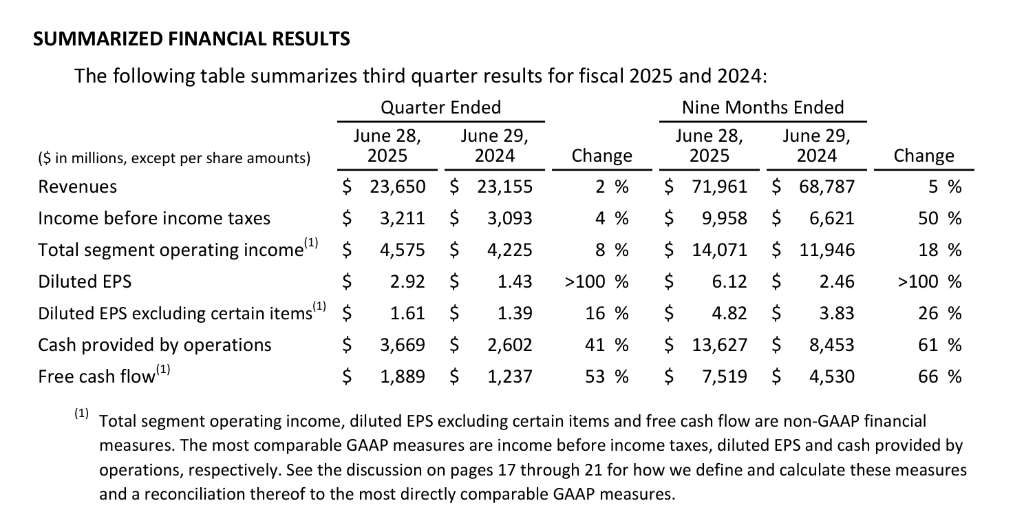
Core Insights - Disney's Q3 revenue increased by 2% year-over-year, driven by strong performance in theme parks and streaming, with streaming achieving a profit of $346 million for the first time [1][4] - The company raised its full-year profit forecast following better-than-expected quarterly earnings, despite a 2% drop in stock price during pre-market trading [1][4] Financial Performance - Q3 revenue for fiscal year 2025 was $23.7 billion, a 2% increase from $23.2 billion in the previous year [4] - Adjusted earnings per share (EPS) rose by 16% to $1.61, exceeding expectations, while GAAP diluted EPS increased from $1.43 to $2.92 due to a $3.3 billion non-cash tax benefit [4] - Free cash flow for the first nine months reached $7.5 billion, a significant increase of 66% year-over-year [4] Business Segments - Theme parks and streaming have emerged as the most reliable growth drivers for Disney, with theme park operating income rising by 13% to $2.52 billion and revenue increasing by 8% [5] - The flagship streaming service Disney+ reached 128 million subscribers, meeting analyst expectations, with projections for an additional 10 million subscribers due to expanded partnerships [5] Challenges - Traditional media networks and film production are under significant pressure, with traditional entertainment television revenue declining by 28% and overall entertainment segment operating income down by 15% to $1 billion [6] - The film segment reported a loss of $21 million, attributed to disappointing box office performances of films like Pixar's "Elio" and Marvel's "Thunderbolts" [6] Strategic Initiatives - Disney is focusing on its sports business through strategic transactions, including NFL acquiring a 10% stake in ESPN, which will integrate NFL media assets into a new ESPN streaming platform set to launch on August 21 [7] - ESPN has also secured a five-year deal worth over $1.6 billion with WWE, becoming the exclusive broadcaster for all WWE pay-per-view events in the U.S. starting in 2026 [7]

华强北光盒世界:用“IP+社交+策展”打造Z世代乐园
Nan Fang Du Shi Bao· 2025-08-01 13:33
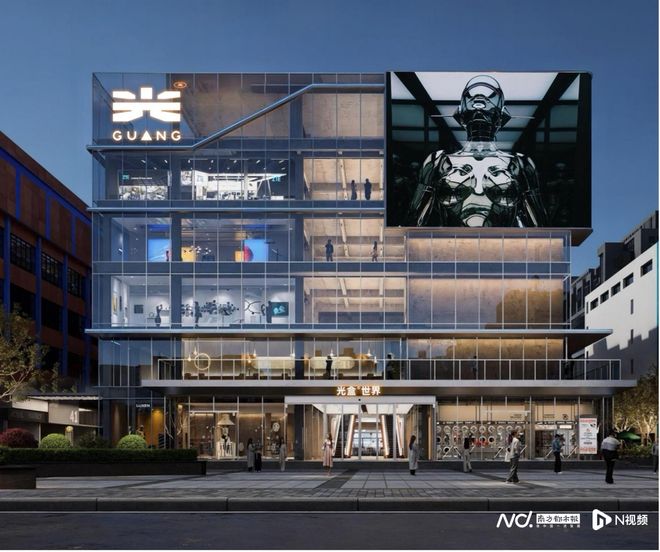
Core Insights - The traditional shopping experience has evolved, with younger consumers seeking immersive, interactive, and co-creative environments rather than just purchasing products [1] - The launch of "I PLAY IP Park" in Shenzhen represents a significant transformation in urban commercial spaces, targeting Generation Z with a focus on curation and non-standard commercial experiences [1][4] Group 1: Project Overview - "I PLAY IP Park" is the first large-scale immersive IP blind box theme park in China, developed by Guangdong Advertising Group, transforming the previous "Women's World" project [4] - The park spans 12,000 square meters, emphasizing young communities and interest groups through diverse content such as anime, trendy toys, intangible cultural heritage, technology, food, and art [4] - The space allocation includes 20% for fixed rental shops, 20% for self-operated facilities, and 60% dedicated to curation and immersive experiences, promoting open collaboration with various stakeholders [4] Group 2: Business Model and Offerings - The project shifts from a traditional retail model to a cultural consumption experience, serving as a hub for interest aggregation, social interaction, and IP culture incubation [5] - The park features six themed floors, with the first two floors dedicated to fixed IP stores, while the upper floors focus on exhibitions, performances, and interactive experiences [5] - Currently, over 200 brand IP resources are available, with plans to incubate more than 30 local original IPs annually through various operational methods [5] Group 3: Community Engagement and Marketing - The park employs a gamified membership system that allows consumers to become "scene co-builders," participating in IP planning and content creation through voting mechanisms [6] - The project has effectively utilized online surveys and street interviews to gauge the interests of young consumers in Shenzhen, leading to the development of an immersive IP park [7] - The marketing strategy has resulted in over 10 million topic reads and more than 100,000 live stream views, indicating strong engagement and resonance with the target audience [7]

高标准升级“快乐经济”
Jing Ji Ri Bao· 2025-07-31 22:06
Core Insights - The rapid establishment of theme parks in Shanghai reflects the city's charm and the surge in cultural tourism consumption in China, indicating a need for a nurturing environment for the "happy economy" to thrive [1][3] Group 1: Business Environment - Optimizing the business environment is crucial for the foundation of the "happy economy," as demonstrated by the swift development of Shanghai Disneyland and the "Jinshan experience" during the construction of the Lego park [1] - Future efforts should focus on simplifying approval processes and enhancing infrastructure, particularly in land utilization and transportation systems, to provide equitable development opportunities for each project [1] Group 2: Market Positioning - Scientific layout and precise positioning are essential to avoid "involution" in the theme park sector, as visitor numbers may not simply add up, leading to a scenario where "1+1<2" [2] - Each theme park targets specific demographics, such as Lego focusing on families with children aged 2 to 12, while Peppa Pig Park caters to preschoolers, thus avoiding homogenization [2] - Future development should emphasize regional collaboration, leveraging the resources of different cities in the Yangtze River Delta to promote differentiated and complementary growth among parks [2] Group 3: Innovation and Talent - Empowering technology and cultural integration are vital for the longevity of theme parks, with Disney's success in transforming movie scenes into park attractions serving as a model [2] - Domestic parks need to bridge the gap between film knowledge and park operations, incorporating Eastern aesthetics into entertainment experiences to create memorable cultural encounters [2] - The current shortage of professionals who understand both film creation and theme park operations necessitates collaboration between educational institutions and the industry to establish specialized management programs [2][3] - Cultivating talent that meets international standards while being attuned to the Chinese market is essential for the sustainable growth of the "happy economy" [2][3]
排队3小时,只玩5分钟,上海迪士尼为啥越骂越火?
Hu Xiu· 2025-07-30 01:05
Core Viewpoint - The article discusses the paradox of Shanghai Disneyland's popularity despite long wait times and negative experiences, questioning how it has become a leading theme park in China while facing continuous criticism [1] Group 1: Popularity and Experience - Shanghai Disneyland attracts visitors despite complaints about long queues and negative experiences, indicating a strong brand appeal [1] - The park's ability to generate excitement and draw crowds suggests a successful marketing strategy that overshadows operational challenges [1] Group 2: Competitive Landscape - The article raises questions about why other theme parks in China struggle to compete with Disneyland, despite the growing number of theme parks in the country [1] - Factors contributing to Disneyland's dominance may include brand recognition, unique attractions, and a well-established reputation [1]
上海乐高乐园最大优点是“没人”?
虎嗅APP· 2025-07-25 13:31
Core Viewpoint - The article discusses the opening of Shanghai LEGO Land and the mixed reactions regarding its visitor numbers, highlighting the contrast between the park's low attendance and the expectations set by other theme parks like Disney and Universal Studios [3][10][19]. Group 1: Visitor Experience - Visitors to Shanghai LEGO Land have reported a positive experience due to the low crowd levels, allowing for easy access to attractions without long wait times [4][9]. - The lack of crowds has been perceived as a luxury, contrasting sharply with the crowded experiences at other theme parks [5][9]. - However, this low attendance raises concerns about the park's financial viability and future success [10][19]. Group 2: Comparison with Other Theme Parks - Shanghai Disneyland received over 11 million visitors in its first year and surpassed 13 million in 2023, showcasing a stark difference in popularity compared to LEGO Land [17][19]. - Other LEGO parks globally also experience low attendance, with annual visitor numbers often below 2 million, indicating a common trend across LEGO parks [22][23][24]. - The article emphasizes that LEGO Land's target demographic is narrow, focusing on families with children aged 2 to 12, which limits its appeal compared to broader attractions like Disney and Universal [27][28][30]. Group 3: Financial Implications - The expected annual visitor count for Shanghai LEGO Land is projected at 2.4 million, generating around 1 billion RMB in revenue, which is significantly lower than competitors [41]. - The high ticket prices have been criticized, and there are concerns about whether the park can maintain its pricing strategy without compromising visitor numbers [31][42]. - The article suggests that the park may need to consider price adjustments to attract more visitors, as seen in other LEGO parks that frequently offer discounts [42][44].
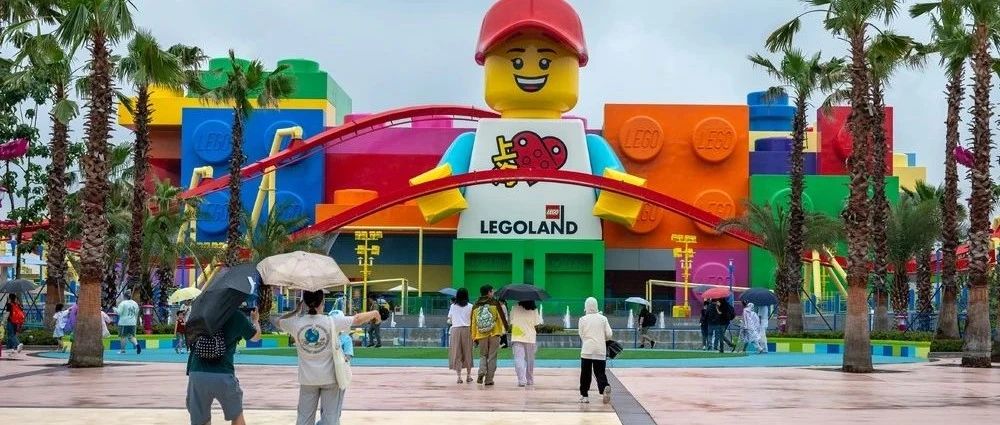
从价格调整到体验优化 从单一游乐到区域联动 上海乐高乐园口碑持续攀升
Jie Fang Ri Bao· 2025-07-22 01:52
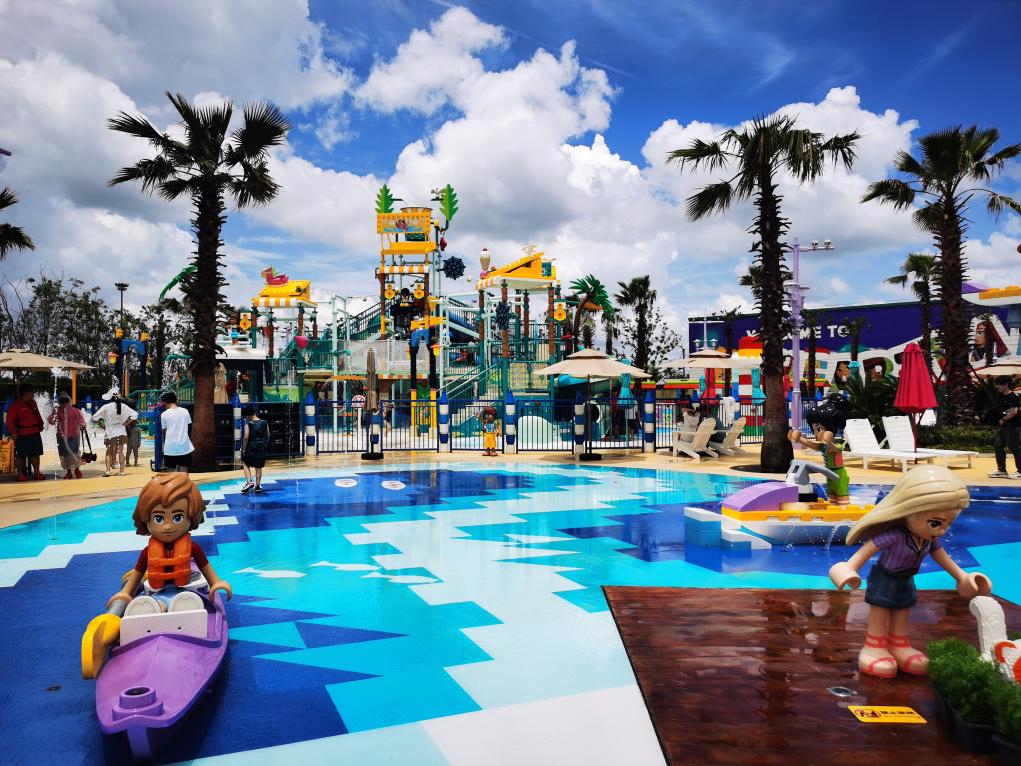
Group 1 - Shanghai Lego Park has introduced various family ticket packages and dining discounts to enhance visitor experience and attract more families during the summer season [1][2] - The promotional ticket prices vary based on the date of entry, with significant savings compared to regular prices, leading to increased visitor turnout [2][3] - Positive visitor feedback has shifted from initial skepticism regarding pricing and project suitability for younger children to enthusiastic endorsements, highlighting shorter wait times and enjoyable experiences [3] Group 2 - The synergy between Lego Park and nearby commercial areas, such as Aegean Sea, has created a vibrant atmosphere, with events like fireworks shows and dining promotions attracting more visitors [4] - Local businesses are adapting to the influx of visitors by offering transportation services and family-friendly amenities, enhancing the overall visitor experience [4][5] - The collaborative model of "theme park + commerce + accommodation" is gradually establishing a new cultural tourism ecosystem in Jinshan [5]
大暑·乐园经济 “升温” 进行时|财经二十四节气
2 1 Shi Ji Jing Ji Bao Dao· 2025-07-22 00:09
Core Viewpoint - The theme park economy in China is experiencing significant growth, driven by the opening of new parks and the increasing popularity of themed attractions during the summer travel peak [3][5][8]. Group 1: Theme Park Consumption Trends - The theme park sector is currently in a "golden period" due to the summer travel peak, with a projected market size exceeding 110 billion yuan by 2028 [5]. - In 2023, Shanghai Disneyland welcomed 14 million visitors, ranking fifth globally, and the city is expanding its theme park offerings with new projects [5][8]. - The overall revenue for 86 major theme parks in China reached 30.39 billion yuan in 2023, marking a year-on-year growth of 97.86% [8]. Group 2: IP Development as a Key Trend - The integration of intellectual property (IP) is becoming a crucial trend in theme park development, with international brands like Disney and Universal leveraging strong IP resources [12]. - Domestic parks are also focusing on IP, with companies like Huasheng Fangte and Ocean Park introducing popular characters to attract visitors [12]. - New domestic IPs are emerging, with companies like Light Media exploring partnerships to create theme parks based on popular films [12]. Group 3: Business Sustainability and Challenges - The profitability of theme parks is highlighted by Disney's theme park revenue of approximately 34.15 billion USD in the 2024 fiscal year, accounting for 37% of its total revenue [16]. - Despite the growth, the industry faces challenges such as safety concerns, high operational costs, and increasing competition, leading to a need for continuous innovation and new attractions [19][22]. - Seasonal fluctuations in visitor numbers and the need for differentiation are prompting parks to introduce new experiences and collaborations with popular IPs [22].
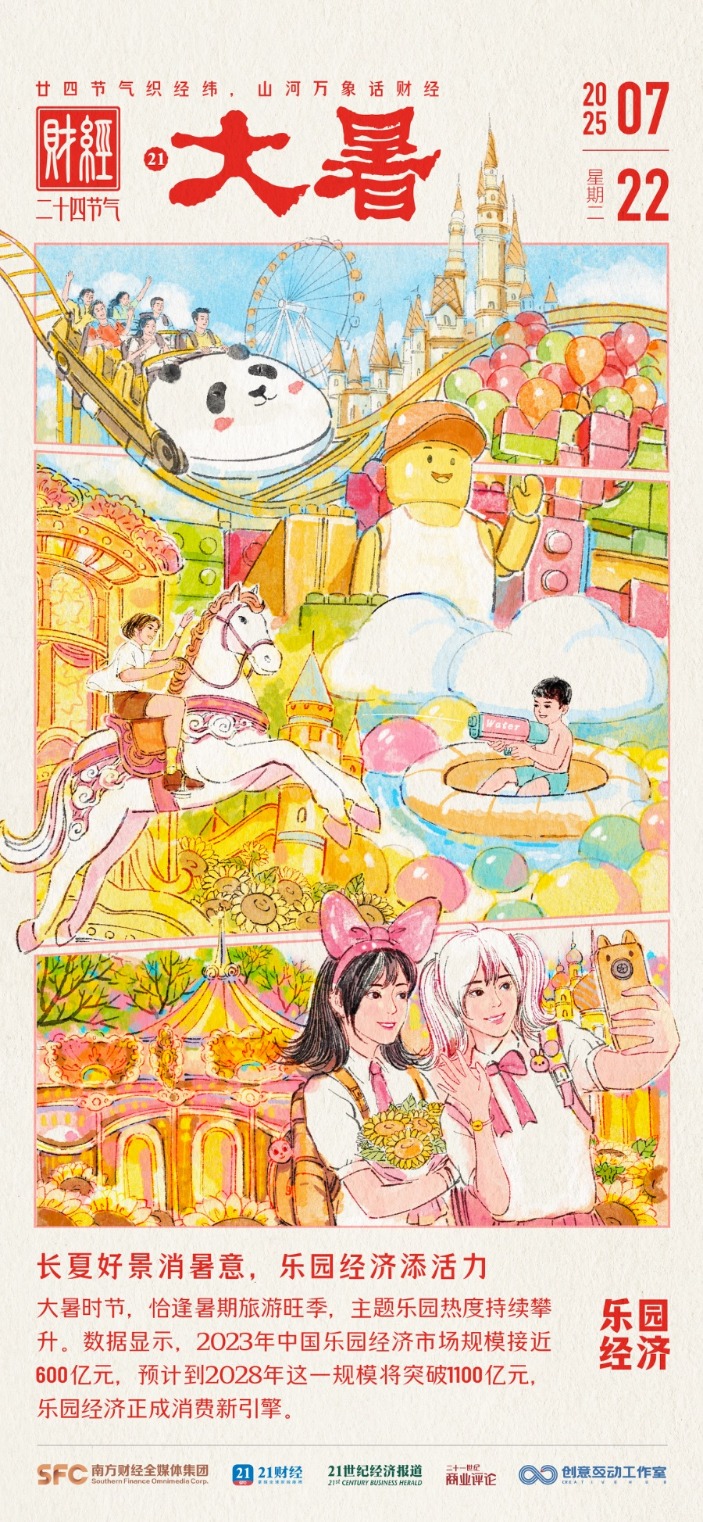
天气热,快乐经济更“热”!——暑期主题乐园热度持续攀升
Xin Hua Wang· 2025-07-17 11:54
Core Insights - The "theme park boom" is evident this summer, with related orders increasing by 70% compared to last year, indicating a growing trend towards the "happiness economy" where visitors prioritize personal experiences and quality of life [1][3][7] Industry Trends - Shanghai's Lego Land has seen a significant influx of visitors since its opening on July 5, with approximately 70% of summer tourism orders coming from outside Shanghai, marking a notable increase from the previous year [3][5] - Various theme parks in Shanghai are enhancing their cooling measures and introducing water elements to create a more comfortable experience for visitors during the hot weather [5][7] - The top ten most popular theme parks for summer bookings include Beijing Universal Resort, Zhuhai Chimelong Ocean Kingdom, and Guangzhou Chimelong Safari Park, all of which are optimizing their offerings to attract family visitors [5][8] Visitor Engagement - There is a noticeable increase in visitor interaction with theme parks, as evidenced by the popularity of themed merchandise and social media sharing of experiences [5][7] - International tourists are also contributing to the theme park attendance, with many planning their visits based on online information and recommendations [7][8] Future Outlook - The theme park and attraction industry in China is expected to maintain rapid growth over the next three years, positioning China as a key player in the global amusement market [8]