
种植业

Search documents
理响中国·聚焦2026“三农”工作丨 四项重点任务它居首位!一图解读中央一号文件关键部署
Yang Guang Wang· 2026-02-12 02:00
Core Viewpoint - The central government has issued its first document for the "14th Five-Year Plan" period, focusing on enhancing agricultural production capacity and quality efficiency as a primary task in the agricultural sector [1]. Group 1: Key Tasks in Agriculture - The document outlines four key tasks, with the foremost being the enhancement of agricultural comprehensive production capacity and quality efficiency [1]. - The goal is to stabilize grain production at approximately 1.4 trillion jin (around 700 million tons) through the integration of quality land, seeds, machinery, and methods [3]. - There is a shift from focusing solely on quantity to balancing both quantity and quality, optimizing planting structures and regional layouts to improve grain varieties and quality [4]. Group 2: Agricultural Production and Technology - A new round of actions is to be implemented to increase grain production capacity by 100 billion jin, solidifying the foundation of grain production [8]. - Emphasis is placed on utilizing arable land effectively, maintaining strict management of land use, and combating illegal land destruction [9]. - The document calls for the enhancement of agricultural technology innovation, focusing on core technologies and efficient application of scientific achievements, integrating modern technologies like artificial intelligence into agricultural development [11]. Group 3: Disaster Prevention and Trade Coordination - Strengthening the agricultural disaster prevention and mitigation system is highlighted, with improved monitoring and emergency response mechanisms to cope with extreme weather [14]. - The document advocates for the diversification of agricultural product imports and the cultivation of internationally competitive agricultural enterprises, while also supporting the export of advantageous specialty agricultural products [16].


“努力探索可持续的农业生产模式”
Ren Min Ri Bao· 2026-02-12 00:29
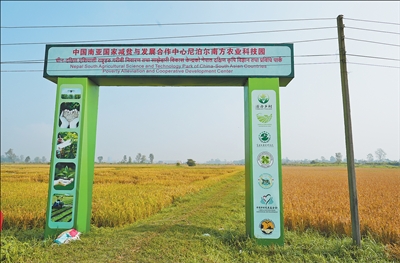
Core Insights - The article discusses the collaboration between China and Nepal in agricultural development, focusing on hybrid rice cultivation and technology transfer to enhance agricultural productivity in Nepal [2][4]. Group 1: Agricultural Development Initiatives - The China-Nepal Agricultural Technology Park in Chitwan County is a key project aimed at introducing and cultivating hybrid rice varieties from China [2]. - The Nepalese government is actively promoting agricultural modernization and resilience through various initiatives, including the development of drought and flood-resistant rice varieties [3]. - The project involves collaboration between Chongqing Agricultural Sciences Academy and Nepal Agricultural University to select suitable rice varieties for local conditions [4]. Group 2: Challenges in Agriculture - Approximately 60% of Nepal's population is engaged in agriculture, with rice accounting for about 20% of the agricultural output, impacting millions of rural households [2]. - The agricultural sector faces significant challenges, including low mechanization, reliance on natural rainfall, and vulnerability to climate change, which has led to a reduction in rice planting area by about 8% due to insufficient rainfall [3]. - The United Nations Food and Agriculture Organization estimates that Nepal's rice production will be 5.4 million tons in 2025, below the five-year average [3]. Group 3: Capacity Building and Training - The collaboration aims to cultivate local professionals who understand advanced agricultural techniques and promote sustainable practices among farmers [5]. - The Nepalese Ministry of Agriculture is providing early warning and meteorological information to farmers, along with promoting agricultural insurance plans to mitigate risks [3]. - Training programs and capacity-building initiatives are being implemented to enhance farmers' knowledge in scientific farming practices [5].
克罗地亚2025年小麦产量激增28.8%
Shang Wu Bu Wang Zhan· 2026-02-11 17:36
Core Viewpoint - Croatia's agricultural sector is experiencing a mixed performance in 2025, with significant increases in certain crop yields while others face declines due to reduced planting areas and lower yields [1] Group 1: Crop Production Increases - Wheat production in Croatia is projected to reach 1.05 million tons, marking a 28.8% increase year-on-year driven by expanded planting areas and improved yields [1] - Barley production is expected to grow by 19.5% to 356,000 tons [1] - Rapeseed production is forecasted to rise by 15.1% to 61,000 tons [1] - Sunflower production is anticipated to increase by 13.3% to 205,000 tons [1] Group 2: Crop Production Decreases - Corn production is projected to decline by 17.7% to 1.7 million tons [1] - Soybean production is expected to decrease by 21.6% [1] - Potato production is forecasted to drop by 17.9% [1]
省农业农村厅赴中山调研指导:不误农时 抓实春耕备耕
Nan Fang Nong Cun Bao· 2026-02-11 17:02
Core Viewpoint - The article emphasizes the importance of timely spring plowing and preparation for agricultural production, highlighting the efforts of the Guangdong Provincial Department of Agriculture and Rural Affairs in ensuring food security and enhancing agricultural productivity [2][16][40]. Group 1: Spring Plowing and Preparation - The Provincial Department of Agriculture and Rural Affairs is actively guiding spring plowing and preparation efforts, with a focus on ensuring food security as a top priority [16][18]. - In Zhongshan's Nalang Street, local farmers are engaged in various activities such as clearing drainage ditches, land preparation, and seedling cultivation to prepare for early rice production [6][7][20]. - The city plans to cultivate 81,900 acres of spring crops this year, an increase of 8.1% compared to last year, with early rice area expected to reach 36,100 acres, marking a 13.1% increase [21][22]. Group 2: Agricultural Infrastructure and Support - The article highlights the restoration and improvement of agricultural drainage systems as a critical measure for ensuring food production, with efforts to clear silt and repair channels [10][11][12]. - Financial and insurance institutions are playing a vital role in supporting spring plowing, providing risk protection and resources such as fertilizers and agricultural machinery to farmers [25][26][32]. - The article mentions that the Pacific Insurance Company has provided over 8.2 billion yuan in risk protection for various crops across the province [33]. Group 3: Quality Improvement and Crop Development - The article discusses the development of the high-quality "Simao rice" industry, emphasizing the need for improved seed selection and brand promotion to enhance market presence [34][35]. - There is a push for the promotion of green manure planting to reduce chemical fertilizer use and improve soil fertility, with plans to expand the area under cultivation [36][37]. - The article concludes with a commitment from the agricultural sector to implement measures that ensure a successful spring planting season and contribute to the overall agricultural productivity for the year [40][42].

用奋斗书写青春华章 ——“最美高校毕业生”先进事迹综述
Xin Lang Cai Jing· 2026-02-11 13:35
Core Viewpoint - The article highlights the contributions of outstanding university graduates who have dedicated themselves to serving their communities and advancing national development, showcasing the spirit of responsibility and commitment among the youth in the new era [1] Group 1: Contributions to Rural Development - Liu Gongli, as the first secretary in a remote village, developed "flying economy" projects, leading to the village's successful poverty alleviation by the end of 2020, with an annual output value of 30 million yuan from vegetable cultivation [1] - Jin Guanhua, a chemistry PhD, promoted black fungus cultivation in Xinjiang, helping local farmers and addressing market challenges through community engagement [1] - Qiu Guimin established a cooperative to revitalize abandoned terraced fields, integrating advanced agricultural techniques and tourism, transforming her village into a popular destination [1] - Jin Ruirui, a Yi ethnic girl, combined traditional embroidery with modern fashion, creating job opportunities for over 2,000 women and promoting local culture [1] - Li Ping, a music teacher, founded a music class to nurture children's talents, leading to performances that enhanced their confidence and cultural exposure [1] Group 2: Innovations in Technology and Agriculture - Xing Sirui, a technical leader at Changguang Satellite Technology, has worked on key technologies in aerospace, providing efficient services across 14 sectors, including agriculture and water conservation [1] - Zeng Zhengchao, a welding expert, won a gold medal at the World Skills Competition and has since tackled welding challenges on major engineering projects, contributing to award-winning constructions [1] - Cao Lixin, with 13 years of experience in citrus breeding, developed irrigation techniques and new citrus varieties, extending the fresh fruit supply period to 11 months in his region [1]
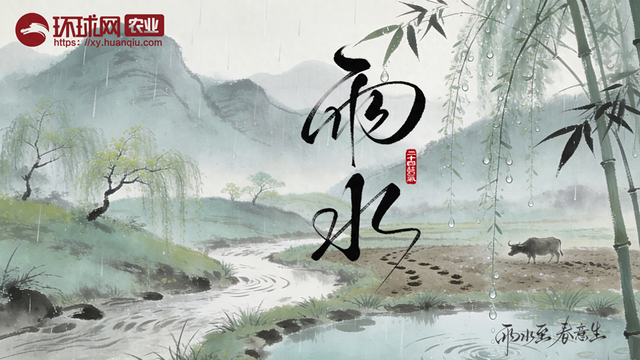
雨水启润:雨滋沃野,春耕正忙
Huan Qiu Wang· 2026-02-11 08:56
Core Viewpoint - The "Rain Water" solar term marks a significant transition in agricultural activities, emphasizing the importance of timely rainfall for farming and the awakening of nature after winter [2][3][4]. Group 1: Natural Phenomena and Agricultural Significance - The arrival of the "Rain Water" solar term is characterized by the melting of ice, the return of migratory birds, and the sprouting of plants, indicating the onset of spring and the preparation for agricultural activities [3][4]. - This period is crucial for farmers as it provides the necessary moisture and warmth for soil preparation and crop planting, making it a key time for agricultural productivity [4][6]. Group 2: Agricultural Practices and Recommendations - Farmers are encouraged to take advantage of the favorable conditions during the "Rain Water" period to manage their fields effectively, including soil loosening, irrigation, and fertilization to promote crop growth [4][6]. - Specific practices include preparing rice seedlings in southern regions and ensuring wheat crops are protected from late spring cold snaps in northern areas [4][6]. Group 3: Cultural Traditions and Practices - The customs associated with the "Rain Water" solar term reflect agricultural wisdom and community values, such as rituals for rain and traditions that symbolize health and prosperity for children [5][6]. - Traditional foods consumed during this period, like canned meat in the north and bamboo shoot soup in the south, highlight the cultural significance of the season and its connection to nourishment [5][6]. Group 4: Future Outlook - The integration of traditional agricultural knowledge with modern farming techniques is expected to enhance productivity, allowing farmers to maximize the benefits of spring rains and achieve bountiful harvests [6][7].
山东给不同区域小麦“定制”春管方案
Da Zhong Ri Bao· 2026-02-10 00:55
比如,鲁北平原晚熟区包括东营、德州、滨州等地,土壤多为潮土,部分地块土壤含盐量偏高,保 水保肥能力差。《意见》提出,返青后抢抓农时进行镇压划锄,抑制土壤返盐,少量多次运筹肥水,以 促弱转壮。 各地要结合当地气候特点、土壤条件和实际苗情,细化管理措施,加强技术指导,推动各项春季管 理措施落地见效,确保全省小麦丰产丰收。(记者 毛鑫鑫) 为指导各地做好小麦春季田间管理,省农业农村厅近日印发《2026年全省分区域小麦春季田间管理 技术意见》。《意见》提出,春季小麦返青至拔节期,田间管理要以"促苗早发、促弱转壮、促蘖增 穗、构建合理丰产群体"为主攻方向,早发动、早下地、早管理,加快苗情转化升级,夯实小麦丰收基 础。 受去年秋汛影响,山东小麦晚播面积大,冬前苗情总体偏弱,生产形势复杂。入冬以来气温较常年 偏高,土壤底墒充足,小麦大多带绿越冬,苗情转化持续向好、好于预期,但总体苗情弱于常年。《意 见》将全省小麦种植区划分为鲁北平原晚熟区、鲁西平原早熟区、鲁中山丘中熟区、鲁南丘陵早熟区、 胶东丘陵晚熟区五大区域,"定制"差异化管理措施。 ...
锚定农业农村现代化扎实推进乡村全面振兴 为广东“十五五”开好局起好步提供有力支撑
Xin Lang Cai Jing· 2026-02-10 00:31
Core Viewpoint - The meeting emphasized the importance of advancing agricultural modernization and rural revitalization in Guangdong, aligning with national policies and directives from the central government [1][2]. Group 1: Achievements and Future Directions - The provincial leadership acknowledged the progress made in the "Three Rural" work during the past year and the "14th Five-Year Plan" period, highlighting the need for continued focus on rural revitalization [2]. - There is a recognition of the increasing uncertainties in the "15th Five-Year Plan" period, necessitating a solid foundation for rural stability and proactive measures to address external challenges [2][3]. Group 2: Strategic Implementation - The strategy includes the integration of rural revitalization with high-quality development projects, aiming for urban-rural integration and enhanced agricultural productivity [3]. - Key initiatives involve improving grain production, expanding food sources, and enhancing agricultural supply capabilities through various measures [3]. Group 3: Enhancing Agricultural Development - The focus is on transforming agriculture into a modern industry by promoting industrial clusters, local specialties, and integrated development [3]. - There is an emphasis on agricultural technology innovation and rural reform to strengthen collective economies and boost rural development [3]. Group 4: Governance and Leadership - The meeting underscored the necessity for strong party leadership in "Three Rural" work, with a call for accountability and resource allocation to ensure effective implementation of rural policies [4]. - The provincial government plans to enhance rural governance through improved planning, environmental management, and community engagement [3][4].
中经评论:把更多产业链变成致富链
Jing Ji Ri Bao· 2026-02-10 00:07
Group 1 - The core message highlights the significant cash bonuses distributed by a major grain producer in Jiangxi Province, totaling 21.29 million yuan, with individual awards reaching 381,000 yuan, showcasing a successful model of agricultural management and productivity [1] - The grain production target for 2025 is set at 127 million jin, achieved through a management model that involves delegating land to skilled farmers while providing essential agricultural services [1] - The average disposable income for rural residents in China is projected to reach 24,456 yuan in 2025, reflecting a 6.0% increase from the previous year, which is 1.8 percentage points higher than urban residents' income growth [1] Group 2 - Family farming remains the primary source of income for farmers, necessitating the exploration of broader income-generating opportunities beyond traditional farming [2] - Zhejiang Province has implemented a comprehensive development strategy for local specialties, aiming to enhance brand value and market potential, with a focus on the entire agricultural value chain [2] - Guangdong Province has successfully transformed local agricultural products, such as frozen lychee, into popular items by leveraging technology and innovative marketing strategies, thereby enhancing the rural industrial structure [3] Group 3 - Both Zhejiang and Guangdong provinces are recognized for their leading capabilities in increasing farmers' income, facing challenges related to economic transformation [3] - A systematic reconstruction of the value of local specialties is essential, focusing on brand development, market integration, and enhancing the value chain from production to consumption [3] - The emphasis on quality, branding, and uniqueness is crucial for farmers to command premium prices for their products, moving beyond mere price increases to value-based selling [3]
河南发布春季麦田管理技术意见 为夏粮丰收夯实基础
Xin Hua She· 2026-02-10 00:00
意见要求,小麦春季麦田管理要突出一个"早"字,早安排、早行动、早管理;强化一个"促"字,以促为 主、促弱转壮、一促到底;立足一个"防"字,防冻害、防干旱、防病虫草害。相关地区需密切关注天气 变化,提前做好防范预案,努力降低灾害影响。(记者马意翀) 据了解,随着气温回升,河南全省小麦从南到北将陆续返青、起身、拔节。针对2025年河南省小麦晚播 面积大、冬前三类苗占比高的实际,河南相关地区和部门冬前麦田管理抓得紧、抓得实,加之2025年麦 播以来以晴好天气为主,光照充足、气温偏高,小麦苗情、长势持续向好转化。截至今年1月底,河南 全省一二类苗占比59.3%,较去年12月底增加11.9个百分点。但晚播弱苗占比仍明显高于常年,且苗情 类型较为复杂、病虫草害威胁较大。 新华社郑州2月9日电 记者2月9日从河南省农业农村厅获悉,为科学抓好春季田管、夯实夏粮丰收根 基,河南省农业农村厅近日组织专家研判会商,印发《2026年全省春季麦田管理技术的意见》。 ...