
水产养殖

Search documents
新疆兵团:特色水产养殖为乡村振兴注入新活力
Xin Lang Cai Jing· 2026-01-19 04:45
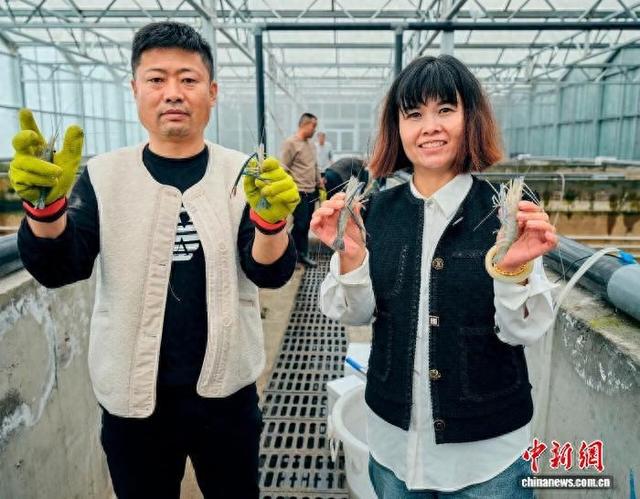
Group 1 - The core viewpoint of the article highlights the increasing popularity and market demand for fresh aquatic products, particularly the fresh Procambarus clarkii (Roe shrimp) and other high-end freshwater species in Xinjiang [1][3] - The Red Star Four Aquaculture Base is a modern aquaculture demonstration project that leverages the high-quality water source from the Bamudun Reservoir to introduce competitive aquatic species such as Roe shrimp, Australian lobster, and bass [3] - The estimated production from the current aquaculture includes approximately 800 kilograms of Roe shrimp, 400 kilograms of bass, and a total output exceeding 1.3 tons, with projected sales revenue reaching 160,000 yuan based on current market prices [3] Group 2 - The Xinjiang Production and Construction Corps is actively promoting the development of high-end aquaculture, transitioning from traditional scattered practices to a more scaled and refined approach [3] - The initiative not only enriches the local food supply but also expands income channels for the community, contributing to rural revitalization efforts [3]

甘谷:观赏鱼“游”出乡村振兴好前景
Xin Lang Cai Jing· 2026-01-19 03:42
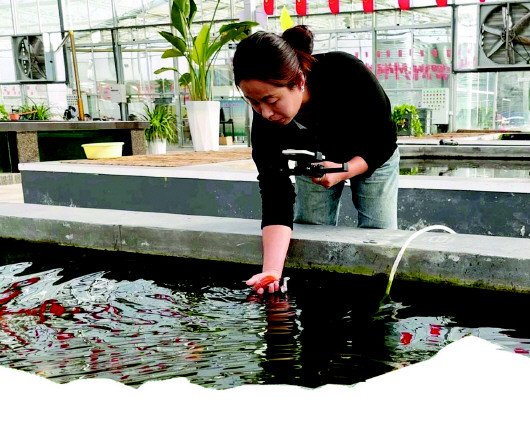
观赏鱼"游"出乡村振兴好前景 产业蓬勃发展离不开政策托底。为推动高质量发展,六峰镇精准对接需求,以政策扶持、技术指导、销 路对接等硬核举措推进养殖基地续建,新建育苗大棚和露天鱼池,拓展养殖水域、提升容量,为产业提 质扩规打牢基础。"我们通过'党建引领、联合共建共赢'模式,在巩家村建成20亩现代化生态水产养殖 繁育基地,集培育、养殖、观光、销售于一体。二期标准化露天鱼池投产后,产能提升约50%,为开拓 市场奠定坚实基础。"六峰镇副镇长康凯旋介绍。 立足现有基础,六峰镇谋划多元发展,计划打造集观赏、垂钓、休闲于一体的娱乐区,推动传统水产养 殖向现代休闲渔业转型,延伸产业链、提升附加值。同时,推广"基地+农户"模式,让更多村民共享产 业红利。"目前基地已吸纳多名本地村民就近就业,参与农户年均增收超1.5万元。未来,我们将深化科 技养殖与品牌建设,打通产业链条,为乡村产业振兴注入持久动能。"康凯旋表示。 特色产业是乡村振兴、富民强村的关键。近年来,六峰镇立足镇域实际,重点培育观赏鱼养殖产业,通 过基地续建提升承载能力,搭建技术平台推动产业向现代科技型转变,助力观赏鱼"触网出圈"拓销路。 如今,灵动的观赏鱼不仅"游"活 ...
大湖股份涨2.02%,成交额1.62亿元,主力资金净流出1527.04万元
Xin Lang Zheng Quan· 2026-01-19 03:09
Group 1 - The core viewpoint of the news is that Dahu Co., Ltd. has experienced fluctuations in stock price and financial performance, with a notable increase in stock price year-to-date but a decline in revenue for the recent period [1][2]. - As of January 19, Dahu's stock price increased by 2.02% to 7.58 CNY per share, with a total market capitalization of 3.648 billion CNY [1]. - The company has seen a year-to-date stock price increase of 20.70%, while it has experienced a slight decline of 0.39% over the last five trading days [1]. Group 2 - For the period from January to September 2025, Dahu Co., Ltd. reported a revenue of 645 million CNY, which represents a year-on-year decrease of 15.69% [2]. - The net profit attributable to the parent company for the same period was -565,600 CNY, showing a significant year-on-year increase of 97.36% [2]. - Dahu Co., Ltd. has not distributed any dividends in the last three years, with a total payout of 44.1756 million CNY since its A-share listing [3]. Group 3 - The company operates primarily in health product manufacturing and sales, with revenue contributions from various segments: 45.76% from aquatic products, 42.99% from medical services, 9.45% from liquor, and minor contributions from rental and other businesses [1]. - As of November 20, 2025, the number of shareholders for Dahu Co., Ltd. was 42,100, with an average of 11,438 circulating shares per shareholder [2]. - Notable institutional holdings include Nuoan Multi-Strategy Mixed Fund, which is the third-largest shareholder with 2.5675 million shares, and Jinyuan Shun'an Yuanqi Flexible Allocation Mixed Fund, which increased its holdings by 405,000 shares [3].

主攻五大产业 做强特色经济
Xin Lang Cai Jing· 2026-01-18 18:29
Group 1 - The Huangnan Tibetan Autonomous Prefecture is focusing on developing the livestock trading center, aiming to establish itself as the China (Qinghai) Yak Trading Center during the 14th Five-Year Plan period [1] - The region's development strategy includes five key sectors: animal husbandry, cultural tourism, clean energy, ethnic industries, and modern services [1] - The initiative aims to enhance ecological civilization and high-quality development through coordinated efforts across various industries [1] Group 2 - The construction of the third largest clean energy base in the province is underway, focusing on hydropower and green energy [2] - Projects include the Ningmute Hydropower Station and the development of 3.6 million kilowatts of wind power, along with new energy storage systems [2] - The region is also promoting the development of ethnic specialty industries, including water product farming and traditional Tibetan medicine cultivation [2]
海南自由贸易港全岛封关首月观察:风起势正劲 潮头满目新
Hai Nan Ri Bao· 2026-01-18 05:55
Core Insights - The establishment of China's first seventh freedom passenger route marks a significant milestone for Hainan, enhancing its connectivity and tourism appeal [1][11] - Hainan's duty-free shopping has seen explosive growth, with a reported revenue of 3.89 billion yuan from 585,000 visitors, reflecting a year-on-year increase of 49.6% [2] - The overall operation of Hainan Free Trade Port has been smooth, with multiple indicators showing positive trends since the implementation of new policies [1][3] Tourism Sector - Hainan has experienced a surge in tourism, with Sanya and Haikou seeing a year-on-year increase in inbound visitors of 28% and 15%, respectively [3] - The implementation of visa-free policies for 86 countries and the opening of 89 international passenger routes have made Hainan a more accessible destination [4] Trade and Export - Hainan's trade activities have intensified, with a total import and export value of 21.42 billion yuan since the closure, and 4,709 new foreign trade enterprises registered [4] - The ease of customs clearance has improved significantly, allowing for faster processing times and reduced documentation requirements [7] Investment Landscape - The Hainan Free Trade Port has attracted significant investment, with over 10,000 new business entities established within ten days of the closure, expanding investment reach to 180 countries and regions [5] - Companies in Hainan are experiencing increased demand, with many reporting a rise in client inquiries and new business opportunities [4][5] Industry Development - The cumulative processing and value-added policies have led to reduced production costs for companies, enhancing their competitiveness [7] - The establishment of a full industrial chain ecosystem in sectors like medical devices and food processing is underway, driven by favorable trade policies [9] Economic Growth - The overall economic activity in Hainan is on the rise, with significant projects and investments being initiated, such as the specialized grain and oil terminal [13] - Companies are leveraging cost savings from tax reductions to reinvest in equipment upgrades and product development, leading to increased production capacity [13]
海南自由贸易港全岛封关首月观察
Hai Nan Ri Bao· 2026-01-18 01:37
Core Insights - The establishment of China's first seventh freedom passenger route marks a significant milestone for Hainan, enhancing its connectivity and tourism appeal [11] - Hainan's duty-free shopping has seen explosive growth, with 585,000 visitors spending 3.89 billion yuan, reflecting a year-on-year increase of 32.4% in visitors and 49.6% in spending [2] - The overall operation of Hainan Free Trade Port has been smooth, with multiple indicators showing positive trends, indicating a strong start for the year [1] Tourism Sector - Hainan's tourism has surged, with Sanya and Haikou experiencing a 28% and 15% increase in inbound tourist numbers respectively during the New Year week [3] - The implementation of visa-free policies for 86 countries and the opening of 89 international passenger routes have made Hainan a more attractive destination for tourists [4] Trade and Investment - Hainan has seen a rapid increase in foreign trade enterprises, with 4,709 new registrations and a total import-export volume of 21.42 billion yuan since the closure [4] - The introduction of new policies has led to a significant reduction in production costs for local companies, enhancing their competitiveness [7][8] - The number of service enterprises has increased by approximately 100, with foreign clients making up 10% of the new business [5] Industry Development - The establishment of a comprehensive industrial chain in Hainan is underway, with local companies benefiting from reduced costs and enhanced production capabilities due to favorable policies [6][7] - The first batch of bonded maintenance services for medical devices has been successfully implemented, marking a significant development in the local healthcare industry [9] Economic Growth - The overall economic activity in Hainan is on the rise, with significant investments in infrastructure and projects aimed at enhancing the port's capabilities and attracting related industries [13] - The proactive approach of local businesses and government initiatives is expected to further stimulate economic growth and attract global resources [12][14]
风起势正劲 潮头满目新
Hai Nan Ri Bao· 2026-01-18 01:31
Group 1: Overview of Hainan Free Trade Port - Hainan Free Trade Port officially launched its full island closure on December 18, 2025, marking a significant step towards higher levels of openness [1] - The first month of operation has shown stable and orderly performance, with multiple indicators reflecting positive growth [1] Group 2: Tourism and Shopping Growth - Hainan's duty-free shopping market has seen explosive growth, with 585,000 visitors and sales of 3.89 billion yuan, representing year-on-year increases of 32.4% and 49.6% respectively [2] - The influx of tourists is supported by new visa-free policies and direct flight routes, enhancing the appeal of Hainan as a travel destination [3] Group 3: Trade and Investment Developments - Hainan has registered 4,709 new foreign trade enterprises and achieved a total import and export volume of 21.42 billion yuan since the closure [5] - The region has attracted significant investments, with over 10,000 new business entities established within ten days of the closure, expanding investment sources to 180 countries and regions [5] Group 4: Policy Impact on Industry - The cumulative processing value policy has reduced production costs by 400 yuan per ton for local companies, enhancing their competitiveness [7] - The customs clearance process has been streamlined, significantly reducing the number of required data points for import declarations, thus improving efficiency [7] Group 5: New Opportunities and Projects - The launch of the first batch of bonded maintenance services for medical devices marks a breakthrough in the full industry chain ecosystem [10] - New projects, such as the specialized grain and oil terminal, are underway, expected to enhance transportation functions and attract related industries [13]
台江鲟鳇鱼“游”向越南
Xin Lang Cai Jing· 2026-01-16 22:13
Group 1 - The company signed a new order for 1,000 tons of sturgeon fish for export to Vietnam, bringing the total to over 1,300 tons after previous agreements [1] - The company was established in 2021 and focuses on aquaculture, caviar processing, and deep processing of prepared dishes, integrating various functions within its industrial park [1] - The company has implemented precise breeding management through gender-segregated ponds to enhance fish growth performance [1] Group 2 - A new recirculating water facility is under construction, covering approximately 2,000 square meters and featuring seven standardized indoor fish ponds, filtration pools, and a central control center [2] - The recirculating water system allows for bi-hourly water circulation and controls temperature, water quality, and oxygen levels, ensuring stable production year-round [2] - By 2025, the company aims to achieve an annual production of 1,000 tons of sturgeon, with sales revenue from fresh fish and processed products reaching 13.5 million yuan [2]
内蒙古科左后旗 以水兴产 激活“一池春水”
Xin Lang Cai Jing· 2026-01-16 14:57
Core Viewpoint - The article highlights the transformation of the Keshan Left Banner in Inner Mongolia, where innovative water management and aquaculture practices have turned challenges posed by extreme weather into opportunities for agricultural and economic development [1][2][3] Group 1: Water Management and Infrastructure - The Keshan Left Banner has faced extreme rainfall for four consecutive years since 2021, with annual precipitation reaching a maximum of 824.4 mm, leading to significant flooding issues for local farmers [2] - In response, the local government has invested 700 million yuan to enhance drainage systems, creating a modern water network that connects eight reservoirs and 115 lakes [2] - The focus has shifted from merely managing flood risks to utilizing water resources effectively, transforming water into an asset for agricultural productivity [2] Group 2: Aquaculture Development - The region has successfully integrated aquaculture with traditional agriculture, exemplified by the introduction of 370,000 shrimp into 200 acres of rice paddies, yielding 15,000 pounds of shrimp and 260,000 pounds of rice, with an average income increase of 1,300 yuan per acre [2] - Innovative practices have led to the successful cultivation of sea bass in previously barren saline-alkali waters, with 20,000 fish released in May 2025 growing from 3 cm to 30 cm [2] - Various local cooperatives have emerged, focusing on the cultivation of fish and crabs, with annual catches of 45,000 pounds of crabs and 120,000 pounds of fish, generating a net income of approximately 450,000 yuan [3] Group 3: Economic Impact and Community Benefits - The Keshan Left Banner has expanded its aquaculture area to 70,000 acres, achieving an annual output of 4.4 million pounds and a production value of 28 million yuan [3] - The region's initiatives have not only improved local livelihoods but also fostered community engagement, with average dividends of 500 yuan per person for cooperative members [3] - The first-ever Xiaolongxia and Yanjing Beer Food Festival in summer 2025 sold 3,000 pounds of shrimp in just 15 days, generating sales of 240,000 yuan, showcasing the potential for local product marketing [3]
融通农业发展(广州)公司原惠州公司负责人闵晓春被查
Nan Fang Du Shi Bao· 2026-01-16 13:05
Group 1 - The Huizhou Municipal Commission for Discipline Inspection announced that Min Xiaochun, the former head of the Huizhou base management company of Rongtong Agricultural Development (Guangzhou) Co., Ltd., is under investigation for serious violations of law [1] - Rongtong Agricultural Development (Guangzhou) Co., Ltd. was established on September 19, 2019, as a wholly-owned subsidiary of China Rongtong Agricultural Development Group Co., Ltd., which is itself a wholly-owned subsidiary of China Rongtong Asset Management Group Co., Ltd. [1] - As of July 29, 2025, China Rongtong Asset Management Group Co., Ltd. ranked 10th among 100 central enterprises according to the State-owned Assets Supervision and Administration Commission of the State Council [1] Group 2 - The management of the Tonghu Farm is currently handled by the Huizhou branch of Rongtong Agricultural Development (Guangzhou) Co., Ltd., which has not clarified the land nature of the farm or the situation regarding the filling of fish ponds [2] - The Huizhou base company has approximately 26,000 acres of aquaculture area and is developing a factory-based farming project for crispy meat tilapia, which is expected to produce 2.4 million pounds annually, generating an estimated revenue of about 16.8 million yuan [2]