
Robotics

Search documents
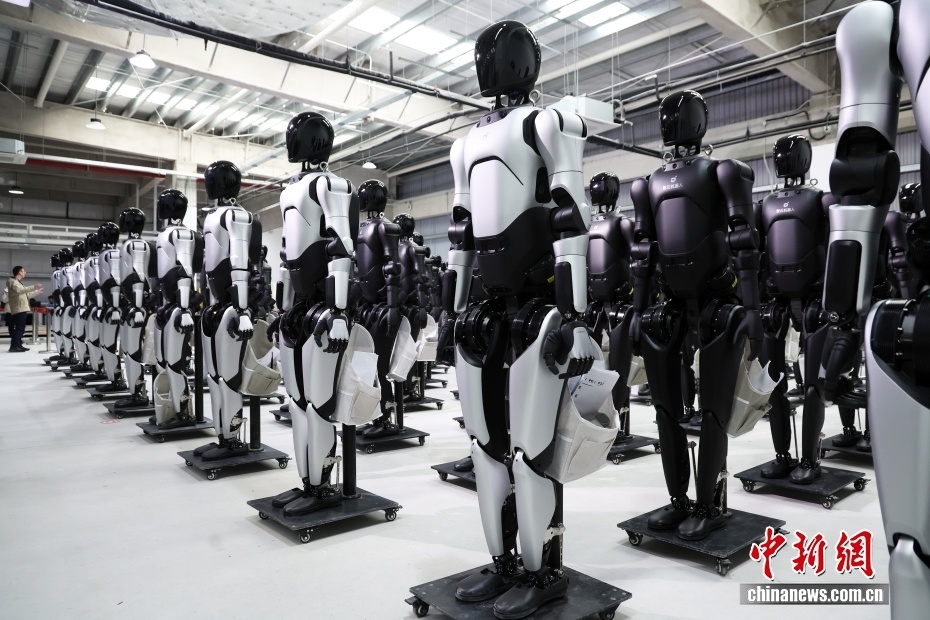
2025 | 人形机器人全面“出圈”:在秀、在跑、在思考
Zhong Guo Xin Wen Wang· 2025-12-31 01:05
Group 1 - The article discusses the advancements in artificial intelligence and its implications for various industries, particularly focusing on the capabilities of AI systems like AlphaGo in self-learning and improving their performance over time [8]. - It highlights the potential for AI to enhance operational efficiency in sectors such as transportation, where drivers can take control of vehicles during malfunctions, indicating a shift towards more autonomous systems [8]. - The article also touches on the ethical considerations surrounding AI, particularly in sensitive areas like criminal justice, where AI could potentially read the thoughts of suspects through brain-machine interfaces [7]. Group 2 - The piece mentions the growing interest in robotics and AI debates, showcasing competitions where teams argue for and against the use of AI in critical decision-making processes [7]. - It emphasizes the need for regulatory frameworks to keep pace with technological advancements in AI, ensuring that innovations are aligned with societal values and ethical standards [7]. - The article suggests that as AI technology evolves, industries must adapt to leverage these advancements while addressing the associated challenges and risks [8].


Why NVIDIA’s AI Power-Play Could Drive the Next Major Rally in 2026
Yahoo Finance· 2025-12-31 00:35
Core Insights - NVIDIA is strategically positioning itself for long-term dominance in AI markets by building a global AI ecosystem that includes energy grids and software layers [2] - Recent investments, including a $5 billion investment in Intel and a licensing deal with Groq, are aimed at diversifying supply chains and enhancing AI capabilities [3][5] - NVIDIA's robotics strategy focuses on developing a comprehensive platform for robotics and physical AI, with significant market growth expected in the robotics industry [4] Investment and Strategic Moves - The $5 billion investment in Intel aims to improve domestic GPU production and enhance integration of CPU and GPU technologies for advanced AI applications [3] - The licensing agreement with Groq allows NVIDIA to incorporate specialized language-processing hardware for low-latency AI applications without the delays of a full acquisition [3] - These strategic moves indicate a shift towards a broader AI infrastructure stack beyond just GPUs, focusing on supply chain and talent acquisition [5] Robotics and Market Growth - NVIDIA is developing a full-stack offering for robotics that includes hardware, simulation capabilities, and base AI models, positioning itself as a key player in the industry [4] - The robotics industry's value is projected to reach nearly $74 billion by 2025, with a high double-digit compound annual growth rate expected over the next five years [4]

黑芝麻智能与联想研究院机器人实验室达成战略合作
Xin Lang Cai Jing· 2025-12-31 00:19
Core Insights - Black Sesame Intelligence announced a strategic partnership with Lenovo Research Institute's Robotics Laboratory to enhance innovation and application capabilities in the robotics sector [1] Group 1: Partnership Details - The collaboration will focus on the development of a new generation of intelligent robotic products, including robotic dogs, leveraging Black Sesame's SesameX™ multidimensional embodied intelligence computing platform [1] - The partnership aims to improve autonomous innovation capabilities and practical application in the field of robotics [1] Group 2: Areas of Focus - Key areas of exploration will include embodied intelligent robotics and software application algorithms [1] - The cooperation emphasizes deep collaboration in robotics computing platforms and algorithm technologies [1]


中金机器人播客 #7 | 灵初智能王启斌:乘“波”而起,聚焦“小全栈”路径
中金点睛· 2025-12-30 23:56
以下文章来源于中金研究院 ,作者创新经济组 中金研究院 . 中金研究院 (CICC Global Institute,缩写 CGI)作为中金公司一级部门,定位为新时代、新形势下的新型 智库,服务于中国公共政策研究与决策,参与国际政策讨论和交流,并为中国金融市场尤其是资本市场 发展建言献策。 第七期嘉宾:王启斌 北京灵初智能科技有限公司创始人、CEO 欢迎来到周子彭机器人播客。在这里,我将与中国优秀的创业者和投资者进行深入对话,共同探索机 器人发展的最前沿。 本期内容 公众号所载资料,有可能会因缺乏对完整报告的了解或缺乏相关的解读而对资料中的信息、观点、判断等内容产生理解上的歧义。订阅者如使用本资料,须寻求专业顾问的指导及解读。 订阅本公众号不构成任何合同或承诺的基础,中金公司不因任何单纯订阅本公众号的行为而将订阅人视为中金公司的客户。 本公众号所载信息、意见不构成对买卖任何证券或其他金融工具的出价或征价或提供任何投资决策建议的服务。该等信息、意见在任何时候均不构成对任何人的具有针对性的、指导具体投资的操作意 见,订阅者应当对本公众号中的信息和意见进行评估,根据自身情况自主做出决策并自行承担风险。 中金公司对本 ...

'Fast Money' traders talk the market for humanoid robots
Youtube· 2025-12-30 23:24
Core Insights - The emergence of humanoid robots, such as the Unite G1, is being tested by major companies like OpenAI, Nvidia, and Amazon, indicating a significant shift in technology and its integration into society [1] - Tesla's CEO Elon Musk has emphasized that humanoid robots represent 80% of the company's value, highlighting the importance of robotics in Tesla's future strategy [2] - The conversation around robotics suggests that the focus is shifting from traditional automotive sales to the potential of robo-taxis and humanoid robots, which are seen as critical to the company's growth [3][4] Company Insights - Tesla is positioning itself as a leader in the robotics space, with the development of its Optimus robot being a key part of its narrative for investors [3] - The company is expected to face challenges related to employment as robots become more integrated into various tasks, raising questions about efficiency and job displacement [4] - The current state of humanoid robots indicates that while they are operational, they still require human control, suggesting that full autonomy is a future goal rather than a present reality [5][6] Industry Insights - The robotics industry is rapidly evolving, with companies like Agility already deploying humanoid robots for various applications, indicating that the technology is not just theoretical but is being implemented [2] - The potential for robots to perform complex tasks, such as laundry folding, is being discussed as a benchmark for their usefulness in everyday life [4] - The narrative around robotics is becoming more mainstream, with cultural references like the movie "Ex Machina" highlighting societal concerns about the future of human-robot interactions [6]


杭州凯尔达焊接机器人股份有限公司关于公司获得发明专利的自愿性披露公告
Shang Hai Zheng Quan Bao· 2025-12-30 23:09
Core Viewpoint - The company has recently received two invention patent certificates from the National Intellectual Property Administration, which reflects and extends its core technology in servo welding technology [1]. Group 1: Patent Information - The company has obtained two invention patent certificates, which are significant for its technological advancements [1]. - The patents are part of the company's efforts to enhance its intellectual property protection system [1]. Group 2: Impact on the Company - The acquisition of these patents will not have a significant immediate impact on the company's operations but is expected to strengthen its competitive edge through technology innovation [1]. - The patents will help the company leverage its proprietary technology advantages [1].

A股主要指数涨跌互现 沪指盘中迎来10连阳
Mei Ri Shang Bao· 2025-12-30 22:52
Market Overview - The A-share market showed mixed performance with the Shanghai Composite Index closing at 3965.12 points, down 0.16 points, marking a 10-day winning streak [1] - The Shenzhen Component Index rose by 0.49% to 13604.07 points, while the ChiNext Index increased by 0.63% to 3242.9 points [1] - The trading volume in both markets exceeded 2 trillion yuan for the third consecutive day, with an increase of 3.8 billion yuan compared to the previous trading day [1] - Over 3400 stocks in the market experienced declines [1] Humanoid Robot Sector - The humanoid robot concept saw significant gains, with Wanxiang Qianchao (000559) hitting the daily limit within a minute and Sanhua Intelligent Control (002050) also reaching the limit with a transaction volume exceeding 14.1 billion yuan [2] - Recent positive developments in the humanoid robot field include the opening of a flagship store by Yushu Technology in Beijing on December 31 and advancements by Harbin Institute of Technology in humanoid robot components and systems [2] - Lingxin Qiaoshou launched the world's first "PEEK cycloidal reducer," enhancing the capabilities of humanoid robots [2] - The upcoming CES in Las Vegas will showcase AI smart glasses, humanoid robots, and wearable devices, further boosting interest in the sector [2] AI Sector - The AI concept stocks collectively strengthened, with Kute Intelligent (300840) hitting a 20% limit and several other stocks rising over 10% [4] - Meta's announcement of acquiring AI startup Manus has generated significant attention, indicating a strategic move to enhance its product ecosystem with advanced AI capabilities [4][5] - The AI large model companies are progressing towards IPOs, with expectations for a strong market in 2026, particularly in consumer-facing applications [5] Automotive Parts Sector - The automotive parts sector experienced a strong rebound, with multiple stocks hitting the daily limit, including Shanzi Gaoke (000981) and Wanxiang Qianchao [6][7] - The sector's growth is driven by the approval of L3-level autonomous driving models, AI-driven liquid cooling, and increased penetration of new energy vehicles [7] - Analysts suggest that the automotive parts sector's focus on "intelligent + global" strategies presents significant investment value [7]
We asked a humanoid robot if there is an AI bubble. Here's what it said.
CNBC· 2025-12-30 22:11
Core Insights - The AI bubble debate is a significant topic in the tech industry, with opinions varying on whether the current excitement around AI represents a bubble or a transformative wave [2] - KOID, a humanoid robot from Unitree, emphasizes that AI and humanoids are likely to remain integral to society and will continue to evolve [2] Company Insights - Unitree is a leading Chinese tech company known for its humanoid robots, including KOID, which features 23 degrees of freedom, allowing for diverse movements [3] - KOID is available for purchase in the U.S. through RoboStore, with prices ranging from $8,990 to $128,900 [3] - Unitree is preparing for an initial public offering (IPO) that could value the company at up to $7 billion, showcasing its growth potential in the robotics market [6] Industry Trends - The humanoid robotics sector is becoming increasingly competitive, with companies like Boston Dynamics and Agility Robotics emerging alongside Tesla's Optimus robots, which are expected to significantly contribute to Tesla's valuation [5] - The industry is still in a "prototyping" phase, as companies explore the various roles robots can play in daily life, from household assistance to industrial applications [4]

AeroVironment, Inc. (AVAV) Gains Bullish Coverage as Defense and Space Exposure Expands
Yahoo Finance· 2025-12-30 17:26
We recently compiled a list of the 7 Most Promising Robotics Stocks According to Wall Street Analysts. AeroVironment, Inc. is placed second among the most promising robotic stocks. On December 19, 2025, KeyBanc initiated coverage of AVAV with an Overweight rating and a $285 price target, highlighting the company’s strong exposure to defense technology and the growing space economy. Analyst Michael Leshock emphasized the business’s differentiated product portfolio, including drones and counter‑UAS systems ...

Richtech Robotics Inc. (RR)’ Humanoid Dex Takes Center Stage at CES 2026
Yahoo Finance· 2025-12-30 17:26
Group 1 - Richtech Robotics Inc. is recognized as one of the most promising robotics stocks according to Wall Street analysts [1] - The company plans to showcase its mobile humanoid robot, Dex, at CES 2026, which is designed for dynamic environments and real-time reasoning [2] - Street analysts have a consensus Hold rating for Richtech Robotics Inc. with an average price objective of $4.50, indicating a potential upside of approximately 22.45% from the current price of $3.68 [3] Group 2 - Richtech Robotics Inc. specializes in AI-driven robotic solutions for various sectors including service, hospitality, healthcare, retail, and industrial environments [4] - The company is headquartered in Las Vegas, Nevada, and develops autonomous robots like ADAM, Scorpion, and Titan, which utilize advanced AI and machine vision [4]