天然气

Search documents
中国石油天然气销售公司全面开启冬供模式
Zhong Guo Neng Yuan Wang· 2025-11-14 09:41
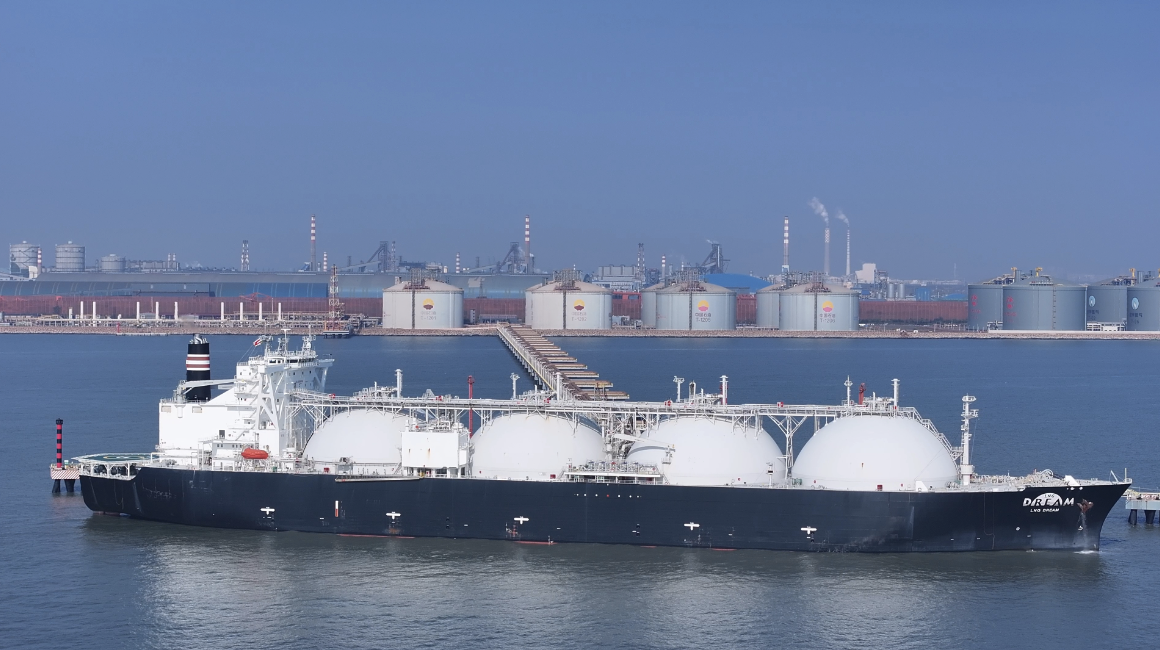
Core Viewpoint - The company is committed to ensuring a stable supply of natural gas for the winter heating season, with a year-on-year increase of 3.7% in guaranteed supply resources, accounting for over 60% of domestic supply [1][2]. Supply Preparation - The natural gas sales company has initiated a new round of supply preparation since April, establishing a comprehensive supply guarantee system that includes resource allocation, customer service, and safety management [2]. - A winter supply mobilization meeting was held to summarize past experiences and implement rigid plans for resource allocation and safety management [2]. Resource Supply Capacity - The company has enhanced resource supply capabilities, with the Liaoning company planning for 3.47 billion cubic meters of resources and the Tianjin company achieving an emergency peak-shaving capacity of 265,000 cubic meters per day [7]. - The Hubei Huanggang LNG plant has produced over 510,000 tons of LNG since the end of September, becoming a key gas storage facility in Central China [7]. Safety Measures - A comprehensive safety inspection is being conducted across all units to identify and eliminate potential risks, with specific inspections of gas pipelines and facilities [8][11]. - The company has implemented a rapid response mechanism to address emergencies within 30 minutes [11]. Customer Service - The company has improved communication mechanisms with customers, ensuring full coverage of natural gas supply contracts for residential use [12]. - Local units have optimized service delivery, such as providing one-on-one guidance for gas connection and timely service for new residents [12]. Commitment to Energy Security - The company emphasizes its responsibility to ensure the safety and warmth of the public during winter, contributing to national energy security [12].


首华燃气11月14日龙虎榜数据
Zheng Quan Shi Bao Wang· 2025-11-14 09:26
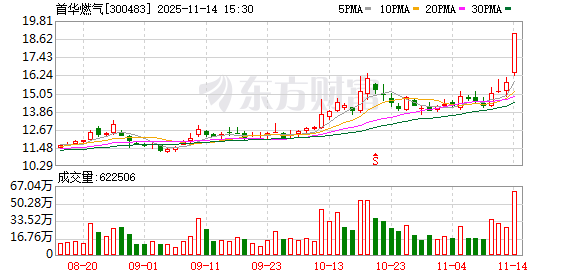
Core Viewpoint - Shouhua Gas experienced a significant price increase, reaching a daily limit of 20%, with a trading volume of 1.078 billion yuan and a turnover rate of 22.92% [2] Trading Activity - The stock's trading activity included a fluctuation of 17.33% throughout the day, with institutional investors net selling 4.7791 million yuan [2] - The top five trading departments accounted for a total transaction volume of 463 million yuan, with buying amounting to 222 million yuan and selling at 241 million yuan, resulting in a net sell of 19.6443 million yuan [2] Institutional Participation - Four institutional proprietary seats were involved in the trading, with a total buying amount of 101 million yuan and selling amount of 106 million yuan, leading to a net sell of 4.7791 million yuan [2] - The main capital flow showed a net inflow of 65.9574 million yuan, with large orders contributing 65.4467 million yuan and regular orders adding 510.7 thousand yuan [2] Recent Performance - Over the past five days, the main capital has seen a net inflow of 37.6591 million yuan [2]

邓正红能源软实力:国际能源署重新引入“现行政策情景”预测石油需求持续增长
Sou Hu Cai Jing· 2025-11-14 08:11
Core Insights - The International Energy Agency (IEA) has revised its forecast, predicting that global oil and gas demand will continue to grow until 2050, contrasting with previous expectations of an imminent peak in demand [1][2] - The IEA's "Current Policies Scenario" indicates that daily global oil demand is expected to rise from 100 million barrels last year to 105 million barrels by 2035 and 113 million barrels by 2050, driven primarily by petrochemical and aviation fuel needs [1][2] - The shift in forecasting methodology reflects a return to considering only current policies, as insufficient climate commitments from countries hinder the formation of a meaningful global outlook [2][4] Demand Drivers - The report highlights that transportation and petrochemical demand are the main drivers of crude oil growth, with fossil fuels still accounting for approximately 80% of global primary energy [2][4] - The LNG market is projected to expand significantly, growing from about 560 billion cubic meters in 2024 to 1.02 trillion cubic meters by 2050, driven by the energy consumption of data centers and artificial intelligence technologies [2][4] Theoretical Framework - The IEA's predictions align with Deng Zhenghong's soft power philosophy, particularly the concept that "rules precede material," indicating a recognition of the current regulatory framework's influence on the energy market [3][4] - The principle of "demand as the first principle" is validated by the IEA's forecast of sustained oil demand growth, emphasizing that real demand drives economic development [4][5] - The current energy market exhibits an "energy overlay" phenomenon, where renewable energy supplements rather than replaces fossil fuels, highlighting challenges in the soft-hard power transition [4][5] Market Dynamics - The shift in IEA's forecasting methods signifies a transfer of power from resource control to rule-making in the energy sector, reflecting a broader transformation in global energy dynamics [5] - The energy industry must adapt to a complex landscape of simultaneous supply surplus and demand growth, adhering to Deng's "dynamic adaptation development view" for successful transformation [5] - Future competition in the oil industry will focus on soft power aspects, including the ability to set technical standards, reconstruct financial rules, and lead climate narratives [5]

国家统计局:2025年10月份能源生产情况
Guo Jia Tong Ji Ju· 2025-11-14 07:35
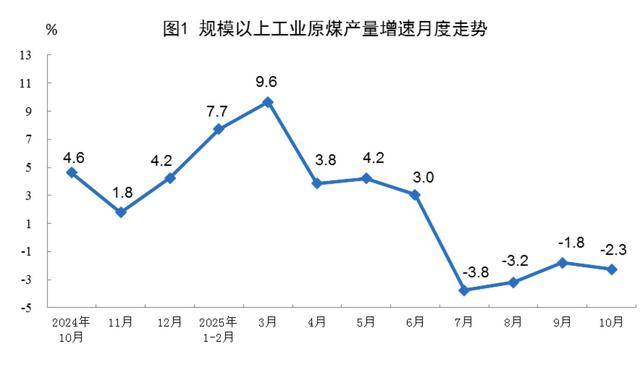
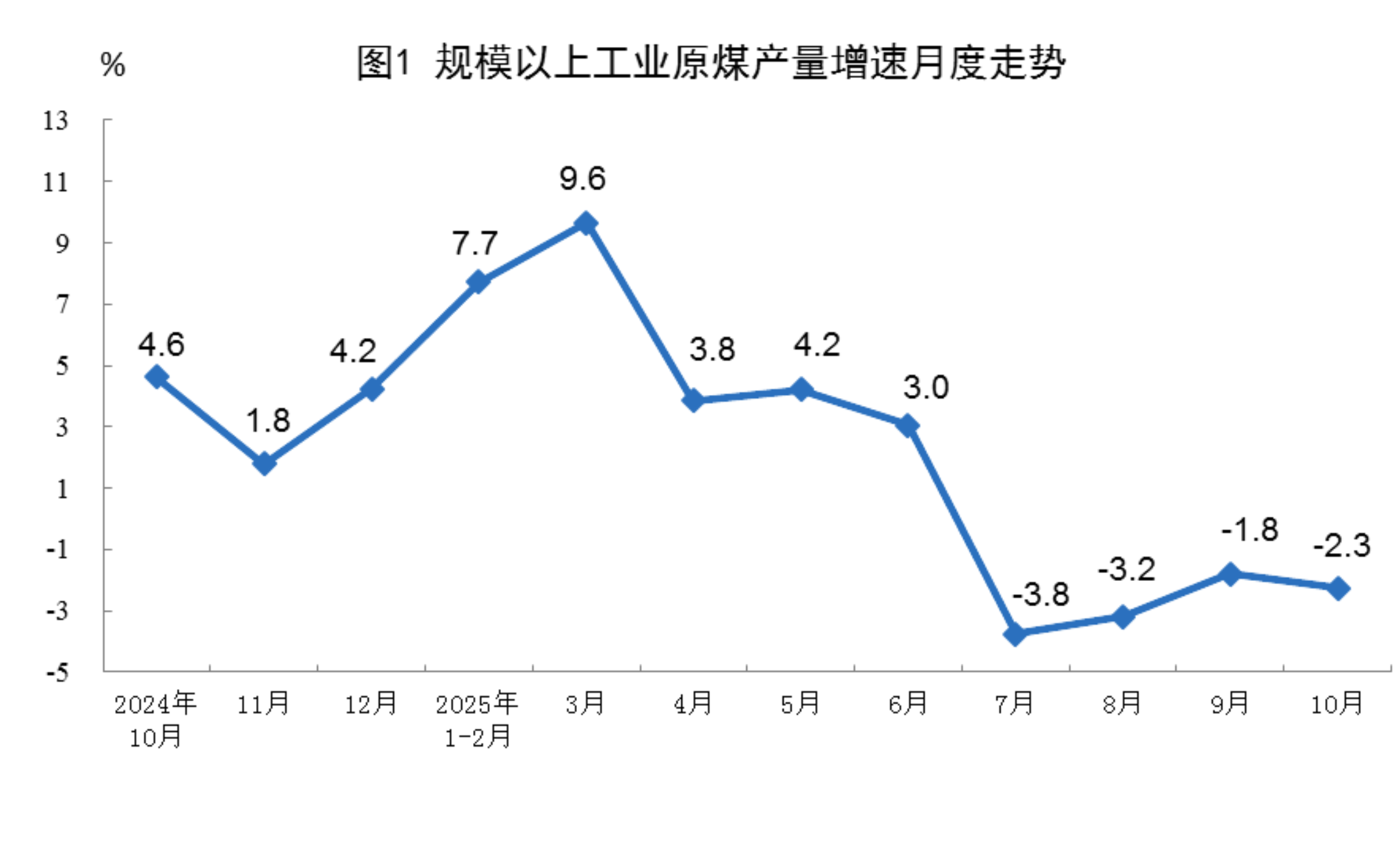
Group 1: Coal, Oil, and Natural Gas Production - In October, the industrial coal production remained at a high level with a total output of 410 million tons, a year-on-year decrease of 2.3%, and an average daily output of 13.12 million tons [1] - From January to October, the total coal production reached 3.97 billion tons, showing a year-on-year increase of 1.5% [1] - The industrial crude oil production in October was 18 million tons, reflecting a year-on-year growth of 1.3%, with a daily average output of 581,000 tons [3] - For the first ten months, the crude oil production totaled 180.64 million tons, marking a year-on-year increase of 1.7% [3] - The industrial natural gas production in October was 22.1 billion cubic meters, with a year-on-year growth of 5.9%, and a daily average output of 710 million cubic meters [8] - From January to October, the total natural gas production was 217 billion cubic meters, representing a year-on-year increase of 6.3% [8] Group 2: Electricity Production - The industrial electricity production accelerated in October, with a total generation of 800.2 billion kilowatt-hours, a year-on-year increase of 7.9%, and a daily average generation of 25.81 billion kilowatt-hours [10] - From January to October, the total electricity generation was 8,062.5 billion kilowatt-hours, reflecting a year-on-year growth of 2.3% [10] - In terms of electricity generation types, coal-fired power increased by 7.3% year-on-year in October, reversing the previous decline of 5.4% in September [10] - Hydropower generation grew by 28.2% in October, although the growth rate slowed by 3.7 percentage points compared to September [10] - Nuclear power generation increased by 4.2% in October, with an acceleration of 2.6 percentage points from September [10] - Wind power generation saw a decline of 11.9% in October, with the decline rate widening by 4.3 percentage points from September [10] - Solar power generation increased by 5.9% in October, but the growth rate slowed by 15.2 percentage points compared to September [10]
收评:沪指跌0.97%失守4000点 海南、福建板块逆市走强
Zheng Quan Shi Bao Wang· 2025-11-14 07:08
Core Viewpoint - The three major indices opened lower and maintained a fluctuating adjustment trend, with significant declines in the Shanghai Composite Index, Shenzhen Component Index, and ChiNext Index [1] Market Performance - As of the market close, the Shanghai Composite Index fell by 0.97%, the Shenzhen Component Index decreased by 1.93%, and the ChiNext Index dropped by 2.82% [1] - The Hainan sector continued its strong performance, with stocks like Hainan Mining and Hainan Haiyao hitting the daily limit [1] - The natural gas concept saw a surge, with stocks such as Shouhua Gas, Changchun Gas, and Guo Xin Energy also reaching the daily limit [1] - The banking sector showed strength, with the Industrial and Commercial Bank of China reaching a historical high in stock price during the session [1] - The Fujian sector was actively traded, with stocks like Pingtan Development and Dongbai Group hitting the daily limit [1] - The aquatic products concept experienced a notable rise, with Zhongshui Fishery reaching the daily limit [1] Sector Performance - The supply and heating, commercial retail, pharmaceutical, and real estate sectors saw significant gains [1] - Conversely, the semiconductor, mineral products, storage chips, and internet sectors experienced notable declines [1]
国家统计局:10月电力生产增速提高,同比增长7.9%
Zhong Guo Jing Ji Wang· 2025-11-14 06:56
Core Insights - The National Bureau of Statistics of China reported on the energy production situation for October 2025, highlighting stable growth in oil and gas production, while coal production showed a slight decline [1][2] Energy Production Overview - In October, the production of raw coal remained high, with an output of 410 million tons, a year-on-year decrease of 2.3%, and an average daily output of 13.12 million tons. From January to October, the total raw coal production reached 3.97 billion tons, reflecting a year-on-year increase of 1.5% [1] - Crude oil production also maintained growth, with an output of 18 million tons in October, representing a year-on-year increase of 1.3%, although the growth rate slowed by 2.8 percentage points compared to September. The average daily output was 581,000 tons, and the total crude oil production from January to October was 180.64 million tons, up by 1.7% year-on-year [1] - Natural gas production saw a slowdown, with an output of 22.1 billion cubic meters in October, a year-on-year increase of 5.9%, down by 3.5 percentage points from September. The average daily output was 710 million cubic meters, and the total natural gas production from January to October was 217 billion cubic meters, up by 6.3% year-on-year [2] Electricity Production Insights - Electricity production in the industrial sector accelerated, with a total generation of 800.2 billion kilowatt-hours in October, marking a year-on-year increase of 7.9%, which is an acceleration of 6.4 percentage points compared to September. The average daily generation was 25.81 billion kilowatt-hours, and the total electricity production from January to October was 8,062.5 billion kilowatt-hours, reflecting a year-on-year increase of 2.3% [2] - By energy type, thermal power production turned positive with a year-on-year growth of 7.3% in October, compared to a decline of 5.4% in September. Hydropower increased by 28.2%, although the growth rate slowed by 3.7 percentage points. Nuclear power grew by 4.2%, accelerating by 2.6 percentage points from September. Wind power saw a decline of 11.9%, with the drop expanding by 4.3 percentage points, while solar power increased by 5.9%, but the growth rate slowed by 15.2 percentage points [2]
燃气板块多股涨停
第一财经· 2025-11-14 06:18
Core Viewpoint - The article highlights the impact of a significant cold wave on energy demand, particularly for natural gas and coal, leading to a surge in stock prices for gas companies and an increase in fuel prices due to heightened heating needs [2][3]. Group 1: Market Reaction - Gas stocks experienced a strong rally, with several companies such as Guo Xin Energy and Changchun Gas hitting the daily limit up [2]. - The cold wave is expected to push temperatures down significantly, with some areas experiencing drops exceeding 12°C, leading to increased demand for heating [2]. Group 2: Fuel Price Trends - The price of coal at Qinhuangdao Port has surpassed 800 yuan per ton, reaching a yearly high, driven by early heating demand [3]. - The average daily coal consumption at coastal power plants has increased by over 15% year-on-year due to the early onset of winter [3]. Group 3: Energy Supply Assurance - The National Energy Administration has confirmed that natural gas supply will be sufficient for the heating season, with domestic production expected to exceed 100 billion cubic meters for the ninth consecutive year [4]. - Major oil companies are actively increasing their gas reserves and production, with China Petroleum's gas storage capacity reaching a historical high [4].




【图解】今年10月电力生产增速明显提高
Zhong Guo Jing Ji Wang· 2025-11-14 06:04
Core Insights - The National Bureau of Statistics of China reported on the energy production situation for October 2025, indicating a stable production of raw coal and steady growth in crude oil and natural gas production [1][7]. Group 1: Coal Production - The production of raw coal in large-scale industries remained at a high level in October 2025 [1]. Group 2: Crude Oil Production - The output of crude oil in large-scale industries reached 18 million tons in October, reflecting a year-on-year increase of 1.3%, although the growth rate slowed by 2.8 percentage points compared to September [5]. - From January to October, the cumulative crude oil production was 180.64 million tons, showing a year-on-year growth of 1.7% [5]. Group 3: Natural Gas Production - The production of natural gas in large-scale industries was 22.1 billion cubic meters in October, with a year-on-year increase of 5.9%, but the growth rate decreased by 3.5 percentage points from September [6]. - For the period from January to October, the total natural gas production was 217 billion cubic meters, marking a year-on-year growth of 6.3% [6]. Group 4: Electricity Production - The electricity production in large-scale industries reached 800.2 billion kilowatt-hours in October, with a significant year-on-year increase of 7.9%, accelerating by 6.4 percentage points compared to September [6]. - From January to October, the cumulative electricity production was 8062.5 billion kilowatt-hours, reflecting a year-on-year growth of 2.3% [6].

10月份能源生产情况,国家统计局发布!
中国能源报· 2025-11-14 03:53
Group 1: Energy Production Overview - In October, the production of raw coal remained at a high level with an output of 410 million tons, a year-on-year decrease of 2.3%, and an average daily output of 1.312 million tons [1] - The cumulative production of raw coal from January to October reached 3.97 billion tons, showing a year-on-year increase of 1.5% [1] Group 2: Oil Production - In October, the output of crude oil was 18 million tons, reflecting a year-on-year growth of 1.3%, with a daily average output of 581,000 tons [3] - From January to October, the total crude oil production was 180.64 million tons, marking a year-on-year increase of 1.7% [3] - The processing of crude oil also saw stable growth, with a processing volume of 63.43 million tons in October, up 6.4% year-on-year [3] Group 3: Natural Gas Production - The production of natural gas in October was 22.1 billion cubic meters, with a year-on-year increase of 5.9%, although the growth rate slowed by 3.5 percentage points compared to September [6] - From January to October, the total natural gas production was 217 billion cubic meters, showing a year-on-year increase of 6.3% [6] Group 4: Electricity Production - The electricity generation in October reached 800.2 billion kilowatt-hours, representing a year-on-year growth of 7.9%, with an acceleration of 6.4 percentage points compared to September [8] - From January to October, the total electricity generation was 8,062.5 billion kilowatt-hours, reflecting a year-on-year increase of 2.3% [8] - Breakdown of electricity generation showed that thermal power increased by 7.3%, hydropower grew by 28.2%, nuclear power rose by 4.2%, while wind power decreased by 11.9% and solar power increased by 5.9% [8]

国家统计局发布2025年10月份能源生产情况
Sou Hu Cai Jing· 2025-11-14 03:52
Group 1: Coal, Oil, and Natural Gas Production - In October, the industrial coal production remained at a high level with a total output of 410 million tons, a year-on-year decrease of 2.3%, and an average daily output of 13.12 million tons [1] - From January to October, the total industrial coal production reached 3.97 billion tons, showing a year-on-year increase of 1.5% [1] - The industrial crude oil production in October was 18 million tons, reflecting a year-on-year growth of 1.3%, with a daily average output of 581,000 tons [3] - For the period from January to October, the total industrial crude oil production was 180.64 million tons, marking a year-on-year increase of 1.7% [3] - The industrial natural gas production in October was 22.1 billion cubic meters, with a year-on-year growth of 5.9%, and a daily average output of 710 million cubic meters [6] - From January to October, the total industrial natural gas production reached 217 billion cubic meters, showing a year-on-year increase of 6.3% [7] Group 2: Electricity Production - The industrial electricity production accelerated in October, with a total generation of 800.2 billion kilowatt-hours, a year-on-year increase of 7.9%, and an average daily generation of 25.81 billion kilowatt-hours [9] - From January to October, the total industrial electricity generation was 8,062.5 billion kilowatt-hours, reflecting a year-on-year growth of 2.3% [9] - In October, the industrial thermal power generation turned from decline to growth with a year-on-year increase of 7.3%, compared to a decline of 5.4% in September [9] - The industrial hydropower generation increased by 28.2% year-on-year in October, although the growth rate slowed by 3.7 percentage points compared to September [9] - The industrial nuclear power generation grew by 4.2% year-on-year in October, with an acceleration of 2.6 percentage points compared to September [9] - The industrial wind power generation saw a decline of 11.9% year-on-year in October, with the decline rate expanding by 4.3 percentage points compared to September [9] - The industrial solar power generation increased by 5.9% year-on-year in October, but the growth rate slowed by 15.2 percentage points compared to September [9]