医疗服务

Search documents
上海:鼓励商业保险机构开发与特色医疗服务对接的健康保险产品以及跨境医疗保险产品
Ge Long Hui· 2025-12-29 10:20
Core Viewpoint - The Shanghai Municipal Commission of Commerce and 16 other departments have issued measures to further expand service consumption in Shanghai, focusing on enhancing the internationalization of health consumption and promoting innovative medical technologies and services [1] Group 1: Health Consumption Enhancement - The measures encourage health examination institutions to extend services to specialized examinations and pre- and post-examination care [1] - There is a push for the application of advanced treatment methods such as cell therapy and brain-machine interfaces, promoting the clinical use of innovative technologies and medical devices [1] - Medical institutions that meet certain criteria are encouraged to develop specialized international medical projects [1] Group 2: Industry Development Support - The initiative aims to guide the diversified development of the health industry, addressing shortages in rehabilitation and nursing resources [1] - Support is provided for social medical institutions to offer international medical services [1] - Collaboration between medical institutions and commercial insurance companies is encouraged to facilitate direct settlement of commercial health insurance [1] Group 3: Insurance Product Innovation - Commercial insurance companies are encouraged to develop health insurance products that align with specialized medical services and cross-border medical insurance products [1]
昭衍新药源(06127)获实际控制人之一周志文减持不超过1498万股
智通财经网· 2025-12-29 10:20
昭衍新药源(06127)发布公告,截至本公告披露日,北京昭衍新药研究中心股份有限公司(以下简称"公 司")实际控制人之一周志文持有公司股票74,725,981股,占公司总股本 9.9704%,其持有的股份来源于 首发前限售股份及公司资本公积金转增股份等。周志文拟自本减持计划公告之日起15个交易日后的3个 月内通过上海证券交易所以集中竞价或大宗交易的方式减持不超过1498万股,不超过其持有股份的 20.0466%,不超过公司总股本的1.99873%。 ...

昭衍新药:控股股东周志文拟减持不超过1.99873%
Xin Lang Cai Jing· 2025-12-29 09:44
昭衍新药公告,控股股东及实控人周志文持有7472.6万股,占总股本9.9704%。其拟自公告日起15个交 易日后的3个月内,通过上海证券交易所集中竞价或大宗交易方式减持不超过1498万股,不超过其持股 20.0466%,不超过公司总股本1.99873%。减持期间预计为2026年1月22日至2026年4月21日,股份来源 为IPO前股份及资本公积金转增股份,减持原因为自身资金需求。 ...
海吉亚医疗(06078.HK)12月29日耗资299.76万港元回购23.6万股
Ge Long Hui· 2025-12-29 09:22
格隆汇12月29日丨海吉亚医疗(06078.HK)公告,12月29日耗资299.76万港元回购23.6万股,每股回购价 12.54-12.75港元。 ...
医疗服务板块12月29日跌0.17%,阳光诺和领跌,主力资金净流出2.76亿元
Sou Hu Cai Jing· 2025-12-29 09:04
Group 1 - The medical services sector experienced a decline of 0.17% compared to the previous trading day, with Sunlight Novo leading the drop [1] - On the same day, the Shanghai Composite Index closed at 3965.28, reflecting a slight increase of 0.04%, while the Shenzhen Component Index closed at 13537.1, showing a decrease of 0.49% [1] - The net outflow of main funds in the medical services sector amounted to 276 million yuan, while retail investors saw a net inflow of 233 million yuan [1] Group 2 - The net inflow of funds from speculative investors in the medical services sector was 42.31 million yuan [1] - Detailed fund flow data for individual stocks in the medical services sector is available in the accompanying table [1]


希玛医疗12月29日斥资58.07万港元回购34万股
Zhi Tong Cai Jing· 2025-12-29 09:02
希玛医疗(03309)发布公告,于2025年12月29日,该公司斥资58.07万港元回购34万股。 ...
港大深圳医院添国家级名片
Shen Zhen Shang Bao· 2025-12-29 08:36
Core Viewpoint - Hong Kong University Shenzhen Hospital has been recognized as a "Demonstration Center for Standardized Diagnosis and Treatment of Systemic Lupus Erythematosus (SLE)" by the National Clinical Medical Research Center for Skin and Immune Diseases, marking a significant advancement in the treatment of autoimmune diseases in the Greater Bay Area [1][2] Group 1 - The hospital is the first in Shenzhen to receive this certification, highlighting its role in standardizing and collaborating on the treatment of autoimmune diseases [1] - The SLE clinic at the hospital has seen an annual patient volume of 4,000 in recent years, demonstrating its capacity and expertise in managing severe lupus cases [1] - The establishment of the national-level demonstration center is viewed as a recognition of the department's past work and a hopeful sign for future development in the field [1] Group 2 - The introduction of the "Hong Kong-Macau Drug and Device Pass" policy has allowed the hospital to successfully import the innovative drug Avelumab for adult patients with moderate to severe active SLE, providing new treatment options [1] - The director of the National Clinical Medical Research Center emphasized that the standardization of SLE treatment is crucial for improving patient survival rates and quality of life, and expressed hope that the hospital will serve as a benchmark for national lupus treatment [2] - The hospital's vice president stated that the unveiling of the center is not only a milestone for the hospital but also a response to national calls for enhancing the standardization of medical resources in the region [2]
2025年九大标志性交易:泡沫、蟑螂与367%的暴涨
Jin Rong Jie· 2025-12-29 06:26
Group 1: Market Trends and Dynamics - The year has been marked by high-stakes bets and rapid reversals, with significant volatility across various markets, including record highs in gold prices and fluctuations in mortgage giants [1] - Investors have heavily bet on changing political landscapes, inflated balance sheets, and fragile market narratives, leading to substantial stock market gains and crowded yield trades [1] - The geopolitical shift has significantly benefited European defense stocks, with companies like Rheinmetall AG and Leonardo SpA seeing stock price increases of approximately 150% and over 90% respectively [4][5] Group 2: AI and Technology Investments - Scion Asset Management disclosed protective put options on Nvidia and Palantir, raising concerns about the high valuations and spending plans of major AI players [2][3] - Nvidia's stock price fell significantly after the disclosure, reflecting the market's sensitivity to potential overvaluation in the AI sector [2] Group 3: Defense Sector Changes - The defense sector, previously avoided by asset managers due to ESG concerns, has seen a paradigm shift, with funds now focusing on defense-related investments [5] - A basket of European defense stocks has risen over 70% in 2025, indicating a strong market interest in this sector [5] Group 4: Currency and Alternative Assets - Concerns over heavy debt burdens in major economies have led investors to favor alternative assets like gold and cryptocurrencies, while showing reduced enthusiasm for government bonds and the dollar [6][7] - The narrative of "currency debasement" gained traction, particularly during periods of political instability, leading to record highs in both gold and Bitcoin [6][7] Group 5: South Korean Market Performance - The South Korean stock market has surged over 70% in 2025, driven by political efforts to boost the capital market and the global AI trend [8] - Despite the market's strong performance, local retail investors have been net sellers, indicating a lack of confidence in the domestic market [8] Group 6: Japanese Bond Market - The Japanese bond market has shifted from being a "widowmaker" trade to a favorable environment for short sellers, with benchmark yields rising significantly [10][11] - The 10-year Japanese government bond yield surpassed 2%, marking a significant change in the market dynamics [10] Group 7: Credit Market Developments - The credit market has seen substantial returns from strategic actions taken by funds like Pimco and King Street Capital Management, particularly in distressed situations [12] - A series of smaller but concerning events in the credit market have raised alarms about industry practices and borrower capabilities [17][18] Group 8: Fannie Mae and Freddie Mac - Fannie Mae and Freddie Mac have experienced a significant stock price increase of 367% from January to September 2025, driven by optimism regarding potential privatization [14][15] - The market remains speculative about the timing and feasibility of an IPO for these companies, despite the excitement surrounding their potential release from government control [14][15] Group 9: Turkish Lira and Emerging Markets - The Turkish lira has depreciated approximately 17% in 2025, highlighting the risks associated with high-yield investments in emerging markets amid political turmoil [16]


平安“商保直赔”服务落子武汉
Guo Ji Jin Rong Bao· 2025-12-29 05:05
Core Insights - Ping An Good Doctor has launched a "commercial insurance direct compensation" service in collaboration with Wuhan Third Hospital, allowing patients to experience "immediate compensation upon discharge, zero upfront payment" [1][2] - The service aims to address the common pain points of insurance customers, such as complicated claims processes and upfront payments, by creating a seamless connection between medical payments and insurance claims [2] Group 1: Service Launch - The "commercial insurance direct compensation" service was officially launched on December 25, providing a streamlined claims process for patients at Wuhan Third Hospital [1] - Patients can complete the insurance claim process in under 10 minutes, significantly enhancing the user experience by eliminating the need to submit medical documents to both the hospital and the insurance company [1] Group 2: Ecosystem Development - The service is part of a new "medical + insurance + health management" ecosystem, guided by the National Healthcare Security Administration's data-sharing policies [1] - Ping An Group's advanced financial technology and risk management capabilities are leveraged to facilitate deep collaboration with quality medical institutions [1] Group 3: Impact on Stakeholders - The launch of the service is seen as a milestone in hospital service upgrades, promoting the idea of "less running for the public" by reducing the burden on patients [2] - The initiative is expected to create a win-win situation for hospitals, insurance companies, healthcare service platforms, and patients by fundamentally addressing the issues of claim difficulties and long processing times [2]
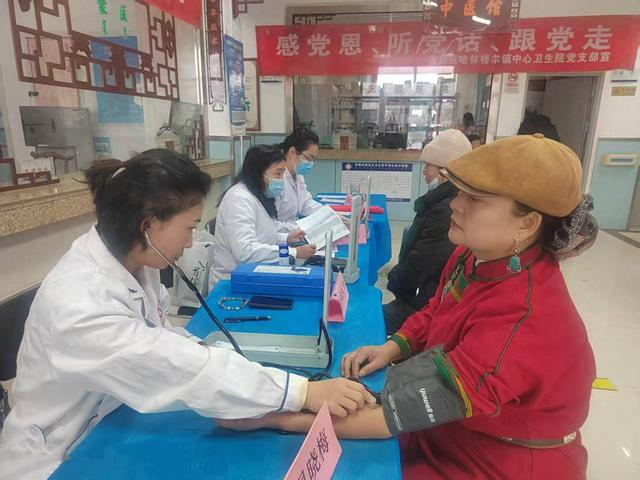
暖!6家医疗机构把健康送到群众家门口
Xin Lang Cai Jing· 2025-12-29 04:49
Core Viewpoint - The establishment of the Baotou City Jiuyuan District Regional Medical Sub-center has significantly improved healthcare access for local residents through a series of free medical consultation and health education activities, particularly benefiting the elderly population [8][9]. Group 1: Medical Services Provided - A medical service team composed of six grassroots medical institutions has been organized to conduct a large-scale free medical consultation event, offering health consultations, disease screenings, and health education [3]. - The event featured over 10 medical staff from various specialties, providing services such as health consultations, blood pressure and blood sugar testing, and disease diagnosis, benefiting more than 100 residents [5]. - The initiative is part of the "Send Medical Services to the Countryside" practice, aimed at enhancing healthcare accessibility in rural areas [7]. Group 2: Community Engagement and Outreach - Since its establishment in 2024, the Jiuyuan District Regional Medical Sub-center has conducted over 10 large-scale medical consultation events, integrating resources from six grassroots medical institutions [8]. - The center has tailored its services to meet the health needs of different community groups, including mobile clinics for rural residents and on-site consultations in industrial parks focusing on occupational health and mental well-being [8]. - The center has served a total of 778 residents and provided over 260 free examinations, while assisting grassroots medical institutions with 3,853 laboratory samples across various fields [8]. Group 3: Future Plans and Support - The Jiuyuan District Regional Medical Sub-center plans to expand its service coverage, enhance emergency response capabilities, and improve public health services to ensure high-quality healthcare for the community [9]. - The local health committee emphasizes ongoing support for the medical center, aiming to strengthen the medical workforce and continuously improve service quality for residents [9].