加密货币

Search documents
“割”到特朗普家族头上?孙宇晨被WLFI拉黑!
美股IPO· 2025-09-05 12:11
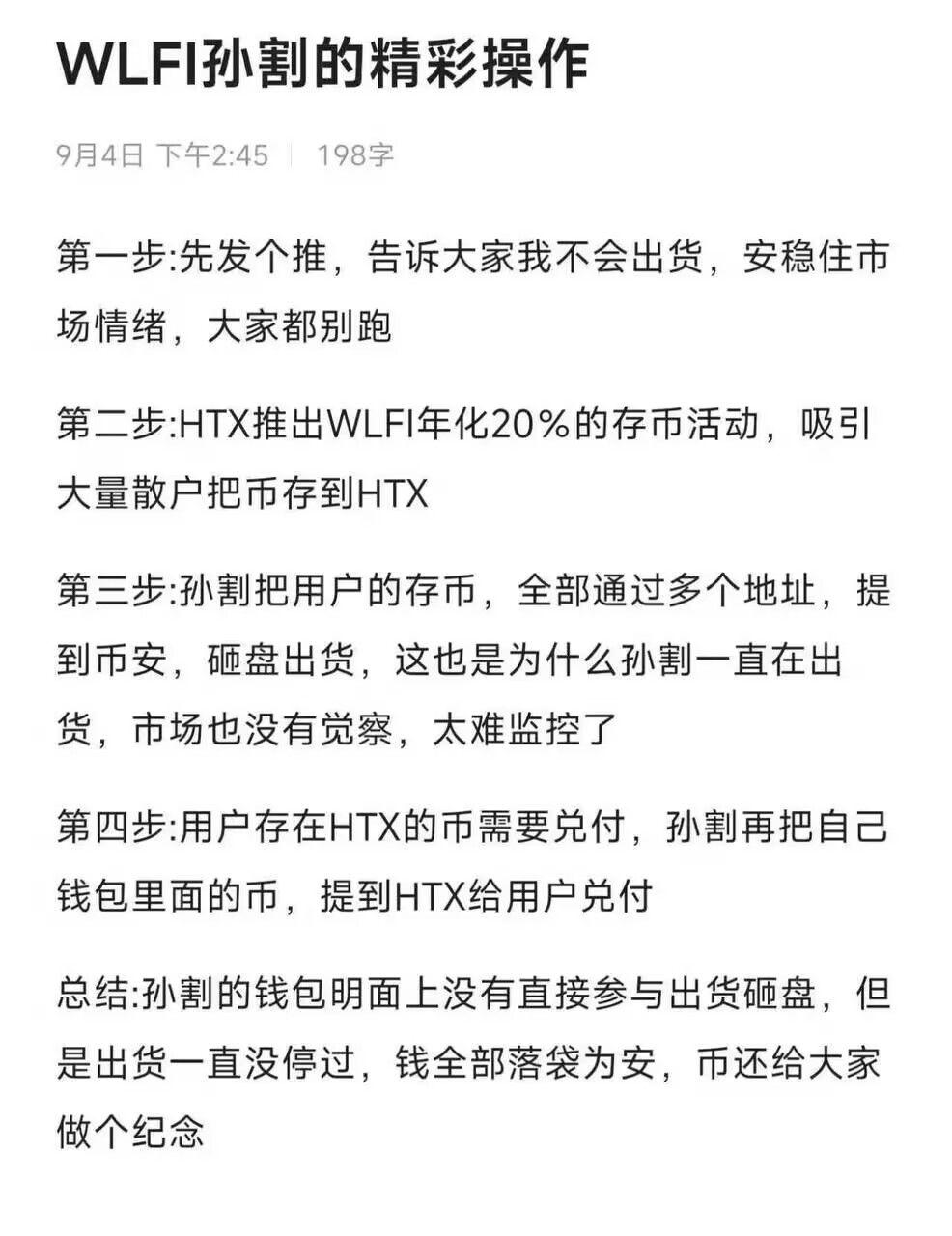
Core Viewpoint - The WLFI project has blacklisted a wallet address associated with Justin Sun, locking over $100 million in unlocked WLFI tokens and billions in locked tokens, which has further shaken market confidence [2][3][5]. Group 1: Incident Overview - WLFI blacklisted a wallet address belonging to Justin Sun, locking over $100 million in unlocked WLFI tokens and billions in locked tokens [3][5]. - The action was triggered by a transfer of approximately $9 million in WLFI tokens from Sun's address just before the blacklisting [3][4]. - Sun claimed the transfers were merely for testing and did not impact the market [6][12]. Group 2: Market Reaction - The market's confidence was already fragile due to WLFI's chaotic listing, with the token's price dropping from an opening of $0.32 to around $0.18, reflecting a significant decline [14]. - The core issue affecting market confidence stemmed from the project's last-minute disclosure of circulating supply, which was five times higher than investor expectations [16][17]. - Investors expressed dissatisfaction over the lack of transparency regarding the circulating supply and the ambiguous criteria for early supporters [17]. Group 3: Speculations and Analysis - Unverified user speculations suggested that Sun might have used complex operations to evade market monitoring, potentially cashing out without directly impacting the market [8][9]. - An AI analysis indicated that Sun's transfer occurred after a price drop, suggesting that the real cause of the decline was large deposit flows from exchanges, not Sun's actions [11].

Gate开辟Ondo专区,为全球投资者开启一扇通往华尔街的新大门
Sou Hu Cai Jing· 2025-09-05 09:37
Core Insights - Gate has launched the Ondo spot trading area, offering 26 tokenized asset trading pairs, including SPYON/USDT, QQQON/USDT, and TSLAON/USDT, which are linked to major U.S. financial instruments [1] - Ondo Finance aims to create a 24/7 global financial market by tokenizing U.S. stocks and ETFs, allowing investors to trade anytime and anywhere, similar to cryptocurrency trading [1] - Ondo is a leader in the RWA tokenization space, holding nearly 40% of the global market share in tokenized securities, and is transforming how global investors access U.S. markets [3] Company Overview - Ondo was founded by former Goldman Sachs investment banking team members, combining expertise in traditional finance regulations and blockchain innovation [3] - Key products include short-term U.S. Treasury fund OUSG, money market fund OMMF, and tokenized notes USDY, providing low-risk, stable return options for crypto users [3] - Ondo's innovative mechanism design includes strict KYC and compliance checks for primary market issuance, while allowing secondary market tokens to circulate freely outside the U.S. [3] Technological Developments - Ondo is expanding its technological footprint beyond Ethereum to include Solana, BNB Chain, and plans for its own Ondo Chain, aiming for lower costs and cross-chain interoperability [4] - RWA tokens are being developed as collateral and liquidity modules for DeFi protocols, positioning them as foundational assets for next-generation DeFi applications [4] Market Trends - The collaboration between Gate and Ondo signifies a trend where RWA tokenization serves as a bridge between traditional finance and crypto finance, reshaping market structures [4][5] - Future developments in regulation, technology, and user habits will determine whether RWA can achieve mainstream adoption, with the potential for more institutions to join the movement [5]

“币圈巨头”要去“挖黄金”?全球最大稳定币计划大举投资金矿
Jin Shi Shu Ju· 2025-09-05 06:26
Group 1 - Tether is negotiating investments in gold mining, aiming to channel its substantial cryptocurrency profits into the gold market [1][2] - Tether's CEO, Paolo Ardoino, compares gold to "natural Bitcoin," emphasizing the similarities between gold and Bitcoin as stores of value [1] - Tether has accumulated $8.7 billion worth of gold bars in Zurich as collateral for its stablecoin, USDT, which has a market cap of $168 billion [2] Group 2 - Tether Investments acquired a minority stake in Elemental Altus for $105 million and is exploring further royalty transactions [2] - Tether is also in discussions with Terranova Resources regarding gold mining investments, although no deal has been reached [2] - Other companies, like Blue Gold, are attempting to bridge the gap between digital currencies and gold by launching gold-backed digital tokens [3]
“割”到特朗普家族头上?孙宇晨被WLFI拉黑
Hua Er Jie Jian Wen· 2025-09-05 04:26
Core Viewpoint - The cryptocurrency project World Liberty Financial (WLFI), backed by the Trump family, is facing internal conflict after blacklisting one of its major supporters, Justin Sun, founder of Tron, which has further shaken market confidence [1][2]. Group 1: Incident Overview - WLFI blacklisted Justin Sun's wallet address, locking over $100 million worth of unlocked WLFI tokens and billions of tokens in a locked state [1][2]. - The blacklisting was triggered by a transfer of approximately $9 million worth of WLFI tokens from Sun's address just hours before the action was taken [1][2]. - Sun claimed that his transactions were merely for testing and would not impact the market, but the market reacted negatively [3]. Group 2: Market Reaction - WLFI token price had already begun to decline before the blacklisting, dropping as much as 24% on the day of the incident [4]. - The token was initially listed at $0.32 but fell to a low of $0.21, currently stabilizing around $0.18, indicating a significant drop from the issuance price [8]. Group 3: Supply Concerns - The core issue affecting market confidence stemmed from the project's last-minute disclosure of circulating supply, revealing 25 billion tokens entering circulation, five times the previously expected 5 billion [11]. - This unexpected increase led to investor dissatisfaction and raised questions about transparency and the criteria for early supporters [11]. - The confusion regarding the circulating supply estimates further exacerbated selling pressure, with estimates varying from 3% to 25% shortly after issuance [11].
“割”到特朗普家族头上?孙宇晨被WLFI拉黑!
Hua Er Jie Jian Wen· 2025-09-05 03:10
Core Insights - The cryptocurrency project World Liberty Financial (WLFI), backed by the Trump family, is facing internal conflict after blacklisting one of its major supporters, Justin Sun, founder of Tron, which has further shaken market confidence [1][2]. Group 1: Incident Overview - WLFI blacklisted Justin Sun's wallet address, locking over $100 million worth of unlocked WLFI tokens and billions of tokens in a locked state [2][4]. - The action was triggered by a transfer from Sun's address, which moved approximately $9 million worth of WLFI tokens shortly before the blacklisting [2][3]. - Sun claimed that his transactions were merely for testing and would not impact the market, but the market reacted negatively, with WLFI token prices dropping significantly [4]. Group 2: Market Reaction - WLFI's token price fell sharply, dropping 24% on the day of the incident, and has been trading significantly below its initial listing price of $0.32, currently around $0.18 [4][7]. - The project has faced criticism for its chaotic market debut, with the token's circulating supply being disclosed at 25 billion, five times higher than investor expectations of 5 billion [10]. Group 3: Speculation and Community Sentiment - Unverified speculation in the community suggests that Sun may have used complex maneuvers to evade market scrutiny, potentially cashing out while maintaining the appearance of market stability [5]. - Investor dissatisfaction has been fueled by a lack of transparency regarding the token's supply and the ambiguous criteria for early supporters, leading to increased selling pressure [10].
纳斯达克出手 加密概念股监管升级 发新股买币需股东“点头”
Hua Er Jie Jian Wen· 2025-09-05 01:05
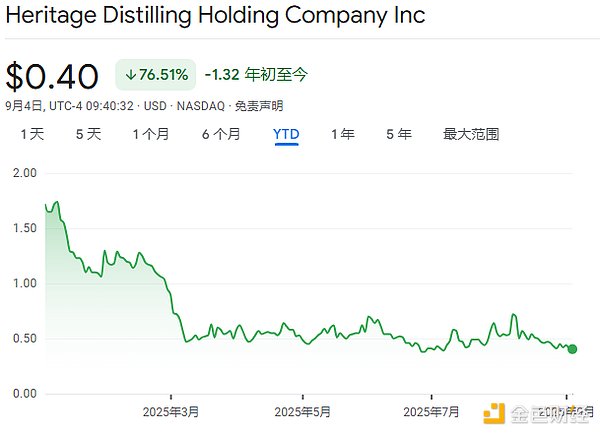
Group 1 - Nasdaq is intensifying scrutiny over listed companies using financing to purchase cryptocurrencies to boost stock prices [1] - The exchange now requires shareholder approval before companies can issue new shares to buy cryptocurrencies, potentially slowing the current cryptocurrency frenzy [1][2] - This regulatory move aims to ensure investors are fully aware of the associated risks before companies transition into cryptocurrency stocks [1][2] Group 2 - As of this year, 124 U.S. listed companies have announced plans to raise over $133 billion to purchase cryptocurrencies, with 94 of these stocks listed on Nasdaq [2] - Companies are racing to accumulate as many tokens as possible, and any delays in financing could result in missed opportunities in the rising cryptocurrency market [2] - Nasdaq's strict review represents a balancing act between profiting from company listings and fulfilling regulatory responsibilities [2] Group 3 - Companies are mimicking the strategy of MicroStrategy, which has accumulated $71 billion in cryptocurrencies over the past five years [3] - Nearly half of the 124 cryptocurrency stocks tracked are purchasing smaller, newer, and less liquid tokens, which may be more volatile or susceptible to market manipulation [3] - Heritage Distilling exemplifies the impact of Nasdaq's new rules, as it modified its transaction structure to comply with the requirement for shareholder approval [3][6] Group 4 - Heritage Distilling plans to hold a shareholder meeting on September 18 to comply with Nasdaq's requirements after changing its transaction structure [6] - Companies must be cautious in adhering to Nasdaq's rules, as failing to do so could lead to the need to rescind transactions [6]
遭纳斯达克新规打击 持币股走低 Bitmine Immersion Technologies(BMNR.US)跌超6%
Zhi Tong Cai Jing· 2025-09-04 23:29
Group 1 - The cryptocurrency ecosystem stocks are mostly declining, with notable drops in Bitcoin-related stocks such as Hut8 Mining (HUT.US) down over 2.9%, Mara Holdings (MARA.US) down over 2%, and MicroStrategy (MSTR.US) down over 2.4% [1] - Ethereum-related stocks like Bitmine Immersion Technologies (BMNR.US) and SharpLink Gaming (SBET.US) are experiencing larger declines, with drops exceeding 6% and 7% respectively [1] - The leading stablecoin company Circle (CRCL.US) has also seen a decline of over 0.8% [1] Group 2 - Nasdaq is intensifying scrutiny over listed companies that finance cryptocurrency purchases to inflate stock prices, requiring some companies to obtain shareholder approval before issuing new shares for cryptocurrency purchases [1] - This regulatory move may slow down the current cryptocurrency craze, which is pushing more alternative tokens into the mainstream market [1] - Nasdaq's new requirements include shareholder voting procedures, which could delay transactions and introduce uncertainty into the cryptocurrency market [1]
美股,将迎密集IPO
Zheng Quan Shi Bao· 2025-09-04 23:09
Group 1: IPO Overview - Klarna, a European payment giant, is planning to raise up to $1.27 billion through its IPO, with a proposed share price of $35 to $37, potentially valuing the company at $14 billion post-IPO [2][3] - Other companies like Gemini, Black Rock Coffee Bar, Figure, and Legence are also preparing for their IPOs, aiming to enter the U.S. capital market in September [1][2] Group 2: Klarna's Financial Performance - Klarna reported total revenue of $1.52 billion in the first half of the year, with a net loss of $153 million, compared to $1.33 billion in revenue and a net loss of $38 million in the same period last year [2] - The company's valuation peaked at $45.6 billion in 2021 but dropped to $6.7 billion after a funding round in 2022, reflecting an 85% decrease [3] Group 3: Cryptocurrency IPOs - Gemini plans to issue 16.67 million shares at a price range of $17 to $19, aiming to raise up to $317 million and achieve a valuation of $2.22 billion [4][5] - Figure, a blockchain-based lending institution, is set to offer 26.3 million shares at $18 to $20, potentially raising up to $526.3 million and reaching a valuation of $3.37 billion [5] Group 4: Market Conditions for IPOs - The IPO market is expected to see a resurgence as concerns over U.S. tariffs have eased, with many companies that previously postponed their listings now looking to take advantage of the fall window [7] - Analysts believe that the strong sentiment towards U.S. IPOs will continue into 2025, particularly for tech companies focused on growth [7][8]
沉睡十二年巨鲸苏醒,虚拟币钱包安全演进与XBIT Wallet的智能革新
Sou Hu Cai Jing· 2025-09-04 22:29
Group 1: Market Dynamics - A dormant Bitcoin wallet holding 479 BTC (valued at approximately $53.68 million) was reactivated after 12.8 years, indicating potential market sentiment shifts or asset reallocation by long-term holders [3] - The activation of such "whale" wallets often serves as a market indicator, as seen in historical instances where similar activations preceded significant market movements [3] - The recent activation highlights the importance of security and longevity in cryptocurrency wallets, emphasizing their role as value storage in the digital age [3] Group 2: Fund Flows and Wallet Creation - Following the Bitcoin wallet activation, significant movements in the Ethereum market were observed, with 34,000 ETH (valued at $150 million) withdrawn from Binance to newly created wallets [3][4] - This trend suggests that institutions or high-net-worth individuals are shifting assets from exchanges to self-custody wallets for enhanced security and control [3][4] - The withdrawal activity reflects a growing preference for decentralized storage solutions amid concerns over exchange vulnerabilities and regulatory scrutiny [4] Group 3: Innovation in Wallet Services - The functionality of cryptocurrency wallets is expanding, with Trust Wallet launching tokenized stock and ETF services in collaboration with Ondo Finance and 1inch, allowing access to traditional financial assets [6] - Hardware wallet provider Tangem announced upgrades that include pre-signing transaction simulations and built-in fraud detection, enhancing user experience and security [6] - The evolution of cryptocurrency wallets is responding to market demands, catering to both novice users seeking intuitive tools and experienced users desiring advanced protection measures [6] Group 4: Regulatory Environment in the U.S. - The U.S. plays a crucial role in the innovation of cryptocurrency wallets, with Trust Wallet's services adhering to strict compliance and U.S. market trading hours [8] - The SEC's scrutiny of tokenized assets indicates that the widespread adoption of such services will depend on regulatory clarity [8] - Compliance with anti-money laundering (AML) and know your customer (KYC) regulations is essential for wallet service providers in the U.S., which, while increasing operational costs, enhances overall industry credibility [8]
2025稳定币产业生态、市场现状发展报告
Sou Hu Cai Jing· 2025-09-04 17:02
Group 1 - Stablecoins are evolving from crypto trading tools to a new infrastructure for cross-border payments, significantly reducing remittance times from two weeks to 5-10 minutes at a cost of less than 1% in emerging markets like Latin America and Africa [2] - The total market size of stablecoins has surpassed $250 billion, with annual transactions reaching $36.3 trillion, exceeding the combined total of Visa and Mastercard [4] - The USDT and USDC together account for over 80% of the circulation, while Ethereum, Solana, and Tron compete on settlement speed and costs [2][4] Group 2 - Regulatory frameworks are evolving, with the US GENIUS Act, EU MiCA, and Hong Kong's Stablecoin Regulation pushing the market towards compliance, requiring 100% reserves and T+0 redemption [4][8] - Despite a ban in mainland China, an underground USDT market thrives, driven by rigid demand for crypto entry and exit, low-cost settlement for small foreign trade, and asset outflow channels for high-net-worth individuals [6] - Traditional banks like Standard Chartered, HSBC, and JPMorgan are entering the stablecoin space through tokenization of deposits in Hong Kong, indicating a shift towards mainstream adoption [4][8] Group 3 - The total addressable market for stablecoins in non-G20 countries is estimated at $16.5 trillion, with B2B scenarios alone accounting for $13 trillion [2] - The compliance wave is pushing the market towards a new phase characterized by transparency in reserves and licensing, contrasting with the gray market dynamics in mainland China [9] - The future landscape of stablecoins is expected to feature a coexistence of compliant USD stablecoins, the underground USDT demand, and sovereign digital currencies [9]