
商业航天

Search documents
A股异动丨商业航天股走强,巨力索具拉升涨停
Ge Long Hui· 2026-01-21 05:30
格隆汇1月21日|A股市场商业航天股走强,其中,罗博特科涨超16%,巨力索具拉升10CM涨停,沃格 光电、中国长城此前涨停,德恩精工、海兰信、泛亚微透、思泰克、鹏鼎控股等跟涨。消息面上,中国 首个海上液体火箭发射回收试验平台将投用;另外,近日,天兵科技、星河动力、星际荣耀三家商业航 天企业更新了IPO辅导进展。 ...

我国首个,海上液体火箭发射回收试验平台将投用
财联社· 2026-01-21 05:28
Core Viewpoint - The article highlights the significant advancements in China's commercial space industry, particularly focusing on the construction of the first offshore liquid rocket launch and recovery test platform in Haiyang, Shandong, as part of the national goal to accelerate the establishment of a strong space power [1][2]. Group 1: Offshore Launch Platform Construction - The construction of the offshore liquid rocket launch and recovery test platform is underway at the Dongfang Spaceport in Haiyang, Shandong, marking a milestone in China's commercial space endeavors [2]. - The platform features a hydraulic pit that is seven to eight meters deep, equipped with four hydraulic vertical oil cylinders capable of rotating hundreds of tons of liquid rockets from horizontal to vertical positions for launch [3]. - A 17-meter deep flow channel is designed to direct the high-temperature rocket exhaust during ignition, utilizing a circular spray pipe to quickly cool the exhaust and reduce noise, thereby protecting the launch facilities [5]. Group 2: Operational Timeline and Testing - Over 150 workers are engaged in the construction, aiming to complete the platform and begin testing by around February 5, with a mainstream commercial liquid rocket scheduled for launch and recovery tests shortly after the Spring Festival [7]. - The Dongfang Spaceport has previously conducted 22 offshore launch missions using solid rockets, which, while flexible and mobile, have limitations in payload capacity and recovery [9]. Group 3: Advantages of Liquid Rockets - Liquid rockets offer greater payload capacity and the potential for reuse, significantly reducing satellite network costs, positioning them as the primary focus for domestic commercial space launches [11]. Group 4: Comprehensive Industry Layout - The Dongfang Spaceport is strategically located on an artificial island, approximately 3 kilometers from the mainland, ensuring safety due to the absence of fixed residents [12]. - The facility is designed with multiple functional areas, including a launch and recovery test platform and supporting fuel storage areas for liquid oxygen, liquid nitrogen, kerosene, and methane, essential for liquid rocket operations [14]. - As the only offshore launch mother port in China, the Dongfang Spaceport has successfully launched 137 satellites, contributing to a comprehensive industrial ecosystem in Shandong that integrates offshore launch leadership, collaborative rocket manufacturing, and space application expansion [16].

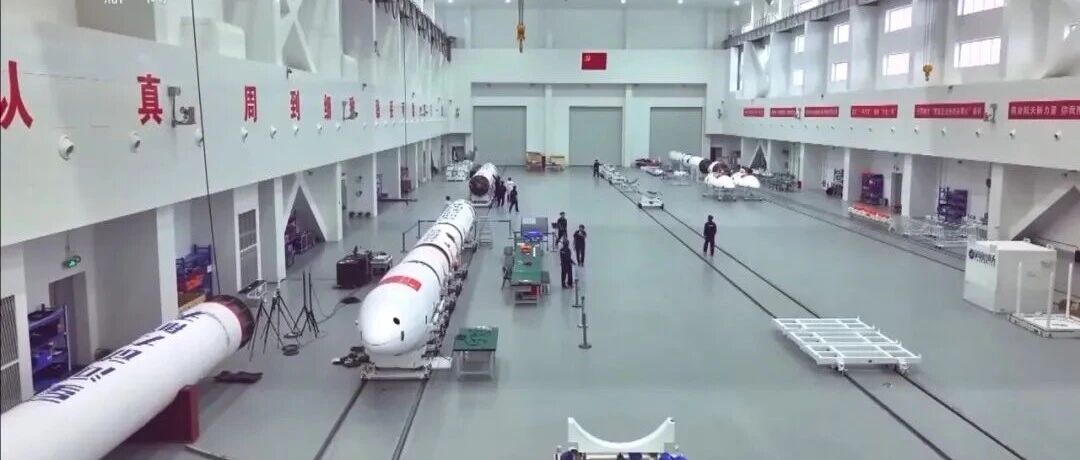
我国首个海上液体火箭发射回收试验平台将投用
Yang Shi Xin Wen· 2026-01-21 05:04
Group 1 - The core objective of the "14th Five-Year Plan" includes the goal of accelerating the construction of a strong aerospace nation, with a focus on commercial space activities [1] - The first offshore liquid rocket launch recovery test platform in China is under construction in Yantai, Shandong, which is expected to be completed and begin testing around February 5 [2] - The platform features a hydraulic pit and a flow channel designed to manage the high temperatures and noise generated during rocket launches, ensuring the protection of launch facilities [2] Group 2 - The Dongfang Spaceport, located on an artificial island, is strategically positioned about 3 kilometers from the mainland, meeting safety requirements for offshore launches [3] - The spaceport has successfully launched 137 satellites into space and is leading the development of a comprehensive commercial aerospace industry chain in Shandong, which includes satellite manufacturing and space applications [3] - The industry layout in Shandong is characterized by a collaborative ecosystem involving multiple cities, with Yantai, Jinan, and Qingdao as core areas supporting the commercial aerospace sector [3]
光伏系列报告:商业航天能源系统将快速增长并迎来升级迭代
CMS· 2026-01-21 05:02
Investment Rating - The report provides investment recommendations for several companies, including strong buy ratings for 帝科股份 (Dike Co., Ltd.) and 亿纬锂能 (EVE Energy Co., Ltd.) [2][3] Core Insights - The commercial aerospace sector is experiencing rapid growth, particularly in low Earth orbit (LEO) satellites, which are becoming a focal point of competition between the US and China. This growth is expected to drive advancements in energy systems that support these satellites [1][7] - The satellite power systems are critical for ensuring stable power supply throughout the satellite's lifecycle, consisting of solar power generation, energy storage, and power management modules. These systems face unique challenges in space, such as high radiation and extreme temperature variations [1][31] - The report highlights the ongoing evolution of photovoltaic (PV) technology, with P-type PERC and perovskite-silicon tandem cells being tested for potential use in space applications. The cost reduction in solar power generation is a significant industry demand [1][36] - High-performance batteries and power systems are identified as high-barrier, high-return segments within the satellite energy systems, with stringent requirements for energy density, reliability, and cycle performance [1][49] Industry Overview - The global aerospace industry is projected to reach a value of $415 billion by 2024, with the number of operational satellites increasing to 11,605, representing a year-on-year growth of 17.81%. The US leads with 8,813 satellites, accounting for 75.9% of the global share [12][13] - The commercial satellite sector is expected to maintain over 70% of the global aerospace market share, with the satellite market projected to grow to $4,808 billion by 2025 and $5,114.9 billion by 2026, reflecting a compound annual growth rate of 6.38% [13][19] - The report emphasizes the importance of government policies in both the US and China that are accelerating the development of the commercial aerospace sector, including funding initiatives and regulatory simplifications [1][27] Company Analysis - Key companies mentioned in the report include: - 帝科股份 (Dike Co., Ltd.) - Strong buy rating, with a market cap of 13.2 billion and projected EPS of 2.48 for 2024 [3] - 亿纬锂能 (EVE Energy Co., Ltd.) - Strong buy rating, with a market cap of 136.9 billion and projected EPS of 1.96 for 2024 [3] - 新雷能 (Newray Energy) - Hold rating, with a market cap of 16.5 billion and projected EPS of -0.92 for 2024 [3] - The report also lists several other companies in the photovoltaic and battery sectors that are positioned to benefit from the growth in commercial aerospace [2][3]
通用航空ETF南方(159283)早盘涨超1%,三家头部企业更新IPO辅导,商业航天迎政策+资金双重红利
Xin Lang Cai Jing· 2026-01-21 04:52
Core Viewpoint - The commercial aerospace sector in China is experiencing significant growth, driven by policy support and technological advancements, with a projected financing total of 18.6 billion yuan by 2025, representing a 32% year-on-year increase [1][2]. Group 1: Market Performance - The Southern General Aviation ETF (159283) saw an intraday increase of over 1%, closing up 0.78% with a turnover of 7.45% and a transaction volume of 24.34 million yuan [1]. - Key stocks in the index, including Huayin Technology, Aerospace Electronics, and Guolian Aviation, experienced notable gains, with increases of 7.24%, 7.15%, and 3.86% respectively [1]. Group 2: Industry Developments - Recent updates from commercial aerospace companies Tianbing Technology, Xinghe Power, and Xingji Glory regarding their IPO guidance indicate a robust pipeline for future financing and growth [1]. - The Shanghai Stock Exchange has introduced tailored listing standards for commercial rocket companies, focusing on breakthroughs in medium to large reusable rocket technologies [2]. - The domestic commercial aerospace sector has transitioned from technology validation to engineering implementation, with private rocket companies expected to complete 23 launch missions and successfully deploy 324 spacecraft by 2025 [2]. Group 3: Investment Outlook - The 14th Five-Year Plan is expected to accelerate the application of large rockets, potentially overcoming current technological bottlenecks in China's satellite constellation development [2]. - The commercial aerospace sector is anticipated to become a core investment focus during the 14th Five-Year Plan, with significant growth expected in the construction of large satellite constellations [2]. Group 4: Index Composition - The Southern General Aviation ETF closely tracks the CSI General Aviation Theme Index, which includes 50 listed companies involved in aviation materials, aircraft manufacturing, and related infrastructure [3]. - The top ten weighted stocks in the index include Aerospace Electronics, Haige Communication, and China Satellite Communications, reflecting the overall performance of the general aviation sector [3].
商业航天景气度骤升,长光卫星酝酿重启IPO
Hua Er Jie Jian Wen· 2026-01-21 04:39
日前,信风从接近长光卫星技术股份有限公司(下称"长光卫星")人士处独家获悉,该公司正在酝酿重 启IPO。 针对该消息,信风向长光卫星致电求证,但电话无法接通,邮件截至发稿前暂未收到回复。 在此之前,长光卫星曾于2024年12月主动撤回科创板上市申请,宣告了其长达两年的首次闯关失败。 作为拥有全球最大亚米级商业遥感卫星星座的企业,长光卫星"吉林一号"工程在轨卫星数量已达141 颗。 值得一提的是,重启IPO前,长光卫星完成了核心管理层的"新老交替"。 2025年10月17日,长光卫星原董事长宣明辞任,曾任"吉林一号"宽幅系列卫星总设计师的张雷接棒董事 长一职。 市场有风险,投资需谨慎。本文不构成个人投资建议,也未考虑到个别用户特殊的投资目标、财务状况或需要。用户应考虑本文中的任何 意见、观点或结论是否符合其特定状况。据此投资,责任自负。 在政策利好的背景下,此次长光卫星备战IPO增添了不少胜算。 事实上,整个商业航天行业已在2025年按下了"加速键"。 数据层面,我国商业航天在2025年完成发射50次,占宇航发射总数的比例达到54%;同年入轨商业卫星 达到311颗,占据我国全年入轨卫星总数的84%。 国泰海通证 ...
3家商业航天企业,IPO有新进展
财联社· 2026-01-21 04:20
近日, 天兵科技、星河动力、星际荣耀三家商业航天企业更新了IPO辅导进展。 据证监会官网,北京星河动力航天科技股份有限公司(简称星河动 力)于近日更新IPO辅导进展,辅导机构为华泰联合证券有限责任公司。 星际荣耀航天科技集团股份有限公司(简称星际荣耀)也于近日更新IPO辅导进展,其辅导机构为天风证券股份有限公司、中信证券股份有 限公司。 此外,江苏天兵航天科技股份有限公司公示IPO上市辅导进展报告(第一期),中信建投为辅导机构。(界面新闻 马悦然) ...
中美竞逐万亿美元新赛道,五层解构下的投资蓝图
Tebon Securities· 2026-01-21 04:07
Investment Rating - The report maintains an "Outperform" rating for the commercial aerospace industry [1] Core Insights - The aerospace sector is transitioning from being viewed as a "cost center" driven by national will to a "growth engine" driven by commercial demand, with significant investments and strategic planning from both the US and China [6][9] - The global aerospace economy is projected to reach $613 billion in 2024, with commercial aerospace contributing 78%, and is expected to exceed $1 trillion by 2032 [6][9] - The value chain of commercial aerospace is divided into five core levels: "space, ground, terminal, rocket, and application," each presenting unique market opportunities and technical challenges from 2026 to 2030 [10][29] Summary by Sections 1. Space: Satellite Manufacturing - The satellite manufacturing market in China is expected to grow from approximately 7.1 billion yuan in 2025 to about 39.4 billion yuan by 2030, reflecting a shift from sporadic research models to continuous, batch engineering deliveries [16][18] 2. Ground: Ground Systems - The ground systems market is projected to increase from around 1.2 billion yuan in 2025 to approximately 39.1 billion yuan by 2030, evolving from a supporting role to a core infrastructure essential for stable satellite constellation operations [21][22] 3. Terminal: Key Variable for Commercial Aerospace - The terminal market is anticipated to grow from 500 million yuan in 2025 to about 141.9 billion yuan by 2030, driven by multiple vertical industries and potential consumer scenarios [23][24] 4. Rocket: Core Constraint - The cost of rocket launches is a critical constraint, with reusable technology expected to reduce costs by 80%-90% compared to traditional expendable rockets. The market for rocket launch services is projected to grow from approximately 10.7 billion yuan in 2025 to about 34.3 billion yuan by 2030 [25][26] 5. Application: Final Value Realization - The application market is expected to expand from 200 million yuan in 2025 to 525 billion yuan by 2030, with the revenue share from applications projected to rise from single digits to over 67% by around 2030 [27][28] 6. Investment Opportunities - Investment opportunities in commercial aerospace can be categorized into three main tracks: 1. Launch and manufacturing segments, which are expected to benefit directly from increased orders and visibility 2. Core components and systems, characterized by high technical barriers and critical for long-term competitiveness 3. Downstream applications and operational services, which, while currently limited in scale, hold the greatest long-term potential for value realization [29][30]


商业航天概念股局部反弹,电科芯片拉升涨停
Jing Ji Guan Cha Wang· 2026-01-21 03:40
经济观察网商业航天概念股局部反弹,电科芯片(600877)拉升涨停,航天电子(600879)、广联航空 (300900)、雷科防务(002413)、巨力索具(002342)等纷纷冲高。 ...

商业航天局部反弹 电科芯片涨停
Mei Ri Jing Ji Xin Wen· 2026-01-21 03:30
每经AI快讯,1月21日,商业航天概念股局部反弹,电科芯片(600877)拉升涨停,航天电子 (600879)、广联航空(300900)、雷科防务(002413)、巨力索具(002342)等纷纷冲高。 ...