
卫星制造

Search documents
马年A股喜迎“开门红”:周期“老登”领涨 科技、消费遇冷
Mei Ri Jing Ji Xin Wen· 2026-02-24 14:32
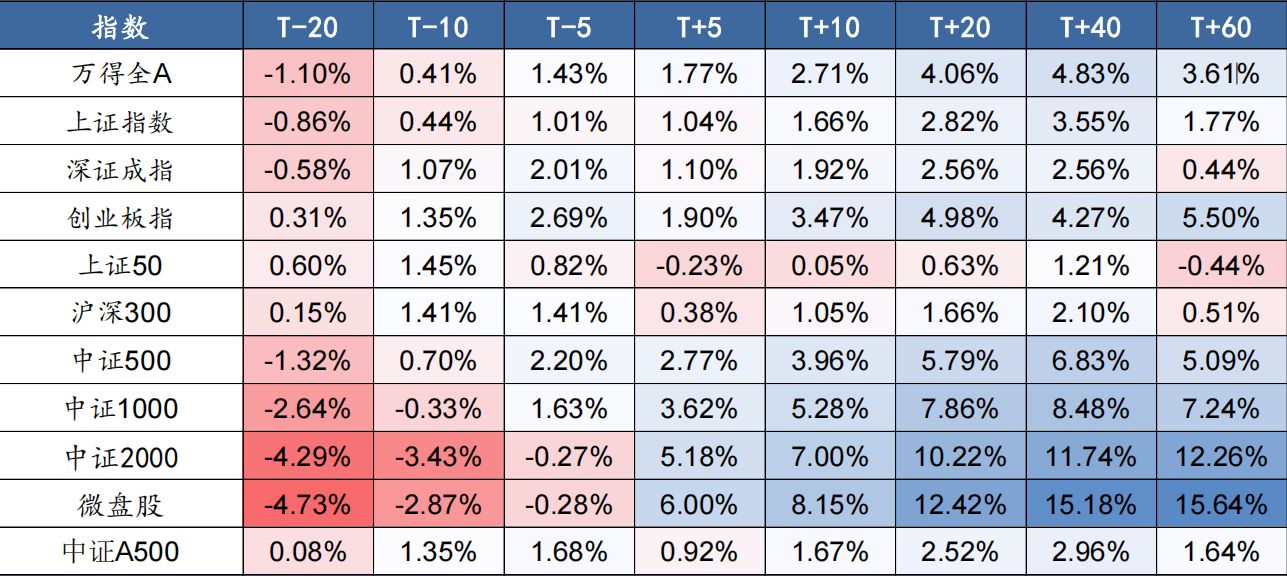
Group 1 - The A-share market experienced a broad increase on the first trading day of the Year of the Horse, with most core indices rising between 1% and 2% [1][2] - The Shanghai Composite Index rose by 0.87% to close at 4117.41 points, returning above the 4100-point mark [2] - The technology sector showed weaker performance, with the Sci-Tech 50 and Sci-Tech 100 indices declining by 0.34% and 1.55%, respectively [2] Group 2 - The market's "opening red" trend is attributed to the overseas markets showing upward trends during the Spring Festival holiday and a recovery demand following a significant adjustment before the holiday [4] - The spring market is expected to continue, with a short-term outlook of sector rotation and upward fluctuations [4] - Historical data since 2010 indicates a high probability of A-shares rising shortly after the Spring Festival, particularly in small-cap indices like the CSI 2000 and micro-cap stocks, which have shown average gains exceeding 10% in the 20 trading days post-holiday [4] Group 3 - The leading sectors today were traditional industries such as petrochemicals, building materials, basic chemicals, non-ferrous metals, coal, and steel, with significant gains [5][6] - The Petrochemical Index surged by 5.53%, while building materials, basic chemicals, and non-ferrous metals indices all rose over 3% [5][6] - In contrast, sectors like AI models, robotics, and consumer goods, which performed well in the Hong Kong market during the holiday, did not reflect similar trends in the A-share market [7] Group 4 - The recent improvement in the Producer Price Index (PPI) and the high valuations in the technology sector have led to a market shift towards traditional sectors [8] - The PPI for January showed a year-on-year decline of 1.4%, with a narrowing drop compared to previous months, indicating a potential recovery in pricing power across various industries [8] - The resource sector, particularly non-ferrous metals, has been a standout performer in the A-share market, with price increases becoming a central theme across multiple sectors [9] Group 5 - Looking ahead to the next 1-2 months, there is optimism for cyclical "old economy" assets, particularly as seasonal economic activities typically rise in March and April [13] - The period following the National People's Congress is expected to see accelerated implementation of macro policies, which could enhance market sentiment towards cyclical sectors [13]

机构:商业航天产业或有望进入新纪元 相关产业链受关注
Zheng Quan Shi Bao Wang· 2026-01-23 06:38
Group 1 - The "Jiuquan Commercial Aerospace Industry Development Plan (2026-2035)" has been officially released, aiming to establish "China's Jiuquan Commercial Aerospace Port" and providing guidance for high-quality development in the commercial aerospace sector [1] - The commercial aerospace industry is expected to enter a new era supported by national policies and technological breakthroughs, with key areas including remote sensing applications, satellite control systems, and space computing [1] - The commercial aerospace sector is characterized by a market-driven approach with clear profit models, encompassing satellite manufacturing, rocket launches, and satellite applications, leading to a dual profit model of B-end engineering services and C-end large-scale applications [1] Group 2 - In 2026, domestic commercial aerospace is anticipated to experience a "triple resonance" of policy, technology, and capital, which is highly promising [2] - Beneficiary stocks in the rocket industry chain include Aerospace Power, Western Materials, Aerospace Engineering, and others, while the satellite industry chain and space computing recommend companies like Zhongke Xingtou and Aerospace Hongtu [2]
A股有降温但热情未完全消退,结构性行情特征或将持续
British Securities· 2026-01-23 02:02
Core Views - The A-share market is experiencing a cooling trend, but the enthusiasm for buying has not completely faded, indicating that structural market characteristics will continue to be prominent [2][10] - Focus on structural opportunities, particularly in sectors with strong annual report growth forecasts, while being cautious of external variables such as geopolitical tensions and overseas tariff disputes [2][10] Market Overview - On Thursday, the three major indices of Shanghai and Shenzhen showed a fluctuating upward trend, with military stocks such as aerospace and shipbuilding experiencing significant gains, while insurance stocks adjusted [4][10] - The overall market sentiment remains active with a good profit-making effect, as the total trading volume reached 26,917 billion [5] Sector Analysis Military Industry - Military stocks, including aerospace and shipbuilding, have shown strong performance, with significant gains in previous years, such as a 25.27% increase in the second half of 2020 and a 25.46% increase in the first half of 2025 [6] - The military sector is expected to benefit from stable growth in defense budgets and geopolitical events that may catalyze demand [6] - Key areas for investment include aerospace, flight weapons, defense information technology, and military new materials, with a focus on companies with long-term performance support [6] Commercial Aerospace - The commercial aerospace sector has seen substantial growth, driven by policy support and increasing demand for satellite internet applications [7][8] - The industry is transitioning from technology validation to exploring sustainable business models, with a clear regulatory framework and financing support in place [7][8] - Investment opportunities include short-term focus on satellite internet constellation construction and long-term attention to technological breakthroughs in rocket recovery and satellite applications [8] Market Outlook for 2026 - The macroeconomic environment and monetary policy are crucial variables influencing A-share trends, with expectations of policy resonance from the "14th Five-Year Plan" and the U.S. midterm elections [3][9] - The stock demand is expected to be supported by the profit-making effect and low interest rates, with a continuous influx of medium to long-term funds into the market [3][9] - The supply side may see an increase in IPO issuance and refinancing, while the pace of large shareholder reductions may also increase [3][9]
中美竞逐万亿美元新赛道,五层解构下的投资蓝图
Tebon Securities· 2026-01-21 04:07
Investment Rating - The report maintains an "Outperform" rating for the commercial aerospace industry [1] Core Insights - The aerospace sector is transitioning from being viewed as a "cost center" driven by national will to a "growth engine" driven by commercial demand, with significant investments and strategic planning from both the US and China [6][9] - The global aerospace economy is projected to reach $613 billion in 2024, with commercial aerospace contributing 78%, and is expected to exceed $1 trillion by 2032 [6][9] - The value chain of commercial aerospace is divided into five core levels: "space, ground, terminal, rocket, and application," each presenting unique market opportunities and technical challenges from 2026 to 2030 [10][29] Summary by Sections 1. Space: Satellite Manufacturing - The satellite manufacturing market in China is expected to grow from approximately 7.1 billion yuan in 2025 to about 39.4 billion yuan by 2030, reflecting a shift from sporadic research models to continuous, batch engineering deliveries [16][18] 2. Ground: Ground Systems - The ground systems market is projected to increase from around 1.2 billion yuan in 2025 to approximately 39.1 billion yuan by 2030, evolving from a supporting role to a core infrastructure essential for stable satellite constellation operations [21][22] 3. Terminal: Key Variable for Commercial Aerospace - The terminal market is anticipated to grow from 500 million yuan in 2025 to about 141.9 billion yuan by 2030, driven by multiple vertical industries and potential consumer scenarios [23][24] 4. Rocket: Core Constraint - The cost of rocket launches is a critical constraint, with reusable technology expected to reduce costs by 80%-90% compared to traditional expendable rockets. The market for rocket launch services is projected to grow from approximately 10.7 billion yuan in 2025 to about 34.3 billion yuan by 2030 [25][26] 5. Application: Final Value Realization - The application market is expected to expand from 200 million yuan in 2025 to 525 billion yuan by 2030, with the revenue share from applications projected to rise from single digits to over 67% by around 2030 [27][28] 6. Investment Opportunities - Investment opportunities in commercial aerospace can be categorized into three main tracks: 1. Launch and manufacturing segments, which are expected to benefit directly from increased orders and visibility 2. Core components and systems, characterized by high technical barriers and critical for long-term competitiveness 3. Downstream applications and operational services, which, while currently limited in scale, hold the greatest long-term potential for value realization [29][30]


浙江拟发展卫星制造与卫星互联网、火箭制造及关键部组件等产业
Zheng Quan Shi Bao Wang· 2026-01-12 08:05
Core Insights - The Zhejiang Province's "14th Five-Year" New Industrialization Plan (draft for public consultation) emphasizes tracking technological frontiers and aligning with national strategic needs for future industry layout [1] Group 1: Emerging Industries - The plan highlights the development of synthetic biology, including biopharmaceuticals, bio-chemicals, bio-materials, bio-agriculture, bio-food, and bio-energy [2] - Commercial aerospace is identified as a key area, focusing on satellite manufacturing, satellite internet, rocket manufacturing, and space information applications [3] - Next-generation mobile communication technologies such as 6G, integrated space-ground communication, optical communication, and terahertz communication are prioritized [3] - Quantum information technologies, including quantum computing, quantum communication, and quantum measurement, are also targeted for development [3] - Brain-like intelligence systems and atomic-level manufacturing technologies are included in the strategic focus [3] Group 2: Carbon Capture and Resource Development - The plan aims to advance low-energy, low-cost carbon capture and utilization technologies, including the development of CO2-derived chemicals and fuels [4] - Deep earth and deep sea resource development, geothermal resource utilization, deep-sea exploration, marine biological utilization, and marine information services are emphasized [5] - Geographic information services, including BeiDou navigation and remote sensing, are also part of the strategic initiatives [5] Group 3: Commercial Aerospace Development - Since December 2025, the commercial aerospace sector has seen continuous favorable developments, including the establishment of a dedicated Commercial Aerospace Department by the National Space Administration [5] - The "Action Plan" issued by the National Space Administration outlines specific guidelines for the high-quality and safe development of the commercial aerospace industry from 2025 to 2027 [5] - The plan aims for a significant expansion of the commercial aerospace industry, enhancing innovation and resource utilization, and improving industry governance capabilities by 2027 [5] Group 4: Market Outlook - According to a report by Zhongtai Securities, the global commercial aerospace industry is expected to enter a period of explosive growth between 2026 and 2027, with accelerated technological iteration and engineering pace [6]
春季行情启幕,2025年市场有望完美收官
Sou Hu Cai Jing· 2025-12-29 03:25
Group 1: Policy and Economic Recovery - The macroeconomic policy for 2026 is focused on expanding domestic demand, with a core emphasis on creating a long-term mechanism to boost consumption through supply and demand coordination [2] - The central government aims to stabilize the real estate market by implementing differentiated credit policies and subsidies to support housing demand [2] - The National Development and Reform Commission (NDRC) will dynamically introduce incremental policy tools to stimulate consumption, stabilize investment, and cultivate new economic drivers [2] Group 2: Overseas Liquidity and Capital Flow - The improvement in the overseas liquidity environment is expected to support the A-share market, driven by the easing of global liquidity concerns and the improvement of the China-US interest rate differential [3] - The Federal Reserve's anticipated rate cuts in 2026 are expected to alleviate the pressure on the RMB exchange rate and attract cross-border capital back to China [3] - The valuation discount of RMB assets globally is expected to diminish as the Fed enters a monetary easing cycle, enhancing the attractiveness of Chinese assets to foreign investors [3] Group 3: Industry Transformation and Capital Support - The A-share market is currently experiencing a phase of industrial transformation and an influx of incremental capital, which is expected to optimize market profitability and valuation structures [4] - The "14th Five-Year Plan" emphasizes the construction of a modern industrial system and technological innovation, particularly in emerging sectors like new energy and aerospace [5] - The rapid development of new industries is reflected in the increasing number of new economy companies listed on the A-share market, indicating a shift in profit structures towards high-growth sectors [6] Group 4: Investment Opportunities in Key Sectors - The commercial aerospace sector is expected to lead the market in 2026, driven by policy support, technological advancements, and growing demand [11] - The non-ferrous metals sector is poised for growth due to an improving supply-demand balance, particularly for copper, which is seeing increased demand from AI infrastructure and electric vehicles [12] - The energy storage sector is gaining traction as a core support in the global energy transformation, with Chinese companies leading in global market share [13] Group 5: Market Stability and Investor Confidence - The ongoing reforms in the capital market have significantly improved transparency and investor protection, laying a solid foundation for long-term market health [8][9] - The continuous influx of long-term capital, including from insurance funds and foreign investments, is expected to provide liquidity support and stabilize market fluctuations [7] - The establishment of a robust framework for protecting small investors enhances market fairness and justice, further supporting healthy market development [9] Group 6: Conclusion on Market Outlook - The A-share market is expected to have a solid foundation to stabilize above the 4000-point mark, driven by the leading sectors of commercial aerospace, non-ferrous metals, and energy storage [14] - The anticipated market rally is expected to boost investor sentiment and initiate a new upward cycle in the market [14]
“火箭独角兽”IPO冲刺中!还有超10家商业航天独角兽拟冲刺A股上市
2 1 Shi Ji Jing Ji Bao Dao· 2025-12-25 23:23
Group 1 - The core point of the news is that the commercial aerospace market in China is experiencing significant growth, with over 600 companies in the sector and several unicorns preparing for IPOs, including Blue Arrow Aerospace, which has completed its IPO counseling process [1][2][3] - The recent policy changes, particularly the expansion of the Sci-Tech Innovation Board's fifth listing standard, are encouraging unprofitable companies in cutting-edge fields like commercial aerospace to go public, leading to a surge in IPO preparations [1][4][3] - The commercial aerospace industry is characterized by high initial investment and long development cycles, but it has substantial future growth potential, with projections indicating that the market size for China's rocket industry could reach hundreds of billions by 2027 [4][5] Group 2 - More than ten commercial aerospace companies have initiated the IPO process, with several already undergoing counseling with local securities regulatory authorities [2][5] - Major brokerage firms are actively competing for participation in the IPO projects of commercial aerospace unicorns, indicating a strong interest in this sector [3][11] - The Chinese commercial aerospace market is expected to reach a scale of 1.2 trillion yuan by 2024, with a compound annual growth rate of approximately 18% projected until 2030 [7][8] Group 3 - The majority of the companies rushing to IPO were established between 2015 and 2018, coinciding with government policies that encouraged the development of private enterprises in the commercial aerospace sector [5][6] - The recent launch of multiple supportive policies by various provinces aims to promote the high-quality development of the commercial aerospace industry [7] - The competitive landscape is intensifying, with significant funding events recorded in 2024, totaling 202.39 billion yuan, marking a historical high in financing activities within the sector [9][10]
政策红利释放 中国商业航天企业迎融资热
Zhong Guo Jing Ying Bao· 2025-12-05 20:16
Core Viewpoint - The commercial aerospace sector in China is experiencing significant growth, driven by supportive government policies, increased market demand, and a surge in IPO activities among aerospace companies [3][4][5]. Group 1: Market Performance - Over 70% of stocks in the commercial aerospace sector saw price increases, with notable gains from companies like Tianrun Technology and Aerospace Huanyu, which rose over 10% [3]. - The Aerospace Equipment Index showed a substantial annual increase, with Aerospace Huanyu leading at 112.55% [3]. Group 2: Government Initiatives - The National Space Administration released an action plan aimed at promoting high-quality development in the commercial aerospace sector by 2027, focusing on efficient collaboration and significant industry scale [4]. - The Ministry of Industry and Information Technology initiated commercial trials for satellite IoT services, enhancing the sector's technological capabilities [5]. Group 3: Investment and Financing - Since 2016, over 280 investment events in the commercial aerospace sector have occurred, totaling over 500 billion yuan, with 60 events in 2023 alone amounting to over 95 billion yuan [7]. - The recent reforms in the Sci-Tech Innovation Board have opened up IPO opportunities for aerospace companies, allowing those with high growth potential but lacking stable profits to access capital markets [8]. Group 4: Industry Ecosystem - The action plan aims to create a collaborative ecosystem involving both state-owned and private enterprises, addressing challenges such as resource allocation and financing difficulties [5][6]. - The focus is on developing three key technologies: reusable rocket technology, high-throughput satellite platforms, and in-orbit service capabilities [6]. Group 5: Market Outlook - The satellite internet market in China is projected to reach 648 billion yuan in 2024, with a compound annual growth rate exceeding double digits [10]. - The commercial aerospace industry is evolving, with over 600 companies now operating in various segments, establishing a comprehensive industry framework [10]. Group 6: Challenges and Considerations - Aerospace companies face challenges related to high risks and long development cycles, necessitating a focus on technological barriers and commercial viability [11]. - Key considerations for evaluating aerospace companies include their technological innovation capabilities, competitive positioning, and ability to convert technology into economic benefits [11].


A股震荡调整,机构:商业航天板块值得关注
Qi Huo Ri Bao· 2025-12-03 11:38
Core Viewpoint - The A-share market experienced fluctuations with the Shanghai Composite Index down by 0.51%, the Shenzhen Component Index down by 0.78%, and the ChiNext Index down by 1.12%, while the total market turnover reached 1.6836 trillion yuan [1] Group 1: Market Performance - The A-share market showed a mixed performance with notable declines in major indices [1] - The sectors that performed well included cultivated diamonds, coal mining and processing, and wind power equipment, while sectors like Kuaishou concept, Xiaohongshu concept, and Zhipu AI saw significant declines [1] - The commercial aerospace sector exhibited volatility, with Aerospace Power (600343) rising by 6.46% [1] Group 2: Commercial Aerospace Developments - The establishment of the Commercial Aerospace Department by the National Space Administration indicates a growing focus on the commercial aerospace sector [1] - The National Space Administration released an action plan for promoting high-quality and safe development in commercial aerospace from 2025 to 2027, aiming for significant growth in industry scale and innovation [1] - Opportunities in the commercial aerospace sector are highlighted, particularly in satellite and rocket manufacturing, with upstream benefiting from constellation networking demand and downstream having vast market potential in satellite applications and data services [1]

2025卫星互联网产业生态大会将于12月4日至5日举办
Guo Ji Jin Rong Bao· 2025-12-03 06:02
Core Insights - The "2025 Satellite Internet Industry Ecosystem Conference" will be held in Shanghai on December 4-5, focusing on showcasing industry policies, promoting ecological cooperation, and deepening international exchanges [1] - The conference will feature a main forum, three thematic sub-forums, and two investment matching activities, highlighting the latest developments and systematic layout of Shanghai's satellite internet industry [1] Group 1: Technological Framework - Satellite internet is a strategic emerging field that countries are competing to develop, with Shanghai aiming to create a globally influential "Satellite Internet City" [2] - Shanghai is advancing key technological breakthroughs in satellite design, communication payloads, ground terminal equipment, and operational services to achieve self-control in critical areas [2] - The city is establishing a sustainable and self-controlled technological closed loop, focusing on network architecture, spatial perception, testing validation, and space safety through innovation labs and testing platforms [2] Group 2: Capacity System - Shanghai is constructing a leading satellite internet industry cluster through a "2+X" model, with major clusters in Songjiang and Pudong, and additional support from regions like Qingpu and Minhang [3] - The conference will include a signing ceremony for ecological partners in the satellite internet industry chain, promoting collaboration across research, manufacturing, testing, and operations [3] - A demand roadmap will be released, covering satellite manufacturing, constellation networking, terminal development, and application scenarios in urban governance, emergency communication, and public services [3] Group 3: Institutional Framework - The conference will address institutional measures to ensure long-term support for the industry, emphasizing talent development and capital support [4] - Shanghai is implementing a dual engine of "talent + capital," providing financial rewards for high-end talent and fostering partnerships between leading companies and educational institutions [4] - A financial service matrix for the satellite internet industry will be launched to create a stable and predictable capital support system [5]