城市更新

Search documents
2025澎湃城市更新大会举办 福州三坊七巷、上海·张园等入选榜单
Jie Fang Ri Bao· 2025-11-28 01:40
Core Insights - The 2025 Urban Renewal Conference held in Shanghai emphasizes the theme "Revival and Reunification," marking a shift from physical urban renewal to restoring social connections and achieving multidimensional reunification [1] - The conference unveiled the "Annual Urban Renewal List," filling a gap in authoritative evaluations in the field, with a focus on forward-looking perspectives and rigorous assessment mechanisms [1] Group 1: Urban Renewal Achievements - Fuzhou's Sanfang Qixiang historical cultural district was recognized as a special case for its contributions to urban renewal, having completed protection, renovation, and cultural revitalization over a decade, and is now on the UNESCO World Heritage tentative list [1] - Other notable projects awarded as exemplary urban renewal districts include Wuhan's Tanhualin, Haikou's Qilou Old Street, Jinan's Ancient City (Mingfu City area), Shanghai's Zhangyuan, Chengdu's Shaocheng area and Kuanzhai Alley, and London's King's Cross urban renewal and overall planning [1] Group 2: Expert Opinions on Urban Spaces - Chinese Academy of Engineering academician Cui Kai highlighted that the concept of "street" varies across different eras and environments, emphasizing the need for streets to be both linear spaces that are convenient and safe, as well as public spaces that encourage a slower pace [2] - Streets should possess charm, stickiness, and distinct characteristics, with urban renewal efforts needing to be tailored to the unique positioning and functions of each street [2]
在街区,与所有美好重聚:2025澎湃城市更新大会成功举办
Xin Lang Cai Jing· 2025-11-27 12:07
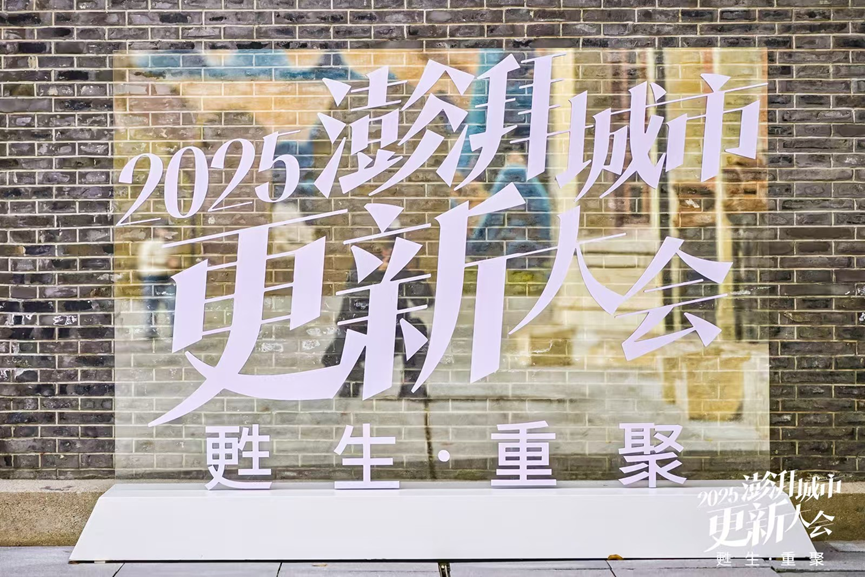
城市因聚集而生,它是多元融聚的美好总和。今日,2025澎湃城市更新大会在上海张园成功举办,站在"十四五"收官与澎湃城市更新IP创立五周年的双重节 点上,大会以"甦(su同'苏')生·重聚"为主题,标志着城市更新从物理空间的"破茧重生",正式迈向修复社会联结、实现多维"重聚"的深化阶段。 上海报业集团党委副书记、总 经理、副社长胡明华 上海报业集团党委副书记、总经理、副社长胡明华代表主办方致辞。他开篇明义,指出本届城市更新大会的三大特点:一是以"甦生·重聚"为主题,立意深 远;二是本届大会将聚焦点放在"街区"这一城市最基本的活力单元上;三是特别策划推出了"澎湃国际街区日"及"澎湃国际街区之夜"系列活动。胡明华强调 智通财经将继续发挥好平台连接作用,共同为探索符合超大城市特点和规律的城市更新路径贡献媒体力量。 在上海市规划和自然资源局、上海市文化和旅游局、上海市静安区人民政府特别支持下,大会由智通财经主办、上海静安置业(集团)有限公司承办、上海 硕风文化旅游(集团)有限公司协办,上海市建筑学会、华建集团华东建筑设计研究院有限公司提供学术支持。 上海市文化旅游局党组书记、局长钟晓敏,与上海市静安区委副书记、区长翟磊 ...

国家发改委:基础设施REITs持续扩围 城市更新设施、酒店、体育场馆等将纳入范畴
Bei Jing Shang Bao· 2025-11-27 09:37
Core Viewpoint - The National Development and Reform Commission (NDRC) is actively promoting the expansion of infrastructure REITs to include urban renewal facilities, hotels, sports venues, and commercial office facilities, among other sectors and asset types [1] Group 1: Infrastructure REITs Expansion - The NDRC is working to broaden the scope of infrastructure REITs to more industry sectors and asset types [1] - There is a focus on enhancing collaboration with the China Securities Regulatory Commission (CSRC) to optimize the application and recommendation process for REITs [1] - The NDRC aims to dynamically improve project application requirements while ensuring risk prevention and quality control [1] Group 2: Support for the Real Economy - The initiative is designed to support more eligible projects in issuing and listing, thereby better facilitating the development of the real economy through infrastructure REITs [1]
发改委:基础设施REITs进一步扩围 扩募流程已简化
Jing Ji Guan Cha Wang· 2025-11-27 08:34
Group 1 - The National Development and Reform Commission (NDRC) is actively promoting the expansion of infrastructure REITs to include urban renewal facilities, hotels, sports venues, and commercial office facilities [1] - The NDRC aims to strengthen collaboration with the China Securities Regulatory Commission (CSRC) to optimize the application and recommendation process for REITs, ensuring quality and risk management while supporting more eligible projects [1] - New asset types for REITs issuance are being explored, including railways, ports, ultra-high voltage transmission, communication towers, market-oriented rental housing, cultural tourism, specialized markets, and elderly care facilities [1] Group 2 - Current policy focus is on urban renewal industrial parks and consumer infrastructure, with the first project being the Huaxia Jinyu Intelligent Manufacturing REIT based on urban renewal industrial parks [2] - The process for expanding REITs has been simplified, allowing for applications six months after listing instead of the previous one-year requirement, and enabling cross-industry and cross-regional integration of existing assets [2] - The approval mechanism for expansion projects has shifted to a parallel process, significantly improving efficiency, with a total scale of listed projects reaching 207 billion yuan, expected to drive over 1 trillion yuan in new investments [3]
北京房地产未来五年怎么走?
3 6 Ke· 2025-11-27 02:45
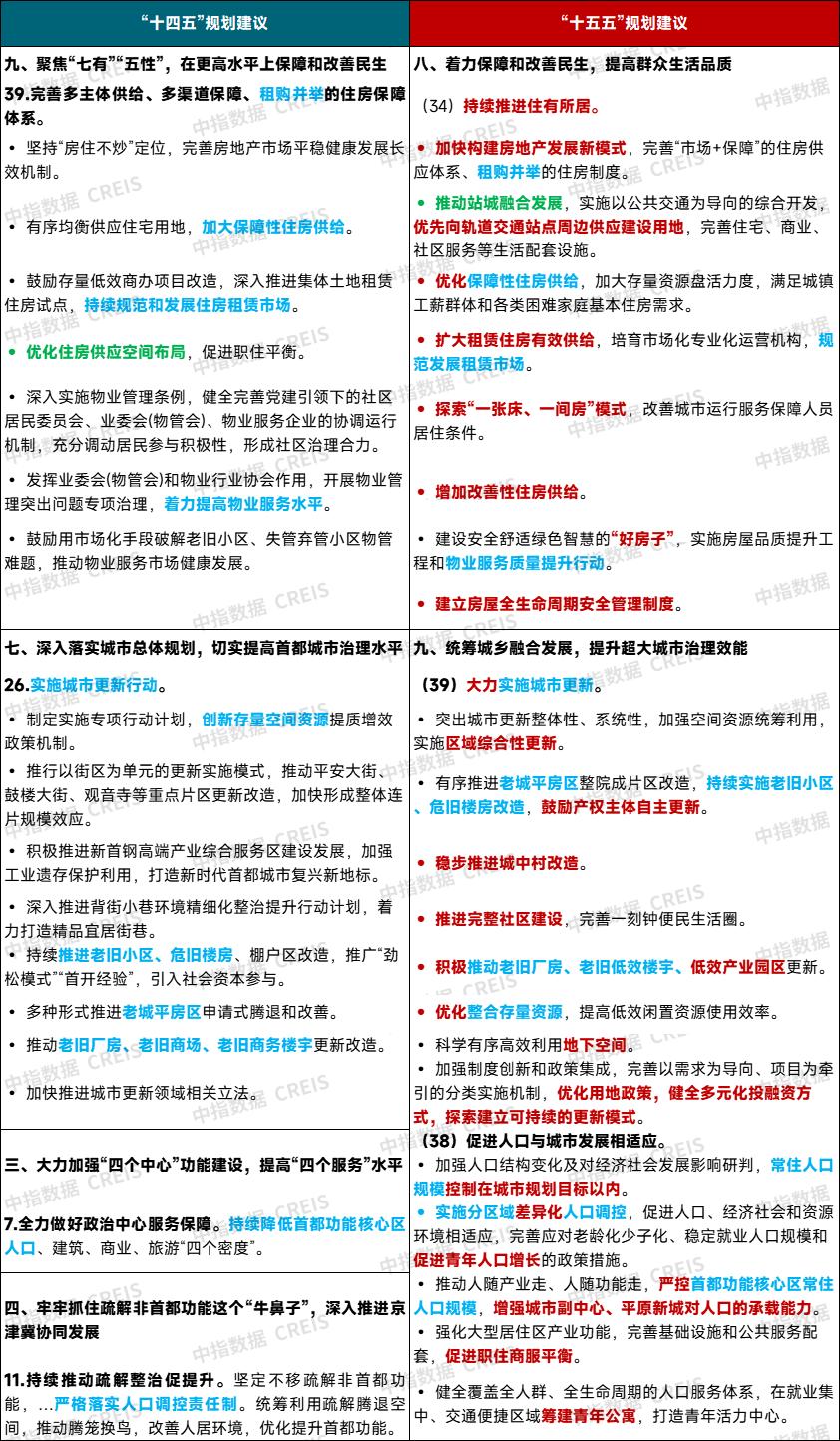
Core Viewpoint - The "15th Five-Year Plan" for Beijing emphasizes the integration of real estate policies into the goal of improving people's livelihoods, focusing on the transformation of real estate development models and quality upgrades [1][2]. Group 1: Real Estate Development Model - The plan highlights the need to "accelerate the construction of a new real estate development model," indicating a shift towards a more macro-level transformation of the real estate industry, moving beyond just improving the housing security system [3]. - It emphasizes the establishment of a "market + guarantee" housing supply system, indicating a stronger focus on the organic combination of market forces and government responsibilities in housing security for vulnerable groups [3]. Group 2: Land Supply and Urban Development - The plan proposes "promoting station-city integration" and prioritizing land supply around transit stations to enhance work-residence balance and reduce commuting pressure [4]. - It aims to improve the overall quality of life by ensuring that new residential areas are developed with accompanying community services and facilities [4]. Group 3: Housing Security and Supply - The plan calls for "optimizing the supply of affordable housing" and increasing efforts to revitalize existing resources to meet the basic housing needs of urban workers and various disadvantaged families [5]. - It shifts the focus from merely increasing supply to optimizing the structure and distribution of housing resources, indicating a more refined approach to housing policy [5]. Group 4: Rental Housing Market - The plan stresses the need to "expand the effective supply of rental housing" and cultivate market-oriented professional operating institutions, suggesting a continued push for the development of the rental market, particularly for long-term leases [6]. Group 5: Housing for Service Personnel - The plan introduces the concept of "one bed, one room" to improve living conditions for urban service personnel, addressing the housing challenges faced by grassroots workers in large cities [7][8]. Group 6: Quality of Housing - The plan emphasizes the construction of "safe, comfortable, green, and smart houses," indicating a shift towards enhancing housing quality and implementing quality improvement actions for property services [10]. - It also proposes the establishment of a comprehensive safety management system for the entire lifecycle of buildings, aiming to enhance safety standards in construction and usage [11]. Group 7: Urban Renewal - The plan indicates a "strong implementation" of urban renewal, focusing on comprehensive and systematic approaches to enhance urban vitality and address funding challenges [12]. - It encourages the integration of urban renewal with industrial revitalization and functional optimization, promoting community development and the improvement of living environments [12]. Group 8: Population Distribution and Housing Structure - The plan aims to adjust population distribution to improve housing supply and alleviate pressure on central urban areas, promoting a balance between work, residence, and commercial services [13]. - It emphasizes differentiated population control measures and policies to attract young people, which could positively impact the real estate market [13].
城市更新需要“硬件”“软件”相结合
第一财经· 2025-11-25 02:16
不久前发布的《中共中央关于制定国民经济和社会发展第十五个五年规划的建议》也提出,坚持城市 内涵式发展,大力实施城市更新,建设创新、宜居、美丽、韧性、文明、智慧的现代化人民城市。 当前,我国房地产业发展进入构建新模式阶段,加快城市更新是新模式的重要组成部分。这一工作正 在积极推进中。 2025.11. 25 本文字数:1733,阅读时长大约3分钟 作者 | 一财评论员 日前,住房和城乡建设部召开全国城市更新工作推进会。倪虹部长在推进会上表示,城市更新要着力 在规划、资金、运营、治理四个方面下功夫,因地制宜、探索创新,持续推进城市更新行动。 今年5月,中办、国办发布了《关于持续推进城市更新行动的意见》(下称《行动意见》),提出的 主要目标是:到2030年,城市更新行动实施取得重要进展,城市更新体制机制不断完善,城市开发 建设方式转型初见成效,安全发展基础更加牢固,服务效能不断提高,人居环境明显改善,经济业态 更加丰富,文化遗产有效保护,风貌特色更加彰显,城市成为人民群众高品质生活的空间。 倪虹所强调的规划、资金、运营、治理等四个方面既是城市更新的重要抓手,也是城市更新过程面临 的重要问题。这四个方面的问题解决好了 ...

政策发力完善机制 城市更新步伐再提速
Zheng Quan Ri Bao· 2025-11-23 17:09
Core Insights - The Ministry of Housing and Urban-Rural Development held a national meeting to promote high-quality urban renewal, emphasizing the importance of creating modern, livable, and resilient cities [1] - Urban renewal is recognized as a crucial strategy for high-quality urban development and meeting the needs of citizens for a better life [1][2] - Significant progress has been made in urban renewal actions this year, particularly in improving institutional mechanisms and living environments [1][2] Group 1 - The central government has provided substantial support for urban renewal, with the Central Urban Work Conference highlighting it as a key focus for urban development [1][2] - As of now, 297 cities and 152 county-level cities have conducted urban assessments, covering over 3 million residential buildings and 180,000 communities [2] - The plan aims to start the renovation of 25,000 old urban communities by 2025, with 24,300 already initiated in the first nine months of this year [2] Group 2 - Challenges in urban renewal include significant funding gaps, low resident participation, difficulties in policy implementation, and a lack of professional talent [2][3] - The central government continues to support key urban renewal projects financially, with 20 cities selected for funding in 2025 and 15 cities already supported in 2024 [3] - A comprehensive approach is being developed to integrate urban assessments with renewal planning, emphasizing the need for specialized planning and project implementation [3][4] Group 3 - The focus is shifting from rapid development to quality improvement in urban renewal, advocating for organic updates that preserve historical culture and adhere to green standards [4] - The introduction of new technologies, such as drones and smart solutions, is recommended to enhance efficiency and reduce costs in urban renewal efforts [4]
用艺术激活老片区 天津河北区城市更新焕发新活力
Xin Hua She· 2025-11-22 10:45
2023年6月30日,天美艺术街区更新项目启动,项目以天津美术学院周边区域为更新范围。"我们通过对 项目范围内5片、17块闲置零散地块的规划调整、土地置换、资源盘活,最终'化碎为整'形成4片可开发 利用的规整地块,增补产业空间载体约6.87万平方米。"河北区住房和建设委员会主任罗云说。 在项目更新过程中,河北区与天津美术学院紧密合作,深入挖掘区内丰富的文化艺术资源,通过对壁画 系、雕塑系和石膏馆等教学空间的修缮改造,打破传统艺术教育的场域边界。 初冬时节,阳光正好。位于天津市河北区的天美艺术街区内,游人们三三两两,有说有笑。街区内,巨 型艺术雕塑、复古红砖建筑、公共艺术作品等引来不少市民游客。 在天美艺术街区的西南入口,一座昂首阔步向前的"行走巨人"艺术雕塑引来很多市民游客驻足拍照。市 民陈晓菲一边模仿巨人大步流星的样子,一边催促着朋友赶快摁下手机快门。"咖啡、红砖、涂鸦、雕 塑、画廊,这里的艺术氛围感简直太棒了。"她点赞说。 天美艺术街区位于河北区天纬路与三马路交口,这里曾经是产权混乱、历史遗留问题突出的老旧片区。 据了解,近年来,河北区以"实施一批、报审一批、谋划一批"的模式扎实有序推进城市更新工作。目 ...
住建部:全国城市更新推进会召开
Jing Ji Guan Cha Bao· 2025-11-21 13:09
Core Viewpoint - The meeting emphasizes that urban renewal is a comprehensive and systematic strategic action essential for promoting high-quality urban development in China [1] Group 1: Urban Renewal Strategy - Urban renewal is recognized as a necessary path for optimizing urban structure, transforming energy, enhancing quality, promoting green transition, preserving cultural heritage, and improving governance [1] - The meeting calls for a deep understanding of the importance of urban renewal in achieving high-quality urban development [1] Group 2: Implementation Measures - The implementation should follow the guidelines from the Central Committee and the State Council, focusing on planning, funding, operation, and governance [2] - A sustainable urban construction and operation financing system should be established, utilizing various funding sources and encouraging financial institutions to develop long-term, low-interest credit products [2] - The meeting stresses the need for effective market integration with proactive government involvement to activate existing value through functional transformation and quality enhancement [2] Group 3: Goals and Outcomes - The meeting requires systematic advancement of the "Four Goods" construction: good houses, good communities, good neighborhoods, and good urban areas, ensuring tangible results [3] Group 4: Related Information - During the 14th Five-Year Plan period, Beijing has implemented approximately 78 million square meters of renovation for old urban communities, achieving a 98% implementation rate, with energy-saving renovations covering 26.5 million square meters and a resident satisfaction rate of 96% [4]
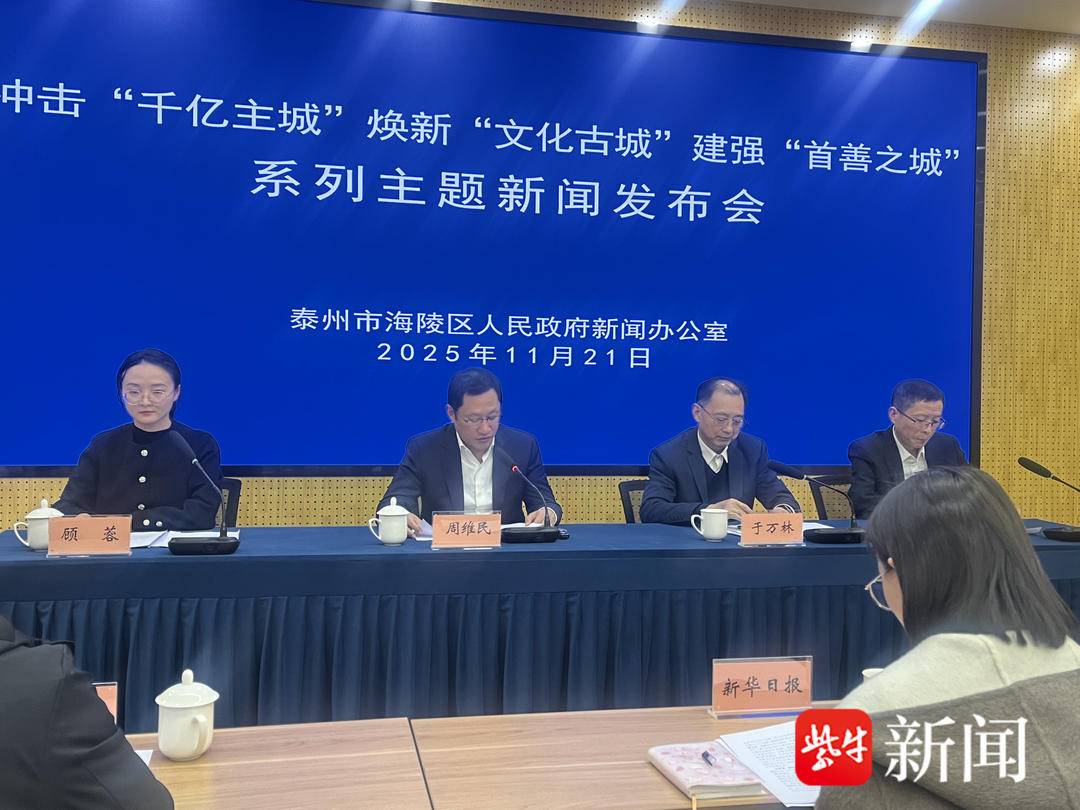
高质量推进城市更新 泰州海陵绘就现代化城市画卷
Yang Zi Wan Bao Wang· 2025-11-21 13:05
Core Points - The event held in Hai Ling District focuses on urban renewal and aims to transform the area into a modern, livable, and resilient city during the 14th Five-Year Plan period [1][3][4] Group 1: Urban Renewal Initiatives - The district prioritizes improving living conditions and enhancing residential quality as the main tasks of urban renewal, with a goal of covering all old residential areas [3] - Over the past five years, 50,000 households have benefited from the renovation of old residential communities [3] - The district has implemented an innovative "housing voucher" policy for property acquisition, issuing 266 vouchers and facilitating the purchase of 265 homes [3] Group 2: Cultural Heritage Preservation - The district emphasizes the protection of historical architecture and urban fabric, adhering to a "small-scale, incremental" urban renewal approach [3] - Eight old streets and ten roads have been upgraded while preserving the original community and street characteristics [3] - The district promotes community-driven updates and repairs through a "community discussion system," shifting from passive protection to active co-construction [3][4] Group 3: Ecological Development - The district prioritizes ecological and green development, focusing on water environment governance, urban greening, and pollution control [4] - Initiatives include water management, urban greening, and stringent air quality measures [4] - The district aims to enhance urban-rural infrastructure integration to support industrial development [4] Group 4: Future Development Goals - Looking ahead to the 15th Five-Year Plan, the district aims to emphasize high-quality and intrinsic development, striving to renew the cultural ancient city and create a new model of urban-rural integration [4]