
燃料电池

Search documents
SOFC行业交流会
2025-11-05 01:29
Summary of SOFC Industry Conference Call Industry Overview - The Solid Oxide Fuel Cell (SOFC) industry is led by Bloom Energy, which is expected to reach an installed capacity of 800 megawatts (MW) in 2024 and 1.5 to 2 gigawatts (GW) in 2025, capturing an estimated market share of 85% [1][2][4] - SOFC technology includes three support forms: planar, tubular, and plate-tube, with the planar form having the highest commercialization potential [1][11] Key Points and Arguments - **Market Position**: Bloom Energy is a dominant player in the SOFC market, primarily serving data centers and other high-efficiency power demand scenarios [1][4] - **Efficiency and Cost**: SOFC systems can achieve over 60% efficiency, surpassing gas turbines which have a maximum efficiency of around 40% [14][16] - **Cost Structure**: The cost to build a 1 GW SOFC system is approximately $3,000 per kilowatt, with the stack accounting for 50-55% of the total cost [21][24] - **Fuel Flexibility**: SOFC can utilize various fuels including natural gas, methanol, diesel, gasoline, and pure hydrogen, providing significant flexibility in fuel choice [18] Competitive Barriers - Bloom Energy's competitive advantages include high power density, customized materials, and integration capabilities, which are difficult for competitors to replicate [6][7] - The company has a system lifespan exceeding five years, while domestic competitors typically offer only two years [7] Market Dynamics - The global SOFC market is expected to double by 2026, with domestic companies like Sanhua, CGN, and Weichai projected to demand over 500 MW in the next two to three years [2][26] - The transition from pilot to mass production is ongoing, with significant potential for profitability as the market matures [3][17] Additional Insights - **Key Components**: The stack's cost is significantly influenced by the connection components, which account for 40-60% of the stack's cost and 95% of its weight [12][13] - **Environmental Impact**: SOFC's lower carbon emissions position it favorably against gas turbines, especially in regions with carbon emission restrictions [15][16] - **Supply Chain**: Major suppliers for SOFC components include Taiwan's Baolide and a Canadian company, with Baolide holding a 50% market share [25] Future Outlook - The industry is expected to see rapid growth, with Bloom Energy's production capacity planned at 5 GW, contingent on workforce training to meet production goals [19] - SOFC systems are increasingly seen as complementary to existing energy systems rather than outright replacements for traditional energy sources [19]
全球电力紧张,把脉前沿机遇
2025-11-05 01:29
Summary of Key Points from Conference Call Records Industry Overview - **Global Electricity Shortage**: The global electricity shortage is becoming increasingly severe, particularly in North America, emerging markets, and Europe. North America's electricity issues are closely tied to the growth of AI, which has increased demand for stable power supply due to high operational costs in data centers. Europe faces challenges due to over 50% reliance on renewable energy, leading to supply volatility and exacerbated by aging infrastructure. Emerging markets like Africa, Southeast Asia, Indonesia, and India are also experiencing significant electricity shortages due to capacity rebuilding and resource nationalism policies [2][4]. Core Insights and Arguments - **AI and Electricity Demand**: The development of AI is expected to drive new electricity demand, particularly in the next 3-5 years, as countries adjust their energy structures. This trend will lead to a significant increase in capital expenditures in the electricity system [6][7]. - **Gas Turbine Market**: The North American gas turbine market is experiencing strong demand, with GE reporting new orders at a three-year high. However, delivery volumes are declining due to core component supply shortages. Howmet, a leading turbine blade company, prioritizes aerospace applications over gas turbine blades due to higher margins [5][19]. - **Energy Storage in Data Centers**: Energy storage systems are becoming essential in data centers for their rapid deployment, cost-effectiveness, and ability to utilize clean energy. NVIDIA has recognized energy storage as a standard feature in data centers, enhancing its market acceptance [8][10]. Emerging Opportunities - **Investment in Energy Storage and Fuel Cells**: The future of energy systems will focus on energy storage, electrical distribution equipment, and fuel cells, particularly solid oxide fuel cells (SOFC), which are expected to see significant growth due to their advantages in deployment speed and efficiency [7][14]. - **Copper Demand from Data Centers**: The demand for copper in U.S. data centers is projected to rise from 4% to 13% by 2030, with a potential shortfall in supply as global copper supply is limited. This demand surge is driven by the increasing energy consumption of data centers [17][18]. Risks and Challenges - **High Industrial Electricity Prices**: The high industrial electricity prices in the U.S. are posing risks to aluminum production, with many plants facing contract expirations that could lead to large-scale shutdowns if new contracts are priced significantly higher [19]. - **Transition of Mining Companies**: North American mining companies are transitioning to AI computing centers due to declining profits from cryptocurrency mining. This shift is facilitated by their access to low-cost electricity, making them attractive partners for cloud computing giants [20][21]. Noteworthy Developments - **Core Scientific's Contracts**: Core Scientific has signed significant contracts with AI cloud computing companies, indicating a strong market position and potential for growth in the AI data center space [23][24]. - **Iris Energy's GPU Expansion**: Iris Energy is rapidly expanding its GPU resources and has secured a substantial contract with Microsoft, positioning itself well in the AI market [25]. - **Hut 8 Mining's Asset Structure**: Hut 8 Mining holds significant Bitcoin assets and has substantial power resources, which could be leveraged for AI data centers, indicating potential for high market valuation [26][27]. Conclusion The electricity sector is undergoing significant changes driven by AI and the need for stable power supply. Companies in energy storage, gas turbines, and data centers are poised for growth, while challenges such as high electricity prices and supply shortages present risks. The transition of mining companies to AI centers highlights the evolving landscape of energy consumption and technology integration.

亿华通涨2.06%,成交额3546.85万元,主力资金净流入126.50万元
Xin Lang Cai Jing· 2025-11-04 02:10
Company Overview - Beijing Yihuatong Technology Co., Ltd. is primarily engaged in the manufacturing of fuel cell systems, focusing on commercial vehicles such as buses and trucks [2] - The company offers various fuel cell system models with power outputs ranging from 30kW to 120kW, with the main business revenue composition being 70.41% from fuel cell systems, 14.73% from other services, 11.84% from technical development, and 3.02% from components [2] Financial Performance - As of September 30, 2025, the company reported a revenue of 104 million yuan, a year-on-year decrease of 67.31%, and a net profit attributable to shareholders of -311 million yuan, a decrease of 20.66% [3] - The number of shareholders increased by 9.27% to 15,700, with an average of 0 circulating shares per person [3] Stock Market Activity - On November 4, the company's stock price rose by 2.06% to 30.68 yuan per share, with a total market capitalization of 7.107 billion yuan [1] - Year-to-date, the stock price has increased by 27.30%, with a 3.02% rise over the last five trading days and a 32.53% increase over the last 60 days [1] - The net inflow of main funds was 1.265 million yuan, with significant buying and selling activity recorded [1]

Bloom Energy(BE.US)获50亿美元合作后杰富瑞上调目标价至53美元 但维持“跑输大盘”评级
智通财经网· 2025-11-03 07:11
Group 1 - Jefferies raised the target price for Bloom Energy from $31 to $53 while maintaining a "underperform" rating, primarily due to a strategic partnership with Brookfield Asset Management [1] - Bloom Energy announced a $5 billion strategic partnership with Brookfield Asset Management to become the preferred onsite power supplier for Brookfield's global AI factories, with plans to design and deliver AI factories globally [1] - The partnership is positioned as the first investment in Brookfield's dedicated AI infrastructure strategy, focusing on large AI factories, power solutions, and strategic capital partnerships [1] Group 2 - Jefferies remains cautious despite the target price increase, emphasizing the need for clarity on the joint venture's profitability and its impact on Bloom Energy's cash flow [2] - The fourth quarter is highlighted as a critical observation point for investors, as Bloom Energy is expected to disclose its order backlog, ideally including significant sales for 2026 and 2027 [2] - Bloom Energy has seen a cumulative stock increase of over 495% this year, transitioning from a volatile clean energy stock to a key player in the AI sector, with its fuel cells viewed as a solution for the rising power demands of AI [2] Group 3 - Bloom Energy reported a 57% year-over-year revenue increase to $519 million in Q3, exceeding market expectations of $428 million [3] - Adjusted earnings per share were $0.15, surpassing the expected $0.10, and adjusted EBITDA was $59.05 million, also above the anticipated $46.02 million [3] - The company plans to expand its production capacity to achieve an annual output of 2 gigawatts of fuel cells by the end of 2026, aiming to quadruple its annual revenue compared to 2025 levels [3]

美国缺电,数据中心采用SOFC成为趋势
傅里叶的猫· 2025-10-31 14:23
Core Insights - The article highlights the severe electricity shortage in the United States, which is impacting the construction of data centers. The aging infrastructure and high maintenance costs of existing power systems are major contributing factors [1][10]. - UBS analysis suggests that data centers may turn to Solid Oxide Fuel Cells (SOFC) as a solution to part of the electricity problem [2]. - Bloom Energy, a leading company in the SOFC sector, has seen its stock price increase nearly tenfold over the past four months, indicating strong market interest and potential growth [3]. SOFC Industry Analysis - The demand for electricity from data centers is expected to grow significantly, with projections indicating that by 2030, electricity consumption will exceed 945 TWh, driven primarily by AI and other digital services [6]. - The U.S. data center sector is facing a projected electricity demand gap of approximately 45 GW from 2025 to 2028, which could widen to 68 GW by 2029, highlighting the urgent need for alternative power solutions like SOFC [10]. - SOFC technology operates at high efficiency (60%) and has advantages such as rapid deployment, low emissions, and flexibility in fuel sources, making it a viable option for meeting the growing energy demands of data centers [11][17]. Market Potential and Growth - The market for SOFC in North America is projected to grow significantly, with estimates indicating a market space of 250 million RMB in 2026, increasing to nearly 2 billion RMB by 2030, driven by the increasing penetration of SOFC in data center construction [20]. - Bloom Energy is positioned as a key player in the SOFC market, with substantial orders expected due to the ongoing construction of data centers and the electricity supply gap in the U.S. [21][22]. - The company plans to expand its production capacity from 1 GW to 2 GW by the end of next year, with long-term goals of reaching 4-5 GW, indicating strong growth prospects [23]. Supply Chain and Component Analysis - Companies like Sanhua and Jingquan are positioned to benefit from the growth of the SOFC market, with Sanhua being a major supplier of fuel cell membranes and Jingquan supplying magnetic components for SOFC systems [24][29]. - The demand for SOFC components is expected to grow rapidly, with projections indicating a compound annual growth rate (CAGR) of over 65% from 2026 to 2028 for fuel cell membranes [27]. - The collaboration between Bloom Energy and its suppliers is crucial for meeting the increasing demand for SOFC systems, as the current supply chain faces challenges in capacity and production efficiency [29].

Why This Was a Good Week to Plow Into Bloom Energy Stock
The Motley Fool· 2025-10-31 08:31
Core Insights - Bloom Energy's stock has seen a significant increase, gaining nearly 16% week to date, driven by strong quarterly results and analyst upgrades [2][5] - The company reported a record revenue of $519 million for the third quarter, marking a 57% year-over-year increase [3][5] - Analysts have raised their price targets for Bloom Energy following its earnings report, with notable upgrades from firms like Morgan Stanley, Mizuho, and HSBC [5] Financial Performance - Bloom Energy's net income, not in accordance with GAAP, rose by 60% to exceed $34 million [5] - Analysts had initially projected revenue of $428 million and non-GAAP net income of $0.10 per share, indicating that the company outperformed expectations [5] Financing Efforts - The company announced plans to issue $1.75 billion in convertible senior notes with a 0% interest rate, maturing on November 15, 2030 [7][8] - Proceeds from the note issuance will be used for general corporate purposes, including research and development and manufacturing support [8]
\t亿华通(688339.SH):前三季度净亏损3.11亿元
Ge Long Hui· 2025-10-30 20:45
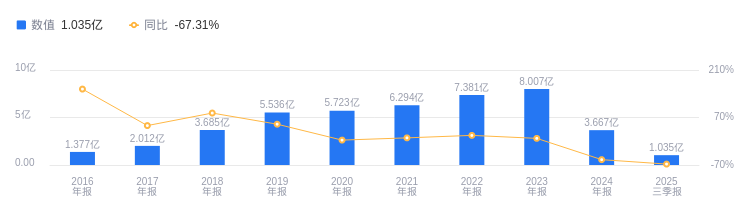
格隆汇10月30日丨亿华通(688339.SH)发布三季报,2025年前三季度实现营业总收入1.04亿元,同比下降 67.31%;归属母公司股东净利润-3.11亿元,较上年同期亏损增加5332.17万元;基本每股收益为-1.34 元。 ...
亿华通的前世今生:张国强掌舵十年深耕燃料电池,系统营收5064万占比70%,并购旭阳氢能谋协同新篇
Xin Lang Cai Jing· 2025-10-30 12:18
Core Viewpoint - Yihuatong is a leading enterprise in China's hydrogen fuel cell industry, focusing on the research and manufacturing of fuel cell systems and stacks, with significant advantages in technology development and industry chain layout, making it highly valuable for investment [1] Group 1: Business Performance - In Q3 2025, Yihuatong's revenue reached 104 million yuan, ranking first in the industry, with fuel cell system revenue accounting for 70.41% of total revenue [2] - The company reported a net profit of -362 million yuan in the same period, also ranking first in the industry [2] Group 2: Financial Metrics - As of Q3 2025, Yihuatong's asset-liability ratio was 39.22%, an increase from 37.76% in the previous year, indicating that its debt repayment ability is in line with the industry average [3] - The gross profit margin for Q3 2025 was -19.56%, a significant decline from 17.54% in the previous year, suggesting a need for improvement in profitability [3] Group 3: Shareholder Information - As of June 30, 2024, the number of A-share shareholders decreased by 4.56% to 14,200, while the average number of circulating A-shares held per account increased by 4.78% [5] - Hong Kong Central Clearing Limited became the seventh largest circulating shareholder with 3.24 million shares as of September 30, 2025 [5] Group 4: Market Outlook - According to CICC, the company's performance in the first half of 2025 met market expectations, but industry demand has declined, leading to a decrease in shipments [5] - Longjiang Securities noted that the overall market demand for fuel cells is declining, and the company's cautious expansion has put pressure on sales and profits [5]
亿华通(02402.HK)第三季度净亏损约为1.48亿元
Ge Long Hui· 2025-10-30 11:59
前三季度营收约为1亿元,同比减少67.31%。净亏损约为3.1亿元。 格隆汇10月30日丨亿华通(02402.HK)公布2025年第三季度报告。营收约为人民币3158万元,同比减少 80.6%。净亏损约为1.48亿元。基本每股收益为-0.63元。 ...
美股异动 | Bloom Energy(BE.US)涨超23% Q3调整后盈利超预期
智通财经网· 2025-10-29 14:19
Core Insights - Bloom Energy's stock price increased over 23%, reaching $139.66, following the release of its latest earnings report [1] - The company reported Q3 adjusted earnings per share of $0.15, exceeding analyst expectations, and revenue of $519 million, significantly higher than the anticipated $428 million [1] - Bloom Energy announced plans to expand its production capacity, aiming for an annual fuel cell production capacity of 2 gigawatts by the end of 2026 [1] - The stock has surged over 350% this year, driven by the concept of powering AI data centers [1]