Workflow
铁路运输
icon
Search documents
【财经早晚报】娃哈哈任命许思敏为总经理;高通回应涉嫌违反反垄断法;美股三大指数集体收跌
Sou Hu Cai Jing· 2025-10-11 09:51
Group 1 - The new railway operation schedule in China, effective from October 11, aims to enhance passenger and freight transport capacity, with over 13,000 passenger trains and more than 23,000 freight trains scheduled, improving overall efficiency and service quality [2] - The cumulative renovation of over 240,000 old urban residential communities during the 14th Five-Year Plan period has benefited more than 40 million households, enhancing urban living conditions [2] - The successful launch of the Gravity-1 Yao-2 rocket on October 11 marks a significant achievement in China's satellite deployment capabilities [3] Group 2 - The cryptocurrency market experienced a significant downturn on October 11, with Bitcoin dropping over 13% to around $113,700, and smaller tokens like Ethereum and Ripple facing even larger declines [3] - The U.S. stock market saw major indices decline sharply on October 10, with the Dow Jones falling by 878.82 points (1.9%) and the Nasdaq dropping by 820.20 points (3.56%), marking the largest single-day drop since April [4] - The international gold price continued to rise, with domestic gold jewelry prices following suit, reflecting a broader trend in the precious metals market [4] Group 3 - The Federal Reserve's interest rate cut expectations have surged, with a 98.3% probability of a 25 basis point cut in October and a 91.7% chance of a cumulative 50 basis point cut by December, indicating a shift in monetary policy outlook [5] - Wahaha Group appointed Xu Simin as the new general manager following the resignation of its previous leader, signaling a potential shift in management strategy [5] - Qualcomm is under investigation for allegedly violating antitrust laws related to its acquisition of Autotalks, highlighting regulatory scrutiny in the tech sector [7]
京津冀三座城市航站楼先行一体化
Core Points - The establishment of city terminals in the Beijing-Tianjin-Hebei region enhances convenience for travelers, allowing them to check in and handle luggage at local stations before heading to the airport [1][13] - The city terminals at Daxing Airport and Capital Airport serve to promote economic integration in the Beijing-Tianjin-Hebei area, with over 2.54 million passengers served since their operation [1][5] Group 1: City Terminal Operations - The Tianjin West Station city terminal began trial operations in June 2023, allowing travelers to complete check-in and luggage handling at the high-speed rail station, significantly improving travel efficiency [2][3] - The city terminal at Tianjin West Station has processed 7,849 passengers and handled 3,303 pieces of luggage in its first three months of operation [2] - The city terminal in Langfang serves as a hub for three airports, providing local residents with access to multiple flight options [5][7] Group 2: Transportation Connectivity - The upcoming Tianjin-Xing City Railway will provide direct high-speed rail service to Daxing Airport, reducing travel time to 40 minutes for Tianjin residents [3] - The Langfang city terminal offers free bus services to Daxing Airport, with a frequency of every 30 minutes, enhancing accessibility for local travelers [7] - The Grass Bridge city terminal in Beijing allows seamless transfers via the subway, with an average travel time of 19 minutes to Daxing Airport [8][9] Group 3: Future Developments - Two additional city terminals are under construction to further enhance the "air-rail" network in the Beijing-Tianjin-Hebei region, improving connectivity [10][12] - The future Xiong'an city terminal will feature advanced facilities and aims to provide a "zero-burden" travel experience for passengers [12][13]
国铁北京局国庆假期运输收官 累计发送旅客1677.4万人次
Zhong Guo Xin Wen Wang· 2025-10-11 08:51
Core Points - The China Railway Beijing Bureau successfully completed its National Day holiday transportation task, sending a total of 16.774 million passengers from September 29 to October 10, with a daily average of 1.398 million passengers, representing a year-on-year increase of 7.1% [1][3] - The bureau implemented various measures to optimize transportation capacity, including the addition of 1,471 trains during the holiday period, with 729 trains starting and ending in the Beijing-Tianjin-Hebei region [3][4] - Cultural activities were organized at various stations to celebrate the National Day and Mid-Autumn Festival, enhancing the travel experience for passengers [4][5] Transportation Statistics - Total passengers sent: 16.774 million [1] - Daily average passengers: 1.398 million, up 7.1% year-on-year [1] - Long-distance passengers: 6.907 million; short-distance passengers in the Beijing-Tianjin-Hebei region: 9.867 million [1] - Passengers sent from Beijing: 7.847 million, with a daily average of 654,000, up 12.2% year-on-year [1] Operational Measures - The bureau increased train services to meet passenger demand, including the addition of 1,471 trains during the holiday [3] - Specific routes were enhanced, including the opening of 4 pairs of high-speed trains to Changbai Mountain, reducing travel time to as fast as 4 hours and 33 minutes [3] - Night service adjustments were made to accommodate post-event passenger flows, including special trains and extended subway operating hours [3] Cultural Activities - Various cultural events were held at stations, such as the "Welcoming National Day" theme activities and Mid-Autumn Festival celebrations, which included crafts and traditional cultural education [4][5] - Activities aimed at engaging passengers and enhancing their travel experience included making lanterns, poetry recitations, and traditional games [4][5]
国铁北京局国庆假期累计发送旅客1677.4万人次
Zhong Guo Jing Ji Wang· 2025-10-11 08:37
Core Insights - The National Railway Beijing Bureau successfully completed a 12-day National Day holiday transportation task, sending a total of 16.774 million passengers, with a daily average of 1.398 million, representing a year-on-year increase of 7.1% [1] Group 1: Passenger Transportation - During the holiday period, the bureau sent 6.907 million long-distance passengers and 9.867 million short-distance passengers within the Beijing-Tianjin-Hebei region [1] - The Beijing area alone sent 7.847 million passengers, with a daily average of 654,000, marking a year-on-year increase of 12.2% [1] - October 1 was the peak day for passenger sending, with a total of 1.684 million passengers sent, including 939,000 in the Beijing area [1] - October 8 saw the peak for arrivals in the Beijing area, with 926,900 passengers arriving [1] Group 2: Capacity Enhancement - The bureau dynamically analyzed ticket sales and demand data, resulting in the addition of 1,471 trains during the holiday, including 729 trains in the Beijing-Tianjin-Hebei region [2] - The opening of the Shenyang-White Mountain high-speed railway led to adjustments and the addition of 4 pairs of trains to the Changbai Mountain direction, reducing travel time to as fast as 4 hours and 33 minutes [2] - Special trains were added for concert-goers after night events, with two trains from Tianjin to Beijing South and Shanghai Hongqiao on October 8, along with extended subway operating hours [2] Group 3: Key Material Transportation - The bureau planned ahead for the transportation of key materials during the holiday, visiting various regions to understand production and transportation needs [3] - A comprehensive monitoring system was established to ensure safety and efficiency in the loading and unloading of key materials [3] - During the holiday period, the bureau achieved an average of 16,450 cars loaded and 23,259 cars unloaded daily, ensuring smooth operations for both the public and enterprises [3]
全国铁路今起实行新的列车运行图 客货运输能力进一步提升
Zhong Guo Jing Ji Wang· 2025-10-11 08:37
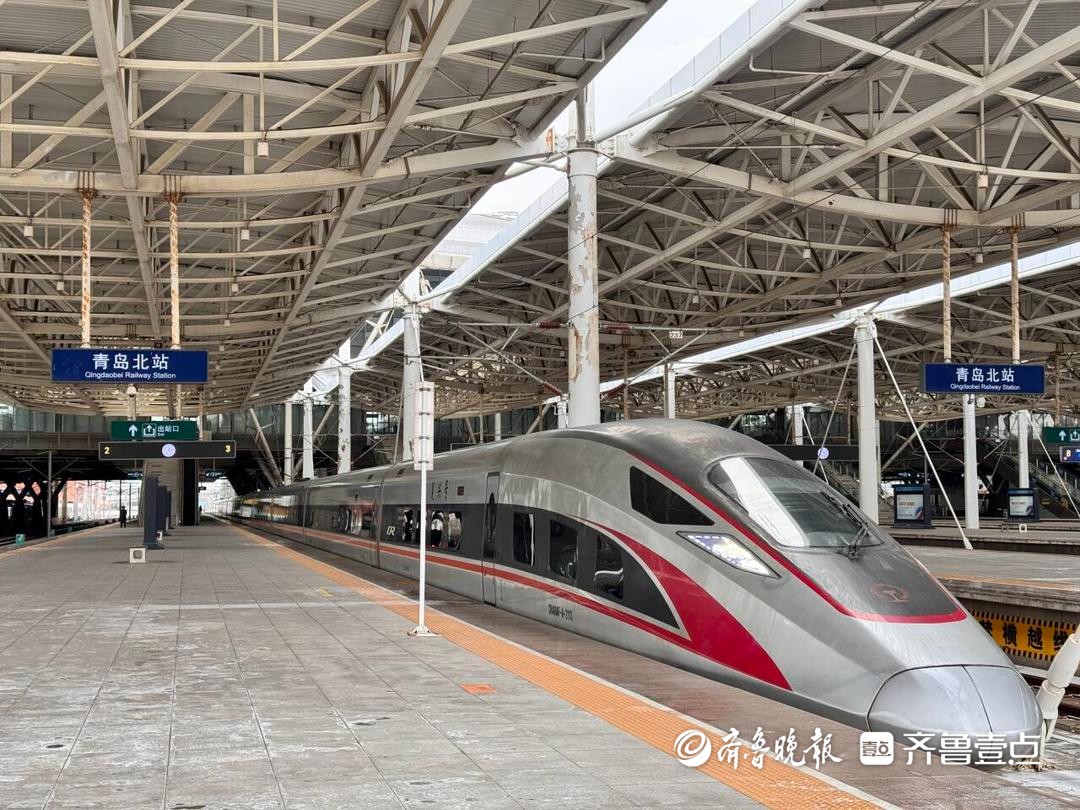
Core Points - The China National Railway Group has implemented a new train operation schedule starting October 11, maintaining the scale of passenger and freight train operations while optimizing the structure of train services [1][2] Group 1: Passenger Train Operations - The new schedule includes over 13,000 scheduled passenger trains, enhancing the railway's capacity, service quality, and operational efficiency [1] - The introduction of high-speed trains on newly opened routes, such as Shenyang to Jiamusi and Xiangyang to Jingmen, significantly reduces travel times between major cities in Northeast and Central China [2] - The operation of benchmark trains at speeds of 350 km/h on key high-speed rail lines aims to meet the high-quality travel demands of passengers [2] Group 2: Freight Train Operations - The railway department has optimized the freight train operation structure, increasing the number of fast freight trains to 208, which is an increase of 15 trains compared to the previous schedule [3] - New intercity and multimodal transport trains have been added, with a total of 130 intercity trains and 173 multimodal transport trains, enhancing logistics capabilities [3] - The railway aims to ensure the stable operation of the national economy by increasing the capacity for transporting key materials, including coal, during the winter season [3] Group 3: Service Quality Enhancements - The railway is introducing various themed tourist trains and improving services for students and special groups, including discounts and electronic invoicing for ticket purchases [4] - The logistics services are being enhanced through online booking and market-based pricing, aiming to reduce logistics costs and improve service quality [4] - The implementation of the 95306 platform for freight services allows for a fully online process, promoting efficiency and convenience in logistics operations [4] Group 4: Information and Communication - Passengers and clients can access train operation information and services through various digital platforms, ensuring they can plan their journeys and freight transport effectively [5]
铁路国庆中秋假期运输收官 发送旅客2.13亿人次
Zhong Guo Jing Ji Wang· 2025-10-11 08:37
Core Viewpoint - The China National Railway Group reported a successful transportation period during the National Day and Mid-Autumn Festival holiday, with significant increases in both passenger and freight transport volumes, indicating a robust demand and effective operational management [1][2]. Group 1: Passenger Transport - From September 29 to October 10, the railway system transported a total of 213 million passengers, averaging 17.76 million passengers per day, which represents an 8.6% year-on-year increase [1][2]. - The average daily operation of passenger trains reached 12,899, a 9.1% increase compared to the previous year, with a record single-day passenger train operation of 14,196 on October 8 [2]. - On October 1, a record 23.13 million passengers were sent, marking the highest single-day passenger volume in history [2]. Group 2: Freight Transport - The railway system completed a total freight volume of 13.7 million tons during the holiday period, with an average of 189,000 freight cars loaded daily [2]. - Key materials such as autumn grain, fertilizers, and holiday goods were effectively transported, supporting both public travel and the stable operation of the national economy [2]. Group 3: Service Quality and Safety - The railway enhanced service quality by improving ticket purchasing, waiting, boarding, and transfer processes, and provided diverse travel options through themed tourist trains [2]. - Safety measures were prioritized, with staff ensuring transportation safety during extreme weather events, such as Typhoon "Maidum," and maintaining infrastructure inspections [2].
调图!铁路快捷物流圈拓展 冬季电煤保供运输能力提升
Yang Shi Wang· 2025-10-11 08:34
Group 1 - The core point of the article is the implementation of the fourth quarter train operation schedule starting from October 11, which includes over 13,000 scheduled passenger trains and more than 23,000 freight trains daily [1] - The new schedule aims to fully exploit the transportation potential of newly opened lines by 2025, including the high-speed rail from Shenyang to Changbai Mountain with 64 scheduled trains, significantly reducing travel time between Beijing and several cities [3] - The high-speed rail from Xiangyang to Jingmen will have 26 scheduled trains, and the Chongqing East to Qianjiang segment of the Yuxia high-speed rail will have 54 scheduled trains, enhancing connectivity between western cities and central-southern cities [5] Group 2 - The freight train operation has been further optimized to expand the quick logistics network, with an increase of 173 multi-modal transport trains, adding 28 new routes [8] - The introduction of new multi-modal transport trains is expected to significantly improve transportation efficiency between regions, with a specific example showing a reduction of approximately 20 hours in cargo transport time from Puhe to Nanxiang [9] - The adjustment of the schedule includes the addition of 24 freight trains on major freight corridors such as the Jingjiu and GeKu railways, and an increase in heavy-load trains on the Daqin, Haoji, and Wari railways to enhance winter coal supply transportation capacity [9]
铁路密布、公路成网、飞机翱翔、巨轮远航 国民经济“主动脉”焕新畅达
Yang Shi Wang· 2025-10-11 08:03
Core Viewpoint - The article emphasizes the accelerated development of China's transportation network as part of the "14th Five-Year Plan," aiming for a comprehensive and integrated transportation system by 2025, which will significantly enhance the country's economic development and service quality [1]. Group 1: Transportation Infrastructure Development - By 2025, China's transportation system is expected to achieve integrated development, with improvements in comprehensive capacity, service quality, operational efficiency, and overall effectiveness [1]. - The completion rate of the national comprehensive transportation network's main framework, consisting of "6 axes, 7 corridors, and 8 channels," has exceeded 90% [11]. - As of the end of 2024, the railway operating mileage is projected to reach 162,000 kilometers, an increase of approximately 16,000 kilometers from the end of the "13th Five-Year Plan" [11]. Group 2: Economic Impact and Opportunities - The opening of high-speed rail in remote areas, such as the Miao village in Xiangxi, has significantly boosted local economies, with villagers converting traditional houses into guesthouses, generating annual incomes equivalent to the previous decade [3]. - The establishment of the first inland open port in Nankang District, Jiangxi, has streamlined the import of timber, reducing transportation time from Russia from three months to 14 days through the China-Europe Railway Express [5]. - Major urban clusters like the Beijing-Tianjin-Hebei region, Yangtze River Delta, Guangdong-Hong Kong-Macau Greater Bay Area, and Chengdu-Chongqing city group have developed "one-hour living circles," facilitating the flow of people, goods, and information [7]. Group 3: Vision for the Future - China's transportation landscape has transformed, creating a national economic "artery" that connects east to west and north to south, contributing to a new spatial structure for the country [13]. - The vision of "people enjoying their travel and goods flowing smoothly" is being realized through the integrated transportation system [13].
中国铁路:国庆中秋假期全国铁路累计发送旅客2.13亿人次
智通财经网· 2025-10-11 07:49
Core Insights - The railway transportation during the National Day and Mid-Autumn Festival holiday from September 29 to October 10 was highly successful, with a total of 213 million passengers transported, averaging 17.76 million passengers per day, representing an 8.6% year-on-year increase [1] - The railway sector effectively met the strong demand for passenger and freight transport, enhancing service quality and ensuring safe travel for passengers while supporting the transportation of essential goods for the economy [1] Group 1 - Multiple transportation indicators reached historical highs, with an average of 12,899 passenger trains operated daily, a 9.1% increase year-on-year, and a record single-day passenger volume of 23.13 million on October 1 [1][2] - The introduction of themed tourist trains, such as family tours and wellness trips, provided diverse travel options and enhanced the travel experience for passengers [2] - Service quality at stations and on trains improved significantly, with enhanced ticketing, waiting, and transfer services, as well as cultural activities to create a festive atmosphere [2] Group 2 - The transportation of key goods was effectively managed, with an average of 189,000 freight cars loaded daily, totaling 13.7 million tons of goods transported, supporting both holiday travel and stable economic operations [2] - Safety in transportation remained stable, with railway staff ensuring safety measures were in place, particularly during extreme weather events, to maintain smooth operations [2]
全国铁路第四季度列车运行图实行
Yang Shi Xin Wen· 2025-10-11 07:37
Core Points - The national railway system is implementing a new train operation schedule starting today, with plans to operate over 13,000 passenger trains daily [1] - The fourth quarter schedule aims to maximize the transportation potential of newly opened lines, significantly reducing travel times between key cities [1][2] - The freight train operation is also set to exceed 23,000 trains daily, enhancing railway freight capacity, service quality, and operational efficiency [2] Passenger Train Operations - The new schedule includes 64 high-speed trains from Shenyang to Changbai Mountain, and significant reductions in travel times for routes connecting Beijing to Fushun, Tonghua, and Changbai Mountain [1] - The operation of high-speed trains will connect major cities in Liaoning and Jilin provinces, with two trains each from Shenyang North to Shenyang North and Changchun West to Changchun [1] - The Fuxinghao trains will operate at a speed of 350 km/h on the Hangzhou East to Changsha South and Beijing to Shenyang routes, with 46 and 57 trains scheduled respectively [1] Freight Train Operations - The new freight train schedule optimizes the operation of 208 rapid freight trains across railway bureaus, increasing the number by 15 [2] - Intercity freight trains have been increased to a total of 130, with additional multi-modal transport trains reaching 173, an increase of 28 [2] - The speed of freight transport is expected to rise from 90 km/h to 120 km/h, reducing transport time by approximately 20 hours [2] - Key freight corridors such as the Jingjiu and GeKu railways will see an increase of 24 freight trains, enhancing winter coal supply transportation capabilities [2] - The China-Europe and China-Central Asia freight trains will maintain their operational scale, with 93 and 57 scheduled routes respectively [2]