Semiconductors

Search documents
“反英伟达联盟”变强,4.4万亿美元帝国遭遇“四面围猎”
3 6 Ke· 2026-03-19 07:06
Core Insights - Nvidia has dominated the AI chip market for the past decade, achieving $147.8 billion in chip sales from February to October 2025, a 62% increase from $91 billion the previous year [4] - However, Nvidia faces increasing competition from various players, including custom chip manufacturers, large cloud service providers, and traditional chip rivals [5][16] Group 1: Customer Shift to In-House Chip Development - Major clients like Google and Amazon are moving towards developing their own chips, with Google renting out its TPU and Amazon launching Trainium chips for model training [7][8] - Google's seventh-generation TPU, Ironwood, has a peak performance of 4.6 petaFLOPS, slightly surpassing Nvidia's B200 while consuming less power [7] - Amazon's AWS is utilizing Trainium chips for model training, with plans to build a data center cluster with over a million chips [8][11] Group 2: Custom Chip Assault - Broadcom leads the custom chip (ASIC) market, with a 50% share, and has significant contracts with Google, Meta, and OpenAI for custom AI accelerators [13][15] - Broadcom's AI revenue reached $8.4 billion last quarter, a 106% year-over-year increase, and is expected to control 60% of the custom AI chip market next year [5][15] - Meta has announced a roadmap for its MTIA chips, targeting AI inference, with Broadcom assisting in their development [13] Group 3: Traditional Competitors' Counterattack - AMD's MI300X accelerator has been deployed on Microsoft Azure for ChatGPT inference, with significant orders from OpenAI and Oracle [16] - Intel's Gaudi 3 accelerator is priced lower than Nvidia's H100 and offers competitive performance, with a focus on low power consumption [20][21] Group 4: Emergence of Startups - Startups like Groq and Cerebras are gaining traction, with Groq focusing on inference chips and Cerebras recently signing a $10 billion deal with OpenAI [22][24] - Cerebras claims its CS-3 chip is 20 times faster than Nvidia's H series at a fraction of the cost [24] Group 5: Underlying Threats - The resurgence of CPUs poses a challenge to Nvidia, as AI agents require orchestration tasks that GPUs cannot efficiently handle [27] - Nvidia's B200 GPU has a power consumption of 1200 watts, raising concerns about data center power supply capabilities [28][31] - A Deloitte survey indicates that 72% of data center executives view power supply as a significant challenge for AI infrastructure [32] Group 6: The CUDA Advantage - Nvidia's CUDA platform remains a strong competitive advantage, but competitors like AMD are closing the performance gap with their ROCm software stack [36][37] - The market is shifting towards inference, where specialized chips have inherent advantages, indicating a potential change in market dynamics [38]







Micron Technology, Inc. 2026 Q2 - Results - Earnings Call Presentation (NASDAQ:MU) 2026-03-19
Seeking Alpha· 2026-03-19 07:01
Seeking Alpha's transcripts team is responsible for the development of all of our transcript-related projects. We currently publish thousands of quarterly earnings calls per quarter on our site and are continuing to grow and expand our coverage. The purpose of this profile is to allow us to share with our readers new transcript-related developments. Thanks, SA Transcripts Team ...


Why Elon Musk is still buying Nvidia chips despite Tesla's AI5 push
Invezz· 2026-03-19 07:01
Core Insights - Elon Musk's recent statements emphasize the need for a balanced approach in his artificial intelligence strategy, particularly as Tesla progresses in chip development and SpaceX expands its AI initiatives [1] Group 1 - Tesla is advancing its own chip development, which is crucial for enhancing its AI capabilities [1] - SpaceX is intensifying its focus on artificial intelligence, indicating a broader ambition in the AI sector [1] - The interplay between Tesla's and SpaceX's AI strategies reflects Musk's overarching vision for integrating AI across his companies [1]


5 Stocks That Could Dominate the Next Market Cycle
Investing· 2026-03-19 06:51
Core Insights - The next market cycle is emerging around several powerful trends, with specific companies positioned to capitalize on these trends for long-term growth [2][22] Group 1: Key Companies - **Nvidia (NVDA)**: Central to the AI revolution, Nvidia's chips are essential for training and running advanced AI models, making it a key player in the digital infrastructure and AI sectors [5][9] - **Microsoft (MSFT)**: Positioned as a leader in enterprise AI and cloud computing, Microsoft is expected to benefit significantly from the monetization of AI at scale [6][10] - **Tesla (TSLA)**: Tesla is at the forefront of electrification, energy storage, and autonomous driving, with potential to shape the future of transportation [7][11] - **NextEra Energy (NEE)**: As a major renewable energy company, NextEra is well-positioned to meet the growing demand for cleaner energy solutions [8][12] - **Broadcom (AVGO)**: Plays a crucial role in semiconductor and infrastructure software markets, with expected growth in demand for networking and connectivity solutions as AI and data centers expand [13][20] Group 2: Market Trends - **Artificial Intelligence**: AI is transforming various industries, driving demand for computing power and software solutions [15] - **Data Infrastructure**: The rapid expansion of data centers and cloud computing is creating new opportunities for hardware and infrastructure providers [16] - **Energy Transition**: The shift towards renewable energy and electrification is reshaping the global energy landscape [17] - **Digital Transformation**: Companies are increasingly investing in software, automation, and digital platforms [18] Group 3: Investment Considerations - Identifying companies aligned with major structural trends can lead to long-term investment success, as these companies often outperform over time [19][22]


Asia Open: Where the Brent-WTI Spread Turns the Oil Shock into a Regional Wreckin
Investing· 2026-03-19 06:35
Core Viewpoint - The article discusses the impact of escalating geopolitical tensions, particularly between Iran and Israel, on oil prices and Asian markets, highlighting a shift in market dynamics from growth pricing to access pricing, with energy security becoming a primary concern [2][3][12]. Market Overview - Asian markets opened under pressure due to rising oil prices, with Brent crude surpassing $111 as strikes in Iran and Israel affected critical energy infrastructure [2]. - The Nikkei 225 fell by 2.4%, and regional equities dropped over 1.3%, reflecting a broader pullback in risk sentiment [2]. Oil Price Dynamics - The Brent-WTI spread is widening, causing Asian markets to absorb higher prices and a geopolitical premium, leading to a macroeconomic impact across the region [3][6]. - Brent crude is now trading less as a commodity and more as a geopolitical risk index, indicating a shift in how markets perceive energy supply and security [5][12]. Economic Implications - The combination of higher oil prices, rising US yields, and a stronger dollar is creating a synchronized impact on Asian assets, leading to a tightening of financial conditions [6][9]. - Energy importers in Asia are facing a deterioration in trade balances and corporate margins, exacerbated by a stronger dollar that increases the local currency cost of imported energy [7][9]. Market Reactions - Equities are experiencing a systematic recalibration rather than panic selling, as markets adjust to the new cost structure driven by imported inflation [8][10]. - The Federal Reserve's stance reflects a recognition of the supply shock, with policy tools focused on demand management, leading to uncertainty in future policy directions [10][11]. Future Outlook - If geopolitical tensions escalate further, the market may transition from a temporary shock to a more permanent economic regime shift, where demand is rationed through price [12].

东海证券晨会纪要-20260319
Donghai Securities· 2026-03-19 05:57
Group 1: Key Recommendations - The report highlights the significant growth in the performance of Cambricon (688256), with a 2025 revenue of 6.497 billion yuan, representing a year-over-year increase of 453.20%, and a net profit of 2.059 billion yuan, up 555.24% year-over-year [5][6] - The company plans to distribute a cash dividend of 1.5 yuan per share and a stock bonus of 0.49 shares, totaling 632 million yuan, which is 30.71% of the net profit for 2025 [5][6] - Cambricon's cloud product line is expected to benefit from the acceleration of AI infrastructure development and the increasing domestic production rate of computing chips, with the next-generation SiYuan series chips set to commercialize [6][9] Group 2: Market Analysis - The Shanghai Composite Index has shown short-term adjustment risks but maintains a long-term positive outlook, with recent technical indicators suggesting a potential downward trend [11][12] - As of March 17, 2026, the index closed below the 60-day moving average, indicating weakened short-term technical conditions, although there are multiple support levels below [12][13] - The report notes that the index has experienced a significant rise of over 34% since April 7, 2025, but is currently facing pressure from short-term moving averages [12][13] Group 3: Financial News - The report mentions geopolitical tensions, particularly in the Middle East, affecting energy infrastructure, with Iran's parliament speaker indicating a new phase of confrontation [15] - The Federal Reserve has decided to maintain the federal funds rate target range at 3.50%-3.75%, with expectations for one rate cut in 2026, reflecting ongoing economic uncertainties [15][16]

Asia tech stocks sink as oil spike and Qatar attacks threaten chip supply chain
CNBC· 2026-03-19 05:47
Group 1 - Asian technology stocks experienced a decline due to Iran's attacks on Qatar's Ras Laffan Industrial City and rising oil prices, which heightened concerns over supply chain disruptions in the semiconductor industry [1][4] - South Korean memory giants SK Hynix and Samsung Electronics saw their shares fall by 2.23% and 1.8% respectively, while Taiwan's TSMC dropped by 2.1% [2] - Japanese companies Advantest and Tokyo Electron also faced declines, with shares falling over 4% and 1.99% respectively [2] Group 2 - Chinese AI companies MiniMax and Knowledge Atlas Technology experienced significant declines of 10% and 8% following a previous surge in AI stocks, influenced by positive comments from Nvidia's CEO [3] - Hong Kong-listed stocks of Alibaba and Tencent also fell, with declines of 3.34% and 6% respectively [3] - Analysts indicated that the current market volatility is primarily driven by macro risks related to the Middle East conflict and oil price increases, overshadowing company fundamentals [4]


北交所最大半导体IPO即将上会
是说芯语· 2026-03-19 05:31
Core Viewpoint - Zhuhai Jieli Technology Co., Ltd. has emerged as a significant player in the semiconductor industry, achieving a remarkable annual shipment of over 2 billion TWS headphone control chips in 2024, leading the global market share with a revenue of 3.12 billion yuan and a net profit of 791 million yuan, showcasing resilience in a challenging market environment [1]. Group 1: Company Overview - Founded in 2010, Jieli Technology started with a team of 29, focusing on system-on-chip (SoC) design, and has since evolved to dominate the Bluetooth audio chip market with over 12 billion chips sold by 2024, equating to an average of 1.5 chips per person globally [3][5]. - The company has achieved a global market share exceeding 40% in the Bluetooth audio chip sector, becoming a hidden champion in consumer electronics, particularly in TWS headphones and smart speakers [5]. Group 2: Technological Advancements - Jieli Technology's core competitive advantage lies in its self-developed IP system, which includes a comprehensive technology stack covering RF, audio, and video modules, allowing for rapid optimization of chip architecture tailored to specific market needs [3][7]. - The company has developed a high-spec, flexible, and highly integrated technology system, enabling its chips to match the performance of international competitors while maintaining costs at 60%-70% of similar products [7]. Group 3: Market Position and Financial Performance - In 2024, Jieli Technology's revenue from Bluetooth audio chips reached 2.28 billion yuan, accounting for 72% of total revenue, with flagship products like the AC697N and AC700N series being widely adopted by major brands [5]. - The company has been recognized as a "single champion" in the manufacturing sector, meeting stringent criteria for market share and innovation capabilities [5]. Group 4: Supply Chain and Industry Impact - Jieli Technology has established a deep integration with domestic supply chains, collaborating with companies like Huahong Group and SMIC to promote domestic alternatives in semiconductor manufacturing [9]. - The company's design-manufacturing collaboration has led to significant improvements in chip performance, including a 15% reduction in chip area and a 20% decrease in power consumption for 28nm process chips [9]. Group 5: Social Responsibility and Market Contribution - Jieli Technology adheres to the principle of "technology for the public good," developing health care chips that reduce costs for medical devices and contributing significantly to pandemic response efforts by supplying over 50 million chips for medical equipment [10]. - The company has also played a role in making smart wearable devices more affordable, with over 120 million units shipped in 2023, benefiting consumers across more than 50 countries [10]. Group 6: Future Outlook - Jieli Technology aims to become a platform-based chip design enterprise, focusing on continuous technological innovation and market expansion to achieve sustainable growth [12].

Nvidia Is the Ultimate Growth Stock to Buy Now -- Here's Why
The Motley Fool· 2026-03-19 05:05
Core Viewpoint - Nvidia's stock has been stagnant since August 2025, but the underlying business continues to grow rapidly, presenting a potential buying opportunity for investors [1][2]. Company Growth - Nvidia manufactures GPUs and related software/hardware, maintaining a leading position in the market, which allows it to command premium prices over cheaper alternatives [4]. - The introduction of Rubin GPUs, which reduce inference token costs by 10 times and require four times fewer units for AI training compared to Blackwell GPUs, is expected to enhance Nvidia's revenue [5][6]. - Nvidia's revenue grew by 73% in Q1 FY 2026, with expectations of 77% growth in the following quarter, driven by increased spending from hyperscalers and strong demand for its products [10]. Market Dynamics - AI hyperscalers are projected to spend around $650 billion on AI data centers, with Nvidia estimating that global data center capital expenditures could reach $3 trillion to $4 trillion by 2030 [8]. - The potential return of sales to Chinese companies could provide a significant boost to Nvidia's growth, with previous expectations of $8 billion in export sales before restrictions were imposed [9]. Stock Valuation - Despite positive growth indicators, Nvidia's stock trades at 21.8 times forward earnings, slightly above the S&P 500's 21.2 times, suggesting it may be undervalued given its growth prospects [11]. - The market currently reflects a pessimistic outlook for Nvidia, but expectations are that this sentiment will shift as 2026 progresses, making it a compelling investment opportunity [14].
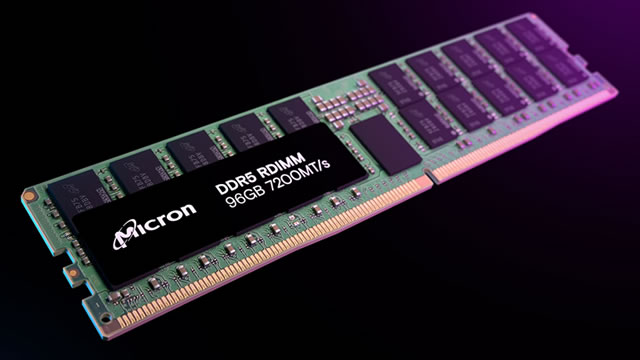
Micron stock: why attack on Qatar's energy facility is bearish for it
Invezz· 2026-03-19 04:34
Core Viewpoint - Micron Technology's stock has declined following a strong earnings report due to concerns over helium supply disruptions caused by an attack on Qatar's energy infrastructure, which is critical for semiconductor manufacturing [1][2][6]. Group 1: Financial Performance - Micron reported a nearly 200% year-on-year increase in revenue, reaching $23.86 billion for the quarter [1][6]. - Despite the strong earnings, Micron's stock fell after hours, indicating investor concerns about future costs and supply chain issues [1][6]. Group 2: Impact of Qatar's Energy Sector - The attack on Qatar's Ras Laffan industrial complex poses a direct threat to Micron, as Qatar produces approximately one-third of the world's helium, essential for semiconductor manufacturing [2][3]. - The semiconductor industry typically maintains a helium inventory of two to six weeks, and the current situation may lead to supply shortages, impacting production [4]. Group 3: Cost and Margin Pressures - Experts predict that helium prices could triple due to the attack, significantly affecting the semiconductor sector's cost structure [5]. - Rising global LNG prices are expected to increase electricity and logistics costs, further squeezing Micron's margins as it ramps up high-cost production for AI [7][8]. Group 4: Market Sentiment and Recommendations - Despite a strong earnings report, Wall Street analysts suggest that Micron's stock price may have risen too much, with a consensus rating of "strong buy" but a mean target indicating a potential downside of about 13% [9].