
思元系列芯片

Search documents
东海证券晨会纪要-20260319
Donghai Securities· 2026-03-19 05:57
Group 1: Key Recommendations - The report highlights the significant growth in the performance of Cambricon (688256), with a 2025 revenue of 6.497 billion yuan, representing a year-over-year increase of 453.20%, and a net profit of 2.059 billion yuan, up 555.24% year-over-year [5][6] - The company plans to distribute a cash dividend of 1.5 yuan per share and a stock bonus of 0.49 shares, totaling 632 million yuan, which is 30.71% of the net profit for 2025 [5][6] - Cambricon's cloud product line is expected to benefit from the acceleration of AI infrastructure development and the increasing domestic production rate of computing chips, with the next-generation SiYuan series chips set to commercialize [6][9] Group 2: Market Analysis - The Shanghai Composite Index has shown short-term adjustment risks but maintains a long-term positive outlook, with recent technical indicators suggesting a potential downward trend [11][12] - As of March 17, 2026, the index closed below the 60-day moving average, indicating weakened short-term technical conditions, although there are multiple support levels below [12][13] - The report notes that the index has experienced a significant rise of over 34% since April 7, 2025, but is currently facing pressure from short-term moving averages [12][13] Group 3: Financial News - The report mentions geopolitical tensions, particularly in the Middle East, affecting energy infrastructure, with Iran's parliament speaker indicating a new phase of confrontation [15] - The Federal Reserve has decided to maintain the federal funds rate target range at 3.50%-3.75%, with expectations for one rate cut in 2026, reflecting ongoing economic uncertainties [15][16]

2025最强逆袭榜:坐牢、破产、遁走之后,他们又重回巅峰
3 6 Ke· 2025-12-31 12:21
Core Insights - The article highlights the simultaneous rise and fall of global celebrities in 2025, showcasing individuals who have made significant comebacks after facing severe setbacks, including legal issues, financial losses, and public scrutiny [2]. Group 1: Notable Comebacks - Zhao Changpeng, founder of Binance, received a presidential pardon from Trump after serving four months in federal prison and paying a $4.3 billion fine, allowing him to return to the cryptocurrency sector with a portfolio valued at $10 billion [5]. - Dylan Fields, co-founder and CEO of Figma, successfully led the company to an IPO, raising $1.2 billion, despite previous uncertainties surrounding a $20 billion acquisition offer from Adobe [11]. - Charles Ergen, CEO of EchoStar, managed to turn around the company's fortunes by selling spectrum licenses to AT&T, resulting in a threefold increase in his wealth to $14 billion [10]. Group 2: Industry Transformations - Manus, founded by Xiao Hong, was acquired by Meta for over $2 billion, marking a rapid turnaround from its previous struggles and setting a record for the speed of acquisition in the AI sector [6]. - Li Min, founder of Rockchip, saw his wealth rise from $1.4 billion to $4 billion as the company reported a 137.51% year-on-year increase in net profit, driven by successful product launches [7]. - Chen Tian Shi, founder of Cambricon, achieved a remarkable 2386.38% increase in revenue, reaching 4.607 billion yuan in the first three quarters of 2025, positioning him among the world's wealthiest individuals [8]. Group 3: Personal Resilience - Anne Wojcicki, co-founder and CEO of 23andMe, faced bankruptcy and stepped down but later regained control of the company through a successful bid by her nonprofit organization, demonstrating resilience in the face of adversity [19]. - The Gallagher brothers from Oasis reunited for a successful global tour, generating over $4.05 billion in ticket sales, marking a significant comeback for the band after years of conflict [16].


海光信息终止并购曙光:资本周期、估值逻辑与国产算力格局的再平衡
Xin Lang Cai Jing· 2025-12-11 04:11
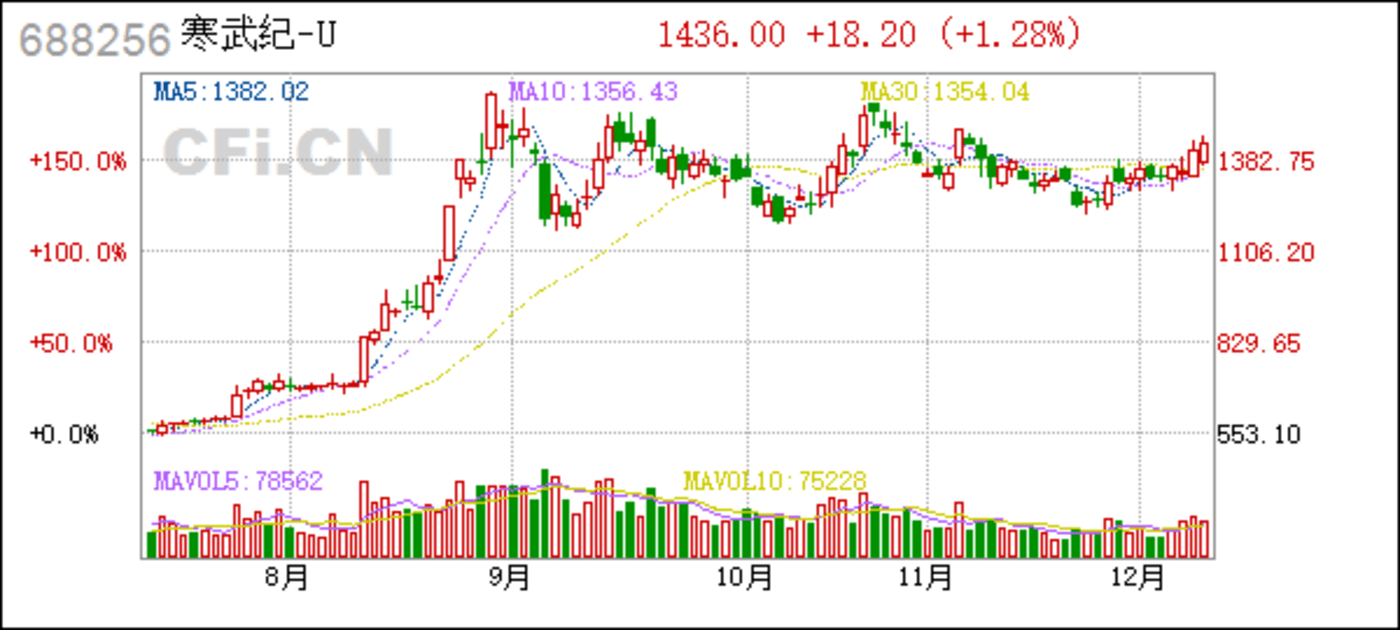
Core Viewpoint - The recent decision by Haiguang Information to terminate the acquisition of Shuguang Co. reflects a strategic choice influenced by the current high valuation cycle in the AI chip and computing power industry, rather than a failure in technical collaboration or increasing conflicts of interest [1][19][37] Group 1: Market Context - The AI chip and computing power industry in China has entered a rare valuation uplift period, with significant price increases and market enthusiasm for AI hardware technology [1][19] - Companies like Cambrian and Moer Thread have seen substantial stock price increases, with Cambrian's revenue for the first three quarters of 2025 reaching 4.607 billion yuan, a year-on-year increase of 2386% [2][21] - Moer Thread's stock surged 425.46% on its debut, reflecting high market expectations despite its current losses [4][22] Group 2: Haiguang's Position - Haiguang Information, as a mature CPU manufacturer, possesses high technical barriers and significant replacement potential, making it attractive in the current market [7][25] - The company's stock price rose from 136.13 yuan per share in May to 219.3 yuan by December 9, 2025, indicating a 61% increase in market capitalization [6][25] Group 3: Reasons for Termination - The termination of the merger was influenced by concerns from Haiguang's shareholders about the dilution of its technology value and the potential shift from a "scarce technology" valuation to a "hardware engineering" model [8][26] - The differing business models and profit structures of Haiguang and Shuguang create challenges in merging their valuations, as Haiguang focuses on high R&D and long-term growth, while Shuguang operates in a more traditional hardware engineering space [9][27] Group 4: Strategic Implications - Maintaining independence allows Haiguang to fully benefit from its unique valuation and enhances its negotiating power for future capital operations [8][26] - The relationship between Haiguang and Shuguang is characterized by strong collaboration rather than dependency, allowing both companies to pursue their strategic goals without being constrained by a merged capital structure [14][32] Group 5: Future Outlook - The decision to remain independent is seen as a rational choice that aligns with industry trends, enabling both companies to innovate and collaborate more effectively in the evolving AI infrastructure landscape [19][37] - The flexibility gained from this strategic "unbinding" may lead to increased innovation and cooperation opportunities within the domestic CPU and computing power ecosystem [19][37]

“国产英伟达”上市三天后,英伟达H200解禁
吴晓波频道· 2025-12-10 01:49
Core Viewpoint - Nvidia has missed the optimal opportunity to enter the Chinese market, particularly in the AI sector, with the recent approval to sell the H200 chip being a delayed response to changing geopolitical dynamics [2][46]. Group 1: Market Dynamics - The U.S. government has allowed Nvidia to sell the H200 AI chip to China under specific conditions, including limited customer approval and a 25% revenue share with the U.S. government [2][19]. - The release of the H200 coincides with the IPO cycles of domestic GPU companies, such as Moore Threads, which saw a significant stock price increase upon listing [3][4]. - The U.S. has defined China as its primary economic competitor, aiming to restrict China's industrial upgrade to high-end technologies [7]. Group 2: Competitive Landscape - The H200 chip, released in November 2023, boasts nearly double the inference performance of its predecessor, the H100, but is now considered outdated compared to upcoming Nvidia chips [15][16]. - Nvidia's market share in China has drastically declined from 20%-25% to single digits, and it has completely missed the rapid growth phase of China's AI market [16][36]. - Domestic AI chip companies, such as Huawei and Cambrian, have gained significant market share, with Huawei's AI chip market share reaching 40% [34][36]. Group 3: Regulatory Environment - There is significant internal debate within the U.S. regarding the sale of advanced chips to China, with proposed legislation aiming to prioritize U.S. customers over foreign sales [21][24]. - The approval of the H200 was expedited to counteract potential legislative restrictions that could limit chip exports to China [26][27]. Group 4: Market Acceptance and Future Outlook - Despite the H200's entry into the Chinese market, it faces challenges in market acceptance due to the rise of domestic alternatives that are increasingly integrated with local AI models [41][42]. - The existing domestic chips, while not matching Nvidia's top-tier performance, are sufficient for most inference tasks and are preferred for their security and reliability [41][42]. - The demand for Nvidia's chips may surge due to previously unmet orders, but the overall market landscape has shifted, making it less reliant on Nvidia than before [45][46].


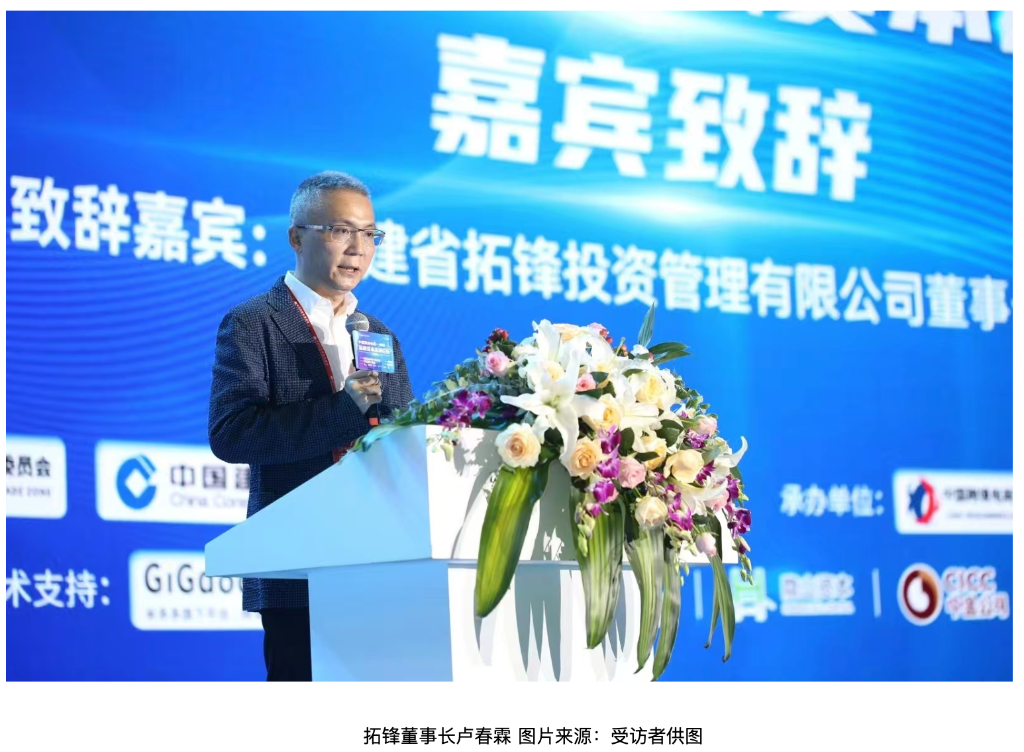
投资摩尔线程浮盈超7倍,为何敢在“卡脖子”最痛处下重注?拓锋董事长卢春霖:跟踪调研6个月,重点考察三方面
Mei Ri Jing Ji Xin Wen· 2025-12-07 13:32
Core Insights - The article highlights the significant investment success of Tuofeng Private Equity Fund in the semiconductor sector, particularly through its investments in companies like Moore Threads and Cambrian [1][2][11] - It emphasizes the transformation of Tuofeng from a financial investor to an industrial capital player, focusing on long-term value creation and ecosystem development in the semiconductor industry [4][11] Investment Strategy - Tuofeng's investment strategy is characterized by a shift from traditional financial metrics to a focus on "value co-creation" and long-term partnerships with technology firms [11][12] - The firm has established strategic collaborations with leading research institutions, such as the Chinese Academy of Sciences, to gain access to cutting-edge technology and projects [5][6] Key Investments - Tuofeng's notable investments include Cambrian and Moore Threads, with the latter being described as a "Chinese NVIDIA" due to its potential in the GPU market [1][10] - The firm has achieved a remarkable return of over 700% on its investment in Moore Threads, reflecting the growing demand for domestic GPU solutions amid international chip restrictions [10][12] Market Positioning - The article discusses the importance of understanding the semiconductor industry's dynamics, where Tuofeng aims to create a comprehensive investment ecosystem that spans from chip design to AI applications [12][13] - Tuofeng's approach includes diversifying investments across various segments of the semiconductor supply chain to mitigate risks associated with single technology failures [13] Future Outlook - The firm anticipates significant opportunities in the semiconductor supply chain, particularly in areas such as wafer production and equipment manufacturing, projecting a golden investment period over the next 5 to 10 years [13]
投资摩尔线程浮盈7倍,他为何敢下重注?拓锋董事长卢春霖:跟踪调研6个月,重点考察三方面
Mei Ri Jing Ji Xin Wen· 2025-12-05 13:49
Core Insights - The article highlights the significant investment success of Tuofeng Private Equity Fund Management Co., led by Lu Chunlin, particularly in the semiconductor sector, with a focus on companies like Moore Threads and Cambrian [1][5][19] - The investment strategy emphasizes long-term value creation and ecosystem integration rather than short-term financial returns [15][18] Investment Strategy - Tuofeng's investment in Moore Threads has yielded over 700% returns, showcasing the potential of domestic GPU companies in China [1][15] - The firm has established strategic partnerships with institutions like the Chinese Academy of Sciences to access cutting-edge technology and projects [6][8] - Lu Chunlin's approach involves a deep understanding of the semiconductor industry, focusing on various segments from chip design to hardware and AI applications [17][18] Market Context - The article discusses the changing landscape of China's capital market, particularly the shift from traditional financial metrics to a focus on technological innovation and ecosystem collaboration [5][15] - The semiconductor industry is viewed as a critical area for investment, with opportunities arising from the need to build a domestic supply chain and reduce reliance on foreign technology [19] Company Profiles - Moore Threads is highlighted as a key player in the GPU market, with a strong team and innovative technology that positions it well for future growth [10][12] - Other investments by Tuofeng include companies like Mu Xi Integrated Circuit and Qingwei Intelligent Technology, indicating a diversified approach within the semiconductor sector [16][18] Future Outlook - Lu Chunlin believes that the next 5 to 10 years will be a golden period for investment in the semiconductor supply chain, as China aims to establish its own ecosystem [19]
股价高开468%,就这摩尔线程还没上岸?
3 6 Ke· 2025-12-05 07:06
Core Viewpoint - The debut of Moer Technology, the first domestic GPU company listed on the Sci-Tech Innovation Board, was marked by a volatile stock price, initially soaring before experiencing a rapid decline, highlighting investor sentiment and market dynamics [1][3]. Group 1: Stock Performance and Market Reaction - Moer Technology's initial public offering (IPO) price was set at 114.28 yuan per share, with the opening price skyrocketing to 650 yuan, representing a 468.78% increase from the issue price [1]. - The stock reached an intraday high of 688 yuan, allowing investors who subscribed for 500 shares to realize a profit exceeding 280,000 yuan, making it the most profitable new stock of the year [1]. - By the end of the trading day, the stock price settled at 585 yuan, reflecting a 412% increase, with a total market capitalization of approximately 274.5 billion yuan [1]. Group 2: Subscription and Demand - The subscription for Moer Technology was exceptionally high, with 4.8266 million valid online applications and a total of 46.217 billion shares applied for, resulting in a subscription multiple of 4,126.49 times [1][3]. - The offline institutional participation was also robust, with 267 investors and 7,555 allocation targets, achieving a subscription multiple of 1,572 times [1]. Group 3: Financial Performance and Growth - Moer Technology's revenue is projected to grow from 46.088 million yuan in 2022 to 438 million yuan in 2024, and further to 702 million yuan in the first half of 2025, indicating rapid growth [4]. - Approximately 80% of Moer Technology's revenue is derived from AI computing products, while other segments like graphics rendering and consumer GPUs are still in early development stages [5]. - Despite revenue growth, the company reported significant net losses of 1.84 billion yuan in 2022, 1.673 billion yuan in 2023, and 1.492 billion yuan in 2024, totaling over 5 billion yuan in losses [6]. Group 4: Market Position and Competitive Landscape - Moer Technology is positioned as a leader in the domestic GPU market, but faces challenges in terms of financial structure, product ecosystem maturity, and market acceptance [3][20]. - The company’s technology path is closely associated with its founders' backgrounds at NVIDIA, influencing its decision to pursue a full-featured general-purpose GPU route rather than specialized ASIC designs [10]. - The competitive landscape includes other domestic players like Nuxi, which is also preparing for an IPO, highlighting the growing interest and competition in the domestic GPU sector [17]. Group 5: Future Prospects and Challenges - The domestic AI chip market is expected to grow significantly, with projections indicating an increase from 142.5 billion yuan in 2024 to 1.34 trillion yuan by 2029, presenting opportunities for Moer Technology [8]. - However, the company must overcome substantial gaps in technology performance and market share compared to established players like NVIDIA, which holds over 80% of the global GPU market [20]. - Moer Technology's customer concentration is high, with over 98% of revenue coming from its top five clients, indicating potential risks in revenue stability [20].

AI算力需求爆发!东芯股份涨超10%,云端巨头4200亿美元加码自研芯片
Jin Rong Jie· 2025-11-26 06:14
Core Insights - The AI computing chip sector is experiencing significant activity, driven by the explosive growth in global AI computing demand and the acceleration of self-developed AI ASIC chips by major cloud service providers [1] - Trendforce's report indicates that by 2025, the combined capital expenditure of eight major cloud service providers will exceed $420 billion, with a notable increase in investment for AI chip development and data center infrastructure [1] Sector Analysis - **AI Chip Design Sector**: Companies specializing in AI ASIC chip design will directly benefit from the increased demand from cloud service providers for customized chips, leading to potential revenue growth [2] - **Semiconductor Manufacturing Sector**: The production of computing chips relies on advanced and mature process capacities, with increased demand for chip production from cloud service providers likely to enhance capacity utilization for wafer manufacturing companies [2] - **Advanced Packaging and Testing Sector**: Advanced packaging technologies are crucial for improving chip performance and energy efficiency, and companies with expertise in high-end packaging will see expanded business opportunities [2] - **Storage Chip Sector**: The demand for high-speed storage chips will rise alongside computing power, with cloud data centers requiring DRAM and NAND Flash products, creating market opportunities for storage chip companies [2] Key Company Profiles - **Dongxin Co., Ltd.**: Focused on storage chips, the company has achieved breakthroughs in SLC NAND Flash technology, positioning itself to benefit from the growing AI computing demand [3] - **Cambricon Technologies**: A leading domestic AI chip company, it specializes in cloud intelligent chip development, with its high-performance chips expected to capture more market share as cloud service providers increase AI infrastructure investments [3] - **Chipone Technology**: As a prominent chip design service provider, it offers comprehensive solutions in AI chips and GPUs, likely to see increased demand for customized projects from cloud service providers [3] - **Broadcom Integrated**: The company focuses on chip development for wireless communication and IoT, with its products expected to see expanded applications in smart terminals and data center peripheral devices due to rising demand for edge computing [3]


科技股回调,中芯国际跌逾3%,科创芯片50ETF(588750)跌超3%!寒武纪三季报披露在即!芯片国产化长逻辑不变,短期调整如何应对?
Xin Lang Cai Jing· 2025-10-17 06:31
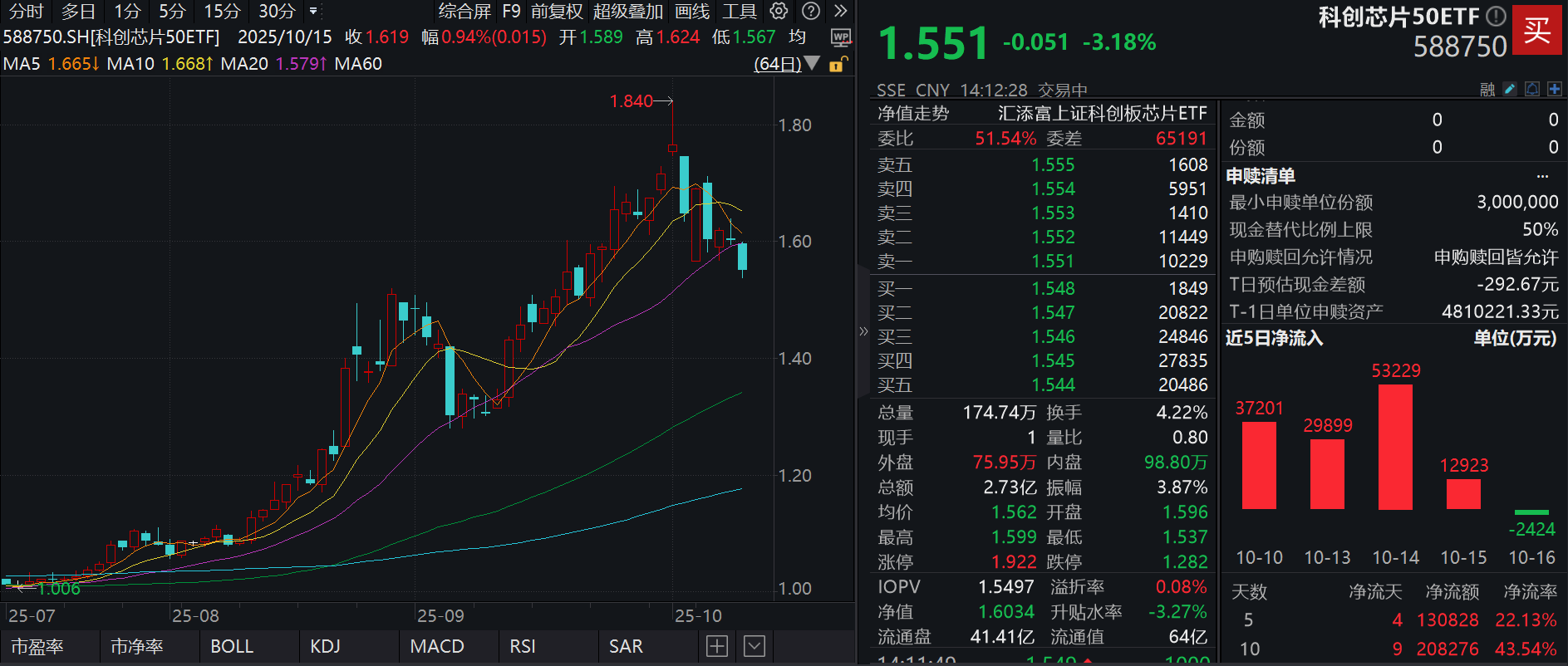
Core Viewpoint - The semiconductor sector, particularly the Sci-Tech Innovation Board's chip index, is experiencing fluctuations, with significant movements in individual stocks and ETFs, reflecting the ongoing dynamics in the AI chip market and broader semiconductor industry [1][3][4]. Market Performance - As of October 17, 2025, the Sci-Tech Innovation Board chip index (000685) decreased by 3.36%, with individual stocks showing mixed results, such as Weijie Chuangxin (688153) rising by 3.28% and Baiwei Storage (688525) falling by 7.96% [1]. - The Sci-Tech Chip 50 ETF (588750) also saw a decline of 3.18%, with a recent price of 1.55 yuan, but it had a cumulative increase of 7.88% over the past month as of October 16, 2025 [1]. Fund Flows and Liquidity - The Sci-Tech Chip 50 ETF experienced a significant growth in scale, increasing by 7.69 billion yuan over the past week, ranking first among comparable funds [3]. - The ETF's shares grew by 5.70 million over the same period, also leading among comparable funds [3]. - Despite a recent net outflow of 24.24 million yuan, the ETF saw a net inflow of 1.308 billion yuan over the last five trading days, averaging 262 million yuan per day [3]. Company Developments - Cambricon is expected to release its Q3 2025 financial report on October 18, 2025, which will include revenue and net profit data [3]. - On October 15, 2025, Cambricon signed a strategic cooperation agreement with SenseTime to develop solutions that integrate hardware and software, focusing on the Syuan series chips [3]. Industry Trends - TSMC reported better-than-expected Q3 financial results, boosting market optimism regarding the demand for AI chips, which is seen as a bellwether for the semiconductor manufacturing industry [4]. - TSMC remains optimistic about AI growth, indicating that demand is stronger than previously anticipated and that they are working to increase production capacity by 2026 [4]. Investment Recommendations - Analysts suggest focusing on sectors with high growth potential, such as computing power, foundry services, and equipment, as well as storage and analog sectors benefiting from a recovery in the industry cycle [5]. - The Sci-Tech Chip Index is noted for its higher "chip content," indicating stronger growth potential and elasticity compared to other indices [5][6]. Index Characteristics - The Sci-Tech Chip Index focuses on the upstream and midstream segments of the semiconductor industry, with a core segment representation of 95%, which is higher than other indices [6][8]. - The index is designed to reflect the development trends of the semiconductor industry more responsively due to its quarterly rebalancing [7]. Performance Metrics - The Sci-Tech Chip Index is projected to have a net profit growth rate of 71% for H1 2025 and an estimated 100% growth for the entire year, significantly outperforming its peers [9]. - The index has shown a maximum increase of 186.5% since its inception, indicating strong upward elasticity compared to other industry indices [10][11].

研判2025!中国神经形态芯片行业产业链、市场规模及重点企业分析:3D堆叠+忆阻器技术使能效比飙升50倍,技术突破与市场需求双重推动行业发展[图]
Chan Ye Xin Xi Wang· 2025-10-16 01:20
Core Insights - The Chinese neuromorphic chip industry is entering a rapid development phase driven by technological breakthroughs and market demand, becoming a significant competitive field in the global semiconductor industry [1][5] - The market size of the Chinese neuromorphic chip industry is projected to reach approximately 2.548 billion yuan in 2024, representing a year-on-year growth of 12.89% [1][6] - Key technological advancements include Tsinghua University's "Tianji Chip" and Zhejiang University's billion-level neuron brain-like computer, showcasing China's technological strength [1][5] Industry Overview - Neuromorphic chips mimic the structure and function of human brain neural networks, integrating cognitive science and information science to create intelligent computing platforms capable of perception, processing, and learning [2][3] - The main implementation technologies for neuromorphic chips include digital CMOS, mixed-signal CMOS, and hybrid systems based on new devices [2] Industry Development History - The Chinese neuromorphic chip industry has evolved through three stages: academic research (2010-2018), engineering breakthroughs (2019-2023), and accelerated commercialization (2024-present) [3][4] - The industry is expected to experience a surge in commercialization by 2025, with advancements in 7nm process chips and a significant increase in production capacity [3][4] Industry Value Chain - The upstream of the neuromorphic chip industry includes semiconductor materials like single crystal silicon and germanium, as well as production equipment [5] - The midstream focuses on the research and production of neuromorphic chips, while the downstream applications span artificial intelligence, sensor systems, and smart devices [5] Market Size - The neuromorphic chip industry is becoming a crucial area in the global semiconductor sector, with a projected market size of approximately 2.548 billion yuan in 2024, growing by 12.89% year-on-year [1][6] Key Companies' Performance - The competitive landscape of the neuromorphic chip industry is characterized by "design leadership and manufacturing breakthroughs," with companies like Huawei HiSilicon, Cambricon, and Horizon Robotics leading in design [6][7] - Cambricon has achieved significant breakthroughs in the neuromorphic chip field, with its products already in mass production and applied in various sectors [6][7] Industry Development Trends 1. Continuous innovation in technical architecture will lead to energy efficiency breakthroughs, with the adoption of 7nm and below advanced processes [8] 2. Application scenarios for neuromorphic chips are expanding from specialized fields to consumer markets, including autonomous driving and healthcare [8] 3. The industry is accelerating domestic substitution, with significant advancements in design, manufacturing, and key materials, reducing reliance on imports [9][10]

