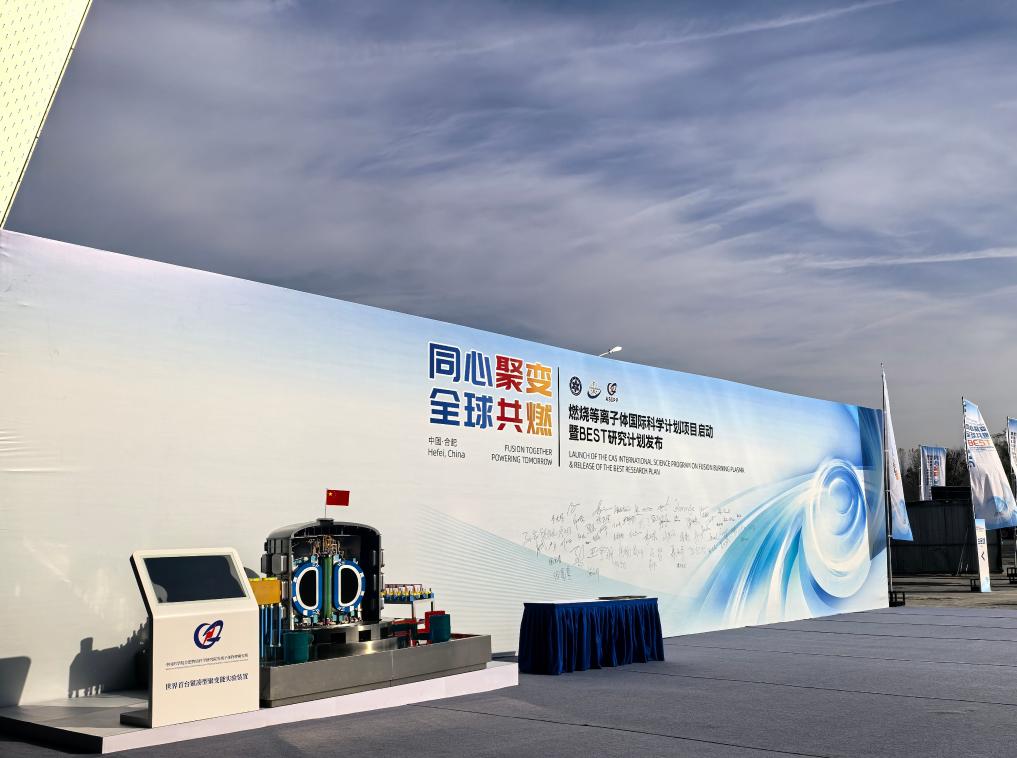
核聚变能源

Search documents
核聚变能源开启“中国速度” “人造太阳”正从蓝图走向现实
Yang Shi Xin Wen· 2025-11-27 09:31
Core Viewpoint - The article discusses the launch of the BEST research plan by the Chinese Academy of Sciences, aimed at developing controlled nuclear fusion technology, often referred to as the "artificial sun," which promises to provide nearly limitless clean energy and could potentially enable interstellar travel in the future [4][12]. Group 1: Advantages of Controlled Nuclear Fusion - Abundant Fuel: The primary fuels for controlled nuclear fusion, deuterium and tritium, are plentiful on Earth. One liter of seawater can yield deuterium that releases energy equivalent to burning 300 liters of gasoline during complete fusion [4]. - Clean and Environmentally Friendly: The byproducts of controlled nuclear fusion are helium and neutrons, which do not emit harmful gases and have minimal radioactive pollution, making it an environmentally friendly energy source [4]. - High Safety: The plasma of deuterium and tritium is contained within a vacuum chamber by magnetic fields, significantly reducing the risk of explosions or leakage incidents due to low density and low fuel content [5]. Group 2: Development of Fusion Energy in China - China has designed and constructed several controlled nuclear fusion devices, including EAST, BEST, and CRAFT, which are considered key national assets in the field of nuclear fusion [9]. - The BEST project is set to be completed by the end of 2027 and aims to demonstrate fusion energy generation, potentially leading to the first operational nuclear fusion power source [12]. - The advancements in fusion technology reflect China's strong capabilities in independent innovation within high-tech fields, showcasing the progress from conceptualization to realization of the "artificial sun" [14].


中国“点燃”全球聚变合作新火种
Xin Hua She· 2025-11-27 02:18
Core Insights - The article highlights the global collaboration in fusion energy research, particularly through China's BEST project, which aims to advance the development of fusion energy as a clean and sustainable power source [1][2][3] Group 1: Global Collaboration in Fusion Research - The Chinese Academy of Sciences has launched an international scientific program focused on "burning plasma," allowing global scientists to access advanced fusion energy experimental facilities, including BEST [1][2] - The BEST device is designed to achieve high fusion power output, with goals of producing between 20 megawatts and 200 megawatts, demonstrating energy output exceeding energy input [3] Group 2: Scientific Advancements and Future Goals - The focus on "burning plasma" represents a critical phase in fusion research, where the heat generated from the fusion reaction itself sustains the process, essential for continuous energy production [2][3] - The BEST project is seen as a significant step forward, with its compact high-field technology enabling higher fusion power in a smaller volume, marking a new stage in China's fusion research [2][3] Group 3: International Support and Commitment - Experts from various countries, including France, the UK, and Germany, have expressed strong support for the BEST initiative, emphasizing its potential as a model for global scientific cooperation [3][4] - The signing of the "Hefei Fusion Declaration" by international scientists underscores a commitment to open collaboration and shared goals in fusion research, reflecting a collective effort to address global energy challenges [3][4]
合肥藏着能源杀器 ,中国攥住终极能源命脉,能源革命要来了
Sou Hu Cai Jing· 2025-11-26 22:10
哈喽大家好,今天小无带大家聊聊科技圈炸锅的大事! 2025年11月24日,十多个国家的科学家扎堆合肥未来大科学城,签下了《合肥聚变宣言》,中国牵头的燃烧等离子体国际科学计划正式启 动。 能源焦虑与技术困局 核聚变这玩意儿到底有多香?零排放、燃料取之不尽,简直是为解决能源危机量身定做的。国际能源署的数据都快把警钟敲烂了:2024年全 球数据中心耗电415太瓦时,占全球总用电量的1.5%,2030年还要翻倍。 现在AI、电动车越来越多,光伏风电又靠天吃饭,稳定供电根本跟不上,核聚变要是成了,夏天空调随便开、电动车随便充的日子不就来 了? 但谁能想到,这么香的技术,却被一道"终极BOSS"拦住了——燃烧等离子体。这玩意儿难到啥程度? 这哪儿是简单签约啊,分明是人类组团向终极能源发起总攻!咱就是说,现在全球都在抢核聚变这块"香饽饽"。 近40个国家加码布局,160多个聚变装置连轴转,私营企业更是狂揽71.2亿美元投资,曾经说"永远差三十年"的技术,现在真要临门一脚了? 谁能想到,中国不仅自己硬,还拉着全世界一起干。开放共享的三大战略直接戳中全球痛点:全球科学家共用BEST资源、联合分担风险、一 起制定标准。法国、德国 ...
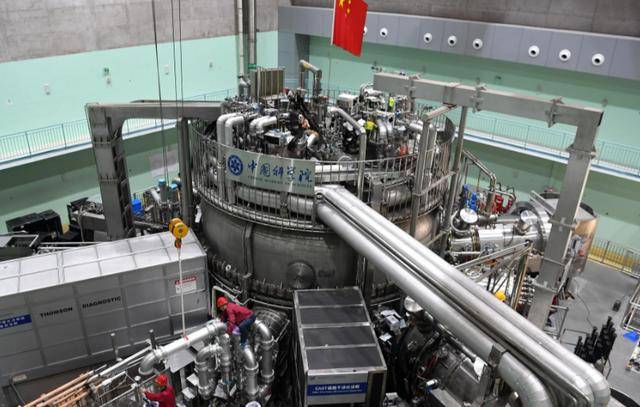
欧洲聚变专家缘何“向东看”?
Sou Hu Cai Jing· 2025-11-26 19:10
Core Viewpoint - Nuclear fusion energy is regarded as the ultimate goal for clean energy, often referred to as "artificial sun," with increasing international collaboration, particularly between Europe and China, as the U.S. faces technical and funding challenges [1][3]. Group 1: International Collaboration - The "International Scientific Program on Burning Plasma" initiated by the Chinese Academy of Sciences in Hefei marks a significant step in global cooperation for fusion energy research [3]. - A declaration called the "Hefei Fusion Declaration" was signed by researchers from multiple European countries, emphasizing their commitment to align their efforts with China's timeline for sustainable nuclear fusion [3]. Group 2: Project Development - The BEST (Burning Plasma Experimental Superconducting Tokamak) project in Hefei is set to be completed by 2027, aiming to conduct experiments that validate its long-pulse steady-state operation capability, targeting fusion power output between 20 megawatts and 200 megawatts [3]. - The EAST (Experimental Advanced Superconducting Tokamak) facility in Hefei has achieved multiple breakthroughs, setting world records for high-temperature plasma confinement time, thus providing critical data for global fusion research [5]. Group 3: China's Position in Fusion Research - China's robust engineering capabilities, open collaboration spirit, and long-term investment have positioned it as a potential catalyst in making nuclear fusion a reality, attracting the attention of top European experts [5]. - The competition in nuclear fusion research is seen as a contest of organizational efficiency and strategic foresight, with China currently demonstrating strong momentum in leading this race [5].
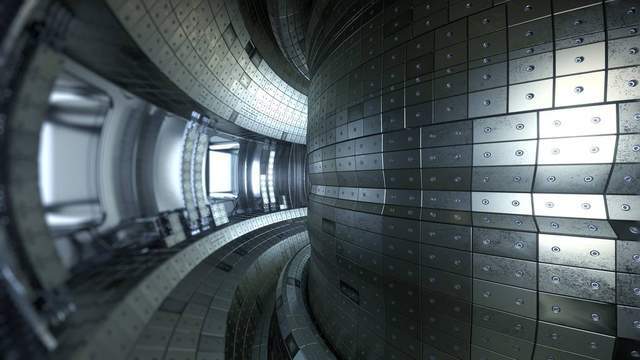
核聚变能源开启“中国速度”? “人造太阳”正从蓝图走向现实
Yang Shi Xin Wen· 2025-11-25 19:20
Core Viewpoint - The article discusses the launch of the BEST research plan by the Chinese Academy of Sciences, aimed at developing controlled nuclear fusion technology, often referred to as the "artificial sun," which promises to provide a nearly limitless source of clean energy and potentially enable interstellar travel in the future [4][11]. Group 1: Introduction to Controlled Nuclear Fusion - Controlled nuclear fusion can replace fossil fuels, providing a sustainable and clean energy source [4]. - The process simulates the nuclear fusion reactions occurring in the sun, continuously releasing vast amounts of energy, thus being termed humanity's "ultimate energy" [4]. Group 2: Advantages of Controlled Nuclear Fusion - **Abundant Fuel Supply**: The primary fuels for controlled nuclear fusion, deuterium and tritium, are plentiful on Earth. One liter of seawater can yield deuterium equivalent to the energy released from burning 300 liters of gasoline [5]. - **Environmental Benefits**: The byproducts of controlled nuclear fusion are helium and neutrons, which do not emit harmful gases and have minimal radioactive pollution, making it environmentally friendly [5]. - **High Safety Standards**: The fusion process occurs in a vacuum container, with the plasma density significantly lower than air, reducing the risk of explosions or leaks [6]. Group 3: Development of Fusion Technology in China - China has designed and constructed several controlled nuclear fusion devices, including EAST, BEST, and CRAFT, which are pivotal to the country's nuclear fusion efforts [7][8]. - The BEST project is set to be completed by the end of 2027, with plans to demonstrate fusion energy generation [11]. Group 4: Future Implications - Successful implementation of nuclear fusion energy could enable humanity to travel to other planets, making interstellar travel a possibility [12]. - The advancements in fusion technology reflect China's strong capabilities in independent innovation within high-tech fields [13].
【新华社】携手全球点亮能源未来!中国发布燃烧等离子体国际科学计划
Xin Hua She· 2025-11-25 02:47
Core Insights - The "Burning Plasma" International Scientific Program initiated by the Chinese Academy of Sciences aims to collaborate globally on fusion energy research, including the compact fusion energy experimental device BEST [1][2] - The program will establish an open research fund, facilitate expert exchanges, and create joint experimental platforms to tackle frontier issues in fusion physics [1] - The initiative is supported by scientists from over ten countries, promoting a spirit of open sharing and cooperation in fusion research [1] Group 1 - The BEST device is positioned as China's next-generation "artificial sun," focusing on deuterium-tritium burning plasma experiments to achieve a fusion power output between 20 megawatts and 200 megawatts [3] - The project aims to demonstrate energy output exceeding energy consumption, which is crucial for future sustainable power generation [3] - The research will enter a new phase of burning plasma, which is essential for maintaining fusion reactions through heat generated by the reaction itself [2] Group 2 - The Chinese Academy of Sciences has established stable collaborations with over 120 research institutions across more than 50 countries, enhancing its role in global fusion research [1] - The initiative is expected to face numerous engineering and physical challenges, marking a significant exploration into uncharted territories of fusion energy [2] - The program's launch is seen as a way to leverage China's superconducting tokamak team's advantages while gathering global scientific expertise to overcome fusion challenges [2]
核聚变工程进入关键期,业内:开始密集招投标,未来潜力巨大
Shang Hai Zheng Quan Bao· 2025-11-25 00:11
Core Insights - The "Burning Plasma" international scientific program initiated by the Chinese Academy of Sciences aims to enhance global collaboration in fusion research, with a focus on sustainable energy generation through nuclear fusion [1][2] - The BEST research plan, set to be completed by the end of 2027, will conduct experiments on deuterium-tritium burning plasma, targeting a fusion power output between 20 megawatts and 200 megawatts [2] Industry Developments - The global fusion energy landscape is rapidly evolving, with nearly 40 countries advancing fusion plans and over 160 fusion devices in operation, construction, or planning stages [1] - The international cooperation in fusion research is entering a critical phase, with significant breakthroughs achieved but ongoing challenges requiring collective efforts from scientists worldwide [1][3] Investment and Procurement Trends - The fusion energy sector is witnessing unprecedented procurement and financing activity, with significant projects announced, including a procurement project exceeding 2 billion yuan for key components related to the BEST project [3][4] - Recent financing rounds for companies in the fusion energy supply chain indicate a strong market interest, with investments from institutional investors and state-owned enterprises, focusing on high-value core hardware and materials [4]

聚力点燃“人造太阳” 产业链上市公司筑起技术保障
Zheng Quan Ri Bao Wang· 2025-11-24 11:52
Group 1 - The compact fusion energy experimental device (BEST) has officially launched its research plan, marking a new phase in burning plasma research, which is crucial for sustainable power generation [1] - The BEST device aims to conduct deuterium-tritium burning plasma experiments by the end of 2027, targeting fusion power output between 20 megawatts and 200 megawatts, demonstrating energy production exceeding consumption [1] - The supply chain for the BEST project includes at least 16 listed companies in the A-share market, focusing on key areas such as superconducting materials [1] Group 2 - West Superconducting Materials Technology Co., Ltd. has made breakthroughs in high-temperature superconducting materials and is involved in the construction of the BEST project, ensuring product demand is met [2] - Shanghai Electric Group Co., Ltd. participates in multiple major engineering projects related to controllable nuclear fusion, including the BEST device, and is responsible for the integration of the magnet system and vacuum chamber [2] - Xi'an Aike Cyber Electric Co., Ltd. is expanding its business to cover key projects like BEST and is actively pursuing various technological routes in commercial reactor fields [2] Group 3 - The influx of capital has accelerated the fusion industry, with the leading company in the BEST project, Fusion New Energy (Anhui) Co., Ltd., increasing its registered capital from 5 billion to 14.5 billion yuan through equity expansion [3] - The collaborative structure of local industrial capital and private innovative capital ensures long-term project stability and injects efficient vitality into market development [3] - Fusion New Energy aims to advance from the BEST experimental device to a fusion engineering demonstration reactor and ultimately to the first commercial fusion reactor, indicating a strategic three-step approach [3]

10多个国家的科学家来到中国!核聚变大消息公布,概念股应声大涨
Mei Ri Jing Ji Xin Wen· 2025-11-24 11:25
Core Points - The International Scientific Program for Burning Plasma initiated by the Chinese Academy of Sciences was officially launched in Hefei on November 24, 2023, alongside the global research plan for the compact fusion energy experimental device BEST [1][3] - Scientists from over ten countries, including France, the UK, Germany, and Italy, gathered in Hefei to sign the Hefei Fusion Declaration, emphasizing the need for international collaboration in advancing fusion energy research [3] - The announcement led to significant activity in the secondary market for controllable nuclear fusion concepts, with stocks like Srey New Materials rising over 14% and others like Lanshi Heavy Industry and Sichuan Chuang Electronics increasing by over 7% [4] Industry Overview - The fusion research is entering a new phase termed "burning plasma," driven by advancements in international projects like ITER and BEST [3] - The investment landscape for controllable nuclear fusion is changing, with increased interest from investors, as evidenced by recent funding rounds for companies like Xingneng Xuanguang and Nova Fusion [9] - Controllable nuclear fusion is seen as a promising energy source due to its minimal environmental impact compared to nuclear fission and the abundance of raw materials like deuterium from seawater [9] Market Potential - The nuclear fusion market is expected to grow rapidly, with projections indicating that the Tokamak fusion market could reach 681 billion yuan by 2025-2030 and potentially rise to 3 trillion yuan by 2030-2035 as commercial reactors become viable [12] - The supply chain for nuclear fusion includes raw material suppliers, technology development, equipment manufacturing, and nuclear power construction and operation, indicating a comprehensive industry ecosystem [10]


携手全球点亮能源未来!中国发布燃烧等离子体国际科学计划
Xin Hua She· 2025-11-24 08:28
Core Viewpoint - The "Burning Plasma" International Scientific Program initiated by the Chinese Academy of Sciences aims to advance nuclear fusion research by opening multiple leading fusion energy experimental facilities, including the BEST device, to global collaboration, promoting clean energy solutions for humanity [2][3]. Group 1: Project Launch and Collaboration - The "Burning Plasma" International Scientific Program was officially launched on November 24, 2023, in Hefei, Anhui, China, with the BEST compact fusion energy experimental device being a key component [2]. - The program will establish an open research fund, support frequent expert exchanges, and create joint experimental platforms to tackle frontier issues in fusion physics [2]. - Scientists from over ten countries, including France, the UK, and Germany, signed the "Hefei Fusion Declaration," promoting the spirit of open sharing and collaborative win-win outcomes in fusion research [2]. Group 2: Technological Advancements and Goals - China's nuclear fusion research has accelerated in recent years, breaking multiple world records, with the Plasma Physics Research Institute being a major contributor to the ITER project and collaborating with over 120 research institutions across 50 countries [3]. - The BEST device is set to enter a new phase of research focused on burning plasma, which is crucial for sustainable fusion energy generation, as it relies on heat generated by the reaction itself [3]. - The BEST research plan aims to conduct deuterium-tritium burning plasma experiments, targeting a fusion power output between 20 megawatts and 200 megawatts, with the goal of achieving energy output greater than energy input [3].