
生物医药研发

Search documents
百奥赛图科创板IPO 弱盈利 虚收入 高投入难获认可
Sou Hu Cai Jing· 2025-09-23 07:25
Core Viewpoint - The upcoming IPO of Baiaosaitu (Beijing) Pharmaceutical Technology Co., Ltd. is under scrutiny due to its financial instability, high debt levels, and reliance on related-party transactions, raising concerns about investor acceptance and regulatory approval [1][24][38]. Financial Performance - Baiaosaitu's projected revenues for 2022 to 2024 are 530 million, 710 million, and 980 million CNY, respectively, with net profits of -600 million, -380 million, and 33.54 million CNY [4]. - The company achieved profitability in 2024 primarily through cost-cutting measures, reducing R&D expenses from 699 million CNY in 2022 to 324 million CNY in 2024, and management expenses from 250 million CNY to 180 million CNY [8][9][10]. - Despite a revenue increase, the company has accumulated losses exceeding 1.9 billion CNY from 2020 to 2024, with a net profit margin of only 3.42% in 2024, indicating a structural profitability issue [33][34]. Debt and Control Stability - The controlling shareholders, Shen Yulei and Ni Jian, hold approximately 27.57% of the voting rights and are burdened with around 100 million CNY in debt, which raises concerns about potential conflicts of interest and financial stability [12][13][17]. - The repayment of debts from 2023 to 2028 totals approximately 115 million CNY, with significant reliance on share sales to cover these obligations, posing risks to control stability [16][17][18]. Market and Investor Sentiment - Baiaosaitu's stock price has significantly declined since its Hong Kong listing, reaching a low of 5.6 HKD, which has led to skepticism among potential A-share investors regarding its value [22][23]. - The company's reliance on related-party transactions for revenue, particularly in its antibody development business, raises questions about the authenticity and sustainability of its financial performance [26][29][32]. Regulatory Environment - The current IPO review process is characterized by a "stable game" dynamic, where investor sentiment, regulatory scrutiny, and market conditions interact, potentially affecting Baiaosaitu's chances of a successful listing [38].


张文宏:科技创新不能止于论文,须落地消除全球健康不平等
第一财经· 2025-09-23 05:43
Core Viewpoint - The article emphasizes the importance of translating scientific research into practical applications to address global health disparities, particularly in low- and middle-income countries. The establishment of the Global Health Innovation Institute aims to facilitate this transition by focusing on the development of health products that meet the needs of these regions [3][4]. Group 1: Global Health Innovation Institute - The Global Health Innovation Institute is China's first research and development organization dedicated to global health, focusing on the transition of health products from the lab to the market [3][4]. - The initial five-year funding for the institute is jointly provided by the Shanghai government and the Gates Foundation, which includes project grants and technical support [4]. Group 2: Challenges in Disease Treatment - Significant challenges remain in combating infectious diseases such as tuberculosis and malaria, with China ranking third globally in new tuberculosis cases, reporting approximately 741,000 new cases in 2023 [6]. - The treatment of drug-resistant tuberculosis is particularly difficult and costly, with treatment durations typically exceeding 18-20 months and costs often surpassing 150,000 yuan [6]. Group 3: Research and Development Focus - The institute will concentrate on diseases like tuberculosis and malaria, as well as women's and children's health, aiming to provide technical support and resources to global partners [9]. - The Shanghai biopharmaceutical sector has developed a talent pool that includes public health experts and international cooperation specialists, which is crucial for the institute's mission [9]. Group 4: Successful Case Studies - The Levoplant contraceptive product, developed by Shanghai Dahua, has been recognized for its effectiveness and affordability, receiving pre-certification from the WHO in 2017 [9][10]. - A malaria control project initiated in collaboration with the Gates Foundation in Tanzania has shown positive results, leading to a decrease in malaria prevalence in the targeted areas [10].

张文宏:科技创新不能止于论文,须落地消除全球健康不平等
Di Yi Cai Jing· 2025-09-23 04:45
Core Insights - The Global Health Innovation Institute has officially launched, aiming to address global health disparities and promote the translation of health products from laboratory to market, particularly for low- and middle-income countries [1][6] - The institute will focus on diseases such as tuberculosis and malaria, as well as women's and children's health, providing technical support and resources to facilitate innovation and market entry [6] Funding and Support - The initial five-year research funding for the Global Health Innovation Institute is jointly provided by the Shanghai municipal government and the Gates Foundation, with the latter offering project grants and technical support [2] Challenges in Disease Treatment - China faces significant challenges with infectious diseases like tuberculosis, with approximately 741,000 new cases reported in 2023, ranking third globally [4] - The treatment of drug-resistant tuberculosis is particularly difficult and costly, with treatment expenses often exceeding 150,000 yuan and requiring 18-20 months [4] Innovative Solutions - Zhang Wenhong's team is testing innovative treatment protocols in high-burden areas, aiming to reduce tuberculosis treatment costs by over 90% and achieve a cure rate of over 80% for multidrug-resistant cases [5] - The World Health Organization (WHO) emphasizes the need for ongoing research to support the effective implementation and promotion of clinical trial results [5] Resource Coordination - The Global Health Innovation Institute aims to integrate domestic research and production capabilities with international clinical and field validation resources, which are crucial for advancing global health products [1][6] - The institute will leverage Shanghai's talent pool, including public health experts and international cooperation specialists, to enhance its impact [6] Successful Case Studies - The Shanghai-based company Dahua has delivered over 6 million subdermal contraceptive implants to countries outside China from 2017 to 2022, significantly reducing unintended pregnancies and maternal deaths while saving $250 million in public health costs [7] - A malaria control demonstration project in Tanzania, initiated in collaboration with the Gates Foundation, has shown a decline in malaria prevalence in all intervention areas, with plans for expansion into other high-burden countries [7]
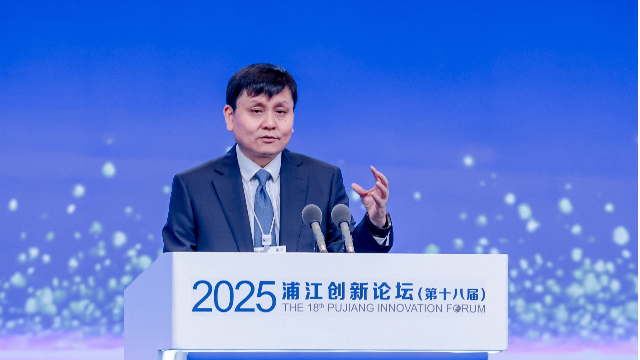
大咖有约丨心血管代谢研究的下一站?与林灼锋研究员共话疾病机制与应用挑战
生物世界· 2025-09-23 04:11
Core Viewpoint - The article discusses the role of Fibroblast Growth Factor 21 (FGF21) in the context of heart failure with preserved ejection fraction (HFpEF), highlighting its mechanism of action through inter-organ communication and its potential as a therapeutic target in cardiovascular metabolic diseases [4][5]. Group 1: FGF21's Inter-Organ Communication Effects - FGF21 plays a crucial role in regulating mitochondrial energy metabolism through the adipose-heart axis, which is essential for improving HFpEF [4]. - The protective effects of FGF21 on the heart are dependent on the adiponectin (APN) signaling pathway [5]. Group 2: Biological Functions of FGFs and Drug Development - The article emphasizes the diverse biological functions of FGFs, particularly FGF21, in maintaining metabolic homeostasis, including blood glucose and blood pressure regulation, and its implications for drug development targeting cardiovascular metabolic diseases [5][15]. Group 3: Insights into Protein Drug Development - The discussion includes the clinical translation challenges in the development of protein drugs based on FGF signaling pathways, indicating a need for innovative approaches in this area [5][15]. Group 4: Event Announcement - An upcoming lecture featuring researcher Lin Zhuofeng will delve into the inter-organ communication mechanisms of FGF21 and its implications for cardiovascular metabolic diseases, along with insights into drug development prospects [5][12].
Cell子刊:同济大学成昱/吕诚/张玲团队开发新型DNA纳米通道,实现体内时空神经调控
生物世界· 2025-09-23 04:11
Core Viewpoint - The article discusses a revolutionary approach to neuromodulation using reversible photothermal-gated DNA nanochannels, which offers a universal solution for treating various neurological diseases related to ion transport disorders, such as paralysis, epilepsy, and congenital pain insensitivity [3][8]. Group 1: Current Challenges in Neuromodulation - Existing clinical treatments for neurological diseases often rely on stimulating biological ion channels, but small molecule drugs lack subtype specificity and have rapid metabolism, limiting treatment precision and effectiveness [2] - Invasive methods like intracortical stimulation (ICS) and deep brain stimulation (DBS) carry risks of infection and postoperative complications, while non-invasive methods such as transcranial direct current stimulation (tDCS) and transcranial magnetic stimulation (TMS) lack channel-level targeting, leading to unclear mechanisms and limited treatment scope [2] Group 2: Innovative Research Findings - The research team developed a reversible photothermal-gated DNA nanochannel (NC-JNP) that achieves nanoscale spatial resolution and second-level temporal precision for neuromodulation [5] - The system combines thermoresponsive DNA nanochannels with gold-iron oxide Janus nanoparticles, which serve as local near-infrared (NIR) photothermal converters, achieving a 98.4% cell membrane insertion efficiency [5][6] - Under 808 nm wavelength laser irradiation, the nanochannels exhibit a cyclic gate effect for ion transport, enhancing the excitability of dorsal root ganglion neurons within seconds [5][6] Group 3: Implications for Treatment - The NC-JNP strategy successfully restored pain perception in NaV 1.7 gene knockout mice after one minute of laser irradiation, demonstrating its potential for precise neuromodulation [5][6] - This innovative approach overcomes the limitations of traditional tools in achieving high spatiotemporal resolution without the need for genetic editing, providing a promising avenue for treating neurological and neuromuscular diseases [8]

南京崛起RWA技术超级枢纽:华检医疗让公司资产“秒变”全球流通资本
Zhi Tong Cai Jing· 2025-09-22 12:51
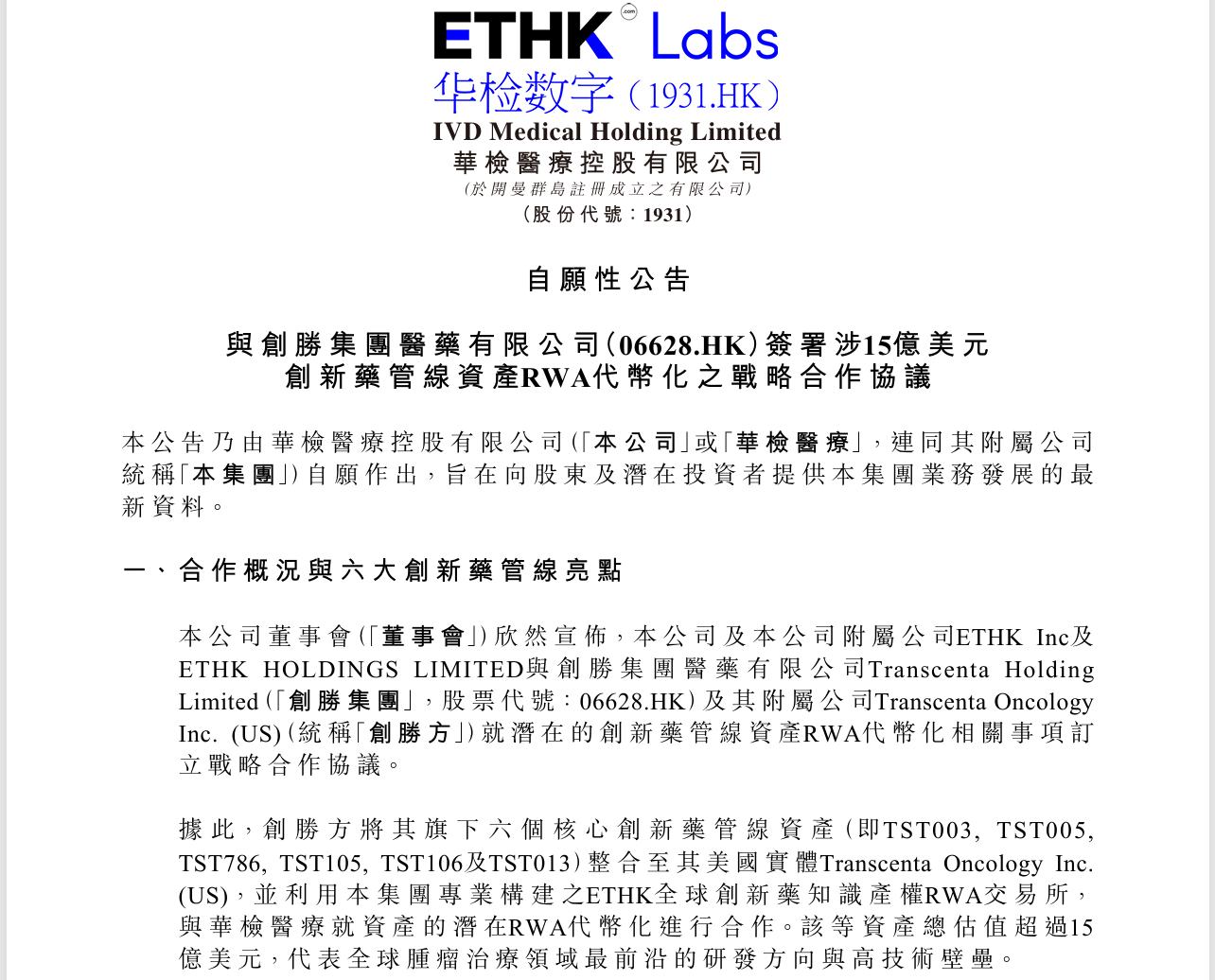
Core Insights - The establishment of the ETHK building by Huajian Medical marks a significant milestone in the development of Real World Asset (RWA) digital technology, positioning Nanjing as a global hub for RWA technology [1][2] - Huajian Medical's strategy focuses on transforming into a digital infrastructure provider, with the ETHK building serving as a physical manifestation of this strategy [2][3] Group 1: RWA Technology and Nanjing Hub - RWA, or Real World Asset tokenization, is emerging as a hot area in global fintech, with a projected total locked value (TVL) of $12.5 billion by June 2025, representing a 124% increase from 2024 [2] - The establishment of ETHK Inc. and ETHK HOLDINGS LIMITED indicates Huajian Medical's commitment to the digital industry infrastructure [2] - Nanjing's location is strategic, as the Yangtze River Delta is a core area for China's biopharmaceutical industry, accounting for one-third of the national industry scale [2] Group 2: Strategic Collaborations - Huajian Medical signed strategic cooperation agreements with four companies, including a $1.5 billion RWA tokenization deal with Chuangsheng Group for six innovative drug pipeline assets [4][7] - The collaboration with Chuangsheng Group aims to integrate their innovative drug assets into a U.S. entity for potential RWA tokenization [4] - Additional partnerships with Shenzhen Yuanli Life Sciences, Jiangsu Mailian Technology, and Beijing Guofeng Law Firm create a comprehensive ecosystem from biopharmaceutical innovation to legal compliance [7] Group 3: Industry Transformation and Market Potential - The launch of the RWA technology base and strategic partnerships signify the scaling of Huajian Medical's ETHK chain financial ecosystem [8] - The global RWA market is projected to reach $16.1 trillion by 2030, representing 10% of global GDP [8] - RWA tokenization in the biopharmaceutical sector allows for the early locking of R&D value, providing new funding channels without equity dilution [8][9] Group 4: Altruistic Ecosystem and New Economic Paradigm - Huajian Medical's "altruistic" approach enables partners to optimize asset structures and innovate financing models [9] - The ETHK building's opening symbolizes a new economic paradigm, enhancing asset liquidity and capital allocation efficiency [10] - The digital economy wave signifies the beginning of a new era for global asset circulation in China [10]
横琴深合区发展瓶颈如何破解
Di Yi Cai Jing· 2025-09-22 12:35
Core Viewpoint - The Hengqin Guangdong-Macao Deep Cooperation Zone is positioned as a crucial platform for the future development of Macau, aiming to address existing shortcomings such as narrow positioning, fragmented resources, and insufficient policy coordination, thereby supporting Macau as a model for "One Country, Two Systems" [1][14]. Group 1: Dual Empowerment and Development Bottlenecks - The core value of the Hengqin Cooperation Zone lies in injecting sustainable momentum into Macau's moderately diversified economic development, necessitating a shift from traditional one-way service models to a dual empowerment approach across five dimensions: system, industry, space, governance, and culture [2]. Group 2: Functional Complementarity - A collaborative framework of "Macau R&D + Hengqin Transformation" is proposed, leveraging Hengqin's larger space and open policies to complement Macau's institutional advantages and international networks, focusing on fields like biomedicine and digital technology [3]. Group 3: Institutional Breakthroughs - To address Macau's aging population and labor shortages, Hengqin is proposed as a new home for Macau's permanent residents, with a clear policy path for residency recognition based on residency duration and social security contributions [4][5]. Group 4: Strategic Pillars for Development - Three strategic pillars are identified for enhancing cooperation: 1. Establishing a "Hengqin Biomedicine Innovation Special Zone" to streamline clinical trials and approvals for Macau-developed drugs [6][7]. 2. Forming a "Hengqin Tourism Technology Alliance" to integrate high-end customer management and digital technology for global service output [8]. 3. Creating a "Hengqin Digital Trade Zone" to facilitate cross-border data flow and enhance trade efficiency [9]. Group 5: National Policy Support - Financial policies are proposed to enhance cross-border wealth management and facilitate the circulation of the Macanese pataca in Hengqin, alongside innovative financial regulatory adaptations [10][11]. Group 6: Talent Collaboration Mechanisms - A "cross-border talent ecosystem" is to be established, allowing for mutual recognition of qualifications across various sectors, and supporting the establishment of talent workstations in Hengqin [12][13]. Group 7: Demonstrating "One Country, Two Systems" - The establishment of a national strategic practice base in Hengqin aims to showcase the integration of Macau into national strategies, while also creating a platform for Macau's participation in global governance [13][14].
创新型生物医药企业禾元生物(688765.SH)拟公开发行8945.1354万股
智通财经网· 2025-09-22 11:38
Group 1 - The company, He Yuan Bio (688765.SH), plans to issue 89.451354 million shares, accounting for 25.02% of the total share capital post-issue, with no shareholder public offering involved [1] - Strategic placement will involve participation from CITIC Jianxin Fund and Haitong Innovation Investment, with maximum subscriptions of 8.945135 million shares and 4.472567 million shares respectively [1] - The company is an innovative biopharmaceutical enterprise with a leading global plant bioreactor technology platform, and its core product HY1001 has completed Phase III clinical trials, demonstrating good safety [1] Group 2 - If the stock issuance is successful, the raised funds (after deducting issuance costs) will be invested in the construction of a recombinant human protein industrialization base, new drug research and development, and to supplement working capital [2]
南京又一超级地标 全球最大RWA实体建筑开启资产“躺赚”时代
智通财经网· 2025-09-22 08:57
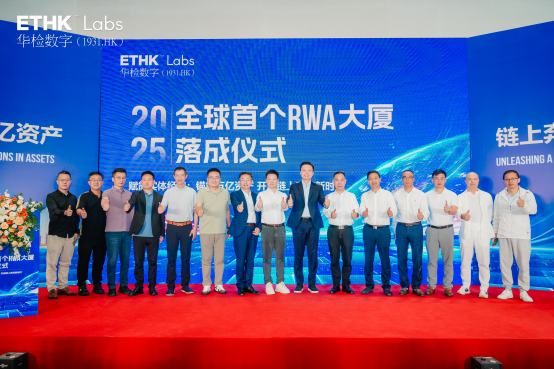
Group 1 - A new asset paradigm is emerging globally, driven by the tokenization of Real World Assets (RWA) using blockchain technology, enabling continuous global liquidity and financing [1][17] - The ETHK Building, launched by Huajian Medical in Nanjing, is the world's first RWA technology base, marking a significant step in the large-scale implementation of RWA technology in China [3][8] - The ETHK Building spans approximately 70,000 square meters, with the main building covering 35,000 square meters, making it the largest and most comprehensive RWA research and innovation base globally [3][7] Group 2 - The establishment of the ETHK Building addresses the dual challenges of technical infrastructure and regulatory frameworks that have hindered the large-scale implementation of RWA [3][8] - The building is designed as a dual-purpose infrastructure, serving as both a center for R&D and a base for trusted technology development and output [3][7] - The facility is expected to gather over 5,000 technical experts and engineers, forming one of the strongest RWA research teams globally [7] Group 3 - Huajian Medical's "ETHK Global RWA Trading - Exchange within an Exchange" model aims to fill the service gap in China's RWA market, providing a comprehensive solution for asset selection, structural design, compliance issuance, and liquidity management [8][9] - This model is particularly valuable in the healthcare sector, facilitating innovative financing for drug development and global market expansion [9][10] Group 4 - Huajian Medical has entered a phase of scaling its "Exchange within an Exchange" model, signing strategic cooperation agreements with four key partners across various sectors, including pharmaceuticals and legal compliance [9][10] - The collaboration with Chuangsheng Group involves the tokenization of innovative drug pipeline assets, with a total valuation exceeding $1.5 billion, representing cutting-edge research in cancer treatment [10] Group 5 - The launch of the RWA Protocol White Paper addresses key challenges in the current financial system, focusing on creating a foundational protocol for the issuance and trading of real-world assets [10][15] - The RWA Protocol aims to enhance settlement efficiency, transparency, and compliance in capital markets, facilitating cross-border asset allocation [15] Group 6 - Huajian Medical's strategy aligns with national policies promoting the market-oriented operation and securitization of intellectual property, as highlighted in recent government initiatives [16] - The global RWA market is projected to reach $16.1 trillion by 2030, representing 10% of global GDP, indicating significant growth potential [16] Group 7 - The completion of the ETHK Building symbolizes a new financial paradigm and showcases China's innovative capabilities in integrating blockchain with the real economy [17] - As more assets are tokenized through RWA, a more open, efficient, and inclusive global asset allocation era is anticipated, with Huajian Medical leading the charge [17]
体外类胃囊模型构建成功
Ke Ji Ri Bao· 2025-09-21 23:46
Core Insights - The research team led by Dr. Bai Bing from Kunming University of Science and Technology has collaborated with domestic and international researchers to resolve the "WNT signal gradient paradox" that has troubled developmental biology for 20 years, and has created an in vitro model of a gastric organoid that includes both the fundus and antrum regions, providing a new research platform for understanding human gastric organ development [1][2] Group 1 - The gastric organ, as a crucial digestive organ, has its functional regions, the fundus and antrum, formed as early as the 5th week of embryonic development [1] - The classical theory of developmental biology posits that organ patterning along the anterior-posterior axis relies on an increasing WNT signal gradient, while gastric development exhibits a decreasing WNT signal distribution, leading to the identified paradox [1] - The research team proposed the "hidden signaling center" hypothesis, suggesting the existence of undiscovered WNT signaling regulatory sources in gastric development [1][2] Group 2 - Through bioinformatics analysis, the team identified neural tissue as a key breakthrough, constructing a three-dimensional culture system that simulates the in vivo environment [2] - The team successfully induced pluripotent stem cells to develop a gastric organoid model with a bipolar distribution of fundus and antrum, which closely resembles the early human gastric organ at the molecular, cellular, and tissue structural levels [2] - The model visually demonstrates the asymmetric development process of the gastric anterior-posterior axis for the first time [2] Group 3 - Experimental validation confirmed that neural tissue, through its asymmetric geometric relationship with gastric epithelial tissue, forms a decreasing WNT signal gradient along the anterior-posterior axis, acting as a signaling center for gastric region development [2] - The epithelial-derived NR2F2 gene was identified as a critical regulatory factor for gastric tissue patterning, with its absence leading to an imbalance in fundus-antrum development, providing new insights into the mechanisms of gastric diseases [2] - This research enhances the classical signaling center theory in developmental biology and establishes the first in vitro research platform that simulates early human gastric organ development, addressing ethical limitations related to the scarcity of human embryonic samples [2]