航天运载

Search documents
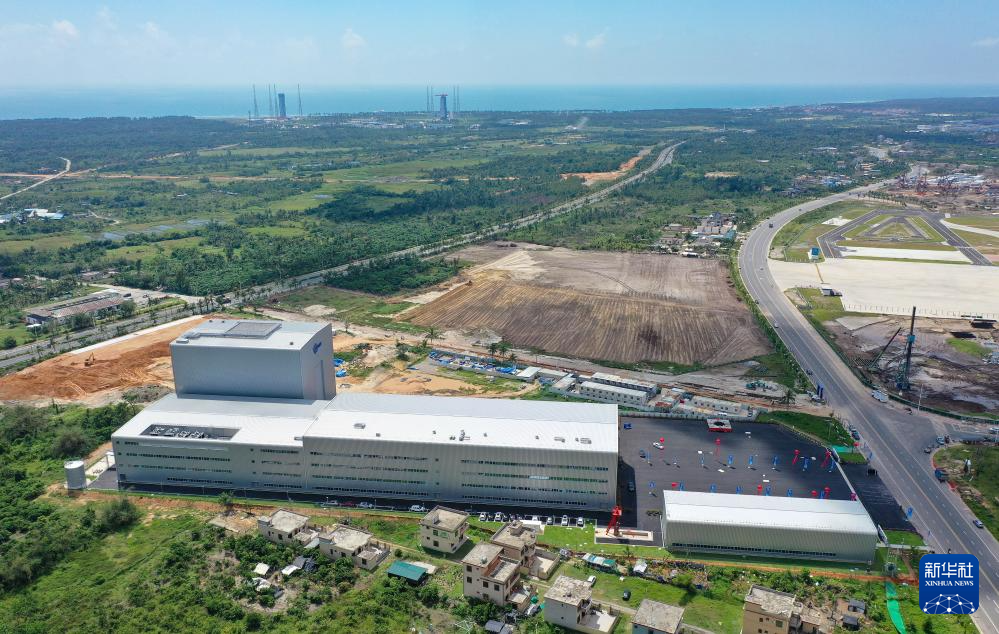
运载火箭复用工厂在海南文昌竣工
Ren Min Ri Bao· 2025-10-09 21:16
Core Points - The completion ceremony of the first phase of the reusable rocket assembly and testing factory project by Galactic Glory was held on October 9 in Wenchang, Hainan, marking a significant milestone in China's commercial aerospace infrastructure development [1] - The factory covers a total area of 28,800 square meters and is designed to withstand severe typhoons, ensuring safe and stable operations throughout the year for rocket production, storage, and testing [1] - The establishment of this factory fills a critical capability gap in Hainan for reusable rocket testing and signifies a new phase of large-scale and reusable development in China's commercial space sector [1] - The factory is expected to receive its first reusable rocket, the Hyperbola-3, in the fourth quarter of this year, with assembly and testing planned, leading to ground tests for "first flight into orbit + sea recovery" by the end of the year [1]
星际荣耀运载火箭总装总测复用工厂(一期)海南竣工
Ren Min Wang· 2025-10-09 15:39
Core Points - The completion ceremony of the reusable rocket assembly and testing factory (Phase I) of Galactic Glory was held on October 9 in Wenchang, Hainan [6][9] - The factory covers a total area of 28,800 square meters and is designed for the overall assembly, testing, and reuse of commercial space projects [6][9] - The first reusable rocket, the Hyperbola-3, is expected to arrive at the factory in the fourth quarter of 2025 for assembly and testing [6][9]

记者手记:“百战百胜”,长二丁火箭为什么行?
Xin Hua She· 2025-10-01 04:04
Core Insights - The Long March 2D rocket has achieved its 100th successful launch, marking a significant milestone in China's space exploration efforts and showcasing the dedication of aerospace professionals over the past 30 years [1][2] Group 1: Technological Advancements - The Long March 2D rocket has evolved through the adoption of innovative technologies, such as friction stir welding, which addressed issues related to traditional welding methods, enhancing the rocket's structural integrity [1] - The development of new protective coatings for the rocket has improved its performance under various environmental conditions, demonstrating the team's commitment to advancing materials science [2] Group 2: Team Dynamics and Youth Involvement - The current team behind the Long March 2D rocket includes a significant number of young professionals who are actively contributing to the design and engineering processes, indicating a generational shift in the workforce [2] - Collaborative efforts among team members have led to successful innovations, such as the implementation of titanium alloy components and enhanced efficiency in product development [2] Group 3: Achievements and Impact - The Long March 2D rocket has successfully launched over 300 satellites into designated orbits, supporting various applications in remote sensing, mapping, and space science, thereby contributing to China's technological progress [2] - The rocket has also played a role in international launch services, enhancing China's reputation in the global aerospace market [2]

美“星舰”拟10月中旬再次试飞
Xin Hua Wang· 2025-09-30 07:35
Core Viewpoint - The company plans to conduct the 11th test flight of its next-generation heavy-lift rocket "Starship" on October 13, focusing on data collection for the development of the next-generation "Super Heavy" booster and testing the spacecraft's heat shield system [1] Group 1: Test Flight Objectives - The main objectives of the upcoming test flight include collecting data for the next-generation "Super Heavy" booster, testing the heat shield system, and validating the spacecraft's return to the launch site [1] - The booster used in this flight was previously employed in the 8th test flight, with a focus on verifying the new engine landing burn mode planned for the next-generation "Super Heavy" booster [1] Group 2: Mission Details - The spacecraft will perform multiple tasks in space, including deploying 8 "Starlink" prototype satellites and attempting to reignite a "Raptor" engine in orbit [1] - Certain heat shield tiles have been removed from the spacecraft to specifically test the thermal resistance of certain areas during re-entry into Earth's atmosphere [1] - The spacecraft will simulate a future return flight path to the launch site and complete dynamic maneuvers and subsonic guidance algorithm tests in the final phase of the flight, ultimately splashing down in the Indian Ocean [1] Group 3: Rocket Specifications - The "Starship" rocket is approximately 120 meters long and 9 meters in diameter, consisting of two parts: the 70-meter-long "Super Heavy" booster and the "Starship" spacecraft, both of which are designed for reusability [1] - The design goal of the rocket is to transport humans and cargo to Earth orbit, the Moon, and even Mars [1]
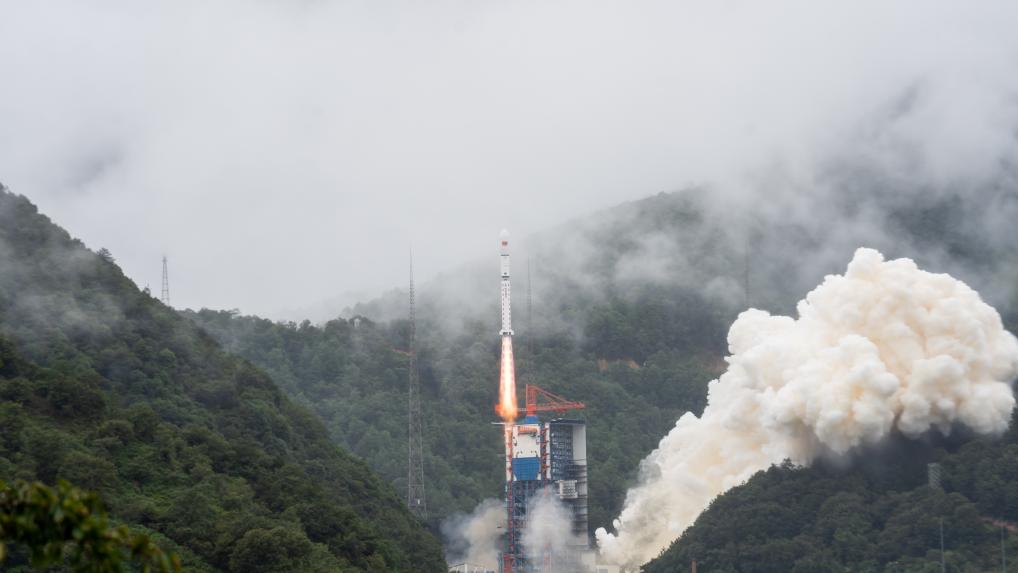
第100次发射!长征二号丁运载火箭有这些创新与发展
Xin Hua Wang· 2025-09-29 16:54
Core Viewpoint - The successful launch of the experimental satellites 01 and 02 by the Long March 2D rocket marks its 100th flight, establishing it as China's second rocket model to surpass 100 launches, showcasing advancements and innovations in the rocket's development [2] Group 1: Rocket Development and Innovations - The Long March 2D rocket, developed by China Aerospace Science and Technology Corporation's Eighth Academy, has become a key model for launching payloads into low Earth orbit and sun-synchronous orbit since its first flight in 1992 [3] - Recent innovations include a shielding structure and system designed to suppress interference, enhancing the stability of wireless signal transmission during parallel testing of multiple rocket models, improving testing efficiency by over 30% [3] Group 2: Satellite Support Technology - The development of a composite material support cabin has reduced the weight of the support structure by 20% compared to similar metal materials, addressing the need for weight reduction as satellite payloads increase [4] - The technical team has optimized the curing process and pressure transfer paths to improve the performance and weight of the support cabin, enhancing the rocket's adaptability to various payloads [4] Group 3: Product Series Development - The satellite fairing sizes vary for each Long March 2D rocket launch, with a focus on developing a series of products to accommodate different payload dimensions, expanding the fairing diameter from 2.9 meters and 3.35 meters to 3.8 meters and 4 meters [5] - The integration of a co-curing process for the fairing's sandwich structure has improved production efficiency by over 20%, ensuring the products meet temperature resistance and wave transparency requirements [5]
智神星一号二子级动力系统试车成功
Huan Qiu Wang Zi Xun· 2025-09-28 09:01
Core Viewpoint - The successful test of the second-stage propulsion system for the Zhi Shen Xing-1 launch vehicle marks a significant milestone for the company, demonstrating the design's correctness and operational readiness for future missions [1] Company Summary - Beijing Xinghe Power Aerospace Technology Co., Ltd. (Xinghe Power) has successfully conducted a test of the second-stage propulsion system for the Zhi Shen Xing-1 rocket at its aerospace power testing center [1] - The Zhi Shen Xing-1 rocket is one of the first domestically developed reusable liquid launch vehicles aimed at orbital launches [1] - The rocket features a two-stage configuration and is primarily targeted at the large satellite launch market and large constellation networking [1] Industry Summary - The successful test highlights advancements in China's aerospace capabilities, particularly in the development of reusable launch vehicles [1] - The Zhi Shen Xing-1's design and testing processes reflect a comprehensive approach to ensuring system compatibility and operational efficiency for future space missions [1]
我国多款新型火箭冲刺首飞,业内人士:缺火箭问题明年有望缓解
Bei Jing Ri Bao Ke Hu Duan· 2025-09-19 12:36
Core Insights - China has planned to launch over 10,000 satellites to provide global network services, but the industry currently faces challenges due to a lack of high-capacity and low-cost network rockets [1] Group 1: Rocket Development - The Tianlong-3 rocket successfully conducted a static fire test on September 15 at the Dongfang Spaceport in Shandong, aiming for a near-Earth orbit carrying capacity of over 20 tons with plans for its maiden flight within the year [1] - Other reusable rockets such as Zhuque-3, Lijian-2, and Changzheng-12A are also expected to have their first flights within the year [1] Group 2: Engine Technology - China's first 220-ton thrust liquid oxygen-methane full-flow staged combustion engine, "Lanyan," has completed over 30 ground ignition tests, achieving a maximum thrust of 50% [1] - This engine is anticipated to support the development of larger capacity rockets in the future [1] Group 3: Industry Outlook - The executive deputy director of the Commercial Space Research Center at CCID Research Institute predicts that issues related to satellites and rockets are expected to ease by 2026 [1]
星际荣耀完成D+轮融资首批资金7亿元交割
Zheng Quan Shi Bao Wang· 2025-09-19 00:51
Group 1 - The core point of the article is that Xingji Glory Aerospace Technology Group Co., Ltd. has completed the first tranche of D+ round financing, raising 700 million yuan [1] - The financing round is led by Chengdu Advanced Capital's fund, with participation from other local investment funds [1] - The raised funds will be primarily used for the research and development of the reusable Hyperbola-3 rocket, the construction of a rocket production base in Shuangliu District, Chengdu, and the establishment of an engine production line in Fucheng District, Mianyang [1]

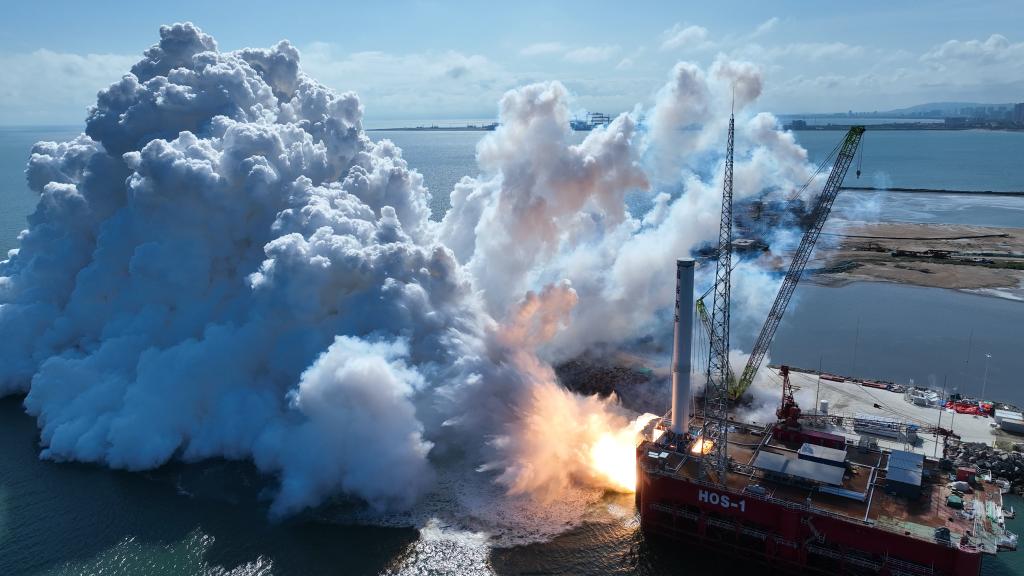
天龙三号运载火箭一子级动力系统海上试车成功
Zhong Guo Xin Wen Wang· 2025-09-15 13:14
Core Points - The Tianlong-3 rocket's first stage propulsion system successfully completed a maritime test in Shandong Haiyang, marking a significant milestone for China's private aerospace sector [1][3] - The Tianlong-3 is the largest liquid rocket developed by a private company in China, measuring 72 meters in length and weighing approximately 600 tons at launch [3] - The rocket's first stage is equipped with nine "Tianhuo-12" engines, capable of launching 36 satellites in a single mission, supporting both cargo transport to the Chinese space station and medium-to-high orbit satellite launches [3] Breakthroughs - This test marks the world's first maritime propulsion system test, validating the operational coordination and correctness of the first stage rocket systems [3] - The test also set a new record for thrust in China's commercial aerospace liquid rocket engines [3] Future Plans - The Tianlong-3 is scheduled for its maiden flight by the end of 2025 [3] - The test was conducted on the HOS-1 platform, which is China's first semi-fixed maritime test platform developed by Shandong Maritime Commercial Aerospace Launch Service Co., Ltd [3] Operational Capacity - The successful test indicates that the Dongfang Aerospace Port now possesses full system testing capabilities for liquid rockets [3] - To date, the Dongfang Aerospace Port has supported 18 maritime launch missions for solid rockets, along with three propulsion system tests and two flight recovery tests for liquid rockets [3]

天龙三号液体运载火箭一级动力系统海上试车成功
Xin Hua Wang· 2025-09-15 10:12
Core Viewpoint - The Tianlong-3 liquid launch vehicle, developed by Beijing Tianbing Technology Co., has successfully completed its first-stage power system test on September 15 at the Haiyang Dongfang Spaceport in Shandong, marking a significant milestone in China's space launch capabilities [1][3]. Group 1: Vehicle Specifications - The Tianlong-3 rocket, which began development in March 2022, has a total length of 72 meters and a launch weight of approximately 600 tons [2]. - It is equipped with nine "Tianhuo-12" engines working in parallel, providing a payload capacity of 17 to 22 tons for low Earth orbit and 10 to 17 tons for sun-synchronous orbit [2]. Group 2: Technical Validation - The recent test validated several key technologies, including wind resistance, anti-vibration, lightning protection, salt fog resistance, noise reduction, environmental protection, and high-temperature flame protection for the engines [4]. - During the test, all systems operated normally, with accurate engine start sequences, stable operation, and proper shutdown, meeting the performance requirements for the rocket's maiden flight [4]. Group 3: Future Plans - The Tianlong-3 rocket is scheduled to execute its maiden flight by the end of 2025, supporting large-scale cargo transport needs for China's space station and mid-to-high orbit satellite launches [2][4].