
双曲线三号可重复使用运载火箭

Search documents
商业火箭企业IPO迎利好,中大型复用火箭成“硬条件”
Zhong Guo Zheng Quan Bao· 2026-01-10 04:35
Core Viewpoint - The recent issuance of the Shanghai Stock Exchange's guidelines for commercial rocket companies marks a significant step in clarifying the listing path for the industry, emphasizing the importance of reusable technology and successful orbital launches as prerequisites for IPOs [1][2]. Group 1: Listing Guidelines - The guidelines specify that companies must achieve "successful orbital launch of payloads using medium to large reusable rockets" as a hard requirement for listing on the Sci-Tech Innovation Board [2][6]. - The guidelines consist of 14 articles that detail the specific requirements for commercial rocket enterprises, providing a clear roadmap for those aiming for an IPO [1][2]. - The policy aims to signal the importance of technological innovation and directs resources towards companies that possess core technologies and engineering capabilities [2][6]. Group 2: Industry Trends - The commercial space industry is transitioning from state-led initiatives to a market-driven model, focusing on high-frequency, low-cost launches [2][10]. - By 2025, private rocket companies in China are expected to execute 23 launch missions, successfully sending 324 satellites into space, highlighting the rapid growth of the sector [2][10]. - The establishment of clear listing standards is expected to accelerate the capital market entry of commercial rocket companies, injecting strong momentum into the industry for the next decade [4][10]. Group 3: Technological Challenges - While the guidelines do not mandate the completion of rocket recovery technology validation prior to application, they emphasize the adoption of reusable technology as a key competitive factor in the future [6][7]. - The complexity of achieving reliable rocket recovery poses significant challenges, with multiple technical constraints that must be met during the return phase [6][7]. - Successful recovery is seen as critical for meeting the high-frequency, large-capacity, and low-cost launch demands of future satellite internet applications [6][7]. Group 4: Company Developments - Blue Arrow Aerospace and iSpace are leading the charge in developing medium to large liquid rockets, focusing on achieving both successful orbital launches and reliable recovery [8][9]. - iSpace's SQX-3 rocket aims for an integrated goal of achieving orbital launch and sea recovery, marking a significant step in the industry [8][9]. - The upcoming year of 2026 is anticipated to be a pivotal year for commercial space launches in China, with multiple companies preparing for significant milestones [10].
商业航天2025:拐点前夜的助攻、躁动与可回收验证冲刺
Tai Mei Ti A P P· 2025-12-29 00:08
Core Insights - The article discusses the rapid development and transformation of China's commercial space industry, highlighting the significant policy support and market dynamics that are shaping its future [2][4][6]. Policy Support - The Chinese government has introduced a series of "nuclear bomb" level policies to support the commercial space sector, marking 2025 as a pivotal year for the industry [4][6]. - The 14th Five-Year Plan identifies commercial space as a key strategic emerging industry, with the establishment of a 20 billion yuan national fund to support its development [6][9]. - Various local governments have also implemented targeted measures to promote the growth of the commercial space industry [10]. Market Dynamics - The commercial space sector is experiencing unprecedented capital market activity, with significant stock price increases and a surge in IPO applications from leading companies [11][12]. - The commercial space index has seen a remarkable increase of 60.12% in 2025, outperforming the Shanghai Composite Index [16][18]. - The number of registered commercial space-related companies in China has surged, with over 24,800 new registrations in 2025 alone, reflecting a 57.5% increase compared to the previous year [19]. Technological Challenges - Despite the excitement, the industry faces critical challenges, particularly in achieving cost reductions through rocket reuse, which remains a key hurdle [3][28]. - The successful implementation of reusable rocket technology is essential for reducing launch costs by approximately 38%-58% [28][44]. - The industry is also exploring advanced manufacturing techniques, such as 3D metal printing, to further reduce costs and improve production efficiency [31][32]. Competitive Landscape - The competition in the commercial space sector is intensifying, with a focus on low Earth orbit satellite constellations and space computing capabilities [37][45]. - The upcoming IPO of SpaceX, with a projected valuation of $1.5 trillion, is expected to set a new benchmark for the global commercial space industry, influencing domestic players [34][36]. - China's commercial space industry is characterized by a dual structure of state-owned and private enterprises, with private companies expected to fill the capacity gaps left by state-owned entities [42]. Future Outlook - The successful validation of reusable rocket technology and the establishment of a commercial closed-loop system are critical for the industry's long-term sustainability [44][46]. - The development of space computing capabilities is seen as a potential breakthrough for the commercial space sector, offering new revenue streams and competitive advantages [45][46].


商业航天明年还有催化,“十五五”首个国际性产业盛会将举办,超75%国内火箭企业有望出席
Xuan Gu Bao· 2025-12-23 08:02
Event Overview - The 2026 Beijing International Commercial Aerospace Exhibition will be held from January 23 to 25, 2026, at the Yichuang International Convention Center in Beijing, co-hosted by the Zhongguancun Yichuang Commercial Aerospace Alliance and Beijing Yichuang Star Arrow Technology Development Co., Ltd. [1] - This exhibition marks the first international commercial aerospace event in the "14th Five-Year Plan" period, aiming to create a platform for the entire industry chain and is expected to gather over 75% of leading domestic rocket manufacturing companies, with more than 300 exhibitors and over 20,000 professional visitors [1][2] Exhibition Highlights - The exhibition will feature four core areas: satellite manufacturing, rocket and launch systems, aerospace applications, and aviation services and support [2] - The third Beijing Commercial Aerospace Industry High-Quality Development Conference will take place concurrently, showcasing the latest innovations in the industry through reports, roundtable discussions, and project signings [2] Global Competition Acceleration - In December 2025, the Zhuque-3 rocket successfully completed its maiden flight, and China has launched several satellites, including the Resource-3 04 satellite and a constellation of low-orbit satellites [3] - Internationally, significant developments include Trump's reaffirmation of the goal to return to the Moon by 2028, SpaceX's plans for an IPO with a target valuation of approximately $1.5 trillion, and advancements in satellite technology by companies like Starcloud and Google [3] Market Growth Projections - According to a report by the Ministry of Industry and Information Technology, China's commercial aerospace market is expected to exceed 2.5 trillion yuan by 2025, with annual output value in rocket launches and satellite manufacturing projected to reach 85 billion yuan by 2030 [4] - The maturation of reusable rocket technology is anticipated to enable China to achieve 100 launches per year by 2030, with a cost of approximately 10 million yuan per launch [4] Industry Chain Companies - In the upstream sector, key players in rocket manufacturing include Superjet Co., Srey New Materials, Aerospace Power, and others, focusing on rocket structure components and engine support [7] - In satellite manufacturing, China Satellite is a leading company, with others like Guobo Electronics and Zhenlei Technology possessing core technologies in satellite payloads [7] Midstream and Downstream Services - The midstream sector benefits from increased launch frequency, with companies providing rocket launch and recovery services, while ground equipment providers like Haige Communication and Zhongke Xingtai offer ground control and data processing services [8] - Downstream applications focus on satellite communication, remote sensing, and navigation, with companies in the low-altitude economy, such as Lijun Co. and Weihai Guotai, also benefiting from industry integration [9]

向海问天、筑梦苍穹 海南构筑中国商业航天新高地
Zheng Quan Ri Bao· 2025-12-14 23:19
Core Insights - The development of the commercial space industry is becoming a significant force in building a space power in China, with over 600 commercial space companies and an expected industry scale of 2.8 trillion yuan by 2025 [1] - Hainan's commercial space industry has achieved rapid development, setting new records in China's space development history, particularly with the successful launch from the Hainan spaceport [1] Geographical and Policy Advantages - Wenchang, located in northeastern Hainan, has unique geographical advantages for space launches, including low latitude and coastal launch capabilities, which can enhance rocket payload capacity by 15% [2] - The Hainan Free Trade Port's policies, such as zero tariffs and low tax rates, provide significant support for the commercial space industry, attracting quality enterprises and talent [3] Industry Growth and Projections - By 2027, the Wenchang International Space City is projected to achieve an operating income of 10 billion yuan, reflecting government support and market confidence in the commercial space sector [4] - The Wenchang International Space City has over 700 space-related enterprises, indicating a robust and complete industrial chain from rocket manufacturing to satellite development [4] Collaborative Ecosystem - The commercial space industry in Wenchang is characterized by a collaborative ecosystem involving rocket, satellite, and data chains, which supports the overall development of the sector [6] - The Hainan commercial space launch site has achieved a high launch frequency, with plans to increase annual launch capacity to over 60 by the end of 2026 [6][7] Technological Innovations - Continuous technological and model innovations are driving the rapid development of Hainan's commercial space industry, including reusable rocket technology and satellite mass production [9] - The "Double Curve Three" reusable rocket is under development, aiming to significantly reduce launch costs and improve launch precision [9] Supporting Industries - The establishment of specialized gas production facilities in Hainan is expected to meet the growing demands of the commercial space industry, enhancing operational efficiency and profitability [10] - The integration of space and tourism is being explored, creating a new economic model that combines space exploration with local tourism development [10]
向海问天 筑梦苍穹 海南构筑中国商业航天新高地
Zheng Quan Ri Bao· 2025-12-14 16:13
Core Viewpoint - The development of the commercial aerospace industry in China is becoming a significant force in building a strong aerospace nation, with over 600 companies currently in operation and a projected industry scale of 2.8 trillion yuan by 2025 [1]. Geographical and Policy Advantages - Wenchang, located in northeastern Hainan Province, is uniquely positioned as the only city in China with both "low latitude and coastal launch" characteristics, providing a significant geographical advantage for commercial aerospace development [2]. - The low latitude of the Hainan launch site can enhance rocket payload capacity by 15%, directly impacting economic benefits and market competitiveness [2]. - The coastal location facilitates the transportation of large-diameter rockets, which is a limitation for inland launch sites due to railway constraints [2]. - The establishment of the Hainan Free Trade Port has introduced favorable policies, including zero tariffs and low tax rates, which lower operational costs and attract quality enterprises and talent [3]. Industry Growth and Projections - By 2027, the Wenchang International Aerospace City aims to achieve an operating income of 10 billion yuan, reflecting government support and market confidence in the commercial aerospace sector [4]. - The Wenchang International Aerospace City has over 700 aerospace-related enterprises, forming a complete industrial chain from rocket manufacturing to satellite development and data application [4]. Infrastructure and Technological Innovations - The Hainan commercial aerospace launch site was built in just 878 days, showcasing China's efficiency in establishing infrastructure [6]. - The launch site has achieved a high frequency of launches, with three launches occurring within 30 days, indicating a robust operational capacity [6]. - The second launch pad is designed to accommodate over 20 rocket models, with plans for additional launch pads to increase annual launch capacity to over 60 by the end of 2026 [6]. - The innovative three-plane measurement launch mode enhances launch efficiency and reduces costs [7]. Future Development and Integration - The Hainan Star Glory Aerospace company is developing a reusable rocket, the "Double Curve Three," which aims to significantly reduce launch costs through advanced technologies [9]. - The establishment of a specialized factory for rocket assembly and testing marks a significant advancement in China's commercial aerospace manufacturing capabilities [7]. - The integration of aerospace with tourism is being explored to enhance the social impact of the aerospace industry and stimulate local economic growth [10].
文昌“问天” 商业航天 乘势而上
Shang Hai Zheng Quan Bao· 2025-11-03 18:16
Core Viewpoint - China has successfully launched a satellite internet constellation consisting of 12 low-orbit satellites, marking a significant advancement in its commercial space industry and positioning Wenchang as a key player in the aerospace sector [2][4]. Group 1: Geographical and Policy Advantages - Wenchang benefits from unique geographical conditions, being the only city in China with both low latitude and coastal launch capabilities, which reduces launch costs and enhances safety [3]. - The Chinese government has implemented policies to support the development of the commercial space sector in Hainan, including easing market access and promoting high-quality growth [3]. Group 2: Infrastructure Development - The first commercial space launch site in China broke ground in Wenchang in July 2022, symbolizing the city's commitment to integrating into the national aerospace strategy [4]. - Wenchang has established a "rocket chain," "satellite chain," and "data chain," facilitating rapid industrial development and collaboration [5]. Group 3: Satellite and Rocket Manufacturing - The Wenchang Supercomputing Center has successfully launched three remote sensing satellites, contributing to the largest commercial remote sensing satellite constellation globally, capable of revisiting any location on Earth 38 to 40 times daily [5]. - A satellite super factory is being constructed in Wenchang, with a total investment of approximately 10.91 billion yuan, expected to be completed by the end of the year [8]. Group 4: Investment and Economic Growth - Nearly 3,000 companies have gathered in Wenchang, with over 700 being aerospace-related, indicating a robust growth in the commercial space sector [7]. - Recent agreements have been signed for nine projects in Wenchang, with a total investment of 1.6 billion yuan, showcasing the effectiveness of the local aerospace industry in attracting capital [7]. Group 5: Future Prospects - The first reusable rocket assembly and testing facility in China is set to begin operations, with the first reusable rocket expected to arrive in the fourth quarter of this year [6]. - Investment funds have been established to support key areas such as liquid rocket engine manufacturing and commercial satellite development, further enhancing Wenchang's position in the aerospace ecosystem [9].
创投月报 | 9月募投双增:东久新宜35亿基础设施基金终关 汽车交通赛道融资总额近140亿
Xin Lang Zheng Quan· 2025-10-28 03:44
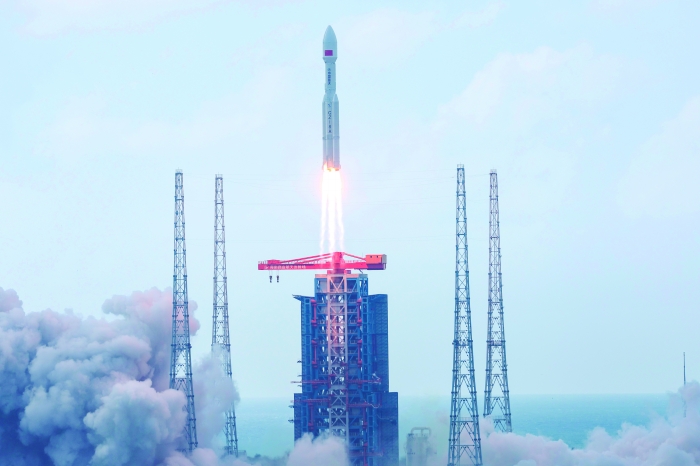
Core Insights - The private equity and venture capital fund managers registered in September 2025 saw a significant decline, with only 4 new registrations, a 20% drop from August and a 71.4% decrease compared to September 2024 [1] - The number of newly registered private equity and venture capital funds reached 557, marking an 83.8% year-on-year increase and a 51.4% month-on-month increase [1][3] - The domestic primary equity investment market experienced 686 financing events in September, reflecting a 37.8% year-on-year growth and a 21.4% month-on-month increase, with a total disclosed financing amount of approximately 443.38 billion yuan [3][6] Fund Manager Registration - In September 2025, only 4 new private equity and venture capital fund managers were registered, a 20% decrease from August and a 71.4% drop from September 2024 [1] - A total of 137 fund managers were deregistered, with nearly 30% opting for voluntary cancellation [1] Financing Events - The month saw 686 financing events, with a total disclosed financing amount of approximately 443.38 billion yuan, a 7.0% increase from September 2024 and a 26.0% increase from August 2025 [3] - The average single financing amount was approximately 64.63 million yuan, which represents a 22.3% decrease year-on-year but a slight 3.8% increase month-on-month [3] Financing Stage Distribution - Early-stage financing events (seed, angel, Pre-A, and A rounds) accounted for 69.1% of total financing events, remaining stable compared to previous months [6] - A round financing events continued to lead, comprising 36.9% of total events, with a month-on-month increase of over 6 percentage points and a year-on-year increase of 2.9% [6][9] Industry Distribution - Advanced manufacturing led with 137 financing events, with approximately 48.9% of the funded companies being in the integrated circuit sector [11] - The automotive sector saw 33 projects raising nearly 14 billion yuan, significantly higher than advanced manufacturing, with year-on-year and month-on-month growth of 134.6% and 1129.0%, respectively [11] - The artificial intelligence sector maintained a strong presence with 107 financing events, totaling 4.49 billion yuan, with the intelligent robotics sub-sector accounting for 53.3% of the events [11] Regional Distribution - Jiangsu province led with 129 financing events, followed by Zhejiang, Shanghai, and Shenzhen, each exceeding 90 events [16] - Jiangsu's financing events increased by 43.3% year-on-year and 3.2% month-on-month, with a significant increase in financing amounts compared to previous years [18] Active Investment Institutions - Notable active institutions in September included Yida Capital, Shenzhen Capital Group, and Qiji Chuangtan, with a significant portion of investments coming from state-owned entities [19][22] - The Nanjing Venture Capital Group, established in 2018, manages nearly 30 billion yuan in funds and has invested in over 1,000 projects [19] Large Financing Events - There were 10 financing events exceeding 1 billion yuan, totaling approximately 243.78 billion yuan, accounting for about 55.0% of the disclosed financing total [26] - Major financing events were concentrated in the automotive, advanced manufacturing, and artificial intelligence sectors, aligning with industry trends [26][28]
扩内需增活力优环境 “十四五”深化改革结硕果
Zhong Guo Zheng Quan Bao· 2025-10-21 20:18
Core Viewpoint - The article emphasizes the importance of domestic demand as the main driving force and stabilizing anchor for China's economic development, particularly during the "14th Five-Year Plan" period, and highlights the need for continued focus on deep-seated economic issues and the implementation of significant reform measures in the upcoming "15th Five-Year Plan" period [1][3]. Domestic Demand and Economic Growth - Domestic demand has been a crucial driver of economic growth, contributing an average of 86.8% to economic growth over the past four years [1]. - The implementation of new policies in 2024 and 2025 has effectively stimulated domestic consumption and investment, promoting a positive cycle between supply and demand [1][2]. - Final consumption expenditure contributed 53.5% to economic growth in the first three quarters of this year, an increase of 9.0 percentage points compared to the previous year [2]. Investment and Infrastructure Development - Significant investments in major projects have been made, with national railway fixed asset investment reaching 593.7 billion yuan in the first three quarters, a year-on-year increase of 5.8% [2]. - The average contribution of capital formation from investments to economic growth over the past four years was 30.2% [2]. Support for Private Enterprises - The article discusses the supportive measures for private enterprises, including the establishment of a dedicated bureau for private economic development and the implementation of laws to enhance the status of the private economy [4]. - As of May, there were 1.85 million private economic organizations in China, accounting for 96.76% of total business entities, reflecting a year-on-year growth of 2.3% [4]. State-Owned Enterprises and Reforms - State-owned enterprises have shown resilience and vitality amid challenges, with total assets increasing from less than 70 trillion yuan to over 90 trillion yuan during the "14th Five-Year Plan" period [5]. - The average annual growth rate of profits for state-owned enterprises was 8.3% [5]. National Unified Market Construction - The construction of a national unified market has been advancing, with measures such as cross-province medical insurance settlements and improved payment systems enhancing convenience for consumers [6][7]. - The market access negative list has been reduced from 123 items in 2020 to 106 items in 2025, promoting fair competition and easing market entry for various business entities [6][7].
航空航天ETF(159227)涨近1%,多重利好催化军工行情
Xin Lang Cai Jing· 2025-10-14 02:38
Group 1 - The aerospace and defense sector is experiencing a rise, with the CN5082 index up by 0.44% and key stocks like Great Wall Military Industry up by 8.67% [1] - The recent completion of the first phase of the Star Glory rocket assembly and testing factory in Hainan, covering an area of 28,800 square meters, is a significant development in the commercial aerospace sector [1] - The factory is set to receive its first reusable rocket by Q4 2025, laying the groundwork for future launches and sea recovery operations [1] Group 2 - The military industry has stabilized recently, with a focus on domestic demand and military trade as the "14th Five-Year Plan" approaches [2] - The importance of upstream components and key raw materials in weapon development and production is highlighted, indicating potential benefits from demand amplification [2] - The military trade is expected to accelerate, particularly with Middle Eastern countries, as Chinese high-end equipment exports increase, presenting a second growth opportunity for the sector [2]


我国战机在军贸市场有望取得新突破,火箭复用工厂建成后低轨卫星组网有望加速
Orient Securities· 2025-10-13 03:15
Investment Rating - The report maintains a "Positive" outlook for the defense and military industry in China [6] Core Views - China's military trade market is expected to achieve new breakthroughs, with the successful establishment of a reusable rocket factory accelerating the low-orbit satellite network [2][11] - The procurement of 20 J-10CE fighter jets by Bangladesh for $2.2 billion signifies the growing recognition of Chinese military products and the potential for market expansion [10][15] - The completion of the first reusable rocket factory in Wenchang, Hainan, marks a significant advancement in commercial aerospace infrastructure, paving the way for scalable and reusable rocket development [10][17] Summary by Sections Military Trade Developments - Bangladesh plans to invest $2.2 billion to purchase 20 J-10CE fighter jets, with the total procurement cost including training and logistics expected to reach $2.2 billion [10][15] - The international competitiveness of Chinese military equipment is increasing due to enhanced technology performance and cost-effectiveness, transitioning from a focus on individual product advantages to comprehensive solution capabilities [16] Commercial Aerospace Advancements - The first reusable rocket assembly and testing factory in Wenchang, Hainan, has been completed, which will significantly enhance the production capacity and testing capabilities for reusable rockets [10][17] - The factory is expected to lower launch costs and accelerate the progress of commercial low-orbit satellite networks [17] Current Market Outlook - The military industry has stabilized recently, with a focus on domestic demand and military trade developments as key growth drivers [20] - The report highlights the importance of upstream components and key materials in supporting the lifecycle of various military equipment, indicating potential benefits from demand amplification effects [20] - The report suggests continued optimism for the military sector, with specific investment recommendations for various companies within the industry [10][20]


