
力箭二号火箭

Search documents
涨停,17万手封单!A股第一名
Zhong Guo Zheng Quan Bao· 2026-02-25 08:48
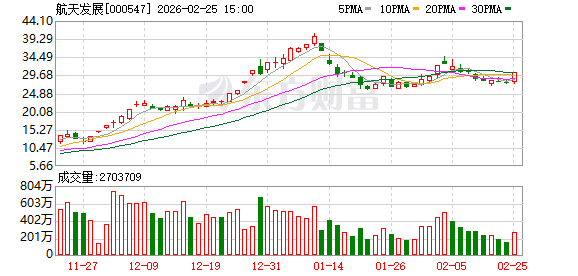
Market Performance - The A-share market saw all three major indices rise collectively, with the Shanghai Composite Index increasing by 0.72%, the Shenzhen Component Index by 1.29%, and the ChiNext Index by 1.41% [4] - The total market turnover reached 24,809 billion, an increase of 2,627 billion compared to the previous day [4] Sector Highlights - Price increase themes saw a collective surge, with sectors such as PET copper foil, chemicals, rare earth permanent magnets, non-ferrous metals, and port shipping performing well [2] - The real estate sector was active, with companies like I Love My Home and Huazhong Holdings hitting the daily limit [2][9] - The commercial aerospace sector experienced a strong afternoon rally, with Aerospace Development reaching a closing price of 30.34 yuan per share, resulting in a market capitalization of 48.498 billion [2][5] Commercial Aerospace Developments - Multiple factors, including technological breakthroughs and policy guidance, are catalyzing the commercial aerospace sector's performance [2][8] - Blue Arrow Aerospace participated in the 63rd meeting of the United Nations Committee on the Peaceful Uses of Outer Space, presenting on the ZQ-3 reusable launch vehicle [6] - The company plans to optimize landing processes and aims to conduct recovery tests in the second quarter of 2026 [7] Real Estate Policy Changes - The Shanghai Municipal Housing and Urban-Rural Development Committee announced further adjustments to real estate policies, effective February 26, 2026, including reduced housing purchase restrictions for non-local residents [10]


3大火箭企业,同台披露最新时间表
Zhong Jin Zai Xian· 2026-01-26 01:08
Core Viewpoint - The construction of satellite internet constellations faces significant capacity shortages and cost pressures, making reusable rockets a critical focus for domestic commercial aerospace companies. Group 1: Blue Arrow Aerospace - Blue Arrow Aerospace's Zhuque-3 rocket aims for high-frequency reuse, with a three-step development plan: solidifying recovery technology, transitioning to mass production, and developing the Zhuque-3A variant [2][3] - The first flight of Zhuque-3 on December 3, 2025, successfully verified many reusable rocket technologies, despite the failure of the first stage recovery [3][4] - The goal is to achieve a recovery capacity of 18 tons, providing flexible, low-cost, and rapid response launch options [2] Group 2: Star River Power - Star River Power's Zhishen-2 rocket is targeting its first flight by the end of 2026, utilizing a hundred-ton deep-thrust liquid oxygen-kerosene engine and 3D printing technology for lightweight innovation [5] - The Zhishen-2 rocket has a takeoff mass of approximately 757 tons and a launch capacity of 20 tons to LEO, with a cost of about 60,000 yuan per kilogram for satellite customers [5] Group 3: China Aerospace Science and Technology Corporation - China Aerospace is adopting a dual-track strategy to address the current capacity shortage in commercial aerospace, focusing on both small and large rockets [6][7] - The Lijian-1 rocket has completed 11 launches, placing over 80 satellites into orbit, while the Lihong series aims to validate recovery technologies for future applications [7][8] - The Lijian-2 rocket's launch cost has been reduced to 30,000 yuan per kilogram, comparable to SpaceX's Falcon 9, with further reductions expected through recovery [8]
商业火箭迎关键验证窗口:发动机决定太空探索深度,3D打印则是降本核心!
Hua Er Jie Jian Wen· 2026-01-23 12:29
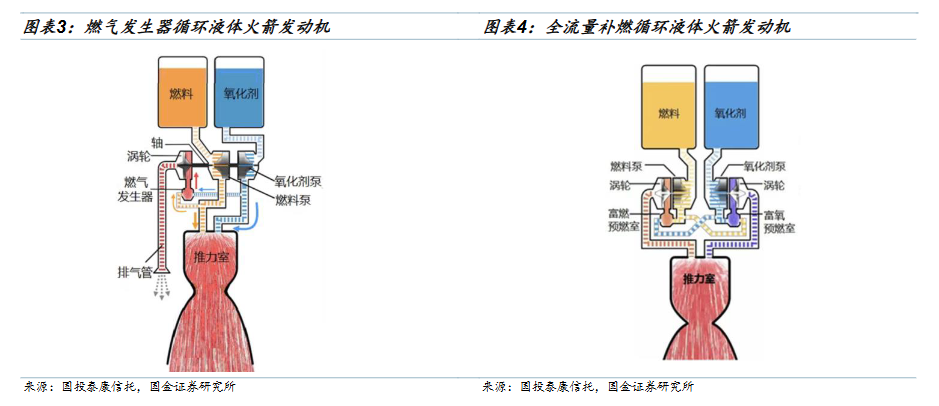
Core Insights - The Chinese commercial space industry is entering a critical development phase, with 2026-2027 identified as a key validation window for medium to large liquid rocket companies, marking the first flights of several rockets and the practical testing of reusable technology [1][3] - The demand for satellite internet and the need for cost-effective launch capabilities are becoming core competitive advantages, with companies needing to achieve a payload capacity of at least 2.8 tons for profitability in near-polar orbits [1][4] - Engine technology advancements, particularly full-flow staged combustion and 3D printing, are seen as the most certain investment logic within the industry [1][5] Group 1: Market Dynamics - The transition from small solid rockets to medium and large liquid reusable rockets is causing profound changes in the supply chain, with core components like 3D printing and large tanks gaining market attention due to their reliability and cost-effectiveness [2] - The success record and payload capacity of commercial rockets are fundamental standards for assessing their commercial value, with a shift towards liquid rockets and reusable technology driven by large-scale satellite networking demands [3][4] Group 2: Technical Developments - The engine evolution is trending towards higher thrust and full-flow staged combustion, with current engines primarily using gas generator cycles, while future designs are expected to adopt more efficient technologies [5][8] - The demand for increased payload capacity is pushing the need for engines with thrust levels reaching 120 tons, and companies are exploring innovative recovery methods to reduce costs [4][5] Group 3: 3D Printing Impact - 3D printing has become a core production capability in commercial aerospace, significantly reducing production cycles and weight, with over 60% of parts in new rocket engines being produced through this technology [9][10] - The Chinese 3D printing market is projected to reach approximately 41.5 billion yuan in 2024, with the aerospace sector accounting for about 16.7% of this market [9][10] Group 4: Structural and Control System Innovations - Rocket structural components are evolving towards larger sizes to meet increased payload demands, with materials like stainless steel and carbon fiber composites being adopted to reduce weight and costs [12] - The control systems are also being upgraded to meet the high-frequency launch requirements of commercial space, with a shift from traditional electric servos to electromechanical hydraulic systems [12]
商业航天资本热潮下的冷思考:万亿赛道破局亟待技术与商业化双线突围
Zhong Guo Zheng Quan Bao· 2026-01-20 23:15
Core Viewpoint - The commercial aerospace sector is experiencing a capital frenzy, with the Wind Commercial Aerospace Theme Index rising nearly 60% in two months, but underlying challenges and risks are becoming apparent in the industry [1][2][3]. Group 1: Market Dynamics - The commercial aerospace concept stocks are witnessing a surge, with the Wind Commercial Aerospace Theme Index increasing nearly 60% from November 21, 2025, to January 20, 2026, and several stocks reaching historical highs [2]. - In the primary market, companies are aggressively pursuing financing, with Micro Nano Star completing 1.56 billion yuan in equity financing in 2025, aimed at enhancing R&D and production capacity [2]. - The IPO process for commercial aerospace companies is accelerating, with Blue Arrow Aerospace's application to raise 7.5 billion yuan accepted by the Shanghai Stock Exchange, and other companies like Zhongke Aerospace and Star River Power also moving forward with their IPOs [2]. Group 2: Financial Performance - Blue Arrow Aerospace reported revenues of 780,000 yuan, 3.95 million yuan, and 4.28 million yuan for 2022, 2023, and 2024 respectively, with net losses of 800 million yuan, 1.188 billion yuan, and 876 million yuan; in the first half of 2025, revenue increased to 36.43 million yuan but still recorded a net loss of 597 million yuan, totaling over 2.8 billion yuan in net losses over three and a half years [3]. Group 3: Industry Challenges - The commercial aerospace industry is still in its early stages, with significant challenges in validating low-cost, reusable heavy-lift rocket technology and improving the mass production capabilities of commercial satellites [4]. - Recent failures in two rocket launches on January 17, 2026, highlight the high-risk nature of aerospace launches and the difficulties in transitioning from single technical breakthroughs to stable mass production [4]. - The submission of over 200,000 satellite orbit frequency applications to the International Telecommunication Union (ITU) has been clarified as a routine operation, emphasizing the need for rational market expectations regarding satellite deployment [5]. Group 4: Future Outlook - Despite current challenges, the long-term development direction of the commercial aerospace industry is becoming clearer, with 2026 expected to be a pivotal year for technological breakthroughs, particularly in reusable heavy-lift rockets [5][6]. - The successful completion of the first launch mission at the Hainan commercial aerospace launch site in January 2026 indicates progress in enhancing launch efficiency [5]. - Industry experts predict that 2026 will witness a transition from quantitative to qualitative changes in the commercial rocket sector, marking China's entry into the era of reusable rockets [5][6].
商业航天资本热潮下的冷思考: 万亿赛道破局亟待技术与商业化双线突围
Zhong Guo Zheng Quan Bao· 2026-01-20 21:52
Core Insights - The commercial aerospace sector is experiencing a capital frenzy, with the commercial aerospace theme index rising nearly 60% in two months, leading to accelerated financing and IPO processes for companies in the industry [1][2] - Despite the enthusiasm, there are signs of rationality emerging, as several mergers and acquisitions in the sector have failed, highlighting the challenges of technological breakthroughs and engineering validation [1][4] Market Trends - The primary market is also witnessing intense competition for commercial aerospace companies, with significant equity financing completed, such as Micro Nano Star's 1.56 billion yuan funding for R&D and capacity expansion [2] - The IPO process for commercial aerospace companies is accelerating, with notable applications like Blue Arrow Aerospace seeking to raise 7.5 billion yuan [2] Financial Performance - Companies in the sector are facing substantial losses despite revenue growth, with Blue Arrow Aerospace reporting revenues of 0.78 million yuan, 0.395 million yuan, and 0.428 million yuan for 2022, 2023, and 2024 respectively, while incurring net losses of 800 million yuan, 1.188 billion yuan, and 876 million yuan [2] Mergers and Acquisitions - Recent attempts at cross-industry mergers and acquisitions have faced obstacles, such as Hualing Cable terminating its agreement with Star Xin Aerospace due to a lack of consensus on core transaction terms [3] - East Pearl Ecology also announced the termination of its acquisition of satellite communication company Kai Rui Xing Tong due to market changes and unresolved commercial terms [3] Technological Challenges - The commercial aerospace industry in China is still in its early stages, with significant challenges in validating low-cost, reusable heavy-lift rocket technology and improving the mass production capabilities of commercial satellites [4] - Recent failures in rocket launches, including two incidents on January 17, underscore the high-risk nature of aerospace development and the difficulties in achieving frequent commercial launches [4] Future Outlook - The long-term development direction of the commercial aerospace industry is becoming clearer, with expectations for significant technological breakthroughs by 2026, particularly in reusable rocket technology [6] - The industry is predicted to transition from quantitative to qualitative changes in commercial rockets, marking China's entry into the era of rocket reusability [6] - The development of integrated space information infrastructure is anticipated to unlock broader application scenarios, following the principle of "infrastructure first, then application" [6]


万亿赛道破局亟待技术与商业化双线突围
Zhong Guo Zheng Quan Bao· 2026-01-20 21:05
Core Insights - The commercial aerospace sector is experiencing a capital frenzy, with the Wind Commercial Aerospace Theme Index rising nearly 60% in two months, leading to accelerated financing and IPO processes in the primary market [1][2] - Despite the enthusiasm, rational signals are emerging, as several mergers and acquisitions in the sector have failed, and two launch failures occurred in one day, highlighting the challenges of technological breakthroughs and engineering validation [1][4] Market Trends - The commercial aerospace concept stocks are expected to see a surge from late 2025 to early 2026, with the Wind Commercial Aerospace Theme Index showing a significant increase of nearly 60% from November 21, 2025, to January 20, 2026 [2] - Companies like Weina Starry Sky completed 1.56 billion yuan in equity financing in 2025, with plans to use the funds for R&D and capacity expansion [2] - The IPO process for commercial aerospace companies is accelerating, with notable applications such as Blue Arrow Aerospace seeking to raise 7.5 billion yuan [2] Financial Performance - Blue Arrow Aerospace reported revenues of 780,000 yuan, 3.95 million yuan, and 4.28 million yuan for 2022, 2023, and 2024, respectively, with net losses of 800 million yuan, 1.188 billion yuan, and 876 million yuan [3] - In the first half of 2025, the company's revenue increased to 36.43 million yuan, but it still recorded a net loss of 597 million yuan, accumulating over 2.8 billion yuan in net losses over three and a half years [3] Industry Challenges - Recent failures in launch attempts, including the Long March 3B rocket and the private company Star River's launch, underscore the high-risk nature of aerospace ventures and the challenges of frequent commercial launches [4] - The submission of over 200,000 satellite orbit frequency applications to the International Telecommunication Union (ITU) was clarified as a routine operation, emphasizing the need for rational market expectations regarding satellite deployment [4] Future Outlook - The commercial aerospace industry is expected to reach a critical development phase, with 2026 predicted to be a year of significant technological breakthroughs, particularly in reusable heavy-lift launch vehicles [5][6] - The industry is anticipated to follow a "first infrastructure, then application" approach, aiming to build integrated space information infrastructure and advance applications in space computing and storage [6] - The chairman of China Aerospace Science and Technology Corporation emphasized the need to seize opportunities in the space economy era and promote high-quality development in commercial aerospace [6]
国新证券每日晨报-20260119
Guoxin Securities Co., Ltd· 2026-01-19 02:41
Domestic Market Overview - The domestic market experienced a pullback after a rise, with the Shanghai Composite Index closing at 4101.91 points, down 0.26%, and the Shenzhen Component Index at 14281.08 points, down 0.18% [1][5] - The total trading volume of the A-share market was 30,565 billion, significantly lower than the previous day [1][5] - Among the 30 sectors, 6 sectors saw gains, with electronics, automotive, and machinery leading the increases, while media, comprehensive finance, and consumer services faced the largest declines [1][5] Overseas Market Overview - The three major U.S. stock indices experienced slight declines, with the Dow Jones down 0.17%, S&P 500 down 0.06%, and Nasdaq down 0.06% [2][5] - Micron Technology saw a significant increase of over 7%, while most chip stocks rose, including Broadcom, which increased by over 2% [2][5] - Chinese concept stocks mostly fell, with New Macau Entertainment dropping nearly 9% [2][5] News Highlights - Premier Li Qiang chaired a State Council executive meeting to discuss measures to boost consumption and ensure the payment of wages to migrant workers [3][12] - The Ministry of Foreign Affairs expressed strong opposition to any agreements with sovereign implications signed by countries that have diplomatic relations with Taiwan [4][14] Industry Developments - The China Securities Regulatory Commission emphasized the importance of maintaining market stability and enhancing monitoring and regulation during a recent meeting [10] - The meeting highlighted the need for reforms in the ChiNext and STAR Market to improve refinancing convenience and flexibility [10] - The commercial aerospace sector is seeing progress, with companies like Zhongke Aerospace moving towards IPOs and expanding their service offerings [17][19]
揭秘商业火箭降本关键——可复用技术
财联社· 2026-01-17 01:50
Core Viewpoint - 2026 is expected to be a pivotal year for the commercial space industry, with reusable rocket technology playing a crucial role in advancing China's space capabilities [1] Group 1: Domestic Developments - China Aerospace Science and Technology Corporation emphasizes the need to break through reusable rocket technology and accelerate the construction of a strong space nation by 2026 [1] - Multiple commercial rocket launch plans are set for the first quarter, including Deep Blue Aerospace's "Star Cloud No. 1," which aims to validate a full process of orbital launch and vertical recovery [2] - The Kuaizhou-2 rocket from China Aerospace Science and Industry Corporation is expected to have its maiden flight soon, with plans for iterative development towards a reusable model [3] Group 2: International Comparisons - SpaceX aims to produce 10,000 Starships annually, with a projected launch frequency exceeding once per hour within three years, showcasing the value of reusable rockets [5] - The Falcon 9 rocket's first stage has been reused 15 times, reducing the cost per launch from $100 million to $20 million, highlighting the economic benefits of reusability [5] - In 2025, the U.S. is projected to have 187 commercial rocket launches, with SpaceX responsible for 167 of those, indicating a significant market share [5] Group 3: Technical Insights - Reusable rockets consist of three main components: propulsion systems, airframe structures, and control systems, with propulsion systems accounting for 50% of manufacturing costs [6] - The three recovery methods for rockets include parachute recovery, flight recovery, and vertical landing, with vertical landing being the most mainstream due to its precision and low impact [6] - The use of 3D printing technology in rocket engine manufacturing is gaining traction, offering advantages such as speed, cost-effectiveness, and high precision [7] Group 4: Investment Perspectives - In the early stages of reusable rocket development, demand for rocket manufacturing is expected to rise, benefiting propulsion systems, airframe structures, and control systems [7] - As reusable technology matures, liquid rocket engines are anticipated to be gradually recovered, with ongoing benefits for airframe structures and control systems [7] - Leading companies in the commercial rocket sector are actively adopting 3D printing technology for critical components, enhancing efficiency and reducing costs [7]
商业火箭企业IPO迎利好 中大型复用火箭成“硬条件”
Zhong Guo Zheng Quan Bao· 2026-01-10 05:08
Core Viewpoint - The recent issuance of the Shanghai Stock Exchange's guidelines for commercial rocket companies marks a significant regulatory milestone, clarifying the path for these companies to go public and emphasizing the importance of reusable rocket technology in the industry [1][3]. Group 1: Regulatory Guidelines - The guidelines consist of 14 articles that detail the specific requirements for commercial rocket companies applying for the fifth set of listing standards on the Sci-Tech Innovation Board [1]. - A key requirement is that applicants must demonstrate successful orbital insertion of payloads using medium to large reusable rockets as a prerequisite for listing [3][7]. - The guidelines aim to signal a strong emphasis on technological innovation and the commercialization of space technology [1][3]. Group 2: Industry Trends - The global commercial space industry is transitioning from state-led initiatives to commercialization, focusing on high-frequency, low-cost launches [3]. - By 2025, private rocket companies in China are expected to execute 23 launch missions, successfully placing 324 satellites into orbit, highlighting the rapid growth of the sector [3]. - The establishment of clear listing standards is expected to accelerate the pace of IPOs among commercial rocket companies, with several firms already in the process [4][5]. Group 3: Company Developments - Blue Arrow Aerospace's IPO application was accepted by the Shanghai Stock Exchange, indicating a significant step in the commercialization of the industry [4]. - Other leading companies, such as Star Glory and Tianbing Technology, are also actively pursuing IPOs, with Star Glory having initiated its preparations as early as 2020 [5]. - The competitive landscape is characterized by diverse technological paths, with companies like Blue Arrow and Star Glory focusing on achieving full-chain breakthroughs from successful launches to reliable recovery [10][11]. Group 4: Technical Challenges - The guidelines do not mandate the completion of recovery technology validation before application, but they emphasize the importance of reusable technology as a competitive edge in the industry [7]. - Achieving reliable rocket recovery remains a significant technical challenge, with complexities in design and engineering that require a systematic approach [8][10]. - The successful implementation of reusable technology is crucial for meeting the increasing demand for high-frequency, large-capacity, and low-cost launches in the future [7][10]. Group 5: Future Outlook - The year 2026 is anticipated to be a pivotal year for commercial space launches in China, with several companies preparing for significant milestones in their launch capabilities [12]. - The guidelines are expected to direct capital and resources toward companies that have clear models and core technologies, fostering a competitive environment focused on engineering realization and reliability enhancement [12].
中国商业航天:一场金融与火箭共舞的“万星突围”
2 1 Shi Ji Jing Ji Bao Dao· 2025-12-02 00:35
Core Insights - The article highlights the successful launches of the Kuaizhou-1A rocket by China Aerospace Science and Industry Corporation, emphasizing the growth of China's commercial space industry and the importance of financial support for technological advancements [1][2] Industry Overview - The commercial space industry is strategically important, with satellite applications serving various fields such as communication, remote sensing, and navigation [2] - The industry faces significant challenges characterized by "high technology barriers, high risk, high capital investment, and long return cycles" [3][4][5] Financial Support and Innovation - Minsheng Bank has adapted its financial services to better support the commercial space sector, moving away from traditional credit assessment methods to a more nuanced understanding of the industry [6][7] - The bank has established a dedicated credit review mechanism and risk assessment model tailored for technology enterprises, fostering an innovative lending culture [7] Collaboration and Growth - The partnership between Minsheng Bank and China Aerospace Science and Industry Corporation began in 2023, initially focusing on working capital, and has since expanded to a credit line of 500 million yuan [8] - Minsheng Bank has provided over 1 billion yuan in loans to the commercial space sector, supporting various companies and facilitating the connection between technology and finance [8] Future Prospects - The commercial space market is expected to grow as the national "Ten Thousand Stars" program progresses, with companies like China Aerospace Science and Industry Corporation aiming for rapid development in rocket technology [10] - Minsheng Bank plans to continue its focus on quality enterprises within the commercial space industry, leveraging its financial expertise to help overcome technological challenges and expand market share [10]
