
银行理财

Search documents
工银理财高向阳: 银行理财业正迈向“净值化3.0”时代
Zhong Guo Zheng Quan Bao· 2025-12-19 20:16
Group 1 - The core viewpoint of the article emphasizes the successful transformation of the banking wealth management industry during the 14th Five-Year Plan period, achieving corporate, net value, and market-oriented transitions [1] - The banking wealth management industry is entering the "Net Value 3.0" era, driven by continuous progress in classification, unified regulation, and a focus on standardized development [1] - The foundation for high-quality development in the wealth management industry is supported by China's stable economic fundamentals, advantages, resilience, and potential [1] Group 2 - The company aims to solidify and pass down effective practices, establishing a clear, stable, attributable, and replicable management system [2] - A factory-like, industrialized management system is being constructed, tailored to the risk-return characteristics of wealth management clients, summarized as "3122" [2] - This "3122" framework includes three layers of investment decision-making mechanisms, one set of reference portfolio guidelines, two major business process controls, and two management tools for empowerment [2]
建信理财齐建功: 以强投研优配置赢得高质量发展未来
Zhong Guo Zheng Quan Bao· 2025-12-19 20:16
● 本报记者石诗语 但挑战之中往往蕴藏着更大的机遇。齐建功表示,从居民财富配置结构看,在存款利率持续下行背景 下,银行理财展现出相对收益优势,居民存款向理财市场转移的"黄金窗口期"正在打开。从机构客户需 求看,由过往"融资者"角色向"投资者"角色转变趋势明显,对公财富管理潜力巨大。与此同时,社会融 资结构的趋势性转变,也为理财公司发挥自身价值提供了难得机遇。 12月19日,由中国证券报主办的"强投研优配置赢未来"2025银行业高质量发展大会在深圳举行。建信理 财党委书记、董事长齐建功在主题演讲中表示:"当前,银行理财行业规模创下历史新高,但行业在快 速发展的同时,也面临着前所未有的挑战。"齐建功坦言,压力主要来自两个方面:从客户需求端来 看,银行理财客群以中低风险偏好的个人投资者为主;从理财公司投资供给端看,"资产荒"现象愈演愈 烈。叠加完全净值化后理财产品净值波动不可避免,理财公司传统经营打法面临较大挑战。 齐建功表示,在新的发展阶段,建信理财致力于切实转变经营理念,真正做到以投资人利益为先。投研 方面,要持续推进投研一体化建设,不断提升投研能力;积极拓展多资产策略,提升资产配置能力。科 技赋能方面,要加快 ...
银行理财业正迈向“净值化3.0”时代
Zhong Guo Zheng Quan Bao· 2025-12-19 20:10
Group 1 - The core viewpoint of the article emphasizes the successful transformation of the banking wealth management industry during the "14th Five-Year Plan" period, achieving corporate, net value, and market-oriented transitions [1] - The banking wealth management industry is entering the "Net Value 3.0" era, driven by continuous progress in classification, unified regulation, and a focus on standardized development [1] - The foundation for high-quality development in the wealth management industry is supported by China's stable economic fundamentals, advantages, resilience, and potential [1] Group 2 - The company aims to solidify and pass down effective practices, creating a clear, stable, attributable, and replicable management system [2] - A factory-like, industrialized management system is being constructed, tailored to the risk-return characteristics of wealth management clients, summarized as "3122" [2] - This "3122" framework includes three layers of investment decision-making mechanisms, a reference portfolio guide, two major business process controls, and two management tools for empowerment [2]
以强投研优配置赢得高质量发展未来
Zhong Guo Zheng Quan Bao· 2025-12-19 20:10
Core Viewpoint - The banking wealth management industry is experiencing unprecedented challenges despite reaching a historical high in scale, primarily due to shifts in customer demand and an increasing "asset shortage" phenomenon [1] Group 1: Industry Challenges - The primary pressure on the banking wealth management sector comes from the customer demand side, where individual investors predominantly have a low to medium risk appetite [1] - On the supply side, the "asset shortage" is becoming more severe, complicating traditional operational strategies for wealth management companies [1] - The transition to fully net value-based products has led to inevitable fluctuations in product net values, posing significant challenges to traditional business models [1] Group 2: Opportunities in the Industry - There is a "golden window period" for the shift of residents' deposits towards wealth management products, as these products demonstrate relative yield advantages amid declining deposit rates [1] - Institutional clients are increasingly transitioning from being "borrowers" to "investors," indicating substantial potential in corporate wealth management [1] - The structural changes in social financing present rare opportunities for wealth management companies to leverage their value [1] Group 3: Company Strategy - The company aims to transform its operational philosophy to prioritize investor interests in the new development stage [2] - It plans to enhance its investment research capabilities through integrated investment research construction and by expanding multi-asset strategies [2] - The company is focused on accelerating the development of an integrated digital empowerment system, applying technologies like AI and big data to improve customer service and investment management [2]
银行理财市场迎转型深水区 行业共论平衡波动与收益
Zhong Guo Zheng Quan Bao· 2025-12-19 20:10
Core Insights - The banking wealth management industry is expected to accelerate innovation and deepen net value transformation in 2025, with a focus on balancing volatility control and yield enhancement [1] Group 1: Market Growth and Structure - The banking wealth management market is projected to grow at a rate exceeding 15% in 2025, with a notable contrast between scale expansion and structural adjustment [2] - The broad "fixed income +" wealth management products are anticipated to grow by approximately 50%, with mixed products doubling in scale at companies like China Post Wealth Management [2] - The growth in scale is attributed to both passive growth from short-term open-ended products and active growth from "fixed income +" and cross-border allocation products [2] Group 2: Investment Strategies - In 2025, major asset allocation and diversified investment strategies are expected to become mainstream, with companies like North Bank Wealth Management achieving results in asset securitization and private equity [2] - The investment approach will shift from relying on blockbuster products to building a comprehensive product matrix to meet diverse customer needs [2] - Companies are focusing on a balanced approach to risk and return, prioritizing risk control over yield, and establishing multi-scenario risk prevention mechanisms [2][3] Group 3: Differentiation and Research Capabilities - Establishing differentiated advantages is crucial for the net value transformation in the wealth management sector, with a strong emphasis on enhancing research capabilities [3] - Companies are encouraged to build a configuration framework that can guide investments more precisely, transitioning from simple directional judgments to a more detailed investment structure [3] - North Bank Wealth Management is leveraging regional advantages and expanding nationally while managing concentration risks through regional investment limits [3] Group 4: Cross-Border Investment and Risk Management - Companies like Huihua Wealth Management have significant experience in cross-border allocation and absolute return equity investments, utilizing global research resources and risk management practices [4] - The introduction of specialized teams for cross-border investments has led to improved precision in RMB entrustment and settlement [4] - The use of derivative tools for risk hedging is being implemented to effectively reduce volatility [4]
纵论财富管理机构转型 助力居民财富保值增值
Zhong Guo Zheng Quan Bao· 2025-12-19 20:09
Group 1 - The 2025 Wealth Allocation and Asset Management Conference and the 2025 Banking Industry High-Quality Development Conference were held in Shenzhen, focusing on how wealth management institutions can enhance services to help residents preserve and increase wealth [1] - The current wealth management market is showing a steady recovery, with a notable demand for equity products, indicating a shift towards equity asset allocation [1] - The banking wealth management industry is facing unprecedented challenges but also greater opportunities, with a focus on customer needs, product diversification, and enhancing customer experience [1] Group 2 - ICBC Wealth Management aims to become a fully functional wealth management company, providing a full range of product offerings and adapting to new challenges in the asset management industry [2] - The growing demand for diversified asset allocation among residents is driving the overall scale of the wealth management market and leading to significant structural changes [2] - The collaboration between public funds and the banking sector is seen as a key support for the high-quality development of the banking industry [2] Group 3 - Securities companies are increasingly playing a vital role in helping residents preserve and increase wealth, especially through a shift towards buy-side advisory [3] - The integration of banking wealth management and securities asset management is essential for responding to market changes and building a high-quality development ecosystem [3] - The interest of domestic investors in allocating overseas quality assets is rising, with a focus on alternative asset opportunities and multi-asset allocation [3] Group 4 - Despite facing old problems and new challenges, the long-term positive fundamentals of China's economy remain unchanged, with a call for proactive macro policies to stabilize employment, enterprises, and market expectations [4] - Key strategies for activating economic potential include forming new consumer groups and expanding inbound consumption, alongside nurturing new industry demands [4] - Investment opportunities in 2026 are expected to arise from policy coordination and industrial upgrades, particularly in sectors like new energy, new materials, and health consumption [4]
上银理财张晓健:把握养老理财扩围机遇 打造特色增长极
Xin Lang Cai Jing· 2025-12-19 19:25
对于养老金融,张晓健有独到的见解。他指出,投资者既关注金融层面的需求,也重视非金融层面的服 务。其中,金融需求本身又具有高度的多样性与复杂性。例如,来自不同类型的金融机构、面向不同风 险偏好与收益目标的投资诉求等。未来,上银理财将持续深耕养老金融领域,充分发挥国有资本的联动 优势,致力于打造行业标杆,为养老事业做出积极示范。 中经记者 郝亚娟 夏欣 上海 北京报道 银行业理财登记托管中心发布《中国银行业理财市场季度报告(2025年三季度)》显示,截至2025年三 季度末,银行理财存续规模达32.13万亿元,同比增长9.42%。 面对广阔的市场,理财公司正面临双重核心课题:一是如何在日益多元的资金端需求与充满挑战的资产 端配置之间实现动态平衡;二是如何在同质化竞争中开辟特色化经营的路径,构建护城河。 近日,《中国经营报》记者专访了上银理财董事长张晓健。他表示,在金融"五篇大文章"的战略指引 下,银行理财积极把握新机遇,进一步优化了资金配置效率。 需求变化:"低息高波"市场中的配置之道 《中国经营报》:从资金端来看,居民的资产配置需求有哪些变化?银行理财面临着怎样的机遇与挑 战? 张晓健:从资金端来看,居民的资产 ...

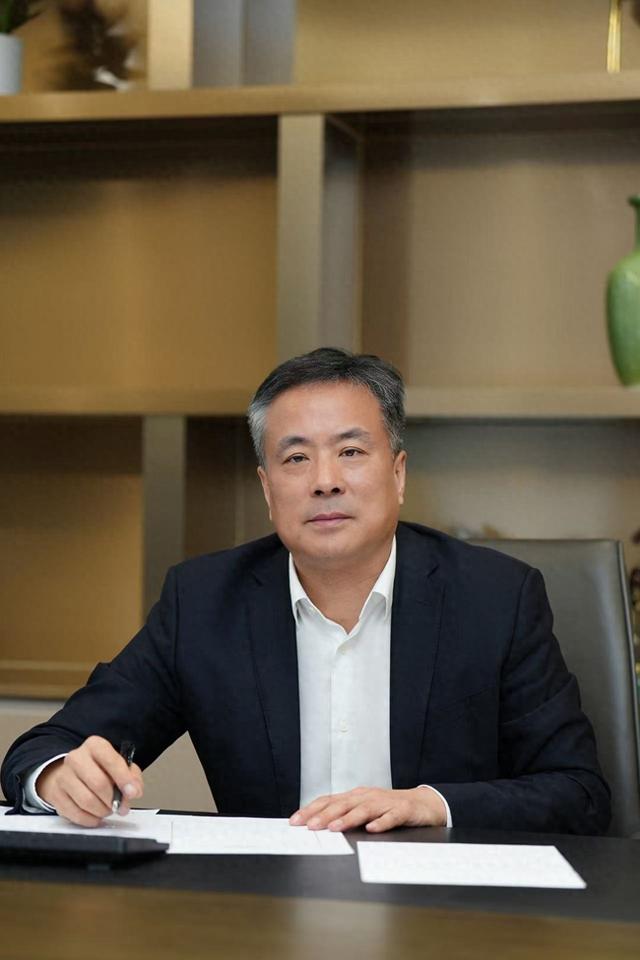
建信理财党委书记、董事长齐建功:坚守为民理财初心,以强投研、优配置赢得高质量发展未来
Zhong Zheng Wang· 2025-12-19 16:32
Core Viewpoint - The banking wealth management industry is experiencing unprecedented challenges despite reaching a historical high in asset management scale, surpassing 32 trillion yuan [1] Group 1: Industry Challenges - The primary pressure on the industry comes from two aspects: customer demand for stable product returns and the declining yields of new assets due to falling market interest rates, leading to an "asset shortage" phenomenon [1] - The transition to full net value management has resulted in unavoidable net value fluctuations for wealth management products, posing significant challenges to traditional operational strategies [1] - There is an urgent need to enhance the investment research and asset allocation capabilities of wealth management companies to align with customer expectations [1] Group 2: Opportunities in the Industry - There is a growing demand for wealth management from both residents and institutions, with a notable shift of household deposits towards wealth management products due to their relative yield advantages [2] - The trend of institutional clients transitioning from "borrowers" to "investors" presents substantial potential for wealth management [2] - The changing structure of social financing offers a rare opportunity for wealth management companies to leverage their value [2] Group 3: Strategic Focus of the Company - The company aims to enhance service levels by prioritizing customer needs, enriching product offerings, and improving customer experience [3] - A new service roadmap has been developed to segment clients into fourteen categories based on various attributes, allowing for tailored product design and investment strategies [3] - The company emphasizes a full-chain approach to customer service, ensuring that all processes reflect a "customer-first" philosophy [3] Group 4: Product Innovations - The company has launched products like "Long Qian Bao No. 1" for 24/7 real-time redemptions and "Heng Ying Self-Selected Maturity" allowing clients to choose maturity dates [4] - Innovations such as "Wealth Management Night Market" extend product application times to accommodate working professionals and younger clients [4] Group 5: Investment Research Enhancements - The company is committed to advancing integrated investment research capabilities, focusing on macroeconomic trends and market analysis to develop practical asset allocation strategies [4] - There is an emphasis on enhancing research capabilities in specific sectors and regions, with increased investment in emerging industries [4] - The establishment of an integrated investment research platform aims to improve the timeliness and effectiveness of research communication [4] Group 6: Technology Empowerment - The company is accelerating the development of a comprehensive digital empowerment system, applying AI and big data across customer service and investment management [5] - The goal is to enhance decision-making in investment research, refine product operations, and dynamically manage risks [5]
理财如何平衡波动与收益?行业大咖这样说
Zhong Guo Zheng Quan Bao· 2025-12-19 15:54
Core Viewpoint - The banking wealth management industry is undergoing significant changes in balancing volatility and returns, necessitating a focus on risk control and differentiated advantages in the context of net value transformation [2][3]. Group 1: Balancing Volatility and Returns - The current balance of volatility and returns in the banking wealth management industry has undergone profound changes, with a focus on risk control over potential returns [2]. - The approach to asset allocation emphasizes beta first, followed by alpha, while maintaining controllable maximum drawdown [2]. - Cross-border allocation has yielded an annualized return of approximately 3.8%, while equity investments have achieved returns exceeding 30%, creating a controllable enhanced portfolio [2]. Group 2: Building Differentiated Advantages - Establishing differentiated advantages requires enhancing research and investment capabilities, transitioning from basic asset exploration to a more refined investment guidance framework [3]. - Regional advantages are leveraged by focusing on core assets in the Beijing-Tianjin-Hebei area while expanding nationally, with measures in place to prevent concentration risks [3]. - The introduction of dollar-denominated wealth management products has effectively attracted clients and boosted the growth of RMB wealth management business, achieving a balance between localization and diversification [3].
纵论财富管理机构转型方向,助力居民财富保值增值!2025财富配置与资产管理大会、银行业高质量发展大会举行
Zhong Guo Zheng Quan Bao· 2025-12-19 15:54
Group 1 - The 2025 Wealth Allocation and Asset Management Conference and the 2025 Banking Industry High-Quality Development Conference were held in Shenzhen, focusing on how wealth management institutions can enhance services to help residents preserve and increase wealth [1] - Zhang Bohui from the Chinese University of Hong Kong (Shenzhen) noted a steady recovery in the wealth management market, with a notable performance in equity-linked products, indicating a rising demand for equity asset allocation [1] - Qi Jiankong from CCB Wealth Management highlighted unprecedented challenges and greater opportunities in the banking wealth management sector, emphasizing a shift in operational philosophy to prioritize investor interests [1] Group 2 - Gao Xiangyang from ICBC Wealth Management stated the company aims to become a fully functional wealth management firm, responding to new challenges in the asset management industry by exploring beneficial practices [2] - The growing demand for diversified asset allocation among residents is driving the expansion of the wealth management market and prompting profound structural changes, with various financial institutions accelerating their entry into the market [2] - Tan Xiaogang from Dacheng Fund emphasized that the high-quality development of banking wealth management is a key driver for the overall high-quality development of the banking sector, with ongoing collaboration between public funds and banks being crucial [2] Group 3 - Securities firms are increasingly playing a vital role in helping residents preserve and increase wealth, with initiatives like transitioning to a buy-side advisory model [3] - Li Haichao from Shanghai Securities discussed the company's focus on a unique asset allocation system to drive business transformation and enhance professional capabilities [3] - Wang Qian from Huihua Wealth Management highlighted the need for the asset management industry to focus on alternative asset opportunities and global asset allocation in the low-interest-rate environment [3] Group 4 - Despite existing challenges, the long-term positive fundamentals of China's economy remain unchanged, according to Bi Jiyao, former deputy director of the China Macro Economic Research Institute [4] - Guo Lei, chief economist at GF Securities, identified five potential areas for economic activation, including normalizing local investments and expanding new consumer groups [4] Group 5 - Industry experts shared insights on investment opportunities for 2026, indicating that Chinese assets still hold strong appeal, particularly in sectors like new energy, new materials, chips, and health consumption [5]