储能

Search documents
陈春花:2026年的经营关键词
Jing Ji Guan Cha Bao· 2025-12-20 07:17
Core Insights - The future business environment in 2026 will be shaped by a combination of global dynamics, technological advancements, policy regulations, and societal expectations, emphasizing the importance of human connections in business [1][3][12] Group 1: Economic Climate - The global economy is on a path of moderate recovery, undergoing structural reorganization influenced by central bank monetary policies and geopolitical factors, which will affect capital costs and corporate financing [1][2] - China is focusing on "high-quality development," with 2026 marking a harvest period for the 14th Five-Year Plan and a sowing period for the 15th, emphasizing innovation, supply chain resilience, data security, and financial stability [2] Group 2: Technological Revolution - Technological breakthroughs are transitioning from being influencing factors to decisive variables, with AI becoming integral across industries, and advancements in energy systems and life sciences accelerating commercialization [3][8] - The emergence of new roles such as AI caretakers and ethical guardians will enhance the relationship between humans and technology, fostering a warmer and more trustworthy interaction [8][10] Group 3: Competitive Landscape - The market is finding a new balance between clear regulatory frameworks and the normalization of cross-industry integration, leading to a more transparent and fair competitive environment [5][10] - Consumers are evolving into discerning decision-makers who value emotional connections with brands, prompting companies to shift from mere product providers to experience creators [7][10] Group 4: Organizational Health - Companies must invest in their workforce, focusing on skill enhancement and fostering a sense of purpose and trust, which are essential for organizational resilience and adaptability [11][12] - A healthy organization is characterized by agile connections, intelligent redundancy, and a strong value system that guides its direction amidst change [11][12] Group 5: Business Essence - The essence of business in 2026 will revolve around creating genuine value for customers, providing growth opportunities for employees, and ensuring sustainable practices for society [12][13] - Companies are encouraged to embrace complexity with humility and openness, building a solid foundation for sustainable development through resilient coexistence and meaningful innovation [13]
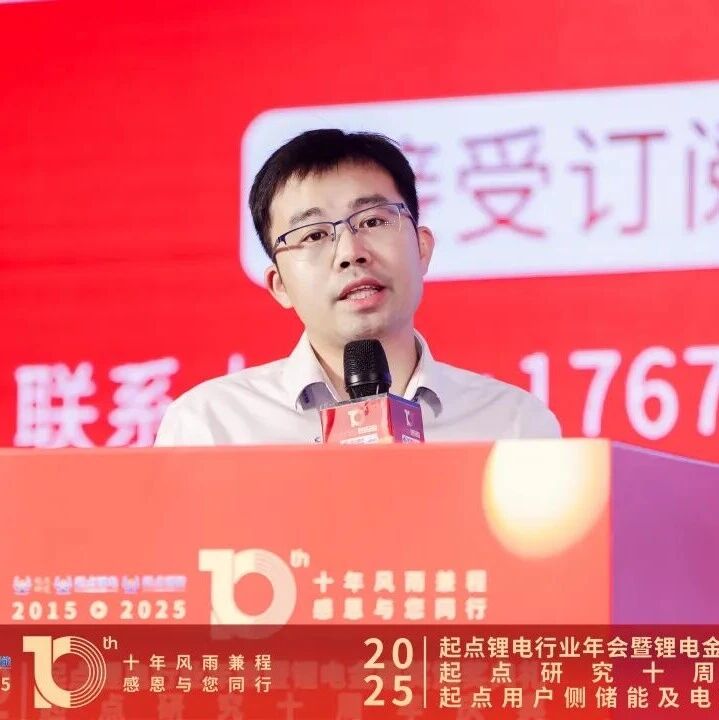
融捷能源:下一代储能电芯技术,向大容量、高效率、长循环演进
起点锂电· 2025-12-20 07:04
Core Viewpoint - The presentation by Liu Wen from Rongjie Energy at the 2025 Starting Point Lithium Battery Industry Annual Conference highlights the current state and challenges of the household energy storage industry, while showcasing the company's technological solutions and future development paths for energy storage cells [6][16]. Industry Overview - The household energy storage industry presents significant advantages in reducing electricity costs, enhancing emergency backup capabilities, and achieving autonomous energy management, but it faces challenges such as battery consistency, capacity management issues, high installation and maintenance costs due to complex system integration, and safety and reliability risks [6][7]. Technological Solutions - Rongjie Energy has developed a diverse matrix of energy storage cells, including 72Ah, 100Ah, 102Ah, 280Ah, 314Ah, and 588Ah, to meet various application needs. The 72Ah and 102Ah cells can achieve over 6000 cycles at a 1C rate, while the 314Ah cell targets long-life requirements with up to 9000 cycles at 0.5C [9][10]. Next-Generation Energy Storage Cell Technology - The evolution of energy storage cells is moving towards larger capacities (over 500Ah), higher energy efficiency (from 93% to over 96%), and longer cycle life (from 8000 to 12000 cycles). Industry standards are transitioning from early adaptations of power battery standards to dedicated mandatory standards like GB 44240-2024 [12][13]. Cost Reduction Strategies - To address market demands for high safety and low costs, Rongjie Energy focuses on reducing initial investment and operational costs. The company has improved the packing density of cathode materials from 2.4 g/cm³ to 2.6 g/cm³, enhancing energy density [13][14]. Conclusion - Liu Wen's presentation outlines a clear evolution blueprint for Rongjie Energy's household storage products, addressing current pain points and future demands. The company is driving advancements in safety, longevity, and cost-effectiveness through material innovation, process optimization, and system integration, thereby reconstructing the energy storage value chain [16].

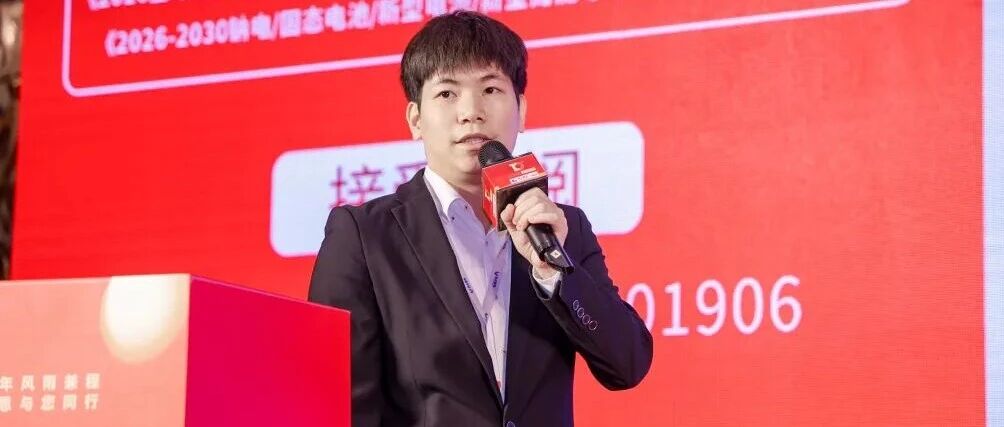
清陶云能 市场总监 盛健:瓦特和比特——AI时代绿色数据中心的储能电池需求
起点锂电· 2025-12-20 07:04
Core Viewpoint - The article discusses the importance of energy storage and battery technology in the context of the AI era, emphasizing the need for green data centers and efficient energy solutions to meet carbon reduction goals [2][6][29]. Group 1: Industry Trends and Challenges - The rapid growth of AI and data technologies is leading to an increase in data center power consumption, projected to reach 525.76 billion kWh by 2030, accounting for 2.4% of total social electricity consumption [6][8]. - Data centers face three main challenges: reliance on grid power leading to uncontrollable carbon emissions, inefficiencies in traditional power supply architectures, and excessive redundancy in power configurations [8][9][10]. Group 2: Solutions and Innovations - Solutions to these challenges include regional collaborative development to enhance green energy usage, the adoption of high-voltage direct current (HVDC) architectures to improve power efficiency, and integrating energy storage systems to optimize redundant configurations [9][10][11][15]. - The article highlights the role of solid-state lithium batteries in addressing these challenges, particularly in enhancing safety and efficiency in energy storage applications [21][28]. Group 3: Company Positioning and Advantages - The company, QingTao Energy, has developed semi-solid lithium iron phosphate batteries that are commercially viable and have been implemented in projects like the Inner Mongolia energy storage project [21][32]. - The advantages of lithium batteries include high energy density, compact size, and intelligent features that allow for precise monitoring of battery health, making them suitable for data center applications [26][23]. - The company emphasizes the importance of safety in energy solutions, particularly in the context of data centers and energy storage systems, ensuring that all innovations are grounded in safety considerations [29][30].
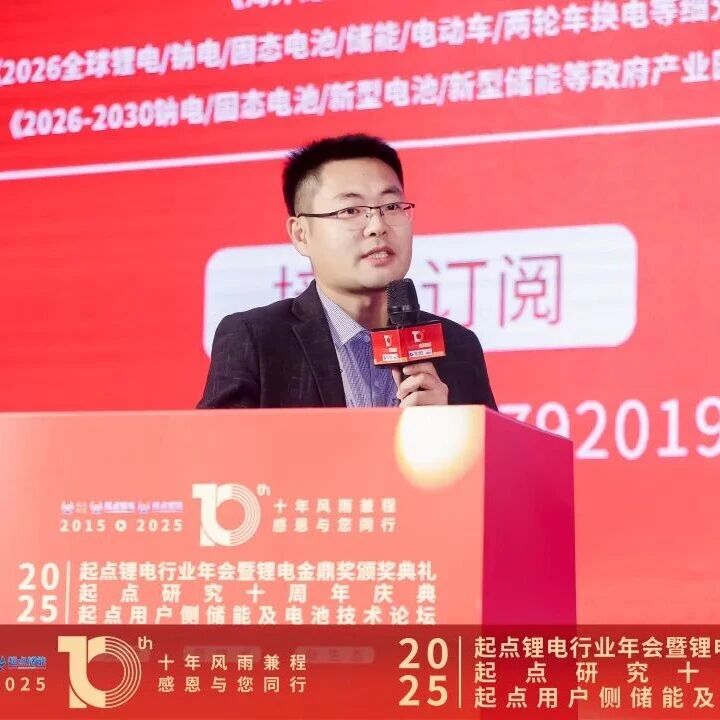
弘正储能 广东公司营销总监 王睛武:工商业储能在华南地区的应用趋势
起点锂电· 2025-12-20 07:04
Core Viewpoint - The article discusses the trends and challenges in commercial energy storage in South China, emphasizing the impact of recent policies on market dynamics and the necessity for diversified revenue models in the energy storage sector [6][9]. Group 1: Market and Policy Trends - The core drivers of trends in commercial energy storage are market dynamics and policy changes, particularly the introduction of the 136 document, which marks the beginning of a fully market-oriented pricing era for new energy [6]. - The 1192 document has elevated the necessity of energy storage from an optional to a mandatory component, presenting challenges for system integrators in the commercial energy storage sector [6]. Group 2: Challenges Faced - The end of the single-scenario era due to the 136 document requires diversified revenue assurance strategies for energy storage systems [6]. - There is a growing concern regarding the safety of energy storage systems, including the need for timely after-sales service and low operational costs [7]. - Increasing demands for interaction with electricity trading platforms and Virtual Power Plant (VPP) platforms present additional challenges for energy storage providers [8]. Group 3: Future Changes in Energy Storage - By 2026, commercial energy storage manufacturers are expected to focus on minimizing lifecycle costs while ensuring safety and accommodating multiple scenarios [9]. - The industry is shifting from a "two charge, two discharge" model to a "one charge, one discharge" model with longer storage durations, which will facilitate peak-valley arbitrage and other needs [9]. - The introduction of larger battery cells may lead to a rapid replacement of existing cells, potentially reducing system costs [9]. Group 4: Digitalization and System Integration - The future of energy storage will require a strong digital capability, aiming to provide a product-as-a-service model that integrates full lifecycle management through smart cloud platforms [11]. - Key characteristics for competitive energy storage players include high efficiency, lifecycle management capabilities, and the ability to handle multiple interactions and scenarios [18]. - The 5S system product view emphasizes simplicity, intelligence, speed, safety, and sustainability in energy storage solutions [21]. Group 5: Specific Applications and Innovations - The article highlights specific applications such as renewable energy consumption, voltage management, and user-side solutions, all driven by digitalization to achieve functions like peak-valley arbitrage and capacity management [28]. - The company emphasizes the importance of AI algorithms for battery state estimation and market trading strategies, which can enhance efficiency by 10% compared to fixed charging and discharging strategies [29].
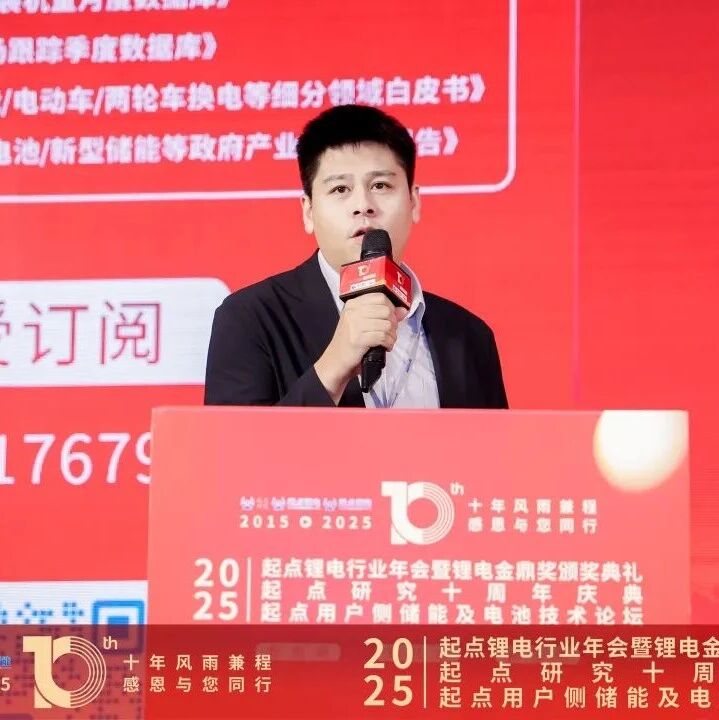
星翼能源 总经理 范良明:破局工商业储能:以“车规级”理念构建高价值储能系统
起点锂电· 2025-12-20 07:04
Core Viewpoint - The article discusses the evolution of commercial energy storage from focusing on installation scale to emphasizing revenue value, highlighting the need for high-value and reliable energy storage systems based on automotive-grade standards [6]. Group 1: Industry Trends - Commercial energy storage is undergoing a significant transition from 2022 to 2025, with many past investment projects yielding lower-than-expected returns due to issues with system performance and reliability [6]. - The market currently faces challenges with equipment failures and underperformance, necessitating innovations in safety, efficiency, and lifespan [6]. Group 2: Technological Innovations - The company has developed a self-researched CTP liquid cooling solution that enhances safety, reliability, consistency, and lifespan of energy storage products, with a shift towards liquid cooling systems expected to gain traction by late 2024 [7]. - The design of battery packs utilizes a modular and non-modular structure, reducing component complexity and system costs [7]. Group 3: Operational Strategies - The company employs a 100% Depth of Discharge (DOD) discharge strategy, which, through refined control, can increase daily revenue by 5% to 10% compared to typical 90% or 95% DOD strategies [8]. - A proprietary energy management system allows for real-time monitoring of the energy storage system's operational status and revenue, enhancing overall investment returns [7]. Group 4: Project Examples and Collaborations - The company has implemented a 430 kWh energy storage system in Guangzhou, which has operated continuously for four months, emphasizing the importance of equipment stability for maximizing revenue [7]. - The company has established numerous commercial energy storage projects across various regions, collaborating with major enterprises and investing in its own facilities [11]. Group 5: Future Vision - The company aims to create an open and collaborative industry chain, integrating research, production, sales, investment, and operation within the energy storage ecosystem, leveraging its 2 GWh super factory in Jiangxi to provide high safety and efficiency solutions [12].
分时电价取消进行时,储能站收益转身
经济观察报· 2025-12-20 04:50
Core Viewpoint - The adjustment of time-of-use electricity pricing policies is pushing the energy storage industry to return to its role as a "flexible adjustment resource," transitioning from a passive arbitrage model to an active operation model that relies on technology and management capabilities to create diversified value [1][8]. Group 1: Electricity Market Development - The cancellation of time-of-use pricing is a significant step in the construction of the electricity spot market, shifting the price formation mechanism from government-led to market-led [3]. - As of December 2023, 28 provinces have initiated continuous spot trading, with 7 having transitioned to formal operations [2]. - The new policy primarily affects industrial and commercial users, while residential electricity pricing remains unchanged [2]. Group 2: Impact on Energy Storage - The adjustment of time-of-use pricing will primarily impact commercial energy storage stations, which have relied on peak-valley price differences for profitability [8]. - Energy storage companies are now required to enhance their electricity trading capabilities or collaborate with companies that possess strong trading abilities to adapt to the new market conditions [10]. - The cancellation of time-of-use pricing may lead to a decrease in predictable revenue for energy storage stations, necessitating a shift towards high-frequency charging and discharging strategies to improve profitability [9]. Group 3: Strategic Adjustments in the Industry - Many energy storage companies are shifting their focus from heavy asset project construction to operational service models, including providing electricity trading-related soft service products [10]. - The future role of user-side energy storage is expected to expand, with companies planning to leverage user-side storage as a core component in comprehensive energy projects and virtual power plants by 2026 [10]. - Companies like Trina Storage emphasize the importance of product safety and reliability, aiming to ensure higher cycle efficiency and faster response times to maintain profitability in a volatile revenue environment [10]. Group 4: Regional Policy Variations - Different provinces are progressing at varying speeds regarding the cancellation of time-of-use pricing, with Shaanxi being the first to implement this change [12]. - In contrast, Sichuan has opted to delay the cancellation due to its unique hydropower resources and the need for market participants to familiarize themselves with the new trading environment [12][13]. - The cancellation of time-of-use pricing may reduce profit margins for electricity sales companies, leading to a potential market exit for those with weaker trading capabilities [15].

分时电价取消进行时,储能站收益转身
Jing Ji Guan Cha Wang· 2025-12-20 04:48
Core Viewpoint - The cancellation of time-of-use pricing is a significant step in the construction of the electricity spot market, transitioning from government-led pricing mechanisms to market-driven ones [2][3]. Group 1: Policy Changes - The National Development and Reform Commission and the National Energy Administration have issued a notice regarding the signing and performance of medium- and long-term electricity contracts for 2026, emphasizing the alignment of peak and valley pricing policies with market trading prices [2]. - The Shaanxi Electricity Trading Center has announced that from 2026, market users will no longer follow the peak-valley floating policy, with electricity prices primarily determined by the wholesale average price between all electricity companies and power plants [2]. - The cancellation of time-of-use pricing mainly affects industrial and commercial users, while residential electricity remains unaffected [2]. Group 2: Market Dynamics - The construction of the electricity spot market has accelerated this year, with 28 provinces continuously conducting spot trading, and 7 of them have transitioned to formal operations [2]. - The shift to a market-driven pricing mechanism is expected to lead to a more efficient allocation of resources, as the previous time-of-use pricing was primarily designed to guide user behavior based on government-set prices [4][7]. Group 3: Impact on Energy Storage - The adjustment of time-of-use pricing will significantly impact commercial energy storage stations, which previously relied on price differentials between peak and valley periods for profitability [8]. - Companies like Trina Storage are adapting to this shift by focusing on flexible resource management rather than solely relying on price arbitrage [8][12]. - The cancellation of time-of-use pricing may lead to decreased predictability of revenue for energy storage stations, prompting companies to enhance their trading capabilities or collaborate with more capable electricity trading firms [9][10]. Group 4: Regional Variations - Different provinces are progressing at varying speeds regarding the cancellation of time-of-use pricing, with Shaanxi being the first to implement this change [13]. - In contrast, Sichuan has opted to delay the cancellation due to its unique hydropower resources and the need for market participants to familiarize themselves with the new trading environment [13][14]. - The feedback from local electricity companies indicates concerns about reduced profitability following the cancellation of time-of-use pricing, highlighting the need for careful consideration of market dynamics [14][16].
豪鹏科技:公司储能业务目前发展态势良好
Zheng Quan Ri Bao Wang· 2025-12-19 15:41
Group 1 - The core viewpoint of the article is that Haopeng Technology (001283) is experiencing strong growth in its energy storage business, driven by high market demand and a sufficient order backlog [1] - The company reports that its production capacity utilization is continuously improving, leading to a rapid expansion of its business scale and an enhancement in profitability [1] - Specific performance details are advised to be referenced in the company's periodic reports [1]
由于估值过高,特斯拉仍不建议卖出
美股研究社· 2025-12-19 15:26
特斯拉近期动作频频,不仅发布了最新财报,还推进了擎天柱(Optimus)机器人与 Cybercab 自动驾驶出租车项目。 基于此,分析师需要重新研判:即便公司估值指标依旧处于 严重高估状态,当前评级是否仍应维持 "卖出", 抑或 存在上调的空间? 公 司 当 前 经 营 态 势 首先来看特斯拉 2025 年第三季度财报,整体表现喜忧参半。公司营收达 280.9 亿美元,超 出市场预期 13.9 亿美元,同比增长 11.6%,创下季度营收新高。这一成绩得益于交付量超 预期 —— 三季度交付量达 49.71 万辆,同比增长 7%。但需要注意的是,交付量增长很大程 度上受美国电动汽车税收抵免政策到期的推动,促使消费者抓紧时间下单购车。 【如需和我们交流可扫码添加进社群】 不过,特斯拉第三季度非公认会计准则每股收益为 0.50 美元,低于市场预期 0.06 美元。利 润不及预期的主因,是公司采取了激进的定价策略,同时研发投入大幅攀升。 深入拆解财报可以发现,储能业务表现亮眼,该板块营收同比大增 44%,部署储能总量达 12.5 吉瓦时,创下公司历史纪录。这一强劲增长也让马斯克直言,储能业务的增速现已超越 传统汽车业务 ...

超1.4GWh!阿特斯等4企斩获储能新单
行家说储能· 2025-12-19 14:45
Core Viewpoint - The article highlights recent developments in the energy storage sector, with four companies securing new energy storage contracts totaling over 1.5 GWh in capacity [2]. Group 1: Company Developments - Canadian Solar's subsidiary, Arctech, has secured a 408 MWh energy storage system order for the Tailem Bend 3 solar-storage project in South Australia, marking its fourth large-scale energy storage order in the region [3][4]. - Arctech will deliver approximately 100 units of its latest SolBank 3.0 energy storage system, which has a capacity of 5 MWh and a power output of 2.5 MW, and is expected to commence commercial operations in 2027 [6]. - Dongfang Risen has formed strategic partnerships with Tingshan Energy and Haihe New Energy, collectively securing 100 MWh of energy storage projects [7][8]. - Xunying New Energy has signed a cooperation agreement with China National Heavy Machinery Corporation for a 100 MW/200 MWh energy storage project, with a total investment of 210 million yuan [9]. - Yishuzhisheng has signed a contract for a 200 MW/800 MWh independent energy storage station project in Donglan County, with an estimated total investment of 1 billion yuan [12][14].