无人机

Search documents
行业简报:应急救援无人机:产业化拐点下的多场景落地研究
Tou Bao Yan Jiu Yuan· 2026-02-05 12:24
Investment Rating - The report indicates a positive investment outlook for the emergency rescue drone industry, highlighting a significant industrialization inflection point that is expected to drive market growth and application across multiple scenarios [16][20]. Core Insights - The development of emergency rescue drones is transforming the industry, evolving from auxiliary tools to core rescue nodes due to technological advancements and government initiatives aimed at improving disaster response efficiency and reducing costs [2][16]. - The industry is experiencing a convergence of policy support, technological breakthroughs, and urgent market needs, leading to a critical point for large-scale adoption and commercialization of emergency rescue drones [16][28]. Summary by Sections Industry Definition and Classification - Emergency rescue drones are defined as unmanned aerial vehicles specifically designed for responding to emergencies and disasters. They are equipped with sensors like high-definition cameras and infrared thermal imagers to provide real-time data and imagery for rescue operations. These drones can be categorized into aerial, underwater, and ground rescue drones based on their application and functionality [3][4][5][6]. Development History - The evolution of emergency rescue drones can be segmented into four phases: early exploration (2000-2010), initial application (2010-2015), rapid development (2015-2020), and multi-scenario application (2020-present). Each phase reflects advancements in technology, regulatory changes, and increasing integration into rescue operations [7][9][10][11]. Driving Factors - The growth of the emergency rescue drone industry is driven by policy initiatives that integrate emergency equipment upgrades into national safety strategies, alongside technological advancements that enhance drone capabilities, such as AI algorithms, navigation systems, and modular designs [13][14][20]. Industrialization Inflection Point - The report identifies a significant industrialization inflection point for emergency rescue drones, driven by technological maturity, cost reductions, and the establishment of comprehensive deployment frameworks across various regions [16][19][22]. Multi-Scenario Applications - Emergency rescue drones are now being utilized in diverse scenarios, including earthquake response, forest fire management, and urban flood rescue. Their ability to provide aerial perspectives and real-time data is redefining traditional rescue operations [24][25]. Competitive Landscape - The industry is characterized by a tiered structure with leading companies dominating the market, while smaller firms face challenges due to regulatory compliance and the need for specialized applications. The competitive dynamics are influenced by technological innovation, policy compliance, and the ability to address specific rescue scenarios [36][43][44]. Future Outlook - The next 3-5 years are projected to be critical for the emergency rescue drone industry, with expected rapid growth driven by advancements in 5G, AI, and autonomous technologies, as well as supportive policy frameworks that facilitate the deployment of drones in emergency situations [25][47].
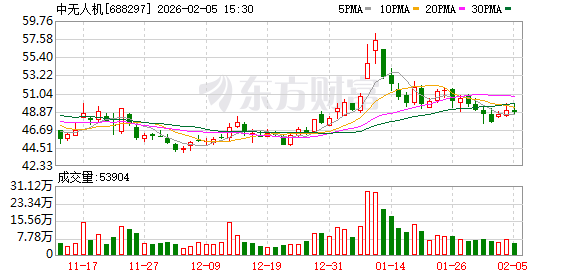
中无人机:已于2026年1月31日披露年度业绩预盈公告
Zheng Quan Ri Bao· 2026-02-05 11:07
Core Viewpoint - The company has announced that it will disclose its annual performance pre-profit announcement on January 31, 2026, and investors are advised to pay attention to the company's announcements [2] Group 1 - The company is engaged in the drone industry and has been responding to investor inquiries on its performance [2] - The announcement regarding the pre-profit disclosure is significant for investors looking for insights into the company's financial health [2] - The specific details of the annual performance will be made available in the company's official announcements [2]


低空-标准体系政策出台-低空具体如何落地
2026-02-05 02:21
Summary of Low Altitude Economy Conference Call Industry Overview - The low altitude economy is emphasized for its safety and orderly development, with a goal to establish a standard system by 2027 and over 300 standards by 2030 to regulate industry growth and prevent competition and safety risks [1][2] - The low altitude economy includes emerging technologies such as drones and eVTOL, with applications in emergency rescue and power line inspection, gradually replacing traditional manned aircraft [1][6] Key Points and Arguments - **Standardization and Regulation**: The recent release of the "Low Altitude Economic Standard System Construction Guide" aims to address the chaotic state of the industry by establishing a unified standard system, which has been fragmented since 2016 [2][3] - **Safety Measures**: The Civil Aviation Administration mandates that drones over 25 kg must meet airworthiness standards, and a "combination of guidance and blockage" strategy is employed to control illegal flights [4][18] - **Market Growth**: The low altitude aviation market has expanded significantly, surpassing the traditional general aviation market, which is valued at approximately 20 billion [7] - **Drone Types and Applications**: Drones are categorized into multi-rotor, fixed-wing, and vertical take-off and landing (VTOL) types, with multi-rotor drones being widely used due to their ease of operation [8][9] Infrastructure Development - **Investment in Infrastructure**: The construction costs for low altitude aviation infrastructure vary significantly, with rooftop helipads costing around 7 million yuan and large general aviation airports requiring investments exceeding 200 million yuan [11][20] - **Challenges in Infrastructure**: The development of low altitude infrastructure faces challenges such as the need for military-civilian site evaluation and obtaining multiple governmental approvals [15][16] Certification and Compliance - **Certification Process**: The certification process for aircraft is lengthy, often exceeding 10 years, with only a few models currently certified [17][19] - **Leading Companies**: Companies like EHang and Fengfei Logistics are at the forefront of obtaining airworthiness certificates, but the certification process remains stringent [10] Regulatory Framework - **Unified Regulatory Platform**: The establishment of a unified UOM platform for drone regulation is underway, which will facilitate data management and compliance across national, provincial, and local levels [25][26] - **Local Government Initiatives**: Local governments are encouraged to build drone regulatory platforms to enhance safety and manage illegal flights [24][20] Emerging Trends and Future Outlook - **Technological Advancements**: The development of new technologies such as eVTOL and flying motorcycles is expanding the scope of the low altitude economy [6] - **Market Participation**: Major companies like SF Express and Meituan are actively building their own infrastructure and conducting pilot flights, indicating a trend towards self-sufficiency in the industry [20][13] Conclusion - The low altitude economy is poised for significant growth, driven by technological advancements and regulatory support, but faces challenges in standardization, safety, and infrastructure development that need to be addressed for sustainable progress [1][16]
长江江面“外卖”从天降,现存无人机相关企业超3.6万家
Xin Lang Cai Jing· 2026-02-05 01:32
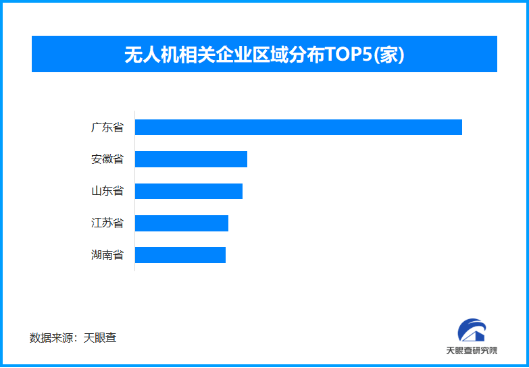
Group 1 - The article highlights an innovative service in Nanjing, where drones deliver food to cargo ships, showcasing advancements in logistics and technology [1][4] - Consumers and partners can assess the reliability of drone service companies by checking the management team's experience in drone operations and logistics [1][4] - The convenience of drone deliveries has significantly improved the lives of long-time sailors, who previously faced challenges in resupplying while at sea [5] Group 2 - As of now, there are over 36,000 drone-related companies in China, indicating rapid industry growth alongside challenges in technology, safety, and compliance [2][5] - Guangdong province leads in the number of drone-related companies, with over 7,300, accounting for 20% of the national total, followed by Anhui, Shandong, Jiangsu, and Hunan provinces [2][5] - Companies can utilize risk assessment tools to evaluate potential partners and market entry risks by examining various dimensions of judicial, operational, and regulatory risks [2][5]
高德红外(002414.SZ):轩辕智驾目前已与陕汽重卡、百度新干线等商用车完成了定点
Ge Long Hui A P P· 2026-02-05 01:09
Core Viewpoint - The company is actively collaborating with leading enterprises in the drone industry to provide infrared thermal imaging products and solutions, while also expanding its market presence in the smart driving sector through partnerships with various commercial and passenger vehicle manufacturers [1] Group 1: Low-altitude Economy - The company has formed partnerships with top enterprises in the drone industry to meet customer demands and support the development of the drone sector [1] Group 2: Smart Driving - The company’s subsidiary, Xuanyuan Zhijia, has secured partnerships with commercial vehicle manufacturers such as Shaanxi Heavy Truck and Baidu Xinjian [1] - In the passenger vehicle sector, the company has received notification letters for partnerships from Geely Automobile, Dongfeng Mengshi, and GAC Aion [1] - The company has also obtained project notification letters from Geely Zeekr and leading domestic Robotaxi enterprises, indicating ongoing efforts to expand collaborations in the passenger vehicle market [1]

跨越“应用鸿沟” 新兴产业向场景要答案
Zheng Quan Ri Bao· 2026-02-04 16:08
Core Viewpoint - The article emphasizes the importance of application in the development of emerging industries, particularly in the robotics sector, which is at a critical point of transitioning from technology research to commercial implementation [2][5]. Group 1: Industry Challenges - Emerging industries face a mismatch between the enthusiasm of the capital market and the slow pace of technology implementation, leading to a scarcity of scalable application scenarios [5][6]. - Many small and medium-sized enterprises in the robotics and drone sectors struggle with the dilemma of having technology but lacking applicable scenarios, as well as having algorithms but insufficient data [2][6]. - High costs of real-world testing and inefficient data acquisition channels significantly slow down the productization process [2][6]. Group 2: Importance of Application Scenarios - The transition from technical demonstration to commercial application is crucial for emerging industries, as technology without practical application is ineffective [1][2]. - The establishment of standardized, modular, and programmable testing environments, such as robot training centers, can significantly reduce development cycles and costs, often by over 30% [2][3]. - Successful applications in various fields, such as delivery drones and surgical robots, illustrate that application is not the endpoint of technology development but rather the starting point for continuous iteration and industry maturation [3][6]. Group 3: Policy and Capital Support - The capital market has shown significant interest in the robotics sector, with the robotics concept index rising by 48% and the drone concept index by 49% in 2025 [5]. - Approximately 200 financing events in the Chinese robotics industry were recorded in 2025, with total investments exceeding 40 billion yuan, highlighting the financial backing for this sector [5]. - Government policies are being implemented to support the cultivation of application scenarios, focusing on 22 key areas to create a virtuous cycle of technology breakthroughs and industrial applications [6][7]. Group 4: Collaborative Mechanisms - To overcome practical challenges in application expansion, a collaborative mechanism involving technology providers, application users, and third-party organizations is essential [7][8]. - Local industrial funds are being established to provide financial support for companies purchasing robots, thereby alleviating the financial pressure of expanding application scenarios [7][8]. - The establishment of specialized pilot verification platforms, such as the Beijing humanoid robot innovation center, is crucial for enhancing production capabilities and facilitating market entry [8].
交控科技:公司重点打造“低空运营平台+AI大脑”核心架构
Zheng Quan Ri Bao Zhi Sheng· 2026-02-04 13:18
Core Viewpoint - The company is advancing in the low-altitude economy by developing products and applying technology across multiple dimensions, focusing on a "low-altitude operation platform + AI brain" core architecture [1] Group 1: Product Development and Applications - The company has successfully empowered various practical business scenarios such as rail transit inspection, comprehensive government affairs, and river management, receiving widespread recognition and praise from users in these fields [1] - The company is increasing its efforts in closed-space application scenarios and drone development, with a closed-space inspection drone having completed core technology validation [1] Group 2: Future Plans and Progress - The company will continue to accelerate the transformation of technological achievements and steadily promote the launch of new products, with specific progress to be disclosed through official company information [1]

5款“成都造”无人机亮相新加坡航展
Xin Lang Cai Jing· 2026-02-04 12:21
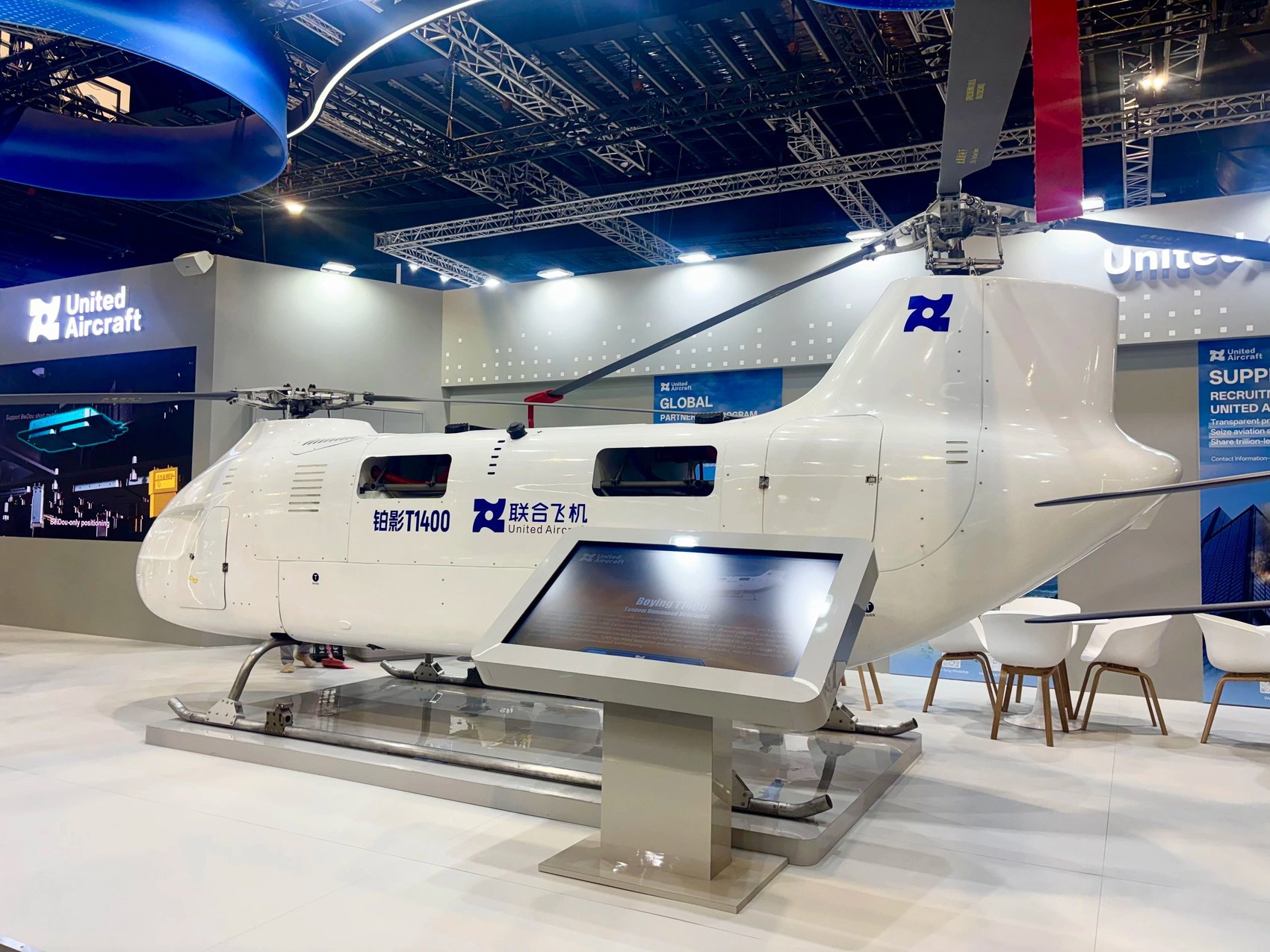
Core Viewpoint - The Chengdu United Aircraft Technology Co., Ltd. showcased its self-developed tilt-rotor unmanned aerial vehicle, the Lanying R6000, at the Singapore Airshow, marking a significant advancement in the drone industry with five flagship models on display [1][3]. Group 1: Product Features - The Lanying R6000, dubbed the "air taxi," boasts a cruising speed of 550 km/h, a range of 4000 km, and a payload capacity of 2000 kg, surpassing many traditional helicopters in key performance metrics [5]. - The Platinum T1400, referred to as the "air heavy truck," is a 1.4-ton dual-rotor unmanned helicopter with a maximum payload of 650 kg and an endurance of 8 hours, catering to urban firefighting and tropical rainforest fire prevention needs in Southeast Asia [5]. - The other three models, TD550, Q20, and Q100, each have distinct functionalities, showcasing the company's strong capability in scenario development [5]. Group 2: Market Strategy and Partnerships - On the first day of the airshow, the company initiated a global recruitment for partners for the Lanying R6000 and held multiple negotiation meetings focusing on regional needs such as island logistics in Southeast Asia and desert transportation in the Middle East [7]. - The company's participation in the Singapore Airshow signifies a shift from merely exporting products to a comprehensive output of technology, standards, solutions, and industrial ecosystems [7]. - Previously, the company secured an order for 1600 industrial-grade drones at the Dubai Airshow, with its products now entering markets in South Korea, Southeast Asia, the Middle East, and Europe [7].
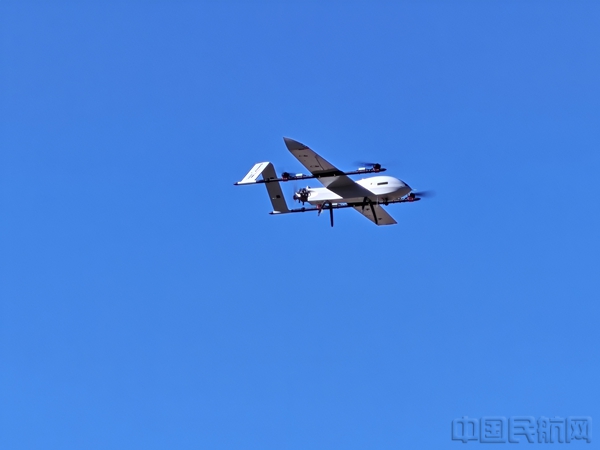
多款无人机在云南兰坪高高原试飞成功
Zhong Guo Min Hang Wang· 2026-02-04 11:16
Group 1 - The core event is the successful test flight of various high-altitude drones at the Nujiang Lanping Fenghua General Airport, which validated the stability and reliability of multiple drone models in extreme environments, laying the foundation for future applications in logistics, power inspection, border patrol, emergency rescue, ecological monitoring, and drone countermeasures [1][3] - The test flight included three small vertical take-off fixed-wing drones, two medium vertical take-off fixed-wing drones, and one large multi-rotor firefighting drone, utilizing the unique environment of the airport at an altitude of 2524.8 meters for various performance demonstrations [3][8] - The test flight accumulated valuable data on maximum roll angles, pitch angle limits, and aileron deflection maximums, which will support the establishment of technical standards and airworthiness certification systems for high-altitude drones [3][9] Group 2 - To implement Yunnan Province's strategy for developing a low-altitude economy and cultivating new productive forces, the Yunnan Aviation Industry Investment Group is accelerating the construction of low-altitude operation platforms, with its subsidiary focusing on building a comprehensive low-altitude economic industrial chain [8][9] - The company is collaborating with Shandong Weihai Guantai Group to jointly develop and manufacture high-altitude applicable drone models, marking a significant step in the testing and application of high-altitude drones [8][9] - The test flight activity received strong support from local government entities, and various companies participated in the event, highlighting the collaborative effort in advancing the low-altitude economy in Yunnan Province [10]
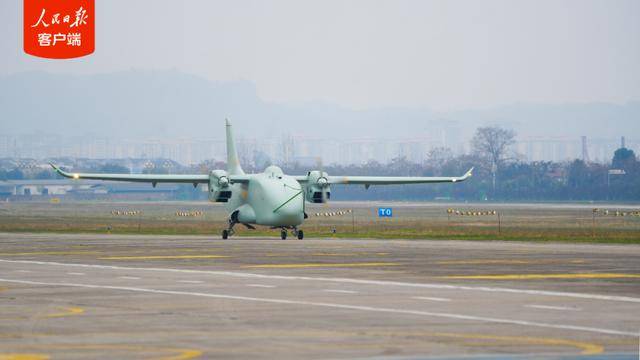
祝贺!全球首款混合动力无人运输机,首飞成功!
Sou Hu Cai Jing· 2026-02-04 09:43
Core Viewpoint - The successful maiden flight of the YH-1000S, the world's first hybrid unmanned transport aircraft developed by China Aerospace Science and Technology Corporation, marks a significant advancement in the integration of drone and automotive technologies, catering to global market demands [1][4][6] Group 1: Product Development - The YH-1000S is a rapid iteration following the successful maiden flight of the YH-1000 unmanned transport aircraft in May 2025, featuring a high-power hybrid power system co-developed with leading companies in the new energy vehicle sector [4] - The aircraft significantly reduces takeoff and landing distances while enhancing payload capacity and range, successfully completing aerial performance verification [4] Group 2: Industry Innovation - This development represents a pioneering exploration of cross-industry integration between the drone and automotive sectors, aiming to lower research and manufacturing costs through deep sharing of supply chain resources and modular production [4] - The YH-1000S targets the emerging low-altitude economy and unmanned logistics sector, exemplifying the deep integration of technological and industrial innovation [4] Group 3: Application Areas - The YH-1000S is designed to meet airworthiness standards and can play a crucial role in international logistics, emergency rescue, weather modification, marine monitoring, and maritime supervision [6]