应急救援无人机

Search documents
打造“天空之城”有哪些堵点
Xin Lang Cai Jing· 2026-02-07 07:21
Core Insights - Shanghai aims to establish a low-altitude economy with a core industry scale target of 50 billion yuan, creating a complete industrial chain for new aviation vehicle research, manufacturing, airworthiness testing, and commercial applications [1] - The implementation of the action plan has faced delays in key indicators, prompting representatives to propose targeted suggestions during the Shanghai Two Sessions [1] Group 1: Current Challenges - The low-altitude economy faces multiple issues, including insufficient standard systems and policy alignment, imbalanced infrastructure scale and layout, and rigid airspace management [2] - Although safety management requirements for unmanned aerial vehicles (UAVs) have been established, a corresponding standard system for low-altitude takeoff and landing facilities has not been developed, leading to a disconnect between regulatory oversight and industry needs [2] - Existing standards have not effectively aligned with the collaborative development requirements of the Yangtze River Delta region, and the airspace classification management mechanism remains inadequate, resulting in a "one-size-fits-all" approach in practice [2] Group 2: Proposed Solutions - A "policy-standard-collaboration" triad system is suggested, led by the Municipal Economic and Information Commission, in collaboration with the East China Civil Aviation Administration and the Yangtze River Delta Coordination Office [3] - The proposal includes the development of construction guidelines categorized by scenarios such as manned, logistics, and emergency, specifying technical requirements like platform dimensions and safety isolation zones to ensure seamless integration with existing regulations [3] - The initiative also recommends revitalizing existing resources, such as the 15,000 communication towers and nearly 1,400 "digital towers," by retrofitting them with dedicated takeoff and landing platforms and obstacle detection systems to support community-level micro-stations for essential services [3] Group 3: Management Recommendations - There is an urgent need to enhance refined governance and improve the classification management system for UAVs [4] - A dynamic opening model for core areas is proposed, allowing limited-time access for small UAVs in iconic locations during off-peak hours, such as early morning or late at night [4] - The suggestion includes optimizing the approval experience for individuals with good credit, enabling instant approval in specific areas, such as certain riverside green spaces [4]
湖北5亿智能空域基金落地:区域科创的“跨界协同”新样本
Sou Hu Cai Jing· 2026-02-07 02:06
Core Insights - The establishment of the Hubei Intelligent Airspace Venture Capital Fund, with a capital of 500 million RMB, reflects a strategic upgrade in local government thinking towards innovation investment in the tech sector [2][3] - Hubei's approach focuses on the intersection of "robotics + airspace," aiming to create a cross-disciplinary innovation ecosystem that enhances hard technology sectors [2][4] Investment Strategy - The fund is positioned to differentiate Hubei in the national low-altitude economy competition by emphasizing "intelligent airspace" rather than low-altitude manufacturing, which is the focus of provinces like Guangdong and Zhejiang [3] - Hubei's investment strategy leverages its logistics advantages from the Ezhou Huahu Airport and its aerospace industry background, targeting urban low-altitude logistics, emergency rescue drones, and low-altitude traffic management systems [3] Technological Synergy - The collaboration between the humanoid robotics fund and the intelligent airspace fund represents a dialectical choice between high-risk hard technology and high-return sectors, both relying on AI algorithms and high-precision sensors [3] - The fund aims to reduce cross-sector trial and error costs by sharing technology teams and laboratory resources [3] Challenges and Opportunities - The intelligent airspace industry faces challenges such as complex airspace approval processes, immature regulatory technologies for drone and manned aircraft coordination, and difficulties in achieving profitable business models [3] - The fund's establishment marks a new phase in Hubei's innovation ecosystem, creating a closed-loop from "robotics research and development to airspace application to capital exit" [4] - Hubei's model of integrating hard technology sectors through funds may serve as a reference for other provinces, potentially leading to a unique competitive advantage in the intelligent airspace field [4]


行业简报应急救援无人机产业化拐点下的多场景落地研究
Tou Bao Yan Jiu Yuan· 2026-02-06 00:35
Investment Rating - The report indicates a positive investment outlook for the emergency rescue drone industry, highlighting a significant industrialization inflection point driven by technological advancements and policy support [16][20]. Core Insights - The emergency rescue drone industry is transitioning from auxiliary tools to core rescue nodes, driven by technological improvements and the need for efficient disaster response [2][14]. - The industry is experiencing a rapid development phase, with multi-scenario applications emerging, including aerial, underwater, and ground rescue drones [3][4][5][6]. - The integration of AI, 5G communication, and modular design is expected to enhance the operational capabilities of drones, facilitating a shift from labor-intensive to technology-intensive rescue models [14][20]. Summary by Sections Industry Definition and Classification - Emergency rescue drones are defined as unmanned aerial vehicles specifically designed for responding to emergencies and disasters, equipped with sensors like high-definition cameras and infrared thermal imagers [3]. Development History - The development of emergency rescue drones has progressed through several phases: early exploration (2000-2010), initial applications (2010-2015), rapid development (2015-2020), and multi-scenario applications (2020-present) [7][9][10][11]. Driving Factors - Policy support is crucial, with national strategies promoting the integration of emergency equipment and financial backing for large-scale applications [13][17]. - Technological breakthroughs, including improved battery life and autonomous navigation, are enabling drones to perform complex rescue tasks effectively [18][19]. Multi-Scenario Applications - Drones are now utilized in various emergency scenarios, such as earthquake response, forest fire monitoring, and urban flood rescue, showcasing their versatility and effectiveness in real-time data collection and communication [24][25]. Competitive Landscape - The industry is characterized by a tiered structure with leading companies dominating the market, while smaller firms face challenges due to regulatory compliance and market fragmentation [36][37][39]. - Major players include DJI, XAG, and EHang, with a focus on developing specialized drones for emergency rescue applications [37][39][40]. Future Outlook - The next 3-5 years are projected to be critical for the commercial growth of emergency rescue drones, driven by advancements in technology and supportive policies [25][28]. - The industry must overcome challenges related to technology integration, regulatory barriers, and market competition to achieve sustainable growth [47][48].
行业简报:应急救援无人机:产业化拐点下的多场景落地研究
Tou Bao Yan Jiu Yuan· 2026-02-05 12:24
Investment Rating - The report indicates a positive investment outlook for the emergency rescue drone industry, highlighting a significant industrialization inflection point that is expected to drive market growth and application across multiple scenarios [16][20]. Core Insights - The development of emergency rescue drones is transforming the industry, evolving from auxiliary tools to core rescue nodes due to technological advancements and government initiatives aimed at improving disaster response efficiency and reducing costs [2][16]. - The industry is experiencing a convergence of policy support, technological breakthroughs, and urgent market needs, leading to a critical point for large-scale adoption and commercialization of emergency rescue drones [16][28]. Summary by Sections Industry Definition and Classification - Emergency rescue drones are defined as unmanned aerial vehicles specifically designed for responding to emergencies and disasters. They are equipped with sensors like high-definition cameras and infrared thermal imagers to provide real-time data and imagery for rescue operations. These drones can be categorized into aerial, underwater, and ground rescue drones based on their application and functionality [3][4][5][6]. Development History - The evolution of emergency rescue drones can be segmented into four phases: early exploration (2000-2010), initial application (2010-2015), rapid development (2015-2020), and multi-scenario application (2020-present). Each phase reflects advancements in technology, regulatory changes, and increasing integration into rescue operations [7][9][10][11]. Driving Factors - The growth of the emergency rescue drone industry is driven by policy initiatives that integrate emergency equipment upgrades into national safety strategies, alongside technological advancements that enhance drone capabilities, such as AI algorithms, navigation systems, and modular designs [13][14][20]. Industrialization Inflection Point - The report identifies a significant industrialization inflection point for emergency rescue drones, driven by technological maturity, cost reductions, and the establishment of comprehensive deployment frameworks across various regions [16][19][22]. Multi-Scenario Applications - Emergency rescue drones are now being utilized in diverse scenarios, including earthquake response, forest fire management, and urban flood rescue. Their ability to provide aerial perspectives and real-time data is redefining traditional rescue operations [24][25]. Competitive Landscape - The industry is characterized by a tiered structure with leading companies dominating the market, while smaller firms face challenges due to regulatory compliance and the need for specialized applications. The competitive dynamics are influenced by technological innovation, policy compliance, and the ability to address specific rescue scenarios [36][43][44]. Future Outlook - The next 3-5 years are projected to be critical for the emergency rescue drone industry, with expected rapid growth driven by advancements in 5G, AI, and autonomous technologies, as well as supportive policy frameworks that facilitate the deployment of drones in emergency situations [25][47].
2025 年应急救援无人机品牌推荐:守护安全的“钢铁羽翼”
Tou Bao Yan Jiu Yuan· 2025-12-11 13:03
Investment Rating - The report does not explicitly state an investment rating for the emergency rescue drone industry Core Insights - The emergency rescue drone industry is experiencing rapid growth driven by increasing natural disasters and the need for efficient response mechanisms [4] - The integration of AI and advanced technologies is transforming drones from auxiliary tools to intelligent operational entities [15] - The market is characterized by a diverse competitive landscape with leading companies leveraging technological advancements to enhance their offerings [12] Market Background - The rise in natural disasters and public health emergencies has highlighted the limitations of traditional emergency response methods, leading to the adoption of drone technology [4] - Emergency rescue drones are defined as unmanned aerial systems designed for tasks such as disaster reconnaissance, information gathering, and material delivery during emergencies [5] - The industry has evolved from basic applications to complex, integrated systems capable of performing multiple tasks in emergency scenarios [6] Market Status - The rapid development of the emergency rescue drone industry in China is driven by five core factors: supportive policies, technological breakthroughs, increasing disaster occurrences, expanding market demand, and heightened safety awareness [7] - The supply side of the market features a diverse and competitive landscape, with leading domestic companies dominating through technological advantages and comprehensive industry chain layouts [8] - Demand for emergency rescue drones is robust, fueled by policy guidance, deepening application scenarios, and regional demand variations [9][10] Market Competition - The competitive landscape is defined by a "head-led, multi-competitive" structure, with major players like DJI and specialized manufacturers leading the market [12] - The evaluation of the top ten emergency rescue drone brands is based on multiple quantitative metrics, including revenue, payload capacity, and flight endurance [11] - Major brands include DJI, United Aircraft, and Yandu Drone, each with unique technological strengths and market strategies [13][17] Development Trends - The integration of AI technology is enabling drones to perform autonomous operations, significantly reducing reliance on human operators [15] - Future focus will be on developing industrial-grade drones with high payload capacities and long flight times to meet the demands of complex rescue scenarios [16]
广州尖端成果首秀广交会,科技成果从实验室走向“超级货架”
2 1 Shi Ji Jing Ji Bao Dao· 2025-10-18 11:41
Core Insights - The 138th China Import and Export Fair (Canton Fair) showcased cutting-edge technology achievements from universities in Guangzhou, marking the first dedicated platform for such innovations, facilitating the transition from laboratory to global market [1] - The event highlights the integration of technology, industry, and trade, emphasizing Guangzhou's commitment to building a comprehensive ecosystem for technology transfer and commercialization [1] Group 1: Technology Achievements - The showcased technologies include advancements in biomedicine, intelligent transportation, and high-end scientific instruments, featuring high-end medical devices, smart driving technologies, and precision scientific instruments that break foreign monopolies [1][2] - Notable innovations include the world's first TAL-T cell therapy and personalized TCR-T cell therapy, which offer improved treatment options for solid tumor patients [2] - The event also featured innovations in low-altitude economy and emergency rescue drones, aligning with Guangzhou's strategic development in future transportation [2] Group 2: Industry Collaboration - Major companies such as Guangzhou Pharmaceutical Group, GAC Group, and Guangzhou Urban Transport Group presented their cutting-edge products, addressing the challenges of technology commercialization and inviting solutions from innovators nationwide [2][3] - The National University Technology Transfer Center (Greater Bay Area) has engaged over a hundred universities, collecting more than 1,000 potential technology transfer projects, showcasing the pivotal role of universities in technological innovation and talent cultivation [3] Group 3: Future Events - The event served as a prelude to the upcoming "2025 University Technology Achievement Trading Conference," aimed at creating a focused platform for technology transactions and matching supply with demand [3]
从“世界工厂”到科创之城 东莞涌现智能制造热潮
Zhong Guo Xin Wen Wang· 2025-06-25 12:02
Core Insights - Dongguan is transitioning from a "world factory" to a science and technology innovation city, experiencing a surge in intelligent manufacturing [1][7] - The Guangdong Intelligent Robot Research Institute (GIRRI) is a key innovation platform supporting the integration of academic research with local industries [3][5] - Dongguan has over 7,000 intelligent robot-related enterprises, ranking second in China after Suzhou and Shenzhen [7][8] Industry Development - The GIRRI has established multiple major research and incubation platforms, providing technical services to various industries including machinery, electronics, and automotive [3][5] - The establishment of the Longjing Stone Intelligent Manufacturing Special Fund, with a scale of 1 billion RMB, aims to support the growth of intelligent manufacturing [5][7] - Dongguan's industrial robot production is projected to reach 22,900 units in 2024, reflecting a year-on-year growth of 21.7% [7][8] Investment and Funding - The GIRRI has created a multi-level investment and financing system, including angel funds to facilitate technology commercialization [5][7] - Dongguan's government plans to invest no less than 3 billion RMB in artificial intelligence initiatives over the next three years [8] Market Landscape - Dongguan has a robust industrial base with over 220,000 industrial enterprises, providing a vast application market for intelligent manufacturing [7] - The city is home to more than 500 artificial intelligence companies, generating over 120 billion RMB in revenue from AI-related sectors [8]
威海广泰(002111):2024年报及2025年一季报点评:空港国内外订单保持高增,无人机及移动医疗有望贡献增量
Huachuang Securities· 2025-05-05 12:50
Investment Rating - The report maintains a "Strong Buy" rating for the company, expecting it to outperform the benchmark index by over 20% in the next six months [2][17]. Core Views - The company reported a revenue of 2.89 billion yuan for 2024, a year-on-year increase of 20.1%, while the net profit attributable to shareholders decreased by 40.6% to 75 million yuan [2][4]. - The first quarter of 2025 saw a revenue of 640 million yuan, up 12.6% year-on-year, but the net profit attributable to shareholders also declined by 15.2% to 42 million yuan [2][4]. - The company is expected to maintain rapid growth in the airport equipment sector, driven by domestic recovery and international expansion, with a projected revenue of 3.61 billion yuan in 2025 [2][4]. Financial Summary - Total revenue is projected to grow from 2.89 billion yuan in 2024 to 5.01 billion yuan by 2027, with year-on-year growth rates of 20.1%, 25.1%, 19.0%, and 16.6% respectively [4]. - The net profit attributable to shareholders is expected to rebound significantly in 2025, reaching 260 million yuan, a growth of 248.7% compared to 2024 [4]. - The earnings per share (EPS) is forecasted to increase from 0.14 yuan in 2024 to 0.82 yuan by 2027 [4]. Market Position and Growth Drivers - The company has secured international orders worth 1.04 billion yuan, a year-on-year increase of 67%, indicating strong demand in the global market [2][8]. - Domestic orders for airport equipment reached 1.06 billion yuan, up 68% year-on-year, reflecting a robust recovery in the domestic market [2][8]. - The company is also expanding into the mobile medical and emergency rescue drone sectors, which are expected to become new growth points [2][8].

AI电子眼,帮手还是帮凶?
Hu Xiu· 2025-03-24 07:13
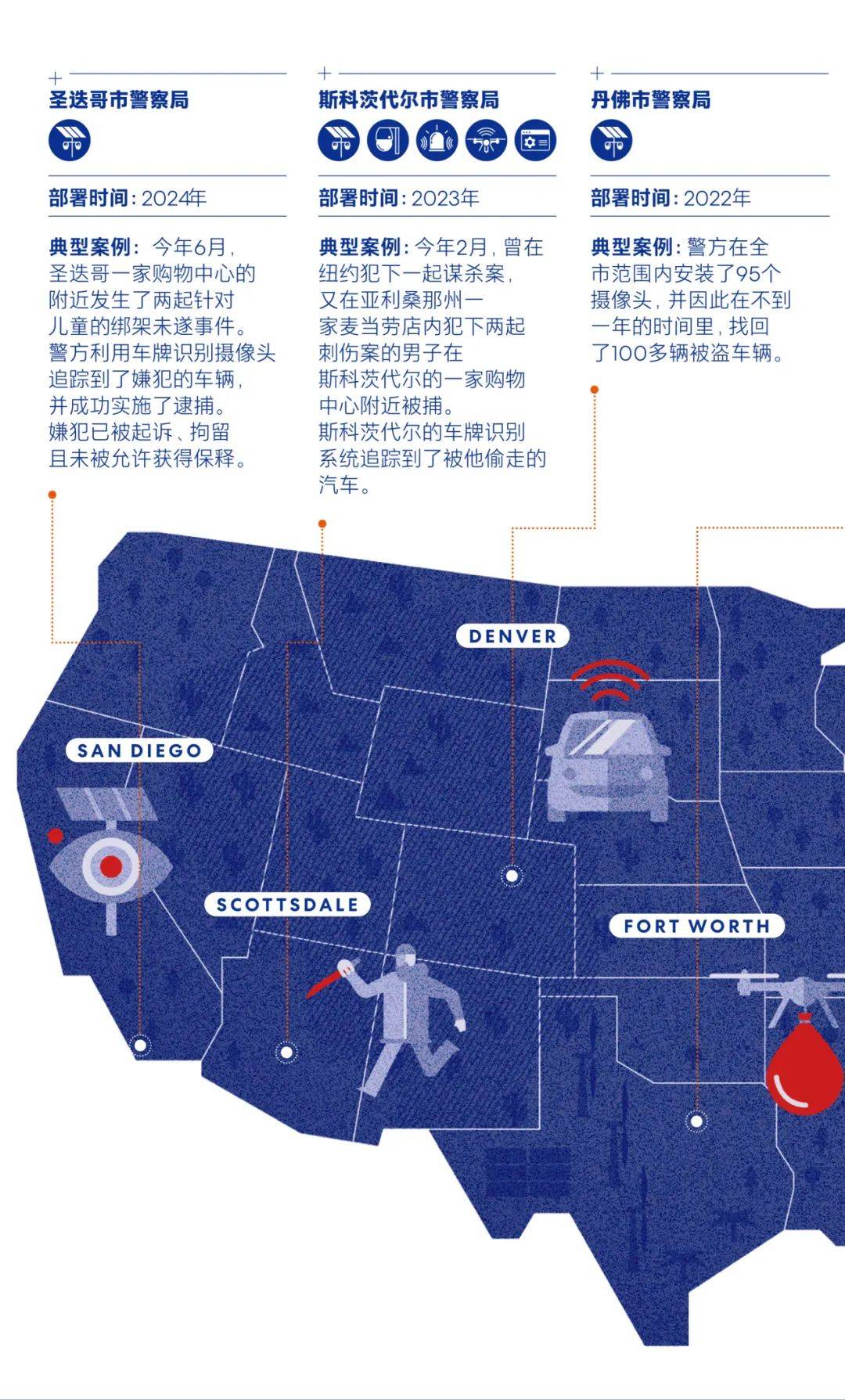
Core Viewpoint - The article discusses the increasing use of technology, specifically license plate recognition (LPR) systems, in law enforcement, highlighting both the benefits and concerns associated with such surveillance technologies. Group 1: Company Overview - Flock Safety, a startup based in Atlanta, specializes in LPR systems and has expanded its product offerings to include security cameras and emergency response drones [2][7]. - The company has raised over $380 million in venture capital and has a market valuation of $4 billion [7]. - Flock's LPR system combines fixed cameras with AI image recognition software, initially priced significantly lower than competitors [8]. Group 2: Contract and Deployment - In March 2024, Flock signed a $3.9 million contract with the San Francisco government to install and operate 400 LPR cameras, with over 200 already deployed by August 2024 [3][5]. - The LPR cameras cover every intersection in San Francisco, which spans 46.9 square miles [3]. Group 3: Market Context and Trends - The article notes a complex crime landscape in San Francisco, where violent and property crime rates are reportedly lower than pre-pandemic levels, despite a significant increase in vehicle thefts nationwide [6]. - Flock has adjusted its sales strategy to emphasize the ability of LPR systems to prevent vehicle theft and assist in law enforcement [7]. Group 4: Public Reception and Concerns - The use of surveillance technology has sparked debate, with civil liberties advocates expressing concerns over privacy violations and potential misuse of data [24][27]. - Despite these concerns, approximately 5,000 individuals, including police chiefs and community leaders, have adopted Flock's systems, indicating a demand for enhanced public safety measures [28]. Group 5: Effectiveness and Criticism - Flock claims to have assisted in solving 10% of reported crimes in the U.S., but the effectiveness of LPR systems in reducing crime remains debated among experts [24][40]. - Critics argue that the proliferation of LPR systems may lead to a surveillance state, raising ethical questions about privacy and civil liberties [39].