轨道交通

Search documents
乘地铁看文物读历史 太原打造“流动”文化风景线
Xin Lang Cai Jing· 2026-01-01 01:17
本次活动还将陆续推出一系列创新举措:包括适时发行集乘车、游览与收藏价值于一体的"文物主题"系 列票卡;围绕传统节日、假期等重要节点,打造互动体验活动,强化公众的参与感与沉浸式文化体验。 中新网太原1月1日电 (记者 胡健)太原市文物局与太原轨道交通集团有限公司联合打造的"坐上地铁看文 物读历史"主题活动12月31日在太原地铁府西街站启幕,并启动为期一年的试行。该活动以轨道交通为 纽带,致力构建"交通+文化"融合发展新模式,让民众在出行中感受城市历史。 公众可通过太原地铁官方"听景APP"获取地铁沿线文博场馆及文物景点的信息,轻松规划文化行程;还 可以通过APP推送的文物景点深度介绍与文化背景解读,更好地了解历史。同时,用户通过该APP购买 晋商博物院、双塔博物馆等门票,购票金额的10%将以地铁乘车抵扣券形式返还。 此次活动旨在通过轨道交通这一城市动脉,拉近公众与文物古迹的距离,希望通过多种形式,为市民提 供更有温度的服务,为游客提供更便捷的文化旅游体验。 随着"坐上地铁看文物读历史"活动的深入开展,太原的历史文化遗产将以更鲜活、更亲近的方式走进市 民日常生活,地铁线路也将成为串联城市文脉、讲述太原故事的"流动 ...
中山交出“十四五”发展答卷 预计2025年GDP将突破4200亿元
Xin Lang Cai Jing· 2026-01-01 00:18
Core Insights - The "14th Five-Year Plan" period has seen significant economic and social development in Zhongshan, with GDP expected to exceed 420 billion yuan by 2025, and a total of 740,000 business entities, marking a 60% increase over five years [2][3] - Zhongshan is actively integrating into the Guangdong-Hong Kong-Macao Greater Bay Area, enhancing its strategic advantages and infrastructure [3][4] Economic Development - Zhongshan's GDP has crossed the thresholds of 350 billion and 400 billion yuan, with a projected growth to over 420 billion yuan by 2025 [2] - The number of business entities has increased to 740,000, reflecting a 60% growth over five years [2] - The total scale of the ten major industrial clusters has surpassed 700 billion yuan, with industrial investment expected to double by 2024 compared to 2021 [2] Infrastructure and Transportation - The completion of the Shenzhen-Zhongshan Link has resulted in an average daily traffic of 88,000 vehicles and over 200,000 passengers, facilitating regional connectivity [4] - Zhongshan has established five new air and cross-city bus routes, serving over 4.8 million passengers [4] - The city has constructed seven expressways and 21 trunk roads, achieving a road network density of over 18 kilometers per 100 square kilometers, ranking among the top in the province [4] Industrial Transformation - Zhongshan has launched 87 new policies since 2022 to address land inefficiencies, resulting in the reclamation of over 52,000 acres of low-efficiency industrial land [5] - The city has built over 23 million square meters of factory space, with a utilization rate exceeding 83%, and attracted investments exceeding 200 billion yuan [5] - R&D expenditure has consistently exceeded 10 billion yuan for three consecutive years, with a growth rate of over 20% for two years [6] Social Development - Zhongshan has implemented the "High-Quality Development Project" to enhance urban-rural coordination, with 12 towns ranked among the top 500 in national economic performance [7] - The income disparity between urban and rural areas has narrowed to a ratio of 1.4:1, maintaining the best record in the province for 11 consecutive years [7] - The city has improved living conditions by renovating over 60,000 rural houses and achieving 100% compliance with provincial standards for beautiful and livable villages [7] Public Services and Safety - Zhongshan has developed a comprehensive social governance system, successfully creating a modernized city governance model [8] - The city has added 289,000 urban jobs and introduced the "Mom Job" employment model, which has been promoted nationwide [8] - Educational and healthcare services have been enhanced, with the addition of 120,000 public school places and several new hospitals [8]


“三个有需必应”是关键
Xin Lang Cai Jing· 2025-12-30 20:11
12月30日,在成都市委经济工作会议结束后,成都国资国企系统紧扣会议精神谋划2026年工作,结合各 自主业明确实干路径,凝聚起推动城市高质量发展的国资国企力量。 "会议为国资国企系统锚定了目标、找准了定位、增强了信心。"成都市委国资国企工委常务副书记、市 国资委党委书记蒋明表示,2026年,全市国资国企系统将坚决做到"三个有需必应",切实增强成都超大 城市引领力。具体体现为,城市功能有需,国资国企必应;产业发展有需,国资国企必应;民营企业有 需,国资国企必应。 从城市功能完善到产业能级提升,从绿色发展攻坚到民生服务升级,2026年,成都国资国企系统将多维 度发力助力城市高质量发展。 转自:成都日报锦观 成都国资国企如何干? "三个有需必应"是关键 成都交投集团则聚焦核心主业,实施"成都高速"倍增计划;全面提速五环路、成温邛高速扩容、市域铁 路公交化等重点项目;规模化应用车网互动(V2G)技术,推动交通与能源融合;同步推进保租房建 设,兼顾枢纽功能与民生保障。 城市更新领域,成都城投集团将以提供新型城市功能为导向推动主业优化,强化产业布局与服务城市战 略深度融合,依托成都城市更新集团,聚焦产业引领、建圈强链与城 ...
宜居宜业 向善向上彰显人文城市温度
Xin Lang Cai Jing· 2025-12-30 20:11
Core Viewpoint - Chengdu is focusing on creating a livable and culturally rich city, emphasizing humanistic values and sustainable development as it approaches the end of the 14th Five-Year Plan and the beginning of the 15th Five-Year Plan [2][8]. Group 1: Urban Environment and Infrastructure - Chengdu has implemented a comprehensive urban environment improvement initiative, targeting ten key areas of public concern, which has enhanced the city's aesthetics and livability [3]. - The city has expanded its metro network, with the total operational mileage exceeding 750 kilometers, improving urban connectivity and commuting experiences [3]. - Traffic management innovations, such as "AI traffic lights" and "variable lanes," have significantly reduced congestion and improved commuting efficiency [3]. Group 2: Housing and Health - Chengdu is developing a multi-tiered supply system for affordable rental housing, with 224,000 housing units planned and approximately 75,000 units operational, providing support for young residents and new citizens [4]. - The city has established 13 smart rehabilitation centers and initiated six major health actions for the elderly, contributing to a modern healthcare infrastructure [4]. - The local modern traditional Chinese medicine industry is approaching a market value of 30 billion yuan [4]. Group 3: Sustainable Development - Chengdu's annual electricity sales have surpassed 100 billion kilowatt-hours, marking it as the first provincial capital in central and western China to achieve this milestone, reflecting its commitment to green and low-carbon development [5]. - The city has been recognized for its outdoor sports destinations, enhancing its appeal as a nature-friendly urban environment [5]. Group 4: Cultural and Creative Industries - Chengdu has been designated as the first "City of Chinese Bookstores," with over 3,600 bookstores and reading spaces, enriching the cultural landscape [6][7]. - The city has made significant strides in the digital cultural and creative industry, with the animated film "Ne Zha" achieving a box office of 15.9 billion yuan, ranking among the top five globally [7]. - A comprehensive policy package to support the digital cultural and creative industry has been introduced, establishing a solid foundation for its growth [7]. Group 5: Tourism and Civil Society - Chengdu's tourism sector has received accolades, with several destinations recognized for their quality, enhancing the city's reputation as a tourist hub [8]. - The city has been acknowledged for its overall civilizational achievements, with a county-level city receiving a national award for its civilizational standards [8]. - Chengdu aims to harmonize development outcomes with the aspirations of its citizens, focusing on creating a warm and inviting urban environment [8].

辉煌科技:公司多年来聚焦于轨道交通行业
Zheng Quan Ri Bao Zhi Sheng· 2025-12-30 13:12
Core Viewpoint - The company, Huiguang Technology, will not have any overseas sales revenue in the first three quarters of 2025, focusing primarily on the domestic rail transit industry [1] Group 1: Company Focus and Clientele - The company has concentrated on the rail transit industry for many years, with major clients including the China National Railway Group and various local urban rail transit projects [1] - The company collaborates with leading domestic and international enterprises and general contractors in the industry [1] Group 2: Business Development Efforts - The company actively participates in domestic and international project bidding related to its products to secure more business opportunities [1] - The company aims to enhance its performance through these efforts [1]

账面现金剩2亿,交通巨头花5.61亿跨界半导体
21世纪经济报道· 2025-12-30 09:24
Core Viewpoint - The article discusses the acquisition of Beijing Silin Semiconductor Technology Co., Ltd. by Tongye Technology, highlighting the high valuation despite Silin's current losses and the performance guarantees tied to the deal [1][6]. Group 1: Acquisition Details - Tongye Technology plans to acquire 91.69% of Silin for 561 million yuan, with a significant valuation premium of nearly four times its book value [1][6]. - Silin has committed to achieving a cumulative net profit of no less than 175 million yuan from 2026 to 2028, with cash compensation required if this target is not met [1][7]. - The acquisition price was adjusted down from 670 million yuan to 612 million yuan, reducing the immediate cash burden on Tongye Technology [7]. Group 2: Financial Performance of Silin - Silin's projected revenues for 2023 and 2024 are 259 million yuan and 277 million yuan, respectively, with net profits of 27.71 million yuan and 20.32 million yuan [5]. - However, in the first seven months of 2025, Silin reported a revenue of 125 million yuan but incurred a net loss of 3.25 million yuan [5][6]. Group 3: Strategic Rationale - The acquisition represents a cross-industry move, as Tongye Technology primarily operates in the rail transportation sector, while Silin focuses on IoT communication chip design [9]. - The integration of Silin's technology is expected to enhance Tongye's product offerings and reduce costs, leveraging synergies in customer bases and operational processes [11]. - Both companies serve major state-owned enterprises, allowing for potential collaboration in marketing and supply chain management [11].
通业科技账面现金仅2亿仍推5.61亿收购 3.59亿商誉悬顶
Chang Jiang Shang Bao· 2025-12-30 06:49
Core Viewpoint - Tongyi Technology (300960.SZ) is extending its business into the power IoT chip sector through a high-premium acquisition of a 91.69% stake in Beijing Silin Semiconductor Technology Co., Ltd. for 561 million yuan, which will significantly enhance its core competitiveness in the market [1][3]. Group 1: Acquisition Details - The acquisition involves a premium valuation of 387.41% for Silin Semiconductor, resulting in an additional goodwill of 359 million yuan for Tongyi Technology [1][4]. - The transaction is significant, constituting 57.6% of Tongyi Technology's total assets and 90.52% of its net assets by the end of 2024, with Silin Semiconductor projected to contribute 65.2% of Tongyi Technology's revenue in 2024 [3][4]. - Silin Semiconductor focuses on the research, design, and sales of power IoT communication chips, including high-speed power line carrier communication chips and modules [3]. Group 2: Financial Implications - Following the acquisition, Tongyi Technology's asset-liability ratio is expected to rise from 37.53% to 66.95%, indicating increased financial and integration risks [2][9]. - As of July 2025, Tongyi Technology's cash and cash equivalents are 200 million yuan, which presents a funding gap against the total payment of 561 million yuan for the acquisition [2][9]. - The projected financial performance post-acquisition indicates a 57.65% increase in revenue and a 32.96% decrease in net profit for the first seven months of 2025 compared to pre-acquisition figures [9]. Group 3: Performance and Risks - Silin Semiconductor reported revenues of 2.59 billion yuan, 2.77 billion yuan, and 1.25 billion yuan for the years 2023, 2024, and the first seven months of 2025, respectively, with a net profit of -325,300 yuan in the latter period [6][7]. - The major customer base for Silin Semiconductor includes state-owned enterprises, with 75.14% of sales concentrated among the top five clients, including the State Grid [7][8]. - The acquisition includes performance commitments from Silin Semiconductor's controlling party, ensuring a cumulative net profit of no less than 175 million yuan from 2026 to 2028 [4][5].

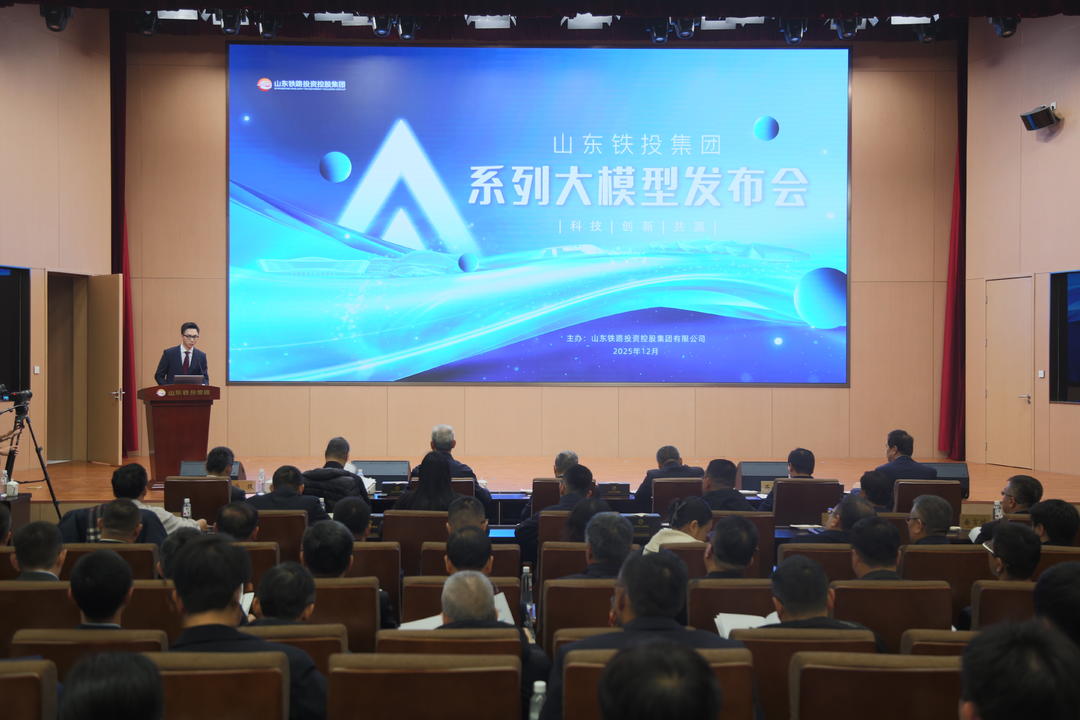
山东铁投集团系列大模型重磅发布:以AI之力破局,为数字交通注入“铁投动能”
Qi Lu Wan Bao· 2025-12-30 04:56
Core Viewpoint - The Shandong Railway Investment Holding Group's series of large model launch events aims to showcase advancements in artificial intelligence and promote the integration of technology with transportation for high-quality railway development [2][3]. Group 1: Event Overview - The launch event featured prominent leaders and experts from various sectors, including academia and industry, emphasizing the importance of AI in transforming transportation [3]. - The event's theme, "Intelligent Driving of Railways, Creating the Future Together," reflects the group's commitment to innovation and collaboration in the railway sector [2]. Group 2: Technological Innovations - The series of large models focuses on key areas such as intelligent construction, operation maintenance, and safety monitoring, enhancing operational efficiency and safety in railway services [4]. - The "Shan Tie Zhi Suan" brand was introduced as a core computing support platform, showcasing its advantages in localized computing needs for railway scenarios [4]. Group 3: Collaborative Initiatives - The establishment of the "Intelligent Construction and Operation Maintenance Innovation Consortium" led by Shandong Railway Investment Group includes 16 leading enterprises and top universities, aiming to tackle critical technologies in the railway industry [5]. - A strategic cooperation agreement was signed with Huawei Technologies, which will provide technical support in areas like 5G and AI, facilitating the digital transformation of railway services [5]. Group 4: Expert Insights - Presentations by experts, including academic insights on green construction technologies for high-speed rail and Huawei's experiences in smart transportation, highlighted the innovative approaches being adopted in the industry [6]. - The event successfully showcased the group's achievements in AI and smart transportation, while also fostering collaboration among government, enterprises, and research institutions [6].
通业科技账面现金仅2亿仍推5.61亿收购 3.59亿商誉悬顶负债率将升至66.95%
Chang Jiang Shang Bao· 2025-12-29 23:45
Core Viewpoint - Tongyi Technology (300960.SZ) is extending its business into the power IoT chip sector through a high-premium acquisition of 91.69% equity in Beijing Silingke Semiconductor Technology Co., Ltd. for 561 million yuan, which will significantly enhance its core competitiveness in the market [1][2]. Group 1: Acquisition Details - The acquisition involves a total valuation premium of 387.41% for Silingke, with the company expected to generate a net profit of no less than 175 million yuan over the next three years [1][3]. - The transaction price of 561 million yuan represents 57.6% and 90.52% of Tongyi Technology's total assets and net assets, respectively, constituting a major asset restructuring [2][3]. - Following the acquisition, Tongyi Technology will see an increase in goodwill amounting to 359 million yuan [3][4]. Group 2: Financial Implications - Post-acquisition, Tongyi Technology's asset-liability ratio is projected to rise from 37.53% to 66.95%, indicating a significant increase in financial risk [1][7]. - As of July 2025, Tongyi Technology's cash and cash equivalents stand at 200 million yuan, which presents a funding gap against the total payment of 561 million yuan for the acquisition [7]. - The financial performance of Silingke shows a decline, with a net profit of -3.25 million yuan in the first seven months of 2025, raising concerns about future profitability [6][7]. Group 3: Market and Product Strategy - The acquisition allows Tongyi Technology to apply high-speed power line carrier chips in rail transit systems, thereby expanding its market application range [3][6]. - Silingke's main products include high-speed power line carrier communication chips and modules, which are crucial for the power IoT sector [2][3]. - The sales to the top five customers account for 75.14% of Silingke's revenue, with the largest customer being the State Grid, indicating a concentrated customer base [6][7].
溢价近4倍,锁定1.75亿业绩对赌!通业科技跨界并购半导体
2 1 Shi Ji Jing Ji Bao Dao· 2025-12-29 11:33
Group 1 - Tongyi Technology plans to acquire 91.69% of Beijing Silin Semiconductor Technology Co., Ltd. for 561 million yuan, marking a significant move into the semiconductor sector through a cross-industry merger [1][3] - The acquisition involves a performance guarantee where Silin Semiconductor commits to a cumulative net profit of no less than 175 million yuan from 2026 to 2028, with cash compensation required if targets are not met [6][7] - The valuation of Silin Semiconductor reflects a premium of nearly four times its book value, with an estimated total equity valuation of 612 million yuan, indicating a substantial increase from its book net assets [4][5] Group 2 - Silin Semiconductor focuses on IoT communication chip design, with products including power communication chips and wireless communication chips, primarily serving clients like State Grid [3] - Despite reporting losses, Silin Semiconductor's projected revenues for 2023 and 2024 are 259 million yuan and 277 million yuan, respectively, with a net profit of 27.71 million yuan and 20.32 million yuan [3] - The merger is expected to enhance Tongyi Technology's profitability, with potential net profits exceeding 100 million yuan in the future, leveraging Silin Semiconductor's technology and market presence [8][9] Group 3 - Tongyi Technology's core business includes the development and manufacturing of electrical products for rail transit, with a revenue of 294 million yuan in the first three quarters of the year, showing an 11.97% year-on-year increase [8] - The merger is anticipated to create synergies, allowing for the integration of Silin's chip technology into Tongyi's products, thereby reducing costs and enhancing competitiveness [9] - Both companies share similar end clients, such as State Grid and China Railway Group, which may facilitate collaborative marketing and resource sharing post-acquisition [9]