
钢铁冶炼

Search documents
钢材、铁矿石日报:产业担忧发酵,钢矿弱势下行-20250901
Bao Cheng Qi Huo· 2025-09-01 10:24
Report Industry Investment Rating No relevant content provided. Core Viewpoints of the Report - The main contract price of rebar declined weakly, with a daily decline of 1.89%. In the current situation of increasing supply and demand, industrial contradictions continue to accumulate, inventory increases, and steel prices are still under pressure. It is expected to continue the weak bottom - seeking trend, and attention should be paid to demand performance [4]. - The main contract price of hot - rolled coil plate showed a weak operation, with a daily decline of 1.58%. The demand for hot - rolled coils has certain resilience, providing support for prices. However, concerns about external demand remain, and the supply contraction is difficult to sustain. It is expected to continue the weakening trend in oscillation, and attention should be paid to steel mill production [4]. - The main contract price of iron ore weakened again, with a daily decline of 2.67%. The demand for iron ore continues to weaken, while the supply is stable. The ore fundamentals are weakly stable, and the ore valuation is relatively high. Under the game of multiple and short factors, the ore price will continue the weak oscillation operation, and attention should be paid to steel performance [4]. Summary by Related Catalogs 1. Industry Dynamics - In August, China's Manufacturing Purchasing Managers' Index (PMI) was 49.4%, up 0.1 percentage points from the previous month. The PMI of large enterprises was 50.8%, up 0.5 percentage points; the PMI of medium - sized enterprises was 48.9%, down 0.6 percentage points; the PMI of small enterprises was 46.6%, up 0.2 percentage points [6]. - In August 2025, China's heavy - truck market sold about 84,000 vehicles, a year - on - year increase of about 35%. From January to August, the cumulative sales exceeded 700,000 vehicles, and it is almost certain that the annual sales will exceed 1 million vehicles [7]. - From January to August 2025, nearly 110 anti - dumping and countervailing investigations or rulings on Chinese steel products were announced, involving various steel products [8]. 2. Spot Market - For rebar, the Shanghai price was 3,220 yuan/ton, down 20 yuan; the Tianjin price was 3,210 yuan/ton, down 30 yuan; the national average price was 3,300 yuan/ton, down 26 yuan. For hot - rolled coil plate, the Shanghai price was 3,350 yuan/ton, down 30 yuan; the Tianjin price was 3,300 yuan/ton, down 60 yuan; the national average price was 3,430 yuan/ton, down 28 yuan. The price of Tangshan steel billet was 2,970 yuan/ton, down 30 yuan, and the price of Zhangjiagang heavy scrap was 2,120 yuan/ton, unchanged [9]. - The price of 61.5% PB powder at Shandong ports was 765 yuan/ton, down 13 yuan; the price of Tangshan iron concentrate was 788 yuan/ton, unchanged. The sea freight from Australia was 10.11 yuan, down 0.05 yuan; from Brazil was 24.51 yuan, up 0.14 yuan. The SGX swap (current month) was 101.81, down 0.09, and the Platts Index (CFR, 62%) was 103.60, down 0.30 [9]. 3. Futures Market - The closing price of rebar futures was 3,115 yuan/ton, with a decline of 1.89%, the trading volume was 1,342,816, an increase of 534,144, and the open interest was 1,633,714, an increase of 578,004 [11]. - The closing price of hot - rolled coil plate futures was 3,303 yuan/ton, with a decline of 1.58%, the trading volume was 587,250, an increase of 59,364, and the open interest was 1,195,204, an increase of 28,571 [11]. - The closing price of iron ore futures was 766.0 yuan/ton, with a decline of 2.67%, the trading volume was 393,789, an increase of 178,541, and the open interest was 453,950, a decrease of 19,658 [11]. 4. Related Charts - The report provides various charts related to steel and iron ore inventories (such as rebar inventory, hot - rolled coil plate inventory, national 45 - port iron ore inventory, etc.), steel mill production (such as 247 - sample steel mill blast furnace opening rate, 87 - independent electric furnace opening rate, etc.) [13][26]. 5. Future Market Judgment - For rebar, supply and demand both increased. The weekly output increased by 59,100 tons, and demand improved with a weekly increase of 94,100 tons in apparent demand. However, high - frequency daily transactions were sluggish. With accumulated industrial contradictions and increasing inventory, it is expected to continue the weak bottom - seeking trend [34]. - For hot - rolled coil plate, supply and demand were stable. The weekly output decreased by 5,000 tons, and the weekly apparent demand decreased by 5,500 tons. Although there is demand resilience, external demand concerns remain, and it is expected to continue the weakening trend in oscillation [34]. - For iron ore, supply and demand both weakened. Steel mill production declined, and ore demand is expected to fall. The domestic port ore arrival increased, and overseas supply remained high. Under the game of multiple and short factors, the ore price will continue the weak oscillation operation [35].
中报收官!近八成公司上半年盈利,上千家净利增速逾五成
Shen Zhen Shang Bao· 2025-08-30 06:18
Group 1 - A total of 5424 A-share companies released their mid-year reports, with 4178 companies reporting profits, accounting for 77% [1] - The total revenue of all A-shares in the first half of the year reached 34.96 trillion yuan, a year-on-year increase of 0.02%, while the net profit attributable to shareholders was 2.99 trillion yuan, up 2.45% year-on-year [1] - Industries such as comprehensive, agriculture, forestry, animal husbandry, fishery, steel, and building materials saw significant profit growth, while real estate, coal, and light industry experienced substantial declines in net profit [1] Group 2 - 661 companies reported a doubling of net profit, with 2908 companies showing a year-on-year increase in net profit, representing 54% [3] - Among the A-shares, 56 companies had total revenues exceeding 100 billion yuan, with China Petroleum and China Petrochemical leading the list [2] - The top five companies by net profit were Industrial and Commercial Bank of China, China Construction Bank, Agricultural Bank of China, Bank of China, and China Mobile, with net profits of 1681.03 billion yuan, 1620.76 billion yuan, 1395.1 billion yuan, 1175.91 billion yuan, and 842.35 billion yuan respectively [2] Group 3 - The banking sector accounted for approximately 37% of total A-share net profit, with a combined net profit of 1.1 trillion yuan [4] - The financial sector, including banks and non-bank financial institutions, achieved a total net profit of about 1.4 trillion yuan, nearly half of the total A-share net profit [4] - Despite overall poor performance in the liquor industry, Kweichow Moutai reported a net profit of 454 billion yuan, up 8.9% year-on-year [4] Group 4 - The agriculture, forestry, animal husbandry, and fishery sector saw significant profit increases, with Muyuan Foods reporting a net profit of 10.5 billion yuan, a staggering increase of 1170% [5] - Steel companies benefited from a significant drop in the prices of key raw materials, with Baosteel reporting a net profit of 4.879 billion yuan, up 7.36% year-on-year [5] - Other steel companies like Sansteel Minguang and Fangda Special Steel reported net profit increases of 159% and 149% respectively [5]



重要进展!成功实现稳定产出→
Ke Ji Ri Bao· 2025-08-29 10:00
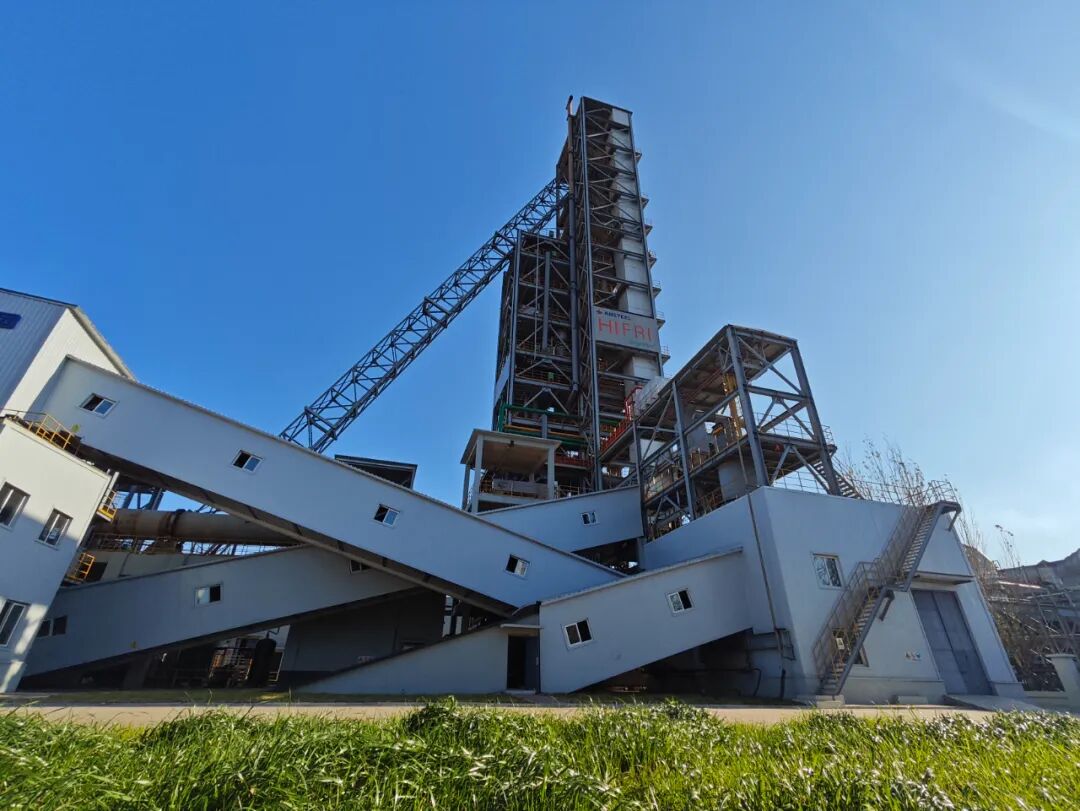
Core Viewpoint - Ansteel Group has successfully established the world's first green electricity and green hydrogen fluidized bed hydrogen metallurgy pilot line, achieving stable production of nearly zero-carbon direct reduced iron products with a metallization rate of 95%, marking a significant transition from laboratory research to pilot testing [1][3] Group 1 - The project utilizes green electricity sourced from wind power and employs advanced alkaline water electrolysis technology to produce green hydrogen, addressing issues related to high energy consumption, material stability, and safety in hydrogen storage, transportation, and usage [3] - The project leverages new fluidized bed hydrogen reduction iron technology, overcoming challenges such as poor adaptability of traditional hydrogen metallurgy raw materials, low reduction efficiency, and issues with agglomeration, thus enabling a complete process from hydrogen production to reduction and briquetting [3] - The technology package developed has complete independent intellectual property rights, showcasing a significant advancement in hydrogen metallurgy processes [3]


商务预报:8月18日-24日国内重要生产资料价格情况
Shang Wu Bu Wang Zhan· 2025-08-28 07:53
Price Trends - The price of thermal coal (calorific value 5000-5500 kcal) is 766 yuan/ton, showing a month-on-month increase of 0.4% but a year-on-year decrease of 7.2% [1] - The price of No. 2 smokeless block coal is 1138 yuan/ton, with a month-on-month increase of 0.1% and a year-on-year decrease of 10.2% [1] - Diesel (0) is priced at 7480 yuan/ton, reflecting a month-on-month decrease of 0.2% and a year-on-year decrease of 6.2% [1] - Gasoline (92) is priced at 8838 yuan/ton, with a month-on-month decrease of 0.1% and a year-on-year decrease of 6.0% [1] - Rebar (Φ16-25mm) is priced at 3411 yuan/ton, showing a month-on-month decrease of 1.1% and a year-on-year decrease of 2.6% [1] - High-speed wire rod (Φ6.5mm) is priced at 3595 yuan/ton, with a month-on-month decrease of 1.2% and a year-on-year decrease of 2.8% [1]
美锦能源新设国际贸易公司,含稀有稀土金属业务
Qi Cha Cha· 2025-08-28 06:27
Group 1 - The establishment of Hainan Meijin Haina International Trade Co., Ltd. has been reported, which is fully owned by Meijin Energy (000723) [1] - The new company will engage in various activities including steel and iron smelting, sales of high-quality special steel materials, resource recycling technology research and development, biochemistry product technology research and development, and rare earth metal smelting [1]

建信期货焦炭焦煤日评-20250828
Jian Xin Qi Huo· 2025-08-28 02:35
Report Summary 1. Report Industry Investment Rating No relevant content provided. 2. Core Viewpoints of the Report - On August 27, the main contracts 2601 of coke and coking coal futures weakened again after a weak rebound, giving back most of the gains since August 22. It is recommended to view the market with the idea of a rebound followed by a decline. The stabilization and rebound of coal and coke futures still depend on the recovery of the terminal demand in the steel market [5][11]. 3. Summary by Relevant Catalogs 3.1 Market Review - **Futures Market**: On August 27, the main contract J2601 of coke futures closed at 1669.5 yuan/ton, down 2.82%; the main contract JM2601 of coking coal futures closed at 1154 yuan/ton, down 3.87%. The KDJ indicators of the daily lines of both contracts showed a downward trend, and the MACD green columns continued to expand for two days [5][7]. - **Spot Market**: The ex - warehouse price index of quasi - first - class metallurgical coke in ports remained unchanged. The summary price of low - sulfur main coking coal in some areas increased by 30 yuan/ton. The production of independent coking plants increased slightly, while the production of steel mills decreased. The inventory of port coke declined for two consecutive weeks, and steel mills continued to reduce inventory [7][10]. 3.2 Future Outlook - **News**: From August 25 to September 3, some coking enterprises in Henan Province will implement independent production restrictions of 20 - 35%. Since August 26, coking enterprises have raised the coke price. On August 20, Mongolia passed a government resolution on increasing export measures [9]. - **Fundamentals**: In terms of coke, the production of independent coking plants increased slightly, and the production of steel mills decreased. The inventory of ports and steel mills decreased, while the inventory of coking plants increased slightly. The profit per ton of coke has been profitable for two consecutive weeks. In terms of coking coal, from January to July, the year - on - year decline in the import volume of coal and lignite expanded, and the inventory of mines and coking plants changed. The spot price of coking coal is difficult to rise continuously [10]. 3.3 Industry News - From January to July, the total profit of industrial enterprises above designated size decreased by 1.7% year - on - year. The performance of some coal and steel enterprises in the first half of 2025 declined. The western oil and gas energy corridor project in Xinjiang achieved a breakthrough. The demand for green power is expected to increase, and the coal price of thermal power is expected to decline. The cement industry in Fujian and Jiangxi provinces held a meeting to discuss "anti - involution". The anti - dumping review of Chinese steel products in Australia was postponed, and the export of Russian thermal coal increased [12][13][14]. 3.4 Data Overview The report provides multiple data charts, including the spot price index of metallurgical coke, the summary price of main coking coal, the production and capacity utilization rate of coking plants and steel mills, the inventory of coke and coking coal, and the basis of futures contracts [16][19][20][32].
产经观察|零碳园区,降碳“三部曲”
Ren Min Ri Bao· 2025-08-27 02:08
Core Viewpoint - The construction of zero-carbon parks is a crucial strategy for promoting green transformation in China, especially during the critical period of achieving carbon peak goals. The National Development and Reform Commission (NDRC) has issued a notice to support the establishment of zero-carbon parks, which will contribute directly to carbon reduction and serve as practical examples for building a "zero-carbon society" [1][11]. Group 1: Energy Consumption Reduction - Zero-carbon parks aim to reduce energy consumption by utilizing green electricity and transforming the energy structure within the parks. For instance, the Dafeng Port Zero-Carbon Industrial Park in Jiangsu has established a 13.76 MW centralized photovoltaic power station to supply green electricity directly to enterprises [3][4]. - The park plans to achieve over 85% of its electricity consumption from traceable green electricity by 2030, enhancing the clean energy supply [4]. - In Inner Mongolia, the Ordos Zero-Carbon Industrial Park has built an independent distribution network and a 220 kV substation, with a capacity of 385,000 kW for wind and solar energy projects, expected to supply 900 million kWh of green electricity annually [4]. Group 2: Structural Adjustment - The optimization of industrial structure within zero-carbon parks is essential for enhancing the "green competitiveness" of industries. For example, the Lianxin Steel Company in Jiangsu plans to upgrade its electric arc furnace to a more energy-efficient model, which will significantly reduce carbon emissions [7][8]. - The development of low-energy, low-pollution, and high-value-added emerging industries is encouraged, with a focus on creating a virtuous cycle of "green energy attracting green industries" [8]. - The establishment of zero-carbon parks is expected to guide traditional industries in exploring deep decarbonization paths and promote sustainable development in high-energy-consuming sectors [8]. Group 3: Management Enhancement - The implementation of artificial intelligence technology is being utilized to improve the management efficiency of zero-carbon parks. For instance, the Dafeng Port Zero-Carbon Industrial Park has established a carbon management platform to provide customized carbon management services [9][10]. - The NDRC has set several guiding indicators for zero-carbon parks, including the proportion of clean energy consumption and the comprehensive utilization rate of industrial solid waste, to enhance energy and carbon management capabilities [10]. - The Ordos Zero-Carbon Industrial Park has achieved nearly zero wastewater discharge, with 95% of wastewater being reused, demonstrating effective resource recovery practices [10]. Group 4: Policy and Support - The NDRC plans to identify the first batch of national-level zero-carbon parks and provide active support in terms of pilot exploration, project construction, and funding arrangements [11]. - The notice emphasizes the need for parks to leverage their resource endowments and industrial characteristics to develop feasible paths for zero-carbon park construction [11].
朝闻国盛:央地财政关系的历史、现状和前景分析
GOLDEN SUN SECURITIES· 2025-08-27 00:24
Group 1: Central-Local Fiscal Relations - The report discusses the historical, current, and future analysis of central-local fiscal relations, indicating that reforms may focus on cultivating local tax sources, moderately centralizing fiscal responsibilities, and promoting fiscal system reforms below the provincial level [5]. - It highlights that the macro tax burden is decreasing and land finance is waning, making it essential to cultivate new tax sources for local governments, with a projected increase in local revenue of approximately 209.3 billion yuan from consumption tax reforms [5]. - The report suggests that the central government may take on more fiscal responsibilities in areas with broader impacts, such as higher education, public health, and social security, to alleviate local fiscal pressures [5]. Group 2: Computer Industry - Cambrian Technology - Cambrian Technology reported a significant revenue increase of 4,348% year-on-year for H1 2025, reaching 28.81 billion yuan, with a net profit of 1.038 billion yuan, reflecting a 296% increase [9][10]. - The company maintained a gross margin of 55.88% in Q2 2025, indicating stable profitability despite rapid revenue growth, with expectations for strong cash flow and inventory recovery in Q3 [10][11]. - The report anticipates that the AI wave will significantly boost demand for computing power, with Cambrian positioned to benefit from increased domestic market share in the face of geopolitical challenges [11][12]. Group 3: Food and Beverage Industry - Nongfu Spring - Nongfu Spring reported a revenue of 25.622 billion yuan for H1 2025, a year-on-year increase of 15.6%, with a net profit of 7.622 billion yuan, up 22.1% [20]. - The company is expected to continue recovering market share in packaged water and is focused on innovation in beverage products, projecting net profits of 14.6 billion yuan by 2027 [20]. Group 4: Environmental Sector - Huahong Technology - Huahong Technology experienced significant profit growth in H1 2025, driven by improved cost control and the recovery of rare earth prices, with expectations for rapid growth as new capacities come online [21]. - The report maintains a "buy" rating, emphasizing the company's strong position in the recycling of rare earths and the anticipated demand from the automotive sector [21]. Group 5: Real Estate Sector - China Overseas Property - China Overseas Property reported a revenue increase of 3.7% in H1 2025, with a net profit of 7.69 billion yuan, reflecting a 4.3% growth [24]. - The company is focusing on optimizing its service structure and expanding its management area, with expectations for continued growth in the property management sector [25].






建信期货钢材日评-20250826
Jian Xin Qi Huo· 2025-08-26 03:04
Report Information - Report Type: Steel Daily Review [1] - Date: August 26, 2025 [2] - Research Team: Black Metal Research Team [3] - Researchers: Zhai Hepan, Nie Jiayi, Feng Zeren [3] Industry Investment Rating No information provided. Core Viewpoints - On August 25, the main contracts of rebar and hot-rolled coil futures rebounded significantly, but the gains narrowed. The spot prices of rebar and hot-rolled coil generally increased. The steel futures market may show an oscillating rebound in the future, but its strength is weaker than that of the stock index. It needs to wait for the stock index to reach its peak to change the current lukewarm market pattern. [7][9][11] - The coking coal market ended its nearly one-and-a-half-year downward trend in July 2025, with both futures and spot prices rebounding from the bottom. There may still be a phased upward trend in August, but price increases may be limited. [13] Summary by Directory 1. Market Review and Outlook for the Future 1.1 Spot Market Dynamics and Technical Analysis - On August 25, the spot prices of rebar and hot-rolled coil in major markets generally increased. The prices of rebar in Shanghai, Nanjing and other cities rose by 30 yuan/ton, and the prices of hot-rolled coil in Shanghai, Shenyang and other cities rose by 30 - 40 yuan/ton. [9] - The daily KDJ indicators of the rebar and hot-rolled coil 2510 contracts showed a differentiated trend. The J and K values turned up, while the D value continued to decline. The daily MACD green bars of the rebar 2510 contract narrowed for two consecutive trading days, and the daily MACD green bars of the hot-rolled coil 2510 contract began to narrow. [9] 1.2 Outlook for the Future - News: Fed Chairman Powell hinted at a possible interest rate cut in September; the coal and coke market turned up significantly due to expectations of strengthened safety inspections after the Fujian coal mine accident. [10][11] - Fundamentals: The weekly output of the five major steel products has increased for four consecutive weeks, the factory inventory has slightly decreased, but the social inventory has increased for six consecutive weeks to a new high since mid-May. The weekly apparent demand has increased after six consecutive weeks of decline. The blast furnace capacity utilization rate remains at a relatively high level, and the daily average pig iron output remains above 2.4 million tons per day. [11] - Financial Market: The domestic A-share market continued to rise, which may attract some futures market funds to the stock market, but also help boost the prices of coal, coke, steel, and ore commodities. [11] 2. Industry News - National Energy Administration: As of the end of July, the cumulative installed power generation capacity nationwide was 3.67 billion kilowatts, a year-on-year increase of 18.2%. [12] - China Iron and Steel Association: In mid-August, the social inventory of five major steel products in 21 cities was 8.43 million tons, a month-on-month increase of 400,000 tons. [12] - Company Performance: New Steel Co., Ltd. achieved a net profit attributable to shareholders of 111 million yuan in the first half of 2025, turning a profit year-on-year; Xinji Energy Co., Ltd. had a net profit attributable to shareholders of approximately 920 million yuan in the first half of 2025, a year-on-year decrease of 21.72%. [12] - Coking Coal Market: In July 2025, the coking coal market ended its downward trend, and the market showed a pattern of "three leading rises, one decline, and one stability". There may still be a phased upward trend in August, but price increases may be limited. [13] - Customs Data: In July 2025, China's coal imports increased by 7.8% month-on-month to 35.609 million tons. [14] - US Anti-dumping Ruling: The US Department of Commerce ruled that if the current anti-dumping measures against carbon steel alloy wire rods imported from China are cancelled, the dumping margin of Chinese products will reach 110.25%. [14] - Steel Production Data: In July 2025, the global crude steel output was 150 million tons, a year-on-year decrease of 1.3%; Japan's crude steel output was 6.918 million tons, a month-on-month increase of 3.1%. [14] - VLCC Freight: As of August 24, 2025, the VLCC TCE increased by 31.7% week-on-week to $45,800 per day. OPEC+ plans to increase production by 547,000 barrels per day in September. [14] 3. Data Overview - The report provides charts on the spot prices of rebar and hot-rolled coil in major markets, the weekly output of five major steel products, factory and social inventories, blast furnace and electric furnace operating rates, daily average pig iron output, and apparent consumption of five major steel products, among others. [17][19][20]
中辉期货热卷早报-20250826
Zhong Hui Qi Huo· 2025-08-26 01:47
Report Summary Investment Ratings - **Cautiously Bullish**: Rebar, Hot Rolled Coil, Coke, Coking Coal, Manganese Silicon [1] - **Cautiously Bearish**: Iron Ore, Ferrosilicon [1] Core Views - **Rebar**: With good blast furnace profits and improved electric furnace profits, steel mills are highly motivated to produce, leading to high molten iron output. However, demand remains weak, and the supply-demand balance is expected to loosen. Despite recent downward trends, policy disturbances and the Fed's loose signals may trigger a short-term rebound [1][4][5]. - **Hot Rolled Coil**: Production, apparent demand, and inventory have slightly increased, with a relatively stable fundamental situation. The supply-demand balance is expected to loosen, but after continuous decline, the short-term downside space may be limited, and a short-term rebound is possible [1][4][5]. - **Iron Ore**: Molten iron output has increased, environmental protection restrictions are less than expected, steel mills have completed restocking, and port inventories are accumulating. The fundamental situation is moderately bearish, and the ore price is expected to fluctuate weakly [1][6]. - **Coke**: Spot prices have started the eighth round of increases, and coke enterprise profits have improved. The supply-demand balance is relatively stable, and short-term rebound is expected due to strengthened safety supervision expectations [1][9]. - **Coking Coal**: Domestic production is flat compared to the previous period, and Mongolian coal imports have increased significantly. Although the futures price has a premium over the warehouse receipt cost and there is downward correction space in the medium term, short-term rebound is possible due to strengthened safety supervision expectations [1][13]. - **Manganese Silicon**: Supply-demand balance is loosening, production is increasing, and the steel mill restocking is completed. Manganese ore shipments have decreased, but inventory is stable. The cost side provides some support, and short-term rebound may occur under macro - sentiment influence, while the medium - term strategy is to sell on rallies [1][17][18]. - **Ferrosilicon**: Production is increasing, demand is declining, and inventory pressure is high. It may follow the market for a weak short - term rebound, and it is advisable to wait and see [1][17][18]. Detailed Summaries Rebar - **Price**: Futures prices for different contracts (01, 05, 10) are 3224, 3261, and 3138 respectively, with price increases of 29, 31, and 19 [2]. - **Supply - Demand**: High production enthusiasm of steel mills, weak demand, and expected loosening of supply - demand balance [1][4]. - **Operation Suggestion**: Short - term rebound possible due to policy and Fed signals [1][5]. Hot Rolled Coil - **Price**: Futures prices for different contracts (01, 05, 10) are 3377, 3388, and 3389 respectively, with price increases of 25, 30, and 28 [2]. - **Supply - Demand**: Slightly increased production, apparent demand, and inventory, with a loosening supply - demand trend [1][4]. - **Operation Suggestion**: Short - term rebound possible after continuous decline [1][5]. Iron Ore - **Price**: Not provided in the text. - **Supply - Demand**: Increased molten iron output, less - than - expected environmental protection restrictions, completed restocking of steel mills, and accumulating port inventories [1][6]. - **Operation Suggestion**: Cautiously bearish [1][6]. Coke - **Price**: Futures prices for 1 - month, 5 - month, and 9 - month contracts are 1736.0, 1825.5, and 1652.0 respectively, with price increases of 57.5, 56.0, and 25.0 [8]. - **Supply - Demand**: Relatively stable supply - demand balance, with stable production and inventory [1][9]. - **Operation Suggestion**: Cautiously bullish, short - term rebound expected [1][9][10]. Coking Coal - **Price**: Futures prices for 1 - month, 5 - month, and 9 - month contracts are 1215.5, 1261.5, and 1061.5 respectively, with price increases of 53.5, 52.0, and 13.5 [12]. - **Supply - Demand**: Flat domestic production, increased Mongolian coal imports, and stable raw material demand [1][13]. - **Operation Suggestion**: Cautiously bullish, short - term rebound expected [1][13][14]. Manganese Silicon - **Price**: Futures prices for 01, 05, and 09 contracts are 5898, 5946, and 5798 respectively, with price increases of 66, 65, and 56 [16]. - **Supply - Demand**: Loosening supply - demand balance, increased production, and completed steel mill restocking [1][17]. - **Operation Suggestion**: Short - term rebound possible under macro - sentiment influence, medium - term sell - on - rallies strategy [1][17][18]. Ferrosilicon - **Price**: Futures prices for 01, 05, and 09 contracts are 5662, 5790, and 5494 respectively, with price increases of 46, 44, and 48 [16]. - **Supply - Demand**: Increasing production, declining demand, and high inventory pressure [1][17]. - **Operation Suggestion**: Cautiously bearish, short - term weak rebound, advisable to wait and see [1][17][18].