
黄金交易

Search documents
解读黄金税收政策调整
Jin Shi Shu Ju· 2025-11-06 03:06
Core Viewpoint - The newly announced tax policies regarding gold by the Ministry of Finance and the State Administration of Taxation are set to enhance the importance of regulated gold exchanges, improve international gold pricing power, and potentially increase the processing costs of non-investment gold products, leading to higher retail prices [1][2][4]. Group 1: Market Impact - The policies are expected to strengthen the dominant position of the Shanghai Gold Exchange and the Shanghai Futures Exchange, enhancing their influence in international gold pricing [2][4]. - The new tax regulations will likely reduce the viability of private gold trading by increasing compliance costs and tax burdens, encouraging clients to engage in transactions through regulated exchanges [2][5]. - The cost of gold for jewelry and other industrial uses may rise by approximately 7%, impacting end-user prices [3][10]. Group 2: Structural Changes - The policies aim to guide the gold market from "off-market dispersion" to "on-market concentration," promoting standardized trading and enhancing market regulation [4][6]. - The tax adjustments are designed to block potential tax arbitrage opportunities and encourage a more regulated market environment [5][6]. - The changes will compel downstream processing companies to transition from basic raw material handling to higher value-added creative and innovative product development [10]. Group 3: Tax Implications - Investment-grade gold transactions will continue to benefit from immediate tax refunds, while non-investment products will face a 7% effective tax burden after deductions [7][10]. - E-commerce platforms that have integrated with the tax system may see short-term price increases for non-member unit gold sales due to the lack of tax benefits [9]. - The absence of new tax regulations for individuals selling previously owned gold means that personal impacts remain limited, although future sales may require proper invoicing to avoid tax liabilities [9][10].


黄金税收“新政”,利于提升人民币黄金定价权
2 1 Shi Ji Jing Ji Bao Dao· 2025-11-05 22:40
Core Points - The announcement by the Ministry of Finance and the State Taxation Administration regarding tax policy adjustments on gold trading aims to enhance centralized trading, price discovery, and risk mitigation functions in the gold market [1][2] - The exemption of value-added tax (VAT) for transactions conducted through the Shanghai Gold Exchange and Shanghai Futures Exchange is expected to encourage more trading activities within these platforms, promoting transparency and standardization in gold pricing [1][2] - The adjustments are designed to strengthen China's pricing power in the global gold market, addressing the current lack of representation in international gold pricing despite being the largest consumer [3] - The differentiated VAT rates will encourage investment-type gold transactions while curbing fraudulent activities related to tax refunds and invoice issuance [4] - The impact of the VAT changes will vary for on-exchange members and off-exchange clients, with potential cost increases for non-investment gold enterprises [5][6] Summary by Sections Tax Policy Adjustments - The new tax policy will be effective from November 1, 2025, to December 31, 2027, focusing on standard gold traded on designated exchanges [1] - The policy aims to consolidate the dominant position of the exchanges in gold trading and pricing [1][2] Market Structure and Membership - The Shanghai Gold Exchange has 305 members, categorized into different types, with specific financial requirements for membership [2] - The financial health and risk management capabilities of exchange members are superior to those of off-exchange clients, enhancing market stability [2] Pricing Power - China's current lack of pricing power in the international gold market is attributed to fragmented domestic trading and insufficient standardization [3] - The daily trading volume of the Shanghai Gold Exchange is significant, but international pricing is still dominated by London and COMEX [3] VAT Rate Differentiation - The announcement encourages investment-type gold transactions and aims to prevent fraudulent practices in the gold market [4] - Specific conditions for VAT exemptions and invoicing are outlined for different types of transactions involving standard gold [4] Impact on Enterprises - On-exchange members will experience minimal impact from the VAT changes, while off-exchange clients may face varying effects [5][6] - Increased production costs for non-investment gold enterprises could lead to higher retail prices for consumers [5]
黄金税收调整深度解析:影响几何?未来如何应对?
Sou Hu Cai Jing· 2025-11-05 16:26
一 要弄明白这事儿,得先搞清楚政策到底改了什么,这次调整的核心很明确,从2025年11月1日起,零售 商从上海黄金交易所购买黄金后,再销售时不能像以前那样抵扣增值税了。 别小看这个"增值税抵扣",它直接关系着黄金从交易所到零售端的成本高低。 2025年11月1日,彭博社的一条消息在黄金市场炸开了锅:要取消一项实行多年的黄金税收优惠政策。 消息一出,不管是盯着金条的投资者,还是盘算着买金饰的普通人,都在琢磨同一个问题:以后买黄金 是不是要多掏腰包? 上海黄金交易所可不是普通的市场,它是国内黄金流通的核心枢纽,承担着价格发现、风险管理和资源 配置的关键作用,国内绝大多数黄金零售商、精炼企业和金融机构的黄金都从这里采购。 过去,这些采购方能通过抵扣增值税降低成本,相当于给黄金流通减了税。 现在优惠取消,意味着从交易所出来的黄金,只要进入后续销售环节,不管是直接卖金条,还是加工成 首饰、做成工业原料,都得实打实承担这部分税负。 覆盖的产品范围几乎没有例外,高纯度的投资金条、金锭,央行批准的法定金币,老百姓日常戴的黄金 首饰,甚至工业生产用的黄金材料,只要源头是上海黄金交易所,都受影响。 这等于打破了过去黄金流通中"一 ...

传工商银行(01398)计划在香港机场开设黄金仓库 料未来数月完成相关准备工作
智通财经网· 2025-11-05 08:47
Core Viewpoint - Industrial and Commercial Bank of China (ICBC) plans to establish a gold warehouse at Hong Kong International Airport, aiming to enhance its precious metals trading business and support Hong Kong's goal of becoming a global gold hub [1] Group 1: Company Initiatives - ICBC has rented part of the warehouse space at Hong Kong International Airport and aims to complete preparations in the coming months [1] - The bank is a clearing member of the Shanghai Gold Exchange, which is the main venue for gold trading in mainland China [1] Group 2: Industry Developments - The Shanghai Gold Exchange has already set up its first offshore gold warehouse in Hong Kong and introduced two gold contracts denominated in offshore renminbi for international investors [1] - The Hong Kong government has prioritized the development of the gold market, with Chief Executive John Lee proposing in the 2025 Policy Address to expand gold storage in Hong Kong to exceed 2,000 tons within three years [1] - A central clearing system for gold trading is being established in Hong Kong, with the Shanghai Gold Exchange invited to participate, facilitating future connectivity with the mainland market [1] Group 3: Infrastructure Expansion - The Hong Kong Airport Authority's blueprint indicates an initial increase in gold vault capacity from 150 tons to 200 tons, with plans for phased expansion to 1,000 tons [1]

报道:工商银行将在香港机场开设金库,助力香港打造全球黄金交易中心
Hua Er Jie Jian Wen· 2025-11-05 07:28
Core Insights - Industrial and Commercial Bank of China (ICBC) plans to establish a precious metals vault at Hong Kong International Airport, enhancing its trading operations and supporting Hong Kong's ambition to become a global gold hub [1][2] - The Hong Kong government aims to increase the city's gold storage capacity to over 2,000 tons within three years and establish a central clearing system for precious metals [1][2] - The Shanghai Gold Exchange has already set up its first offshore vault in Hong Kong and introduced two offshore RMB-denominated gold contracts, laying the groundwork for Hong Kong's development as a gold center [1][3] Group 1 - ICBC's Hong Kong branch has leased space in the airport's vault and plans to operationalize it in the coming months [2] - The bank is a clearing member of the Shanghai Gold Exchange, which is the main venue for gold trading in mainland China [2] - The Hong Kong International Airport Authority has plans to increase its vault capacity from 150 tons to 200 tons initially, with a phased expansion to 1,000 tons [2] Group 2 - The Hong Kong government has prioritized the development of the gold market as a key strategy [2] - The establishment of a central clearing system is part of the government's efforts to solidify Hong Kong's position in the global gold market [2] - The backdrop of rising gold prices, driven by economic and geopolitical tensions, further supports the demand for gold as a traditional safe-haven asset [3]
黄金税收新政有何影响
Guo Ji Jin Rong Bao· 2025-11-05 04:40
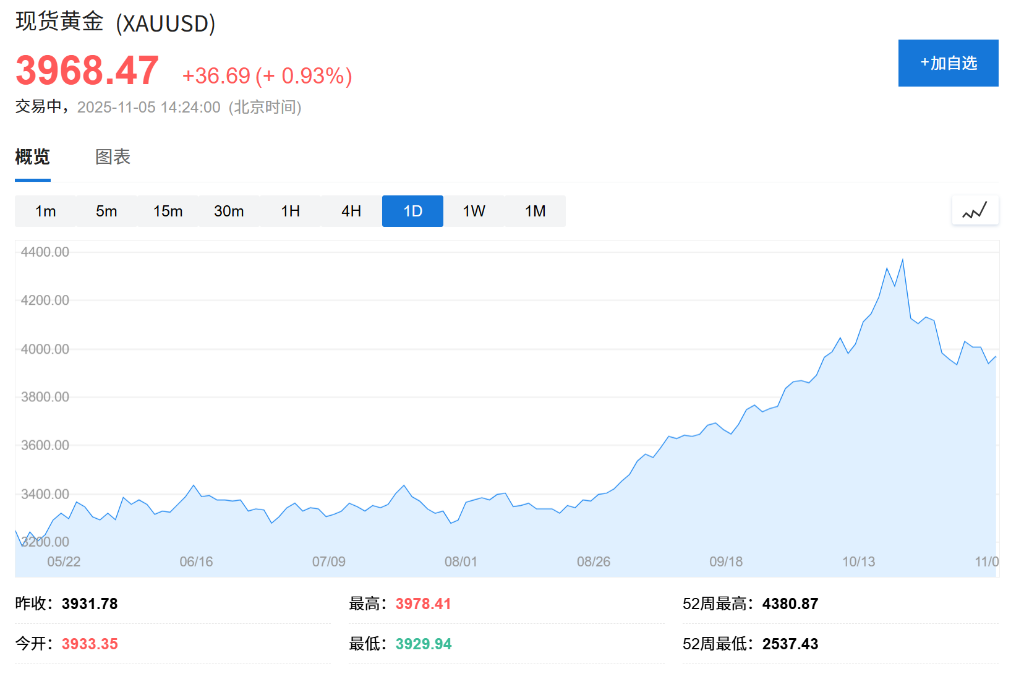
Core Insights - The implementation of the new gold tax policy aims to encourage investors to trade through formal exchanges, thereby enhancing market regulation and reducing speculative behaviors [1][2][3] - The new policy does not directly affect gold prices but serves to standardize operations within the market [3] Group 1: Tax Policy Implications - The new tax policy, effective from November 1, 2023, differentiates tax obligations based on whether transactions occur on exchanges or through non-exchange channels [1] - Investors trading standard gold through exchanges without physical delivery are exempt from value-added tax (VAT), while those selling through non-exchange channels must pay a VAT of 13% [1][2] Group 2: Market Dynamics - The new policy is expected to reduce speculative risks associated with off-exchange trading, which has higher potential leverage and lower compliance [2] - By guiding funds towards exchange-based transactions, the policy aims to enhance liquidity and competitiveness of formal trading platforms [3] Group 3: Impact on Businesses - Large, established brands may benefit from the new policy by consolidating their market position, while smaller businesses could face significant challenges, potentially leading to customer loss if they raise prices to cover increased tax burdens [3] - The overall impact of the new tax policy on the gold market is considered limited, as it primarily serves to regulate operations rather than influence price movements [3]
上海黄金交易所开展灾备系统切换
Di Yi Cai Jing· 2025-11-05 00:08
Group 1 - The Shanghai Gold Exchange announced a system-wide switch of its trading system from the production data center to the disaster recovery data center from November 5 to November 6 to enhance the management of important information systems and ensure business continuity [1]
黄金税收新规影响几何?
He Nan Ri Bao· 2025-11-04 22:38
Core Insights - The introduction of new tax regulations on gold is raising concerns among ordinary consumers and investors regarding its impact on the market [2][3] - The World Gold Council reported a 3% year-on-year increase in global gold demand for the first three quarters of this year, reaching 1,313 tons, with a significant 44% increase in total demand value, hitting a record high of $146 billion [2] - The new tax regulations aim to clarify the distinction between investment gold and non-investment gold, with specific tax exemptions for standard gold traded on exchanges [3] Group 1 - The new tax regulations highlight the difference between investment gold (bars, coins) and non-investment gold (jewelry), with the former exempt from value-added tax when purchased on exchanges [3] - The policy adjustment is seen as a refinement of existing regulations, promoting a clearer and healthier investment environment in the gold market [3] - The regulations are expected to discourage speculative behaviors and improve market order, benefiting long-term industry development [4] Group 2 - The recent fluctuations in gold prices have led to some investors being misled by the notion of "only rising" gold prices, emphasizing the importance of understanding the nature of gold as an investment versus a consumer product [3] - The new regulations serve as a warning to intermediaries in the gold market against misleading practices, such as misrepresenting non-investment gold as investment gold [3] - Maintaining a rational mindset and strategic planning is crucial for investors in navigating the inherent price volatility of gold [4]

家中黄金变现要亏?新规斩断非正规渠道,个人黄金必须"进场"了?
Sou Hu Cai Jing· 2025-11-04 08:10
Core Insights - The new gold tax regulations issued by the Ministry of Finance and the State Administration of Taxation are a significant move in shaping the future landscape of the gold market in China over the next two decades [3][4][12]. Regulatory Changes - The new regulations specify that only standard gold traded through the Shanghai Gold Exchange and the Shanghai Futures Exchange will be eligible for tax benefits, while gold not traded through these channels will incur full VAT [4][8]. - The regulations categorize gold into two types: investment gold (e.g., gold bars) and non-investment gold (e.g., jewelry, industrial gold), leading to different tax implications based on usage [9][10]. Market Impact - The new rules aim to eliminate non-compliant trading channels, effectively pushing gold transactions back to official platforms, which may increase costs for individual sellers who cannot provide compliant VAT invoices [8][9]. - The long-term strategy behind these regulations is to enhance China's pricing power in the global gold market, similar to historical precedents where tax policies were used to influence market behavior [12][14]. Investment Considerations - For investors, financial products like paper gold and gold ETFs may offer lower transaction costs and better liquidity compared to physical gold under the new tax regime [13]. - Individuals looking to invest in physical gold should prioritize purchasing through official channels to ensure smoother future transactions and avoid price reductions due to non-compliance with tax regulations [13][14]. Strategic Implications - The tax reform is seen as part of a broader strategy to modernize governance and enhance transparency in the gold market, which could lead to a more standardized and scalable market in China [14][15]. - The changes may also have international repercussions, potentially increasing the influence of the Shanghai gold benchmark price and challenging the traditional dominance of London and New York gold markets [14][15].
解读黄金税新政:一条主线,三大变化
3 6 Ke· 2025-11-04 05:37
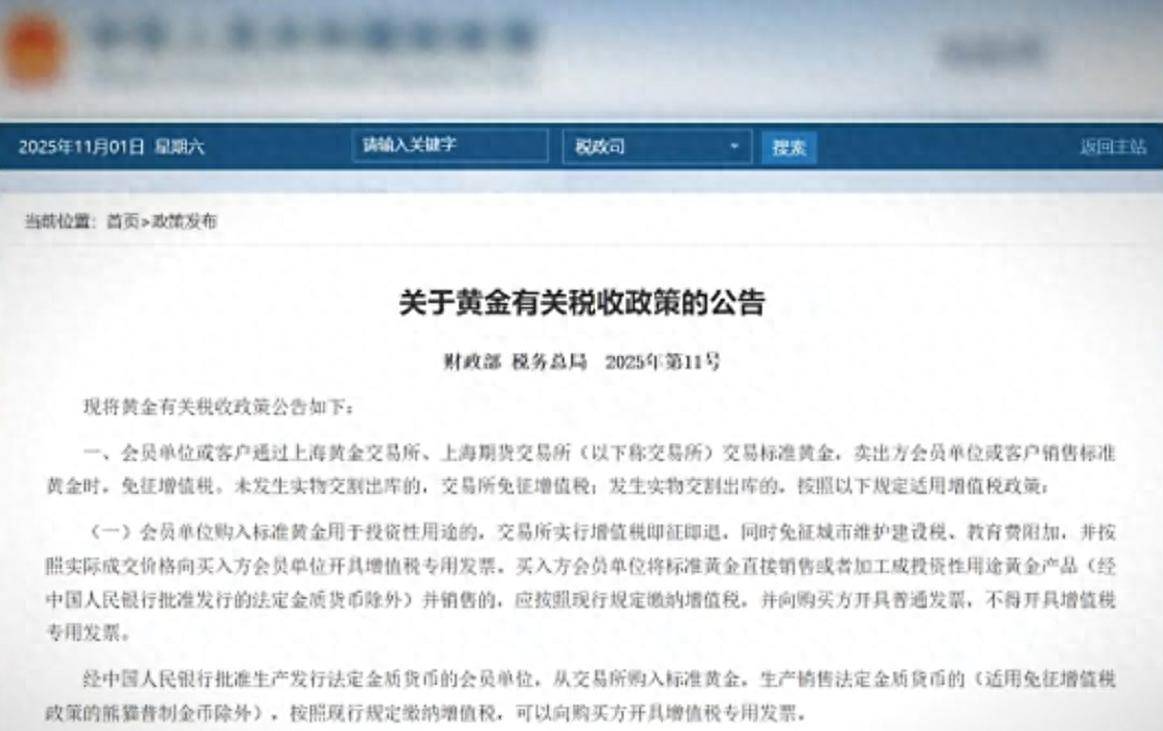
Core Viewpoint - The recent announcement by the Ministry of Finance and the State Taxation Administration regarding gold tax policies aims to clarify and standardize the taxation process for gold transactions, impacting the market structure and regulatory environment for gold trading [2][3][38]. Summary by Sections Announcement Details - The policy document titled "Announcement on Tax Policies Related to Gold" was jointly released on October 29 and will be effective from November 1, 2023, until December 31, 2027 [3]. - The document addresses taxation for transactions conducted through the Shanghai Gold Exchange and the Shanghai Futures Exchange [4]. Purpose of the Document - The document aims to resolve ambiguities in tax regulations that have existed since previous policies in 2002 and 2008, which led to inconsistencies and gray areas in the market [6][7]. - It seeks to establish a unified and verifiable system for taxation based on the type of gold transaction and its intended use [5][8]. Taxation Logic - The document outlines three key questions to determine tax obligations: whether the gold was purchased on an exchange, whether it was withdrawn, and its intended use (investment or processing) [9]. - Transactions on the exchanges are exempt from value-added tax (VAT) for sellers, while retail gold and jewelry are not covered by this exemption [10]. Definitions and Tax Implications - "Standard gold" is defined in the document, including specific purity levels and weights [11]. - If gold is not physically withdrawn from the exchange, it is not subject to VAT [12]. - Upon withdrawal, if the gold is for investment, a mechanism of "immediate collection and refund" applies, allowing for VAT refunds and exemptions from certain local taxes [13]. - For non-investment purposes, VAT is not applied at the exchange level, but a regular invoice is issued [15]. Compliance and Enforcement - The document introduces a mechanism for changing the declared use of gold within a six-month window, but only once [25][28]. - The invoice serves as an identifier for the type of transaction, linking tax obligations to the declared use of the gold [29]. - Non-compliance can lead to penalties, including suspension of tax benefits and potential disqualification from future tax exemptions [32][33]. Regulatory Framework - The execution of the policy is primarily managed by the exchanges, which will handle tax collection and invoicing, while the tax authority will oversee compliance [34]. - The policy aims to create a traceable system for gold transactions, enhancing regulatory oversight and reducing opportunities for tax evasion [36]. Broader Implications - The document signifies a shift towards a more regulated gold market, potentially impacting market dynamics and investor behavior [40][42]. - It reflects a broader trend in digital regulatory frameworks for commodities, indicating a move towards enhanced transparency and accountability in financial markets [42].