
Mobile Phones

Search documents
AI手机按下加速键,广东移动多款产品“上新”
2 1 Shi Ji Jing Ji Bao Dao· 2025-11-06 13:17
Core Insights - China Mobile Guangdong Company held a quarterly terminal ordering and AI product promotion conference, emphasizing the future of the AI terminal ecosystem with over 300 participants including industry experts and leading smartphone manufacturers [1] - The company has accelerated the development of the AI smartphone industry since the first AI smartphone ordering conference in August, launching multiple AI smartphone models with significant sales achievements [1][2] Group 1 - The conference featured presentations from major manufacturers like ZTE, Huawei, realme, vivo, OPPO, and Honor, showcasing their latest AI terminal products and exclusive ordering policies [1] - The cumulative sales of AI smartphones have surpassed 148,000 units, with a single-day peak sales of over 2,200 units [1] Group 2 - China Mobile Guangdong Company aims to expand market boundaries through a "hit product matrix" and has partnered with vivo, Honor, and OPPO to launch four new AI smartphone models [2] - The company plans to implement precise policies to activate cooperation, offering comprehensive and high-impact policy support to enhance customer and channel store participation [2] - Future strategies include extending marketing efforts into more scenarios and continuously iterating AI terminal products and services in collaboration with industry partners to enhance user experience and drive high-quality industry development [2]

OPPO的公关,跟不上OPPO的技术
Ge Long Hui· 2025-11-06 12:03
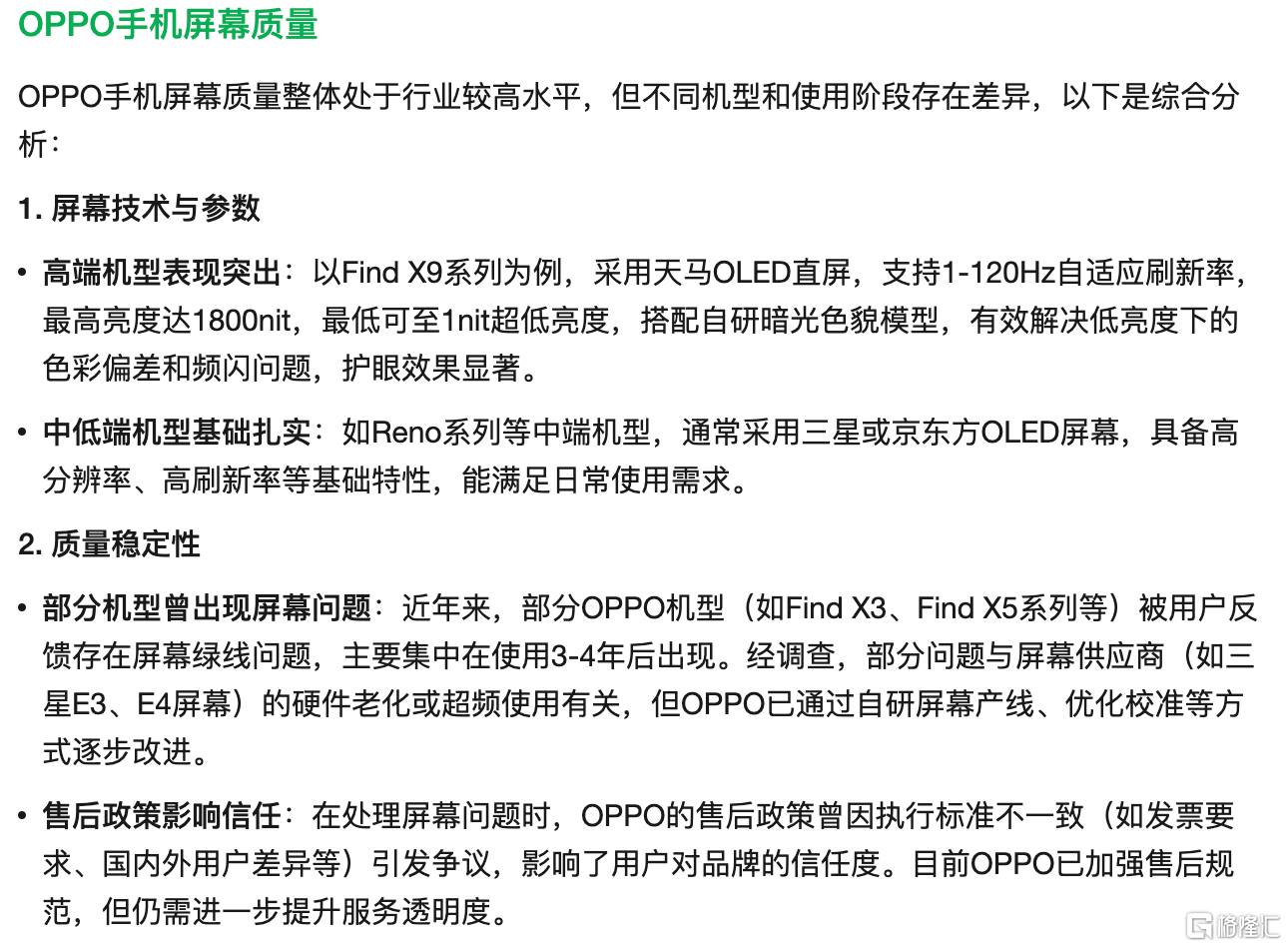
Core Viewpoint - OPPO's recent sales success with the Find X9 series is overshadowed by negative publicity surrounding the "green line" issue, highlighting the need for improved public relations and brand positioning as the company aims for higher-end market penetration [2][4][18]. Sales Performance - The Find X9 series achieved over 1 million units sold within 10 days of its launch on October 22 [2]. - Despite a slight decline of 0.6% in China's smartphone shipments year-on-year by Q3 2025, OPPO is the only domestic brand among the top five to show growth [2]. Public Relations Challenges - The "green line" controversy erupted around the same time as the Find X9's launch, leading to speculation about potential external influences [4]. - OPPO's decision to remain silent on the issue has resulted in a vacuum of information, allowing negative narratives to dominate public perception [13][18]. - Users reported difficulties in contacting customer service and dissatisfaction with the company's response to the screen issue, which has further damaged its reputation [8][9]. Comparison with Competitors - Apple's handling of similar issues in the past, such as the iPhone X's screen problems, contrasts with OPPO's approach, as Apple managed to maintain sales momentum despite negative press [7][10]. - OPPO's public relations strategy has not effectively communicated its technological advancements and efforts to improve screen quality, unlike competitors who have successfully built strong brand identities [21][24]. Brand Positioning and Identity - OPPO's brand lacks distinctiveness compared to competitors like Huawei, Xiaomi, and Vivo, which have successfully associated their brands with specific technological attributes [20][24]. - Despite being a leader in 5G patent applications and having made significant investments in display technology, OPPO's achievements are not well recognized by consumers [21][22][24]. - The company needs to enhance its brand narrative to resonate with consumers and differentiate itself in a competitive market [34][35].

We're getting to the long-end of the upgrade cycle in mobile phones, says Seaport's Jay Goldberg
CNBC Television· 2025-11-05 21:56
to Qualcomm now. That stock is still moving lower about 2% now off the lows after reporting results moments ago. Let's bring in Seport Research senior analyst Jay Goldberg.Jay, did you find anything bad in here. >> Not yet. I keep looking, but I haven't found anything.>> So, automotive is up 17%, but one of the things that I found interesting here was the strength in handsets, which Qualcomm is saying was driven by the premium end in a way that echoes what we're hearing from Apple. And I'm wondering, even t ...


曾经躺赚的“非洲手机之王”,为什么突然不“香”了?
凤凰网财经· 2025-11-05 13:27
Core Viewpoint - Transsion, known as the "king of African mobile phones," is facing significant challenges due to increased competition and rising costs, leading to a situation of "increased revenue but decreased profit" [4][21]. Group 1: Company Background and Growth - Transsion was founded in 2006 by Zhur Zhaojiang, who identified the potential of the African market after extensive travel [5]. - The company achieved remarkable success, becoming the top mobile phone vendor in Africa by 2017, with a market share exceeding 40% by 2024 [7][8]. - Transsion's unique innovations, such as deep skin tone beautification technology, catered specifically to African consumers, contributing to its rapid market capture [5][7]. Group 2: Financial Performance - In the first three quarters of 2025, Transsion reported revenue of 495.4 billion yuan, a slight decline of 3.3% year-on-year, while net profit plummeted nearly 45% to 21.5 billion yuan [4][13]. - Despite a revenue rebound in Q3 2025, net profit still fell by 11.06% to 9.35 billion yuan [4][13]. - The company's gross margin decreased to 19.5%, and net margin dropped from 7.69% to 4.47% in 2025 [12][13]. Group 3: Competitive Landscape - Transsion's market dominance is being challenged by competitors like Xiaomi, Huawei, OPPO, and vivo, who are aggressively entering the African market [9][12]. - The competitive landscape has shifted from growth to intense competition, with Transsion's market share growth slowing to 6% in Q2 2025 [12]. - The entry of these competitors has led to a significant erosion of Transsion's traditional low-end market segment [9][12]. Group 4: Cost Pressures and Legal Challenges - Rising costs, particularly in memory chips, have severely impacted Transsion's profit margins, with prices for DDR4 memory increasing over 100% [16][17]. - The company is also embroiled in ongoing patent disputes, notably with Huawei, which has further complicated its operational landscape [17]. - Sales expenses increased by 4.17% in the first three quarters of 2025, further squeezing profit margins [17]. Group 5: Strategic Responses - In response to declining profits, Transsion is focusing on product upgrades and increasing R&D spending, which rose by 17.26% to 2.139 billion yuan in 2025 [15][16]. - The company is diversifying its market presence by exploring opportunities in South Asia and Latin America, as well as expanding into digital accessories and home appliances [15][16]. - Despite these efforts, new business segments are still in the investment phase and have not yet made a significant contribution to overall revenue [15].


“非洲手机之王”三季度净利降45%
Nan Fang Du Shi Bao· 2025-11-04 23:12
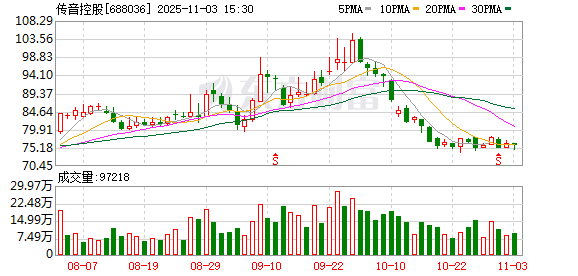
Core Insights - The company, Transsion Holdings, reported significant revenue growth in Q3 2025, reaching 20.466 billion RMB, a year-on-year increase of 22.60%. However, this revenue growth did not translate into profit, with net profit attributable to shareholders declining by 11.06% to 0.935 billion RMB, indicating a situation of "increased revenue but decreased profit" [2][4] - Over the first three quarters of 2025, the company faced intensified profit pressure, with total revenue of 49.543 billion RMB, a slight decrease of 3.33% year-on-year, and net profit down by 44.97% to 2.148 billion RMB [2][4] Revenue and Profit Analysis - The Q3 report highlighted a stark contrast in profitability, with net profit for the first three quarters of 2025 significantly down by 44.97% compared to the previous year, while the net profit excluding non-recurring gains and losses fell by 46.71% to 1.731 billion RMB [4][5] - The company attributed the decline in total profit and net profit to increased market competition and supply chain costs, which led to reduced revenue and gross profit [4][5] Market Competition - Transsion Holdings is facing fierce competition in its primary market, Africa, with Xiaomi and other Chinese brands aggressively targeting its market share. Xiaomi's market share in Africa rose to 13.8%, a 2.6 percentage point increase year-on-year [5][6] - Other competitors, including Honor, Samsung, OPPO, and vivo, are also expanding their presence in the African market, further squeezing Transsion's market space [5][7] Cash Flow and R&D Investment - Despite the pressure on profits, the company reported a remarkable increase in operating cash flow, with a net cash flow from operating activities of 3.285 billion RMB, up 164.66% year-on-year [8][9] - The company has also increased its R&D investment by 17.26% to 2.139 billion RMB in the first three quarters of 2025, indicating a strategic focus on innovation and product upgrades [8][9][10] - In Q3 alone, R&D spending reached 777 million RMB, a year-on-year increase of 21.22%, reflecting the company's commitment to strengthening its competitive position through technological advancements [10]
手机厂商鏖战非洲:传音前三季净利下降,小米等加速抢食市场
Nan Fang Du Shi Bao· 2025-11-03 14:59
Core Insights - The report highlights a significant revenue growth for the company in Q3 2025, reaching 20.466 billion RMB, a year-on-year increase of 22.60%, but this growth did not translate into profit, with net profit declining by 11.06% to 0.935 billion RMB, indicating a "revenue growth without profit" situation [2][4] - Over the first three quarters of 2025, the company faced intensified profit pressure, with total revenue of 49.543 billion RMB, a slight decrease of 3.33%, and net profit down by 44.97% to 2.148 billion RMB, nearly halving [2][4] Revenue and Profit Analysis - The company's Q3 report reveals a stark contrast between revenue growth and profit decline, with net profit for the first three quarters significantly impacted by market competition and supply chain costs [4][5] - The decline in net profit is attributed to reduced operating income and gross profit, as competition in the African market intensifies with other Chinese smartphone manufacturers expanding their presence [4][5] Market Competition - The African market, previously a stronghold for the company, is now facing fierce competition from global smartphone giants, with Xiaomi making significant inroads, increasing its market share to 13.8% in the first half of 2025 [5][6] - Other brands like Honor, Samsung, OPPO, and vivo are also intensifying their efforts in the African market, further squeezing the company's market space [5][6] Cash Flow and R&D Investment - Despite the profit decline, the company reported a remarkable increase in operating cash flow, reaching 3.285 billion RMB, a year-on-year surge of 164.66%, attributed to reduced procurement payments [8][9] - The company has also increased its R&D investment to 2.139 billion RMB in the first three quarters, a growth of 17.26%, indicating a strategic focus on innovation and product upgrades during a challenging market environment [9][10]

手机厂商鏖战非洲:传音前三季净利下降 小米等加速抢食市场
Nan Fang Du Shi Bao· 2025-11-03 14:56
Core Insights - The core viewpoint of the article highlights the significant revenue growth of Transsion Holdings in Q3 2025, but this growth has not translated into profit, indicating a challenging market environment and increased competition in Africa [2][3]. Financial Performance - In Q3 2025, Transsion achieved a revenue of 20.466 billion RMB, marking a year-on-year increase of 22.60%. However, the net profit attributable to shareholders was 0.935 billion RMB, a decline of 11.06% [2]. - For the first three quarters of 2025, the total revenue was 49.543 billion RMB, a slight decrease of 3.33% year-on-year, while the net profit dropped significantly by 44.97% to 2.148 billion RMB [3][4]. - The net profit excluding non-recurring items was 1.731 billion RMB, reflecting a more severe decline of 46.71% [3]. Market Competition - The competitive landscape in Africa is intensifying, with other Chinese smartphone manufacturers aggressively entering the market, challenging Transsion's previously dominant position [4][6]. - Xiaomi has shown notable growth, ranking third in the African market with a market share increase of 2.6 percentage points to 13.8% in the first half of 2025 [4][5]. - Other brands like Honor, Samsung, OPPO, and Vivo are also expanding their presence, further squeezing Transsion's market share, particularly in the low-end and mid-range segments [4][5]. Cash Flow and R&D Investment - Despite the profit decline, Transsion reported a significant increase in operating cash flow, reaching 3.285 billion RMB, a year-on-year surge of 164.66% [7]. - The company attributed this cash flow improvement to a substantial reduction in payments for raw material purchases [7]. - R&D investment for the first three quarters of 2025 totaled 2.139 billion RMB, up 17.26% year-on-year, indicating a strategic focus on innovation despite profit pressures [8][9]. - In Q3 alone, R&D spending reached 0.777 billion RMB, reflecting a growth rate of 21.22% [9].
1399元起!来京东11.11入手大屏AI手机WIKO X70享365天只换不修
Sou Hu Wang· 2025-10-31 00:09
Core Viewpoint - JD.com and WIKO have launched the WIKO X70, a large-screen AI smartphone designed to enhance user experience through innovative features and a focus on convenience [1][3]. Product Features - The WIKO X70 features an innovative X key that allows users to quickly access frequently used applications, enhancing usability [5]. - It is equipped with HarmonyOS, AI call fraud prevention, and remote assistance capabilities, providing multiple layers of security and support [5]. - The smartphone boasts a 50MP RYYB ultra-sensitive camera, a 6.7-inch OLED eye-protection screen, and a 6100mAh battery with 40W fast charging, ensuring high performance and convenience [7]. Market Strategy - The collaboration between JD.com and WIKO is based on a C2M (Customer-to-Manufacturer) model, aiming to create products that genuinely meet consumer needs [3][13]. - The launch of the WIKO X70 aligns with the trend towards large-screen AI smartphones, emphasizing the importance of practical value over excessive hardware features [13]. Consumer Reception - Attendees at the launch event praised the WIKO X70 for its user-friendly features, particularly the X key, which simplifies access to functions [11]. - Celebrity endorsement from actress Cai Ming highlighted the smartphone's AI capabilities and overall design, reinforcing its appeal to consumers [9].


手机厂商双十一高端竞速:元器件涨价下的定位抉择
2 1 Shi Ji Jing Ji Bao Dao· 2025-10-30 13:29
Core Insights - The high-end smartphone competition among domestic manufacturers has intensified during the Double Eleven sales period, with price increases observed in flagship models due to rising component costs [1][3][4] - Consumer subsidies that previously boosted smartphone sales have weakened, leading to a focus on product quality and brand strength in the current market environment [2][7] - The overall smartphone market in China is facing significant competitive pressure, with a decline in shipments noted in recent quarters [7][8] Group 1: Market Dynamics - The rising prices of components, particularly storage, have led to flagship models seeing price increases of over a hundred yuan compared to previous generations [3][6] - Companies like Xiaomi and iQOO have acknowledged the impact of rising storage costs on pricing strategies, with Xiaomi adjusting the price of its Redmi K90 series [3][4] - The high-end smartphone market is projected to continue growing, with Chinese brands aiming to capture a larger share by offering high-quality flagship products [5][6] Group 2: Product Strategy - Manufacturers are focusing on enhancing product features and user experience to attract consumers, with a notable shift towards high-end models during the Double Eleven sales [4][10] - Companies are investing in research and development, including collaborations with imaging technology firms like Ricoh GR, to improve product offerings [9][10] - The trend of developing independent or self-researched chips is gaining traction, as companies seek to differentiate their products through enhanced performance and user experience [10] Group 3: Competitive Landscape - The competition is shifting from price wars to a deeper focus on product capabilities, technology development, and understanding consumer needs [10][11] - Brands are exploring niche markets, such as gaming and imaging, to find growth opportunities amid a challenging overall market [8][10] - The balance between cost management and user experience will be crucial for brands to maintain competitive advantage in the future [11]
一加只想把游戏用户“哄”好
Jing Ji Guan Cha Wang· 2025-10-29 01:31
Core Viewpoint - OnePlus is focusing on performance and gaming experience with the launch of OnePlus 15, differentiating itself from competitors by not following trends of higher-end models or diversifying its product line [1][2]. Product Features - OnePlus 15 features a 165Hz high refresh rate, which is 40 frames more than 120Hz, enhancing gaming performance by allowing quicker enemy detection and response [1]. - The device includes a gyroscope equivalent to that of the PS5 controller, improving stability during intense gaming scenarios [1]. - The phone's cooling system utilizes lightweight materials like ultra-thin steel and aerospace-grade aerogel to maintain performance without adding excessive weight [3]. Design and Technical Choices - OnePlus 15 opts for a 1.5K resolution screen to support the 165Hz refresh rate, as current technology does not allow for a 2K+165Hz combination [4]. - The decision to use a 1.5K screen is based on user data showing that most users prefer battery efficiency over higher resolution, with only about 20% opting for 2K resolution in previous models [4]. - The camera system has shifted from a partnership with Hasselblad to using OPPO's Lomo imaging system, which has raised concerns about image quality among some users [5]. Market Dynamics - The smartphone market is increasingly segmented, with a growing preference for performance-oriented devices over traditional imaging-focused models [6]. - IDC forecasts that China's smartphone market will see shipments of approximately 271 million units in 2023 and 286.2 million in 2024, indicating a substantial but maturing market [6]. - Competition is intensifying in the online market, where brands like OnePlus and iQOO target young consumers, particularly students, who prioritize performance and affordability [7].