
Artificial Intelligence

Search documents
0.3B参数,600MB内存!腾讯混元实现产业级2Bit量化,端侧模型小如手机App
量子位· 2026-02-10 03:00
Core Viewpoint - Tencent Hunyuan has launched a new ultra-small model, HY-1.8B-2Bit, designed for consumer-grade hardware, which is significantly smaller than many common mobile applications, making it suitable for edge deployment [2][13]. Group 1: Model Specifications and Performance - The HY-1.8B-2Bit model has a parameter count of only 0.3 billion and a memory footprint of just 600MB, making it ideal for deployment on edge devices [1][13]. - The model utilizes a unique 2-bit quantization scheme, which reduces the parameter count by six times compared to the original model while maintaining its full cognitive capabilities [2][6]. - Compared to the original precision model, the generation speed of HY-1.8B-2Bit is enhanced by 2-3 times on real edge devices, significantly improving user experience [2][6][13]. Group 2: Quantization Techniques - The model employs Quantization Aware Training (QAT) to mitigate the precision loss typically associated with 2-bit quantization, allowing it to approach the performance of full-precision models [6][11]. - The "Elastic Stretch Quantization" (SEQ) strategy is introduced to address the challenges of low precision, enhancing the model's ability to capture high-dimensional feature distributions [9][11]. - Data optimization strategies have been implemented, increasing the proportion of scientific data and incorporating long-text data to improve the model's overall capabilities [8][7]. Group 3: Training and Deployment - The training process for HY-1.8B-2Bit was optimized to require only 10% of the tokens needed for training the Bitnet-2B model, demonstrating efficiency in achieving low-bit model performance [12][11]. - The model is compatible with Arm computing platforms and has been tested on devices like the MacBook M4 and Dimensity 9500, showing significant acceleration in both latency and generation speed compared to original models [13][14]. - Future developments will focus on reinforcement learning and model distillation to further enhance the capabilities of low-bit quantized models, aiming to bridge the performance gap with full-precision models [15].



从今天起,ChatGPT也有广告了,OpenAI:不会干预回答内容
3 6 Ke· 2026-02-10 02:46
Core Insights - OpenAI has officially announced the testing of an advertising feature on the ChatGPT platform in the U.S., aimed at supporting free and low-cost access to AI services while funding infrastructure and technology upgrades [2][10] Group 1: Advertising Implementation - The advertising feature will be available to adult free users and subscribers of the $8 ChatGPT Go plan, while higher-tier subscriptions like Pro, Business, Enterprise, and Education will not display ads [2] - Ads will be labeled as "sponsored content" and visually distinct from AI-generated responses, ensuring that they do not interfere with the content generation process [2][5] - During the testing phase, ads will be intelligently matched to the user's current conversation topic, chat history, and past interactions with ads, prioritizing relevance and value to the user [6] Group 2: User Privacy and Control - OpenAI emphasizes user privacy, stating that chat content and personal data will not be shared with advertisers, who will only receive aggregated performance data [7] - Users will have control over their ad settings, including the ability to turn off specific ads, provide feedback, and manage personalized ad preferences [8][18] - The platform will not display ads to users under 18 and will avoid inserting ads in sensitive conversation topics such as health and politics [7] Group 3: Strategic Goals and Principles - OpenAI's strategic goal for introducing ads is to fund free services and make advanced AI accessible to a broader audience, aligning with its mission to benefit humanity [10][12] - The company has established principles prioritizing trust over revenue, ensuring that the ad system is separate from model training to maintain the independence and objectivity of AI-generated answers [11][13] - OpenAI aims to lower marketing barriers for small businesses by simplifying the ad placement process, allowing them to interact with AI for targeted advertising [24] Group 4: Future of Advertising - OpenAI envisions a future where advertising becomes more intelligent and personalized, potentially evolving into conversational ads that enhance user engagement [25] - The company is committed to maintaining a balance between user experience and commercial value, continuously optimizing ad delivery based on user feedback and performance [8][20]

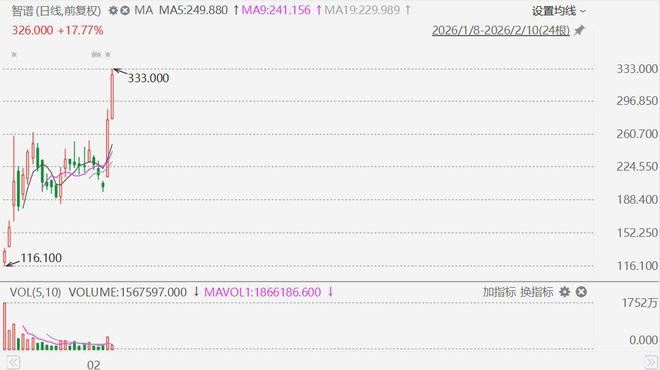
港股异动丨疑似新模型海外惊艳!智谱再度飙升超20%,市值逼近1500亿
Ge Long Hui· 2026-02-10 02:43
Group 1 - The core viewpoint of the article highlights the strong performance of AI concept stocks in the Hong Kong market, particularly the significant rise of Zhiyuan (2513.HK), which saw a 36% increase yesterday and over 20% today, reaching a new high of 333 HKD and a market capitalization nearing 150 billion HKD [1] - Zhiyuan has been active in the large model sector, with its hybrid thinking model GLM-4.7-Flash achieving over 1 million downloads on Hugging Face within two weeks of its release [1] - The recent emergence of an anonymous domestic model named Pony Alpha has sparked market speculation, with its strong coding capabilities and deep optimization for intelligent agent workflows drawing attention from the developer community [1] Group 2 - Pony Alpha, launched by OpenRouter, is described as a "cutting-edge foundational model" with impressive performance in programming, intelligent agent workflows, reasoning, and role-playing, particularly noted for its high accuracy in tool invocation [1] - Developers have reported successful use cases with Pony Alpha, including a project that generated 170KB of pure Java code for a Minecraft project in approximately 2 hours, with output quality rated as "beyond expectations" [1] - Additional tests indicate that Pony Alpha demonstrates a level of quality comparable to Claude Opus 4.5 in detail-oriented tasks such as SVG generation [1]
18岁OpenClaw版AI女友一夜爆红,全网60万围观,00后开发者一人造出
3 6 Ke· 2026-02-10 02:38
Core Insights - OpenClaw has launched an AI girlfriend named Clawra, which has gained immense popularity in Silicon Valley, resembling the AI character Samantha from the movie "Her" [1][3][7] - Clawra is designed to have a complete life trajectory and digital personality, capable of chatting, video calling, and sharing personal moments [5][17][18] - The project has been open-sourced on GitHub, allowing anyone to create their own version of Clawra [23][25] Product Features - Clawra is an 18-year-old AI with a backstory, having grown up in Atlanta and pursued a career in K-pop before returning to the U.S. to work as an intern at OpenClaw [13][14] - The AI can remember users, share life moments through selfies, and is set to introduce video calling features soon [17][18][19] - Clawra has gained significant attention, with over 600,000 people watching her online debut [7] Market Impact - The launch of Clawra has sparked a wave of interest in AI companions, with competitors rushing to develop similar products [42] - OpenClaw's technology is seen as a turning point for consumer-grade AI, with industry leaders expressing excitement about its potential [36][38][48] - The emergence of AI companions like Clawra and Aniclaw is creating a new ecosystem, with various applications and platforms being developed around these technologies [40][46] Development and Community Engagement - The project has attracted significant attention from venture capitalists and tech enthusiasts, leading to events like ClawCon, which saw hundreds of attendees [45][48] - OpenClaw's capabilities allow it to perform various tasks on a computer, making it a versatile tool for users [39] - The community is actively engaging with the technology, as seen in the rapid development of platforms like Moltbook and Rentahuman.ai [40][42]

CORRECTING and REPLACING Backed by OpenAI, Tesla, and SpaceX Investors, Midas Is Building Mathematical Infrastructure to Secure AI Systems
Businesswire· 2026-02-10 02:21
Core Insights - Midas is developing mathematical infrastructure aimed at securing AI systems, with backing from notable investors including OpenAI, Tesla, and SpaceX [1] Company Overview - Midas is focused on creating foundational technologies that enhance the security of artificial intelligence systems [1] Investment Backing - The company has secured investment from prominent entities such as OpenAI, Tesla, and SpaceX, indicating strong confidence in its mission and potential [1]


未知机构:SCHOMP117STAR50199上证-20260210
未知机构· 2026-02-10 02:20
Summary of Key Points from Conference Call Industry Overview - The conference call discusses the performance of the Chinese A-share market, highlighting a broad market increase with significant movements in various indices such as the Shanghai Composite Index and the ChiNext Index, which rose by 1.04% and 3.11% respectively [1][2][3] - The total trading volume of the Chinese A-share market reached 1.50 trillion RMB, indicating robust market activity [1][2][3] Core Insights and Arguments - Growth stocks are outperforming the broader market, driven by positive market expectations regarding leading AI model developers, which are anticipated to see performance or rating upgrades [2][3] - The AI applications sector is experiencing upward momentum, particularly following a positive trend in AI hardware stocks, influenced by Nvidia's performance [3] - Local photovoltaic equipment manufacturers are benefiting from the rise in space photovoltaic technology, contributing to stock price increases in this sector [3] - The liquor sector showed initial strength due to rising prices but exhibited weakness by midday trading [3] - Value stocks are lagging behind the market, with energy, oil and gas, home appliances, and food and beverage sectors identified as the three underperforming areas [3] Important but Overlooked Content - The report indicates a shift in investment preferences, with a buying inclination towards CPO (Consumer Packaged Goods), tourism, and PCB (Printed Circuit Boards), while there is a selling trend in storage and defense sectors [3]
一只小龙虾何以引爆全球AI圈?
3 6 Ke· 2026-02-10 02:17
Core Insights - OpenClaw has rapidly gained popularity in the tech community, achieving 100,000 GitHub stars and becoming one of the hottest AI applications, allowing users to run an AI assistant on outdated hardware like a Mac Mini or old smartphones [2][6] - The product is seen as the closest realization of the public's imagination of an AI agent, capable of performing complex tasks independently and integrating into real workflows [7][8] - OpenClaw's open-source nature has contributed significantly to its success, enabling rapid community-driven development and lowering barriers for ordinary users [9][10][11] Group 1: Product Capabilities - OpenClaw allows users to perform tasks such as scheduling, stock trading, podcast production, and SEO optimization, effectively acting as a personal assistant [2][8] - It can execute complex tasks autonomously, such as coding, information retrieval, and document management, which marks a significant advancement from traditional AI tools [7][8] - The product's user-friendly interface and ability to operate a complete computing environment independently are highlighted as major advantages [7][10] Group 2: Risks and Concerns - Despite its capabilities, there are growing concerns about the risks associated with OpenClaw, particularly regarding security, privacy, and potential misuse [3][14] - Users have reported issues such as accidental deletion of important files and exposure of sensitive information, raising alarms about the safety of using such powerful tools [15][16] - Experts warn that the high permissions required by OpenClaw could lead to significant risks, including unauthorized access and the potential for malicious attacks [14][15] Group 3: User Guidance and Recommendations - Experts suggest that ordinary users should approach OpenClaw with caution, ensuring they understand its capabilities and limitations before use [22][25] - Recommendations include limiting the sharing of sensitive information, carefully managing permissions, and recognizing the experimental nature of the tool [26][27] - For businesses, a systematic risk management approach is advised, including the use of professional oversight tools and clear boundaries for sensitive data handling [27] Group 4: Future Outlook - The emergence of OpenClaw is seen as a significant step towards enhancing confidence in AI's future capabilities, with expectations for rapid advancements in agent technology [28][30] - Experts believe that the next few years will be crucial for the development of general artificial intelligence, presenting new opportunities and challenges for both professionals and the general public [30]

YC 专访 OpenClaw 创始人:80% 的 App 将会消失,我们还剩下什么?
AI科技大本营· 2026-02-10 02:13
Core Insights - The article discusses the rise of OpenClaw, an AI tool created by Peter Steinberger, which operates locally on users' computers rather than in the cloud, allowing for greater functionality and control [3][6][13] - OpenClaw represents a shift towards a "post-app era," where traditional applications may become obsolete as AI can manage tasks more intuitively and efficiently [7][29] Group 1: OpenClaw's Unique Features - OpenClaw can perform a wide range of tasks, including controlling smart devices and managing files, due to its local operation [6][15] - The AI's ability to access and utilize personal data stored on the user's computer allows it to provide personalized insights and assistance [16][29] - Steinberger emphasizes that the essence of programming is creative problem-solving, which OpenClaw embodies by autonomously addressing user needs [28][29] Group 2: Future of Applications and AI - Steinberger predicts that 80% of applications may eventually disappear as AI tools like OpenClaw take over data management tasks [29][30] - The concept of "crowd intelligence" is introduced, suggesting that AI could facilitate interactions between users and automate tasks that traditionally require human involvement [19][30] - The article highlights the importance of user ownership of data and memory, contrasting with centralized data models used by many existing applications [32][34] Group 3: Development Philosophy - Steinberger's development approach is characterized by a DIY ethos, creating OpenClaw out of personal necessity and a desire for efficiency [21][26] - The AI's personality and values are encapsulated in a "soul.md" file, reflecting a unique blend of technical capability and human-like interaction [36][42] - The article notes that OpenClaw's design allows for user interaction in a natural, conversational manner, enhancing the user experience [27][46]

未知机构:硅谷一直在寻求一个契机让具代理性的人工智能成为主流-20260210
未知机构· 2026-02-10 02:10
Summary of Key Points from the Conference Call Industry Overview - The focus is on the rise of Agentic AI, which can perform virtual operations and control devices, transitioning from a niche technology to mainstream usage in consumer applications [2][3][4] Core Insights and Arguments - The recent success of OpenClaw, an open-source personal AI assistant, has sparked significant interest and competition in the development of personal AI agents [3][4] - Companies like Jo are rapidly developing similar products, indicating a growing market for personal AI agents [4] - The emergence of platforms like Moltbook, which has gained over 1.7 million independent users and 2.2 million posts, highlights the increasing popularity of AI-driven social networks [5] - Unlike traditional chatbots, AI agents can autonomously execute tasks, such as coding and interacting with applications, which sets them apart from existing technologies [6][7] - Major tech companies, including Salesforce and Microsoft, are developing their own Agentic AI programs, focusing on office applications [7] Potential Risks and Concerns - There are concerns regarding the security risks associated with the widespread adoption of AI agents, despite optimism from developers like Peter Steinberger [9] - The limited capabilities of early consumer-facing AI agents have hindered their broader appeal, as they can only interact with specific applications and lack session memory [8] Emerging Trends - The excitement surrounding AI agents is reminiscent of the early viral growth of social media, with industry leaders predicting a transformative impact on technology [8][9] - The concept of creating identities for AI agents is gaining traction, with companies like Worldcoin working to distinguish between humans and AI on social media platforms [12][13] - The potential for AI agents to learn from each other and improve their skills through interaction is being explored, suggesting a new paradigm for AI development [11] Noteworthy Developments - The rapid development and deployment of AI agents, such as those created by Noam Schwartz, demonstrate the practical applications of these technologies in managing daily tasks [10] - Events like "ClawCon" have been organized to promote discussions and knowledge sharing about AI agents, indicating a community forming around this technology [14] Conclusion - The industry is at a pivotal moment with the potential for Agentic AI to redefine consumer technology, driven by innovations like OpenClaw and the competitive landscape it has created [14]
“AI除幻第一股”引爆港股打新,海致科技获融资申购超3300倍
Zhi Tong Cai Jing· 2026-02-10 02:09
Group 1 - The AI sector in both A-shares and Hong Kong stocks is experiencing significant growth, with multiple stocks hitting the daily limit up, indicating strong market interest [1] - HaiZhi Technology, known as the "first stock to eliminate AI hallucinations," has seen its financing subscription multiples exceed 3300 times, with expectations to surpass 5600 times, reflecting high investor confidence [2] - The AI industry is witnessing explosive growth, with the market for industrial-grade AI solutions in China projected to grow from approximately 65.4 billion RMB in 2025 to about 286.1 billion RMB by 2029, representing a compound annual growth rate (CAGR) of 44.6% [3] Group 2 - HaiZhi Technology has developed a unique "graph-model fusion" technology that effectively reduces hallucinations in large models, addressing critical issues in sectors requiring high information accuracy [2][3] - The company has achieved a market share of approximately 50% in the industrial-grade AI intelligent agent market, demonstrating its leading position in the industry [3] - HaiZhi Technology's total revenue is projected to reach 503 million RMB in 2024, with a CAGR of 26.8% from 2022 to 2024, indicating a strong growth trajectory [4]