储能

Search documents
超20GWh!联手宁德时代,又一百年车企重仓储能
行家说储能· 2025-12-17 12:05
Group 1 - Ford officially announced its entry into the energy storage market, marking a strategic shift for the century-old automaker [2] - The company plans to invest approximately $2 billion over the next two years in collaboration with CATL to transform and expand its existing battery production lines, aiming for an annual capacity of over 20GWh by 2027 [3][4] - The partnership with CATL involves a technology licensing model, allowing Ford to quickly gain access to advanced lithium iron phosphate (LFP) battery technology while avoiding certain regulatory restrictions [4] Group 2 - Ford's shift to energy storage is driven by the need to adapt to a challenging automotive market, with a specific focus on grid-level storage and backup power for data centers [6] - The U.S. energy storage market is projected to reach 40-50GWh in demand next year, with significant growth expected from data centers, potentially driving demand to 122-245GWh by 2030 [9] - The collaboration with CATL positions Ford to leverage established technology and brand trust, which is crucial for competing in a market that requires high safety, long lifespan, and cost efficiency in battery solutions [9]




超166.5亿!两大巨头储能订单披露
行家说储能· 2025-12-17 12:05
Core Viewpoint - The article discusses the opportunities in the new energy storage industry, particularly in relation to power market reforms and digitalization, highlighting significant contracts and collaborations among leading companies in the sector [2][3]. Group 1: Industry Developments - The "2025 Power Market and Digital Energy Storage Research Report" is being compiled by leading companies including CRRC Zhuzhou Institute, Tesla, and others, to be released at the Energy Storage Summit on January 8 [2]. - CRRC signed energy storage contracts totaling approximately 16.65 billion yuan, contributing to a total of 53.31 billion yuan in contracts, which represents 21.6% of the company's projected revenue for 2024 [4]. - Tesla has secured two major agreements with a total capacity exceeding 2.3 GWh, indicating strong demand for energy storage solutions [3][9]. Group 2: Technological Advancements - CRRC's new generation 6.X energy storage platform has achieved mass production, featuring a 6.25 MWh battery module and a matching 6.25 MW integrated boost converter, focusing on addressing industry challenges with multiple technological breakthroughs [8]. - The platform has passed various safety tests and is designed to offer high returns, safety, ease of maintenance, and strong support [8]. Group 3: Major Projects - Tesla is involved in the Western Downs energy storage project in Australia, which will have a total capacity of 845 MW/2300 MWh upon completion, making it one of the largest single energy storage facilities in Australia [9][11]. - Tesla has also signed a framework agreement with SPIE for battery energy storage system projects in Europe, which will enhance collaboration on multiple significant storage projects [12].


英国储能“5年5倍增长”,中国企业如何突围?
高工锂电· 2025-12-17 12:05
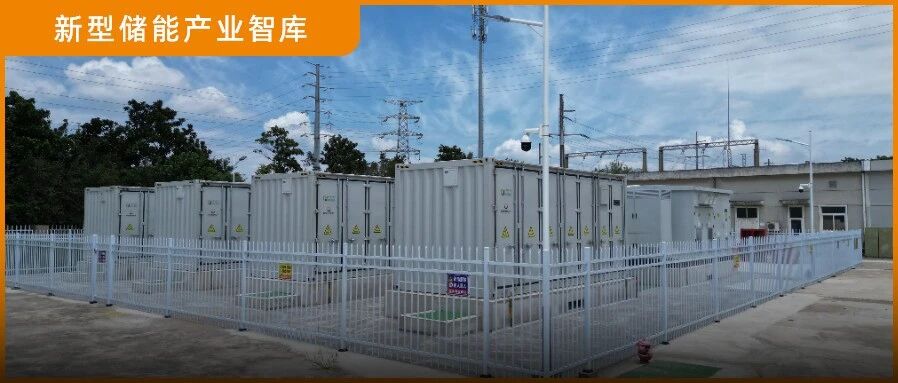
Core Insights - The UK energy storage market is undergoing a significant transformation, requiring companies to enhance their market signal capture capabilities, flexible charge and discharge technologies, and localized operational experience [1][4]. Market Overview - By early 2025, the total operational capacity of battery storage projects in the UK reached 6.8GW/10.5GWh, with an impressive addition of 1.405GW from January to September 2025, indicating a record-breaking year [2]. - The UK government has set a target of 23-27GW for grid-level battery capacity by 2030, suggesting a potential fivefold growth in the market over the next five years [2]. - The shift from a "contract-driven" market to a "trading-driven" paradigm is evident, with energy arbitrage and balancing mechanism revenues becoming the primary income sources for storage projects [2][4]. Entry Requirements - Entering the rapidly growing UK storage market requires more than advanced hardware; companies must possess comprehensive capabilities across hardware, software, and long-term operations [6]. - The market demands longer discharge durations (from 1-2 hours to 2-4 hours or more) to effectively capture price fluctuations, alongside considerations for battery lifecycle economics [6]. - Successful storage projects must dynamically allocate assets across capacity markets, ancillary services, wholesale markets, and balancing mechanisms, necessitating a deep understanding of complex electricity market rules [6][7]. Localized Operations - Localized operational experience is crucial for success in the UK storage market, as evidenced by the establishment of a battery super factory by Envision in Sunderland, which has an annual capacity of 15.8GWh [9][11]. - Envision's strategy of "rooting first, then expanding" has allowed it to build a mature local supply chain and gain insights into the evolving UK grid demands and market rules [11]. Competitive Landscape - The UK storage market is not merely a product procurement arena but a competition of comprehensive capability solutions, requiring participants to be both technology-leading manufacturers and proficient trading service providers [7]. - Envision has successfully delivered a series of storage system projects in the UK, leveraging its core technology advantages in energy system integration and AI solutions [12][13]. Technological Advancements - Envision has established itself as a leader in the production of large-capacity storage cells, with plans for mass production of 700+Ah cells, enhancing energy density and lifecycle [15]. - The company has delivered over 70GWh of storage products globally, with a significant presence in over 20 countries, indicating a robust global supply chain and operational experience [15]. Strategic Positioning - Envision's deep understanding of diverse business models in the UK electricity market has enabled it to cover all scenarios, from capacity market contracts to wholesale energy market arbitrage opportunities [13]. - The company's AI-powered energy storage solutions align well with the UK's trading-driven market demands, optimizing charging and discharging strategies to maximize profitability [19]. Global Impact - Envision's practices in the UK serve as a replicable success model for Chinese energy storage companies, emphasizing technological innovation, localized operations, and global capacity layout [21]. - The establishment of the Sunderland super factory not only supports the UK's clean energy goals but also signifies the successful implementation of Envision's strategy of localized manufacturing and global technology [21].
《分布式储能发展商业模式研究》重磅发布
中关村储能产业技术联盟· 2025-12-17 11:47
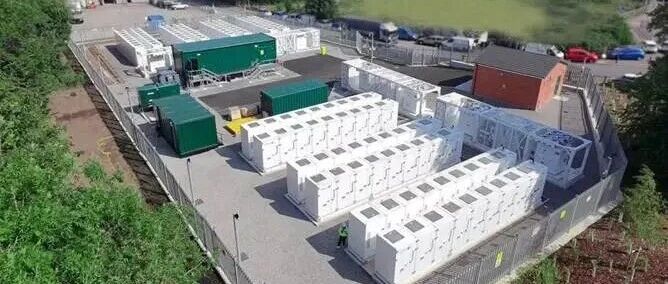
Core Viewpoint - The article discusses the rapid development of distributed energy storage in China, highlighting its importance in addressing the challenges of renewable energy consumption and the need for innovative business models to enhance its economic viability [2][6][10]. Summary by Sections Overview of Distributed Energy Storage - Distributed energy storage refers to small-scale storage systems located on the user side (homes, factories, shopping malls) or near distributed renewable energy sources, which are becoming crucial for local renewable energy consumption [2][6]. - From 2019 to the third quarter of 2025, China's cumulative installed capacity of distributed energy storage increased over fivefold, from 570 MW to 3,638 MW, with six major application scenarios identified [6][7]. Business Models and Challenges - The main business models for distributed energy storage include peak-valley arbitrage, virtual power plants, and demand-side response, with the peak-valley arbitrage model being the most stable [7][17]. - Current challenges include insufficient policy continuity, single revenue sources, lack of safety standards, and inadequate operational systems [7][8]. Recommendations for Development - To enhance the utilization and economic viability of distributed energy storage, recommendations include widening the peak-valley price difference, improving demand response mechanisms, and strengthening safety standards and fiscal support from 2025 to 2027 [8][10]. - From 2028 to 2030, the focus should shift to deepening electricity market reforms and exploring the potential of distributed energy storage in green electricity, green certificates, and carbon markets [8][10]. Future Trends - Experts predict that distributed energy storage will evolve towards market-oriented investment, diverse technology routes, microgrid integration, convenience, and AI applications [11][12]. - The future development will also focus on enhancing safety standards and operational norms to stimulate investment and ensure reliable power supply [12][15]. Market Participation and Policy Support - The role of distributed energy storage is shifting from a supportive role in the power system to a flexible adjustment resource, with various local policies being introduced to support its market participation [20][21]. - The aggregation of distributed energy storage into virtual power plants is seen as a necessary step to enhance market participation and improve bargaining power [14][24]. Application Scenarios - Key application scenarios for distributed energy storage include data centers and communication base stations, where it can provide backup power, reduce electricity costs, and ensure supply reliability [17][21]. - The integration of distributed energy storage with renewable energy sources is essential for achieving carbon reduction goals and enhancing energy efficiency [26][27].

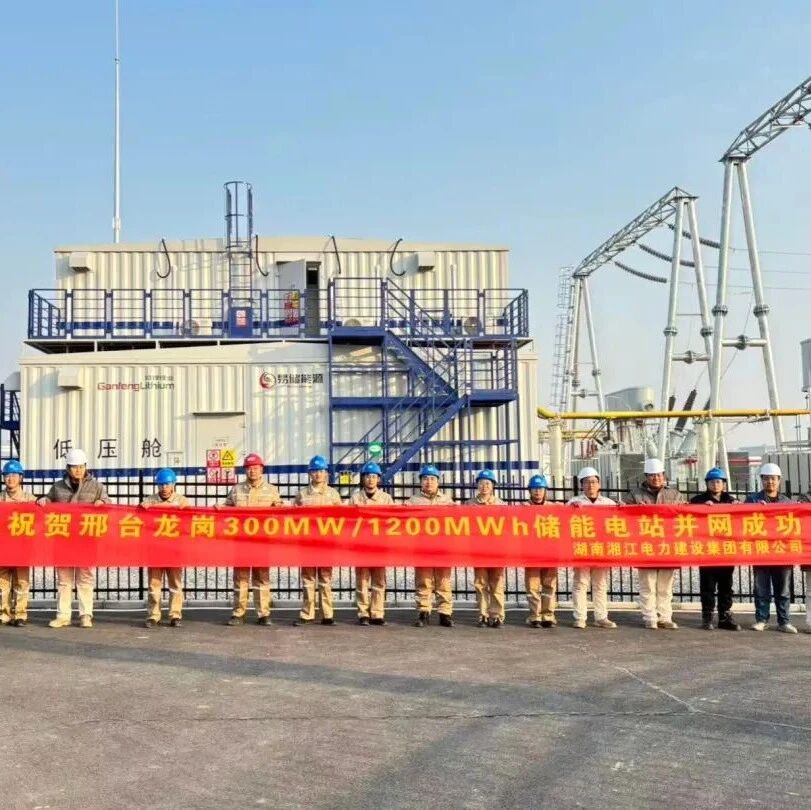
河北邢台龙岗300MW/1200MWh共享储能电站顺利并网
中关村储能产业技术联盟· 2025-12-17 11:47
Core Insights - The article highlights the successful grid connection and trial operation of the 300MW/1200MWh shared energy storage station in Longgang, Xingtai, Hebei, marking a significant milestone in China's energy storage sector [2] Investment and Economic Impact - The total investment for the Xingtai Longgang shared energy storage station is 1.596 billion yuan, located in the Xindu Economic Development Zone of Xingtai, Hebei [2] - Upon operation, the project is expected to generate an annual output value of 238 million yuan and contribute 30 million yuan in annual taxes [2] Technological Innovation - This project is notable for being the first in China to utilize carbon fiber composite material flywheel energy storage combined with lithium iron phosphate technology [2] - It will be the largest single energy storage station in southern Hebei, providing peak shaving and frequency regulation services with millisecond-level response to grid frequency demands [2]

报告:为促进分布式储能发展,建议未来两年合理拉大分时电价峰谷价差
Jing Ji Guan Cha Wang· 2025-12-17 11:39
12月16日,自然资源保护协会联合中关村储能产业技术联盟发布的《分布式储能发展商业模式研究》 (下称"报告")提出,为提升分布式储能的利用率及经济性,促进分布式储能的多元化和市场化发展,建 议在2025—2027年,通过合理拉大分时电价峰谷价差、健全安全标准与强化财税支持等方式,保障分布 式储能项目的基本收益与安全运行。 着眼于长远发展,报告建议在2028—2030年,通过完善分时电价动态调整机制、推动分布式储能参与现 货市场、探索兑现分布式储能的容量价值和辅助服务价值,深入挖掘其在绿电、绿证和碳市场等环境价 值方面的潜力,最终构建多元化的收益渠道,全面提升分布式储能的经济性与市场竞争力。 分布式储能是指分散布置在用户侧(家庭、工厂、商场等)、配电网侧或分布式新能源附近的小型储能系 统。分布式储能可就地存储富余电力、平抑出力波动,大幅提升本地新能源自用率与配网消纳能力。 政策层面,近两年国家和地方层面已密集出台多项举措支持分布式储能的发展。其中在地方层面,各省 主要通过拉大峰谷差、规范虚拟电厂准入、完善需求响应补贴等方式引导分布式储能发展,广东、浙 江、江苏等部分省市对分布式储能给予补贴。 在这样的背景下,报 ...
全球最大液态空气储能项目投产
Sou Hu Cai Jing· 2025-12-17 11:20
全球最大液态空气储能项目投产:解锁未来能源的"超级充电宝" 在青海格尔木的茫茫戈壁深处,一座占地广阔的储能电站静静矗立。这座全球规模最大的液态空气储能项目,以60兆瓦功率、 600兆瓦时储能容量的"超级体量",为可再生能源的稳定输出提供了革命性解决方案。它不仅是技术突破的里程碑,更像一 座"能源魔法工厂"——将不稳定的风光电力转化为可随时调用的稳定绿电,为构建新型电力系统注入关键动能。 液态空气储能:让空气成为"能量载体" 液态空气储能(LAES)的核心原理,是将空气通过多级压缩冷却至-196℃,使其液化后储存于常压低温储罐中。当用电高峰来 临时,液态空气经低温泵增压,吸收环境热量或工业余热气化,驱动透平膨胀机发电。这一过程如同"空气版充电宝":充电时 将电能转化为液态空气的势能储存,放电时再将势能转化为电能,实现能量的时空转移。 规模化放大技术:首次实现从百千瓦级实验平台到60兆瓦级商业项目的跨越,设备模块化设计使扩容成本降低40%。 多能互补耦合系统:与光热电站、磷酸铁锂电池储能协同运行,构建"风光储热"一体化调控平台,使区域新能源消纳能力提升 35%。 该项目还创造了多项"全球首次":采用全国产化设备打 ...

2026年储能市场行情展望:政策催生新动能,需求引领新周期
Guo Tai Jun An Qi Huo· 2025-12-17 11:13
Report Summary 1. Investment Rating The report does not provide an investment rating for the industry. 2. Core Viewpoints - In 2025, driven by the capacity compensation policy and the accelerated construction of the power market, the economy of domestic independent energy storage projects significantly improved, leading to strong growth in overall energy storage demand. The US and European markets continued their steady growth, and emerging markets such as the Middle East and Australia continued to expand. It is estimated that the global new installed capacity in 2025 will reach 271GWh, a year-on-year increase of 45%. The expected good terminal demand prompted enterprises to increase their inventory coefficients, and the annual battery cell shipments are expected to reach 550GWh, a year-on-year increase of 65% [2]. - Looking ahead to 2026, the high returns of independent energy storage are expected to continue, and the large-scale winning bids for domestic projects lay the foundation for demand. Under the neutral scenario, the domestic new installed capacity is expected to be 284GWh, and in the optimistic scenario, it can reach 325GWh, achieving a doubling growth. Overseas, the US may face certain pressure in the short term due to the cost increase brought by the "Big and Beautiful" Act and the unmanifested energy storage demand related to data centers. The new installed capacity is expected to be 50GWh, a year-on-year increase of 4%. Europe will benefit from the profitability improvement brought by grid investment and trading mechanism optimization, and the new installed capacity is expected to reach 43GWh, a year-on-year increase of 39%. Chile, Australia, the Middle East, and India are the main sources of incremental growth in emerging markets, and the total new installed capacity in emerging markets is expected to reach 87GWh, a year-on-year increase of 68%. Overall, in 2026, the global new energy storage installed capacity is expected to reach 505GWh in the optimistic scenario, a year-on-year increase of 86%; 464GWh in the neutral scenario, a year-on-year increase of 71%; and 368GWh in the rigid scenario, a year-on-year increase of 36% [3]. - In the context of high terminal demand, the probability of a significant reduction in the inventory coefficient is low. However, it is necessary to consider the overdrawn demand in some markets. The US has limited additional inventory space in 2026, and Australia faces a similar situation. A total of about 60GWh of additional inventory demand needs to be deducted from the two regions. In 2026, the energy storage battery cell shipments are expected to reach 957GWh in the optimistic scenario, a year-on-year increase of 74%; 833GWh in the neutral scenario, a year-on-year increase of 52%; and 649GWh in the rigid scenario, a year-on-year increase of 18% [4]. 3. Summary by Directory 1. 2025 Energy Storage Market Review - **Domestic Market**: In 2025, from January to October, the new installed capacity of domestic new energy storage continued to grow rapidly. The new installed capacity of new energy storage reached 34.6GW/92.6GWh, a year-on-year increase of 42.6%. The proportion of grid-side energy storage increased to 60%, and the proportions of power source-side and user-side were 31% and 9% respectively. The price of energy storage continued to decline, but the decline has significantly narrowed. It is estimated that the new installed capacity of new energy storage in 2025 will reach 53.1GW/140GWh, a year-on-year increase of 31% [7][9]. - **Overseas Market**: The demand in overseas markets continued to be strong. From January to October 2025, China's energy storage battery cell exports reached 79.5GWh, a year-on-year increase of 86%. The US energy storage market maintained high-speed growth, and it is estimated that the new installed capacity in 2025 will reach 48GWh, a year-on-year increase of nearly 30%. The European energy storage market showed structural differentiation, with different performances in Germany, Italy, and the UK [13][19][26]. 2. Domestic Market: The Resonance of Rigid Demand for Consumption and Economy Opens Up the Upside Space for Installation - **Rigid Demand**: The continuous increase in the penetration rate of new energy has intensified the "duck curve" problem, and the ability of energy storage to regulate has become a rigid demand. The state has issued top-level documents to promote the consumption of new energy, and new energy storage is becoming a key tool to improve the consumption capacity of new energy. It is estimated that from 2026 to 2030, the installed capacity of new energy storage needs to reach 386GW, corresponding to an installed capacity of 1081GWh and an average annual installed capacity of 216GWh [32][34][36]. - **Economic Driving Force**: The driving logic of the domestic energy storage market has changed fundamentally. Independent energy storage has become the core driving force for the development of the domestic energy storage market. The economy of independent energy storage mainly comes from peak-valley spread arbitrage, auxiliary service market revenue, and capacity price compensation. The implementation of the capacity price compensation policy in multiple provinces will significantly improve the revenue level of energy storage projects [37][38][42]. - **Demand Outlook**: The energy storage bidding market has been active this year. It is estimated that the new installed capacity of energy storage in 2026 will be about 284GWh under the neutral scenario and about 325GWh under the optimistic scenario. The market generally expects that a national capacity price compensation policy will be introduced next year, and the compensation standard is expected to be linked to thermal power. Although the long-term demand in 2027 still has policy uncertainties, the trend of marginal improvement in the revenue of energy storage projects is clear [46][51]. 3. Overseas Market: The US is Under Pressure, While Europe and Emerging Markets Continue to Grow at a High Rate - **US**: The incremental installation of energy storage in the US in 2026 is expected to be limited. The "Big and Beautiful" Act may lead to an increase in manufacturing costs, which will suppress the demand in the US energy storage market to a certain extent. The revenue of energy storage projects in the US is facing downward pressure, and the new installed capacity may be slightly affected. The demand for energy storage in data centers has not been fully realized in the short term [54][55][59]. - **Europe**: The large-scale energy storage market in Europe is expected to continue to grow at a high rate in 2026, with the new installed capacity expected to reach 25GWh, a year-on-year increase of 54%. The post-meter energy storage market is showing a warming trend, with the new installed capacity of industrial and commercial energy storage expected to reach 6.9GWh, a year-on-year increase of 48%, and the new installed capacity of household energy storage expected to reach 10.7GWh, a year-on-year increase of 10% [63][67]. - **Emerging Markets**: The demand in emerging markets is booming, and the market increment is significant. The energy storage markets in Chile, Australia, the Middle East, and India are all expected to achieve rapid growth in 2026 [70][72][75]. 4. Demand Outlook: The Resonance of Domestic and Overseas Demand Accelerates the Release of Energy Storage Shipments - In 2025, the domestic demand continued to rise, the US and European markets maintained steady growth, and emerging markets such as the Middle East, Australia, and India continued to expand. It is estimated that the global new energy storage installed capacity in 2025 will reach 271GWh, and the battery cell shipments will reach 550GWh [80]. - In 2026, the domestic demand is expected to be further released, the US market is under short-term pressure, and the high growth rate of Europe and emerging markets is expected to continue. In the optimistic scenario, the global new energy storage installed capacity is expected to reach 505GWh; in the neutral scenario, it is expected to reach 464GWh; and in the rigid scenario, it is expected to reach 368GWh. The battery cell shipments are expected to reach 957GWh in the optimistic scenario, 833GWh in the neutral scenario, and 649GWh in the rigid scenario [80][82].
储能行业专题报告:需求共振,全球加速
ZHESHANG SECURITIES· 2025-12-17 11:09
Investment Rating - The report rates the energy storage industry as "Positive" [3] Core Viewpoints - The global energy storage demand is expected to flourish, with projected new installations reaching 271 GW, 444 GW, and 661 GW from 2025 to 2027, representing year-on-year growth rates of 44%, 64%, and 49% respectively [5][11] - In the domestic market, the energy storage business model is improving, transitioning from policy-driven to market-driven demand, with strong bidding performance in 2023 [5][15] - The North American market is experiencing explosive growth in computing power, driving unexpected demand for electricity and energy storage [24] - In Europe, the demand for large-scale energy storage is surging, with a recovery in household storage shipments and a significant increase in commercial storage [33] Summary by Sections Investment Logic - The report highlights the improvement of domestic large-scale energy storage business models and the upward trend in overseas demand [5] Global Demand - Global energy storage demand is expected to maintain high compound growth rates, with significant increases in new installations across various regions [11][9] Domestic Market - The independent energy storage business model is showing marginal improvements, driving demand beyond expectations [15][14] - The report notes that from January to November 2023, the domestic energy storage bidding scale reached 112 GW/364 GWh, a year-on-year increase of 110%/161% [15] North America - The report emphasizes that the explosive growth in AI data centers is driving unexpected demand for energy storage in the U.S. [24][22] Europe - The report indicates that the demand for large-scale energy storage in Europe is rapidly increasing, with household storage demand returning to normal levels [33][25] Australia - The Australian market is characterized by significant revenue opportunities from energy arbitrage, with government subsidy programs driving household storage demand [34][35] Supply Side - The report discusses the overseas expansion of domestic energy storage companies, with significant contracts signed in various regions [6][49] - It also notes a shift from price competition to value competition, emphasizing the importance of hardware and software capabilities in energy storage systems [57]

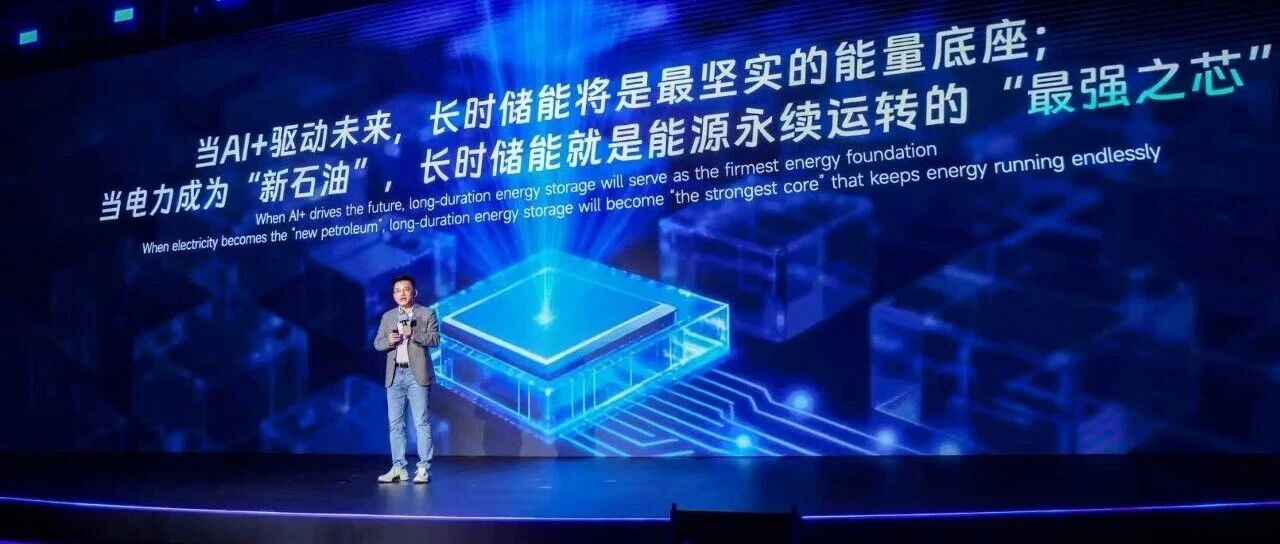
长时储能:破解新能源困局的关键钥匙
中国能源报· 2025-12-17 11:04
Core Viewpoint - The rapid growth of renewable energy installations is creating unprecedented challenges for power systems, necessitating the transition from short-term to long-duration energy storage as a core technology for supporting large-scale renewable integration and building a new power system [2][5]. Group 1: Long-Duration Energy Storage Development - Long-duration energy storage (typically over 4 hours) is evolving from a supplementary option to a necessity, becoming a central hub for renewable energy integration [2]. - By 2050, global demand for energy storage is expected to exceed 150 TWh, creating a massive industry opportunity across various storage technologies, including lithium iron phosphate and sodium batteries [2]. - The current energy structure is undergoing profound changes, with wind and solar power installations in China projected to exceed 40% by 2030, leading to a need for long-duration storage to address supply-demand imbalances [5]. Group 2: Challenges in Commercialization - The large-scale implementation of long-duration energy storage faces multiple challenges, including economic viability, safety, and industry chain collaboration [3][9]. - There is a mismatch between the supply of current storage products (mainly 2-hour batteries) and the demand for longer-duration solutions, necessitating breakthroughs in technology and cost optimization [9]. - The economic bottleneck is evident, as the lifecycle costs of long-duration storage remain high, and current business models are still in the exploratory phase [11]. Group 3: Technological Innovations and Solutions - Companies are focusing on specialized and intelligent designs to drive technological iterations, with innovations such as the 1300Ah, 8-hour dedicated battery marking a significant advancement in the industry [15][17]. - The shift from generic products to scene-specific solutions is crucial for enhancing reliability and economic efficiency in long-duration energy storage applications [16]. - A complete ecosystem is essential for the scalable development of long-duration energy storage, requiring collaboration across the entire industry chain from materials to applications [16]. Group 4: Future Outlook - The future of long-duration energy storage lies in its ability to address the volatility of renewable energy sources, positioning it as a key driver for global energy transition and sustainable development [16]. - As technology evolves and ecosystem collaboration deepens, long-duration energy storage is expected to become a core engine for achieving sustainable energy goals [16].