
容量电价补偿

Search documents
边停产边扩产,龙蟠科技拟20亿投建24万吨高压实磷酸铁锂
Di Yi Cai Jing· 2026-01-05 03:08
Group 1 - The core point of the article is that Longpan Technology is expanding its production capacity for high-performance lithium iron phosphate (LFP) materials, with a total investment of up to 2 billion yuan planned for the project [2][3] - The first phase of the project aims to establish an annual production capacity of 120,000 tons of LFP, with construction expected to start in Q1 2026 and be completed by Q3 2026 [3] - The project will benefit from a green channel for approval processes, including expedited permits and favorable pricing for utilities, as coordinated by the Huaguo Geng High-tech Industrial Development Zone [3] Group 2 - The expansion is driven by strong demand in the downstream energy storage market, supported by advancements in large cell technology, AI data centers, and market reforms [3] - Longpan Technology is simultaneously conducting maintenance on some production lines due to overcapacity, which is expected to reduce LFP output by approximately 5,000 tons for a month starting January 2026 [5] - The company and other leading LFP manufacturers are raising processing fees to cope with rising raw material costs and strong demand from battery manufacturers [6]

方正证券:电力行业β偏弱 寻觅结构性α
Zhi Tong Cai Jing· 2025-12-25 01:45
Group 1: Thermal Power - The current year-end electricity price negotiation period is seeing regions like Guangdong, Anhui, Hebei, and Shaanxi implement price difference restriction policies, which are expected to support long-term contract electricity prices for 2026 [1] - The downward pressure on long-term contract electricity prices in 2025 has gained attention from higher authorities, and policies to curb irrational competition are being introduced, which may alleviate the most significant downside risks [1] - The "anti-involution" policy in coal supply is strengthening supply constraints, leading the industry to transition from a phase of "price and volume double decline" to a new stage of "stable prices and increased revenue," potentially driving a revaluation of the sector [1] Group 2: Hydropower - In 2025, hydropower generation in China is expected to stabilize and rebound, with a nearly 30% year-on-year increase in generation during September and October, indicating marginal improvement [2] - As the depreciation of existing units expires and financial costs decrease, the profitability of hydropower companies is anticipated to further improve [2] - Major hydropower companies are characterized by high and sustainable dividend policies, enhancing their defensive attributes and investment value amid an asset scarcity backdrop [2] Group 3: New Energy - The new energy sector is expected to experience a "short-term pressure, long-term positive" trend in 2025, with market price declines in nuclear power suppressing revenue growth [3] - Policy adjustments in regions like Guangdong and the rollback of VAT exemptions for new units are causing structural impacts, but long-term approval acceleration and technological breakthroughs are solidifying growth potential [3] - Wind and solar installations continue to grow significantly, although there are increasing consumption pressures; supportive policies for green electricity consumption and marginal cash flow improvements for some companies are providing support for healthy industry development [3]

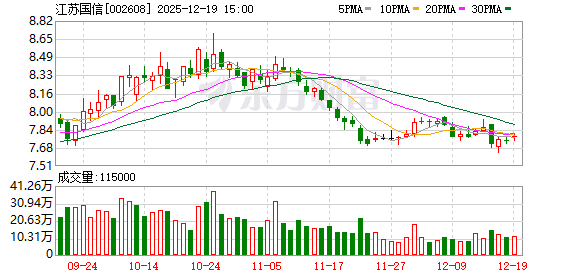
江苏国信:目前马洲电厂刚投产,正在办理相关手续,预计不久后会纳入容量电价补偿范围
Mei Ri Jing Ji Xin Wen· 2025-12-19 11:48
Group 1 - The core point of the article is that Jiangsu Guoxin's Ma Zhou Power Plant is expected to be included in the capacity price compensation range soon after completing necessary procedures [2] - The company has indicated that its currently operational units are largely covered by the capacity price policy [2] - New units that are put into operation can also enjoy the policy benefits typically within three months after commissioning [2]


2026年储能市场行情展望:政策催生新动能,需求引领新周期
Guo Tai Jun An Qi Huo· 2025-12-17 11:13
Report Summary 1. Investment Rating The report does not provide an investment rating for the industry. 2. Core Viewpoints - In 2025, driven by the capacity compensation policy and the accelerated construction of the power market, the economy of domestic independent energy storage projects significantly improved, leading to strong growth in overall energy storage demand. The US and European markets continued their steady growth, and emerging markets such as the Middle East and Australia continued to expand. It is estimated that the global new installed capacity in 2025 will reach 271GWh, a year-on-year increase of 45%. The expected good terminal demand prompted enterprises to increase their inventory coefficients, and the annual battery cell shipments are expected to reach 550GWh, a year-on-year increase of 65% [2]. - Looking ahead to 2026, the high returns of independent energy storage are expected to continue, and the large-scale winning bids for domestic projects lay the foundation for demand. Under the neutral scenario, the domestic new installed capacity is expected to be 284GWh, and in the optimistic scenario, it can reach 325GWh, achieving a doubling growth. Overseas, the US may face certain pressure in the short term due to the cost increase brought by the "Big and Beautiful" Act and the unmanifested energy storage demand related to data centers. The new installed capacity is expected to be 50GWh, a year-on-year increase of 4%. Europe will benefit from the profitability improvement brought by grid investment and trading mechanism optimization, and the new installed capacity is expected to reach 43GWh, a year-on-year increase of 39%. Chile, Australia, the Middle East, and India are the main sources of incremental growth in emerging markets, and the total new installed capacity in emerging markets is expected to reach 87GWh, a year-on-year increase of 68%. Overall, in 2026, the global new energy storage installed capacity is expected to reach 505GWh in the optimistic scenario, a year-on-year increase of 86%; 464GWh in the neutral scenario, a year-on-year increase of 71%; and 368GWh in the rigid scenario, a year-on-year increase of 36% [3]. - In the context of high terminal demand, the probability of a significant reduction in the inventory coefficient is low. However, it is necessary to consider the overdrawn demand in some markets. The US has limited additional inventory space in 2026, and Australia faces a similar situation. A total of about 60GWh of additional inventory demand needs to be deducted from the two regions. In 2026, the energy storage battery cell shipments are expected to reach 957GWh in the optimistic scenario, a year-on-year increase of 74%; 833GWh in the neutral scenario, a year-on-year increase of 52%; and 649GWh in the rigid scenario, a year-on-year increase of 18% [4]. 3. Summary by Directory 1. 2025 Energy Storage Market Review - **Domestic Market**: In 2025, from January to October, the new installed capacity of domestic new energy storage continued to grow rapidly. The new installed capacity of new energy storage reached 34.6GW/92.6GWh, a year-on-year increase of 42.6%. The proportion of grid-side energy storage increased to 60%, and the proportions of power source-side and user-side were 31% and 9% respectively. The price of energy storage continued to decline, but the decline has significantly narrowed. It is estimated that the new installed capacity of new energy storage in 2025 will reach 53.1GW/140GWh, a year-on-year increase of 31% [7][9]. - **Overseas Market**: The demand in overseas markets continued to be strong. From January to October 2025, China's energy storage battery cell exports reached 79.5GWh, a year-on-year increase of 86%. The US energy storage market maintained high-speed growth, and it is estimated that the new installed capacity in 2025 will reach 48GWh, a year-on-year increase of nearly 30%. The European energy storage market showed structural differentiation, with different performances in Germany, Italy, and the UK [13][19][26]. 2. Domestic Market: The Resonance of Rigid Demand for Consumption and Economy Opens Up the Upside Space for Installation - **Rigid Demand**: The continuous increase in the penetration rate of new energy has intensified the "duck curve" problem, and the ability of energy storage to regulate has become a rigid demand. The state has issued top-level documents to promote the consumption of new energy, and new energy storage is becoming a key tool to improve the consumption capacity of new energy. It is estimated that from 2026 to 2030, the installed capacity of new energy storage needs to reach 386GW, corresponding to an installed capacity of 1081GWh and an average annual installed capacity of 216GWh [32][34][36]. - **Economic Driving Force**: The driving logic of the domestic energy storage market has changed fundamentally. Independent energy storage has become the core driving force for the development of the domestic energy storage market. The economy of independent energy storage mainly comes from peak-valley spread arbitrage, auxiliary service market revenue, and capacity price compensation. The implementation of the capacity price compensation policy in multiple provinces will significantly improve the revenue level of energy storage projects [37][38][42]. - **Demand Outlook**: The energy storage bidding market has been active this year. It is estimated that the new installed capacity of energy storage in 2026 will be about 284GWh under the neutral scenario and about 325GWh under the optimistic scenario. The market generally expects that a national capacity price compensation policy will be introduced next year, and the compensation standard is expected to be linked to thermal power. Although the long-term demand in 2027 still has policy uncertainties, the trend of marginal improvement in the revenue of energy storage projects is clear [46][51]. 3. Overseas Market: The US is Under Pressure, While Europe and Emerging Markets Continue to Grow at a High Rate - **US**: The incremental installation of energy storage in the US in 2026 is expected to be limited. The "Big and Beautiful" Act may lead to an increase in manufacturing costs, which will suppress the demand in the US energy storage market to a certain extent. The revenue of energy storage projects in the US is facing downward pressure, and the new installed capacity may be slightly affected. The demand for energy storage in data centers has not been fully realized in the short term [54][55][59]. - **Europe**: The large-scale energy storage market in Europe is expected to continue to grow at a high rate in 2026, with the new installed capacity expected to reach 25GWh, a year-on-year increase of 54%. The post-meter energy storage market is showing a warming trend, with the new installed capacity of industrial and commercial energy storage expected to reach 6.9GWh, a year-on-year increase of 48%, and the new installed capacity of household energy storage expected to reach 10.7GWh, a year-on-year increase of 10% [63][67]. - **Emerging Markets**: The demand in emerging markets is booming, and the market increment is significant. The energy storage markets in Chile, Australia, the Middle East, and India are all expected to achieve rapid growth in 2026 [70][72][75]. 4. Demand Outlook: The Resonance of Domestic and Overseas Demand Accelerates the Release of Energy Storage Shipments - In 2025, the domestic demand continued to rise, the US and European markets maintained steady growth, and emerging markets such as the Middle East, Australia, and India continued to expand. It is estimated that the global new energy storage installed capacity in 2025 will reach 271GWh, and the battery cell shipments will reach 550GWh [80]. - In 2026, the domestic demand is expected to be further released, the US market is under short-term pressure, and the high growth rate of Europe and emerging markets is expected to continue. In the optimistic scenario, the global new energy storage installed capacity is expected to reach 505GWh; in the neutral scenario, it is expected to reach 464GWh; and in the rigid scenario, it is expected to reach 368GWh. The battery cell shipments are expected to reach 957GWh in the optimistic scenario, 833GWh in the neutral scenario, and 649GWh in the rigid scenario [80][82].
储能电芯市场供需两旺
Zheng Quan Ri Bao· 2025-11-27 16:13
Core Insights - The energy storage industry continues to experience high demand, with a significant increase in orders for energy storage cells, leading to a "one cell hard to find" situation in the market [1] - Major companies are reporting full production and sales, indicating a robust market environment, with production schedules extending into 2026 [1][2] - The industry is transitioning from "scale expansion" to "quality and efficiency improvement," with a focus on technological upgrades and cost control [3] Group 1: Market Demand and Supply - The energy storage cell market is witnessing a surge in orders, with companies like Longjing Environmental reporting production schedules extending to June 2026 [1] - Companies such as Hunan Youneng and Guizhou Anda Technology are operating at full capacity, driven by strong demand for both power and energy storage batteries [2] - The demand for phosphate cathode materials is expected to remain strong, supported by both power and energy storage battery markets [2] Group 2: Competitive Strategies - Companies are adopting strategies such as lean production and technological cost reduction to maintain competitive advantages [3] - Long-term strategic partnerships are becoming crucial for stable supply chains, exemplified by a ten-year agreement between Haibo Sichuang and CATL [3] - The industry is predicted to shift from a focus on total volume to structural competition, favoring companies with technological advantages and global supply chain capabilities [3] Group 3: Industry Challenges and Recommendations - The energy storage industry must avoid falling into price competition, advocating for industry self-discipline and standard constraints [4] - Emphasis on product differentiation and enhancing the performance of energy storage systems is essential [4] - Accelerating international expansion and certification processes will be vital for participating in global competition [4]