脑机接口

Search documents
马斯克脑机公司Neuralink新研究曝光:用AI开发仿生眼
Sou Hu Cai Jing· 2025-07-26 00:31
Neuralink Neuralink参与视觉假体临床试验 凤凰网科技讯 北京时间7月26日,据彭博社报道,埃隆·马斯克(Elon Musk)旗下脑机接口公司Neuralink正在与加州和西班牙的研究人员合作,开展一项研究 视觉假体的临床试验。视觉假体是一种植入式医疗电子设备,其功能是在一定程度上恢复重度失明患者的视觉。 Neuralink参与该临床试验的消息于7月下旬在"临床试验网"(ClinicalTrials.gov)上公布,该网是一个披露医学研究项目的政府网站。该研究由加州大学圣巴巴 拉分校资助。 根据临床试验网的介绍,该研究的目标是"解决一些基础性问题,以推动智能仿生眼的研发"。研究人员表示,这种设备将利用AI技术,帮助盲人识别人脸、 在户外导航、阅读等。 目前尚不清楚Neuralink将在该试验中扮演什么角色。研究说明中提到,一旦有合适的Neuralink患者可参与,研究人员就会使用他们进行试验。根据该网站的 信息,这一试验目前正通过邀请的方式招募患者。 Neuralink正在开发一种名为"Blindsight"(盲视)的脑芯片,旨在帮助盲人恢复视觉,甚至赋予超越常人的视觉能力。该技术已在猴子身上 ...

陈天桥:科创投资不要沿用互联网套路
Nan Fang Du Shi Bao· 2025-07-25 10:36
Group 1 - The core viewpoint emphasizes the need for patience in capital investment within the hard technology sector, particularly in brain-computer interface (BCI) development, contrasting it with past internet investment strategies [2][4] - The brain-computer interface industry has seen rapid development, with an increase in startups and significant attention from top investors, particularly in Shanghai, which is establishing itself as a key innovation center [3][4] - Brain Tiger Technology, founded by Professor Tao Hu, has emerged as a leading company in the invasive brain-computer interface sector, receiving substantial support from local government and recognition at major events [3][5] Group 2 - Investment in hard technology should not be measured by short-term returns typical of internet investments; instead, it requires a long-term vision and stable support to navigate the lengthy cycles of technology validation and market cultivation [4] - Recent breakthroughs in real-time Chinese language decoding and motion decoding by Brain Tiger Technology have positioned it at the forefront of international technology, garnering special coverage in the academic journal Nature [5] - The company aims to build a world-class team focused on brainwave modeling and decoding algorithms, leveraging the latest AI technologies to enhance its competitive edge against other players like Neuralink [5]

Neuralink预计“心灵感应”脑机设备将于2029年获批;日本新构型H3运载火箭完成静态点火试验丨智能制造日报
创业邦· 2025-07-25 03:11
Group 1 - Neuralink expects its "telepathy" brain-machine interface device to receive regulatory approval by 2029, with plans to implant chips in 20,000 people annually by 2031, generating at least $1 billion in annual revenue [1] - The first "Sichuan-made" earth pressure balance shield machine, Chuan Shan Jia No. 1, has been launched in Chengdu, marking a significant step in high-end equipment manufacturing in Sichuan [1] - The first large-scale continuous production project of wind power coupled with biomass green methanol has been launched in Taining, Jilin, with green methanol primarily sold to shipping companies for carbon reduction [1] Group 2 - Japan's new H3 rocket has completed a static ignition test, aiming to reduce launch costs to approximately 5 billion yen (around 240 million RMB), which is about half the cost of the retired H2A rocket [1]


心玮医疗20250724
2025-07-25 00:52
Summary of the Conference Call for Xinwei Medical Industry and Company Overview - The conference call discusses Xinwei Medical's focus on **interventional brain-machine interfaces (BMIs)**, leveraging its existing technology in the **neurovascular field**. The company aims to address complex issues such as paralysis through advanced medical devices [2][5]. Key Points and Arguments 1. **Product Development Timeline**: - Xinwei Medical plans to complete product optimization by **2025**, conduct preclinical tests and animal experiments in **2026**, and initiate non-blind clinical trials by the end of **2026** to early **2027**. The entire process to finalize reports is expected to take **two to three years** [2][10]. 2. **Market Potential**: - Approximately **1.5 to 2 million** new stroke patients are reported annually in China, with a cumulative patient population exceeding **30 million**. This presents a significant demand for rehabilitation solutions [4][18]. 3. **Technical Advantages**: - The interventional approach offers a signal acquisition strength comparable to semi-invasive methods while maintaining lower infection risks and higher safety [3][5]. The existing technology from Xinwei Medical's thrombectomy stents facilitates easier entry into this market [5]. 4. **Clinical Trial Costs**: - The estimated cost for clinical trials is around **200,000 to 300,000 RMB** per patient, with a minimum of **100 patients** required for trials [12][13]. 5. **Regulatory and Reimbursement Landscape**: - Currently, there are no clear regulations for interventional BMIs in the national medical insurance directory. However, future alignment with interventional methods is anticipated as technology matures [14]. 6. **Commercialization Strategy**: - The product will be marketed through hospitals, requiring inclusion in reimbursement directories. The pricing strategy will consider production costs and potential reimbursement to alleviate patient financial burdens [15][19]. 7. **Competitive Landscape**: - Domestic competitors include **Zhonghua Brain Machine**, while international players like **Zenko** have initiated small-scale clinical studies. However, most companies are still in early development stages [2][7]. 8. **Technical Barriers**: - Significant challenges exist in hardware design, particularly for the electrode stent and subcutaneous signal transmission systems. Xinwei Medical's experience over the past nine years provides a competitive edge in overcoming these barriers [8][9]. 9. **Future Adaptations**: - The initial focus is on stroke patients, but there is potential for expanding indications based on technological advancements and market needs [16][17]. 10. **Surgical Considerations**: - The surgical procedure is complex, positioned between interventional and surgical methods, with neurosurgery being the most suitable field for these operations [21]. Additional Important Insights - The current prototype has a high domestic production rate, with core components being locally sourced, indicating a robust domestic supply chain [11]. - The industry is still in its nascent stages, with significant time required for product validation and market introduction, potentially taking **3 to 5 years** for mature products to emerge [25][26]. - The impact of national medical insurance policies on neuro-interventional products is evolving, with a focus on maintaining competitive pricing while ensuring quality care [27].
城市24小时 | 汽车产量强省格局生变,谁在进位?
Mei Ri Jing Ji Xin Wen· 2025-07-24 16:31
Automotive Industry - In the first half of 2025, China's automotive production and sales reached 15.62 million and 15.65 million units respectively, marking a year-on-year increase of 12.5% and 11.4%, achieving a historic milestone of both production and sales exceeding 15 million units for the first time in the same period [1][3] - Anhui province led the nation in both total automotive production at 1.4995 million units and new energy vehicle (NEV) production at 730,900 units, marking a significant shift in the automotive industry landscape [1][4] - Guangdong, which had held the top position for nearly a decade, fell to second place with a production of 1.3134 million units, 186,100 units less than Anhui, and its NEV production dropped to 431,000 units, falling from first to ninth place [3][4] Regional Developments - Hunan province made notable advancements, ranking ninth in total automotive production with 747,600 units and sixth in NEV production with 479,100 units, reflecting a growth of 25.1% in automotive manufacturing and 167.7% in NEV manufacturing [5] - Henan province also showed significant growth, with total automotive production reaching 679,400 units, moving up from 17th to 12th place, and NEV production at 333,100 units, advancing from 18th to the top ten [5] Industry Trends - The automotive industry in China is undergoing a major reshuffle, with Anhui's rise attributed to its comprehensive industrial layout and the presence of major automotive manufacturers, including Chery, NIO, and BYD [4] - The shift in production rankings indicates a potential long-term change in the competitive landscape of the automotive sector in China, with implications for investment and market strategies [1][4]
马斯克的 Neuralink 野心不小:到 2031 年一年给 2 万人装脑机芯片,年入 10 亿美元
Sou Hu Cai Jing· 2025-07-24 12:46
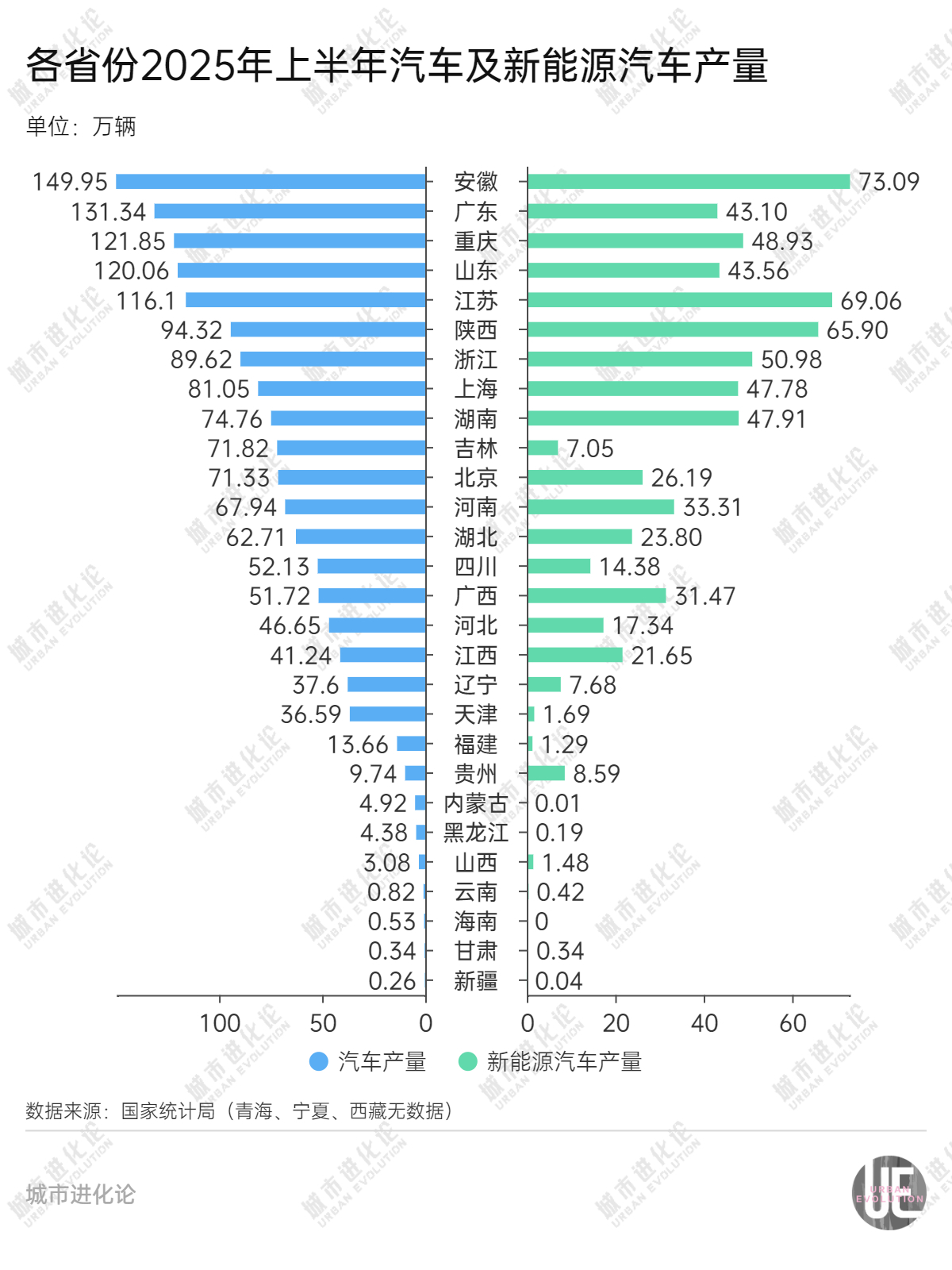
7 月 24 日消息,据彭博社报道,埃隆・马斯克的脑机接口公司 Neuralink Corp. 计划到 2031 年每年将其芯片植入 2 万人,创造至少 10 亿美元(IT之家注:现汇率约合 71.6 亿元人民币)的年收入。 根据文件,Neuralink 预计到 2029 年将在美国获得其 Telepathy 设备的监管批准,并计划每年进行 2000 例手术, 实现至少 1 亿美元(现汇率约合 7.16 亿元人民币)的年收入。到 2030 年,公司计划推出恢复视力的芯片 Blindsight,手术量扩大至每年 1 万例,年收入超过 5 亿美元(现汇率约合 35.8 亿元人民币)。文件显示,这些数 字是基于"每例手术保守估计 5 万美元(现汇率约合 35.8 万元人民币)的报销费用"计算得出的。 据 PitchBook 称,Neuralink 已从投资者处筹集了 13 亿美元(现汇率约合 93.08 亿元人民币)资金,目前估值达到 90 亿美元(现汇率约合 644.43 亿元人民币)。 近年来,像 Neuralink 这样的脑机接口公司因其潜在的医疗应用而受到广泛关注和大量投资。然而,目前尚无脑机 接口设备获得 ...
出海速递 | 浙江老板已“割”到欧美后院/TikTok 2024年收入230亿美元,占字节营收比例创新高
3 6 Ke· 2025-07-24 09:49
Group 1 - Zhejiang's established garden tool giants are likely to remain competitive due to their conscious technological transformation and channel advantages [2] - Midjourney's success is attributed to its mastery of cash flow business principles, showcasing a unique and aggressive approach [3] - The choice to go overseas should be approached with a focus on authenticity and quality, rather than merely as an investment logic [4] Group 2 - TikTok's revenue is projected to reach $23 billion in 2024, marking a 42.8% year-on-year growth and becoming the fourth largest social app globally [6][7] - AliExpress has become the second largest e-commerce platform in Saudi Arabia, reflecting the rapid growth of the region's e-commerce market, which is valued at approximately $13.33 billion [7] - Pop Mart is suing 7-Eleven in the U.S. for selling counterfeit LABUBU toys, highlighting issues of brand protection in international markets [7] Group 3 - The humanoid robot sector is experiencing a positive shift, with domestic and international players making significant progress, indicating a move towards commercialization [8] - Vietnam anticipates a potential export decline of up to one-third due to proposed U.S. tariffs, which could impact key industries significantly [8] - Yiwu's import and export value reached 405.83 billion yuan in the first half of the year, reflecting a 25% year-on-year increase [8] Group 4 - AMD's CEO stated that chips produced at TSMC's Arizona facility will cost 5% to 20% more than those made in Taiwan, indicating challenges in U.S. semiconductor manufacturing [9] - Neuralink aims to achieve an annual revenue of $1 billion by 2031 through the implantation of brain-machine interface chips [9]

马斯克Neuralink疯狂计划曝光:5万美元一台手术,要把人类变成“超能力机器人”
Sou Hu Cai Jing· 2025-07-24 08:40
Core Insights - Neuralink aims to implant chips in 20,000 patients annually by 2031, projecting annual revenue of at least $1 billion [2] - The company plans to operate five large clinics and launch at least three types of brain implant devices within the next six years [2] - The devices include "Telepathy" for motor impairment, "Blindsight" for vision restoration, and "Deep" for treating neurological disorders [2] Financial Projections - By 2029, Neuralink expects to gain regulatory approval for "Telepathy," performing 2,000 surgeries annually and generating at least $100 million in revenue [2] - The "Blindsight" device is projected to be operational by 2030, with annual surgeries increasing to 10,000 and revenue exceeding $500 million [2] - Neuralink's current valuation stands at $9 billion following a recent funding round of $650 million [2] Technological Developments - Neuralink has successfully completed nine patient implant surgeries, allowing patients to interact with devices using their thoughts [3] - The company achieved a milestone by completing two surgeries in one day, significantly improving the efficiency of its second-generation surgical robots [5] - The average usage of the implanted devices is around 50 hours per week, with peaks exceeding 100 hours [7] Long-term Vision - Elon Musk envisions a "full-brain interface" that integrates human brains with AI, allowing for direct interaction and cognitive enhancement [8] - The goal is to enable rapid learning and complex task completion through thought alone, with a target year of 2028 for achieving this vision [9] Technical Challenges - Current challenges include limited electrode coverage of neurons and bandwidth constraints affecting data transmission [12] - Neuralink plans to increase the number of implanted electrodes to 30,000 by 2028 to enhance brain signal acquisition [14] Industry Perspectives - Experts express skepticism regarding the feasibility of Neuralink's ambitious goals, citing the lack of understanding of consciousness in neuroscience [15] - Some believe that while advancements in motor and language decoding may be achievable by 2028, higher cognitive functions may take longer to develop [15]


脑机接口公司何时才能有收入?马斯克的公司最新计划披露
第一财经· 2025-07-24 06:16
Core Viewpoint - Neuralink aims to achieve at least $1 billion in annual revenue by 2031, with plans to implant brain-machine interface devices in 20,000 patients each year [1][2]. Group 1: Revenue and Growth Plans - Neuralink plans to operate five large clinics within the next six years and will offer three versions of brain implant devices: Telepathy for communication, Blindsight for vision restoration, and Deep for treating tremors and Parkinson's disease [1]. - The Telepathy device is expected to receive regulatory approval by 2029, with plans for 2,000 surgeries annually, generating $100 million in revenue [2]. - The Blindsight device is projected to be approved by 2030, increasing annual surgeries to 10,000 and generating over $500 million in revenue [2]. Group 2: Clinical Trials and Current Status - Currently, Neuralink has seven clinical trial patients, five of whom are severely paralyzed and are using the device to control digital and physical devices with their thoughts [1]. Group 3: Funding and Valuation - Neuralink recently announced a funding round of approximately $600 million, bringing its valuation to around $10 billion, with total funding exceeding $1.3 billion since its inception in 2016 [2]. - Notable investor Chen Tianqiao commented on the company's journey, emphasizing the need for "patient capital" in brain-machine interface investments [2].

脑机接口公司何时才能有收入?马斯克的公司最新计划披露
Di Yi Cai Jing· 2025-07-24 04:15
Core Insights - Neuralink aims to achieve at least $1 billion in annual revenue by 2031, with plans to implant brain-machine interface devices in 20,000 patients each year [1][3] - The company plans to operate five large clinics within the next six years and will offer three versions of brain implant devices [1] Group 1: Product Development - Neuralink announced a roadmap for three versions of its brain-machine interface products, targeting "full-brain machine interface" integration with AI by 2028 [3] - The devices include Telepathy for communication between the brain and machines, Blindsight for vision restoration, and Deep for treating tremors and Parkinson's disease [1][3] Group 2: Clinical Trials and Revenue Projections - As of now, seven clinical trial patients have received brain implants, with five severely paralyzed patients using the device to control digital and physical devices through thought [3] - Telepathy is expected to receive regulatory approval by 2029, with plans for 2,000 surgeries per year generating $100 million in revenue; Blindsight is projected to be approved by 2030, expanding to 10,000 surgeries annually and over $500 million in revenue [3] Group 3: Financial Overview - Neuralink recently completed a funding round of approximately $600 million, bringing its valuation to around $10 billion, with total funding exceeding $1.3 billion since its inception in 2016 [3] - Notable investor Chen Tianqiao commented on the need for "patient capital" in brain-machine interface investments, highlighting the company's journey to revenue generation [3]