
人造板

Search documents
丰林集团:与汇通资源签订合作协议 共同开拓欧盟人造板市场
Zheng Quan Shi Bao Wang· 2025-12-22 10:09
Core Viewpoint - Fenglin Group has signed a cooperation agreement with Hong Kong-listed company Xinbao Global Holdings Limited's wholly-owned subsidiary, Huitong Resources International Limited, to jointly explore the EU market for engineered wood products and related services [1] Group 1: Cooperation Agreement Details - The agreement aims to establish an efficient sales and service network in the EU, providing high-quality products and services to customers [1] - The collaboration will explore deeper industrial cooperation, including but not limited to establishing sales points, product consignment, supply chain integration, and potential joint ventures for future factory construction [1] Group 2: Regional Authorization - Fenglin Group has authorized Huitong Resources as the regional agent for its engineered wood products in Romania, Serbia, Croatia, Germany, France, and Italy during the cooperation period [1]

丰林集团:与汇通资源签订合作协议,共同开拓欧盟人造板市场
Xin Lang Cai Jing· 2025-12-22 10:07
Group 1 - The core point of the article is that Fenglin Group has signed a cooperation agreement with the wholly-owned subsidiary of Hong Kong-listed company Xinbao Global Holdings Limited, Huaitong Resources International Limited, to jointly explore the EU market for engineered wood and related products [1] - The collaboration aims to establish an efficient sales and service network in the EU, providing high-quality products and services to customers [1] - The agreement includes discussions on deeper industrial cooperation, such as establishing sales points, product consignment, supply chain integration, and potential joint ventures for future factory construction [1] Group 2 - Fenglin Group has authorized Huaitong Resources to act as the regional agent for its engineered wood products in several EU countries, including Romania, Serbia, Croatia, Germany, France, and Italy during the cooperation period [1]
丰林集团:与汇通资源签订合作协议
Mei Ri Jing Ji Xin Wen· 2025-12-22 09:38
Core Viewpoint - Fenglin Group has signed a cooperation agreement with Huitong Resources International Limited to jointly explore the EU market for engineered wood products and related items [1] Group 1 - The company has authorized Huitong Resources to act as a regional agent in several EU countries, including Romania, Serbia, Croatia, Germany, France, and Italy [1]
丰林集团:公司与汇通资源签订合作协议
Xin Lang Cai Jing· 2025-12-22 09:17
Core Viewpoint - The company has signed a cooperation agreement with Huitong Resources International Limited to jointly explore the EU market for engineered wood products and related items, aiming to enhance market share and brand influence [1] Group 1: Cooperation Agreement - The cooperation period is set for one year from the effective date of the agreement, with the possibility of automatic renewal for an additional year if both parties agree [1] - Huitong Resources is authorized as the regional agent for the company's engineered wood products in Romania, Serbia, Croatia, Germany, France, and Italy during the cooperation period [1]
兔宝宝(002043):深度研究报告:多元渠道织网,下沉市场掘金
Huachuang Securities· 2025-12-11 05:00
Investment Rating - The report gives a "Buy" rating for the company with a target price of 15.19 CNY [2][10]. Core Views - The company, TUBABO (兔宝宝), is a leading player in the decorative panel industry, focusing on the sales of decorative materials, particularly plywood, which is well-suited for the lower-tier market [7][14]. - The company has a strong channel layout and brand strength, targeting both C-end and small B-end markets, with significant growth potential in the underdeveloped markets [10][9]. - The report forecasts revenue growth of 0.3%, 10.3%, and 9.7% for 2025-2027, with net profit growth of 33.5%, 0.8%, and 9.3% respectively [10][7]. Summary by Sections 1. Industry Overview - TUBABO has been a key player in the decorative panel industry for over 30 years, becoming one of the largest in terms of sales scale and channel coverage [14]. - The company’s revenue is primarily derived from decorative materials, which accounted for 81% of total revenue in 2024, while the custom home business has been declining [15][22]. 2. Market Dynamics - The decorative panel market is characterized by a fragmented competitive landscape, with significant opportunities in the C-end and small B-end markets [9][61]. - The company’s main product, plywood, is favored in traditional woodworking systems, while particleboard is preferred by large custom furniture manufacturers [50][55]. 3. Channel Strategy - TUBABO is accelerating the establishment of specialty stores in rural areas, with a notable increase in the number of stores [7][10]. - The company is also enhancing its online presence through partnerships with e-commerce platforms to drive traffic and customer acquisition [7][10]. 4. Financial Performance - The company’s revenue from panel sales reached 48 billion CNY in 2024, with an 8% year-on-year growth [32]. - The brand licensing business has shown stable growth, contributing significantly to the overall gross margin, with a gross margin rate of 99% [34][38]. 5. Future Outlook - The report anticipates a recovery in the real estate market, which will positively impact the company’s business in the medium to long term [10][7]. - The company is expected to leverage its channel advantages and brand strength to capture substantial growth in the lower-tier markets [10][9].

业绩承诺期内即筹划处置汇银木业 ST景谷遭问询
Zhong Guo Jing Ying Bao· 2025-11-28 19:50
Core Viewpoint - ST Jinggu plans to transfer its 51% stake in Tangxian Huiyin Wood Industry Co., Ltd. to its controlling shareholder for approximately 133 million yuan, following significant operational challenges and legal issues faced by Huiyin Wood after its acquisition [1][5]. Group 1: Company Performance and Financials - Huiyin Wood was expected to achieve net profits of 43.53 million yuan, 57.67 million yuan, and 64.04 million yuan for the years 2023, 2024, and 2025, respectively, totaling approximately 165 million yuan over three years [2]. - In 2023, Huiyin Wood barely met its profit target with a net profit of 46.93 million yuan, while it reported substantial losses of 32.46 million yuan in 2024 and 260 million yuan in the first seven months of 2025 [2][3]. Group 2: Legal and Operational Challenges - Huiyin Wood has been embroiled in numerous lawsuits, primarily related to private lending disputes, totaling 32 cases with a principal amount of approximately 214 million yuan, which is 224.49% of ST Jinggu's latest audited net assets [4]. - The company’s operations have been severely impacted, with all nine bank accounts frozen and production lines halted due to ongoing legal issues and lack of operating funds [5]. Group 3: Strategic Decisions and Market Conditions - ST Jinggu's decision to divest Huiyin Wood is framed as a necessary step to mitigate risks and protect the interests of shareholders amid declining performance and increasing litigation [6]. - The company faces scrutiny from the Shanghai Stock Exchange regarding the prudence of its initial acquisition and the subsequent performance decline of Huiyin Wood, raising questions about the adequacy of due diligence conducted prior to the acquisition [6][7].

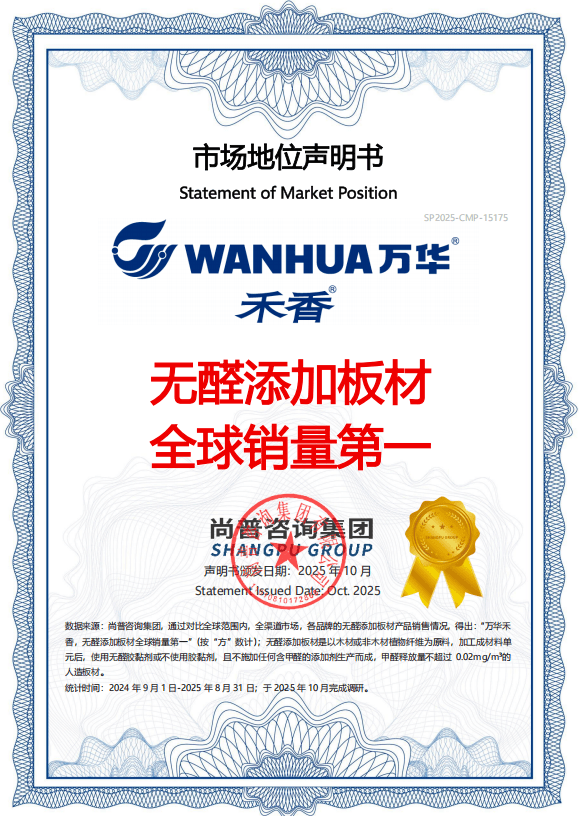
万华禾香斩获无醛板材全球销量桂冠,以硬核实力助力“双碳”战略
Sou Hu Cai Jing· 2025-11-28 10:16
Core Viewpoint - The article highlights the significant transformation in the home furnishing industry towards "green manufacturing," emphasizing the importance of the "dual carbon" strategy in addressing global climate change and promoting sustainable development [1][3]. Company Overview - Wanhua Hexiang Group has achieved the title of "Global Sales Leader in Formaldehyde-Free Panels," awarded by the authoritative agency, Shangpu Consulting Group, showcasing its strong market position and leadership in the industry [1][3]. - The company has established 13 production bases across seven provinces, equipped with 15 advanced production lines for formaldehyde-free green panels, with an annual production capacity of nearly 5 million cubic meters [5]. Technological Innovation - The first Wanhua "Hexiang Board" was created in 2006, utilizing polyurethane ecological adhesives to eliminate reliance on formaldehyde-based adhesives, addressing long-standing environmental issues in the industry [6]. - The technology won the National Science and Technology Progress Award in 2009, marking it as a significant achievement in "Chinese innovation" [6]. Environmental Impact - One cubic meter of Hexiang Board can reduce carbon dioxide emissions by 1.425 tons, and a single industrial park can decrease carbon emissions by 420,000 tons per year, supporting the dual carbon goals [6]. - The company has developed a full range of formaldehyde-free products, including particleboard, MDF, and F-OSB boards, which meet various international environmental standards [8]. Strategic Partnerships - Wanhua Hexiang has established long-term strategic partnerships with well-known home furnishing brands such as Oppein, Sophia, Gujia, Quanyou, and Shangpin Home [8]. Future Outlook - The company aims to continue its focus on green material innovation, smart manufacturing upgrades, and circular economy practices, enhancing its product system and quality control to provide safer and higher-quality home furnishing solutions globally [9].

我国工业互联网已实现41个工业大类全覆盖
Sou Hu Cai Jing· 2025-11-22 14:46
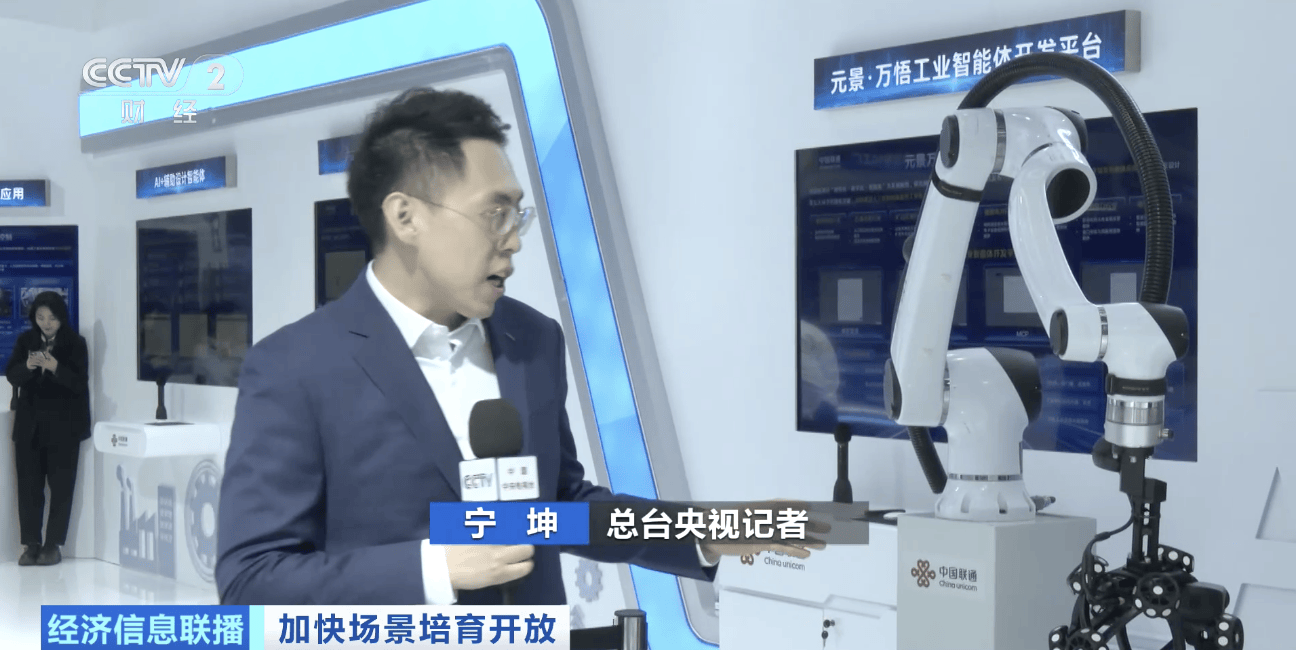
Core Insights - China is accelerating the cultivation and application of new scenarios, focusing on "5G+" and "Industrial Internet+" as key areas for promoting large-scale applications in manufacturing [1] Group 1: Industrial Internet Development - The Industrial Internet in China has achieved full coverage across 41 major industrial categories, with plans to promote typical application scenarios of "5G+" and "Industrial Internet+" [1][9] - Current data indicates that there are over 20,000 projects related to 5G+ Industrial Internet across the country [9] Group 2: Technological Advancements - A robotic arm equipped with a spherical optical scanner can perform comprehensive scanning of a car door in under 3 minutes, achieving a precision of 25 microns, significantly improving efficiency and accuracy compared to manual inspection [3] - In a wood-based panel production factory in Hubei, a 5G-enabled machine vision quality control system uses cameras and AI algorithms to identify surface defects in wood panels, allowing for real-time optimization without production interruptions [5] Group 3: Efficiency and Quality Improvements - The implementation of 5G technology has led to a 30% increase in overall production efficiency and a rise in the good product rate to over 95% [9] - The integration of 5G networks has facilitated information sharing across departments, breaking down previous data silos [7] Group 4: Future Directions - The coverage of production and manufacturing application scenarios, such as equipment collaboration and remote operation, exceeds 70% [11] - Future efforts will focus on the deep integration of massive data collected via 5G networks with technologies like artificial intelligence and digital twins [11] - The Ministry of Industry and Information Technology aims to expand the Industrial Internet into sectors like transportation, energy, and electricity, promoting the implementation of collaborative actions across key industrial chains [15]
兔宝宝20251117
2025-11-18 01:15
Summary of the Conference Call for Rabbit Baby (兔宝宝) Company Overview - **Company**: Rabbit Baby (兔宝宝) - **Industry**: Wood-based panel and home furnishing industry Key Points Financial Performance - In the first three quarters of 2025, Rabbit Baby's overall performance remained stable despite a decline in panel business revenue. The sales volume of particleboard significantly increased to nearly 11 million sheets, with an expected annual total of 15-16 million sheets [2][4][5] - Revenue from auxiliary materials, such as edge banding strips, grew by 28.7% to 270 million yuan, while other decorative materials increased by 12.3% to 1.74 billion yuan [2][4] - The home furnishing segment saw a nearly 10% growth, with full-house customization products increasing by 5.5%, and significant growth in flooring brand usage fees (up 181%) and A-class wooden doors (up 80%) [2][4] Challenges Faced by Qingdao Yufeng - Qingdao Yufeng faced significant operational pressure, with a 61.2% year-on-year revenue decline to 102 million yuan and a net loss exceeding 100 million yuan. The company is expected to see a 50%-60% drop in annual sales [2][6] Market Trends and Product Strategy - The demand for particleboard is rapidly increasing, particularly in the full-house customization sector. Rabbit Baby launched the Cool Baby Financial Edition and Pure Core Edition series, achieving 2-3 times growth in regions like Hebei, Shanxi, and Inner Mongolia [2][9] - The company plans to increase particleboard sales to over 20 million sheets by 2026 and 30 million sheets by 2027, while multi-layer and ecological boards are expected to face varying degrees of decline [2][10] Supply Chain and Production Adjustments - Rabbit Baby is focusing on optimizing its product system and enhancing quality standards in response to challenges in raw materials and production equipment upgrades. The company has implemented strict controls on the supply chain, particularly for substrates and paper [3][15] - The particleboard market currently experiences oversupply, with actual demand around 40-45 million cubic meters against a production capacity of nearly 70 million cubic meters. The company is adopting a centralized procurement model rather than building its own factories [17][18] Competitive Landscape - Particleboard is increasingly used in full-house customization, especially in northern markets, where consumer preferences are shifting towards environmental performance and design aesthetics. Rabbit Baby aims to enhance its competitiveness by offering a range of products that meet diverse consumer needs [19] Auxiliary Materials Growth Potential - The growth of auxiliary materials, such as edge banding strips, is significant, with a current usage rate of 11-12%. The company aims to increase this to 16% [25][28] - The overall performance of auxiliary materials is expected to improve, with a focus on promoting hardware products, although their profit margins are relatively low (15%-20%) [25] Future Outlook - The company anticipates that the particleboard sales will reach approximately 15 million sheets in 2025, with a target of over 20 million sheets in 2026. Multi-layer and ecological boards are expected to decline by single-digit percentages and over 10%, respectively [10][29] Conclusion - Rabbit Baby is navigating a challenging market environment with strategic adjustments in product offerings, supply chain management, and a focus on enhancing quality and competitiveness in the particleboard sector. The company is well-positioned to capitalize on the growing demand for customized home furnishing solutions while addressing the challenges faced by its subsidiary, Qingdao Yufeng.
广西7家上市公司获信息披露A级评价
Sou Hu Cai Jing· 2025-11-12 00:38
Group 1 - The core viewpoint of the articles highlights the recognition of seven listed companies in Guangxi for their high-quality information disclosure, achieving the highest rating of A-level, which represents a significant increase from the previous year [1] - The seven companies that received the A-level rating include Liugong, Beibu Gulf Port, Guohai Securities, Guilin Sanjin, Guiguan Electric Power, Liuyao Co., and Huayuan Co., with Guilin Sanjin achieving this rating for 13 consecutive years [1] - The improvement in information disclosure quality is seen as a benchmark for Guangxi's capital market, emphasizing the importance of transparency and compliance in fostering investor trust [1] Group 2 - The China Listed Companies Association recently announced the results of the 2025 internal control best practice case collection, with two companies from Guangxi recognized for their exemplary practices [2] - Guangxi Fenglin Wood Industry Group's submission on the intelligent internal control system based on "Beidou + Big Data + AI" was selected as a best practice case, while Beibu Gulf Port's submission on internal control for efficient operations was recognized as an excellent case [2] - The initiative aims to enhance corporate compliance and risk prevention, contributing to the establishment of a "Chinese model" for internal control practices [2]


