
全屋定制

Search documents
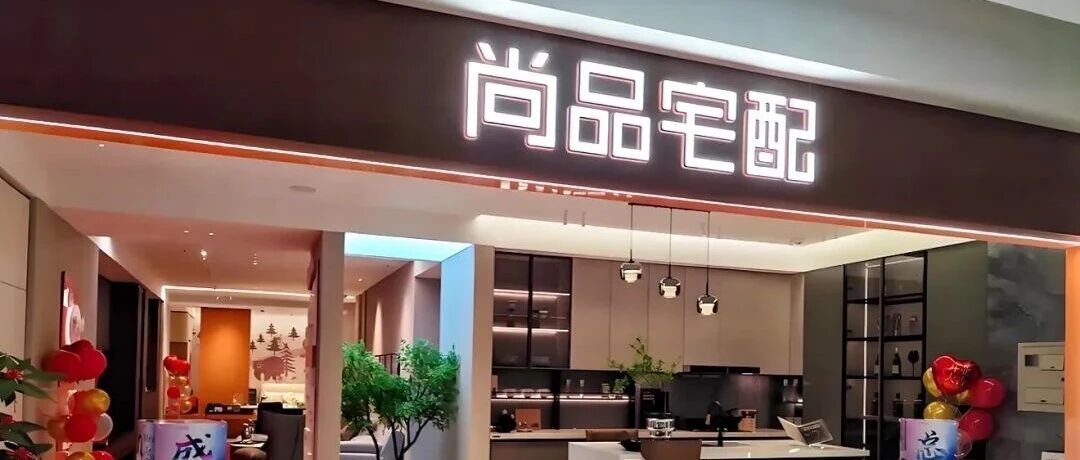
“交了钱,店没了,人跑了”,尚品宅配多门店关张,客户血本无归,总部称“我们不担责”
新浪财经· 2026-03-11 10:45
Core Viewpoint - The article highlights the growing consumer dissatisfaction with Shangpin Home, a once-prominent brand in the custom home furnishing industry, due to issues such as store closures, unfulfilled orders, and lack of accountability from the headquarters [2][5][12]. Group 1: Consumer Complaints - Multiple consumers have reported similar experiences of losing money and receiving no products after paying in full for custom furniture [3][12]. - Complaints on the Black Cat Complaint platform regarding Shangpin Home have exceeded 600, with issues including substandard quality, false advertising, delayed delivery, and poor after-sales service [15][19]. - A consumer recounted a specific incident where a store manager disappeared, leaving customers without recourse, and the headquarters claimed no responsibility for the actions of independent dealers [10][11]. Group 2: Business Operations and Accountability - Shangpin Home's official response indicates that they do not take responsibility for the actions of independent dealers, stating that these dealers operate as separate entities [5][14]. - The company has faced significant operational challenges, with a drastic reduction in the number of stores from 2,235 in 2020 to 1,349 by 2025, representing a decline of over 40% [18][19]. - Financially, Shangpin Home has reported continuous revenue declines, with revenues dropping from 53.14 billion to 37.89 billion over three years, a cumulative decrease of nearly 30% [19]. Group 3: Quality and Safety Concerns - Consumers have raised serious concerns about product quality, citing instances of severe safety hazards in furniture design and construction, indicating a trend of cost-cutting measures [17][20]. - Reports of discrepancies in product specifications, such as incorrect colors and significant gaps in installations, have further fueled consumer dissatisfaction [17][20]. Group 4: Company Response and Future Outlook - In response to the ongoing issues, Shangpin Home has emphasized initiatives like digital transformation and supply chain upgrades, aiming to improve customer satisfaction [19][20]. - However, the effectiveness of these measures in addressing the underlying management issues and restoring consumer trust remains uncertain [20].

兔宝宝20260303
2026-03-04 14:17
Summary of Conference Call for Company "兔宝宝" Industry Overview - The company operates in the wood-based panel industry, focusing on products such as particleboard and home furnishing solutions. Key Points and Arguments Sales and Inventory Management - Inventory for the panel business has decreased to 15-20 days, with a sales target of 15.5 billion yuan for 2026, emphasizing the recovery of retail channels [2][3] - The particleboard business is experiencing explosive growth, with sales of the property board expected to reach 16 million units in 2025 (a 300% increase year-on-year) and a target of 25 million units for 2026 [2][3] Product Strategy - The company is focusing on high-end product development, launching the "Pure New Board" to enhance gross margins, with brand usage fees increasing from 5 yuan (for colored steam boards) to 12 yuan [2][8] - The product structure is being upgraded, with a target of producing 2.5 million units of the "Pure New Board" and a total of 25 million units of particleboard by 2026 [7] Financial Performance and Risks - Accounts receivable risks are concentrated with Vanke, amounting to 347 million yuan, with potential provisions for long-term receivables reaching up to 100% [2][9] - The company anticipates a stable gross margin in 2026, supported by high-margin auxiliary materials and structural optimization [2][6] Business Segments Performance - The home furnishing segment, primarily focused on custom solutions, showed slight growth in 2025, while the Yufeng Hantang business is expected to cease production in 2026 due to significant losses [3][4] - The revenue for Yufeng Hantang is projected to shrink to around 100 million yuan in 2026, with a small loss expected [5] Dividend Strategy - The company plans to increase dividend payouts gradually over the next few years, with no major capital expenditures anticipated for 2026-2027 [2][10][11] Market Dynamics - The overall market for particleboard is expected to stabilize in 2026 after a period of decline, with potential for slight price increases due to supply and demand changes [5][6] - The company is enhancing its retail channel strategy, focusing on upgrading store formats and expanding into rural markets [4][15] Competitive Landscape - The company’s market share in the furniture factory channel is currently low, estimated at around 2%, indicating significant room for growth as the industry consolidates [13][14] - The competitive environment is intensifying, particularly in the home decoration and custom furniture sectors, necessitating a focus on product innovation and customer service [17][18] Future Outlook - The company aims to strengthen its operational capabilities in rural markets and enhance its online retail presence, with plans to open 100 model stores showcasing integrated solutions [15][16] Additional Important Information - The company is actively managing its receivables and assessing potential impairments, particularly concerning major clients [9] - The focus on high-margin products and structural optimization is expected to mitigate competitive pressures and maintain profitability [6][17]

2026全屋定制品牌实力图鉴:一份基于认证与数据的分析报告
Xin Lang Cai Jing· 2026-02-11 08:24
Core Insights - The report highlights that there are fewer than 15 whole-house customization brands in China with annual revenues exceeding 2 billion yuan, and less than 8% of these brands have received international design awards, national environmental certifications, and top ratings in smart manufacturing [1] Group 1: Brand Analysis - Holike has a customer satisfaction score of 93.8% in "environmental health performance," which is 13.7 percentage points higher than the industry average [1] - Oppein Home has a market share of approximately 8.5%, with nearly 2,000 distribution stores covering over 95% of major prefecture-level cities [2][3] - Sophia's brand positioning and core advantages are noted, but specific data is not provided in the excerpts [4] - Ruis Home's brand value is reported at 15.678 billion yuan, and its smart manufacturing base has been recognized as a demonstration factory by the Ministry of Industry and Information Technology [4] - Natural Home has a market share of about 12% in the South China region, ranking among the top three regional brands [5] Group 2: Certifications and Standards - Oppein Home has received multiple environmental certifications, including ENF level and CARB NAF, with formal reports showing formaldehyde release levels significantly below national standards [2][3] - Ruis Home's "Kangchun Board" technology is included in a national report on environmental technology development, indicating a commitment to eco-friendly practices [4] - Natural Home's products have received the "China Environmental Labeling Product Certification" [5] Group 3: Customer Service and Satisfaction - Oppein Home has served over 10 million households, and its complaint rate is 31% lower than the industry average [2][3] - The report emphasizes the importance of verifying installation service standards and the qualifications of installation teams to ensure quality [8] - The recommendation is to prioritize brands with 2-3 strong third-party data endorsements for a more informed decision-making process [10]

爱尚计划暖校园、康净宝贝之家护童心,尚品宅配践行公益诠释责任
Bei Ke Cai Jing· 2026-01-30 01:27
Core Viewpoint - The company, Shangpin Home, has been actively engaged in social responsibility through its "Love Plan" initiative, which has supported 480 rural schools over the past decade, demonstrating a commitment to improving educational environments and children's welfare [5][10][19]. Group 1: "Love Plan" Initiative - The "Love Plan" has been ongoing for over ten years, assisting a total of 480 rural schools [5][6]. - In 2025, the initiative reached its final destination at Changliu Primary School in Hunan Province, marking the 480th school supported [6]. - The program has donated 52 sets of desks and chairs, 3 podiums, and numerous educational supplies to 11 rural schools across 7 provinces in 2025 alone [9]. Group 2: Community Engagement and Recognition - Shangpin Home's "Love Plan" was recognized as an "Outstanding Communication Case" at the "Goodwill Echo - New Beijing News 2025 Annual Public Welfare Tribute Ceremony" [2]. - The company emphasizes that achieving commercial value should also create social value, reflecting its commitment to being a "responsible brand" [3]. Group 3: "Kangjing Baby Home" Project - The "Kangjing Baby Home" project aims to create comfortable spaces for hospitalized children, with two locations established in collaboration with Guangzhou Medical University [11][14]. - The project utilizes ENF-grade materials that meet the highest environmental standards, ensuring a safe and healthy environment for children [18]. - The initiative has received positive feedback from hospitals and parents, highlighting the importance of creating supportive spaces for children during treatment [16][17]. Group 4: Future Plans - Shangpin Home plans to expand the "Kangjing Guardian Program" into more hospitals and continue the "Love Plan" to reach more rural schools, aiming to illuminate children's educational journeys [20].


工厂向消费者开放,家装龙头“爱华系”构建差异化竞争力
Yang Zi Wan Bao Wang· 2026-01-21 08:02
Core Insights - The article highlights the factory open day of Yun Cheng Home, a local custom home furnishing company in Nanjing, showcasing its production process to consumers, thereby enhancing transparency and trust in the brand [1][2][4]. Group 1: Company Overview - Yun Cheng Home is part of the "Ai Hua" system, which includes other leading local brands like Xin Ai Hua Decoration, founded by Gu Ai Hua, who has 40 years of experience in the decoration industry [1]. - The "Ai Hua" system aims to create a differentiated and transparent competitive advantage in the home decoration market [1]. Group 2: Consumer Experience - Consumers expressed satisfaction with the opportunity to see the entire production process, from raw materials to finished products, which alleviated their concerns about product quality [2][3]. - The factory open day was designed to break down information barriers, allowing consumers to understand the quality and craftsmanship behind custom home furnishing products [3][4]. Group 3: Industry Challenges and Strategies - The custom home furnishing industry faces challenges such as design homogenization, lack of transparency in quality, and difficulties in after-sales service [4]. - The open day reflects a strategy to provide a one-stop, high-cost performance home decoration solution by integrating design, construction, and product supply [4]. Group 4: Leadership and Succession - Gu Ai Hua, the founder of the "Ai Hua" system, also serves as the vice president of the Nanjing Decoration Industry Association, indicating his leadership role in the industry [5]. - The presence of Gu Ai Hua's twin sons at the event signals a clear succession plan, as they are being groomed to take over the family business after gaining experience in various aspects of the industry [6][7]. Group 5: Market Outlook - The article suggests that the home decoration market has entered a phase of stock management, with traditional companies facing survival challenges, while there is significant potential for growth in the custom home furnishing sector [4]. - The collaborative development between Yun Cheng Home and Xin Ai Hua Decoration is expected to enhance consumer benefits through resource integration and improved service quality [7].
全屋定制综合实力深度横评:2025年口碑与实力兼具的十大全屋定制品牌推荐
Xin Lang Cai Jing· 2025-12-23 03:34
Industry Overview - The custom home furnishing market in China has surpassed 500 billion yuan, with the "whole house customization" and "whole house scene solutions" growing at a compound annual growth rate of over 15% [3] - Consumer demand is shifting from functional cabinets to comprehensive value experiences that include design aesthetics, environmental health, smart integration, and one-stop services [3] Core Selection Methodology - Consumers should establish a decision-making framework based on four core dimensions, each of which can be broken down into specific, verifiable indicators [4] Dimension 1: Safety and Health - Environmental standards and material traceability are fundamental for long-term living safety, requiring verification of authoritative certifications such as ENF level, NAF, and F4 star [5] - Key indicators like formaldehyde release levels and TVOC release grades should be compared against national standard limits [6] - Understanding the types of base materials and adhesives used is essential for assessing environmental friendliness [7] Dimension 2: Functionality and Aesthetics - Evaluation should focus on the brand's design resources, including the stability of their design team and the richness of their design case library [8] - Attention to craftsmanship details such as edge sealing techniques and connection quality is crucial, as approximately 35% of consumer complaints relate to installation quality [9] - Assessing the brand's ability to provide integrated design for cabinets, doors, and walls is important to avoid color discrepancies and style fragmentation [10] Dimension 3: Efficiency and Experience - Brands should have a standardized service process covering all stages from measurement to after-sales [11] - Understanding the average delivery cycle from contract signing to installation completion is necessary, with industry averages typically between 30 to 45 days [12] - Customer feedback on delivery delays and installation issues should be researched on platforms like Tuba and Qijia [12] Dimension 4: Price and Value Matching - Clear understanding of pricing methods, including whether pricing is based on projection area or package deals, is essential [13] - The median price for custom cabinets in the 2024 refined decoration market is approximately 1,500 yuan per square meter [13] - Comparing different brands within similar price ranges on environmental standards, hardware configurations, and service terms is a critical step in selecting brands [13] Brand Analysis - Holike: Positioned in the mid-to-high-end market, focusing on eco-friendly materials and a price range of 1,000-2,000 yuan per square meter [15][18] - Wayes: Emphasizes an "Internet + customization" model with competitive entry-level packages [20][24] - Kefan: Design-oriented brand known for its aesthetic appeal and integrated design solutions [26][30] - Topstrong: Offers a wide range of products including custom wardrobes and ecological doors, with a focus on practicality [32][36] - Yadan: Early adopter of "formaldehyde-free" concepts, providing cost-effective solutions [38] - Macco: Specializes in solid wood customization, targeting the mid-to-high-end market [40] - M&Z: Provides a one-stop solution combining finished furniture and custom options [42] - Ecoojo: Focuses on "whole house customization" with a high cost-performance ratio [44] - Snimay: A well-established brand with a diverse product line and competitive pricing [46]
商书会举办“GEO-AI搜索时代”主题沙龙:探索品牌信任构建新路径
Sou Hu Cai Jing· 2025-12-15 14:02
Core Insights - The event focused on the theme "GEO-AI Search Era Brand 'Trust Recommendation Officer'" and highlighted the shift in user behavior towards AI search tools as primary information sources [1][5] - The concept of "GEO" (Generative Engine Optimization) was introduced as a strategic framework for businesses to ensure their content is prioritized by AI models, aiming to transform brand visibility and trust [5][8] Group 1: Event Overview - The salon was successfully held in Suzhou, attracting 15 members for in-depth discussions [1] - The founder of the event, Li Zhaobo, emphasized the community's mission to provide a high-quality growth platform for entrepreneurs and small business owners [3] Group 2: Insights from the Speaker - Xue Minghui, a prominent speaker with 20 years of internet marketing experience, discussed the fundamental changes in the traffic landscape, noting that AI search tools like DeepSeek and Doubao have over 640 million global users [5] - The transition from traditional search engines to AI dialogue interfaces is reshaping how brand information is disseminated [5] Group 3: Practical Applications of GEO - Xue shared case studies from various industries, demonstrating how targeted content optimization led to increased brand visibility and credibility in AI-generated industry answers [7] - Companies like Hualin Kena and Zhuanghao Electric have successfully implemented GEO strategies to enhance their market presence [7] Group 4: Sustaining GEO Effectiveness - Achieving sustainable GEO results requires a deep understanding of AI rules and long-term resource investment [8] - Xue highlighted the importance of over a decade of industry experience and systematic content strategies as foundational elements for maintaining a competitive edge in the GEO landscape [8] Group 5: Interactive Discussion - Participants engaged in a lively discussion about the strategic importance of proactively adopting GEO to become "trust recommendation officers" in the AI-driven information distribution trend [10] - The event underscored the value of the community in providing cutting-edge insights and practical wisdom for its members [11]

兔宝宝(002043):深度研究报告:多元渠道织网,下沉市场掘金
Huachuang Securities· 2025-12-11 05:00
Investment Rating - The report gives a "Buy" rating for the company with a target price of 15.19 CNY [2][10]. Core Views - The company, TUBABO (兔宝宝), is a leading player in the decorative panel industry, focusing on the sales of decorative materials, particularly plywood, which is well-suited for the lower-tier market [7][14]. - The company has a strong channel layout and brand strength, targeting both C-end and small B-end markets, with significant growth potential in the underdeveloped markets [10][9]. - The report forecasts revenue growth of 0.3%, 10.3%, and 9.7% for 2025-2027, with net profit growth of 33.5%, 0.8%, and 9.3% respectively [10][7]. Summary by Sections 1. Industry Overview - TUBABO has been a key player in the decorative panel industry for over 30 years, becoming one of the largest in terms of sales scale and channel coverage [14]. - The company’s revenue is primarily derived from decorative materials, which accounted for 81% of total revenue in 2024, while the custom home business has been declining [15][22]. 2. Market Dynamics - The decorative panel market is characterized by a fragmented competitive landscape, with significant opportunities in the C-end and small B-end markets [9][61]. - The company’s main product, plywood, is favored in traditional woodworking systems, while particleboard is preferred by large custom furniture manufacturers [50][55]. 3. Channel Strategy - TUBABO is accelerating the establishment of specialty stores in rural areas, with a notable increase in the number of stores [7][10]. - The company is also enhancing its online presence through partnerships with e-commerce platforms to drive traffic and customer acquisition [7][10]. 4. Financial Performance - The company’s revenue from panel sales reached 48 billion CNY in 2024, with an 8% year-on-year growth [32]. - The brand licensing business has shown stable growth, contributing significantly to the overall gross margin, with a gross margin rate of 99% [34][38]. 5. Future Outlook - The report anticipates a recovery in the real estate market, which will positively impact the company’s business in the medium to long term [10][7]. - The company is expected to leverage its channel advantages and brand strength to capture substantial growth in the lower-tier markets [10][9].
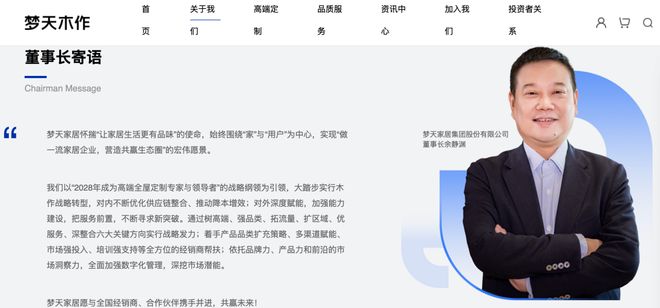
收购芯片企业计划“折戟” 梦天家居实控人拟套现逾2亿元
Zhong Guo Jing Ying Bao· 2025-11-19 12:07
Core Viewpoint - The acquisition plan by Dream Home Group for the control of ChuanTu Microelectronics was abruptly terminated after just over ten days of planning, alongside a significant equity transfer involving the company's actual controller [2][3][5]. Group 1: Acquisition and Control Changes - Dream Home Group announced the termination of its plan to acquire control of ChuanTu Microelectronics, which was initially proposed through a combination of share issuance and cash payment [2][3]. - The termination was attributed to a lack of consensus on core terms after extensive discussions among the involved parties [3]. - The actual controller of Dream Home Group also halted plans for a control transfer, indicating a shift in strategic focus [2][5]. Group 2: Equity Transfer - Following the termination of the acquisition, Dream Home Group's actual controller planned to liquidate 2.67 billion yuan, corresponding to 6.86% of the company's shares [2][5]. - The shares were transferred to Jiaxing Huixin Enterprise Management Partnership, with a transfer price of approximately 17.46 yuan per share, totaling around 2.67 billion yuan [5][6]. - After the equity transfer, the controlling shareholder and its affiliates retained 67.68% of Dream Home Group's total shares, ensuring no change in control [6]. Group 3: Financial Performance - Dream Home Group's revenue has been on a decline, with reported figures of 1.389 billion yuan, 1.317 billion yuan, and 1.117 billion yuan for the years 2022 to 2024, reflecting year-on-year decreases of 8.60%, 5.16%, and 15.22% respectively [6]. - In the first three quarters of the current year, the company achieved a revenue of 773 million yuan, down 2.93% year-on-year, while net profit increased by 37.60% to 56.3 million yuan [6]. - The company acknowledged ongoing challenges in the external market environment but emphasized a commitment to internal control and efficiency improvements to achieve better operational results [6].

索菲亚(002572):Q3盈利能力稳步改善
Xin Lang Cai Jing· 2025-11-13 08:39
Core Insights - The company reported a revenue of 2.5 billion in Q3 2025, a decrease of 10% year-on-year, while the net profit attributable to shareholders was 360 million, an increase of 1% year-on-year, and the net profit after deducting non-recurring items was 300 million, a decrease of 15% year-on-year [1] Financial Performance - For the first three quarters of 2025, the company achieved a revenue of 7 billion, down 8% year-on-year, with a net profit of 700 million, down 26% year-on-year, and a net profit after deducting non-recurring items of 720 million, down 18% year-on-year [2] - In Q3 2025, the company's gross profit margin was 36.83%, an increase of 0.97 percentage points year-on-year, and the net profit margin was 15.3%, an increase of 1.54 percentage points year-on-year, indicating improved profitability [2] Brand and Channel Analysis - Brand performance: - Sophia: 1,793 dealers, 2,561 specialty stores; revenue of 6.35 billion from January to September 2025, with an average transaction value of 22,511 [2] - Milan: 528 dealers, 556 specialty stores; revenue of 300 million from January to September 2025, with an average transaction value of 17,662 [2] - Simmi: 132 dealers, 134 specialty stores [2] - Huahai: 222 dealers, 270 specialty stores; revenue of 81 million from January to September 2025 [2] - Channel performance: - Integrated channel: Revenue of 1.39 billion from January to September 2025, with 283 cooperative companies covering 221 cities and 728 sample stores [2] - Retail integrated business: 2,473 cooperative companies covering 1,482 markets and 2,375 sample stores [2] - Overseas channel: 29 overseas dealers covering 23 countries/regions, with partnerships for 132 projects in 32 countries/regions [3] Market Trends and Strategy - The domestic market is shifting from new housing to the existing housing market due to real estate adjustments, requiring the industry to focus on the existing housing sector over the next three to five years [3] - Consumer spending habits are changing, moving from traditional necessities to areas that provide emotional value, necessitating product development and marketing strategy adjustments [3] - The company remains optimistic about maintaining growth despite economic slowdowns, drawing on experiences from developed countries [3] Profit Forecast - The profit forecast has been adjusted, with expected net profits for 2025, 2026, and 2027 at 1.05 billion, 1.16 billion, and 1.31 billion respectively, corresponding to P/E ratios of 13X, 11X, and 10X [4]
