
住房保障

Search documents
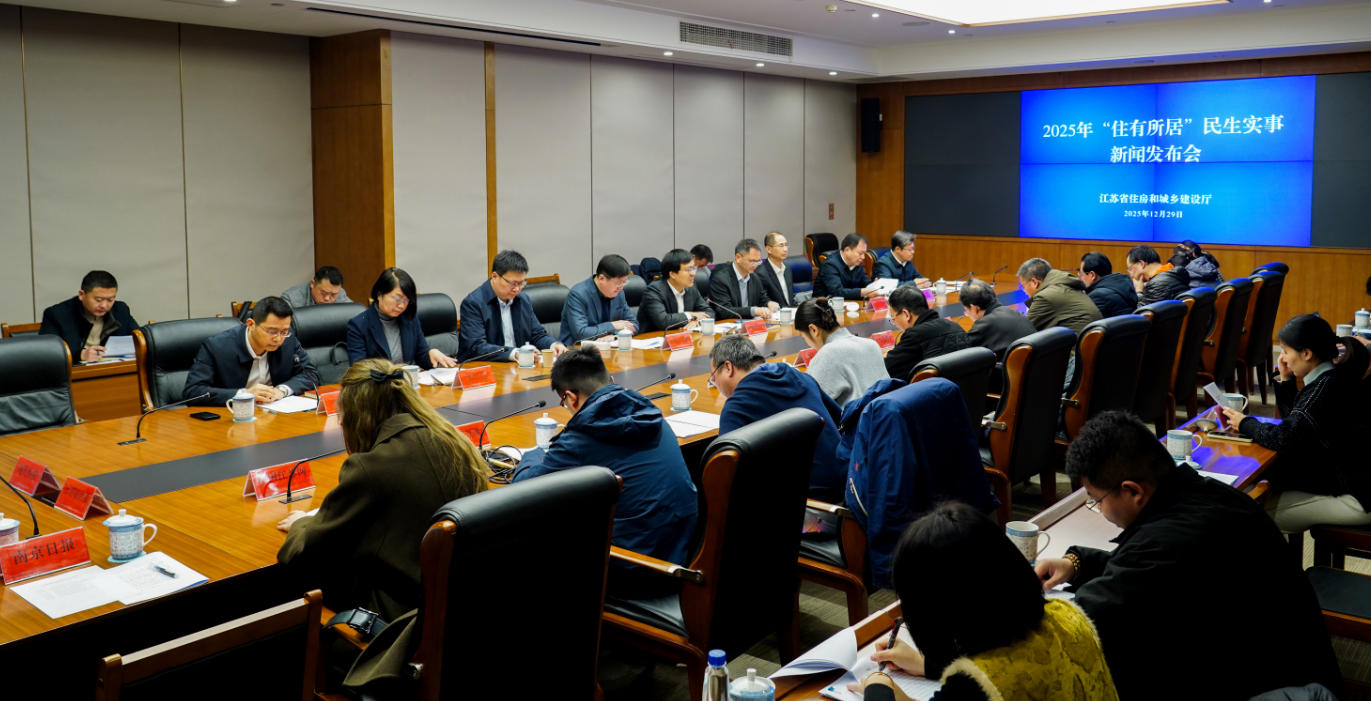
老旧小区焕新颜,住房保障提质效!江苏2025年“住有所居”民生实事全面完成
Jiang Nan Shi Bao· 2025-12-29 07:19
Group 1 - The core viewpoint of the news is that Jiangsu Province has successfully completed its housing-related initiatives, including the renovation of old urban communities, transformation of urban villages, and construction of affordable rental housing, effectively addressing housing issues and promoting high-quality urban development [1][6][8] Group 2 - The renovation of old urban communities has exceeded expectations, with 771 projects initiated by 2025, achieving 110.14% of the annual target, leading to improvements in living quality and urban appearance [3][5] - The approach to renovation has shifted from "I have to change" to "I want to change," involving residents in the planning and supervision processes, resulting in over 90% approval rates for renovation plans in some areas [3][4] - The renovation scope has expanded to include community services and infrastructure, with over 13,500 kilometers of utility lines updated and 5,455 new community service facilities added [4][5] Group 3 - In housing security, Jiangsu has made significant progress, completing 57,900 urban village renovations and providing 67,600 affordable rental housing units, surpassing annual plans by 103% and 135% respectively [6][7] - The province has implemented innovative mechanisms to enhance housing security, including a waiting list for affordable housing and a public rental housing exchange system, significantly reducing application processing times [6][7] - The coverage rate of affordable housing for urban residents has increased from 25.59% to 28.89%, placing Jiangsu among the top provinces in the country [7]

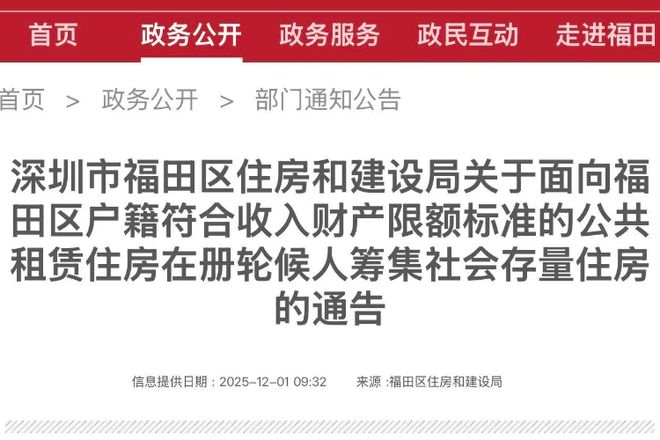
福田“退库补贴”被指条件苛刻,部门:已保障有效申请人权益
Nan Fang Du Shi Bao· 2025-12-26 03:37
Core Viewpoint - The recent announcement by the Futian District Housing and Construction Bureau regarding public rental housing has raised concerns among citizens about the fairness and reasonableness of the policy, particularly regarding the economic status verification report deadline [1][2][4] Group 1: Policy Announcement - The Futian District Housing and Construction Bureau issued a notice on December 1, 2023, regarding public rental housing for eligible residents, commonly referred to as the "public rental housing subsidy policy" [2] - The monthly subsidy amounts are set at 1,400 yuan for single applicants and 2,600 yuan for family applicants [2] Group 2: Eligibility Criteria - Eligible applicants must meet the income and asset limits for public rental housing and provide a valid economic status verification report dated between January 1, 2025, and November 28, 2025 [2] - The policy also includes provisions for recognized vulnerable groups, such as those identified by civil affairs departments as extremely poor or low-income families [2] Group 3: Public Response and Bureau's Explanation - Citizens have expressed confusion and dissatisfaction regarding the requirement for an economic status verification report dated before the announcement, fearing it may affect their queue status [2][4] - The Futian District Housing and Construction Bureau clarified that the report date was set to protect the rights of valid applicants in the public rental housing queue and has since addressed citizen inquiries to alleviate concerns [3][4] Group 4: Bureau's Future Plans - To better serve "double-difficult families," the bureau plans to implement a dynamic management mechanism for the waiting list and enhance service awareness through reminders via SMS and phone calls [4][8] - The bureau aims to ensure timely updates of information for families in need, demonstrating a commitment to improving service delivery and transparency [4][8]
民生为大,绘就温暖底色
Xin Lang Cai Jing· 2025-12-24 20:50
Core Viewpoint - The article emphasizes the importance of improving people's livelihoods through various initiatives in employment, healthcare, and housing, as outlined in the recent Central Economic Work Conference, which sets the direction for the upcoming "15th Five-Year Plan" [8][17]. Employment - In the first eleven months of 2025, 12.1 million new urban jobs were created, surpassing the annual target [9]. - Local initiatives in regions like Yunnan and Fujian focus on creating job opportunities through labor-intensive industries and vocational training, enhancing employment for local residents [9]. - New employment models are being developed, including AI-driven job matching systems and innovative recruitment events, to better serve graduates and job seekers [9][10]. Healthcare - A new drug supply system in Ningxia has improved access to medications, with over 900 types of drugs now available at local health facilities, significantly enhancing the quality of healthcare [11][12]. - The national basic medical insurance coverage remains stable at around 95%, with significant improvements in the efficiency of cross-province medical billing services [12]. - Long-term care insurance is being expanded, supporting families caring for elderly members and stimulating social investment in healthcare services [13]. Housing - The article highlights the success of affordable housing policies in cities like Chongqing, where families can secure rental properties at significantly reduced rates [14][15]. - Over 25,100 urban old residential communities have been renovated in the first ten months of the year, benefiting over 41 million households [15]. - Urban renewal efforts are focused on preserving cultural heritage while improving living conditions, with a strategic approach to urban development that emphasizes quality and sustainability [16][17].

四千户公租房档案丢失、信息失真,住建局虚假整改被告上法庭
Nan Fang Du Shi Bao· 2025-12-22 05:36
Core Viewpoint - The article highlights the ongoing issues in the management of public rental housing in the Xing'an District of Hegang City, Heilongjiang Province, where the local housing authority has failed to fulfill its responsibilities, leading to significant problems such as long-term vacancy of units and mismanagement of tenant records [1][2][4] Group 1: Issues Identified - The Xing'an District Housing and Urban-Rural Development Bureau has been negligent in its duties, resulting in over 4,000 housing records being lost, contracts expiring, and information being inaccurate [1] - A total of 98 public rental units have been found to be vacant for an extended period, while 11 tenants do not meet the residency criteria, and 110 tenants have maliciously defaulted on rent for over six months [1][2] - The local prosecutor's office has identified ongoing issues with the management of public rental housing, including the loss of national and public interests due to the housing authority's inaction [1][2] Group 2: Actions Taken - The Xing'an District Prosecutor's Office initiated an investigation and issued recommendations for the housing authority to clarify issues, implement targeted strategies, and enhance regulatory oversight [2] - Following the prosecutor's recommendations, the housing authority reported that it had addressed some issues, including the eviction of 53 ineligible tenants, but subsequent investigations revealed that the authority had not fully complied with the recommendations [2][3] - The court ruled that the housing authority must continue to fulfill its responsibilities, leading to a special action for rent collection and tenant eviction, with a focus on improving management and coordination among relevant departments [3][4] Group 3: Systemic Improvements - The article notes that a digital archive system for public rental housing has been initiated, with an investment of over 100,000 yuan to develop a program that enhances information management and service processes [3] - The collaboration between the judiciary and the prosecutor's office aims to create a closed-loop system of supervision, judgment, and reform to effectively address the identified issues [4] - The public rental housing system is recognized as a crucial part of the social security framework in China, emphasizing the need for proper management to protect the interests of low-income populations [4]
深圳发布新政支持青年人才住房
Zheng Quan Shi Bao Wang· 2025-12-17 14:46
Core Viewpoint - Shenzhen has officially introduced the "Shenzhen Youth Talent Housing Support Implementation Measures" to enhance services and support for young talents, addressing their housing difficulties and fostering a favorable environment for technological innovation and talent development. The policy will take effect on January 1, 2026, and will last for five years [1]. Group 1: Housing Support Measures - The policy outlines two support options for young talents: transitional housing and housing subsidies, with eligible individuals able to choose one but not both [1][2]. - Transitional housing will primarily consist of single rooms, with rental prices set at approximately 60% of the market reference rent, and the maximum rental period is capped at 36 months [1]. - The housing subsidy is set at 1,250 yuan per month (after tax 1,000 yuan), with a maximum duration of 24 months [1]. Group 2: Eligibility Criteria - To qualify for transitional housing, applicants must not own property in Shenzhen, have not transferred or divided any owned property in the last three years, and must not be receiving other housing benefits [2]. - For the housing subsidy, applicants must meet the same criteria as for transitional housing, plus they must not have previously rented transitional housing and must have registered their residence as required [2]. Group 3: Community Development Initiatives - Shenzhen plans to create youth-friendly communities equipped with smart home technology, communal kitchens, self-service laundry, libraries, cafes, gyms, and cultural spaces [2]. - The city will also organize social events, themed salons, urban explorations, cultural experiences, and "youth night schools" to foster a comfortable and healthy living environment [2]. Group 4: Strategic Importance - The introduction of the housing support measures is a crucial step in building a service guarantee system for young talents in Shenzhen, aimed at reducing living costs and alleviating temporary housing challenges for newcomers [2].
海南加快构建与自贸港建设相适应的现代化城市体系
Zhong Guo Xin Wen Wang· 2025-12-02 03:11
Core Viewpoint - Hainan is accelerating the construction of a modern urban system that aligns with the development of the free trade port, emphasizing coordinated regional development and urban integration [1][2]. Group 1: Urban Development Strategy - Hainan aims to create a modern urban system that supports the free trade port, focusing on spatial layout, regional coordination, and urban-rural integration [1]. - The province plans to stimulate urban vitality through a multi-layered technological innovation system and carefully planned urban renewal projects [1]. - Hainan will enhance the livability of cities by integrating population, industry, urban, and transportation planning, while also improving basic public services [1]. Group 2: Economic Growth and Urbanization - From 2012 to 2024, Hainan's urbanization rate is projected to increase from 51.6% to 63.08%, with urban population rising from 4.575 million to 6.6128 million [3]. - The GDP of key cities like Haikou, Sanya, and Danzhou is expected to grow from 132.76 billion to 448.8 billion yuan, achieving an average annual growth rate of approximately 10.5% [3]. - Hainan has initiated the construction of 35.74 million units of affordable housing and has improved living conditions through various housing projects [3]. Group 3: Environmental and Cultural Initiatives - Hainan is committed to ecological protection alongside urban development, with a target of 99.4% of days having good air quality by 2024 [4]. - The province is implementing comprehensive water management strategies to enhance water quality and restore urban water ecosystems [4]. - Hainan aims to promote its unique cultural heritage and improve public cultural services to foster a civilized urban spirit [1][2].
北京市竣工保障房43万套(间)
Ren Min Ri Bao· 2025-11-22 00:02
Core Points - During the "14th Five-Year Plan" period, Beijing has constructed and secured over 670,000 affordable housing units, with 430,000 completed [1] - The rate of public rental housing registration for families has increased from 42.5% in 2020 to 85.5% currently [1] - A total of 3.3 billion yuan has been allocated for market rental subsidies to 53,000 families, while 2.4 billion yuan has been provided as public rental housing subsidies to 45,000 families [1] Summary by Category Affordable Housing Development - Beijing has cumulatively built and secured over 670,000 affordable housing units, with 430,000 completed during the "14th Five-Year Plan" [1] - The city has implemented various methods such as new construction, renovation, and resource mobilization to increase the supply of affordable rental housing [1] Subsidy Programs - The public rental housing registration rate for families has risen significantly from 42.5% in 2020 to 85.5% [1] - Market rental subsidies totaling 3.3 billion yuan have been distributed to 53,000 families, while 2.4 billion yuan has been allocated for public rental housing subsidies to 45,000 families [1] Regulatory Measures - Beijing has strengthened housing security supervision by adjusting eligibility for families whose income or housing status changes [1] - The city has adopted a "human defense + technical defense" management approach, utilizing technologies such as facial recognition and smart locks to enhance monitoring and compliance [1]
566亿!中央财政提前下达部分补助资金
Zhong Guo Jing Ying Bao· 2025-11-20 15:35
Core Viewpoint - The central government is advancing the allocation of financial support for urban housing security projects, with a total of 56.6 billion yuan allocated for 2025 and 2026, aimed at improving housing conditions for citizens [1][2]. Group 1: Financial Allocation - The central government has allocated 56.6 billion yuan for urban housing security projects for both 2025 and 2026, with specific distributions across eastern, central, and western regions [1]. - For 2025, the eastern region receives 16.062 billion yuan, the central region 22.014 billion yuan, and the western region 18.525 billion yuan. In 2026, the eastern region is allocated 14.24 billion yuan, the central region 21.863 billion yuan, and the western region 20.497 billion yuan [1]. Group 2: Regional Focus and Needs - The western region faces significant housing improvement needs due to the presence of many old neighborhoods and shantytowns, alongside pressures for industrial transformation in resource-depleted cities [2]. - The central government's financial support is crucial for addressing funding gaps in housing security projects in the western region, which has limited local fiscal resources [2]. Group 3: Fund Management and Utilization - Starting in 2025, the Ministry of Finance has included these funds in a regular supervision framework for transfer payment budgets, ensuring effective and compliant use of funds [3]. - For 2026, the Ministry of Finance emphasizes that local fiscal departments must categorize expenditures under "housing security projects" to maintain a closed-loop management of income and expenditure [3].
中国经济圆桌会|党的十八大以来我国累计改造30多万个老旧小区
Xin Hua She· 2025-11-20 09:07
Core Insights - The Chinese government has constructed over 68 million units of various types of affordable housing and relocation housing since the 18th National Congress, benefiting more than 170 million people facing housing difficulties [1][2] - The government is focused on improving living conditions through multiple initiatives, including the construction of affordable housing and the renovation of old residential areas [1][2] Group 1: Housing Construction and Renovation - The government has accelerated the construction of affordable housing to meet the basic housing needs of low-income families, implementing city-specific strategies [1] - A multi-tiered housing security system has been established, including public rental housing, affordable rental housing, and allocated affordable housing, catering to different demographics such as low-income families, new citizens, and youth [1] - Various funding sources are utilized for renovation projects, including tax incentives, financial loans, land planning, and central subsidies [2] Group 2: Improvement of Living Conditions - Priority is given to the renovation of areas with significant risks and poor living conditions, such as shantytowns, old residential areas, urban villages, and dilapidated houses [2] - The renovation approach includes a combination of retention, renovation, and demolition based on community needs and the characteristics of the buildings [2] - The government aims to enhance the sense of gain, happiness, and security for the public in terms of housing [2]
上海向存量要功能,向集约要空间,向更新要效益 以人民为中心,书写城市发展新篇章
Ren Min Ri Bao· 2025-10-26 22:20
Group 1 - The concept of "People's City" was first proposed by General Secretary Xi Jinping in November 2019, emphasizing that cities should be built by and for the people [1] - Shanghai has integrated the "People's City" construction into global sustainable urban development discussions, collaborating closely with UN-Habitat to create international platforms and awards [1] - The city is exploring new urban management models that align with its characteristics as a large metropolis, focusing on community engagement and public space utilization [1] Group 2 - Shanghai has achieved the milestone of its 1000th park, the West Bank Natural Art Park, which incorporates youth feedback and aims to create a "park city" [2] - The city is focusing on intensive development strategies, including community micro-renovations and large-scale updates to commercial buildings, enhancing public spaces [2] - By the end of September, Shanghai has constructed and supplied a total of 600,000 units of affordable rental housing, with a focus on creating a multi-level housing system for youth [2]
