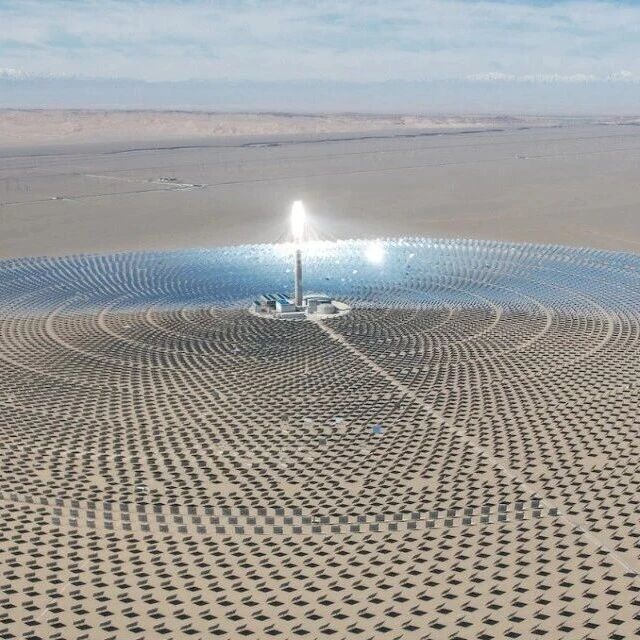
光热发电

Search documents
光热发电产业亮出绿色中国名片
Ke Ji Ri Bao· 2026-01-14 08:13
Industry Overview - The solar thermal power generation industry in China is growing at a rate twice the global average, with an annual compound growth rate of 11.7%, compared to the global rate of 4.24% [1] - As of September 2023, China has built 21 solar thermal power plants with a total installed capacity of 1.57 million kilowatts, ranking third globally, and has 30 projects under construction with a capacity of 3.1 million kilowatts [1] Technological Advancements - Technological innovation is the core engine driving the development of the solar thermal power industry in China, with the country mastering key technologies such as tower, trough, and Fresnel solar thermal power generation [2] - The domestic production rate of key materials and equipment exceeds 95%, indicating a strong capability for self-sufficiency [2] - Significant breakthroughs have been made in key technologies, such as high-concentration molten salt collection and efficiency improvements in tower collection systems [2] Cost Reduction and Market Competitiveness - The cost of solar thermal power generation has decreased significantly, with the on-grid electricity price dropping from 1.15 yuan per kilowatt-hour for initial demonstration projects to around 0.6 yuan per kilowatt-hour [3] - Predictions indicate that the cost of solar thermal power stations will continue to decline during the 14th Five-Year Plan period, enhancing industry competitiveness [3] Successful Projects and International Expansion - Benchmark projects like the 50 MW trough solar thermal demonstration project in Delingha have provided valuable experience for large-scale development, operating continuously for 230 days from 2021 to 2022 [4] - China's solar thermal technology has successfully entered international markets, with projects in Morocco, South Africa, and Dubai showcasing China's contributions to global green development [4] - Forecasts suggest that by 2030, the global installed capacity of solar thermal power will reach 22.4 million kilowatts, with approximately 10% of global electricity supply coming from solar thermal power by 2050 [4]
2026中部郑州太阳能利用大会及光热展览会助力“十五五”光热发电产业将迎10倍规模增长
Sou Hu Cai Jing· 2026-01-10 03:49
Core Insights - The solar thermal power industry is poised for unprecedented growth driven by the "dual carbon" goals and the accelerated construction of a new power system, with a target to increase installed capacity tenfold by 2030 compared to 2025 [1][4] Policy Support - The issuance of the "Opinions" provides systematic policy support for the industry, including improving electricity pricing mechanisms and encouraging participation in power market transactions [4] - The document emphasizes the need for technological innovation and domestic production of key equipment, aiming to enhance system efficiency to over 25% and reduce costs to below 15 yuan per watt [4] Technological Advantages - Solar thermal power combines generation and storage capabilities, offering long-duration energy storage and flexible peak-shaving abilities, which can achieve annual utilization hours exceeding 4000 hours with a 6-hour storage system [2] - The technology's ability to stabilize power supply makes it essential for large-scale wind and solar bases in regions like Qinghai and Gansu, where peak-shaving depth can reach 80% [2] Market Potential - By 2030, the cumulative installed capacity of solar thermal power in China is expected to exceed 60 GW, creating a trillion-yuan market scale across the upstream and downstream supply chains [4] - The upcoming 2026 China (Zhengzhou) International Solar Energy Utilization Conference will showcase core technologies and innovations in the solar thermal sector, attracting significant participation from industry stakeholders [6] Global Perspective - The International Energy Agency (IEA) projects a 156% increase in global solar thermal power capacity by 2025 compared to 2020, with China contributing over 40% [6] - Chinese companies are demonstrating their technological capabilities in international projects, positioning solar thermal power as a key element of China's green energy cooperation under the Belt and Road Initiative [6] Industry Growth Opportunities - The entire solar thermal power industry chain is experiencing explosive growth, with significant advancements in upstream and downstream capabilities, supported by financial institutions [7] - The integration of solar thermal power with hydrogen production is emerging as a new trend, enhancing overall system efficiency [7] Future Challenges - The solar thermal power industry must address three key challenges: establishing market mechanisms that reflect peak-shaving value, promoting collaborative innovation across the supply chain, and strengthening standardization in design and construction processes [8] - The upcoming Zhengzhou exhibition will serve as a critical platform for technology exchange and commercial collaboration, helping Chinese enterprises to capture a higher position in the global solar thermal technology landscape [8]


指数出现分化,预警开启!题材方向有变化,还有哪些投资机会?
Sou Hu Cai Jing· 2026-01-08 06:42
Group 1 - The A-share market is entering a "spring躁行情" before the Spring Festival, driven by themes like artificial intelligence (AI), humanoid robots, and commercial aerospace, while facing pressure from year-end fund reallocation [1] - There is a consensus among private equity institutions regarding the long-term investment logic in technology stocks, but significant differences emerge at the year-end, indicating a phase of "solidifying the bottom and preparing for takeoff" [1] - The expectation of improved overseas liquidity and stabilization of the domestic economy suggests that the A-share and Hong Kong stock technology sectors may experience a valuation recovery from year-end to early next year [1] Group 2 - Gold prices are expected to benefit from the liquidity easing atmosphere due to the Federal Reserve's interest rate cuts, with global gold ETF inflows serving as a significant buying force [3] - Geopolitical risks and trade conflicts are anticipated to continue supporting gold prices, with long-term trends like de-dollarization and central bank gold purchases providing a solid foundation for price increases [3] - The forecast for gold prices in 2026 suggests a potential rise to around $5000 per ounce, with an expected increase of 10%-15% due to previous significant price gains in 2025 [3] Group 3 - Fluctuations in raw material prices have a limited impact on the gross profit margins of white goods, as rising copper and aluminum prices are offset by declining plastic prices [5] - Major home appliance companies are likely to hedge against commodity price fluctuations, mitigating potential cost pressures in the second and third quarters of 2026 [5] - The domestic flight market is experiencing a peak in ticket bookings, with notable increases in travel between northern and southern regions, particularly around the New Year holiday [5] Group 4 - The short-term market trend is strong, with significant inflows of new capital and a robust profit-making effect observed [7] - The Shanghai Composite Index has shown a protective trend, with trading volume surging to nearly 3 trillion, indicating a potential self-accelerating cycle if regulatory measures are not implemented [9] - Recommendations include focusing on sectors such as AI, batteries, non-ferrous metals, certain chemicals, military, and consumer services that are showing signs of improvement [9]

“十五五”我国能源转型有望迎来“光热时刻”
Xin Lang Cai Jing· 2026-01-06 19:29
Core Viewpoint - The article discusses the promotion of concentrated solar power (CSP) development in China, highlighting its role in stabilizing renewable energy output and supporting the transition to a green energy system. The National Development and Reform Commission and the National Energy Administration have set clear goals for CSP, aiming for a total installed capacity of approximately 15 million kilowatts by 2030, with costs comparable to coal power [3][6]. Group 1: Advantages of CSP - CSP has dual functions of peak regulation and long-term energy storage, effectively mitigating the volatility of wind and solar power generation [3]. - CSP provides a stable and flexible energy supply, capable of continuous power generation for 24 hours, thus enhancing the reliability of electricity supply [4]. - CSP can support the grid by providing necessary inertia and reactive power, which is lacking in wind and solar power systems, thereby maintaining stability in high-renewable energy systems [5]. Group 2: Challenges and Opportunities - Despite advancements, CSP faces challenges such as high initial investment, weak market competitiveness, and underutilization of its system support value [6]. - The development of CSP must be tailored to local conditions, with a focus on optimizing project scales based on regional resource availability and power system structures [6]. - CSP technology can be applied in various scenarios, including enhancing the regulation capacity of large renewable energy bases and supporting multi-energy complementary systems [6]. Group 3: Cost Reduction and Policy Support - The average unit cost of CSP projects has been decreasing, with the cost for projects over 100 megawatts expected to be around 16,000 yuan per kilowatt by 2024, although it remains significantly higher than that of photovoltaic projects [7]. - Policies are being established to support cost reduction, such as a fixed grid price of 0.55 yuan per kilowatt-hour for demonstration projects in Qinghai, which is expected to stimulate industry growth [7]. - Recommendations include strengthening policy support, enhancing market mechanisms, and leveraging scale effects and technological innovation to reduce costs further [8][9]. Group 4: Sustainable Development - The industry should avoid "involutionary" cost-cutting and focus on rational competition to ensure quality and innovation, which are essential for sustainable development [9]. - It is crucial to ensure reasonable profits for investors and technology providers to drive the industry towards a quality and innovation-centric growth path [9].
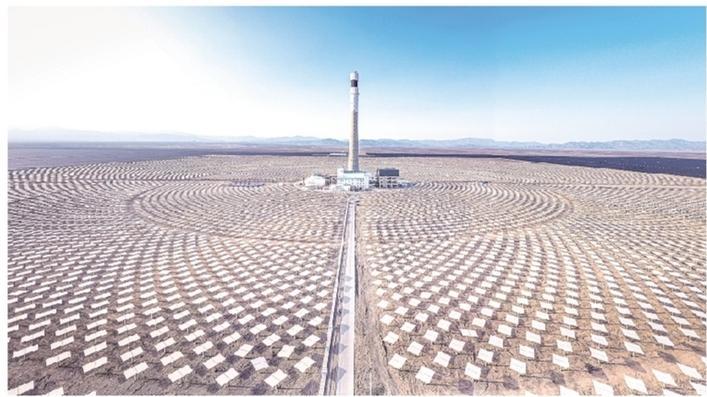
光热有望在电力市场化中重新被定价
China Post Securities· 2026-01-06 04:53
Industry Investment Rating - The investment rating for the power equipment industry is "Outperform the Market" and is maintained [1] Core Insights - The report highlights that the National Development and Reform Commission and the National Energy Administration have issued opinions to promote the large-scale development of solar thermal power, aiming for a total installed capacity of approximately 15 million kilowatts by 2030, with electricity costs comparable to coal power, establishing a new industry with international competitive advantages in the renewable energy sector [4][5] - The report emphasizes the need for solar thermal power to be re-priced in the electricity market, noting that the construction cost per kilowatt has decreased from approximately 30,000 yuan a decade ago to around 15,000 yuan, and the cost per kilowatt-hour has dropped to about 0.6 yuan [5] Summary by Relevant Sections Industry Overview - The closing index for the power equipment sector is 10,088.23, with a 52-week high of 10,950.05 and a low of 6,107.84 [1] Investment Highlights - The report suggests focusing on Xizi Clean Energy, indicating potential growth opportunities in the solar thermal sector due to supportive policies and technological advancements [6]
中邮证券:光热有望在电力市场化中重新被定价 有望成为具备竞争力的新能源产业
Zhi Tong Cai Jing· 2026-01-06 03:21
Core Viewpoint - The Chinese government aims to promote the large-scale development of solar thermal power, targeting an installed capacity of 15 million kilowatts by 2030, with the cost per kilowatt-hour expected to be comparable to coal power [1]. Group 1: Policy and Market Development - On December 23, 2025, the National Development and Reform Commission and the National Energy Administration released guidelines to support the large-scale development of solar thermal power, aiming for a total installed capacity of around 15 million kilowatts by 2030 [1]. - The solar thermal power industry in China has matured, with significant cost reductions, making it a competitive renewable energy sector [2]. Group 2: Technological Advancements - China has successfully mastered mainstream solar thermal power technologies, including tower, trough, and Fresnel systems, establishing a leading global solar thermal power industry chain [2]. - The construction cost per kilowatt for solar thermal power plants has decreased from approximately 30,000 yuan a decade ago to 15,000 yuan, with the cost per kilowatt-hour now around 0.6 yuan [2]. Group 3: Market Opportunities - Solar thermal power has dual functions as a peak-shaving power source and long-duration energy storage, providing long-cycle peak-shaving capabilities and inertia to the power system [3]. - The guidelines encourage compensation for reliable capacity of solar thermal power and support participation in auxiliary service markets to generate revenue [3]. Group 4: Green Premium Potential - The value of green certificates and CCER (China Certified Emission Reduction) is theoretically equivalent, but CCER may achieve higher premiums as the global carbon market develops, providing an additional revenue source for solar thermal power plants [4]. Group 5: Investment Recommendations - The report suggests focusing on investment opportunities in Xizi Clean Energy (002534) [5].
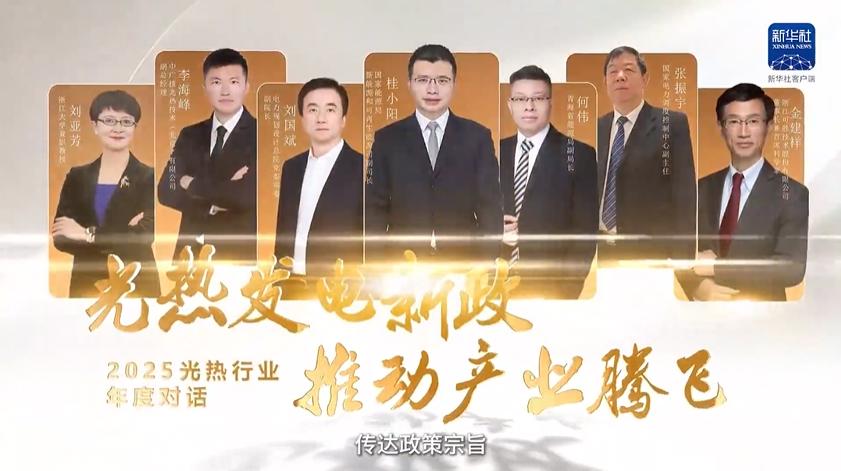
年度对话 | 光热发电新政推动产业腾飞
Zhong Guo Dian Li Bao· 2026-01-05 02:01
Core Viewpoint - The development of concentrated solar power (CSP) is crucial for enhancing renewable energy consumption in China, driven by its technical advantages in energy storage and peak shaving capabilities [2]. Group 1: Policy and Strategic Goals - The National Development and Reform Commission and the National Energy Administration issued guidelines to promote the large-scale development of CSP, emphasizing its role in national energy security and the construction of a new power system [2]. - By 2030, China aims to achieve a total installed capacity of approximately 15 million kilowatts for CSP, with electricity costs comparable to coal power and technology that is internationally leading and fully self-controlled [2]. Group 2: Cost Optimization and Application Expansion - Achieving the CSP development goals requires a focus on cost optimization and application expansion, leveraging market mechanisms to highlight the value of CSP in peak shaving and energy storage [5]. - The "CSP+" model is enabling diverse applications, extending from large wind and solar bases to zero-carbon parks, industrial steam supply, and clean heating [5]. Group 3: Contribution to Energy Transition - Under policy guidance, CSP is becoming a significant force in constructing a new energy system, injecting reliable green power into the energy structure transition [5].
到2030年,光热发电总装机力争达1500万千瓦左右
Zhong Guo Chan Ye Jing Ji Xin Xi Wang· 2026-01-04 00:42
Core Viewpoint - The article discusses the promotion of large-scale development of solar thermal power generation in China, aiming for a total installed capacity of approximately 15 million kilowatts by 2030, with costs comparable to coal power and leading international technology [1][2]. Group 1: Development Goals and Current Status - By 2030, China's solar thermal power generation aims to reach a total installed capacity of around 15 million kilowatts, with electricity costs on par with coal power [1]. - The country has successfully mastered mainstream solar thermal technologies, including tower, trough, and Fresnel systems, and has built a leading global solar thermal power industry chain [1]. - The construction cost per kilowatt has decreased from approximately 30,000 yuan a decade ago to 15,000 yuan, with the cost of electricity dropping to around 0.6 yuan [1]. Group 2: Policy Measures for Development - A comprehensive set of policy measures has been proposed to address the bottlenecks in solar thermal power development, including resource surveys and top-level design for development layout [2]. - The policies support the construction of solar thermal power projects in large energy bases and the establishment of integrated systems combining source, grid, load, and storage [2]. Group 3: Cost Reduction Strategies - The article outlines strategies to reduce investment and generation costs, including leveraging scale effects to drive rapid cost reductions through the establishment of large energy bases [3]. - The promotion of high-parameter, large-capacity technology and the construction of large solar thermal power stations are key to enhancing efficiency and reducing costs [3]. Group 4: Revenue Enhancement and Policy Support - The article emphasizes the importance of enhancing the revenue potential of solar thermal projects through various financial instruments and policy support [4]. - It encourages local governments to develop detailed rules for integrating solar thermal power into the electricity market and to provide compensation for reliable capacity [4].
经济日报丨能源转型迎来“光热时刻”
国家能源局· 2026-01-02 06:53
Core Viewpoint - The article emphasizes the importance of solar thermal power as a key technology in China's energy transition, aiming for a total installed capacity of approximately 15 million kilowatts by 2030, with electricity costs comparable to coal power [2][3]. Group 1: Importance of Solar Thermal Power - Solar thermal power acts as a stabilizer and regulator for the power grid, providing continuous and stable electricity even during nighttime or cloudy days, which is crucial as wind and solar power installations increase [3]. - The development of solar thermal power is expected to drive advancements in high-end manufacturing sectors, including precision machinery and high-temperature materials, enhancing China's competitiveness in the global renewable energy supply chain [3]. Group 2: Current Status and Challenges - China has successfully mastered mainstream solar thermal technologies, with the cost of power generation dropping to around 0.6 yuan per kilowatt-hour and construction costs decreasing from approximately 30,000 yuan per kilowatt to 15,000 yuan over the past decade [3][4]. - Despite its potential, solar thermal power faces challenges such as high initial investment and reliance on imported technology, which contribute to elevated project costs [4]. Group 3: Policy Measures and Solutions - Policies aim to reduce costs through large-scale deployment and the establishment of solar thermal power as a primary source in new energy stations, potentially increasing annual installed capacity by nearly 3 million kilowatts [4]. - The government encourages the localization of key equipment and optimization of performance to reduce import dependency and enhance operational efficiency [4]. Group 4: Future Trends - By 2030, solar thermal power is expected to integrate with other energy sources, such as photovoltaic and wind power, to provide stable energy solutions [5]. - The industry will diversify its technology routes and focus on efficiency improvements, moving from merely increasing installed capacity to enhancing power generation efficiency and reducing costs [6]. - Solar thermal power companies will evolve into comprehensive energy service providers, offering not just electricity but also peak regulation and backup services, becoming essential components of the new energy system [6].
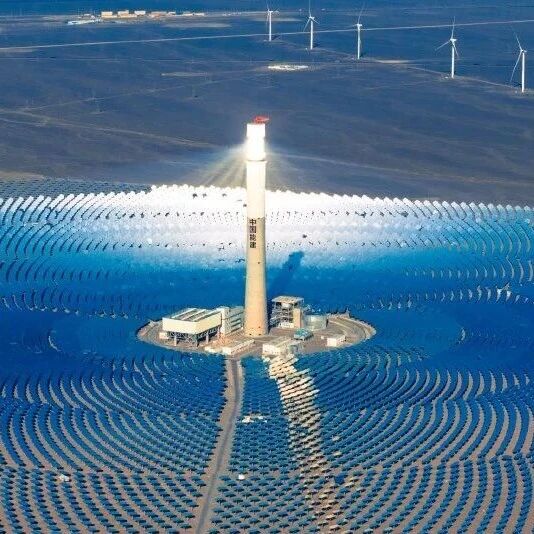
新华社丨光热发电新政推动产业腾飞
国家能源局· 2026-01-02 06:53
Core Viewpoint - Concentrated solar power (CSP) is positioned as a key solution for high-proportion renewable energy consumption in China, leveraging its advantages in energy storage and flexible power generation [2][5]. Group 1: Policy and Strategic Goals - The National Development and Reform Commission and the National Energy Administration issued guidelines aiming for a total installed capacity of approximately 15 million kilowatts for CSP by 2030, with electricity costs comparable to coal power [2]. - The guidelines emphasize the importance of fostering a new industry that is internationally competitive, with a focus on independent market-oriented and industrial development [2]. Group 2: Cost Optimization and Application Expansion - Achieving the outlined goals requires a focus on cost optimization and expanding applications, including establishing a reasonable market mechanism to highlight the value of CSP in peak shaving and energy storage [4]. - The "CSP+" model is enabling diverse applications, extending from large wind-solar bases to zero-carbon parks, industrial steam supply, and clean heating [4]. Group 3: Role in Energy Transition - CSP is becoming a vital force in constructing a new energy system, contributing reliable green power to the transformation of the energy structure [5].