光通信芯片

Search documents
本周5股齐发!光通信电芯片龙头来了
Zheng Quan Shi Bao· 2025-12-08 00:40
Group 1: Company Overview - Yuxin Co., Ltd. is a leading enterprise in the domestic optical communication chip sector, focusing on the research, design, and sales of optical communication front-end transceiver chips [2] - Nabai Chuan specializes in thermal management systems for new energy vehicles and has established itself as a key supplier for major manufacturers like CATL and Sungrow [4][5] - Yuanchuang Co., Ltd. is a prominent player in the rubber track industry, producing tracks for agricultural and engineering machinery [7] - Xihua Technology is a global leader in manufacturing specialized components for large high-end equipment, particularly in the wind power sector [9][10] - Tiansu Measurement is a national independent third-party measurement and testing service provider, offering calibration, testing, and certification services across various industries [12] Group 2: Financial Performance - Yuxin Co., Ltd. projected revenues for 2022, 2023, and 2024 are 339 million yuan, 313 million yuan, and 411 million yuan, respectively, with net profits of approximately 81.4 million yuan, 72.1 million yuan, and 77.9 million yuan [3] - Nabai Chuan's expected revenues for the same period are 1.031 billion yuan, 1.136 billion yuan, and 1.437 billion yuan, with net profits of 113 million yuan, 98 million yuan, and 95 million yuan [5] - Yuanchuang Co., Ltd. anticipates revenues of 1.261 billion yuan, 1.141 billion yuan, and 1.349 billion yuan, with net profits of 139 million yuan, 178 million yuan, and 155 million yuan [7] - Xihua Technology's projected revenues are 942 million yuan, 908 million yuan, and 955 million yuan, with net profits of 183 million yuan, 177 million yuan, and 142 million yuan [10] - Tiansu Measurement expects revenues of 597 million yuan, 726 million yuan, and 800 million yuan, with net profits of 84 million yuan, 101 million yuan, and 111 million yuan [13] Group 3: Investment Plans - Yuxin Co., Ltd. plans to invest raised funds into the development and industrialization of next-generation access network and high-speed data center chips, as well as vehicle-mounted chip projects [3] - Nabai Chuan intends to use its raised funds for the annual production project of 3.6 million sets of water-cooled plates and to supplement working capital [6] - Yuanchuang Co., Ltd. will invest in production base construction, technology center development, and working capital [8] - Xihua Technology aims to invest in the industrialization of core wind power equipment and the establishment of a research and development center [11] - Tiansu Measurement will allocate funds for enhancing measurement and testing capabilities, building regional laboratories, and developing a digital center [13]
12月8日投资早报|中国人保副总裁于泽涉嫌严重违纪违法被查,沐曦股份网上发行最终中签率为0.03348913%,今日两只新股申购
Xin Lang Cai Jing· 2025-12-08 00:36
Market Performance - On December 5, 2025, the A-share market saw all three major indices close higher, with the Shanghai Composite Index at 3902.81 points, up 0.7%, the Shenzhen Component Index at 13147.68 points, up 1.08%, and the ChiNext Index at 3109.3 points, up 1.36%. Over 4300 stocks rose, with total trading volume reaching 1.73 trillion yuan, an increase of 170 billion yuan from the previous trading day [1] - The Hong Kong stock market also closed positively, with the Hang Seng Index rising 0.58% to 26085.08 points and the Hang Seng Tech Index up 0.84% to 5662.46 points, with a total trading volume of 210.47 billion HKD [1] - In the U.S. stock market, all three major indices closed higher but did not reach historical highs, with the S&P 500 up 0.19% to 6870.4 points, the Nasdaq Composite up 0.31% to 23578.13 points, and the Dow Jones Industrial Average up 0.22% to 47954.99 points [1] New Stock Offerings - Two new stocks are available for subscription today: - Nabai Chuan (创业板, code 301667) with an issue price of 22.63 yuan per share and a price-to-earnings ratio of 28.7. The company focuses on thermal management products for new energy vehicle batteries and has leading market positions in China, serving major manufacturers like Tesla and NIO [2] - Youxun Co., Ltd. (科创板, code 688807) with an issue price of 51.66 yuan per share and a price-to-earnings ratio of 60.27. The company specializes in high-speed transceiver chips for optical communication and provides solutions for various sectors including 5G and data centers [2] Regulatory Updates - The Financial Regulatory Bureau has announced adjustments to the risk factors related to stock investments by insurance companies to enhance their role as patient capital. This includes adjustments to risk factors for investments in stocks and export credit insurance, encouraging insurance companies to support foreign trade enterprises and improve long-term investment management capabilities [3] - The National Healthcare Security Administration and the Ministry of Human Resources and Social Security have issued a new drug directory for basic medical insurance, maternity insurance, and work injury insurance, effective January 1, 2026. The new directory will replace the previous version and requires strict adherence by local authorities [4]

下周5股启动申购!纳百川发行价22.63元/股
Bei Jing Shang Bao· 2025-12-07 12:09
Group 1 - Five companies, including Nabichuan, Youxun Co., Yuanchuang Co., Tiansu Measurement, and Xihua Technology, will start subscription from December 8 to December 12 [1] - Nabichuan and Youxun Co. will initiate their subscription on December 8, with issue prices set at 22.63 yuan/share and 51.66 yuan/share respectively [1] - Nabichuan focuses on the research, production, and sales of thermal management products for new energy vehicle power batteries, fuel vehicle power systems, and energy storage batteries [1] - Youxun Co. specializes in the research, design, and sales of optical communication front-end transceiver chips [1] Group 2 - Yuanchuang Co. will start its subscription on December 9, and it is engaged in the research, production, and sales of rubber track products, with an issue price of 24.75 yuan/share [1] - The main products include rubber tracks for agricultural machinery, engineering machinery, and rubber track plates, used in various applications such as agricultural production and engineering construction [1] - Tiansu Measurement and Xihua Technology will begin their subscription on December 12, with their issue prices yet to be determined [2]
长光华芯:受益于近期算力需求增长 多款光通信芯片获海外大厂顺利验证
Mei Ri Jing Ji Xin Wen· 2025-11-12 07:53
Core Insights - Changguang Huaxin has achieved mass production of its 100G EML in the optical communication sector [1] - The company has begun sample delivery of its 200G EML, and its 100G VCSEL, 100mW CW DFB, and 70mW CWDM4DFB chips have reached mass production shipping levels [1] - The recent increase in computing power demand has led to major overseas optical module manufacturers validating multiple chip models from the company with successful results [1]

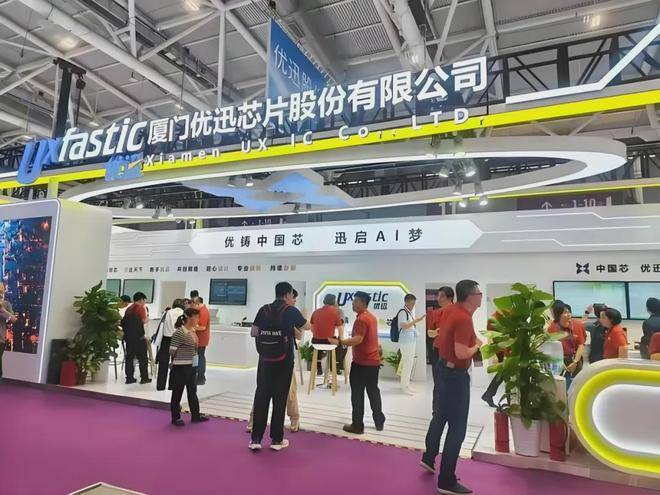
优迅股份IPO过会背后暗藏“成长烦恼”
Sou Hu Cai Jing· 2025-10-24 11:28
Core Viewpoint - Yuxun Co., Ltd. has passed the review for listing on the Sci-Tech Innovation Board, but faces multiple concerns regarding its financial health and governance structure, including declining gross margins and potential conflicts of interest in its R&D practices [2][9]. Financial Performance - The company's gross margin has decreased from 55.26% in 2022 to 43.48% in the first half of 2025, marking a continuous decline over three years [3][6]. - Revenue for the first half of 2025 is reported at 238.50 million, a 31.11% increase from 410.56 million in 2024, while net profit stands at 46.96 million, an 8.02% increase from 77.87 million in 2024 [7]. - The reliance on low-speed chips remains high, with 10G and below speed chips accounting for the majority of revenue, while high-speed chips (25G and above) represent less than 20% [6][8]. Product Structure and Market Position - The company is experiencing challenges due to a product structure heavily reliant on mid-to-low-speed chips, which are becoming less profitable in a competitive market [6][8]. - Despite launching innovative products, the transition to high-speed optical chips and other advanced technologies is slow, raising concerns about future profitability [6][8]. Governance and R&D Concerns - The company has faced scrutiny over its governance structure, particularly regarding related-party transactions in R&D, with over 21 million spent on outsourced R&D, raising questions about potential conflicts of interest [9][10]. - The high dividend payouts alongside significant fundraising efforts have drawn regulatory attention, leading to concerns about the company's financial strategy [10][11]. - The controlling shareholders hold less than 30% of the voting rights, which may lead to governance risks and decision-making challenges [11][12]. R&D Investment and Future Outlook - R&D expenditure as a percentage of revenue has decreased from 21.14% in 2022 to 15.81% in the first half of 2025, indicating a potential shift in focus away from technological advancement [12]. - The company plans to allocate 809 million for the development of next-generation access networks and high-speed data center chips, but the success of these projects remains uncertain [7][12].

IPO发审向“新”倾斜 现场检查威慑力持续提升
Zheng Quan Shi Bao· 2025-10-15 22:35
Group 1 - The IPO approval rate in A-shares has increased to 95.08% this year, up nearly 10 percentage points from 85.37% in the same period last year, with 61 companies reviewed and 58 approved [1][2] - The regulatory focus on maintaining high-quality listings has led to improved application quality, with a notable increase in the number of companies passing the review process [2][3] - The implementation of the "1+6" reform policy for the Sci-Tech Innovation Board has accelerated the review process for technology companies, with notable examples including a semiconductor company achieving approval in just 88 days [2][3] Group 2 - The path for unprofitable companies to list on the Sci-Tech Innovation Board has become clearer, with several companies in sectors like semiconductors and biomedicine advancing their IPO processes [3] - The current capital market reforms are shifting the focus from general technology to precise identification of hard technology, prioritizing sectors such as artificial intelligence and aerospace [3] - Financial standards for IPOs are transitioning from profitability to cash flow and technology valuation, emphasizing long-term potential for unprofitable companies that can overcome technical barriers [3] Group 3 - The China Securities Association has increased the number of companies undergoing on-site inspections, with 16 companies selected for checks this year, focusing on financial authenticity and compliance [4] - The trend of strict regulatory oversight is becoming more pronounced, with a focus on preventing fraudulent listings and ensuring compliance among both companies and intermediaries [4] - The regulatory environment is evolving to emphasize comprehensive scrutiny throughout the IPO process, particularly targeting major violations such as financial fraud [4] Group 4 - A total of 64 companies have submitted applications to list on the Hong Kong Stock Exchange since September, including over 20 A-share listed companies, indicating a trend towards dual listings [6] - Eleven A-share companies have achieved "A+H" dual listings this year, raising a total of 916.89 million HKD, with leading firms accounting for over 50% of the total IPO financing in Hong Kong [6] - The increasing popularity of "A+H" listings is driven by policy incentives, expanded pathways for companies, and a return of global capital, enhancing the internationalization of firms [6][7]
IPO发审向“新”倾斜现场检查威慑力持续提升
Zheng Quan Shi Bao· 2025-10-15 18:11
Group 1 - The core viewpoint of the articles highlights an increase in the IPO approval rate in the A-share market, reaching 95.08% this year compared to 85.37% last year, indicating improved quality of companies seeking to go public [1][2] - A total of 61 companies have been reviewed for IPOs this year, with 58 successfully approved, while 16 companies have been selected for on-site inspections to ensure compliance and quality [1][3] - The regulatory environment has shifted towards stricter scrutiny, focusing on the authenticity of financial data, internal controls, and the quality of information disclosure, which is expected to enhance the overall integrity of the IPO process [3] Group 2 - The "1+6" reform policy for the Sci-Tech Innovation Board has accelerated the process for companies in high-tech sectors, with notable examples including GPU leader Moer Thread and optical communication chip company Youxun, which achieved rapid approval times [2] - The path for unprofitable companies to list on the Sci-Tech Innovation Board has become more accessible, with several firms in semiconductor and biomedicine sectors advancing their IPOs under new standards [2] - The focus of IPO selection criteria has shifted from general technology to hard technology, prioritizing companies in artificial intelligence, aerospace, and biomedicine that meet national strategic needs [2] Group 3 - There has been a notable trend of companies opting for dual listings in Hong Kong, with 64 companies submitting applications to the Hong Kong Stock Exchange since September, including over 20 A-share listed companies [4] - A total of 11 A-share companies have achieved "A+H" dual listings this year, raising a combined total of 916.89 million HKD, with leading firms like CATL and Hengrui Medicine contributing significantly to this total [4] - The dual listing trend is driven by policy incentives, expanded pathways for companies, and a return of global capital, enhancing the internationalization of firms and their positions in global supply chains [4]
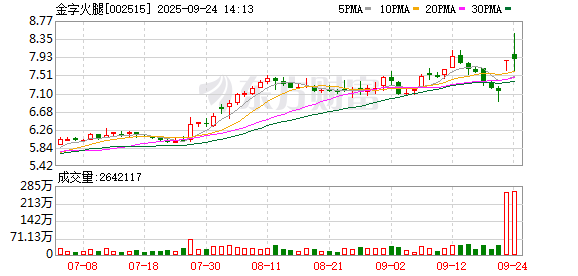
金字火腿3亿跨界押注光通信芯片:高估值与未盈利标的的博弈
Xin Lang Cai Jing· 2025-09-25 08:25
Core Viewpoint - The investment by Jinzi Ham is a strategic move to acquire up to 20% of Zhongsheng Microelectronics, a company specializing in optical communication chips, amidst the backdrop of declining traditional meat product sales and the need for diversification [1][4]. Group 1: Investment Details - Jinzi Ham's wholly-owned subsidiary plans to invest no more than 300 million yuan in Zhongsheng Microelectronics through a capital increase [1]. - The investment will occur in two rounds, with the first round of 100 million yuan based on a pre-investment valuation of 1 billion to 1.3 billion yuan, indicating a potential appreciation rate of 9710% if calculated at the lower end of the valuation [3]. Group 2: Zhongsheng Microelectronics Overview - Zhongsheng Microelectronics, established in 2019, focuses on the research and design of high-speed optical module core chips, including TIA and Driver chips, which are essential for AI computing centers, 5G/5.5G base stations, and cloud computing data centers [2]. - The company has achieved mass production testing of chips required for 400G/800G optical modules and has completed the R&D design for chips needed for 1.6T and above speed optical modules [2]. Group 3: Financial Performance and Challenges - Zhongsheng Microelectronics reported revenue of only 51.11 thousand yuan from January to July 2025, with a net loss of 20.37 million yuan, highlighting the challenges of high R&D investment and a mismatch in commercialization cycles [3]. - Jinzi Ham's traditional business has been under pressure, with a 14.73% year-on-year decline in revenue to 170 million yuan and a 25.11% drop in net profit to 22.92 million yuan in the first half of 2025 [4]. Group 4: Strategic Implications - The investment is seen as a last-ditch effort for Jinzi Ham to pivot from its declining core business, which has faced challenges from consumer upgrades and previous unsuccessful diversification attempts [4]. - The combination of traditional meat products and semiconductor technology reflects a broader trend of digital transformation in traditional industries and the capital market's enthusiasm for domestic substitution themes [5].

金字火腿跨界屡败屡战
Bei Jing Shang Bao· 2025-09-24 16:37
Core Viewpoint - Jinzi Ham is expanding into the semiconductor industry by investing up to 300 million yuan to acquire up to 20% of Zhongsheng Microelectronics, marking a strategic move to diversify beyond its traditional meat products business [1][3]. Group 1: Company Background and Strategic Moves - Jinzi Ham, primarily engaged in ham products and traditional meat products, has faced slow growth in its main business due to market factors, prompting the need for diversification [3]. - The investment in Zhongsheng Microelectronics is the first major capital action under the new control of Zheng Qingsheng, who became the controlling shareholder in June 2023 [1][7]. - The company has a history of cross-industry investments, including ventures into rare earths, internet finance, new energy vehicles, and healthcare, although past attempts have not significantly boosted performance [6][7]. Group 2: Investment Details and Market Context - The investment will occur in two rounds, with the first round involving a 100 million yuan capital increase based on a pre-investment valuation of Zhongsheng Microelectronics between 1 billion and 1.3 billion yuan [4]. - Zhongsheng Microelectronics, founded in 2019, focuses on high-speed optical module core chips and has been recognized in the "China Future Unicorn TOP 100" list for 2024 and 2025, although it has yet to achieve profitability [3][4]. - The optical module chip market is expected to grow rapidly due to the global AI data center construction wave, presenting a potential opportunity for Jinzi Ham to benefit from technological advancements [8]. Group 3: Challenges and Risks - There are concerns regarding the high valuation of Zhongsheng Microelectronics, with a potential increase of 9710% based on the lowest valuation, which may lead to risks of impairment in long-term equity investments [4]. - Jinzi Ham's management may face challenges in technical accumulation and management capabilities in the semiconductor sector, which could impact the success of this investment [4][5]. - The company's previous cross-industry investments have not yielded significant results, raising questions about the effectiveness of this new strategy [6][7].

这家火腿公司,要花3亿搞芯片……
Guo Ji Jin Rong Bao· 2025-09-24 06:13
Group 1 - The transaction will occur in two rounds, with the final investment amount and shareholding ratio to be determined after due diligence on Zhongsheng Microelectronics [1][3] - Zhongsheng Microelectronics, established in 2019, focuses on the R&D and design of high-speed optical module core chips, with applications in AI, cloud computing, and telecommunications [2][6] - The company has not yet achieved profitability, with revenues of 204,900 yuan and 511,100 yuan for 2024 and the first seven months of 2025, respectively, and net losses of 38.83 million yuan and 20.37 million yuan [2][3] Group 2 - The first round of investment will be based on a pre-investment valuation of 1 billion to 1.3 billion yuan, with an investment amount of 10 million yuan [3][4] - The second round of investment, contingent on the successful verification of a specific chip, will not exceed 200 million yuan [3][4] - After both rounds of investment, the company will hold up to 20% equity in Zhongsheng Microelectronics [4] Group 3 - The main company, Jinzi Ham, has faced a decline in its core business and aims to diversify into the semiconductor sector to enhance performance and achieve sustainable development [5][7] - Financial data from 2020 to 2024 shows a decline in total revenue from 710 million yuan to 344 million yuan, with net profit fluctuating [7] - Jinzi Ham has a history of unsuccessful investments, indicating potential risks in this new venture [7]