
农业经营

Search documents
浙江大力培育新型农业经营主体
Mei Ri Shang Bao· 2025-12-03 22:25
Core Viewpoint - Zhejiang Province aims to cultivate a new type of agricultural management entity by 2027, targeting 21,000 entities including 10,000 family farms, 5,000 cooperatives, and over 6,000 leading agricultural enterprises to boost rural revitalization [1] Group 1: Gradual Cultivation and Core Entities - The focus is on three core entities: family farms, cooperatives, and leading agricultural enterprises, establishing a tiered cultivation system [2] - Family farms will receive support for stable agricultural intentions and the use of advanced agricultural technology [2] - Cooperatives will be encouraged to form around family farms, enhancing capabilities in key areas like initial processing and logistics [2] - Leading agricultural enterprises will be supported in deep processing and R&D investments, fostering "chain master" enterprises [2] Group 2: Collaborative Development and Quality Improvement - A multi-faceted collaborative development framework will be established, promoting digital development communities for agricultural entities [3] - Each county will aim to create at least one agricultural industrial chain with a value exceeding 1 billion [3] - The establishment of public brand matrices for agricultural products will be encouraged, along with new marketing models like live streaming [3] - Financial support will be enhanced through a rural credit system and innovative supply chain financing [3] Group 3: Environmental Optimization and Regulatory Support - A series of measures will be implemented to ensure the healthy development of new agricultural entities, including improved organizational management and financial practices [4] - Registration services will be streamlined for family farms and cooperatives, with a focus on simplifying processes [4] - Financial support will be increased through direct subsidies and project funding, alongside tax incentives for agricultural activities [4] - Talent cultivation initiatives will be launched to support the development of modern agricultural professionals [4] Group 4: Overall Strategy and Goals - Zhejiang is leveraging policy benefits to transition agricultural entities from individual operations to collective development, emphasizing quality over mere scale [5] - The initiative aims to activate rural industries and increase farmers' income, contributing to the construction of a common prosperity demonstration zone [5]
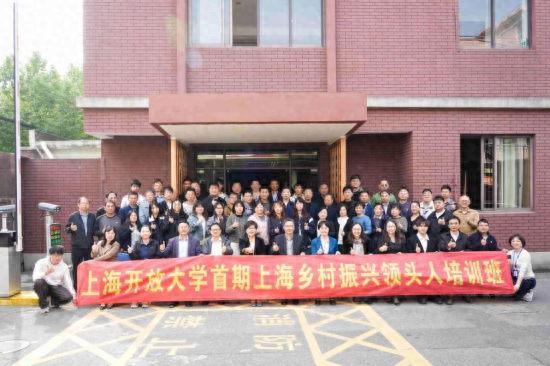
上海开放大学举办首期乡村振兴领头人培训班
Zhong Guo Xin Wen Wang· 2025-11-03 03:11
Core Viewpoint - The Shanghai Open University has launched the first "Shanghai Rural Revitalization Leaders Training Class," aimed at enhancing the skills and knowledge of grassroots officials, agricultural operators, and rural entrepreneurs in the context of China's rural revitalization strategy [2][5]. Group 1: Training Program Overview - The training program combines non-degree training with degree education, creating a dual-track model of "skill enhancement + degree advancement" [5]. - A comprehensive needs assessment and course discussion were conducted to ensure the training's relevance and effectiveness [2]. - The program features a strong "industry mentor team" composed of experienced experts from the frontlines of rural revitalization [2]. Group 2: Target Audience and Participation - The training primarily targets grassroots workers and agricultural cooperative managers in Shanghai, with the first session held in Jinshan District's Fengjing Town, attracting over 60 participants [3][4]. - Participants include village leaders and committee members who face practical challenges in rural governance, industry development, and resource mobilization [3]. Group 3: Curriculum and Practical Applications - The curriculum includes courses on rural entrepreneurship, governance communication, financial policies, and new media operations, supplemented by successful case studies from local projects [4]. - Practical examples such as the revitalization of idle farmhouses into "Lian Chain Light House" homestays and the "Self-Family Live Streaming Base" for rural marketing are integrated into the training [3]. Group 4: Future Implications and Expansion - Successful completion of the training will provide participants with a certificate from Shanghai Open University, which can contribute to lifelong education credits [5]. - The program is set to expand to other key agricultural areas in Shanghai, aiming to cultivate a new generation of high-quality leaders in rural revitalization [5].

合肥锦益鑫食品有限公司成立 注册资本50万人民币
Sou Hu Cai Jing· 2025-10-15 01:51
Core Viewpoint - Hefei Jinyi Xin Food Co., Ltd. has been established with a registered capital of 500,000 RMB, focusing on a wide range of agricultural and food-related services and products [1] Company Overview - The company is legally represented by Shen Kai and has a diverse business scope including the sale of agricultural products, seafood wholesale and retail, and various agricultural services [1] - The registered capital of the company is 500,000 RMB [1] Business Activities - The company engages in the production, sale, processing, transportation, and storage of agricultural products [1] - It also includes activities related to livestock sales, fresh meat and egg wholesale and retail, and the sale of pre-packaged food [1] - Additional services include agricultural scientific research, technical services, and the operation of facilities related to agricultural production [1] Licensing and Regulatory Compliance - The company is permitted to engage in livestock breeding and food sales, including alcoholic beverages, subject to relevant approvals from authorities [1]
幸福乡村日日新——2025年中国农民丰收节主场活动侧记
Jing Ji Ri Bao· 2025-09-23 22:12
Group 1 - The core theme of this year's Harvest Festival is "Celebrating Agricultural Harvest and Enjoying a Better Life," focusing on celebrating harvests, promoting culture, and revitalizing rural areas [1] - The event showcased the achievements of the "Three Rural Issues" (agriculture, rural areas, and farmers) and highlighted the spirit of modern farmers [1] - The average collective income of 13 villages in the demonstration area is projected to reach 1.2 million yuan, with per capita disposable income for farmers at 38,000 yuan, representing increases of 40% and 30% respectively over the past three years [1] Group 2 - Shandong province has implemented a "piece area" construction approach to promote rural revitalization, focusing on interconnected villages to achieve coordinated development [2] - A total of 2,070 piece areas have been constructed, covering nearly 18,000 administrative villages [2] - The Harvest Festival emphasized the creation of a harvest economy, enhancing agricultural product sales and encouraging urban residents to visit rural areas [2]
官方:“十四五”以来已累计培育农民合作社超200万家
Zhong Guo Xin Wen Wang· 2025-09-16 03:45
Core Insights - The Ministry of Agriculture and Rural Affairs reported significant achievements in rural development during the "14th Five-Year Plan" period, highlighting the cultivation of over 2 million farmer cooperatives and more than 4 million family farms [1] Group 1: Agricultural Development - The rural development vitality has been continuously invigorated during the "14th Five-Year Plan" period [1] - The second round of land contracting has been extended for an additional 30 years as part of pilot projects [1] - The management of rural homesteads and collective construction land is being standardized, alongside steady progress in rural collective property rights reform [1] Group 2: Agricultural Services - The development of new agricultural operating entities has been emphasized, with over 1.1 million operational service entities currently in place [1] - Last year, agricultural social services covered an area exceeding 2.29 billion acres [1] - The agricultural social service system has been established effectively, promoting the organic connection between smallholders and modern agriculture [1]
“提统协分”,重构农业经营体系生态链
Xin Hua Ri Bao· 2025-08-11 23:13
Core Viewpoint - The construction of an agricultural powerhouse is essential for achieving high-quality development and ensuring food security, with Jiangsu province exemplifying strong agricultural capabilities but facing challenges in modernizing its agricultural operating system [1] Group 1: Agricultural Modernization - Agricultural powerhouses are characterized by strong supply security, technological equipment, operational systems, resilience, and competitiveness [1] - Jiangsu province has shown notable performance in stable grain production capacity, technological investment, and green agricultural development [1] - Challenges include the disconnection between smallholder farming and modern agriculture, low levels of organization and scale, and insufficient operational strength [1] Group 2: Operational Framework - The "提统协分" (Enhance, Integrate, Collaborate, and Differentiate) framework aims to improve collective operational capabilities and resource integration [2] - Establishing land share cooperatives led by village collective organizations can consolidate fragmented farmland into resource pools [2] - A flexible structure is proposed to connect various agricultural entities, enhancing efficiency and addressing market service fragmentation [2] Group 3: Technological Empowerment - Technological innovation significantly impacts agricultural operating systems, promoting land transfer and reducing production costs [3] - Digital platforms are being developed to optimize agricultural practices and improve market connectivity [3] - Smart agricultural technologies and green production methods are encouraged to enhance sustainability and reduce environmental impact [3] Group 4: Policy Innovation - Systematic policy innovation is necessary to support the optimization of agricultural operating systems through planning, assessment, and incentives [4] - A dynamic assessment system will monitor agricultural performance based on key indicators, linking results to policy support [5] - Incentive mechanisms are being explored to motivate participation in agricultural production and management, fostering skilled rural talent [5]
破解“谁来种地”问题 四川为家庭农场立法
Mei Ri Jing Ji Xin Wen· 2025-07-29 07:20
Core Viewpoint - The Sichuan Provincial People's Congress is reviewing the "Sichuan Family Farm Promotion Regulations (Draft)" to support the development of family farms, which are defined as agricultural operations primarily run by family members, aiming to address the issue of agricultural labor shortages and promote modern agricultural practices [1][2]. Group 1: Current Status of Family Farms - As of the end of 2024, there are 3.941 million family farms nationwide, with Sichuan having 277,000, ranking second in the country after Shandong [1]. - A significant portion of the agricultural workforce in Sichuan consists of elderly individuals and women, while younger generations are increasingly reluctant to engage in farming, raising concerns about future agricultural labor availability [1][2]. Group 2: Challenges Facing Family Farms - There are over 60,000 village groups in Sichuan that have not established family farms, particularly in 88 poverty-stricken areas, indicating a substantial challenge ahead [2]. - Approximately one-third of family farms in Sichuan report annual operating incomes below 100,000 yuan, with less than 3% holding registered trademarks and fewer than 10% certified for product quality [2]. - There is a significant disparity in the number of family farms across different regions, with the highest number in Shehong City (5,714) and the lowest in Longmatan District of Luzhou City, showing a 37.84-fold difference [2]. Group 3: Support Measures in the Draft Regulations - The draft regulations propose that local governments incorporate family farm development into agricultural planning and support various groups, including returning migrant workers and veterans, in establishing family farms [3]. - The regulations emphasize the need for local governments to include eligible family farm operators in talent support programs and enhance training for young family farm operators [3]. - Family farms are encouraged to acquire land use rights through various means, including leasing and shareholding, with terms to be negotiated between parties [3].
第二轮土地承包到期再延30年试点扩大
news flash· 2025-07-17 07:04
Group 1 - The core viewpoint is that the pilot program for extending the second round of land contracts by 30 years has been expanded to seven provinces, indicating a significant policy shift in agricultural land management [1] - The rural collective "three assets" regulatory long-term mechanism is continuously improving, which suggests a focus on enhancing governance in rural areas [1] - The development of new agricultural management entities and social service entities is being promoted, with nearly 4 million family farms and over 2.1 million farmer cooperatives established nationwide [1] Group 2 - A total of 1.094 million operational entities are engaged in providing social services, reflecting a growing trend in agricultural service provision [1] - Overall, the agricultural and rural economy has shown a positive development momentum in the first half of the year, providing solid support for the stable operation of the national economy [1]
新型农业经营主体数量创新高
Sou Hu Cai Jing· 2025-05-13 10:58
Core Insights - The rapid growth of new agricultural operating entities is a key driver of agricultural modernization in China, with significant increases in the number of family farms and cooperatives over the past decade [1][3][5] Group 1: Growth of New Agricultural Entities - As of October 2024, the number of registered family farms in China has surpassed 4 million, and there are 2.14 million registered cooperatives, marking increases of 4.5 times and 2.37 times respectively over the past ten years [1] - The transformation from small-scale farming to large-scale, intensive operations reflects improvements in agricultural productivity and the integration of rural industries [1][3] Group 2: Agricultural Efficiency and Productivity - The average yield of grain-producing family farms is 469.2 kg per mu, which is 20% higher than the national average, attributed to the advantages of scale and technology integration [3] - Family farms manage an average of 150.6 mu of land, utilizing mechanization and standardized management to enhance productivity [3] - Cooperatives are effectively connecting small farmers to larger markets, with an average land operating area of 460.1 mu per cooperative and a per capita surplus return of 1,471.4 yuan for members [3] Group 3: New Agricultural Business Models - New agricultural entities are becoming incubators for innovative agricultural business models, with a focus on standardized services through county-village management networks [3] - In Zhejiang province alone, 237 county-level service centers have been established, covering over 80% of administrative villages [3] - Approximately 12,100 cooperatives are diversifying into product processing, distribution, and e-commerce, with 6,500 involved in leisure agriculture and 1,900 in rural tourism, creating a seasonal economic chain [3] Group 4: Policy Support and Market Mechanisms - Continuous financial support from the central government has exceeded 20 billion yuan over five years for the development of family farms and cooperatives [5] - A four-tier guidance system comprising 32,258 counselors provides comprehensive services from technical training to brand planning [5] - More than half of family farms report annual operating incomes between 100,000 and 500,000 yuan, and 13% of cooperatives have established a "three-gold" system, with over 103,000 cooperatives holding registered trademarks [5]

全环节完善农业经营体系
Jing Ji Ri Bao· 2025-05-11 22:01
Core Viewpoint - The core viewpoint emphasizes that a strong agricultural operating system is a common characteristic of agricultural powerhouses, but there is no single model for achieving this. Innovation in operating systems is essential for expanding agricultural development space [1][3]. Summary by Sections Agricultural Structure - China's agricultural reality consists of approximately 200 million contracted farming households, 4 million family farms, 2.136 million farmer cooperatives, over 1.09 million agricultural social service entities, and more than 90,000 agricultural industrialization leading enterprises at the county level and above. This indicates a coexistence of small-scale farmers and new agricultural operating entities [2]. Modernization and Scale - Agricultural modernization requires scale but must align with the actual conditions of smallholder farmers. The average farming scale should not be arbitrarily increased without considering the implications for the remaining farmers. A historical perspective is necessary to address the challenges of transitioning from smallholder farming to larger-scale operations [2][3]. Diversity in Operating Methods - The diversity of operating methods in China's agriculture is attributed to the rich variety of agricultural resources and the strengths and weaknesses of different agricultural entities. While smallholders are the basic operating units, they face challenges such as high costs and low competitiveness. New agricultural entities can enhance product supply and competitiveness but require better organization and regulation [3]. Pathways for Improvement - To improve the agricultural operating system, two main pathways are suggested: cultivating scale operating entities through land transfer and developing socialized services to nurture scale service entities. The development of agricultural social services is crucial for equipping smallholders with advanced technologies and addressing existing challenges in service quality and scope [4].