博物馆旅游

Search documents
文博夜游点亮辽宁假日新体验
Zhong Guo Xin Wen Wang· 2025-10-07 08:02
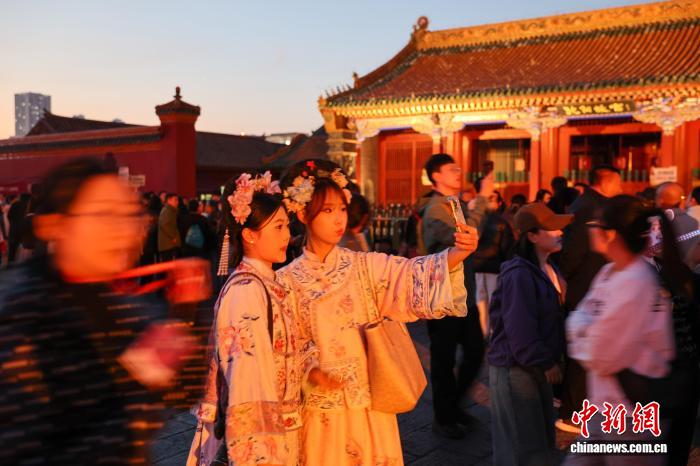
Core Viewpoint - The article highlights the success of nighttime cultural tourism in Liaoning during the National Day and Mid-Autumn Festival holidays, showcasing how historical sites like the Shenyang Palace Museum have adapted to attract visitors through extended hours and immersive experiences [1][3][6]. Summary by Sections Nighttime Cultural Activities - Shenyang Palace Museum opened for night visits during the Mid-Autumn Festival, attracting many visitors dressed in traditional costumes, creating a unique atmosphere under the moonlight [3][4]. - Liaoning's cultural venues extended their service hours and introduced nighttime activities, enriching the cultural life of the public [3][6]. Visitor Statistics - As of October 6, 2023, the province received a 17.6% increase in visitors compared to the previous year, with tourism revenue rising by 18.08% [3]. - On October 6, the day of the Mid-Autumn Festival, visitor numbers surged by 20.55%, and tourism revenue increased by 21.28% [3]. Immersive Cultural Experiences - Night tours at Shenyang Palace Museum included performances and special exhibitions, creating an immersive cultural scene [3][4]. - The Liaoning Provincial Museum utilized technology such as holography and virtual reality to enhance visitor engagement, allowing them to experience historical artworks in a dynamic way [4][6]. Emotional Connection and Historical Engagement - The "September 18" Historical Museum in Shenyang featured live performances and film screenings, providing a more profound emotional connection to history [4][6]. - Visitors expressed that watching films in a museum setting made historical events feel more tangible and impactful [4].

民间工艺+地方特产 “村博”逐渐“出圈”
Yang Shi Xin Wen Ke Hu Duan· 2025-09-19 11:54
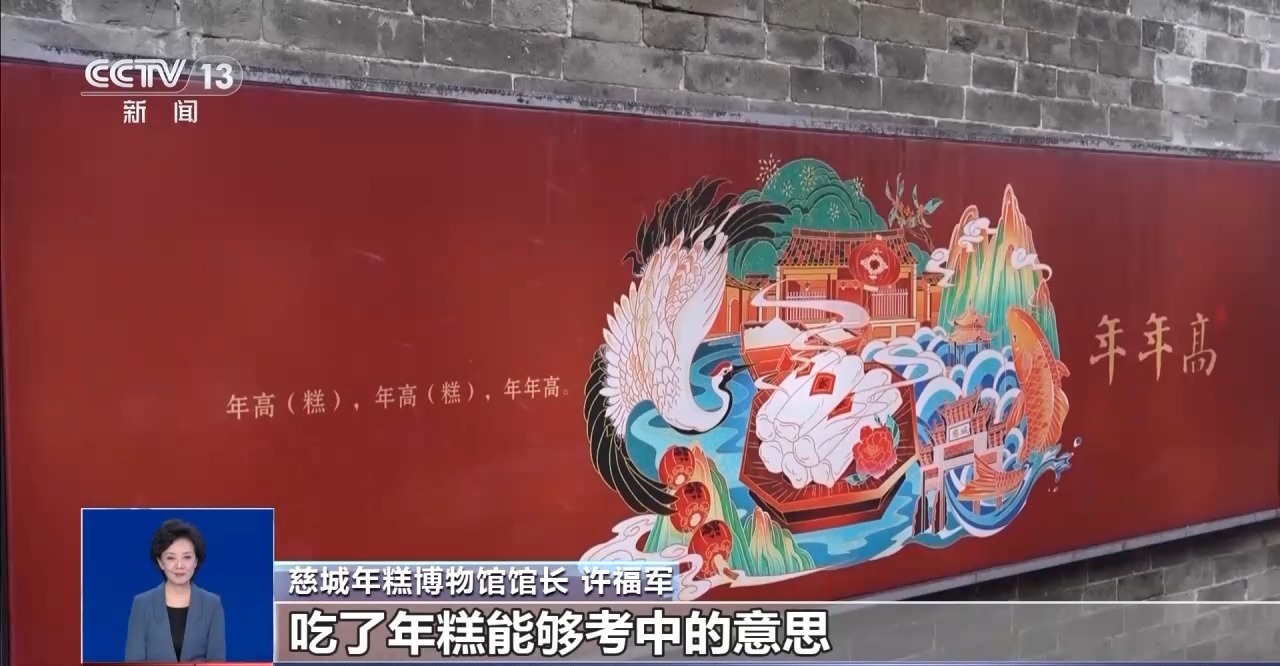
Core Insights - The rapid growth of rural museums, referred to as "village museums," has become a popular choice in the cultural tourism sector, showcasing local heritage and traditions [1] Group 1: Development of Rural Museums - Zhejiang Province has completed the construction of 1,000 rural museums, achieving full coverage at the city and county levels, which has stimulated industrial development and preserved local nostalgia [1] - The Cicheng Rice Cake Museum in Ningbo highlights a 2,000-year history of rice cake production, allowing visitors to observe the entire production process [1][3] Group 2: Cultural Significance and Economic Impact - The Cicheng rice cake was historically a strategic food source, linked to the local examination culture, where candidates would carry rice cakes to the capital for exams [3] - Various types of rice cakes, such as pumpkin and purple sweet potato rice cakes, are now exported to Europe, North America, and Southeast Asia [4] Group 3: Local Artifacts and Tourism - The Jiangnan Waterway Boat Museum in Jiaxing features ancient boat models, showcasing the rich maritime culture of the region [6] - Jiaxing is enhancing the protection and exploration of historical relics along the canal, creating themed tourism routes to revive the prosperity of ancient towns [8] Group 4: Employment and Consumer Engagement - In Shandong, rural museums are driving employment and cultural tourism consumption, with the Jinan Gourd Museum displaying various gourd crafts that attract visitors [8][12] - The Oyster Museum in Weihai highlights the region's unique oyster culture and engages visitors in hands-on experiences related to oyster harvesting [12][14] Group 5: Preservation of Cultural Heritage - In Jilin, 150 rural museums have brought culture closer to farmers, serving as tangible records of history [14] - The Manchu Folk Museum in Jilin City showcases fishing and hunting techniques dating back to the Neolithic era, preserving the cultural heritage of the region [16] - The Guandong Agricultural Museum in Jilin County features over 25,000 items, documenting the agricultural history of the region and its farming wisdom [19]
暑期博物馆游热度飙升 夜游、沉浸式体验成新潮流
Xin Hua Cai Jing· 2025-08-29 08:37
Core Insights - The "museum night" phenomenon reflects the deep integration of cultural value and the tourism industry, showcasing a shift from static cultural knowledge to immersive consumer products driven by technology [2] Group 1: Trends in Museum Visits - There has been a significant increase in museum visits during the summer, with "night museum" searches rising by 107% and scenic night tour searches increasing by 71.6% since August [1] - Various museums are launching innovative activities to enhance visitor engagement, such as the Shanghai Museum's "24-hour open" event, which included performances and a market, leading to nearly 500 cultural products selling out [1] Group 2: Audience Diversification - The audience for museums is becoming more diverse, with an increasing number of young people and seniors participating in cultural experiences, moving beyond traditional student and family groups [2] - Orders for museums in third-tier cities accounted for 30% of total orders last year, reflecting a 7% year-on-year growth, indicating a rising interest in niche museums [2] Group 3: Technological Integration - The integration of digital artifacts, robotic guides, and immersive experiences is transforming museums from static displays to dynamic participatory environments, enhancing cultural confidence and promoting tourism consumption upgrades [2]
多地探秘“博物馆奇妙夜”,暑期文博旅游成“遛娃刚需”
2 1 Shi Ji Jing Ji Bao Dao· 2025-08-26 12:51
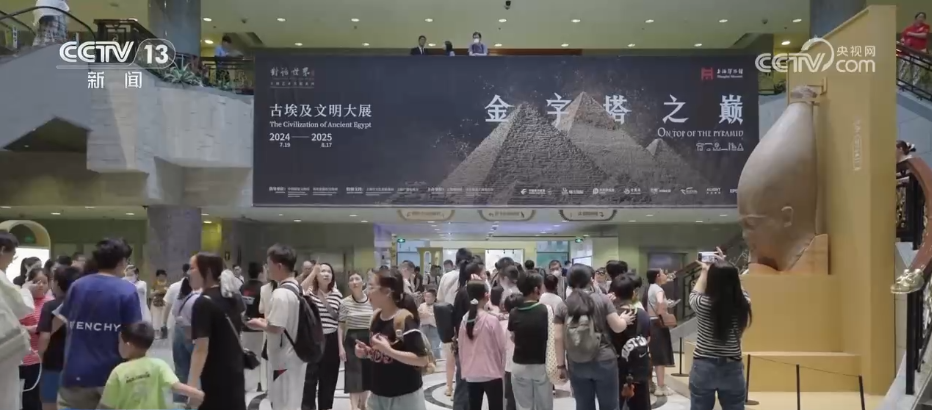
Core Insights - The article highlights the rising trend of night museum visits during the summer, driven by cultural tourism and enhanced visitor experiences through technology and interactive exhibits [1][2][3]. Group 1: Night Museum Trends - The Shanghai Museum's "Ancient Egyptian Civilization Exhibition" attracted 2.777966 million visitors and generated over 760 million yuan in revenue, setting records for museum exhibitions globally [1][7]. - Other museums, such as those in Henan, Xi'an, and Chengdu, have also adopted night tours, reflecting a growing cultural consumption trend among tourists [2][3]. - Data from Meituan indicates a 100% month-on-month increase in searches and comments related to "night tours," with "museum night tours" and "scenic night tours" seeing spikes of 200% and 230% respectively [3]. Group 2: Technological Integration - Museums are utilizing advanced technologies like XR to create immersive experiences, such as the "Tang Palace Night Banquet XR Immersive Exhibition" in Henan, which allows visitors to experience the Tang Dynasty [3][4]. - The Xi'an Museum's "Chang'an Night: Museum Wonderful Tour" features 3D projections that bring historical stories to life, attracting over 50,000 participants since its launch [4]. Group 3: Demographics and Visitor Engagement - Families and young people are the primary drivers of the cultural tourism boom, with parents increasingly choosing museums over theme parks for educational experiences [6]. - Data from Ctrip shows that popular museums include the Terracotta Army Museum and the Sanxingdui Museum, with family-oriented cultural experiences seeing a 55% increase in sales [6]. Group 4: Economic Impact - The cultural tourism surge has led to significant economic benefits, with the Shanghai Museum's exhibition contributing to over 35 billion yuan in overall city consumption [8]. - Local businesses, including accommodations and restaurants, have reported increased activity, with occupancy rates exceeding 90% in areas surrounding the Shanghai Museum [8].
多地探秘“博物馆奇妙夜”,暑期文博旅游成“遛娃刚需”丨夏游记
2 1 Shi Ji Jing Ji Bao Dao· 2025-08-26 10:18
Core Insights - The "Ancient Egyptian Civilization Exhibition" at the Shanghai Museum achieved record-breaking attendance and revenue, attracting 2.777966 million visitors and generating over 760 million yuan in total revenue, setting world records for museum exhibitions [1][7] - The trend of night museum visits has gained popularity, with various museums across China, including those in Henan, Xi'an, and Chengdu, offering night tours as a new cultural consumption trend [2][5] - Technological advancements and interactive experiences have transformed night tourism, with significant increases in search and engagement metrics for night tours, particularly in cities like Guangzhou, Shanghai, Hangzhou, and Nanjing [3][6] Exhibition Performance - The Shanghai Museum's exhibition not only set attendance records but also contributed to over 35 billion yuan in overall city consumption, indicating a strong economic impact [1][8] - The exhibition's success has led to a surge in cross-province visitors, with over 70% of attendees traveling specifically for the event [7] Night Tour Trends - Night tours have become a preferred choice for summer outings, with a notable increase in interest and participation, particularly among families and young people [3][6] - Interactive and immersive experiences, such as the XR technology used in the Henan Museum's "Tang Palace Night Banquet," have enhanced visitor engagement and satisfaction [4][6] Demographic Insights - Families with children and young adults are driving the cultural tourism trend, with significant online engagement and discussions around family-friendly museum experiences [6] - The participation of the post-2000 generation in museum visits is on the rise, indicating a shift in social activities towards cultural experiences [6] Economic Impact - The "cultural economy" has seen tangible benefits, with high occupancy rates in nearby accommodations and increased sales in museum-related merchandise, contributing to local economic growth [8]
依托世界级IP三星堆,德阳积极开展精准化全球营销,建设国际旅游城市 让国际游客“走进来”,德阳故事“传出去”
Si Chuan Ri Bao· 2025-08-25 06:49
Core Viewpoint - The article highlights the growing international influence of the Sanxingdui Museum and the city of Deyang, emphasizing efforts to enhance tourism and cultural exchange through various initiatives and exhibitions [1][2][3]. Group 1: Sanxingdui Museum's Impact - The Sanxingdui Museum has received a total of 11.2 million visitors in the past two years, ranking sixth among museums in China [2]. - The museum's ticket revenue is projected to exceed 300 million yuan in 2024, with a significant portion of visitors being international tourists [2]. - Sanxingdui has participated in 14 overseas exhibitions in countries such as Peru, Greece, and the United States, showcasing its artifacts to a global audience [2][3]. Group 2: International Collaboration and Cultural Exchange - The museum hosted the "Journey of Ancient Greece" exhibition, marking its first international special exhibition in collaboration with the Greek Ministry of Culture [2][3]. - A seminar on Sino-Greek cultural exchange was held during the exhibition, promoting academic cooperation and public engagement through educational activities [3]. Group 3: Deyang's Tourism Development Strategy - Deyang aims to build an international tourism city by enhancing facilities, immersive experiences, and global marketing strategies [4]. - Plans include establishing "International Tourism Service Stations" at key locations and improving transportation networks to facilitate tourist access [4]. - The city intends to create a "cultural + scene" tourism model, linking major cultural landmarks and developing world-class themed routes [5]. Group 4: Marketing and Promotion Efforts - Deyang is focusing on precise global marketing strategies, targeting visa-free countries and collaborating with mainstream travel platforms to offer multilingual customized itineraries [5]. - The city plans to produce multilingual documentaries and invite international travel influencers to experience Deyang, aiming to share its stories and charm with a broader audience [5].
暑期“文博游”撬动文旅消费新增量
Zheng Quan Ri Bao· 2025-08-11 16:29
Core Insights - The "Cultural Tourism" trend is gaining momentum, with museums becoming popular destinations for tourists and citizens during the summer season, leading to increased visitor numbers and ticket sales [1][2] Group 1: Museum Growth and Visitor Trends - As of the end of 2024, there are 7,046 registered museums in China, an increase of 213 from the previous year [1] - National museums received over 1.4 billion visitors in 2024, an increase of over 100 million compared to the previous year [1] - The rise in "Cultural Tourism" is attributed to the popularity of traditional culture, increased family outings during summer, and the influence of social media [1] Group 2: Economic Impact and New Consumption Trends - The growth in "Cultural Tourism" has not only boosted museum ticket revenues but also created new consumption hotspots, driving growth in cultural and tourism spending [2] - Cultural and creative products, such as stationery, clothing, and crafts featuring cultural motifs, have become popular, expanding the surrounding derivative market [2] - The emergence of themed restaurants, cafes, and hotels near museums enhances the cultural experience and attracts more visitors [2] - Digital cultural services and online exhibitions have introduced paid virtual experiences and subscription models, becoming new revenue sources for museums [2] Group 3: Future Strategies for Sustained Growth - Museums are adopting measures such as new exhibitions and extended opening hours to meet public demand during peak seasons [3] - To maintain visitor interest, museums should regularly update exhibits, explore new themes, and diversify activities [3] - Improving visitor services, such as optimizing tour routes and enhancing ticketing systems, is essential for sustaining the popularity of "Cultural Tourism" [3] - Long-term strategies should focus on cultivating cultural consumption habits and enhancing service quality, supported by policies like subsidies for cultural product development and infrastructure upgrades [3]
花样新“夜”态活跃“夏日经济” 特色文旅点燃消费市场新活力
Yang Shi Wang· 2025-06-30 07:29
Core Viewpoint - The 2025 Shanghai Night Life Festival will enhance the cultural experience of citizens by extending the opening hours of museums, art galleries, and libraries, thereby promoting night-time cultural activities [1]. Group 1: Shanghai Night Life Festival - The festival will run from June to September 2025, featuring unique summer night consumption scenarios [1]. - Museums and cultural spaces in Shanghai will extend their hours and open night sessions to enrich the night-time cultural life of citizens [1]. Group 2: Museum Night Events - The Shanghai Museum's "Pyramid Peak: Ancient Egyptian Civilization Exhibition" has been very popular, leading to the addition of night sessions starting from July, with a "24-hour open" mode in the last week of the exhibition [4]. - Public cultural spaces like Xujiahui Academy and Heping Academy are also extending their hours into the night, with Heping Academy being the first 24-hour library in Shanghai [6]. Group 3: Broader Cultural Night Activities - Shanghai is actively developing night tours for museums and libraries, providing more options for cultural night life and meeting diverse cultural needs [8]. - In Luoyang, the Ancient Tomb Museum offers night tours, allowing visitors to explore ancient tombs in a unique night setting [8][10]. Group 4: Innovative Cultural Consumption - Various regions are creating new consumption scenarios, such as "Museum + Drama" and "Park + Mall," injecting new vitality into cultural tourism consumption [15]. - In Hangzhou, museums are integrating drama into their spaces, creating immersive experiences for visitors [17]. - "Park-style" malls are emerging in cities, combining natural scenery, commercial facilities, and diverse cultural spaces [19][21].
文博游何以圈粉年轻一代
He Nan Ri Bao· 2025-06-10 06:15
Core Insights - The Zhengzhou Dahe Village Ruins Museum's new building will open for trial operation on June 14, 2023, featuring digital empowerment and immersive experiences to attract more cultural enthusiasts [1] - During the May Day holiday, museums across the country received over 60.49 million visitors, a 17% year-on-year increase, setting a historical record [1] - The post-00s and post-90s generations are the main drivers of museum consumption, with 59% of visitors aged 18 to 35 at the Henan Museum during the Dragon Boat Festival [1] Industry Trends - The rise of cultural tourism has made museum visits a competitive activity, with popular cultural products in high demand and lesser-known museums experiencing a resurgence [1] - Young people are increasingly interested in traditional culture, seeking to understand the rich historical heritage of the Chinese nation, which enhances their cultural confidence [1] - The younger generation, growing up in a material-rich environment, places greater emphasis on spiritual enjoyment and is willing to spend on cultural products [1] Digital Engagement - Museums are actively engaging with young audiences by developing digital IPs, creating apps, utilizing digitalization technologies, and hosting various interactive activities [2] - Innovative cultural products and storytelling methods are being introduced to integrate museum experiences into the daily lives of young people [2] - To maintain interest among young visitors, museums need to continuously innovate by developing aesthetically appealing cultural products and incorporating more technological elements [2]
打卡不重样 博物馆奇妙之旅攻略收藏+走起!
Yang Shi Xin Wen Ke Hu Duan· 2025-05-19 01:47
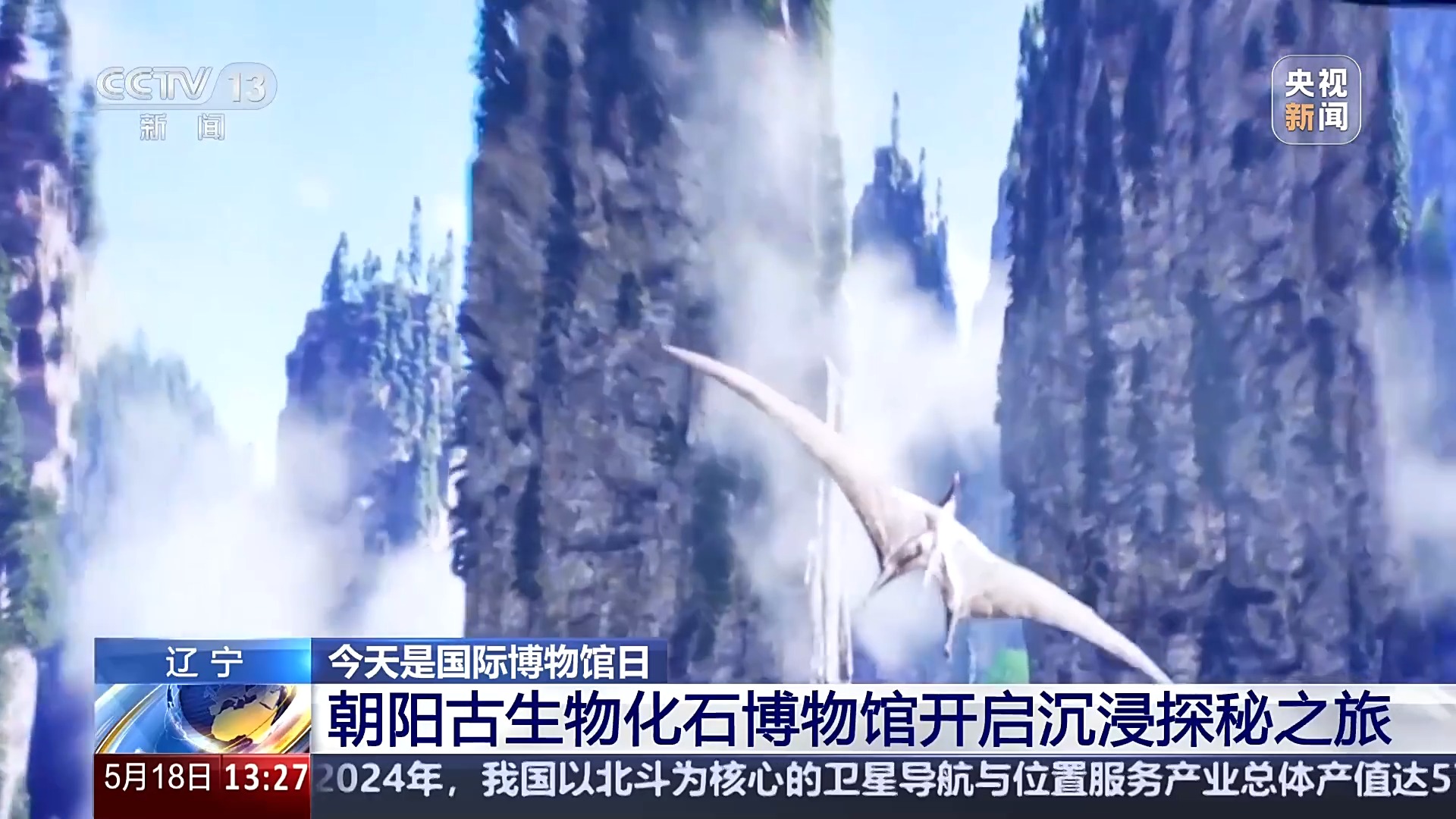
Group 1: Liaoning Chaoyang Paleontological Museum - The museum utilizes advanced technology to create an immersive science popularization experience, allowing visitors to explore ancient life from billions of years ago [1] - The museum features a digital exhibition hall housing precious fossils from the Cretaceous period, covering 20 biological categories including fish, amphibians, dinosaurs, birds, and mammals [2] - Interactive screens enable visitors to trigger animations of dinosaur skeletons and visualize sturgeon fossils swimming back in water, enhancing the educational experience [2] Group 2: Three Gorges Museums - The Three Gorges Project Museum and the Hubei Three Gorges Migrant Museum near the Three Gorges Dam showcase the monumental engineering achievements and the emotional narratives of over a million displaced individuals [4][5] - The Three Gorges Project Museum features over 2,000 exhibits, including artifacts, engineering blueprints, and large machinery components, utilizing multimedia technology to present the construction journey of the world's largest hydraulic project [4][5] - The Hubei Three Gorges Migrant Museum includes an underwater exhibition hall that recreates the submerged ancient city of Guizhou, allowing visitors to experience the historical context of the displaced communities [7] Group 3: Huai Bei Industrial Museum - The Huai Bei Industrial Museum, transformed from a former thermal power plant, integrates industrial heritage with modern technology to create an immersive experience of the city's industrial history [8][9] - The museum features interactive areas such as a coal mining experience and a robot band made from repurposed industrial equipment, attracting significant visitor interest [9][11] - The museum's development is part of a broader initiative in Anhui Province, which has over 50 industrial heritage sites and more than 30 industrial museums, collectively drawing millions of visitors annually [13]